How Long Does It Take To Walk Up To Berat Castle?
The walk up to Berat Castle in central Albania is short in distance but steep and cobbled. Here is how the routes, the heat and the gate work in practice.
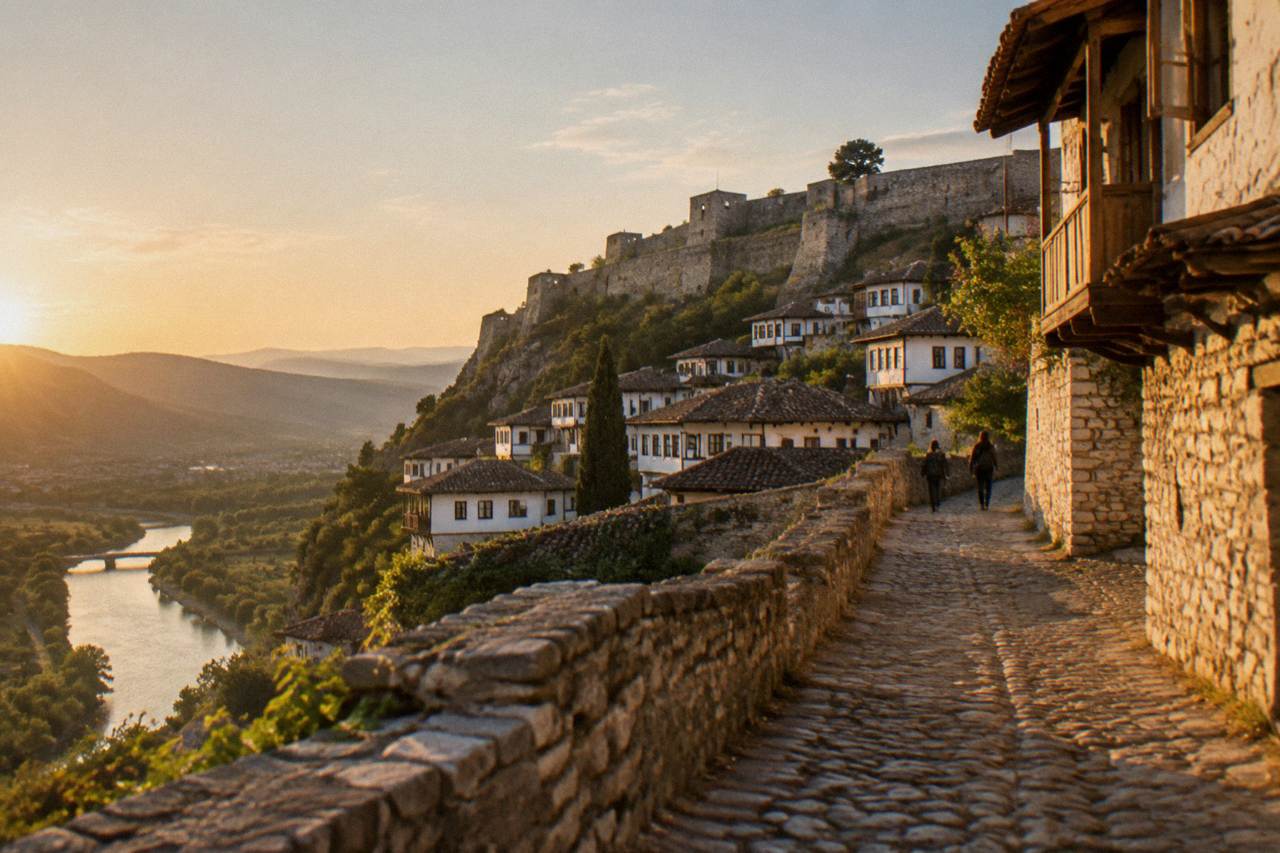
Berat, in central Albania, is a UNESCO World Heritage Ottoman-era hill town stacked along the Osum River, and its castle is the reason most people look up in the first place. The fortress, known locally as the Kala, crowns the hill above the Mangalem quarter, and nearly every visitor ends the day climbing toward it. That climb is the single most common practical question this town generates, ahead even of where to sleep or eat.
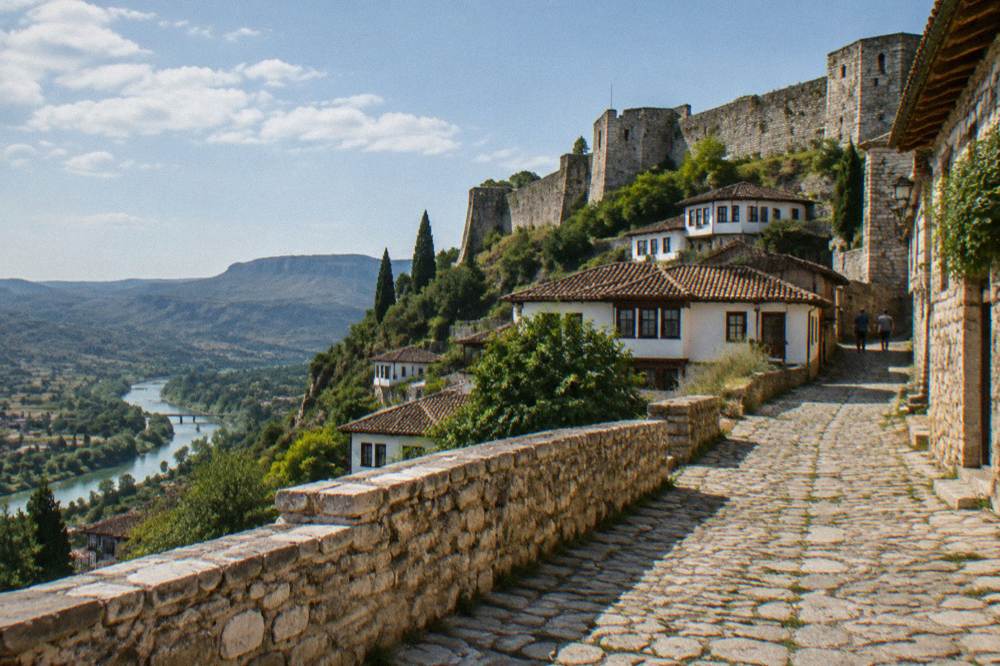
The honest framing matters more than a stopwatch. What follows is a route-by-route look at the ascent, the conditions that change how long it feels, and what is actually waiting at the top, from museums to a lived-in neighbourhood that people still call home. If you want the broader picture of the fortress itself, the full Berat Travel Guide coverage of the site sits elsewhere on this site; this page stays on the walk.
How Long Does It Take To Walk Up To Berat Castle?
No single number fits every walker, and any precise figure you read online should be treated with suspicion: the climb to Berat Castle is short in distance but steep and cobbled, so your pace, the heat, your footwear and your starting point matter far more than the metres. From Mangalem at the foot of the hill, most visitors walk up at an unhurried, stop-and-look pace; from Gorica across the river you cross the Osum first. Plan a relaxed ascent rather than a timed one.
The reason a fixed figure is misleading is that the hill does not have one starting line. Mangalem, the famous quarter of stacked white houses, sits at the base of the slope, and from its lanes the lane to the gate climbs directly. Gorica, on the opposite bank, adds a river crossing through the old Gorica Bridge before the climbing even starts. The New Town around Bulevardi Republika adds a flat walk to the base first.
Then there is the surface. The lane up is cobbled stone, worn smooth in stretches and uneven in others, and it turns at switchbacks rather than running straight. In summer heat, which can top 40 °C in Berat, the same slope feels dramatically longer than it does on a mild spring morning. In practice, walkers who pause for photographs, which is nearly everyone given the view over the tiled roofs, spread their effort over a comfortable stretch of time rather than racing.
The final factor is what you do at the top. The Kala is not a viewpoint with a rail and a kiosk; it is a lived-in quarter with walls to walk, churches to peek into and the Onufri Iconographic Museum inside the Church of St Mary. People who budget only for the climb routinely spend far longer inside than on the way up. For help pacing a whole visit rather than one slope, see our piece on how many days to spend in Berat.
Which Lane Should You Take Up The Hill?
The standard approach starts in Mangalem and follows a cobbled lane through switchbacks to the castle gate; it is the route almost everyone uses and the one your guesthouse will point to. From Gorica you cross the historic Gorica Bridge over the Osum first, then join the same slope from the far side. Driving up is no longer the easy option, because car access into the Kala quarter is being restricted.
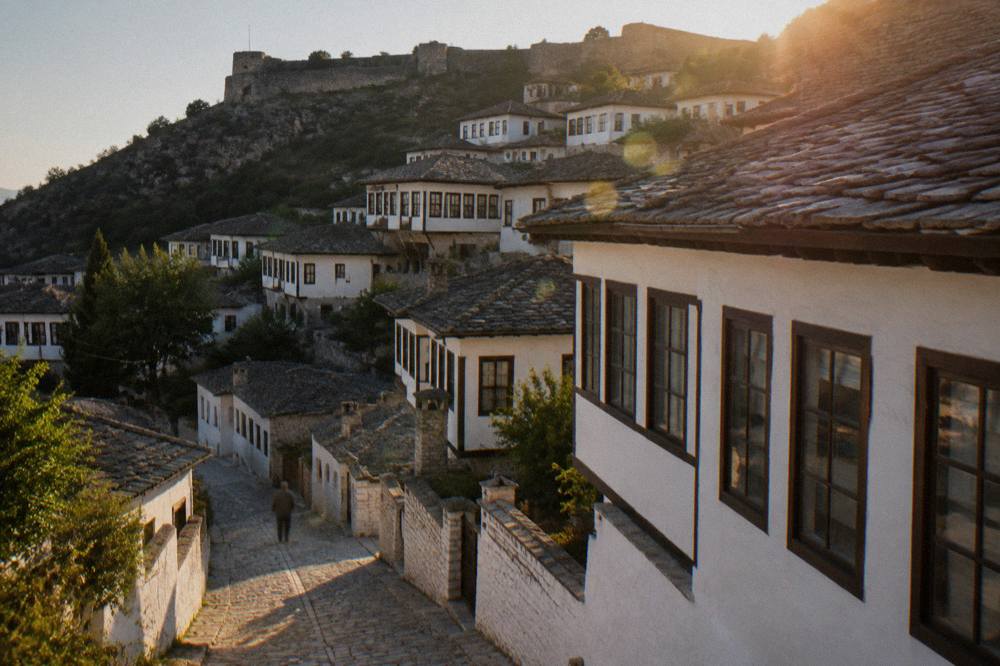
The Mangalem route is the classic one. You wind through the quarter's alleys, past guesthouses built into the hill, and the lane narrows and steepens as it goes. Stone walls on both sides give shade in the morning and early afternoon, which is worth knowing when the sun is high. There are benches and natural pauses along the way, and the view back over the roofs keeps improving, which is exactly why the walk takes as long as it does: nobody hurries past that scenery.
The Gorica approach suits anyone sleeping on the east bank. The Gorica Bridge, an old stone arch over the Osum, is a sight in its own right, and crossing it deposits you at the base of the Mangalem slope with the whole stacked facade of the town behind you. It is the better photographic direction, since the light on the white houses works in your favour for much of the day.
| Approach | Where It Starts | What The Climb Is Like | Best For |
|---|---|---|---|
| Mangalem lane | Mangalem quarter alleys | Cobbled switchbacks, shaded stretches, steady gradient | First-time visitors, guesthouses in Mangalem |
| Gorica Bridge route | Gorica quarter, east bank | River crossing first, then joins the Mangalem slope | Photographers, anyone staying in Gorica |
| Vehicle option | Roads below the hill | Car access into the Kala is being restricted; park below and walk up | Visitors with mobility constraints, pre-booked castle guesthouses |
Whichever lane you choose, the practical advice is the same: start earlier than feels necessary in summer, carry water, and treat the descent as its own event. The cobbles are harder going down in worn shoes than up. If you would rather not think about routes at all, a guided day covers the logistics for you; the trio below pairs the castle-and-city format with two very different ways to spend a afternoon in the region.
Guided formats are especially useful for visitors coming from the coast, since the drive to Berat and the walk up are handled in one package. They also spare you the parking question entirely, which is becoming the real bottleneck of a castle visit.
What Should You Know Before You Climb?
Bring water, shoes with grip, sun protection and more time than you think you need, because the slope is exposed stone in places and summer heat in Berat can top 40 °C. There may be a small daytime charge at the castle gate, so carry some lek in cash. Car access into the castle quarter is being restricted, so plan to park below and walk up regardless of what older guides say about driving.
Start with footwear. Smooth-soled shoes and wet cobbles are a bad combination, and the lane is polished stone in the busiest stretches. Trainers or light hiking shoes are fine; sandals with slick soles are the one choice that regularly turns a pleasant walk into a careful shuffle. A bottle of water matters more than any gadget: the climb is not alpine, but shade disappears on the upper switchbacks and there is little shelter between the gate and the museum.
On money: the old town is largely cash territory, and the lek is the local currency, roughly 92 lek to the euro. Euro notes are sometimes accepted informally in tourist-facing businesses, with change usually given in lek, but relying on that at a castle gate is a poor plan. The gate fee situation is genuinely unclear, since no official source publishes a current figure; a 2022 report described free entry while blogs quote a small daytime charge. The safe move is to bring a few hundred lek and treat any charge as a pleasant surprise in reverse.
The car restriction deserves its own sentence, because it changes plans. A UNESCO-reported Smart Parking project at Berat Castle is under implementation, designed to let traffic only as far as the castle neck, and a municipal announcement cites restrictions on non-resident vehicles entering the Kala quarter from April 2026. Write your plan as "park below, walk up" and you will not be caught out on either side of that rollout. For drivers, our page on whether it is a good idea to rent a car in Albania covers the broader picture.
For anyone arriving from Durres or Golem, a guided format removes the driving, the parking and the route decision in one stroke. The Durres Berat Medieval Castle and City guided tour covers the castle and the old town with a guide and a local tasting, and Check availability on the operator's live listing for dates and meeting points.
One last preparation note: build in slack on either side of the climb. Guesthouses inside the walls mean luggage occasionally goes up the same lane, and the narrow stone passage is shared space, not a tourist conveyor. A little patience makes the whole experience feel like a neighbourhood rather than an obstacle.
What Is Actually Waiting For You At The Top?
The Kala is a lived-in fortress quarter, not a ruin: its walls carry 24 defensive towers, about 42 churches once stood inside and roughly eight survive, and the Red Mosque is among the earliest Islamic buildings in the fortress. The Onufri Iconographic Museum sits inside the castle in the Church of St Mary, with a 400 lek individual ticket and hours that shift by season. The Ethnographic Museum below, freshly reopened, rounds out a full day.
The first thing most people notice is the openness. The walls enclose a plateau of lanes, gardens and houses, with the Osum river curving below and the Gorica quarter across the water. The second thing is the scale of the view: the whole white stack of Mangalem reads best from up here, which is why nearly every classic photograph of Berat is taken from inside the castle looking down.
| Castle Feature | Figure | Note |
|---|---|---|
| Defensive towers on the walls | 24 | Verified on the national tourism agency's castle page |
| Churches once inside | About 42 | Roughly eight are preserved today |
| Red Mosque | Among the earliest Islamic buildings in the fortress | Its exact century is not reliably published, so do not trust blogs quoting one |
The Onufri Museum is the cultural anchor of the top. It holds the icon work of Onufri, the celebrated Albanian painter whose name the museum carries, inside the Church of St Mary. From May to September it opens daily from 9:00 to 18:00; from November to April it runs Tuesday to Saturday 9:00 to 16:00 and Sunday 10:00 to 15:00, with national holidays treated as open days. October sits in a gap on the official schedule, so if you are visiting that month, confirm locally. Children under 12 enter free, and reduced and student rates apply with documentation.
| Museum | Location | Individual Ticket | Hours Summary |
|---|---|---|---|
| Onufri Iconographic Museum | Inside the castle, in the Church of St Mary | 400 ALL | May-Sep daily 9:00-18:00; Nov-Apr Tue-Sat 9:00-16:00, Sun 10:00-15:00 |
| Ethnographic Museum | Below the castle in the old town | 300 ALL | Same seasonal pattern as Onufri |
Online tickets for state museums in Berat have been available through Albania's e-Albania portal since late 2025, which can spare you a queue in peak months. The museum's own site is the place to confirm, since free days exist on several fixed national dates. If the castle's deep history pulls you, our piece on the oldest castle in Albania puts Berat's fortress in national context, and the dedicated Berat Castle attraction guide covers the site in far more depth than this page can.
Walking the whole thing with an expert changes how much of the top you actually absorb. A premium guided walk of the town, castle included, is a popular format for visitors who want the history attached to the stones rather than guessed at; the option below is the one travellers book most often from this site for exactly that.
Between the walls, the towers and the museum, the top of the hill fills a half-day easily, and that is before the descent and an evening meal back in Mangalem. Treat the climb as the opening act of that block of time rather than a separate task to be optimised.
Before the practical questions, one last orientation: everything above assumes you are walking from the town itself, which is how the vast majority of visitors experience it. If you are still deciding whether this town deserves the trip at all, our answer to whether Berat in Albania is worth visiting works through the case in full.
Common Questions About Walking Up To Berat Castle
How long does it take to walk up to Berat Castle?
It depends on your starting point, pace and the weather rather than a fixed number: the climb is short in distance but steep and cobbled. From Mangalem most visitors walk up comfortably at a stop-and-look pace, and from Gorica you cross the Gorica Bridge first. Plan an unhurried ascent, especially in summer heat.
Is the walk up to Berat Castle difficult?
It is a steady cobbled climb with switchbacks rather than a serious hike. Fit walkers manage it easily; anyone with mobility limits or slick-soled shoes will find the stones harder going, and the exposed upper stretches make summer midday the worst time to try.
Can you drive up to Berat Castle instead of walking?
Not reliably anymore. Car access into the Kala quarter is being restricted under a Smart Parking scheme reported to UNESCO, with non-resident vehicles limited from spring 2026. The default plan is to park below and walk up; only pre-booked castle accommodation or licensed local taxis qualify for exceptions.
Do you have to pay to enter Berat Castle?
No official source publishes a current fee: a 2022 report described free entry while blogs quote a small daytime charge at the gate. Assume there may be a small charge, bring a few hundred lek in cash, and check locally on the day.
What is inside Berat Castle once you reach the top?
A lived-in quarter with walls carrying 24 towers, several surviving churches, the Red Mosque among the fortress's earliest Islamic buildings, and the Onufri Iconographic Museum inside the Church of St Mary, with an individual ticket of 400 lek and seasonal daily hours.
When is the best time of day to do the climb?
Morning, for shade on the lower lanes and softer light across the Gorica hillside. Summer afternoons can be brutal, since Berat heat has been reported topping 40 °C on the hottest days of the year, and the upper cobbles hold that heat into the evening.