Gorica Bridge
The Gorica Bridge is the old stone crossing over the Osum River in Berat, Albania, joining the Mangalem quarter's stacked windows to the quieter Gorica quarter on the far bank. This guide covers the viewpoints, both sides of the river, museums, timing and how the bridge fits into a day in the UNESCO old town.
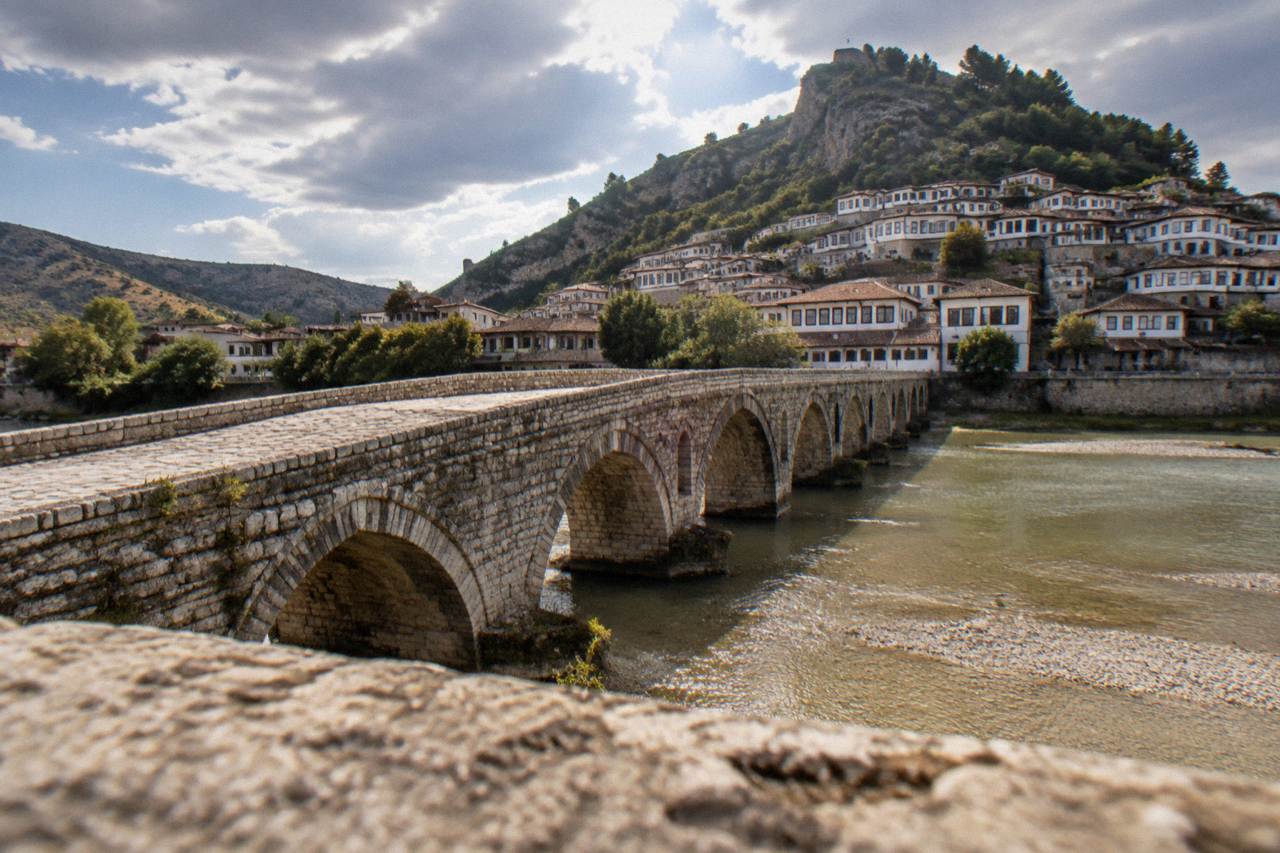
Short answer
The Gorica Bridge is an Ottoman-era stone bridge over the Osum River in Berat, Albania, linking the Mangalem and Gorica quarters of the UNESCO-listed old town. It is free to cross at any hour, takes minutes on foot, and anchors the classic loop past Berat Castle, the Onufri Museum (400 ALL entry) and Gorica's lanes. Views of the town's windows are best early or late in the day.
The Gorica Bridge is the old stone crossing over the Osum River in Berat, a UNESCO World Heritage Ottoman-era hill town in central Albania. It joins the two historic quarters of the town: Mangalem, the famous stack of white windows on the west bank, and Gorica, the quieter, greener quarter on the east bank. Almost every photograph of Berat that you have seen was framed either from this bridge or from somewhere near it, because the crossing puts the full face of Mangalem in one view. The bridge is free to visit, open at all hours, and it sits at the heart of the walking loop that most visitors do on their first day in the town.
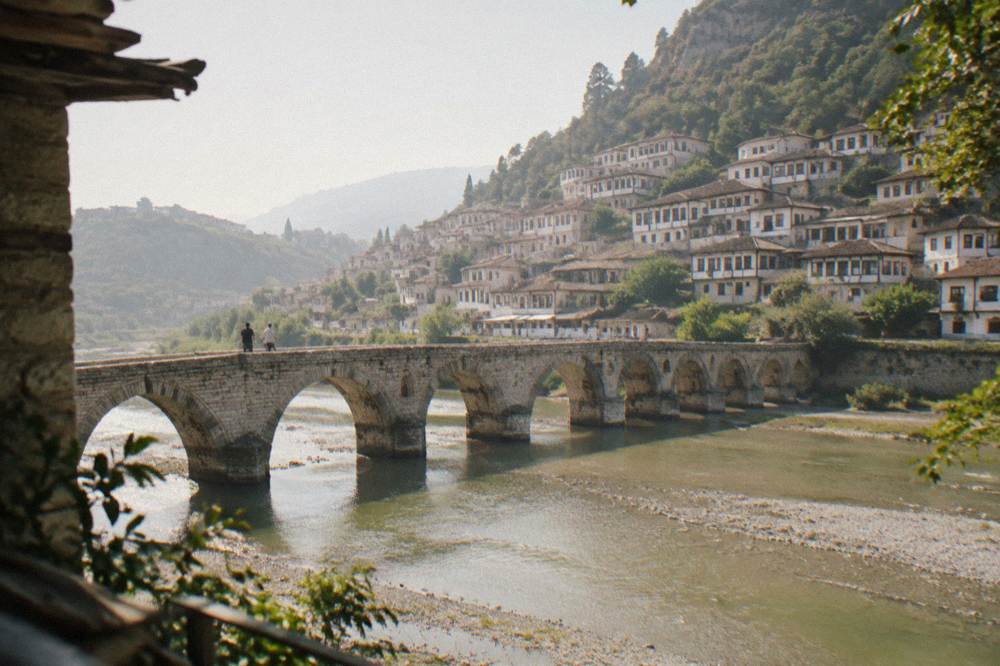
What Is The Gorica Bridge In Berat, Albania?
The Gorica Bridge is an Ottoman-era stone bridge in Berat, central Albania, carrying the main foot route across the Osum River. It links the Mangalem quarter on one bank with the Gorica quarter on the other, and it sits inside Berat's UNESCO-listed historic centre, making it one of the city's most recognisable landmarks and a natural crossing point for visitors exploring both sides of the old town on foot. It has no ticket, no gate and no closing time, and it serves both as an everyday crossing for locals and as the single most used viewpoint in the town. Heritage works completed around the two quarters, including a parking scheme near the Old Gorica Bridge reported in Albania's January 2026 state-of-conservation filing, have made the immediate area easier to explore on foot. A newer, larger crossing now exists upstream, but the old bridge remains the one people walk.
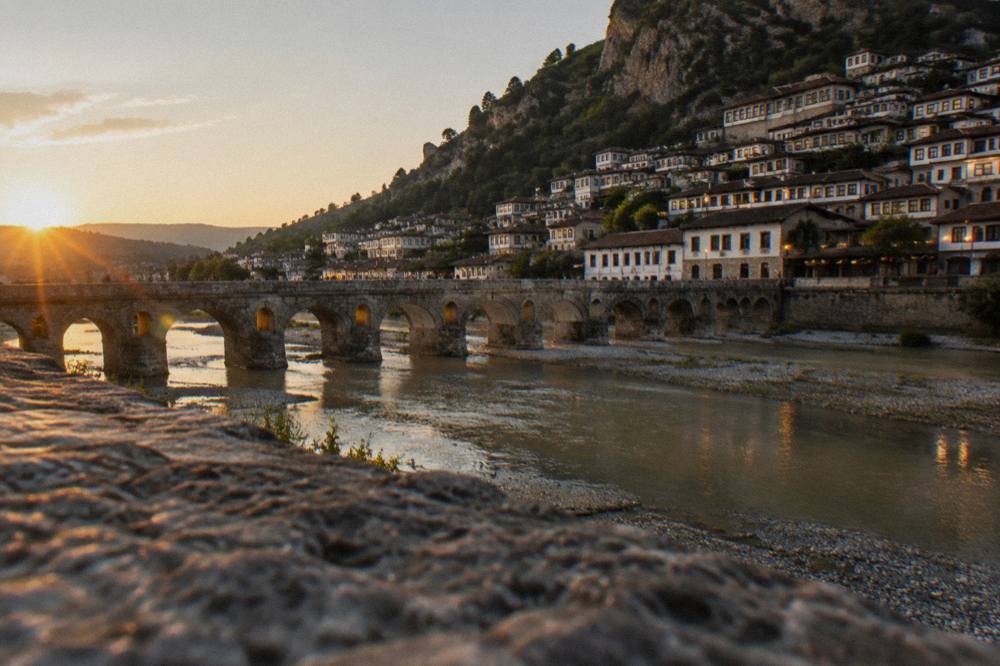
The bridge belongs to the river landscape as much as to either quarter. The Osum is not tidal and has no estuary; it runs through inland Albania, and in the dry months its flow slows to a green ribbon beneath the arches, while spring melt from the Tomorr region swells it. Standing mid-span you get the layered composition Berat is known for: the stone slope of the castle hill above, the white Ottoman houses climbing it, the river below, and the wooded Gorica bank opposite.
It helps to understand what each side offers before you cross. Mangalem is the postcard side, dense with guesthouses, restaurants and the lanes that climb to the castle. Gorica is calmer, more residential, with church towers, garden walls and viewpoints back across the river. The bridge is the hinge between them, and almost every route in the old town passes over it at least once.
| Side of the river | Character | What dominates the view | Best for |
|---|---|---|---|
| Mangalem (west bank) | Busy, photogenic, guesthouse-heavy | The stacked white windows and the castle hill above them | First views, food, castle access |
| Gorica (east bank) | Quiet, leafy, residential | Mangalem's full face across the Osum | Photographs, calm walks, churches |
| Mid-span on the bridge | Constant foot traffic | Both banks at once, up to the castle walls | The classic postcard frame |
For orientation before you arrive, the Gorica quarter guide goes deeper into the eastern bank, and the Berat old town overview explains how the whole historic centre fits together.
Why Is The Gorica Bridge The Best Viewpoint In Berat?
Because it is the only place where the three elements of Berat's famous view line up at once: the river, the stacked windowed houses of Mangalem, and the castle above them, all from a free public crossing you can reach on foot in minutes from anywhere in the old town. No ticket booth, no climb and no timing restriction stand between you and the view. The angle from mid-span is the one reproduced on postcards and in most coverage of the town, and it works in both directions, since the Gorica side with its church towers makes an equally clean frame looking back west.
The light matters more than the spot. Berat's summers are hot and dry, and the town's white walls throw hard glare at midday, which flattens photographs. Early morning and late afternoon are when the windowed facades catch low light and the stone of the bridge warms up. In the wetter winter months the light is softer all day, and the river runs higher under the arches, which changes the reflection at the bottom of the frame.
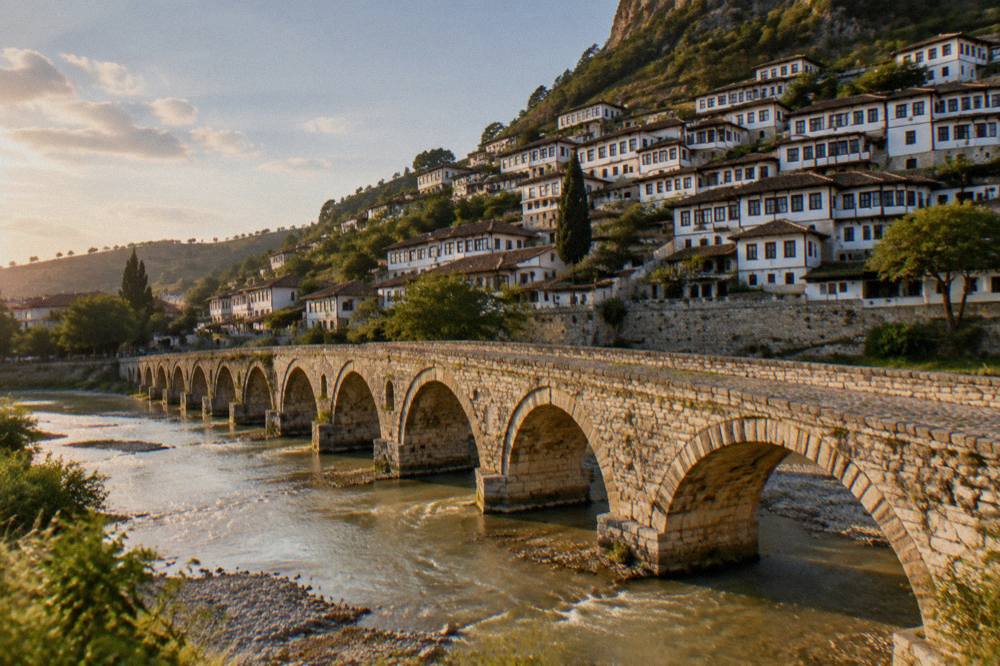
A second, less crowded option sits a short way along the Gorica bank. Walking downstream on the east side gives you Mangalem's face from a lower angle with the bridge itself inside the frame, which the mid-span view cannot do. The promenade along the river on the Gorica side has benefited from the same completed heritage upgrades as the quarter behind it, so the walk is smooth and well signed.
For a fuller treatment of camera angles around the town, see Berat photography spots; for the seasonal picture, Berat weather covers what the climate actually does, qualitatively, across the year.
How Do You Cross Between Mangalem And Gorica?
You simply walk across: the Gorica Bridge is a public crossing with no fee, no gate and no posted hours, and the walk from the Mangalem riverbank to the heart of Gorica takes only a few minutes at an easy pace. The bridge sits at the bottom of the valley, so both approaches are flat, which makes it one of the few genuinely level parts of an otherwise steep town. Steps and lanes radiate from either end toward the churches, guesthouses and castle paths on each bank.
The practical thing to know is what the bridge connects to. On the Mangalem end you land near the restaurants of the riverfront and the lanes that begin the climb toward Berat Castle. On the Gorica end you arrive in a quarter of narrower lanes, small churches and the viewpoints back over the river. Most visitors cross at least twice, once for the view and once as a through-route on the loop between the quarters.
Vehicle access is the one thing that has changed recently around the historic centre, and not on the bridge itself. Parking near the Old Gorica Bridge was part of the completed heritage upgrade scheme, and a separate restriction now limits vehicle entry into the Kala, the castle quarter, to residents, pre-booked guests, licensed taxis and similar categories; the practical takeaway is to park low near the river and move on foot, which is what the heritage plan was designed for. The driving and parking in Berat guide covers the details.
If you would rather have someone else handle the logistics of reaching Berat and walking the old town, a guided option such as the Durres and Golem Berat heritage day tour covers the castle and Mangalem with transport included. Check availability if that sounds like the right format for your group.
What Can You See On The Gorica Side Of The Osum River?
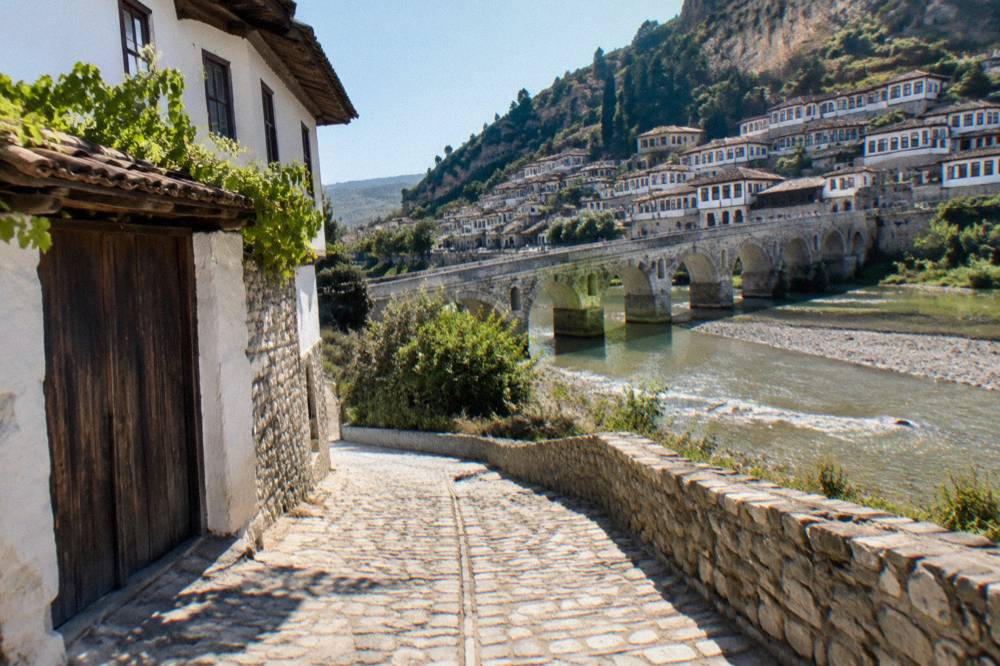
Gorica rewards you with churches, garden lanes and the best look back at Mangalem's famous windows, and its highlights can be walked in a slow hour: the church of Saint Michael, the quarter's upper lanes, and the riverside promenade that runs downstream from the bridge. The quarter is residential, so it stays quieter than Mangalem even in peak season. The heritage upgrades completed across the Gorica quarter's historic urban landscape and its castle trail, documented in Albania's January 2026 UNESCO filing, have tidied the walking surfaces and signage without changing the quarter's lived-in character.
Start from the bridge's east end and climb gently through the lanes. The Church of St Michael sits high in the quarter and pairs with the Holy Trinity Church, which is the one you see from below, perched above Gorica's roofs; both are covered in the St Michael's Church and Holy Trinity Church pages. The upper lanes loop back toward views of the castle across the valley.
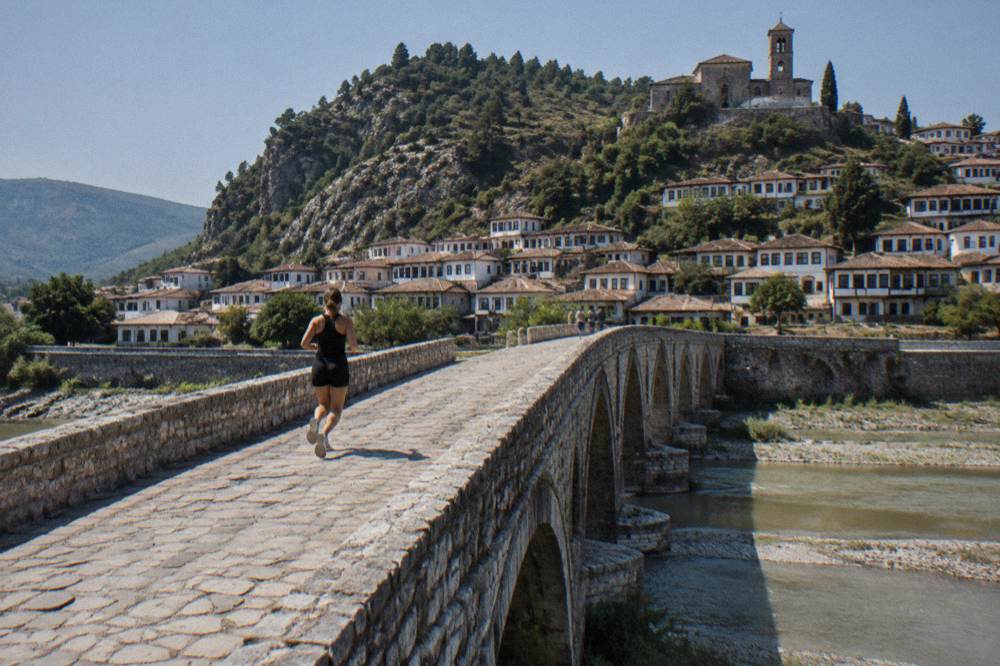
After the walk, most people drop back to the promenade for the return view of the bridge with Mangalem behind it. That stretch is flat, shaded in parts, and it is where you most often see locals fishing from the bank. If your visit falls in the warmer months, the river and canyon country around Berat opens up as well; a Berat wineries day trip and the Osumi Canyon page both start from the same logic, that the old town is the base and the river is the thread.
When Is The Best Time Of Day To Photograph The Bridge?
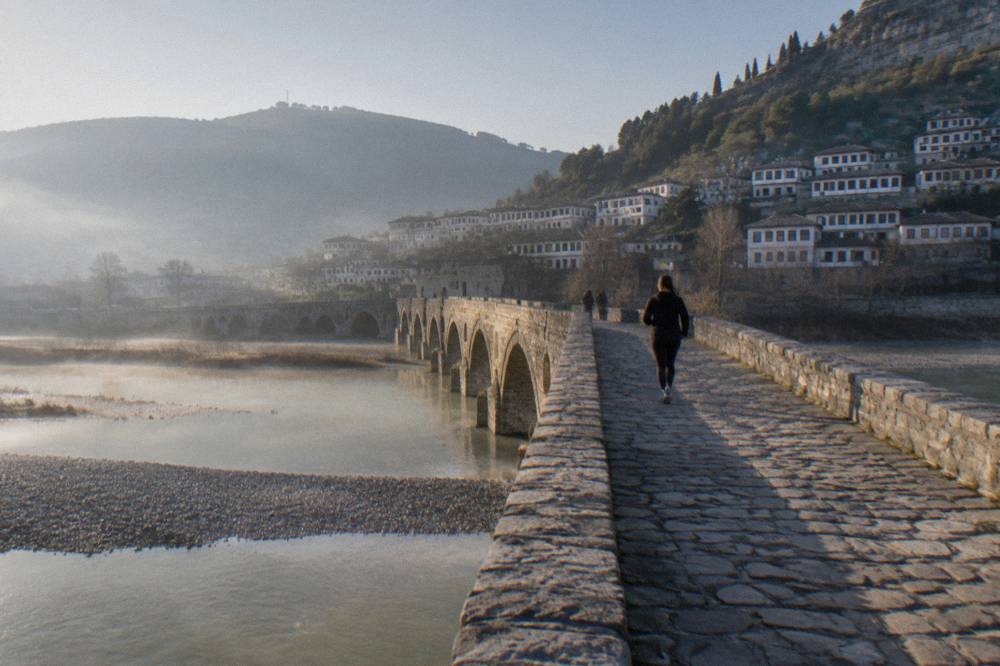
Early morning and late afternoon are the best times: low light warms the white facades of Mangalem, the tour groups have not yet arrived or have already gone, and the reflections in the Osum are calmest, which is when the classic Gorica Bridge composition works. Midday is the weakest option in summer, when Berat's dry heat produces hard overhead light that bleaches the stonework and the stacked windows lose their depth. The town's summer heat can genuinely top 40 °C, so the midday hours are better spent indoors in a museum or over a long lunch anyway.
The season changes the frame as much as the hour does. In late spring the river runs higher and greener under the arches after melt from the mountains. In autumn the Gorica bank's trees turn, which adds colour to the east side of the frame. Winter is the wettest period, and while you may get rain, you also get the softest light of the year and almost nobody else on the bridge at dawn. More of these guides are collected on Berat Travel Guide.
The museums give you a productive midday bolt-hole with fixed hours, which helps you plan the photography around them rather than losing the day. Their published schedule is straightforward and worth knowing before you set out.
| Museum | Summer hours (1 May to 30 Sep) | Winter hours (1 Nov to 30 Apr) | Individual ticket |
|---|---|---|---|
| Onufri Iconographic Museum | Daily 9:00 to 18:00 | Tue to Sat 9:00 to 16:00; Sun 10:00 to 15:00 | 400 ALL |
| Ethnographic Museum | Daily 9:00 to 18:00 | Tue to Sat 9:00 to 16:00; Sun 10:00 to 15:00 | 300 ALL |
Online tickets for the Berat museums have been available through the national e-Albania platform since its launch in November 2025, so you can secure entry before you leave your guesthouse. The Onufri Iconographic Museum and Ethnographic Museum pages break down what is inside each.
How Much Does A Visit Around The Bridge Cost?
Crossing the Gorica Bridge itself is free, and a full day built around it can be too: the viewpoints cost nothing, the quarters are public streets, and the only fixed charges are the museums, the Onufri and the Ethnographic Museum, with free entry days scattered through the year. Budget beyond that for food, and Berat remains inexpensive by regional standards, with a cheap restaurant meal a modest sum and a mid-range dinner for two still affordable, though it is worth checking against the current menu rather than trusting blindly.
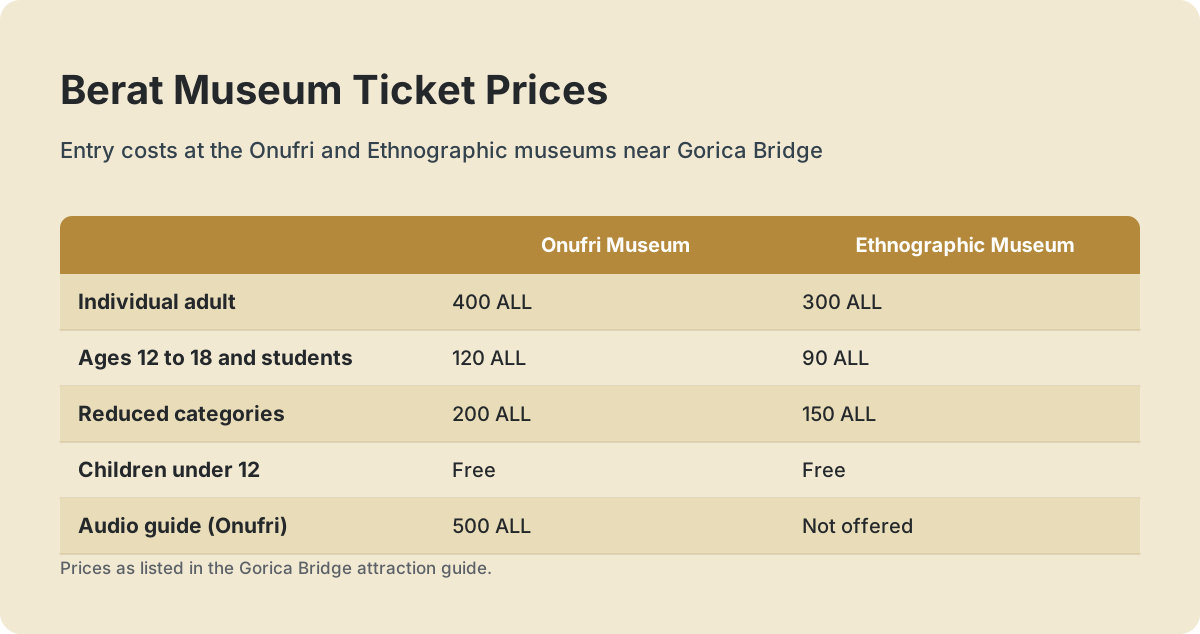
The museum prices have a clear structure, and discounts require documentation, so carry a student card if one applies to you. Children under 12 enter both museums free, which makes the day cheap for families. The free days are the real bargains if your dates align.
| Ticket category | Onufri Museum | Ethnographic Museum |
|---|---|---|
| Individual adult | 400 ALL | 300 ALL |
| Ages 12 to 18 and students | 120 ALL | 90 ALL |
| Reduced categories | 200 ALL | 150 ALL |
| Children under 12 | Free | Free |
| Audio guide (Onufri) | 500 ALL | Not offered |
| Free entry date | Who it applies to |
|---|---|
| 18 April | All visitors |
| 18 May | All visitors |
| 21 May | All visitors |
| 29 September | All visitors |
| 28 and 29 November | Albanian citizens only |
Food costs cluster in a narrow band, and the riverfront near the bridge's Mangalem end has the densest selection of restaurants in town. More detail, including what to order, sits in the where to eat in Berat and what to eat in Berat guides; coffee in town is cheap by European standards, so treat aggregator price reports as planning ranges rather than guarantees.
Where Does The Bridge Fit In A One- Or Two-Day Berat Plan?
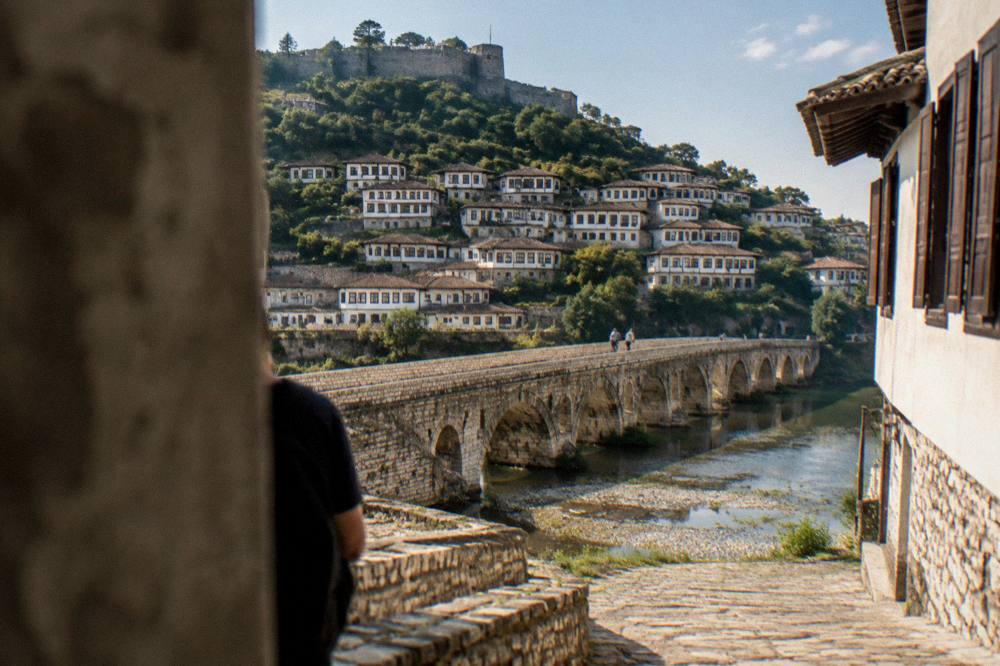
Put the bridge early and late: on a one-day visit, walk the Mangalem lanes and climb to Berat Castle in the cooler morning, descend to the Gorica Bridge and cross into Gorica after lunch, and return to the span at sunset for the day's best photographs; on a two-day visit, keep the second day for a winery or canyon trip out of town and come back to the bridge at a different hour. The bridge is the natural pivot of the day because it sits at the bottom of the loop, so it costs you almost nothing to pass it two or three times.
The classic sequence works like this. Morning: the castle and the Onufri Museum inside it, before the heat and the crowds build. Midday: lunch in Mangalem and the museums or a slow wander. Afternoon: cross the bridge into Gorica, walk the quarter's upper lanes, and come down to the promenade. Evening: a final crossing at golden light, then dinner back on the Mangalem side. The one day in Berat and two days in Berat itineraries lay this out hour by hour.
If you are arriving from the capital without a car, the Tirana to Berat guide covers the bus routes, and day-trippers from the coast should look at the Berat day trip from Tirana page for timing. Guided formats can carry a lot of the day for you; the premium walking tour of Berat is a compact option for the old town itself.
For the second day, the river that runs under the bridge also defines the region's big excursions. The Osumi Canyon trips out toward Çorovodë, the winery visits into the hills around town, and the Tomorr mountain roads all branch from the same base. The Osumi Canyon rafting and Bogove Waterfall pages cover the water-side options in detail.
What Should You Know Before You Walk Across?
Wear shoes with grip, carry some lek in small notes, and plan to move on foot: the bridge and both quarters are at their best walked slowly, the lanes either side climb quickly, and cash remains king in the old town even as cards work in some hotels and larger restaurants. The surface of the bridge and its approaches is old stone, which gets polished and slick in the rain. Bring water in summer, and expect the climb on either bank to be the hardest part of the loop, not the crossing itself.
A few practicalities round out the picture. Berat is not in the European Union or the Schengen area, so it is a separate border from the EU with its own entry rules, and the currency is the Albanian lek, roughly 92 to the euro, with the euro accepted informally in some tourist-facing businesses but change usually given in lek. Emergency numbers in Albania are 112 as the general number, with 127 for an ambulance, 128 for fire and 129 for the police. Tap water quality draws mixed reports, so bottled water is the safe default.
For staying overnight near the crossing, the accommodation split is simple: Mangalem puts you in the postcard itself, Gorica trades a short walk for quiet, and a few guesthouses sit inside the castle walls for full immersion. The where to stay in Berat guide breaks down the trade-offs, and the riverside rooms near the bridge are the most requested positions in town.
The last thing worth knowing is how the bridge fits the wider heritage story. Berat was added to the World Heritage List in 2008 as an extension of the Gjirokastra inscription, under the name "Historic Centres of Berat and Gjirokastra", and UNESCO describes it as a rare example of a well-preserved Ottoman town. The bridge is one of the few pieces of that heritage you can use, for free, at midnight if you want, with the whole lit face of the town to yourself. If the wider route interests you, a combined format such as the Berat and Durres Roman amphitheater day trip covers two heritage towns in one outing.
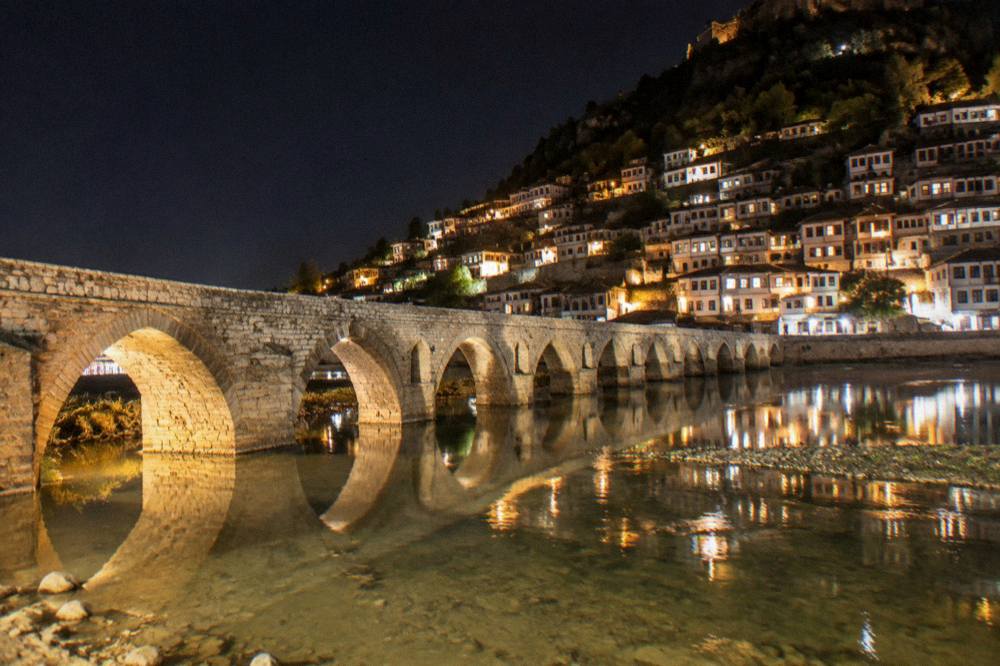
Whether you spend five minutes on the span or build your whole visit around it, the bridge is the one piece of Berat that belongs to everybody's itinerary. Cross it slowly, look both ways, and use it as the town uses it: as the front door between its two halves.
Common Questions About The Gorica Bridge
What Is the Gorica Bridge in Berat, Albania?
It is the old Ottoman-era stone bridge over the Osum River, connecting the Mangalem and Gorica quarters inside Berat's UNESCO World Heritage old town in central Albania. It is free to cross and serves as the town's best-known viewpoint.
Do You Have to Pay to Cross the Gorica Bridge?
No. The bridge is a public crossing with no fee and no posted hours. The only paid sights in the loop around it are the museums, at 400 ALL for the Onufri and 300 ALL for the Ethnographic Museum.
Which Side of the Bridge Is Better to Stay On?
Mangalem puts you among the famous windows, the restaurants and the castle paths, but it is busier. Gorica is quieter and greener and gives you the best views back across the river. Both are a short walk from the bridge.
When Is the Best Time to Photograph the Bridge?
Early morning and late afternoon, when low light warms the white facades and the crowds are thin. Avoid midday in summer, when hard overhead light flattens the view and the heat can top 40 °C.
Can You Drive Over the Gorica Bridge?
The bridge and both quarters are best treated as a walking zone. Heritage upgrades added parking near the Old Gorica Bridge, and car access into the castle quarter is being restricted, so plan to park below and walk up.
How Long Does a Visit Take?
Crossing takes minutes, but the loop that does it justice, the castle and Onufri Museum in the morning, Gorica's lanes after lunch and the viewpoint at golden hour, fills a full day. Two days let you add a winery or canyon trip on the second morning.