Berat Castle
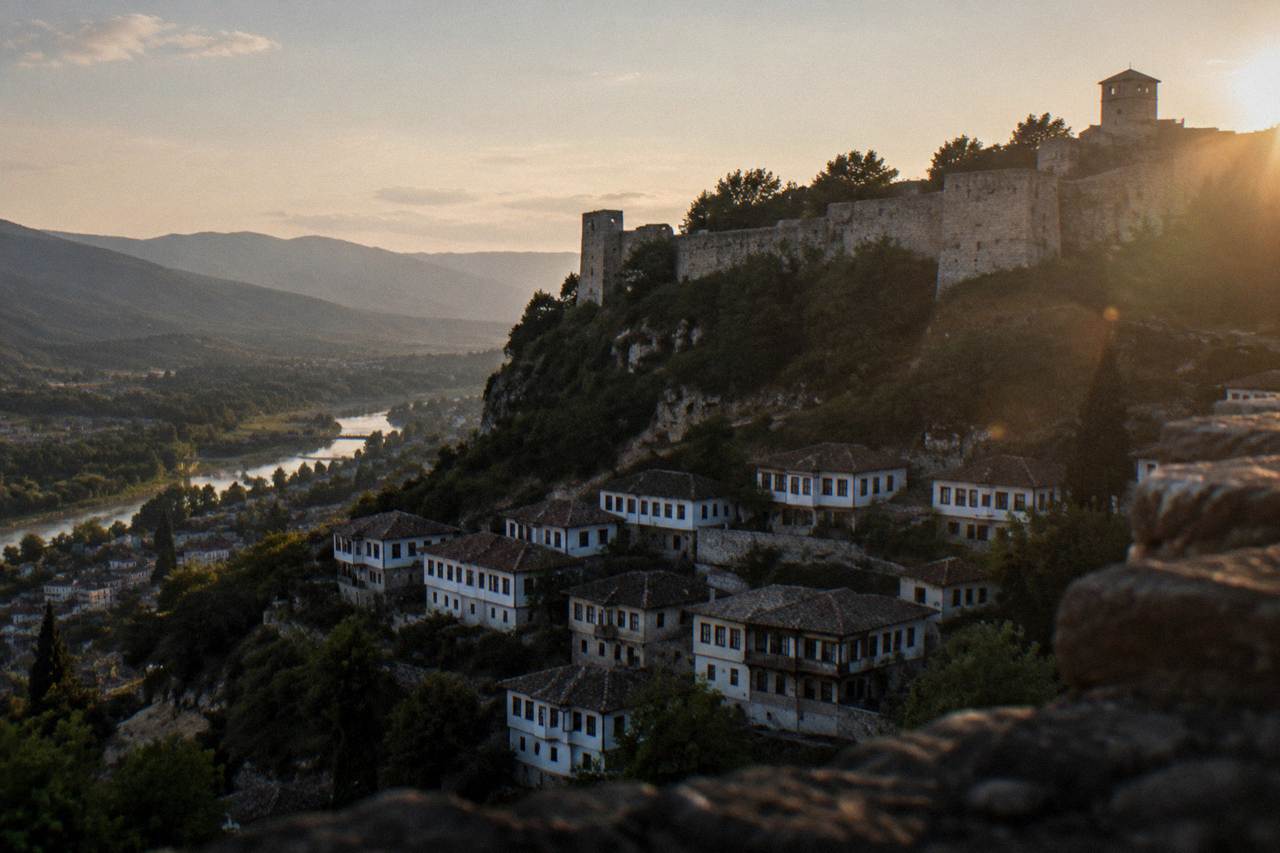
Berat Castle, known locally as the Kala, is the walled hilltop quarter that crowns this UNESCO World Heritage town in central Albania. It is not a ruin kept behind a rope: people still live inside it, guesthouses operate among its churches, and its walls carry 24 defensive towers above the Osum River.
Short answer
Berat Castle is a UNESCO-listed fortress quarter above the old town of Berat, Albania, with walls bearing 24 defensive towers and about eight preserved churches. The Onufri Museum inside costs 400 ALL. Walking up from Mangalem takes a steady uphill stroll on a stone road; car access is being restricted, so most visitors park below and climb.
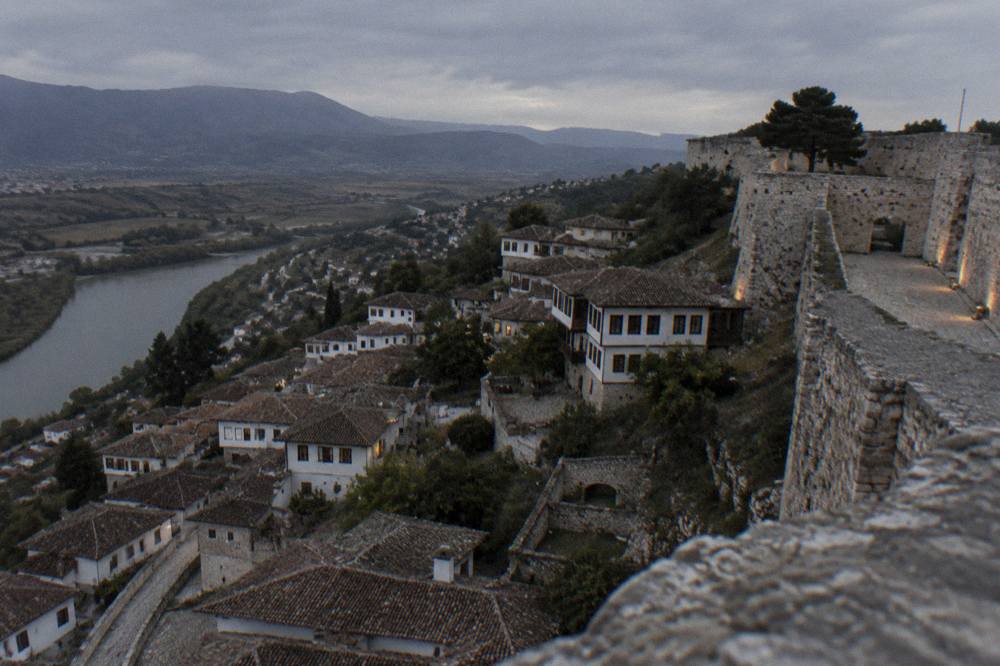
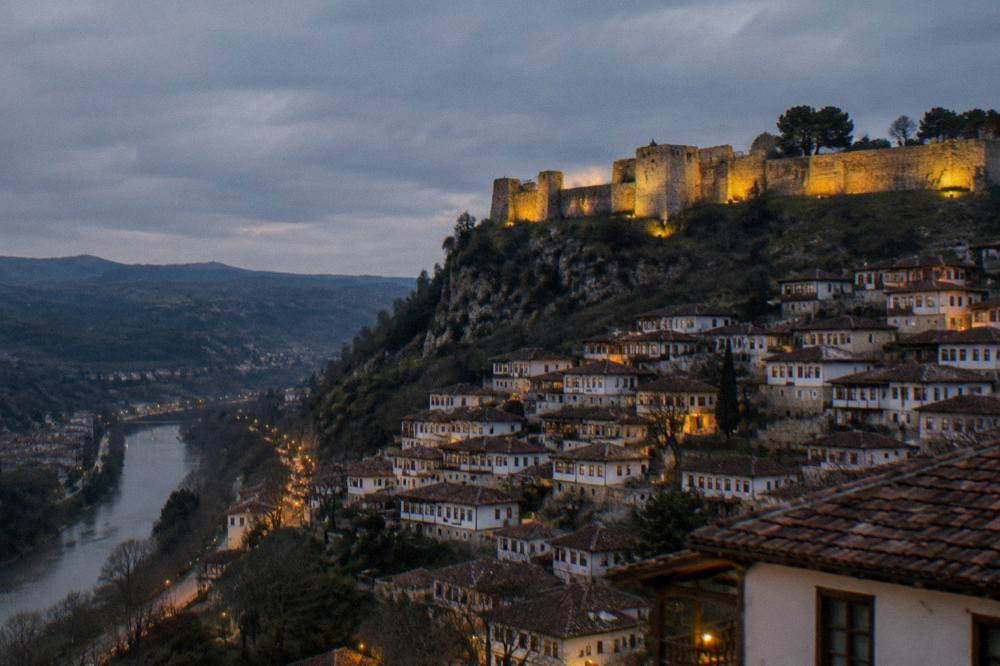
Berat Castle, the hilltop fortress the locals call the Kala, dominates the UNESCO World Heritage town of Berat in central Albania, gazing down over the Ottoman houses of Mangalem, the Gorica Bridge and the slow green bend of the Osum River. It is one of the few castles in the Balkans that never became an empty monument. Its walls still shelter a lived-in neighbourhood, a working museum, several churches and a scatter of guesthouses, which gives a visit here a texture most fortress sites cannot match: you walk a cobbled lane, a grandmother waters her tomatoes beside a Byzantine wall, and the whole scene hangs above one of the best-preserved Ottoman towns in Europe.
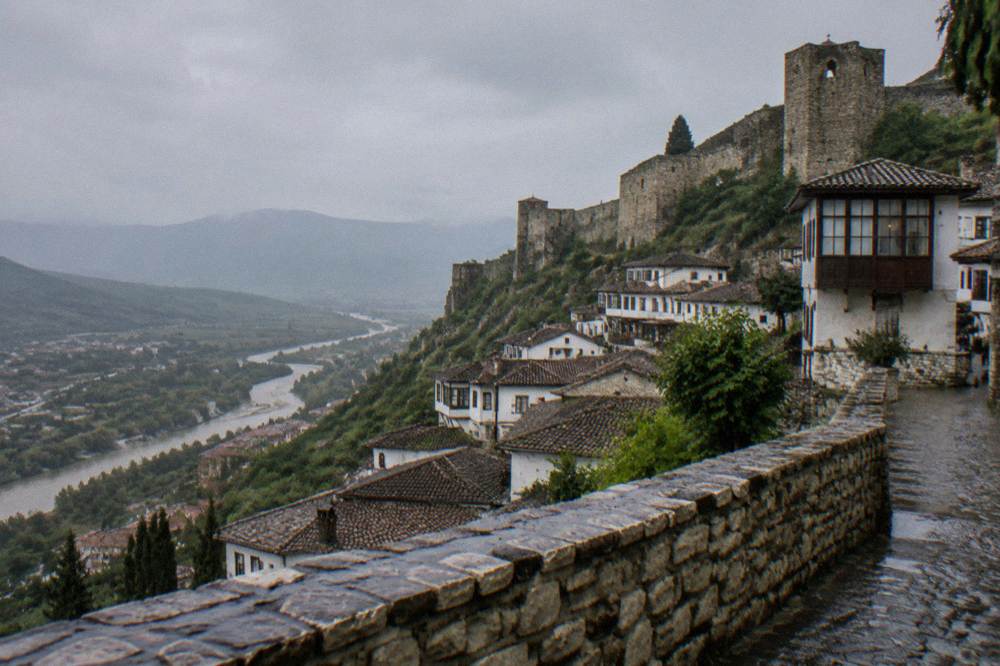
UNESCO lists the site under the joint property "Historic Centres of Berat and Gjirokastra", and its citation describes Berat as a rare example of a well-preserved Ottoman town. The castle above it is the reason the town survived so intact. Perched on its rocky hill, it anchored Berat through centuries of rebuilding, and the neighbourhood inside it, small as it is, remains the most rewarding hour or two you will spend in this part of Albania. This guide covers what the castle actually is, how to get up it, what it costs, what to see inside the walls, and which tours are worth your money.
What Is Berat Castle And Why Is It A UNESCO Site?
Berat Castle is the fortified upper quarter of Berat, Albania, a walled citadel whose defences carry 24 defensive towers and whose interior once held about 42 churches, of which about eight survive today. It sits inside the UNESCO World Heritage property "Historic Centres of Berat and Gjirokastra", inscribed for Gjirokastra in 2005 and extended to include Berat's city centre in 2008 under criteria (iii) and (iv), covering a combined 58.9 hectares. The Red Mosque inside the fortress counts among its earliest Islamic buildings.
The first thing that surprises most visitors is that this is not a castle in the ruin-and-ticket-booth sense. The Kala is a functioning neighbourhood. Families live here, laundry hangs between medieval stonework, and a handful of small guesthouses operate inside the walls, including one being converted from a centuries-old building next to the Onufri Museum. That conversion, supported by Albania's National Investment Scheme, tells you how the city treats this quarter: as living heritage, not a museum piece.
The numbers that matter come from Albania's national tourism agency, AKT. The wall circuit carries 24 defensive towers. Around 42 churches once stood within the fortress; roughly eight are preserved in recognizable form today. The Red Mosque, whose surviving minaret base you can still pick out near the centre of the quarter, is among the earliest Islamic buildings in the fortress. The AKT source has its quirks, so treat any precise founding date you read elsewhere with caution: no reliable primary source pins the walls to a single century, and any guide who tells you an exact construction date with total confidence is overselling what the evidence supports.
| Fact | Figure | Notes |
|---|---|---|
| Defensive towers on the walls | 24 | Counted on the wall circuit |
| Churches once inside the fortress | About 42 | Historical count |
| Churches preserved today | About 8 | Surviving structures |
| UNESCO property | Historic Centres of Berat and Gjirokastra | Inscribed 2005, extended 2008 |
| UNESCO criteria | (iii) and (iv) | Property 58.9 ha, buffer 136.2 ha |
| Islamic landmark inside | Red Mosque | Among the earliest in the fortress |
The UNESCO citation praises Berat for bearing the imprint of a more independent lifestyle linked to its handicraft and merchant functions. That character shows inside the Kala more than anywhere: the fortress was never purely military, it was a town on a hill, and its churches, homes and mosques coexisted within one wall. For orientation before you climb, the old town area guide sketches Mangalem and Gorica, the two riverside quarters the castle looks down on, and photographers will want the castle as a backdrop for the viewpoints collected in our Berat photography spots guide.
How Long Does It Take To Walk Up To Berat Castle?
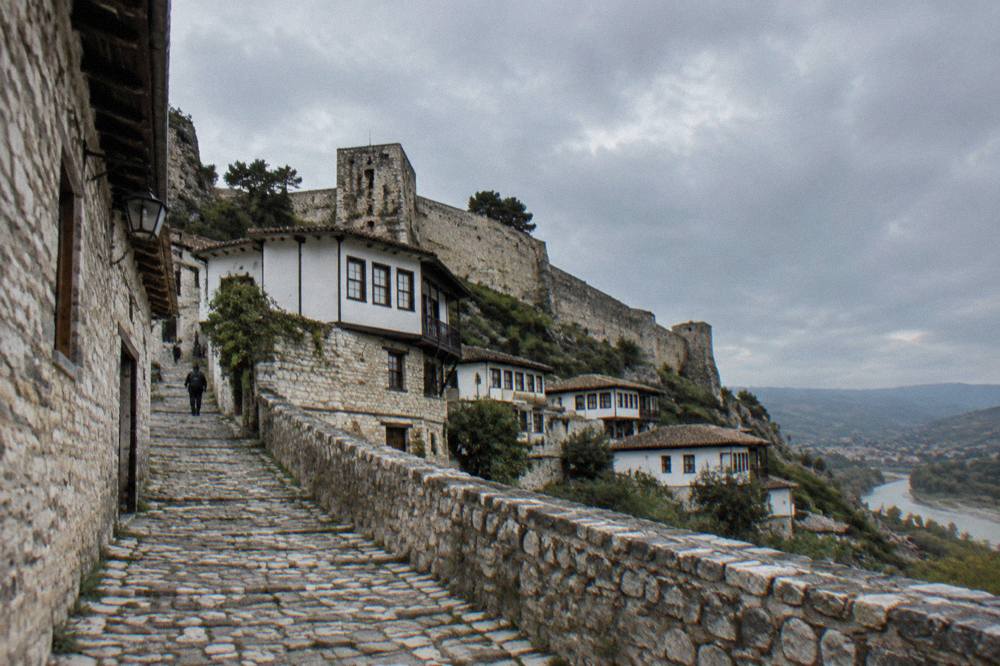
The walk up to Berat Castle is a short but steadily uphill climb on a paved stone road from the Mangalem quarter below, and almost every visitor makes it on foot because car access into the castle quarter is being restricted under a new traffic scheme. You do not need a guide, a ticket or special fitness, just sensible shoes and water in summer, and the effort is repaid the moment you pass through the gate and the whole Osum valley opens below you.
The route is simple. From the old town you climb through Mangalem, following the stone road, the kalldrëm, that switchbacks up the hill. It is the same road that has carried pilgrims, donkeys and now delivery vans for centuries, and repairs to its cobbled surface began in April 2026 after winter damage. There is no mystery to the way up and no wrong turn that matters; the road funnels you toward the main gate.
What trips people up is the car question. A municipal restriction now limits vehicle entry into the Kala to residents, pre-booked hotel and restaurant visitors, licensed taxis and a few other categories, part of a wider "Smart Parking" scheme with barriers and planned electric shuttles that UNESCO's January 2026 conservation report describes as still under implementation rather than fully deployed. The practical translation for a visitor: do not plan to drive up and park inside. Park below, in the new town or near your guesthouse, and walk. If you are staying inside the walls, tell your host in advance so your booking is registered.
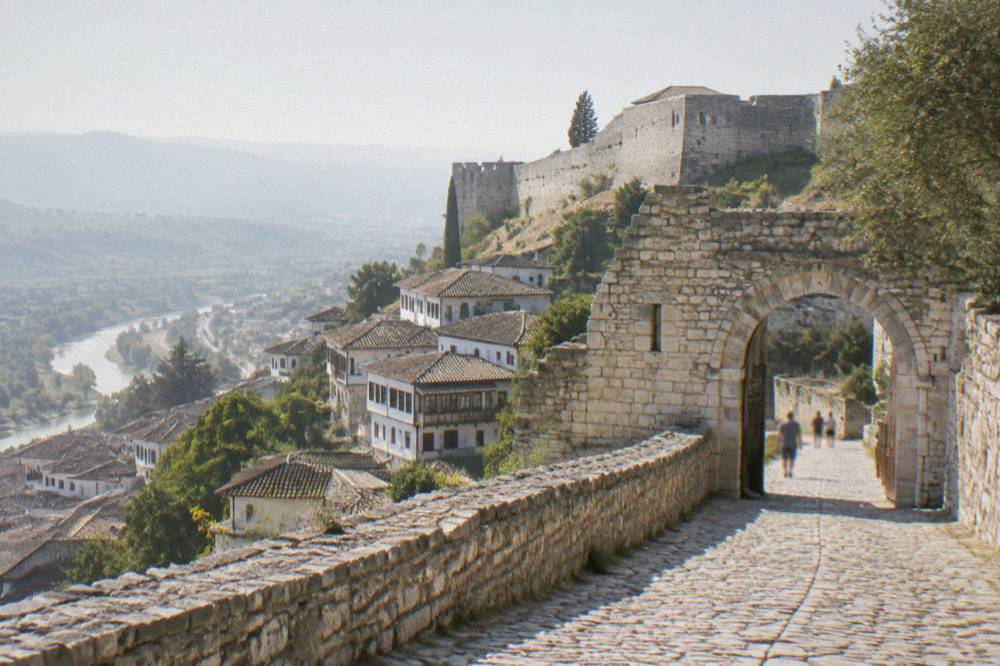
For the details of the climb itself, timing and what the gradient does to a summer afternoon, we keep a dedicated answer page on exactly this question, how long it takes to walk up to Berat Castle. And if castle-hunting across the country is your thing, our piece on the oldest castle in Albania puts the Kala in national context.
How Much Does It Cost To Visit Berat Castle?
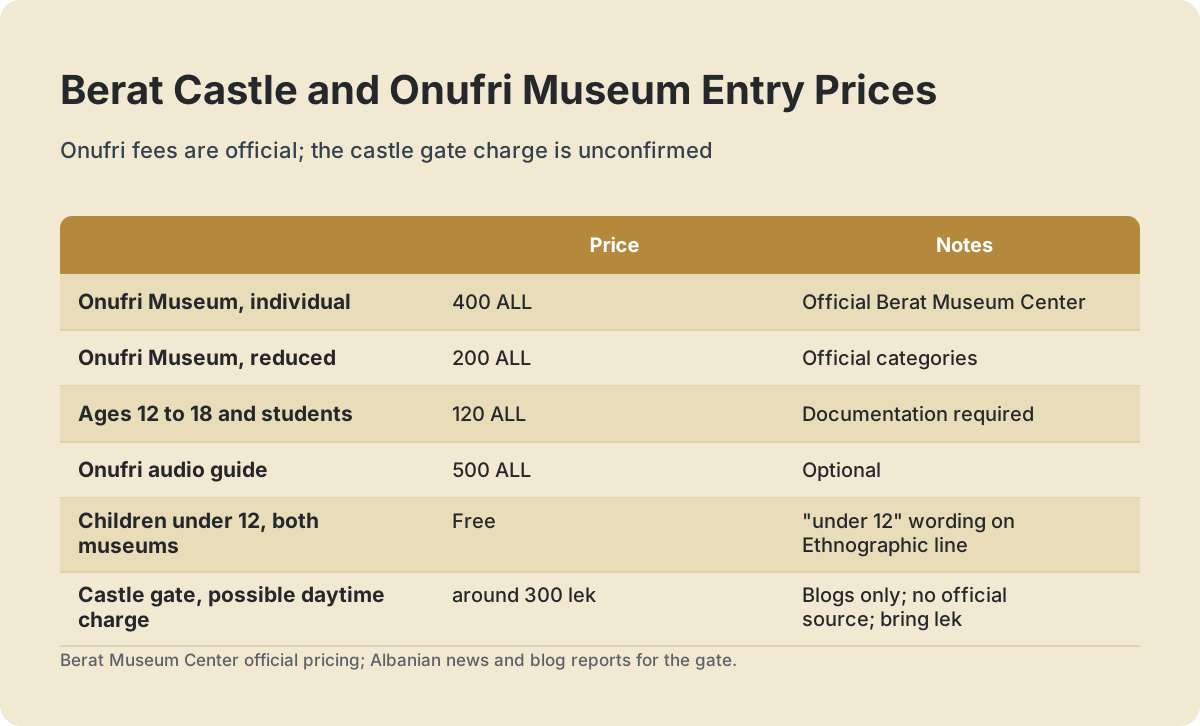
Walking into Berat Castle itself may carry a small daytime charge at the gate, or may not: no official primary source publishes a current entry fee, a 2022 Albanian news agency report described the castle as free to enter, and blogs quote around 300 lek, so bring cash in lek and expect either outcome. The castle grounds are pedestrian space at heart, and the museum inside, the Onufri, has firm official pricing at 400 lek per adult.
This is the honest answer rather than the tidy one. The castle gate fee sits in a grey zone that even careful researchers have not been able to pin to an official source, so the only advice worth giving is practical: carry a few hundred lek in small notes, pay if asked, and do not build a budget around it. What you should budget around is the Onufri Iconographic Museum, whose prices the Berat Museum Center publishes on its own site.
| Item | Price | Notes |
|---|---|---|
| Castle grounds, possible gate charge | There may be a small daytime charge at the castle gate; carry lek. | No official source; blogs only, bring lek |
| Onufri Museum, individual | 400 ALL | Official Berat Museum Center |
| Onufri Museum, reduced | 200 ALL | Official categories |
| Onufri Museum, ages 12 to 18 and students | 120 ALL | Documentation required |
| Onufri audio guide | 500 ALL | Optional |
| Children under 12, both museums | Free | Ethnographic line wording "under 12" |
The wider town around the castle costs almost nothing. The riverside quarters, the Gorica Bridge, the boulevard and most viewpoints are free public space, which is why our free things to do in Berat guide keeps growing. What most visitors actually pay for is either a museum ticket or a tour, and the tour market is where the day trips earn their keep.
Those three options are the shape of the market from the capital: a long combined day covering the castle, the old town and Belshi Lake, each with slightly different inclusions and group sizes. The differences sit on the operators' live listings rather than in any description here, so compare what is actually included, pickup points and cancellation terms before you book. If you are already sleeping in Berat rather than arriving from Tirana, you can skip day-trip packaging entirely and walk up under your own steam, which is the cheaper and often better experience.
For travellers who want the decision made simple, the headline pick pairs the UNESCO castle walk with the Belshi Lake stop in a single day from Tirana or Durrës, and the operator's live listing carries the current dates and free-cancellation terms.
What Can You See Inside The Walls Of Berat Castle?
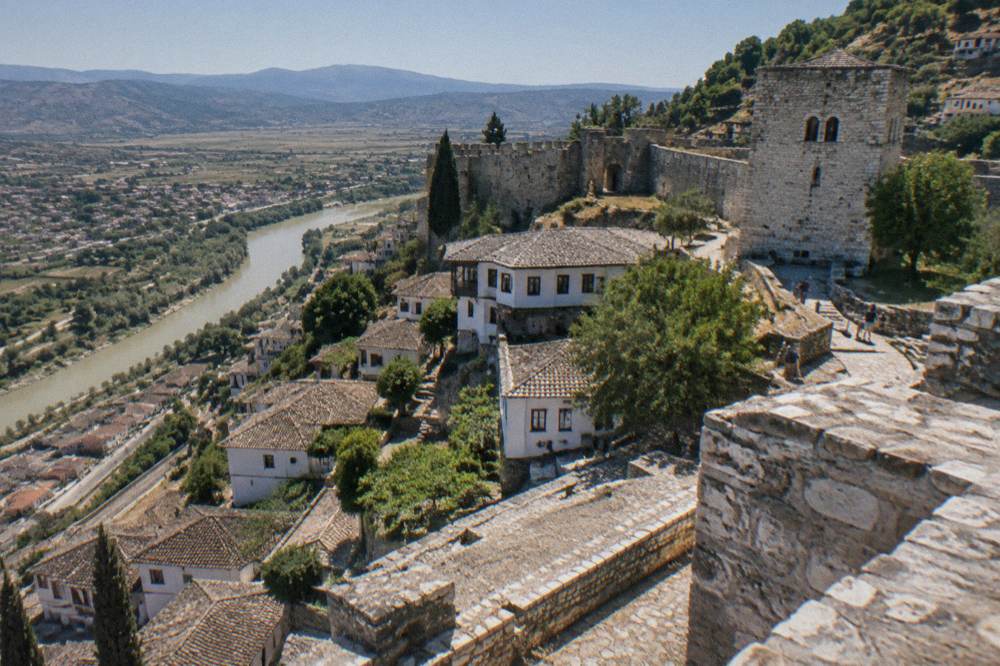
Inside the walls of Berat Castle you find a compact lived-in quarter: about eight preserved churches including the Church of St Mary, which houses the Onufri Iconographic Museum, the striking remnant of the Red Mosque, small houses and gardens, water cisterns, long stretches of walkable wall, and viewpoints over Mangalem, Gorica and the Osum River that define every photograph of the town. Give it ninety minutes to half a day.
The interior is small enough that you will not get lost and rich enough that you should not rush it. Enter through the main gate and the lane rises gently through houses. Most visitors make three stops. First, the Red Mosque area, near the centre of the quarter, where the mosque's fragment stands as one of the earliest Islamic buildings in the fortress; its story continues in our Red Mosque attraction page. Second, the churches: about eight survive of the roughly 42 that once stood here, and the most important, the Church of St Mary of the castle, now contains the Onufri Museum. Third, the walls and towers themselves, several of which you can walk out to for the panorama.
| Stop inside the Kala | What it is | Why it matters |
|---|---|---|
| Church of St Mary | Church housing the Onufri Iconographic Museum | Berat's premier museum interior |
| Red Mosque remnant | Among the earliest Islamic buildings in the fortress | Key to the quarter's mixed heritage |
| Preserved churches | About 8 survive of about 42 historically | Densest church concentration in any Albanian fortress |
| Defensive towers | 24 along the wall circuit | Best viewpoints over the river and town |
| Kala lanes and houses | Lived-in neighbourhood, some guesthouses | The castle is inhabited, not a ruin |
| Water cisterns | Historic storage inside the walls | Explain how the quarter survived sieges |
It is worth saying plainly: the castle's greatness is partly what is not here. There is no gift shop strip, no headphone audio trail, no chain café at the summit. The interior feels like what it is, a village that happens to sit inside a fortress, and the city's protection of that character is deliberate. UNESCO's 2026 committee decision on the property even urged suspension of a castle road project and riverbank developments until heritage impact assessments are finished, which tells you how seriously the balance between access and preservation is being fought over.
Many visitors prefer a guide for this interior, and the small-group format suits the Kala's lanes well. A castle and old town small-group tour pairs the fortress walk with the Mangalem quarter below, and it is one of the most-reviewed guided options in the city.
The Onufri Iconographic Museum Inside The Castle
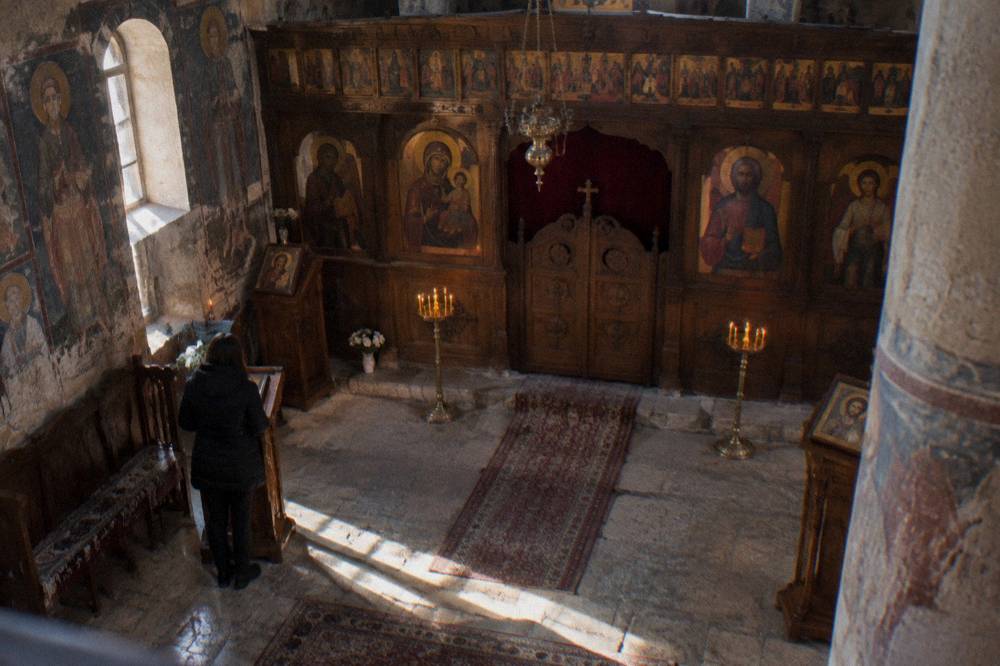
The Onufri Iconographic Museum, inside the Church of St Mary within Berat Castle, is the single best indoor sight in the city, holding the icons of Onufri, the celebrated master whose work defines Albanian religious art. Entry is 400 ALL per adult, the audio guide is 500 ALL, and hours follow the Berat Museum Center's seasonal pattern: daily 9:00 to 18:00 from 1 May to 30 September, and Tuesday to Saturday 9:00 to 16:00 with Sunday 10:00 to 15:00 in winter.
Onufri's icons are the reason this modest church interior draws 58,912 visitors in the first seven months of a year. His reds, a pigment the tradition attributes to a secret technique, glow off the panels in a way that survives reproduction badly, and the museum layout gives the works room. Plan the visit for the middle of your castle walk, when the hilltop sun has started to bite and the cool interior is welcome.
| Museum detail | Figure | Notes |
|---|---|---|
| Individual ticket | a few hundred lek | |
| Reduced ticket | 200 ALL | Official categories |
| Ages 12 to 18, students | 120 ALL | Documentation required |
| Audio guide | 500 ALL | Optional add-on |
| Summer hours | 1 May to 30 Sep, 9:00 to 18:00 | Daily |
| Winter hours | Tue to Sat 9:00 to 16:00, Sun 10:00 to 15:00 | 1 Nov to 30 Apr |
| Online tickets | e-Albania platform | Launched November 2025 |
Two practical notes. First, Albania launched online ticketing for state museums through its e-Albania platform in November 2025, which covers the Onufri and can save a queue in peak season. Second, the museum also participates in free admission days, listed below with the Ethnographic Museum, though some are reserved for Albanian citizens.
If the museum leaves you curious, the deep dive lives on our Onufri Iconographic Museum page, and the Ethnographic Museum in the lower town, reopened in May 2026 after a three-year restoration, makes the obvious second stop.
When Is The Best Time Of Day To Visit The Castle?
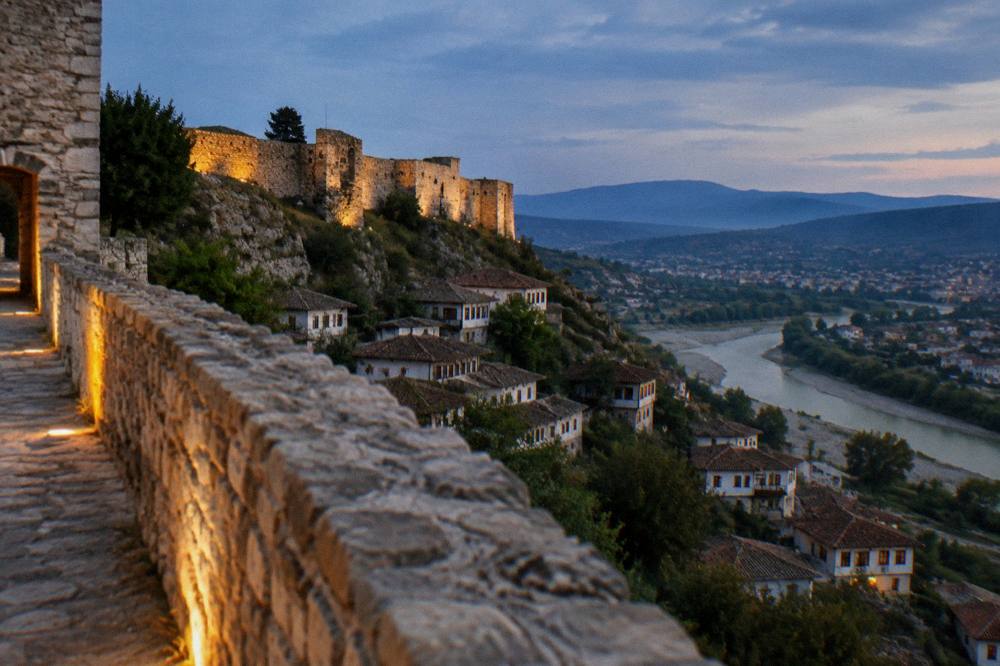
The best time of day at Berat Castle is late afternoon, when the sun drops behind the western hills, the climb is cooler, and the whitewashed walls of Mangalem below turn gold for the photographs that made the town famous. Summer heat in Berat can genuinely top 40 °C, the town recorded the country's hottest readings of the year in July 2026, so avoid midday climbs between June and August, and treat winter visits as quiet but short, with museums closing earlier.
The seasonal logic matters more here than in most Albanian towns because the climb is exposed. Berat's climate is that of the inland Balkans: hot, dry summers and wetter winters, with rain concentrated from late autumn through winter and the driest stretch in high summer. No official station normals exist for Berat, so any precise monthly temperature table you see for the town is reconstructed rather than measured, and this guide will not invent one. What is certain from recent reporting is that summer afternoons on a bare stone hillside can be brutal; locals climb in the evening, and you should too.
| Season | Castle experience | Museum hours pattern |
|---|---|---|
| May to September | Hot afternoons, climb morning or evening | Daily 9:00 to 18:00 |
| November to April | Quieter lanes, changeable weather | Tue to Sat 9:00 to 16:00, Sun 10:00 to 15:00 |
| Peak crowds | Summer months and festival weekend | Onufri's busiest months are in summer |
| Free museum days | 18 Apr, 18 May, 21 May, 29 Sep, plus 28 and 29 Nov for Albanian citizens | Check official terms |
The one date worth planning around in autumn is the Wine and Stories of Berat festival, held 2 to 4 October in 2026, which fills the lower town and can make castle-adjacent guesthouses book out; the winery landscape behind it is covered in our Berat wineries day trip guide. For a fuller seasonal breakdown, our Berat weather guide and the answer to the best month to visit Berat go deeper.
Evening visits have a second advantage: the walking tours that focus on light and atmosphere run then. A premium expert-guided walk through the old town, offered by GuruWalk as a free, tip-based format with local guides, is a good fit for travellers who want the stories without a fixed price, and the operator's listing carries the current schedule.
GuruWalk's free tours, including this premium walk, work on tips for the guide, which suits flexible budgets and longer evenings in summer, though the paid small-group options above come with set logistics and support.
Can You Visit Berat Castle On A Day Trip From Tirana?
Yes, Berat Castle is a standard day trip from Tirana, roughly a two-and-a-half-hour drive each way, with multiple small-group tours running the route daily and pairing the castle and Mangalem with a stop at Belshi Lake on the way back. Most day trips give you two to three hours in Berat itself, which is enough for the castle walk plus the Onufri Museum if you do not dawdle, but not enough for the wineries or a long lunch.
The featured pick on this site is the Berat UNESCO heritage and Belshi Lake day tour from Tirana or Durrës, one of the most-reviewed products in the entire destination, and it is the option most first-time visitors should default to: Check availability. Its price, rating and current review count sit on the operator's live listing rather than in this text, and the trio of day-trip options compared earlier covers the main variations on the route.
If you are coming from the coast rather than the capital, the same logic holds: a Durrës and Golem heritage day tour of Mangalem runs a shorter loop, and the coastal resorts feed Berat visitors throughout summer.
Independent travel is the alternative, and for many it is the better one. Buses and furgons leave Tirana's South-North terminal through the day and reach Berat in around two and a half hours, with a fare of a few hundred lek paid in cash; the details, terminal logistics and onward connections are all in our Tirana to Berat transport guide. Once in town you do not need anyone to reach the castle, the walk is the attraction.
Where Should You Stay Near The Castle?
The best place to stay for a castle-first visit is inside the Kala itself, where a handful of guesthouses operate within the walls, including one being converted from a centuries-old building beside the Onufri Museum; otherwise Mangalem at the foot of the climb offers the postcard views, and Gorica across the bridge trades views for quiet. Book castle accommodation early and tell your host, since vehicle access into the quarter is being restricted and pre-booked guests are the category allowed up.
Staying inside a UNESCO fortress is a rare thing, and Berat is one of the few places in Europe where ordinary travellers can do it. The trade-offs are real: you carry bags up the kalldrëm, services are thinner than below, and you are effectively car-free. The reward is the castle at dawn and at night, when the day crowds are gone and the lanes belong to residents and a few lucky guests. Below the hill, Mangalem stacks its whitewashed windows toward the river and puts the climb at your door, while Gorica, across the historic bridge detailed in our Gorica Bridge guide, is the calmer, more residential pick. The full neighbourhood-by-neighbourhood comparison, with named properties for each, lives in where to stay in Berat.
Two blocks of practical advice close this out. First, money: Berat runs on the Albanian lek, cards are unreliable in the old town, and the cash you need for museum tickets and any gate charge should come from a proper bank ATM, not a standalone machine on the boulevard. Our money and currency in Albania guide covers rates and habits. Second, time: most travellers find one full day plus an evening is the sweet spot for the castle and the town together, a question we answer in detail in how many days to spend in Berat.
Berat Castle rewards exactly the kind of unhurried visit this guide has described: up the hill on foot, through the gate in the cooler hours, an hour with Onufri's icons, the walls and towers for the panorama, and then the descent into Mangalem for dinner. Whether you walk up alone, join a small group from Tirana, or sleep inside the walls, the Kala is the single sight that makes this Berat Travel Guide destination worth the detour, and no photo of the thousand windows quite prepares you for standing among them.
Common Questions About Berat Castle
Is Berat Castle free to enter?
No official primary source publishes a current entry fee. A 2022 Albanian news report described the castle as free to enter, while blogs quote around 300 lek. The practical approach: bring a few hundred lek in cash and pay the small daytime charge if one is collected at the gate.
How long does it take to walk up to Berat Castle?
The climb is a steady uphill walk on a stone road from Mangalem to the main gate, and most visitors manage it comfortably without rushing. Sensible shoes help, and in summer you should climb in the morning or late afternoon, when the exposed slope is cooler.
Can you drive into Berat Castle?
Car access into the castle quarter is being restricted under a Smart Parking scheme, limiting vehicles to residents, pre-booked hotel and restaurant guests, licensed taxis and a few other categories. The practical rule is simple: park below and walk up, and if you are staying inside the walls, register with your host in advance.
What is inside Berat Castle?
A lived-in neighbourhood: about eight preserved churches of the roughly 42 that once stood there, the remnant of the Red Mosque, 24 defensive towers along the walls, family houses and gardens, water cisterns, and the Onufri Iconographic Museum inside the Church of St Mary.
How much does the Onufri Museum cost?
The official price is 400 ALL for an individual ticket, 200 ALL reduced, 120 ALL for ages 12 to 18 and students, and 500 ALL for the optional audio guide. Children under 12 enter free. Tickets can also be bought online through Albania's e-Albania platform.
Is Berat Castle worth visiting with kids?
Yes. The walk up is manageable, the lanes are traffic-calmed, and towers, walls and open spaces give children plenty to explore. Bring water and sun protection in summer, and time the climb away from midday heat.