Do They Drink Alcohol In Albania?
Alcohol is legal, widely enjoyed and locally made across Albania, and Berat toasts with raki and indigenous wines like Shesh and Puls. Here is what visitors should know.
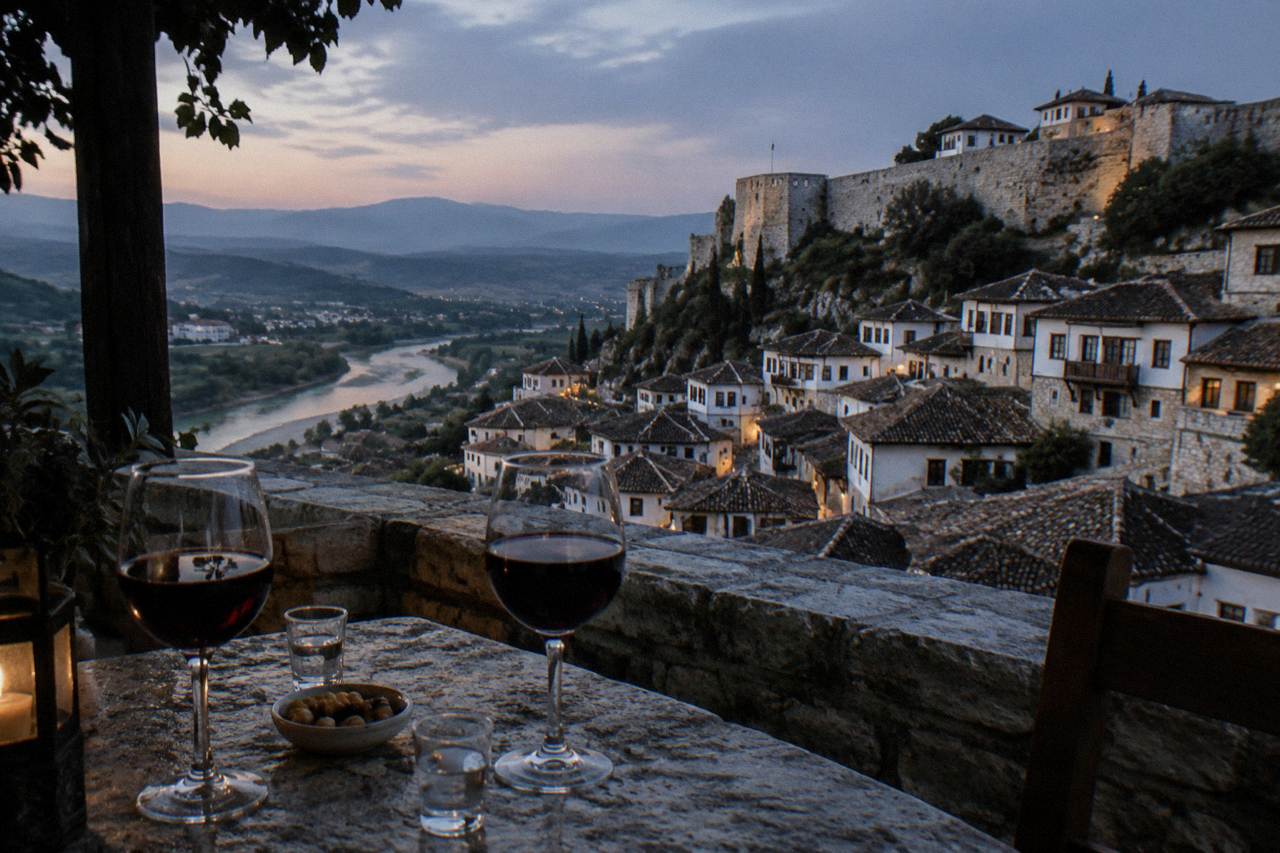
Berat, the UNESCO-listed Ottoman hill town on the Osum River in central Albania, is a place where a bottle of raki tends to appear the moment you sit down for dinner. That surprises some visitors, who arrive expecting a conservative, Muslim-majority Balkan country and instead find wine festivals, vineyard tours and a national culture of toasting. The short answer to the question is yes, and openly, but there is a lot of local texture worth knowing before your first glass.
Do They Drink Alcohol In Albania?
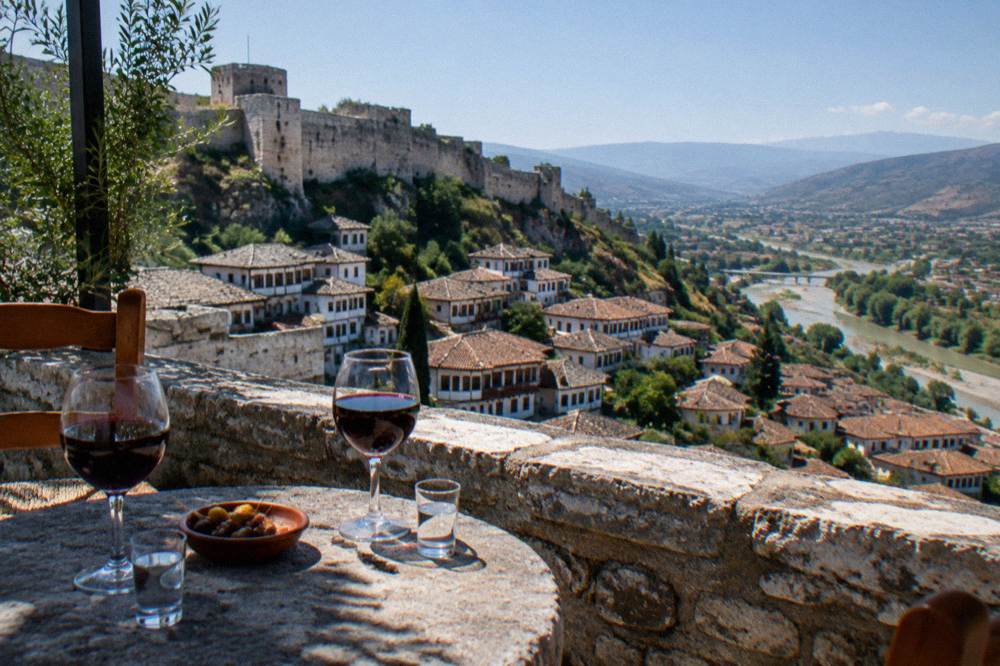
Yes, they do, and quite openly. Alcohol is legal throughout Albania, sold in shops and supermarkets, served in restaurants and family guesthouses, and woven into everyday hospitality in Berat, the UNESCO World Heritage Ottoman-era town on the Osum River in central Albania. Guests are routinely offered raki, the local grape spirit, and wine from surrounding vineyards; refusing politely is entirely normal and accepted. Albania is not in the European Union, but its drinking culture feels closer to the Mediterranean than to the Middle East.
That openness is not a recent import. The Berat region has a working wine industry built on native grapes, and the town actively celebrates it: the Wine and Stories of Berat festival, a three-day event with wineries from Albania and Kosovo, Austrian and Italian judges, cheese, olive oil and fig tastings, ran from 2 to 4 October in 2026, with the 2025 edition held on 3 to 5 October. A town does not build a wine festival around something it is shy about.
Religion shapes the backdrop rather than the bar list. The Bektashi pilgrimage to the tomb of Abaz Ali on Mount Tomorr, south of Berat, draws huge crowds every August, and Muslim and Orthodox communities have shared these valleys for centuries. In practice, alcohol is sold and drunk across the country without controversy, and no visitor needs to hide a beer or a glass of wine. What matters here is manners, which we come to later, not legality.
For travellers, the practical upshot is simple: you will never struggle to find a drink in Berat, and you will never be pressured to have one. Coffee, not alcohol, is the true social fuel of the country, and a long espresso is offered as hospitality just as readily as raki. If you are planning a wider trip, our piece on what Berat is famous for puts the town's food and drink culture in context.
What Is Raki And Why Is It Everywhere?
Raki is the national spirit: a strong, usually clear drink distilled from grapes or fruit, poured into small glasses and offered after meals, at celebrations, and to guests as a gesture of welcome. In Berat, restaurants and family guesthouses across Mangalem and Gorica keep a bottle on the shelf for exactly that purpose. It is drunk in slow sips, not downed, and a short toast before the first sip is the norm. Refusing a glass is unremarkable and offends nobody.
Raki is less a beverage than a social institution. A host pours a small amount, raises the glass, says "geçmira" or simply nods, and the table follows. Meals in Berat, from tavë kosi, the baked lamb and yogurt dish the region is known for, to simple byrek with tea, often end with the bottle appearing unrequested, and there is no expectation that anyone finishes their glass. The spirit turns up in village names around here too: a popular canyon tour from Berat takes in Osumi Canyon, the Bogova waterfall and a rakia village in the Skrapar hills, where the drink is part of the local identity.
The wine side of the table is just as local. Berat's wineries work with Shesh i Zi, the native red grape of central Albania, and Shesh i Bardhë, its white counterpart, alongside Vlosh and the rare local white Puls, which the Cobo winery also ferments into a traditional-method sparkling wine. If you want a fuller picture of the town beyond the glass, our answer on how many days to spend in Berat helps you pace a visit that leaves room for both.
| Drink | What it is | Where you meet it |
|---|---|---|
| Raki | Clear grape or fruit spirit served in small glasses | After meals, toasts, guesthouse welcomes |
| Shesh i Zi | Red wine from central Albania's native dark grape | Restaurant lists and winery tastings |
| Shesh i Bardhë | White wine from the same native family | Wineries around Berat |
| Puls sparkling | Traditional-method fizz from the rare local Puls grape, aged 36 to 40 months on lees | Cobo Winery tastings |
For visitors who want a structured taste of the region rather than self-guided sampling, a guided winery visit handles transfers, pours and pacing for you.
What About Wine In And Around Berat?
Berat sits in one of Albania's most active wine areas. Family wineries such as Cobo work almost exclusively with indigenous grapes: Shesh i Bardhë white, Shesh i Zi red, Vlosh, and the rare local white Puls, which Cobo also turns into a traditional-method sparkling wine aged 36 to 40 months on its lees with zero dosage. Villages around Roshnik, a short drive out of town, host tastings served with olives, cheese and raki alongside the pours.
The interesting part, and the detail most first-page search results miss, is the Puls story. This white grape is specific to the Berat area and was close to fading from production; Cobo now uses it both for still wine and for a bottle-fermented sparkling wine, Shëndevërë, that spends three years on lees before release. That is a serious commitment to a grape most wine drinkers have never heard of, and it is happening an afternoon's drive from the UNESCO old town, not in a famous European wine region.
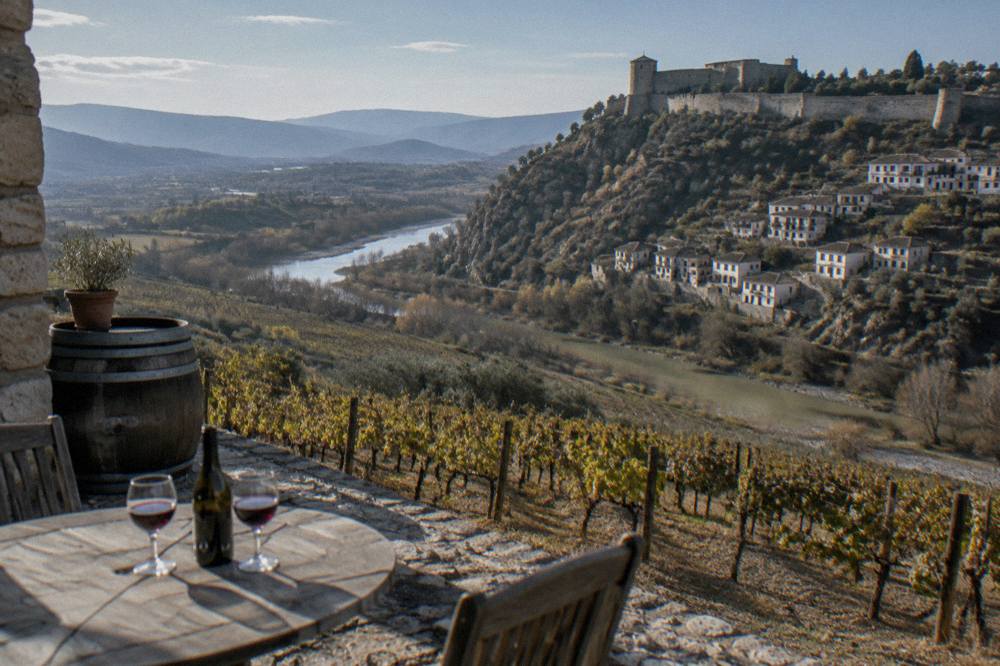
Tastings in the area follow a consistent pattern: a winery or village estate, three or more wines, a raki to finish, and local snacks of olives, cheese and bread. If timing your visit matters, the famous festivals of Albania include the Wine and Stories of Berat weekend in early October, when the town's wineries pour in one place with live music and food stalls around them.
| Winery or estate | Base | Known for |
|---|---|---|
| Cobo | Berat region | Indigenous Shesh, Vlosh and Puls wines, including the sparkling Puls |
| Pupa | Berat area | Tastings reached through guided wine tours |
| Alpeta | Roshnik | Puls still wines and vineyard lunches |
| Luani, Nurellari, Edoni | Berat region | Family estates visited on guided itineraries |
Booking a guided winery tour from Berat is the easiest way to reach these estates, since several sit in villages where public transport is thin; the operator's live listing shows current availability for the season.
How Much Does A Drink Cost In Berat?
Drinks in Berat are inexpensive by most European standards. A raki shot runs around 2 euro, and food and drink are cheap by European standards, paid for in cash in lek. The old town is largely cash territory, so carry lek rather than assuming cards will work everywhere. Change from a euro payment will usually come back in lek.
The lek, not the euro, is Albania's currency, and the exchange rate sits at roughly 92 lek to the euro. Euro notes are accepted informally in some tourist-facing businesses, but the rate is rarely in your favour and the change comes back in lek, so the cheapest path is a bank ATM and small notes. Standalone ATM machines on the street charge higher fees than bank-branch machines, and the old town in particular still runs on cash for smaller restaurants and guesthouse bars.
| Item | Typical reported price |
|---|---|
| Raki, one shot | Around 2 euro |
For travellers combining drinks with sightseeing, a day tour that pairs the castle and the old town with a lake stop is a popular way to use a single organized day, and the price and current schedule are shown on the operator's live listing. Our wider answer on whether Albania is cheap or expensive breaks down the rest of a daily budget.
Drinking Etiquette And Sensible Limits For Visitors
Hospitality, not pressure, is the rule. Accepting a small raki is a compliment to the host; declining with a simple no thank you draws no offence, and coffee or water is always an acceptable substitute. Sip slowly, match your host's pace rather than racing the toasts, and never drive afterwards: the cobbled climb to the castle and summer heat, which can top 40 degrees, both punish overconfidence. Eat first, drink second, and keep water on the table.
A few local habits go a long way. The first pour is often the host's decision, and glasses are small on purpose; a raki glass holds a sip, not a shot to be thrown back. Toasts are short and frequent, so pacing matters more than volume. In family-run guesthouses, especially inside the castle quarter where residents live among the monuments, late-night noise lands badly, which is worth remembering when a dinner stretches past midnight.
Sensible caution is the same here as anywhere: watch your belongings on the boulevard after dark, use registered taxis, and rely on the general emergency number, 112, if anything goes wrong. Our guide to what to be careful of in Albania covers the practical side in more detail, and the Berat Travel Guide homepage gathers the town's sights, walks and tours in one place for planning the rest of your stay.
One last note for anyone abstaining entirely: it is genuinely easy. Albania runs on coffee culture, and raki is offered as welcome, not as a test. A firm but friendly refusal, or a raised water glass at the toast, is met with a smile, and nobody will push the point. The freedom runs both directions, and that ease is part of what makes Berat an easy town to visit.
Common Questions About Alcohol In Albania
Do they drink alcohol in Albania?
Yes. Alcohol is legal, sold openly and produced locally across the country, from raki distilled in villages to bottled wine from Berat-region wineries. Drinking is a normal part of hospitality in Berat and refusing a pour is equally normal.
Is alcohol legal in Albania for tourists?
Yes, alcohol is fully legal and sold in shops, supermarkets, restaurants and bars throughout Albania. There are no restrictions on tourists buying or drinking it, and the only practical constraints are cash payment in old-town establishments and not driving afterwards.
Is Berat a Muslim town where alcohol is banned?
No. Berat has Muslim, Orthodox and Bektashi heritage, and the annual pilgrimage to the tomb of Abaz Ali on nearby Mount Tomorr draws huge crowds each August, but none of that restricts alcohol. Bars and restaurants in Mangalem and Gorica serve wine and raki openly.
Can you visit wineries from Berat?
Yes. Family wineries including Cobo, Pupa and estates around Roshnik welcome visitors, and guided tours from Berat include transfers, tastings of several wines, raki and local snacks. October's Wine and Stories of Berat festival is another way to taste many producers in one place.
How much does a drink cost in Berat?
By recent price reports, a raki shot runs around 2 euro. Drinking with dinner stays modest on any budget.