What To Be Careful Of In Albania?
Practical safety advice for Albania, from street crime and road conditions to cash, heat and canyon trips around Berat, with official figures and local context.
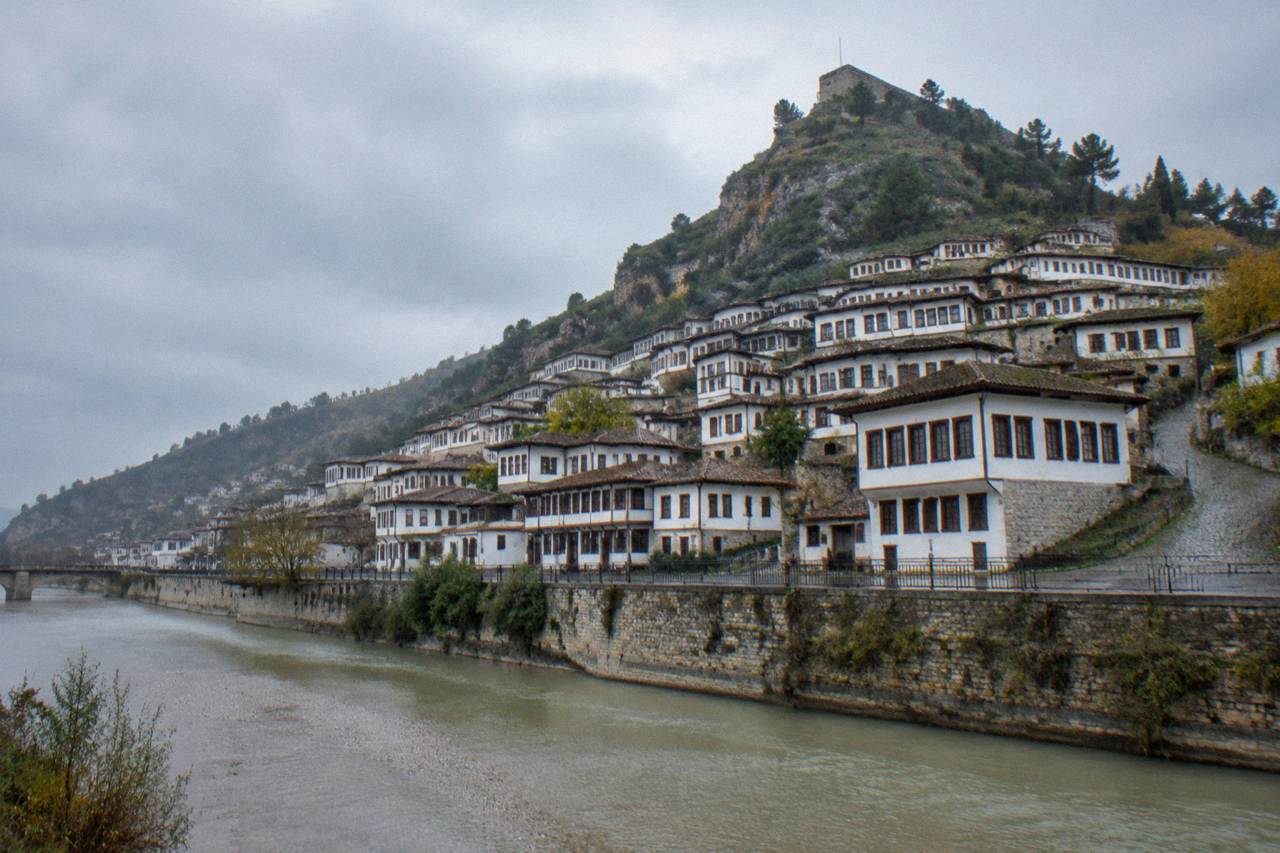
Berat, the UNESCO World Heritage Ottoman hill town on the Osum River in central Albania, is one of the calmest corners of the Balkans, and most visits pass without incident. The country still has its rough edges: roads that demand full attention, an old-town economy that runs on cash, dry summers whose heat can push past 40C, and the opportunistic street crime that any popular destination attracts. This page walks through the cautions that genuinely matter here, from the cobbles below the castle to the swimming pools of the Osumi Canyon, with official numbers where they exist and plain advice where they do not.
What To Be Careful Of In Albania?
The main things to be careful of in Albania are opportunistic street crime, demanding roads, a mostly cash economy in old towns like Berat, and serious summer heat. Violent crime against visitors is rare, and neither the UK nor the US government advises against travel to any part of the country. Most problems travellers actually encounter are small and preventable: pickpocketing, exchange and taxi scams, dehydration, and road situations that reward a defensive driver.
Break that down and the picture is reassuring. The US State Department keeps Albania at a Level 2 advisory, "Exercise Increased Caution" due to crime, which is the same band that covers much of Europe's most visited countries. The UK Foreign Office goes further in the reassuring direction: it currently has no advice against travel to any part of Albania, and it notes that crime reports specifically targeting foreigners are rare. That is the frame for everything else on this page. Nothing here says do not go; it says go with your eyes open.
The American OSAC country security report adds useful texture. Overall recorded crime rose about 17 percent across 2024-2025, but that rise was driven by drugs, fraud and weapons offences inside the criminal economy, not by attacks on visitors. Violent crime and homicides actually fell about 3 percent, the fifth straight year of decline. The offences a tourist is realistically exposed to are the quiet ones: bag snatching at night in urban areas, card skimming, and fraud. Whether the trip is worthwhile at all is a question this site answers separately in is Berat Albania worth visiting, and the answer is an emphatic yes, but worth reading first if Albania is new to you.
| Risk | What the official record shows | What you do about it |
|---|---|---|
| Street crime | US advisory Level 2; violent crime down about 3 percent, fifth year of decline | Keep bags closed and in front in crowds; avoid empty streets late at night |
| Scams | Crime rise driven by fraud, not violence | Change money only in banks or licensed exchanges; agree taxi prices first |
| Summer heat | Berat has recorded shade readings around 42C on peak days | Walk mornings, carry water, cover your head on the castle climb |
| Road conditions | No official tourist-safety updates beyond standing risks | Drive defensively, expect the unexpected on rural roads, avoid night driving |
| Stray dogs | OSAC notes large numbers countrywide | Do not feed or approach; give them distance, especially in packs |
The Berat record itself is quiet. The notable police operations in the city in 2026 involved unlicensed currency exchange, drug distribution and a cannabis seizure, and in none of them was a tourist the victim. Those operations matter to you in one specific way: they explain why the money section below says what it says about where you change cash.
Is Albania Safe For Tourists?
Yes, Albania is safe for tourists by any regional standard, and Berat is among the safest-feeling towns in it. Neither the UK nor the US government advises against travel to any part of the country, and foreign travellers are rarely targeted by violent crime. The realistic risks are petty: unattended bags, bad driving around you, and small scams around money. Even solo and family visitors report few problems beyond the ordinary annoyances of Balkan travel.
The numbers back that up. With roughly 2.4 million people in the whole country per the 2023 census and a tourism economy the government is actively trying to grow, Albania has every incentive to keep visitors safe, and the lived experience of most travellers matches the statistics. The OSAC report flags urban street crime at night as the main exposure, which in Berat means the usual habits: keep your phone off the café table edge on the Gorica side of the river, and walk the boulevard rather than unlit back lanes after dark.
Berat-specific crime is genuinely thin on the ground. The city's police news in 2026 was about enforcement operations, not incidents involving travellers, and the old town is small enough that walking anywhere takes minutes rather than risky night bus rides. For broader context on the country's standing with different visitors, including Americans, our page on is Albania friendly to Americans covers entry rules and day-to-day reception in more detail.
That said, safety in practice often comes down to how you structure your days. A guided day tour removes the two biggest variables at once, the driving and the navigation, and lets you pay attention to the town instead of the road. These picks span the formats most Berat visitors choose:
The common thread is local guides who know which streets, which seasons and which river levels need care. That local knowledge is exactly what a first-time visitor does not have.
How Careful Do You Need To Be On Albanian Roads?
Roads are the single biggest genuine hazard for visitors in Albania, not crime. Expect inconsistent driving standards, winding rural routes, narrow castle lanes, livestock and pedestrians on open roads, and surfaces that vary without warning. Drive defensively, never assume right of way, avoid driving after dark, and if a mountain route worries you, take a guided tour with a local driver instead. In Berat itself, the live issue is car access into the castle quarter.
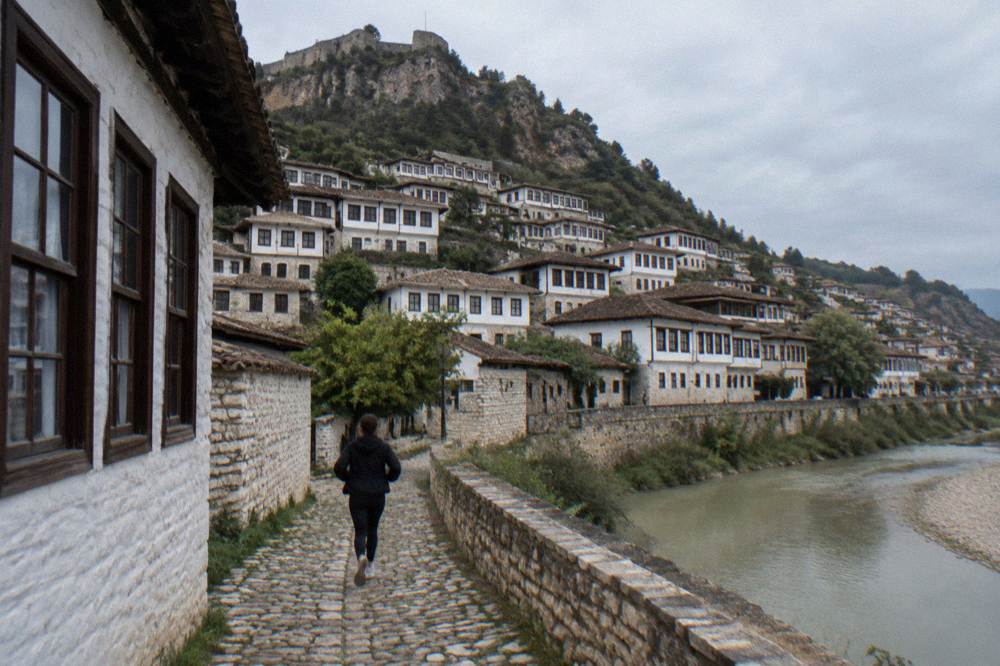
The Berat castle quarter is the practical example. Vehicle entry to the Kala has been restricted to residents, pre-booked hotel guests, licensed taxis, suppliers and similar categories, part of a Smart Parking scheme with barriers that the UNESCO state of conservation report describes as under implementation. The takeaway for a visitor is simple: do not plan to drive up to the castle. Park at the base and walk the steep cobbled lane up, which is how the quarter is meant to be seen anyway. The walk from the old town to the castle gate is a real climb on stone, so allow time, water and decent shoes, especially in the heat described below.
Beyond town, the geography does the work. Routes to the Osumi Canyon around Çorovodë run one to one and a half hours from Berat on largely paved roads, with gravel and dirt tracks once you go deeper toward the waterfalls, and mountain roads to places like Mount Tomorr have seen active works and upgrades through 2026. That is progress, but it also means road conditions can change between your research and your arrival. Our guide to driving and parking in Berat goes deeper on the local rules and the parking question, and the honest countrywide question has its own answer in is it a good idea to rent a car in Albania.
If your priority is the castle and the old town rather than the freedom of the open road, there is a cleaner option. The Berat Full-Day Tour from Durres covers the castle and city with an English-speaking guide and transport handled for you, which takes the driving, the parking and the castle access question off your plate entirely. Check availability on the live listing if that framing suits your trip; the price is on the listing.
One road note that is not a warning: buses. Inter-city furgons and coaches to Berat run from Tirana's South-North terminal through the day and are the normal way locals travel. They are generally fine, but standards differ from what some visitors expect, so the question of how reliable are buses in Albania deserves its own read before you commit to a bus-heavy itinerary.
How Careful Do You Need To Be With Money And Cash?
Albania's currency is the Albanian lek, written ALL, and Berat's old town runs largely on cash, so the main money cautions are three: carry lek rather than assuming cards work, change money only at banks or licensed exchanges, and expect foreign-card ATM fees of roughly 500-800 lek per withdrawal. The euro is not legal tender in Albania. Some tourist-facing businesses accept it informally, but your change usually comes back in lek at a worse rate.
Start with the exchange rate so you can sanity-check anything you're quoted: the Bank of Albania's official rate puts one euro at about 92 lek and one US dollar at about 80 lek. Prices in town are quoted and paid in lek. Card acceptance exists at some hotels and larger restaurants, but Mangalem and the lanes inside the castle are cash territory, and the tap-water-sized purchases that fill a day in Berat, coffee at around 130 lek, raki, byrek, are cash by default.
The scam vector here is real and specific. Berat saw police take eleven measures against unlicensed currency exchange operators in a single 2026 operation, seizing millions of lek and thousands of euros. Unlicensed changers, including some working near tourist streets, offer rates that evaporate in the arithmetic or hand back counterfeit notes. A bank branch or a licensed exchange with a posted rate is the only place to change money, and an ATM attached to a bank is the only machine to trust. Skip the standalone yellow machines, which exist to collect the 500-800 lek foreign-card fee and sometimes more.
| Money situation | Figure or rule | What it means for you |
|---|---|---|
| Official exchange rate | 1 EUR = 91.97 ALL; 1 USD = 80.74 ALL | Sanity-check any quoted euro price against lek |
| Cheap restaurant meal | Inexpensive | Old-town eating is inexpensive; small cash amounts add up |
| Mid-range dinner for two | Cheap by European standards | Still lek, still usually cash |
| Foreign-card ATM fee | Roughly 500-800 ALL per withdrawal | Withdraw larger amounts less often, at bank ATMs |
| Onufri Museum ticket | 400 ALL individual | Bring cash; children under 12 enter free |
| Ethnographic Museum ticket | 300 ALL individual | Same: lek at the door, plus discounts for students |
One planning note that belongs here rather than in a shopping context: there is no verified Berat-specific tourist tax or visitor levy in force, so do not budget for one or let a host add one to a bill without question. And if overall trip costs are your worry, the country remains genuinely cheap by European standards, a question we treat fully in is Albania cheap or expensive.
What Should You Watch For Around Osumi Canyon And Mount Tomorr?
The cautions around Berat's outdoor trips are seasonal and environmental, not criminal. Rafting on the Osumi runs with spring snowmelt while tubing covers the calmer summer and autumn water, swimming in canyon pools has real depth and current risks, and mountain areas carry heat, fire and terrain hazards. The February 2026 drowning near the Blezënka Bridge was a tragic reminder that the canyon is a wild river gorge, not a theme park. Go with an operator, not alone.
The canyon is protected as a natural monument, and the rim viewpoints such as Vrima e Nuses and the Old Italian Bridge cost nothing and need no equipment. But the water itself is a different matter. The one serious recent incident in the canyon area was the death of a 42-year-old man near the Blezënka Bridge early in 2026, a suspected suicide jump, with the recovery operation itself briefly trapping a volunteer searcher. Nothing about that event implicates tourists, but it underlines the point that locals who know the canyon best treat its water with respect.
The Bogove waterfall, reached by a short forest walk of roughly half an hour to an hour from Bogovë village, is the easy day trip most families attempt, and it is a genuine easy walk. The cautions there are the small ones: a narrow trail, a natural pool whose depth is not signposted, and summer heat on the exposed sections. On Mount Tomorr, the 2,416-metre peak above Berat, the issues are altitude weather and fire; a forest fire burned pine in the national park in February 2026, and further fire activity near the pilgrimage area was reported in August. Check conditions locally before any long hike, and treat September, when fires have been active in the hills, as a month to ask around.
For the water itself, a guided trip is the standard answer, and the Osum Canyon Rafting & River Tubing option pairs equipment, instruction and local knowledge of the day's levels, which is the single variable an independent visitor cannot judge.
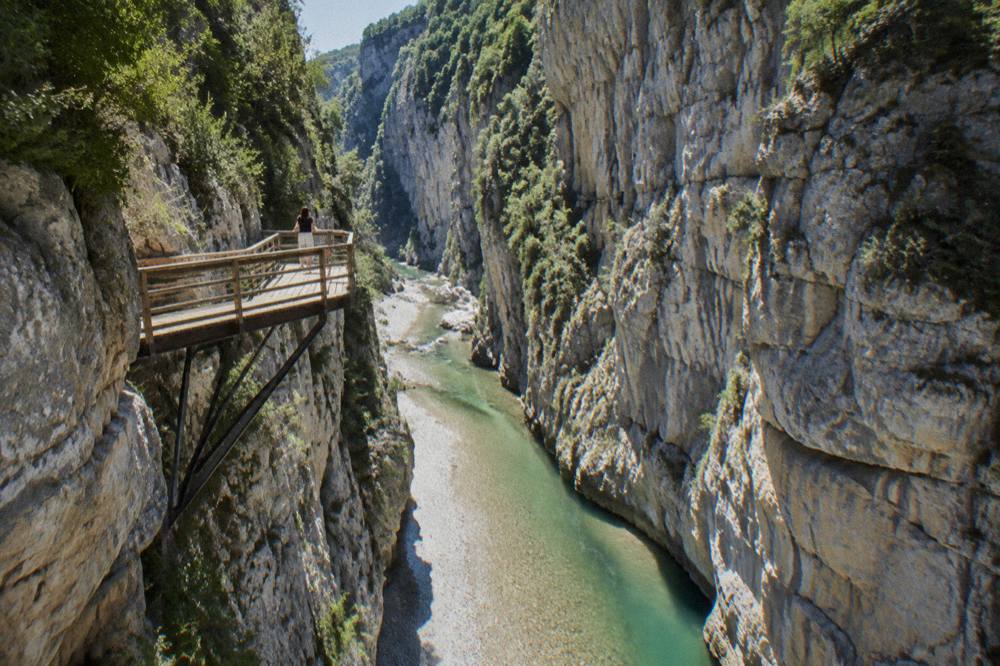
The other two canyon formats are the rafting-and-tubing combinations and the hiking adventures, and the Skrapar Canyons hiking trip with Pirogoshi Cave is the one to look at if water levels or swimming are not for you. Cave terrain adds its own cautions, footing and lighting, which are exactly the things a guide carries.
What Health And Water Precautions Matter In Berat?
The health cautions that matter in Berat are tap water, stray dogs, heat and knowing the emergency numbers. Tap water in the city is reported as generally treated and safe by local sources, though official US guidance recommends bottled water, so the honest answer is mixed and bottled water is the cautious choice. Stray dogs are numerous countrywide. Ambulance is 127, fire is 128, the general emergency number 112 works from any phone, and the Albanian police short number 129 is also widely used.
The water question deserves the hedge, because sources genuinely disagree. One assessment of Berat's municipal supply, drawn from the Bogova spring, describes it as treated and generally safe, while the US security report's standing advice is bottled water only for its personnel. Neither is wrong about the same tap; they are answering different questions. For a short visit, bottled water is cheap, everywhere, and removes the debate, which matters double in summer when you are drinking far more of it.
| Emergency service | Number to dial | Notes |
|---|---|---|
| General emergency | 112 | Works from any phone, including without credit or SIM |
| Ambulance | 127 | Medical emergencies |
| Fire | 128 | Relevant in dry summer and autumn months |
| Police | 129 | Albanian police short number |
Heat is the health issue that actually fells visitors in Berat, and it deserves more respect than it usually gets. Berat sits in a hot, dry summer climate, and on the hottest day of 2026 the city itself recorded the country's highest readings, with shade values reported around 42C and sun-exposed measurements even higher. The castle climb is a steady uphill walk on stone with little shade, so do it early, carry more water than feels reasonable, and treat headache or dizziness as a signal to stop, not push through. The shoulder seasons, covered in the best month to visit Berat, trade peak heat for comfortable walking weather.
Stray dogs round out the health list. The OSAC report recommends a rabies vaccine for anyone doing extended outdoor activity in Albania, and while bites are rare, giving loose dogs distance, especially in numbers, costs nothing. The same goes for the two-legged hazards of a night out, which mostly amount to the street-crime cautions above; our nightlife notes for Berat keep those in context.
What Should You Be Careful Of At Berat Castle And The Museums?
At Berat's heritage sites the cautions are practical and small: bring lek for museum tickets, check seasonal opening hours before you climb, respect the vehicle restrictions at the castle, and treat the cobblestones and steps as the main injury risk. Onufri tickets cost 400 lek, the Ethnographic Museum 300 lek, hours shift between the summer and winter seasons, and the castle lane itself is steep, uneven stone that punishes flip-flops.
The detail worth knowing in advance is the hours split. The Berat museums run 9:00 to 18:00 daily through the May-to-September season, then drop to Tuesday-to-Saturday 9:00 to 16:00 with Sunday hours of 10:00 to 15:00 through the winter. The castle grounds are a lived-in quarter and effectively open around the clock, though a small gate fee may operate in daytime, so carry a few hundred lek. The Onufri Museum's visitor numbers tell you what to expect on the ground: it recorded 58,912 visitors across January to July, a 16 percent rise on the previous year, with over 14,000 in August alone. Early morning is your friend in peak season.
The Ethnographic Museum is a genuine 2026 story: it reopened on 30 May after a three-year restoration with around 1,300 objects on display. Also note the free admission days, 18 April, 18 May, 21 May and 29 September for everyone, and 28-29 November for Albanian citizens only, if your dates happen to line up. And keep expectations realistic about quiet: a city whose museums are posting record crowds is a city you book a bed in early, which our where-to-stay guide covers street by street.
Simple Habits That Cover Most Risks In Berat
Five habits cover almost everything this page has warned about: carry lek and change money only in banks or licensed exchanges, walk the castle early with water and real shoes, keep bags closed and phones off table edges, drive defensively or hand the driving to someone who does it daily, and swim or hike canyon country with an operator rather than alone. None of it is dramatic, and that is the point: Berat's risks are ordinary risks, well within a normal traveller's range.
A last framing thought. Albania is not an EU member and not in the Schengen area, so entry is its own process, with visa-free stays of up to 90 days in any 180 for UK and EU citizens and up to a year for US citizens. That matters for the paperwork side of care, but it rarely causes problems on the ground. This whole question sits inside the wider practical picture that Berat Travel Guide covers town by town, and for the deeper country-level context on which spots to approach with which cautions, our rundown of areas to avoid in Albania separates the genuinely rough from the merely rumoured.
Common Questions About Staying Safe In Albania
What to be careful of in Albania?
Opportunistic street crime, demanding roads, cash-only pockets of the old towns like Berat, serious summer heat, and scams around currency exchange. Violent crime against visitors is rare, no foreign government advises against travel to any part of the country, and the risks are preventable with ordinary care: closed bags, bank exchanges, defensive driving and early-morning walks in hot months.
Is Berat safe to walk around at night?
Generally yes. The old town is small, and police operations in the city in 2026 involved no tourist victims. Keep to lit streets such as the riverside and the boulevard, keep bags closed, and treat the castle lane as a daytime or early-evening walk rather than a midnight one because of the stone footing, not crime.
Can you drink tap water in Berat?
Sources disagree: local assessments describe Berat's municipal supply from the Bogova spring as treated and generally safe, while official US guidance recommends bottled water. The cautious and cheap choice is bottled water, widely available at low cost, and it matters most in summer when heat is the biggest health risk you face.
What is the emergency number in Albania?
112 is the general emergency number and works from any phone, including one without credit or a SIM card. The dedicated short numbers are 127 for ambulance, 128 for fire and 129 for police. Save all four before you arrive; response standards vary but the numbers themselves are simple.
Do I need cash in Berat?
Yes. The old town and Mangalem largely run on cash, with cards accepted at some hotels and larger restaurants. Carry lek, change money only in banks or licensed exchanges after Berat's 2026 crackdown on unlicensed changers, and use bank ATMs to avoid the roughly 500-800 lek foreign-card fees charged by standalone machines.
Are there areas to avoid in Albania?
No foreign government advises against travel to any part of the country. The realistic cautions are unlit urban areas late at night and busy nightspots where pickpocketing concentrates, plus rural roads driven after dark. Berat itself has no district a visitor needs to avoid; the castle lane, canyon trails and summer heat are the things that actually need care.