What Is Berat Famous For?
Berat, in central Albania, is famous for its tiered white Ottoman houses, the 'City of a Thousand Windows' nickname, Berat Castle, the Onufri icons, and local wine. Here is what to know.
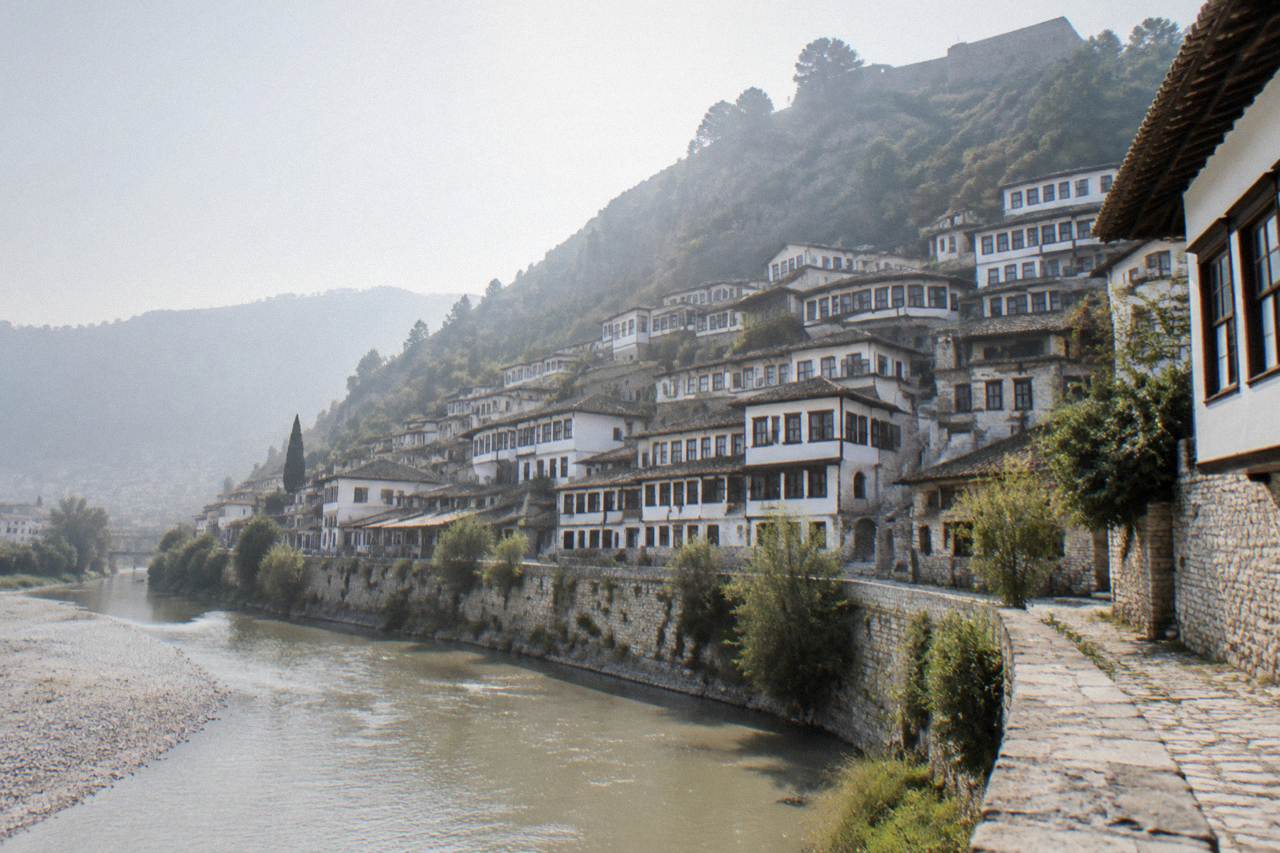
Berat, in central Albania, is a UNESCO World Heritage Ottoman-era hill town on the Osum River, and almost everything it is famous for fits inside one frame: white houses stacked up a hillside, their windows facing the river in row after row. UNESCO added Berat's city centre to the World Heritage List in 2008, extending a listing that had begun with Gjirokastra in 2005, and described it as "a rare example of a well-preserved Ottoman town". The town is small, 62,232 people across the whole municipality at the 2023 census, and inland, about two and a half hours south of the capital Tirana by road. Locals and Albanian media call it the City of a Thousand Windows; that is a popular nickname for the tiered houses, not an official title. This page walks through each claim to fame, one by one.
What Is Berat Famous For?
Berat is famous for its white Ottoman houses on the Mangalem hillside, the "City of a Thousand Windows" nickname, a castle where people still live, the Onufri Iconographic Museum, and its old Christian and Islamic buildings standing side by side. UNESCO inscribed its historic centre in 2008 as part of the Historic Centres of Berat and Gjirokastra. Add local wine and the Osum River gorge nearby, and the list is complete.
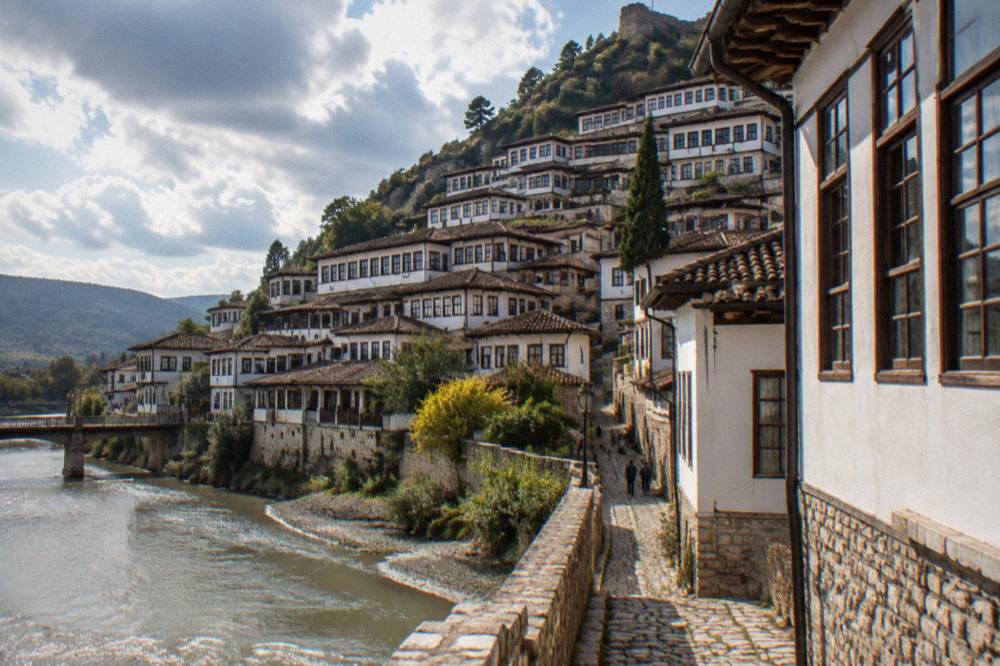
The nickname is the part most visitors arrive knowing. The houses of Mangalem climb the slope in tiers, and because each storey juts slightly over the one below, every floor gets a full wall of windows looking out over the river and the Gorica quarter opposite. In the right light, from the Gorica bridge or the far bank, the hillside reads as a single surface of glass and whitewash. Albanian state media and the national tourism agency both use the thousand-windows phrase, which is as close to an official endorsement as a nickname gets, though it remains a popular description rather than a designation.
The deeper story is that Berat is a museum town that never stopped being a town. Mangalem and Gorica, the two historic quarters facing each other across the Osum, are residential streets with guesthouses, bakeries and families on their doorsteps. A restoration programme covering both quarters, the Gorica castle trail and parking near the old Gorica Bridge was reported as completed in Albania's January 2026 state-of-conservation report to UNESCO. The restorations fixed roofs and streetscapes without emptying them out, which is rare, and it is the reason the town photographs the way it does.
For readers planning around the famous views rather than reading about them, a guided day trip covers the old town efficiently. Durres/Golem: Berat, the City of a Thousand Windows is the tour built around exactly this reputation, with transport included from the coast. Check availability if that format suits your trip; the same roster carries a premium walking alternative and an ATV tour for travellers who want the hills rather than the streets.
The Thousand Windows Of Mangalem And Gorica
The famous window walls belong to two quarters: Mangalem on the castle hill's lower slopes and Gorica on the opposite bank of the Osum River. The houses are Ottoman-era and white-rendered, stacked in tiers so that nearly every floor faces the river with a full wall of windows, which is what earned the town its nickname. Gorica's historic streets, quieter than Mangalem's, mirror the view back across the water.
Mangalem is the postcard. Walk uphill from the river and the streets narrow into lanes where every house shows off the same architecture: a stone base, whitewashed upper storeys, and rows of small-paned windows framed in wood. The quarter grew as a craftsman and merchant district, and UNESCO's citation notes that Berat "bears the imprint of a more independent life style, linked to its handicraft and merchant functions". That commercial past is why the houses are so dense and so uniformly oriented toward the light.
Gorica, reached across the historic Gorica Bridge, is the quarter most first-time visitors underrate. It has the same white houses, fewer restaurants, and the single best view of Mangalem's window wall from ground level. A castle trail above Gorica, restored as part of the same heritage programme, climbs toward the fortress and gives the panorama that the thousand-windows photographs only hint at. Between the two quarters, the Osum River promenade along Bulevardi Republika ties the halves together, and the new Bilça bridge upstream now carries the through-traffic that used to rattle along the riverbank.
Choosing where to stand for the classic shot matters more than the camera. Early morning puts the sun behind Gorica and lights Mangalem flat and white; late afternoon warms the facade and deepens the window shadows. Readers comparing Berat with the country's other stone town can weigh both in Gjirokastra or Berat, which is better, and anyone deciding how long to linger should read how many days to spend in Berat, since the window quarter rewards slow mornings.
Berat Castle And The Onufri Icons
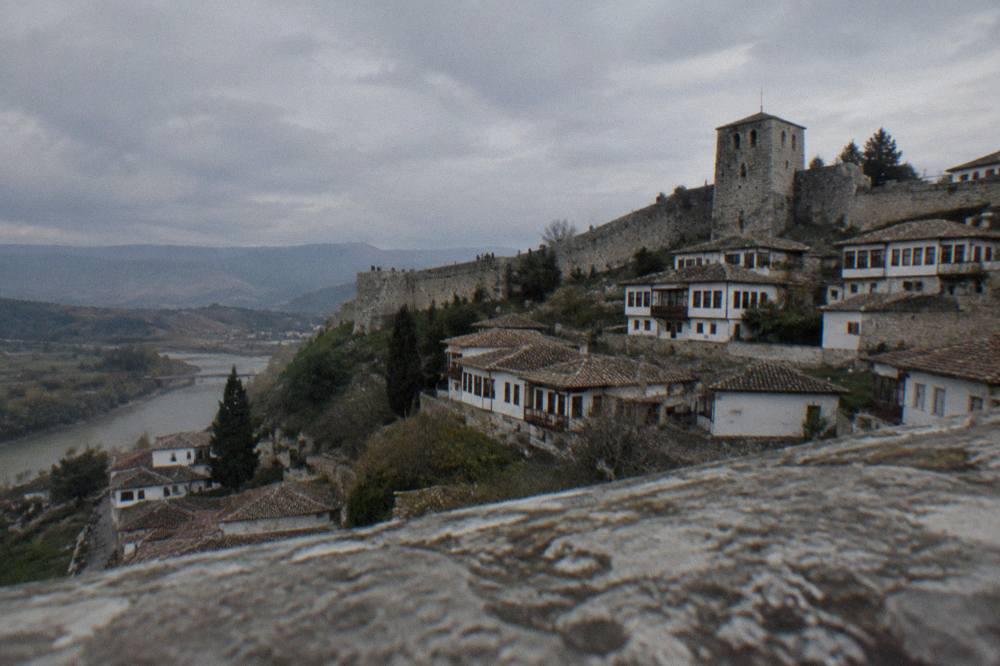
Berat Castle, the Kala, is a fortress quarter on the hilltop with walls and 24 defensive towers, where people still live year-round, with guesthouses inside. The Onufri Iconographic Museum inside the compound holds the painted icons of Onufri, the master painter whose name it carries, and the Ethnographic Museum below in the old town reopened in 2026.
The castle is the anchor of the skyline. Its walls wrap a whole hilltop neighbourhood, and about 42 churches once stood inside them; roughly eight survive, alongside the Red Mosque, one of the earliest Islamic buildings in the fortress. Unlike most European castles, the Kala is not a ruin with a ticket booth and a rope line. Families live there, small guesthouses operate, and one centuries-old building next to the Onufri Museum is being converted into an eight-room family guesthouse. Walking up means walking through a living neighbourhood. There may be a small fee at the gate in daytime, so bring lek.
The Onufri museum is the intellectual heart of the town. The museum that carries Onufri's name sits inside the Church of St Mary in the castle compound and displays the icons of the Albanian painter it is named for. The individual ticket is 400 lek, the audio guide 500 lek, and children under 12 enter free. Demand is real and measurable: the museum logged more than 14,000 visitors in August 2026 alone. Hours are seasonal, 9:00 to 18:00 daily from May through September, and shorter Tuesday to Sunday from November through April.
Below the hill, the Ethnographic Museum in the old town reopened on 30 May 2026 after three years of restoration work, with around 1,300 objects on display covering Berat's domestic life, dress and crafts. Combined with the Onufri icons, the two museums give the town a depth that most one-view destinations lack. For a fuller walkthrough of the fortress itself, see the site's Berat Castle guide, and for the painter's story, the Onufri Iconographic Museum guide.
Want the castle and the window quarter covered in one organised sweep? A small-group day tour handles the hill, the quarter and the viewpoints without you mapping them yourself.
Berat Wine, Raki And The Famous Table
Berat is famous in Albania for its wine. The surrounding hills grow native grapes, Shesh i Zi and Shesh i Bardhë from central Albania and the local white Puls, and family wineries in the Berat region pour them alongside raki, the fruit spirit that anchors Albanian hospitality. The town hosts the "Wine & Stories of Berat" festival each October, and its kitchens are known for dishes like tavë kosi and japrak.
The wine claim is not tourist gloss. Cobo Winery, a family producer in the Berat region, works with Shesh i Bardhë, Shesh i Zi, Vlosh and Puls, and has invested in new tasting areas and vineyard paths for visitors. Puls, a rare white variety rescued around Berat, even goes into a traditional-method sparkling wine aged on its lees. Tastings in the region typically come with olives, cheese and raki, and guided winery tours from town with transfers and tastings included are the easiest way to reach them. The festival, "Wine & Stories of Berat", returns on 2–4 October 2026 with wineries from Albania and Kosovo, a wine contest judged by foreign oenologists, and food stalls around it.
| Grape or drink | What it is | Where you meet it |
|---|---|---|
| Shesh i Zi | Native red grape of central Albania | Regional wineries, restaurant lists |
| Shesh i Bardhë | Native white grape of central Albania | Regional wineries, festival pours |
| Puls (Pulëz) | Rare local white variety, still and sparkling | Berat-area producers such as Cobo |
| Vlosh | Old regional variety used by local makers | Berat-area wineries |
| Raki | Fruit spirit, usually grape, central to hospitality | Every table and tasting |
The food side of the fame is humble and specific. Qifqi, rice dumplings with mint, tavë kosi, lamb baked with yogurt and egg, and japrak, stuffed grape leaves, are the dishes Berat cooks are known for, and the town's Slow Food community works to keep the traditional recipes in circulation. Cooking classes in local homes have become one of the more distinctive experiences on offer, and the raki poured at the end of them is not optional theatre; it is how the country says welcome. For context on the drinking culture, see alcohol in Albania, do they drink it, and for the wider national picture, what Albania is famous for.
The Osum River, Tomorr And The Landscape Around Berat
Berat is famous for its setting as much as its streets: the town sits in the Osum River valley, with Mount Tomorr, its summit at 2,416 metres, rising to the east as a national park and pilgrimage mountain, and the Osumi Canyon carved into the Skrapar hills to the south. Rafting and tubing season in the canyon follows the spring snowmelt, roughly March into early June for rafting, with tubing through summer and autumn.
Tomorr is the mountain every Berat photo has in the background. It is a national park, home to brown bear, wolf and birds of prey, and the southern peak carries the tomb of Abaz Ali, the holiest Bektashi pilgrimage site in Albania. Every August, tens of thousands of pilgrims climb to the Kulmak Tekke at the top; the 2026 pilgrimage ran from 18 to 25 August with police managing the traffic. A new road up the mountain has cut the drive to the shrine sharply, and the Berat to Ballaban road project was nearing completion in September 2026, which makes the mountain far more reachable than it was even two years ago.
The Osumi Canyon, protected as a natural monument, lies about an hour to an hour and a half from town on paved roads toward Çorovodë. Its rim viewpoints, including the Vrima e Nuses opening and the old Italian bridge, cost nothing to visit, and the canyon's walls draw rafters while the spring water runs high. Closer to town, the Bogovë waterfall inside Tomorr Mountain National Park is a short forest walk of roughly half an hour to an hour from the village, one of the easiest green escapes from the window quarter.
Travellers who like their landscape with an engine have options too. An ATV tour across the hills above the valley is a different way to see the same ridges, and it suits visitors with a free half day.
The mountain and the canyon are also why Berat works as a base rather than a stopover. Hikers, rafters and winery visitors all sleep in the old town and fan out by day, and the town answers with enough guesthouses inside and below the castle walls to make that easy. Summer heat can top 40 °C in the valley, so the higher ground is not just scenery; it is relief.
How Berat's Fame Compares Across Albania
Within Albania, Berat's fame is specific: it is the country's Ottoman window town, one of its two UNESCO-listed historic centres alongside Gjirokastra, a byword for wine and raki hospitality, and the gateway to Tomorr and the Osumi Canyon. Other regions own the coast, the capital or the Alps, but nobody else owns the white hillside of windows. That is why the town pulls day-trippers from Tirana and the coast in numbers its museums now record.
The comparison visitors actually make is with Gjirokastra, the grey stone slate-roofed town in the south. The two share the World Heritage inscription and the Ottoman pedigree, but they look nothing alike: Gjirokastra is dark, fortress-heavy and compressed, while Berat is white, wide and spread across a river valley. Onufri's visitor growth, 16 percent year on year, suggests the white town is winning the itineraries, and festival dates in October put the wine crowd in the streets just as summer heat breaks.
| Claim to fame | What it is | Best seen at |
|---|---|---|
| Thousand Windows | Tiered white Ottoman houses above the Osum | Gorica Bridge and the Gorica bank |
| The Kala | Lived-in castle quarter with 24 towers | The climb from Mangalem |
| Onufri icons | Painted icons by the museum's namesake painter | Onufri Museum in the castle |
| Old quarters | Mangalem and Gorica across the river | Both banks on foot |
| Wine and raki | Native grapes, family wineries, festival | Wineries around town, October festival |
| Tomorr and canyon | 2,416 m pilgrimage mountain and gorge | Day trips from town |
For first-time visitors to the country weighing where Berat fits, where to go in Albania first places it alongside the coast and the capital, and is Berat worth visiting answers the blunt version of that question. If the famous hillside has already sold you, this site's own Berat Travel Guide collects the castle, the quarters and the canyon in one place, and the tours below are the formats that match the fame.
Common Questions About Berat
What is Berat famous for?
Berat is famous for its tiered white Ottoman houses, the "City of a Thousand Windows" nickname, its lived-in hilltop castle, the Onufri Iconographic Museum, its two riverside quarters of Mangalem and Gorica, and local wine from native Albanian grapes.
Why is Berat called the City of a Thousand Windows?
Because the Ottoman houses of the Mangalem quarter are stacked in tiers up the hillside, each storey set slightly over the one below it, so nearly every facade is a full wall of windows facing the Osum River. It is a popular nickname used by Albanian media and tourism bodies, not an official or UNESCO designation.
Is Berat a UNESCO World Heritage site?
Yes. Berat's historic centre was added to the UNESCO World Heritage List in 2008 as an extension of the Historic Centres of Berat and Gjirokastra listing, which began with Gjirokastra in 2005.
Can you stay inside Berat Castle?
Yes. The Kala is a lived-in quarter with guesthouses operating inside the walls, and a centuries-old building next to the Onufri Museum is being converted into an eight-room family guesthouse. Note that car access into the castle quarter is being restricted, so most visitors park below and walk up.
What food and drink is Berat known for?
Tavë kosi, qifqi and japrak are the signature dishes, and the region is known for wine from native grapes such as Shesh i Zi, Shesh i Bardhë and the local white Puls, plus raki poured as a mark of hospitality. The "Wine & Stories of Berat" festival runs in early October.
What is near Berat besides the old town?
Mount Tomorr National Park with its 2,416-metre summit and Bektashi pilgrimage site, the Osumi Canyon south toward Çorovodë, and the Bogovë waterfall, all reachable as day trips from the town.