What Are Some Hidden Gems In Albania?
Hidden gems in Albania beyond the obvious coast: Osumi Canyon, Bogovë waterfall, Mount Tomorr and the quiet corners of Berat itself, with seasons, costs and how to reach them.
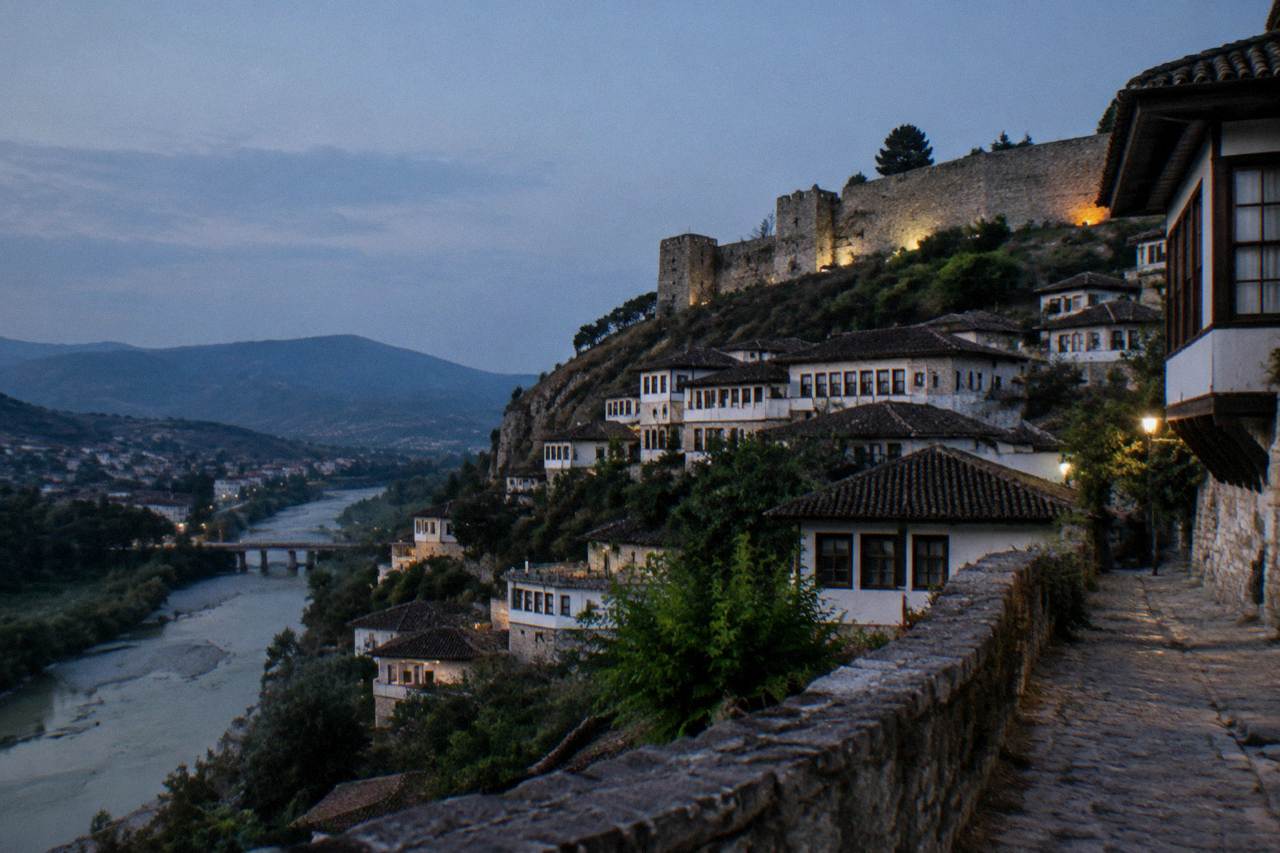
Most lists of hidden gems in Albania send you to the same three or four beaches, yet the quietest corners of the country sit inland, clustered around Berat, the UNESCO World Heritage Ottoman-era hill town on the Osum River in central Albania. This guide starts from Berat because it is the practical base for the region's overlooked places: a river canyon that most coastal visitors never see, a waterfall reached on a forest path, a holy mountain that fills with pilgrims one week a year, and museums inside the old town that reopened quietly after years of restoration.
What Are Some Hidden Gems In Albania?
The strongest hidden gems in Albania are Osumi Canyon near Çorovodë, the Bogovë waterfall on the edge of Tomorr Mountain National Park, the Gorica quarter across the river from Berat, the Solomon Museum in Berat's old town, and the Berat Castle quarter itself after day visitors leave. Each one sits within an hour or two of Berat, none charges a barrier-price entry apart from small museum tickets, and all of them stay uncrowded for most of the year.
Albania gets framed as a beach destination, and that framing is exactly why the interior stays quiet. The town of Berat, a municipality of 62,232 residents at the 2023 census, anchors a region that UNESCO listed jointly with Gjirokastra in 2008 as "Historic Centres of Berat and Gjirokastra", describing Berat as "a rare example of a well-preserved Ottoman town". The listing brought day visitors but almost no overnight pressure compared with the coast, so the surrounding countryside, Skrapar's canyons, the Tomorr massif, the wine villages south of town, remains genuinely under-visited.
The honest starting point is our own Berat Travel Guide homepage, which lays out the town site by site, and if you are weighing whether the detour inland is worth it at all, the answer page on whether Berat Albania is worth visiting covers the case for and against. For a broader national view, the piece on the nicest part of Albania explains why the center of the country is the part most travelers still skip.
One distinction matters before the list. A "hidden gem" here means a place that is genuinely uncrowded and barely promoted, not merely a famous spot reframed. Osumi Canyon qualifies: it is protected as a Natural Monument, yet it appears in almost no international itineraries. The Gorica quarter qualifies: most Berat day trippers walk Mangalem on the west bank and never cross the bridge. The castle quarter after dusk qualifies for the same reason, since the day buses leave by late afternoon.
Which Hidden Gems Sit An Hour From Berat?
The deepest hidden gem near Berat is Osumi Canyon, a gorge cut by the Osum river near Çorovodë in the Skrapar region, roughly an hour to an hour and a half's drive south of town on fully paved roads. There is no entrance fee to view the canyon from the rim, and the paid rafting and tubing trips that run inside it are the only real cost. Bogovë waterfall, a short forest walk from Bogovë village, is the second.
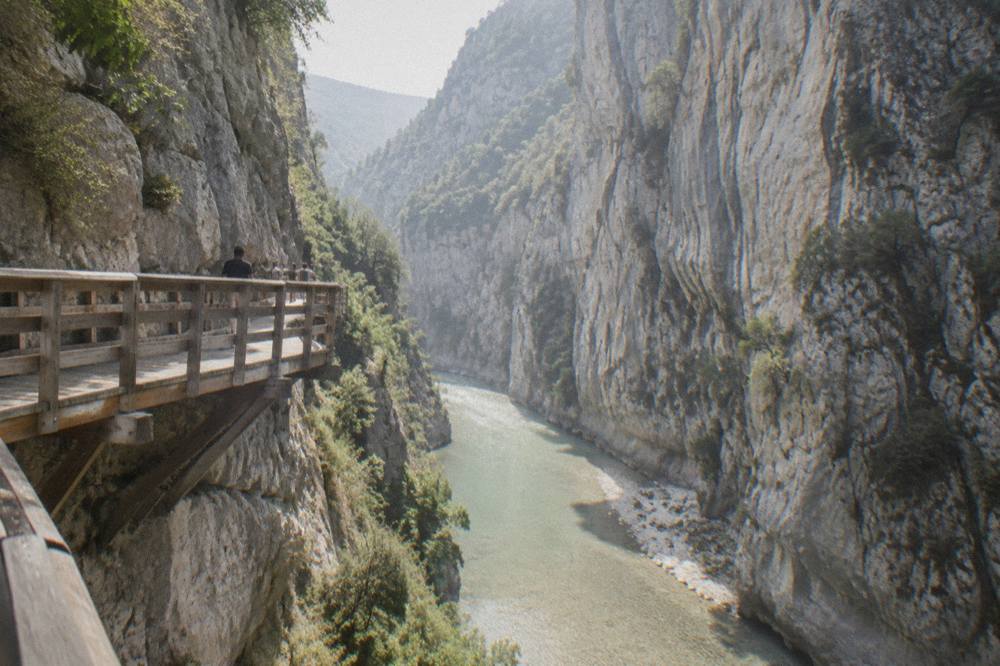
Osumi Canyon is the region's headline find. The gorge is a protected natural monument, and the rim viewpoints, including the opening known as Vrima e Nuses, the Bride's Hole, and the old Italian bridge near the village of Blezënkë, cost nothing to reach. What makes it feel hidden is that the canyon only fills with people in high summer, and even then it is a trickle compared with any coastal beach. A local operator's trip, Discover the Magic of Osumi Canyon, puts you on the water itself rather than at the rim, and the details, dates and pricing all sit on the tubing and rafting listing page.
Bogovë waterfall is the softer option. It sits on the edge of Tomorr Mountain National Park, reached by a short out-and-back forest walk from the village, gentle enough that families do it, and it ends at a waterfall with a pool that locals swim in through summer. The classic combined trip, canyon rim plus Bogovë, works well if you have one day and no car; the Osum Canyon and Bogove Waterfall classic tour is the standard way to see both, and it pairs naturally with a swim stop in the canyon's lower stretch.
Mount Tomorr is the third, and the most atmospheric of all. Its main peak, Çuka e Partizanit, rises to 2,416 metres, and the massif is a national park that shelters brown bear, wolf and birds of prey. For most of the year Tomorr is empty walking country, a green wall behind Berat that almost nobody climbs. For one week in late August it transforms: the Bektashi pilgrimage to the tomb of Abaz Ali at the top was expected to draw around 600,000 pilgrims for the 2026 edition, which ran 18 to 25 August with police-managed access roads. Time a visit badly and you meet a crowd; time it well and you have a sacred mountain almost to yourself, helped by a new road to the shrine that has cut a drive which once ran an hour and a half to two hours down to around half an hour.
| Hidden gem | What it actually is | Why it stays quiet | Best fit |
|---|---|---|---|
| Osumi Canyon, Çorovodë | River gorge, protected Natural Monument, free rim viewpoints | Inland gorge with no rail link, reached by road from Berat | A day with a guide on the water |
| Bogovë waterfall | Forest waterfall and pool in Tomorr Mountain National Park | Short walk from the village deters large groups | Half day, families, hot afternoons |
| Mount Tomorr | 2,416 m national park peak with a Bektashi shrine | Pilgrims come one week a year; walkers rarely do | A clear day with a local guide |
| Gorica quarter, Berat | Ottoman hillside quarter across the Osum from Mangalem | Day visitors stay on the west bank | An evening stroll at golden hour |
| Solomon Museum, Berat | Museum founded 2018 on Albania's Jewish community | Tiny, unmarked on most itineraries, easy to walk past | An hour inside on a rainy day |
What Hidden Gems Are Inside Berat Itself?
Berat's own hidden gems are the Gorica quarter across the old bridge, the Solomon Museum dedicated to Albania's Jewish community, the Ethnographic Museum which reopened in May 2026 after a three-year restoration, and the castle quarter of Kala in the evening once the day trippers leave. Each is walkable from anywhere in the old town.
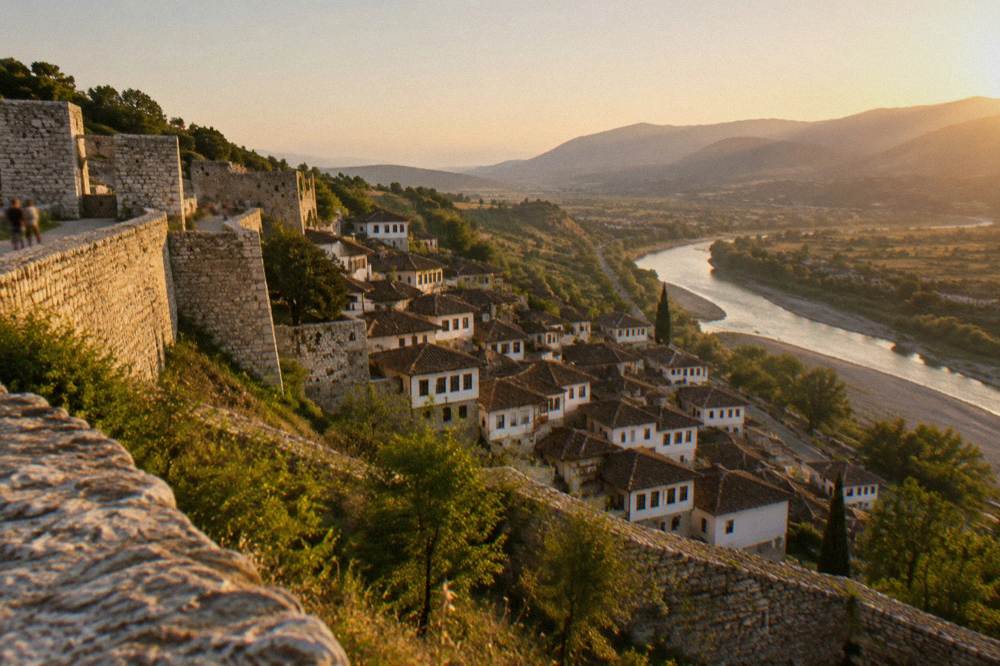
Gorica is the answer to the question nobody asks. Everyone photographs Mangalem's stacked windows from the Gorica bridge, then turns back. Cross the bridge properly and climb into Gorica itself and you get the reverse view, the famous windows across the water, plus cobbled lanes, a small square, and guesthouses in restored houses, with a fraction of the footfall. The quarter was restored as part of the completed heritage projects listed in Albania's 2026 UNESCO state-of-conservation report, alongside the Mangalem quarter and the Gorica castle trail, so the fabric you walk through is freshly consolidated rather than crumbling.
The Solomon Museum is the town's most overlooked single site. Founded in 2018 by Professor Simon Vrusho, it is the only museum in Albania dedicated entirely to the Jewish community, and it sits in the old town in a space small enough that most walking tours pass its door without stopping. Its hours and fee are not reliably published, so treat a visit as a walk-in chance rather than a scheduled stop.
The Ethnographic Museum is the newest good reason to give Berat a full day. It reopened on 30 May 2026 after more than three years of restoration, with around 1,300 objects on display in a rebuilt interior, and it charges 300 lek for an individual ticket, with children under 12 free. The Onufri Iconographic Museum inside the castle, at 400 lek, is the better-known sibling, and it drew 58,912 visitors between January and July 2026, so it is hardly hidden, but its August 2026 figure of roughly 14,000 visitors still means the rooms are empty by museum-city standards. Both museums share seasonal hours, 9:00 to 18:00 from May through September, and shorter winter hours from November through April.
The castle quarter in the evening deserves its own line on any hidden-gem list. Kala is a lived-in neighborhood with guesthouses inside the walls, and one centuries-old building next to the Onufri Museum is being converted into an eight-room family guesthouse. Once the day-trip crowds thin out in the late afternoon, the lanes, the walls, and the west-facing view over the Osum valley belong to a few hundred residents and whoever booked a night inside. Our guide to spending two days in Berat builds an itinerary around exactly this: sleep in the castle, see it empty at dawn.
When Is The Best Season For Albania's Hidden Places?
Spring is the season for Osumi Canyon rafting, when snowmelt swells the river, roughly March through early June; summer is the tubing season, from mid-June into autumn; late August belongs to the Tomorr pilgrimage; and the first weekend of October brings the Wine and Stories of Berat festival. There is no single wrong month, but each gem has one right window.
The canyon's calendar is set by water, not by weather. Operators run rafting while the spring melt keeps the river high, and switch to tubing, the calmer float version, once summer drops the level, usually from mid-June through the autumn months. The distinction matters more than the exact dates: arrive in April hoping for a lazy float and you get a paddle; arrive in August hoping for rapids and you get a swim. The seasonal adventure trip, Berat Osumi Canyon seasonal adventure, is built around this split and switches activity with the water.
For the rest of the region the windows are simpler. Bogovë waterfall is at its best in late spring, when the pool is cold and full, and in high summer, when the walk is shaded and the swim is the point. Summer heat in Berat is real, dry and can top 40 degrees, so canyon water and mountain altitude are the region's natural escape. The wine villages around Berat, Roshnik and its neighbors, are at their best from late September, when the harvest comes in and the Wine and Stories of Berat festival runs, in 2026 from 2 to 4 October, with wineries from Albania and Kosovo pouring under one set of tents. If timing a whole trip around quiet, the page on the best month to visit Berat breaks the trade-offs month by month.
How Do You Reach These Hidden Gems Without A Car?
You reach Osumi Canyon and Bogovë by guided tour from Berat, since public transport to Çorovodë is sparse and the trailheads sit beyond the town; you reach everything inside Berat on foot; and you reach Berat itself by bus from Tirana's South-North terminal in about two and a half hours, paying a few hundred lek in cash. A car helps, but only three of the gems on this list genuinely need one.
Berat is the hub, and it is an easy hub. Buses and shared furgons leave Tirana's Terminali Jug-Veri through the day, the ride runs around two and a half hours, and the fare is paid in cash, a few hundred lek. There is no direct airport bus and no passenger train to Berat at all; the railway is under reconstruction elsewhere with a target of end-2027. Once in town, the old core is entirely walkable, and the 2026 vehicle restriction in the castle quarter means even drivers end up on foot for the last stretch uphill.
For the canyon, the choice is between a guided day trip and a self-drive. Self-driving to Çorovodë takes an hour to an hour and a half on paved road, with gravel tracks only on the deeper approaches, and the rim viewpoints are free. The water-level logic of the previous section still applies, and a guide who reads the river is worth having in spring. For travelers pairing the town with the gorge in one trip, the private option is a day trip from Tirana to Berat, while wine-first travelers should look at the Pupa Winery tasting tour. Costs across the region stay low by European standards, so stringing several of these places together in one loop rarely strains a budget.
Common Questions About Hidden Gems In Albania
What are some hidden gems in Albania?
Osumi Canyon near Çorovodë, the Bogovë waterfall on the edge of Tomorr Mountain National Park, the Gorica quarter across the Osum from Berat's Mangalem, the Solomon Museum on Albania's Jewish community, and the castle quarter of Berat in the evening. All sit in or around Berat in central Albania, and none of them carries a barrier-price entry beyond small museum tickets of a few hundred lek.
Is Osumi Canyon free to visit?
Yes for the rim. The canyon viewpoints, including Vrima e Nuses and the old Italian bridge, charge no entrance fee. Only the guided rafting and tubing trips on the water inside the gorge cost money, and those prices are listed on each operator's live listing.
Can you visit these places without a car?
You can visit everything inside Berat on foot. For Osumi Canyon, Bogovë and Mount Tomorr, most travelers without a car take a guided tour from Berat or from Tirana, because public transport to Çorovodë is sparse and the trailheads lie beyond the town itself.
Is Berat itself a hidden gem?
Partly. It is UNESCO-listed and receives growing visitor numbers, with the Onufri Museum logging 58,912 visitors in the first seven months of 2026, but it remains quiet by evening and overnight. The genuinely hidden version of Berat is the castle quarter after the day buses leave, and the Gorica side of the river, which most day trippers never cross.
What is the best month for the canyon and waterfall?
Roughly March to early June for rafting on spring snowmelt, mid-June through autumn for the calmer tubing float, and late May through September for swimming at Bogovë waterfall. The Wine and Stories of Berat festival, a good anchor for a harvest-season trip, ran 2 to 4 October in 2026.
Are any of these gems crowded at times?
Mount Tomorr is, for one week. The Bektashi pilgrimage to the tomb of Abaz Ali ran 18 to 25 August in 2026 with an expected 600,000 pilgrims and managed access roads. Outside that week the mountain is one of the emptiest landscapes in the country.