What Is The Prettiest Town In Albania?
Berat, the UNESCO-listed City of a Thousand Windows in central Albania, makes the strongest claim to being the country's prettiest town. Here is why, and what to see.
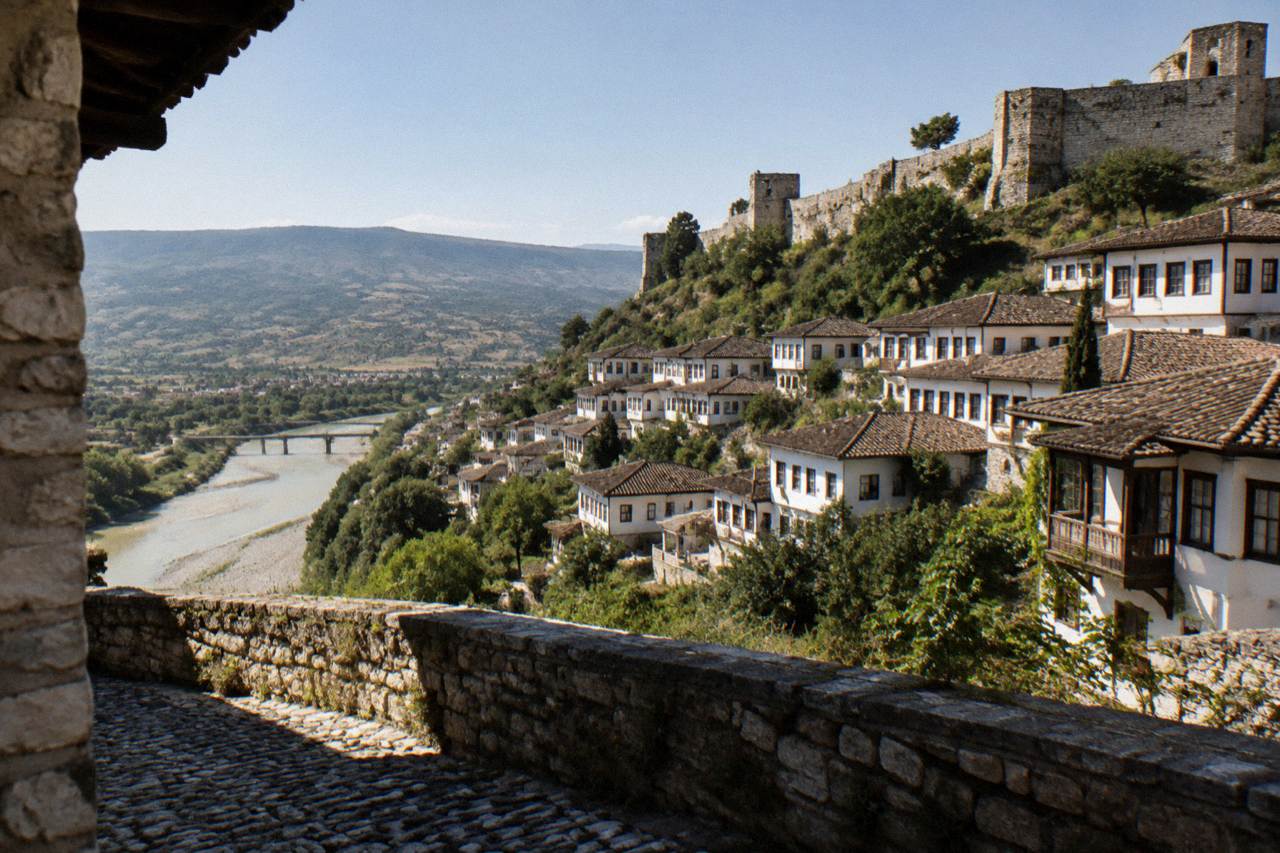
Ask most travellers who have crossed Albania and one name comes back again and again: Berat. This is a UNESCO World Heritage Ottoman-era hill town in central Albania, built above the Osum River, and its ranks of white houses climbing the hillside have earned it the nickname the City of a Thousand Windows. The UNESCO listing, which covers the historic centres of Berat and Gjirokastra, describes Berat as a rare example of a well-preserved Ottoman town, and that description is not marketing copy; it is the World Heritage Committee's own assessment. Albania has other beautiful towns, from the stone-roofed lanes of Gjirokastra to the mountain setting of Shkodër, but the case for Berat is unusually strong and unusually well documented.
What Is The Prettiest Town In Albania?
Berat, in central Albania, is the prettiest town in the country for most visitors, and it is the one with international recognition to back the claim. Its historic centre was added to the UNESCO World Heritage List in 2008 as an extension of the Gjirokastra inscription, covering 58.9 hectares of protected property. No other Albanian town has Berat's combination of a lived-in hilltop castle, Ottoman houses stacked above a river, and two complete old quarters facing each other across the water.
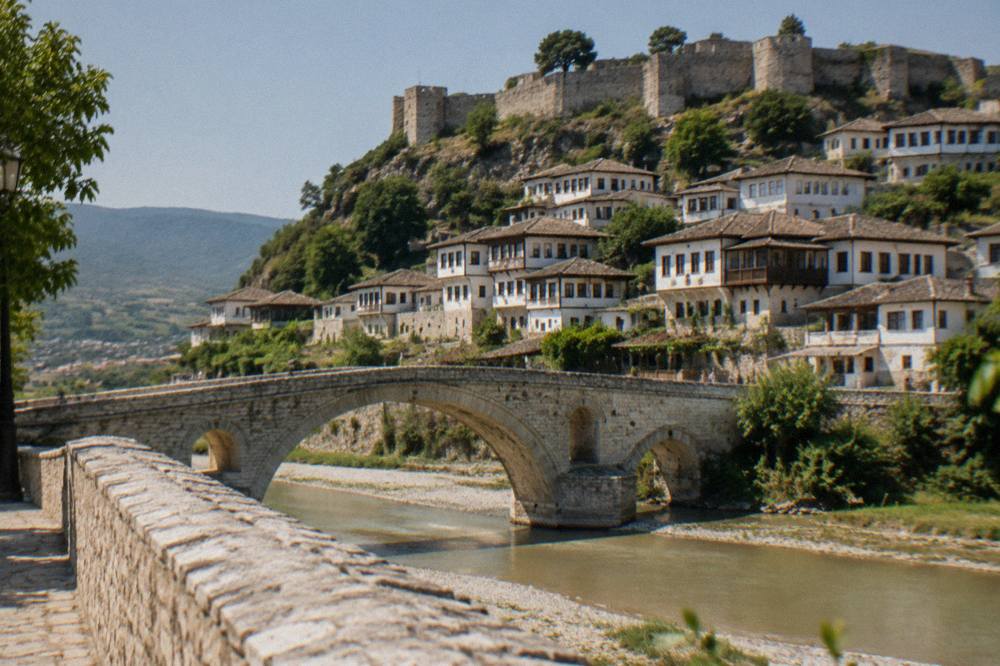
The nickname is not decoration. The houses of the Mangalem quarter rise up the hillside in tiers, and every upper storey is filled with rows of window after window, dozens deep, so the whole hillside reads as one enormous wall of glass and whitewash. Across the Osum River, the Gorica quarter mirrors it from the other bank. Between them runs the Gorica Bridge, the historic stone crossing that ties the two halves together. Very few towns in the Balkans give you a UNESCO old town where you can stand in one World Heritage quarter and look straight at another.
What makes the answer feel settled rather than argued is that Berat is not a museum piece. The castle quarter, the Kala, is a lived-in neighbourhood with guesthouses inside the walls, and one centuries-old building next to the Onufri Museum is being converted into an eight-room family guesthouse. About 42 churches once stood inside the castle; about eight are preserved today. Walking up through the gate you pass houses, gardens and washing lines before you reach the views. The prettiness is daily life, not a stage set. If you want the fuller story behind the town's fame, what Berat is famous for goes deeper than the postcard view.
Why The City Of A Thousand Windows Deserves Its Name
Berat's beauty is architectural and topographic at once. The Mangalem quarter climbs the western hillside toward the castle, the Gorica quarter climbs the eastern one, and the Osum River runs between them, so every street corner offers a framed view of white houses stacked against green slopes. The UNESCO property covers 58.9 hectares, and the castle walls still carry 24 defensive towers. The effect, at morning or late afternoon, is of a town built entirely out of windows.
Start in Mangalem, the quarter most visitors photograph first. The stone houses step down the hill in overlapping layers, and the famous windows belong to the upper rooms, where Ottoman households wanted light and air without giving up privacy on the street. Wander upward rather than following a route and you will find the lanes get quieter and the views over the river open wider. At the top, the Kala, the castle quarter, holds the remains of the Red Mosque, one of the earliest Islamic buildings in the fortress, and the Church of St Mary, which now houses the Onufri Iconographic Museum.
Then cross the Gorica Bridge. The old Gorica quarter on the far bank is the quieter side of Berat, with narrower lanes, fewer restaurants and a slower rhythm, and its own completed restoration work under the heritage programme that also restored the Mangalem quarter and the Gorica castle trail. Looking back at Mangalem from Gorica is the single best view in the town, and it costs nothing. If you are planning a first visit, the question of how many days to spend in Berat matters here; the town rewards slow walking, and most people find one packed day too short.
How Does Berat Compare With Other Beautiful Albanian Towns?
The honest comparison is qualitative, because this build verified detailed figures for Berat and none for its rivals. Gjirokastra shares the same UNESCO inscription and offers grey stone roofs and a fortress above a valley; Shkodër offers lake and mountain light; Krujë offers a bazaar street below a castle. Berat's edge is the double-bank composition of Mangalem and Gorica facing each other across a river, and its castle that you can sleep inside. For pure prettiness, most visitors give it to Berat.
Gjirokastra is the obvious challenger, and it is the fair fight, since both towns sit inside the same World Heritage property. The two are often compared directly, and the usual verdict is that Gjirokastra feels stonier and more austere while Berat feels whiter, softer and more lived-in. That is a matter of taste, not of fact. What is fact is Berat's own set of numbers: the 24 towers, the eight preserved churches in the Kala, the Onufri Museum's 400 lek individual ticket, the Ethnographic Museum at 300 lek, and the 2023 census population of 62,232 for the whole municipality, which keeps the old town small enough to walk end to end. For a longer treatment of the head-to-head, Gjirokastra versus Berat compared works through the same fight in detail.
The other contenders should be named fairly. Shkodër in the north has the great Shkodër Lake and a bohemian café culture, and its scenery is arguably grander, but the town itself is more scattered than Berat's dense Ottoman core. Krujë is dramatic below its castle but is essentially one historic street. Korçë has elegant boulevards and a colder, central-European feel. Tirana, the capital, is energetic and colourful but it is a capital city, not a pretty hill town. For visitors deciding which part of the country to base in, the question of the nicest part of Albania is a wider one, and the honest answer there is usually the south. But town against town, Berat keeps winning the beauty contest.
Berat's prettiness also comes with practical depth. There are free and cheap options here that few rivals match: the two museums, the castle grounds and the viewpoints cost a few hundred lek between them, the bus in from Tirana runs from the South-North terminal several times a day, and food is inexpensive by any regional standard. Solo travellers and couples who want a small walkable base tend to settle on Berat for exactly that reason. The town is also a good answer to the practical question of whether Albania is cheap or expensive, since in Berat it is genuinely the former.
A winery visit is the other thing Berat does unusually well for a small town. The surrounding hills grow Shesh i Zi, Shesh i Bardhë and the local white Puls, and Cobo Winery in the Berat region makes wine from all of them, including a traditional-method sparkling Puls aged on its lees. A guided winery tour with transfers and tastings from Berat takes about three hours, and its rating and current price are on the operator's live listing rather than printed here; Check availability if a vineyard afternoon fits your dates.
Where Are The Best Views In Berat?
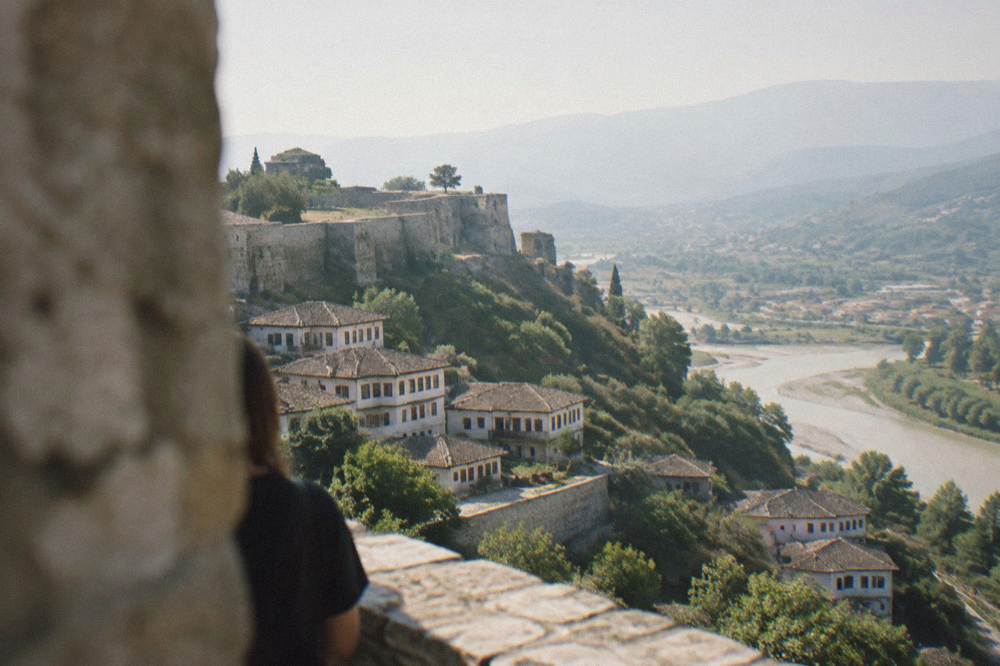
The classic view is from the Gorica side of the Osum River looking back at Mangalem and the castle, best in early morning or late afternoon light. The second is from the castle walls themselves, looking down over both quarters and the river bend. The third, quieter option is the Bulevardi Republika promenade at the base of the old town, where the whole composition is visible at once.
The castle viewpoint is the one most worth the climb. Inside the Kala you can walk along stretches of the walls and look down over the tiled roofs of Mangalem to the river, with Mount Tomorr, whose highest point is 2,416 metres, rising behind the town on clear days. The Onufri Museum sits inside the castle, so a visit combines the view with the icons, and its summer hours run from 9:00 to 18:00 between May and September. There may be a small fee at the castle gate in daytime, so bring lek; car access into the castle quarter is being restricted, and the practical advice is to park below and walk up.
The Gorica side rewards the opposite effort. Cross the Gorica Bridge, climb any lane into Gorica, and turn around. The restoration programme that completed work on the Gorica quarter and the Gorica castle trail has left the lanes in good shape, and the quarter is calm in the evenings when day-trippers have gone. Photographers should also know that Berat is a well-known destination for picture-hunting, and the light on the white walls is at its softest outside midday; the summer heat can top 40 degrees Celsius in July and August, so the pretty hours are genuinely the comfortable ones.
The two museums anchor a rainy morning or a hot midday. Their official hours and prices are fixed and published.
| Museum | Individual ticket | Reduced | Students and ages 12-18 | Under 12 |
|---|---|---|---|---|
| Onufri Iconographic Museum (in the castle) | 400 ALL | 200 ALL | 120 ALL | Free |
| Ethnographic Museum (reopened 30 May 2026) | 300 ALL | 150 ALL | 90 ALL | Free |
An audio guide at the Onufri Museum costs 500 ALL. Tickets can also be bought online since Albania's e-ticketing system for cultural sites launched in late 2025. The Ethnographic Museum, inside a handsome historic house, reopened in May 2026 after three years of restoration and now displays around 1,300 objects, from wedding costumes to household tools, which makes it the best single stop for understanding the domestic life behind all those windows.
When Is Berat At Its Prettiest?
Berat is at its most photogenic in spring and early autumn, when the hills around the town are green, the light is soft and the summer heat has passed. Summers are hot and dry, and midday temperatures in July and August can top 40 degrees Celsius, which flattens the colour and empties the lanes. Winters are wetter but mild, and the low season gives you the quarters almost to yourself.
The seasonal rhythm is real and worth planning around. The rain concentrates in the late-autumn and winter months, while high summer is the driest stretch. Late July 2026 was reported as the hottest day of the year, with the highest values recorded in Berat itself, which is a useful warning: the climb to the castle is exposed, and the walls hold heat. May, June, September and early October are the months when the prettiness of the town and the comfort of walking it line up. Early October brings an added draw, the Wine and Stories of Berat festival, which in 2026 ran from 2 to 4 October with wineries from Albania and Kosovo, music and local food.
Choosing your month is also a question of crowds. The Onufri Museum's visitor numbers show the pressure: more than 17,000 people passed through in May 2026 alone, the busiest month of the first half of the year. Arrive early or late in the day, stay overnight after the day-trip buses leave, and Berat becomes a different town entirely. The question of the best month to visit Berat deserves its own look, but the short version is spring or autumn.
What Should You Not Miss When You Visit The Prettiest Town In Albania?
Do not miss the climb through Mangalem to the castle and the Onufri Museum, the walk across the Gorica Bridge into Gorica, the view back at the Thousand Windows from the far bank, and one meal or tasting built around local wine and home cooking. That is the core of Berat, and it can be done at a walking pace over a relaxed day and a morning.
Food belongs on the list, because Berat's cooking is part of its character. The town's signature dishes include qifqi, rice dumplings with mint and fennel, tavë kosi, lamb baked under a yogurt and egg crust, and japrak, stuffed grape leaves. The Slow Food community in Berat works to keep these recipes alive in local kitchens, and the family-run cooking classes in town are built around them. A cooking class with wine tasting at a local home runs around four hours and pairs the dishes with the same regional wines poured in the wineries; its current price and rating are on the live listing. If you are weighing Berat against other options for a first Albania trip, the honest overall verdict is that Berat is worth visiting, and the pretty-town argument is a large part of why.
The surrounding country matters too. The Osumi Canyon near Çorovodë, a protected natural monument, lies about an hour to an hour and a half from Berat on paved roads, and the Bogove Waterfall is a short forest walk from the village of Bogovë. Mount Tomorr rises 2,416 metres to the east, and the Bektashi pilgrimage to the tomb of Abaz Ali on its southern peak brings hundreds of thousands of visitors each August, filling the mountain road. These are the views that make Berat's backdrop, and a day trip into the hills is the natural third day of any stay.
This site, Berat Travel Guide, is built around exactly these questions, from the walk up to the castle to the wineries and canyons beyond the town. The prettiest town in Albania is a small place with a lot of answers.
Common Questions About The Prettiest Town In Albania
What is the prettiest town in Albania?
Berat, the UNESCO-listed City of a Thousand Windows in central Albania, is the prettiest town in Albania for most visitors. Its white Ottoman houses climb the hillside above the Osum River, and its Mangalem and Gorica quarters face each other across the water below a lived-in hilltop castle.
Is Berat or Gjirokastra more beautiful?
Both share one UNESCO World Heritage inscription, and the choice is a matter of taste. Gjirokastra is grey stone and austere; Berat is white, soft and full of windows. Most visitors who love photography choose Berat.
How many days do you need in Berat?
Two days is the comfortable answer. One day covers the castle, the Onufri Museum and the two quarters; a second lets you cross to Gorica properly, eat slowly and visit a winery or the Osumi Canyon.
When is the best time to visit Berat?
Spring and early autumn. Summers are hot and dry, with July and August temperatures that can top 40 degrees Celsius, while the Wine and Stories of Berat festival in early October is a pleasant reason to come in autumn.
Is Berat expensive to visit?
No. The museums cost 400 and 300 lek, food and guesthouses are inexpensive, and the best things in town, the lanes, the bridge and the views, are free.