Which Is Better, Gjirokaster Or Berat?
A straight comparison of Berat and Gjirokaster, Albania's two UNESCO Ottoman towns: heritage, sights, transport, costs and which one suits your trip.
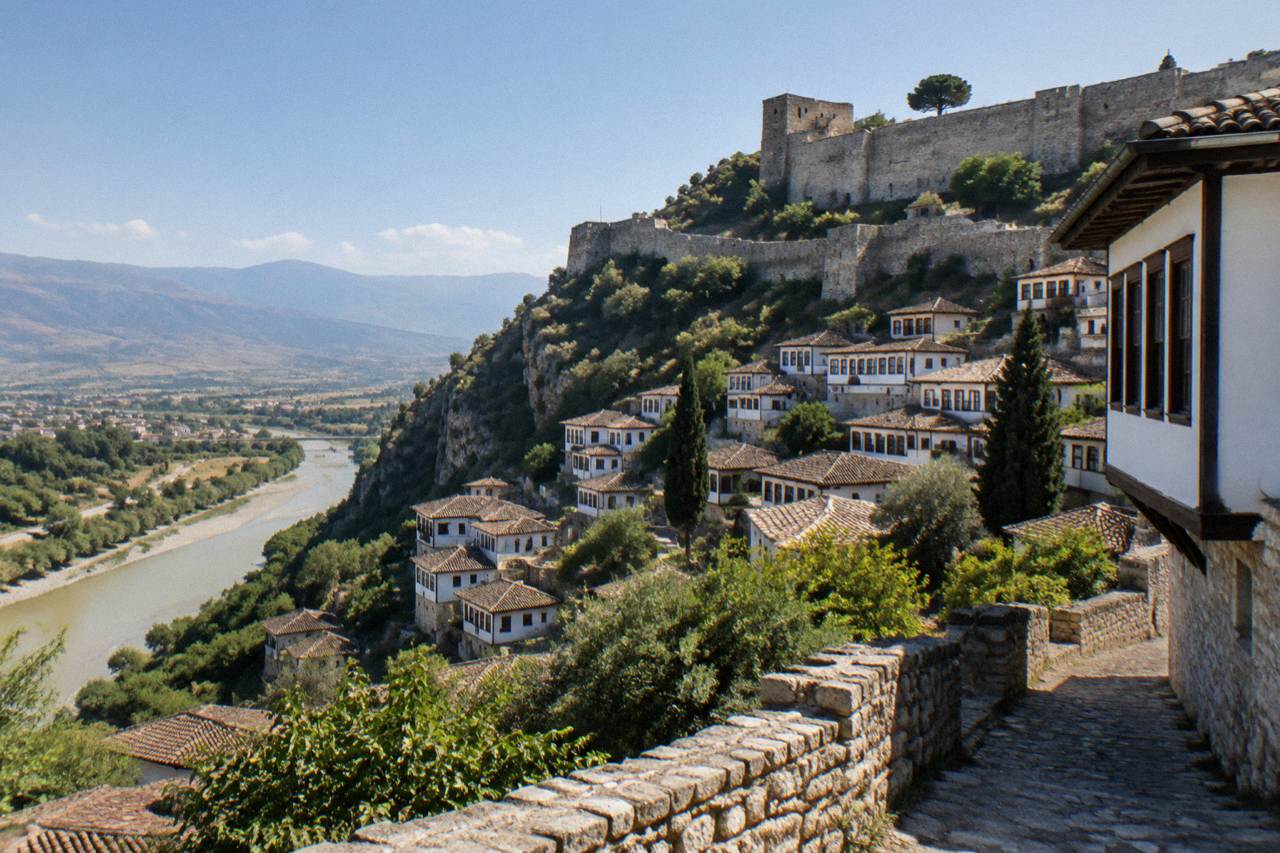
Berat, in central Albania, is a UNESCO World Heritage Ottoman-era hill town on the Osum River, and it is only one half of the country's most common traveller dilemma: which to visit, Berat or Gjirokaster, the stone city three hours further south. The honest answer is that neither is "better" in any absolute sense. They share a single World Heritage inscription, the Historic Centres of Berat and Gjirokastra, yet they feel like different countries: Berat is white, leafy and built around a river bend, while Gjirokaster is grey, austere and stacked under a huge fortress. This page compares the two town by town, category by category, so you can pick the one that matches your trip, or work out whether you have time for both.
Which Is Better, Gjirokaster Or Berat?
Berat suits most first-time visitors better: it is gentler to walk, cheaper to eat in, easier to reach without a car, and its old quarters still function as lived-in neighbourhoods rather than museum streets. Gjirokaster is better if you want drama: a fortress above slate roofs, a heavier sense of history and a base for southern trips. If you can only choose one and this is your first taste of Albania, choose Berat, then come back for Gjirokaster with a car.
That recommendation comes with a caveat worth stating plainly. The two towns were inscribed together precisely because UNESCO judged them complementary, not competing. Gjirokastra went on the list in 2005, and Berat was added in 2008 as an extension, with the inscription praising Berat as a rare example of a well-preserved Ottoman town. The property covers 58.9 hectares across both towns with a 136.2 hectare buffer zone. In other words, the question of which is better is a question about your itinerary, not about quality. A reader deciding between the two should also look at our wider take on whether Berat is worth visiting at all, and at the practicalities of the Berat to Gjirokaster route, which many travellers do in a single long day.
How Do The Two Towns Compare On Heritage And Atmosphere?
The core difference is texture: Berat is a white town of windows opening onto a green river valley, while Gjirokaster is a dark stone town of fortified mansions climbing a bare hillside. Berat's castle quarter, the Kala, is still inhabited, with families, guesthouses and churches inside the walls; Gjirokaster's fortress dominates from above and is experienced mainly as a monument. Both are outstanding, but Berat feels lived-in and Gjirokaster feels monumental.
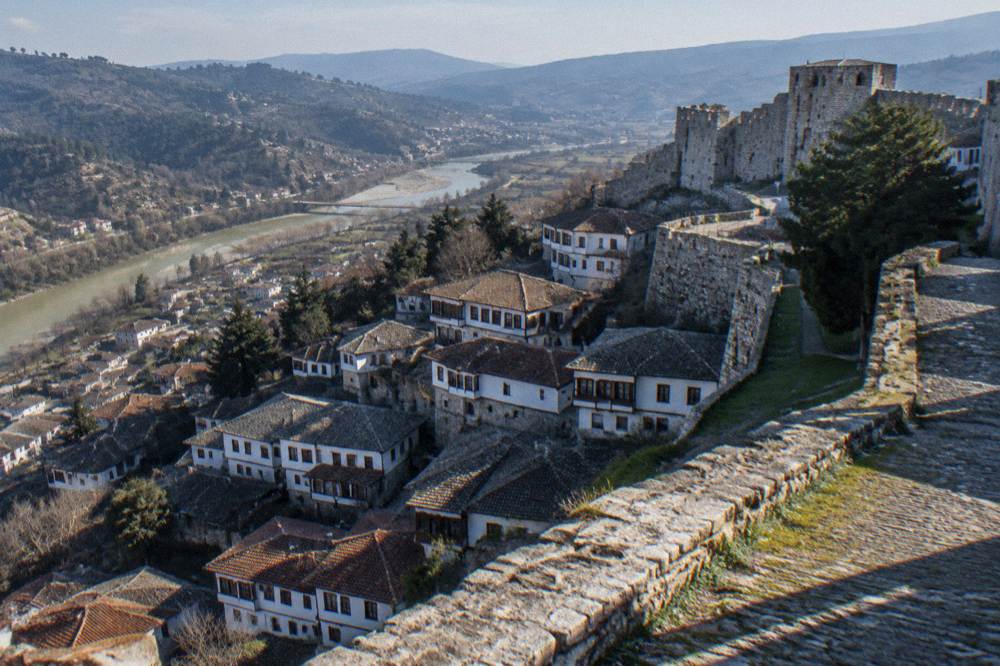
Berat's skyline is the famous one: rows of houses stacked on top of one another on the Mangalem hillside, every floor boasting its own row of windows, which is where the "city of a thousand windows" nickname comes from. Across the river, the Gorica quarter mirrors it in quieter form, and the two are stitched together by the old Gorica Bridge over the Osum. The castle above still has its city walls with 24 defensive towers, and about eight churches survive of the roughly 42 that once stood inside. Staying or walking inside a working castle quarter is something Gjirokaster simply cannot offer in the same way, although an old building next to the Onufri Museum is being converted into a small guesthouse inside the walls, which tells you how demand to sleep there keeps growing.
Gjirokaster, by contrast, sells itself on severity. Its Ottoman mansions are built of local grey slate, its streets are steep, and its castle is one of the biggest structures in the Balkans, complete with an old US spy plane displayed in its grounds as a Cold War curiosity. The town is the birthplace of two of Albania's most famous writers, and its museums lean heavily on that literary history. If your mental image of Albania is rugged and melancholic, Gjirokaster delivers it; if your image is Mediterranean and domestic, Berat does.
| Aspect | Berat | Gjirokaster |
|---|---|---|
| UNESCO status | Added 2008 as extension of the 2005 Gjirokastra inscription | Inscribed 2005, the original half of the shared property |
| Setting | Hillside above the Osum River, green valley, white houses | Bare hillside, grey slate mansions, fortress above |
| Signature landmark | Berat Castle, a lived-in quarter with 24 towers | The fortress, with museum halls and a Cold War aircraft |
| Best one-word label | The city of a thousand windows | The stone city |
| Strongest museum card | Onufri Iconographic Museum inside the castle | Fortress museum and literary-house museums |
For a deeper split of atmosphere versus practicality across the whole country, our piece on the prettiest town in Albania covers how these two compare with Shkodra, Korça and the rest.
What Can You See And Do In Each Town?
Berat's sightseeing clusters around one walkable circuit: the castle and the Onufri Museum above, the Mangalem and Gorica quarters and the historic bridge below, all within about half a day of easy walking. Gjirokaster's circuit is steeper: the fortress, the old bazaar street and two or three house-museums fill a similar half day but with more climbing. Neither town needs more than a full day of actual sightseeing, and Berat's extra activities, wineries and canyon trips, reach further outside the town.
In Berat, the anchor sights are the Onufri Iconographic Museum and the Ethnographic Museum, and both have confirmed, published entry figures. Onufri, inside the Church of St Mary in the castle, holds the church's iconostasis and the museum's icon collection, and the museum's own site lists an individual ticket at 400 lek, with an audio guide at 500 lek, reduced tickets at 200 lek, and free entry for young children. The Ethnographic Museum, reopened in late May 2026 after three years of restoration work, charges 300 lek for individuals. The castle grounds themselves may involve a small daytime fee at the gate, so carry lek, but there is no confirmed published figure, and the quarter remains walkable around the clock on foot. The full index of guides sits on Berat Travel Guide.
Beyond the walls, Berat's advantage is its hinterland. The Osumi Canyon and the Bogovë waterfall sit within an hour or so of town and anchor most of the adventure tourism in the region, while Tomorr Mountain National Park, whose highest point reaches 2,416 metres, draws hikers and the annual August Bektashi pilgrimage to the tomb of Abaz Ali. GuruWalk also runs free, tip-based walking tours of Berat's old town, which is a genuinely useful way to get oriented on a first morning. If you want the castle explained rather than just seen, this site's featured Berat Castle and old town small-group tour covers the fortress and the lower quarters with a local guide, Check availability if the dates line up with your visit.
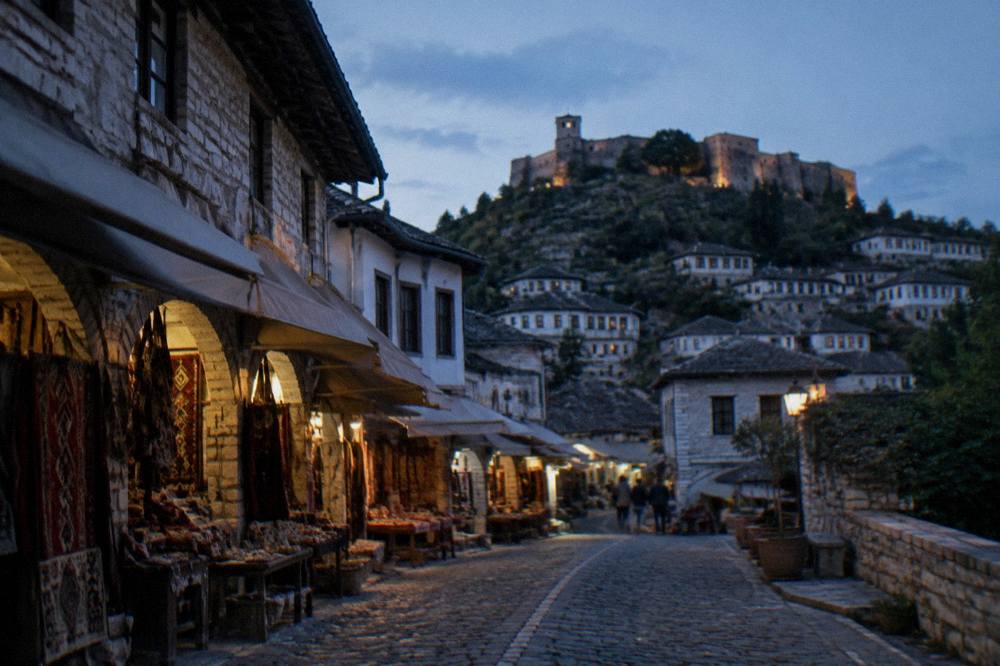
Gjirokaster's sightseeing is more self-contained but no thinner. The fortress alone can absorb two hours, the Skenduli house and Zekate house show how Ottoman merchant families actually lived, and the old bazaar street is the most atmospheric single stretch of either town for shopping. From Gjirokaster, the natural add-on is further south rather than out into nature: Saranda and the coast, or the Butrint archaeological site. Our Gjirokaster destination guide lays out those options in full.
Which Town Is Easier To Reach, And Where Should You Base Yourself?
Berat wins on transport for anyone arriving without a car: buses and shared furgons run roughly every hour through the day from Tirana's South-North terminal, taking around two and a half hours along decent roads. Gjirokaster also has direct buses from Tirana, but the journey is longer and the town is a commitment at the end of the country. For a one-week first trip to Albania, Berat is the easier base; Gjirokaster rewards travellers heading south toward the coast or Greece.
The practical detail that matters: there is no direct bus from Tirana airport to Berat, so you transfer through the capital's terminal, and no passenger train reaches either town. You pay the driver in cash, in lek, and the fare is a few hundred lek, so arrive with small notes. Neither town needs a car once you are in it; both old centres are pedestrian in spirit, and Berat's castle quarter is actively restricting vehicle access as its new parking scheme beds in. Driving between the two is straightforward on main roads, and plenty of visitors string them together, which our road trip guide from Tirana through Berat to Gjirokaster covers end to end.
For basing decisions, Berat offers the more varied overnight experiences: guesthouses inside the castle walls, family-run houses in Mangalem and Gorica, and hotels along the river, typically in the modest band you would expect of inland Albania rather than the coast. Gjirokaster's stays concentrate on stone mansions converted into boutique rooms, which is atmospheric but slightly pricier for what you get. If you are weighing the whole country rather than these two, our answer on where is the best place to stay in Albania puts both in context.
Costs, Food And Wine: Where Does Your Money Go Further?
Berat is the cheaper town to visit day to day. Eating out, from a cheap restaurant meal to a mid-range dinner for two or a cappuccino, is about as inexpensive as it gets in Europe. Gjirokaster is not dramatically pricier, but its orientation toward tour groups and its smaller supply of simple local kitchens nudge the average bill up. Both towns are far cheaper than the Albanian coast in peak season.
Treat those figures as planning ranges rather than promises: they come from aggregated 2026 price reports, menus move with the season, and the smart move is always to check the room before you sit down. What is not in doubt is the character of the two food scenes. Berat sits in wine country: the hills around town produce Shesh i Zi, Shesh i Bardhë and the rare local white Puls, and Cobo Winery in the region makes everything from still wines to a traditional-method sparkling aged three years or more on its lees. Cooking classes in family homes are a Berat speciality too, and one of the most popular formats is the cooking class in a local home with drink tastings, where the point is the kitchen table as much as the food.
Berat's signature dishes also travel less well than Gjirokaster's, which is a point in the stone city's favour at the table: qifqi, the local rice dumplings, are made properly in only a handful of kitchens, and tavë kosi, lamb baked under a yogurt and egg crust, is the classic plate everywhere but tastes best where it is a household habit. For the fuller food picture, see our dedicated guides to where to eat in Berat, and for the national picture, our answer on whether Albania is cheap or expensive covers the whole budget question.
| Typical spend in Berat | Reported figure | Note |
|---|---|---|
| Cappuccino | cheap by European standards, cash in lek | Old-town cafés |
| Onufri Museum entry | 400 lek | Official museum site, audio guide 500 lek |
| Ethnographic Museum entry | 300 lek | Official museum site |
Final Verdict: Which Town Should You Choose?
Choose Berat if this is your first trip to Albania, if you are travelling without a car, if you like soft light, wine country and easy river walks, or if you only have two or three days. Choose Gjirokaster if you have a car, if you are heading south to Saranda, Butrint or Greece, or if you prefer grand, austere landscapes to pretty ones. If your trip is a week or longer, see both: the route between them is the single best heritage drive in the country.
The tie-breaker most people actually feel is mood. Berat in the late afternoon, with the sun on the Mangalem windows and the Osum running quiet below the bridge, is the image of Albania that makes people book flights. Gjirokaster under cloud, slate roofs darkening and the fortress swallowing the skyline, is the image that makes people understand why writers came from there. If you are still undecided after all of that, start from how long you have: our answer to how many days to spend in Berat is two days for the town itself, plus a third if you want the canyon or the wineries, while Gjirokaster works comfortably as one full day and a night.
For a wider framing, if you are building a first Balkans itinerary, our comparison of Montenegro or Albania looks at how the whole country sits against its neighbour, and our piece on the best month to visit Berat helps you time whichever town you pick.
Common Questions About Berat And Gjirokaster
Which is better, Gjirokaster or Berat?
Berat is the better pick for most first visits to Albania: it is easier to reach, cheaper, gentler to walk and surrounded by wineries and canyon country. Gjirokaster is better for travellers heading south with a car who want fortress drama and a base for Butrint and the coast. With a week available, visit both.
Can you visit both Berat and Gjirokaster on one trip?
Yes, easily. They lie roughly three hours apart by road, and many travellers drive or bus from one to the other with an overnight stop. The classic route runs Tirana, Berat, Gjirokaster, then south to Saranda or back to Tirana.
Which town is cheaper, Berat or Gjirokaster?
Berat is generally cheaper for food and lodging, with simple guesthouse culture. Gjirokaster skews slightly higher because its boutique mansion stays and tour-group restaurants set the tone. Both remain far cheaper than most of Europe.
Which town is better for families with children?
Berat, in most cases. The walking is easier, the castle quarter feels like an adventure rather than a climb, and the cooking classes and river walks suit mixed ages. Gjirokaster's steep slate streets are harder work with small children.
Do Berat and Gjirokaster share the same UNESCO status?
Yes. Gjirokastra was inscribed in 2005 and Berat was added in 2008 as an extension, forming the single World Heritage property Historic Centres of Berat and Gjirokastra.
Which town has the better castle?
Berat Castle is a lived-in quarter with walls, towers, churches and guesthouses, so you experience it as a place. Gjirokaster's fortress is bigger as a structure and packed with exhibits, including a Cold War aircraft. Berat's is more atmospheric; Gjirokaster's is more monumental.