What Is Worth To Buy In Albania?
A shopping guide to Albania through Berat: native-grape wine, raki, olive oil, crafts and what things actually cost, from a UNESCO Ottoman town on the Osum River.
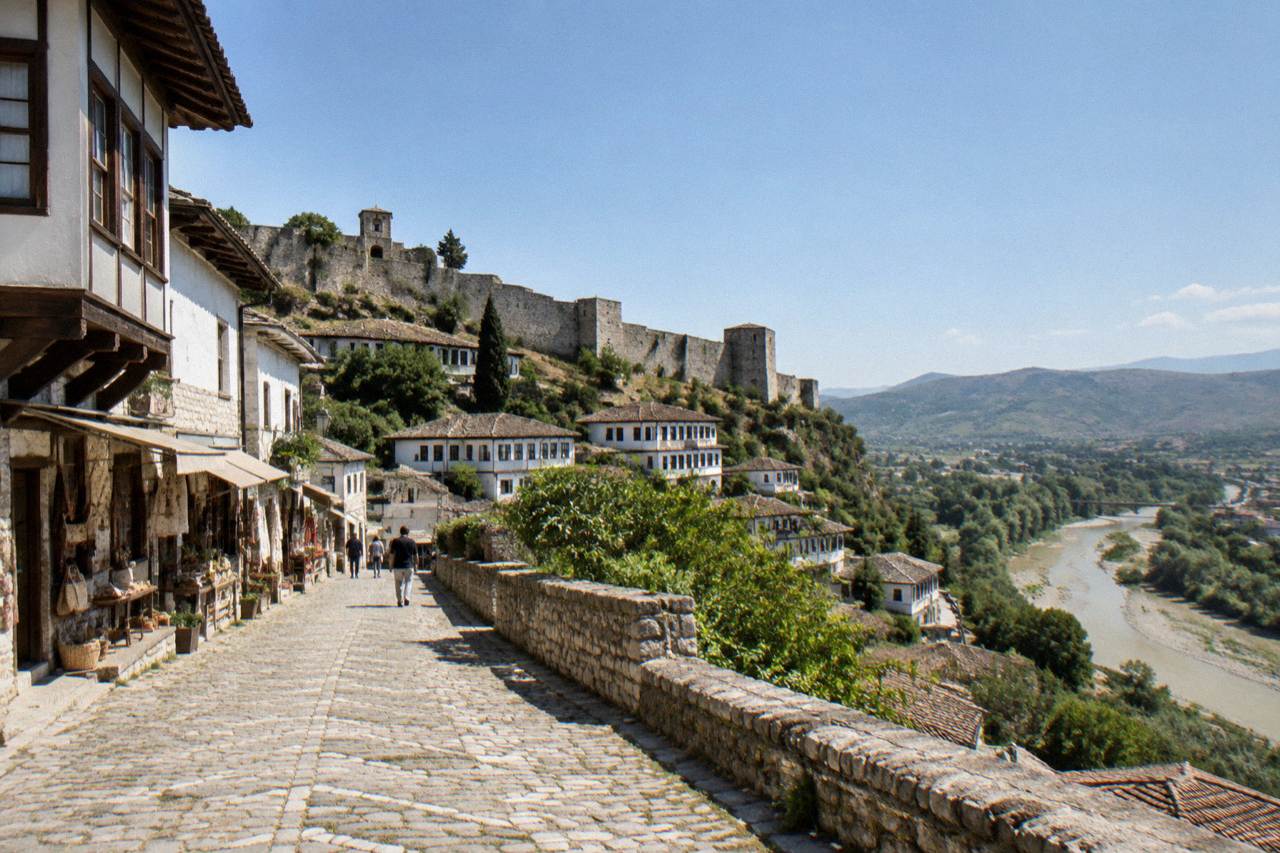
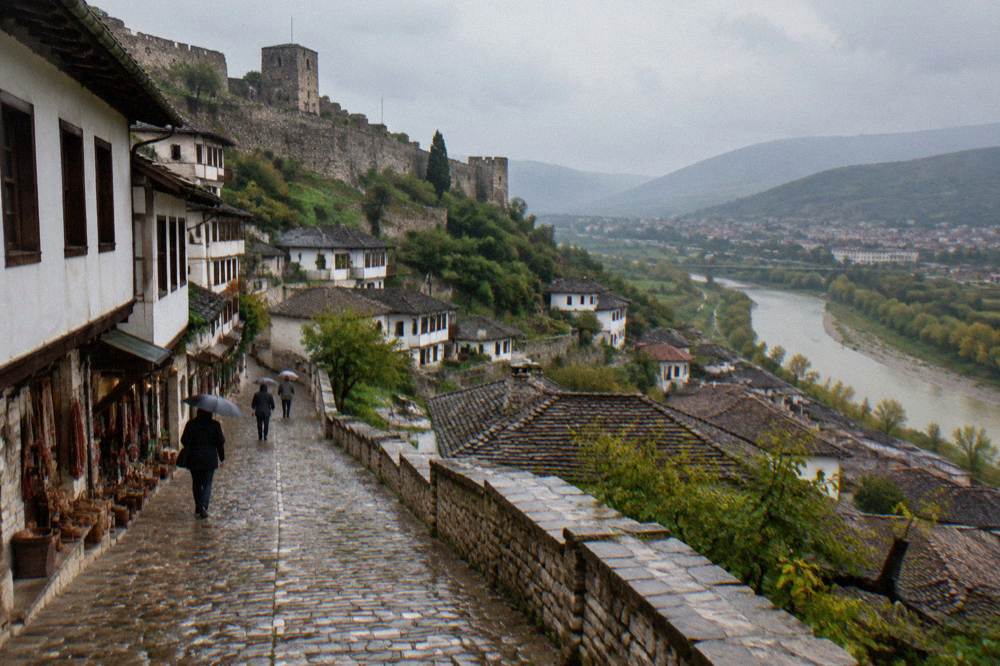
Berat, the UNESCO World Heritage Ottoman-era hill town on the Osum River in central Albania, is small enough to walk across in an afternoon and still one of the best small shopping towns in the country. Its Mangalem and Gorica quarters are lined with family shops selling wine, raki, olive oil, cheese, lace and copperwork, most of it made within a few hours of the counter you are standing at. That is the quiet argument for shopping here rather than in Tirana: what you buy in Berat is overwhelmingly local, and the price gap between tourist Albania and everyday Albania is narrower in a town that still lives at Albanian pace.
What Is Worth To Buy In Albania?
The short list of things worth buying in Albania runs: wine made from native grapes such as Shesh i Zi and Puls, raki, olive oil, artisanal cheese, mountain tea, honey and fig jam, handmade lace and textiles, and copper or woodwork. Berat, the hill town on the Osum River, is one of the best places to buy nearly all of it, because the producers and the shops sit within walking distance of each other.
Start with the wine, because it is the item most specific to this country. Albania grows Shesh i Zi for red and Shesh i Bardhë for white across central Albania, and the Berat area adds a rarer local white called Puls, or Pulëz. Cobo Winery, just outside town, works with all of these, including a traditional-method sparkling Puls aged on its lees for more than three years. That last bottle is the sort of thing you simply cannot buy at home, and it travels reasonably well if packed between clothes.
Raki is the other signature purchase. It is the national spirit, served everywhere, and a decorative bottle from a local producer makes a more honest souvenir than most fridge magnets. Around it sit the pantry goods: olive oil from the groves between Berat and the coast, fig jam, chestnut and flower honey, and the dried herbs sold as mountain tea. None of it is expensive by the standards of most of Europe, and all of it is produced in Albania rather than imported for visitors.
Then there is craftwork. Berat's old quarters have small workshops selling embroidered textiles, lace, woven rugs and copper items, plus icons and reproductions in the Byzantine style of Onufri, the celebrated painter whose museum sits inside the castle. Woodcarving, from spoons to small boxes, is a slower-moving craft here but a durable one. Buy one good object rather than five forgettable ones, and you will still be using it in ten years.
Where To Shop In Berat: Mangalem, Gorica And The Castle Quarter
Shop in Mangalem first, the steep quarter of white Ottoman houses below the castle, where most of the wine, raki and food shops cluster along the stepped lanes. Cross the Gorica Bridge to the Gorica quarter for quieter craft shops and guesthouse gift counters. Inside the castle walls, small stalls near the Onufri Museum sell icons and prints, and the shopkeepers there are used to visitors asking questions.
Mangalem rewards slow browsing. The shops are small, often one room, and the person behind the counter is frequently the person who made or bottled what is on it. Ask which wine comes from their own vines and which they buy in; the honest answer is usually immediate. Prices are posted or quoted plainly, and a short conversation costs nothing.
Gorica, across the old bridge, has fewer shops and more atmosphere. If you are staying in Berat for a couple of days, save Gorica for the quieter morning and use the evening for Mangalem, when the lanes are lit and the shops are still open. An evening walk is also the light in which Berat earns its nickname, the city of a thousand windows, and a guided night tour with a photography focus turns that into pictures you will actually keep.
For visitors arriving without a car, several day tours from Tirana and the coast include free time in the old town, which is exactly when shopping happens. A guided day tour with a local expert covers the history first and leaves space afterwards, and a specialist walking tour with tastings built in is the most efficient way to taste before you buy.
Is Albanian Wine And Raki Worth Bringing Home From Berat?
Yes, and wine is arguably the single most worthwhile purchase in Albania. The native varieties, Shesh i Zi, Shesh i Bardhë, Vlosh and the rare Berat-area white Puls, barely exist outside the country, so a bottle from a Berat winery is a genuine souvenir rather than an import you could buy at home. Buy from the winery or a shop that will pack bottles properly, and check your airline's liquid rules for checked luggage before you commit.
The practical route is a winery visit with transfers and tastings included, which several operators run from Berat with three or more wines, raki and snacks at a family cellar in the surrounding hills. Tastings like these are the cheapest way to learn which grape suits your palate before you buy, and the wineries around Roshnik and Berat pour varieties you will not find in any shop abroad. If your time is short, a tasting with snacks in town is the compressed version.
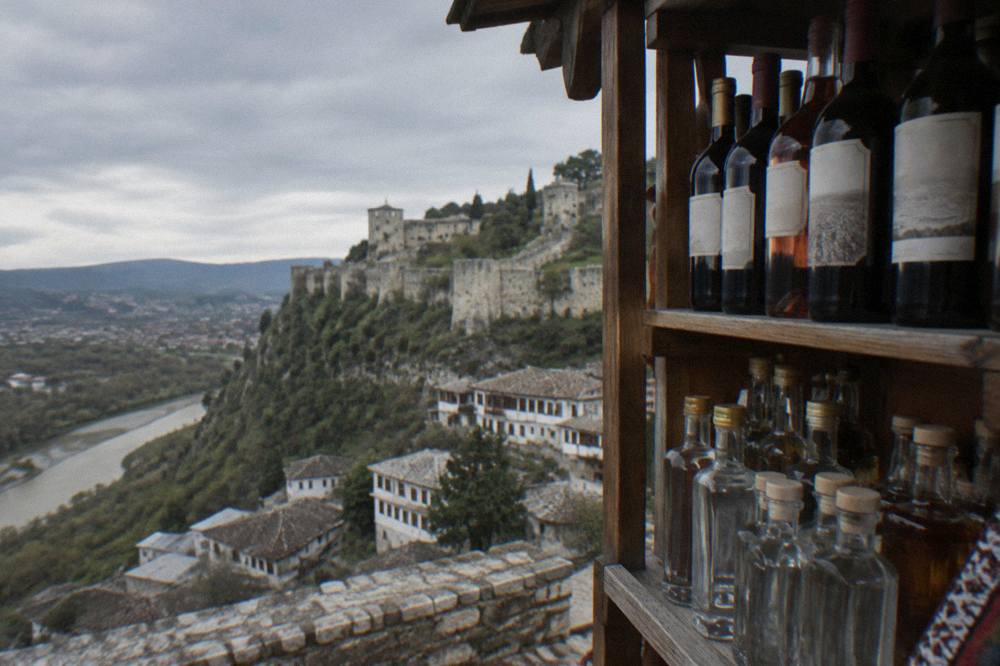
Raki deserves its own sentence of caution: it is strong, it is everywhere, and it is cheap by the shot in restaurants. If you are flying home, remember that any bottle over 100 millilitres must travel in checked baggage, and that customs limits on alcohol apply in your home country just as they always did. If that rules out raki, buy the honey and the jam instead; they weigh nothing and never leak.
Berat also puts a calendar date on its wine culture. The Wine and Stories of Berat festival runs over three days in early October, with wines from Albanian and Kosovo wineries, a contest judged by international oenologists, and local food alongside. If your trip can bend toward those dates, it is the best single weekend in the year to taste before buying.
What Food, Drink And Souvenirs Cost Around Berat
Day-to-day prices in Berat are low by most European standards, and souvenir spending behaves the same way. Pantry souvenirs like honey, jam and tea usually sit in the few-euro range, with wine and raki above them. Treat every figure here as a planning range and confirm the price at the counter.
The table below gathers the reported figures for everyday spending, from food and drink price reports rather than from any official tariff. Use it to budget, not to hold anyone to a number.
| Item | Reported price | What to expect |
|---|---|---|
| Cappuccino | cheap by European standards | Old-town cafes, cash preferred |
| Cheap restaurant meal | cheap by European standards | Byrek, qifqi, simple plates |
| Mid-range dinner for two | cheap by European standards, cash in lek | Sit-down places in Mangalem and Gorica |
| Raki, by the shot | around €2 | Standard pour in most restaurants |
| Tavë kosi, main course | roughly €8-15 | Berat's signature baked lamb and yogurt dish |
| Byrek and tea, light lunch | around €4 | Bakery counters, Mangalem lanes |
For non-food purchases, keep three rules in mind. First, the best olive oil, honey and jam come from small producers, and the price usually reflects the jar, not the marketing. Second, textiles and copperwork are priced individually; there is room to ask politely for a better price when buying more than one piece, though aggressive haggling is not part of local culture. Third, anything that looks genuinely old, a coin, an icon, an antique tool, should stay where it is: exporting antiquities is restricted in Albania, and the rule applies no matter what a seller says.
How To Pay When You Shop In Albania: Cash, Cards And Lek
Pay in Albanian lek, in cash, for almost everything you buy in Berat. The lek is the currency; the euro is accepted informally by some tourist businesses but any change will come back in lek, usually at an unhelpful rate. Cards work at some hotels and larger shops, but Mangalem, Gorica and the castle quarter remain largely cash territory, so carry small notes.
Withdraw from a bank-branch ATM rather than a standalone machine on the street, because fees on foreign cards have been reported around 500 to 800 lek at some machines, and that charge bites hardest when you are withdrawing small amounts for souvenirs. Skip unofficial currency changers entirely; police in Berat have run operations against unlicensed exchange just this year, and a licensed exchange or a bank is the only safe version. The rough working rate is about 92 lek to the euro, which makes mental arithmetic easy once you fix a few landmarks: a thousand lek is a bit over ten euros.
Tipping is modest and appreciated rather than obligatory; rounding up a café bill or leaving small change at a restaurant is normal, and nobody expects a percentage. If you want to read wider context on prices across the country, our pieces on whether Albania is cheap or expensive and on how many days you should spend in Berat cover the budget side in more detail.
How To Fit A Shopping Trip Around A Full Day In Berat
The pattern that works is shopping in the early evening and activities by day. Berat's lanes shop best after about five, when the tour groups have thinned and the light hits the white walls; the morning belongs to the castle, the museums and the outdoor trips. A canyoning day on the Osumi Canyon or a waterfall hike fills the daylight hours, and the shops are still open when you get back, tired and ready to buy a bottle of something.
The standout full-day option from the roster pairs hiking and canyoning at Bigazi Waterfall, an eight-hour outing with rappels and jumps that ends back in Berat with the evening free. That is the moment for a slow walk through Mangalem, a dinner of tavë kosi, and a last stop at whichever shop poured you your favourite tasting. If adventure is not your speed, a horseback ride through the countryside or a winery tour with transfers covers the same shape of day at a gentler pace. Check availability on the canyoning listing before you plan around it, since canyon trips depend on the season and water levels.
For a fuller picture of the town beyond its shops, the Berat Travel Guide homepage collects the castle, museum and walking guides, and our article on what Berat is famous for explains why the old town looks the way it does. Shoppers who want the view explained while they walk may also like the old town and castle guides, which sit alongside pieces such as the prettiest town in Albania comparison.
Common Questions About Shopping In Albania
What is worth to buy in Albania?
Wine from native grapes such as Shesh i Zi and Puls, raki, olive oil, artisanal cheese, honey, fig jam and mountain tea, plus handmade lace, textiles, copperwork and woodcarving. Berat is one of the best towns to buy all of it, because producers and shops sit close together in the old quarters.
Can you pay by card in Berat?
Some hotels and larger businesses take cards, but Mangalem, Gorica and the castle quarter are largely cash territory. Carry lek in small notes and withdraw from a bank-branch ATM rather than a standalone street machine.
Can you bring Albanian wine home on a plane?
Yes, if it travels in checked baggage; bottles over 100 millilitres cannot go in hand luggage. Buy from a winery or shop that packs bottles well, and remember that your home country's customs allowance for alcohol still applies.
Is raki a good souvenir from Albania?
It is a genuine one, since it is the national spirit and every region makes its own. A decorative bottle from a local producer travels well in checked luggage, and a shot in a Berat restaurant costs only a couple of euros if you want to try before you buy.
Do you haggle over prices in Albania?
Not aggressively. Prices for food and drink are fixed, and at craft stalls it is fine to ask politely for a better price when buying more than one piece. Rounding up or leaving small change is the normal way to show appreciation.
Is Albania cheap for shopping compared with the rest of Europe?
Generally yes. Coffee, meals and pantry goods in Berat cost well below Western European levels, and locally made crafts are priced for locals as much as for visitors. The exceptions are imported branded goods, which cost about what they do anywhere.