Gjirokaster
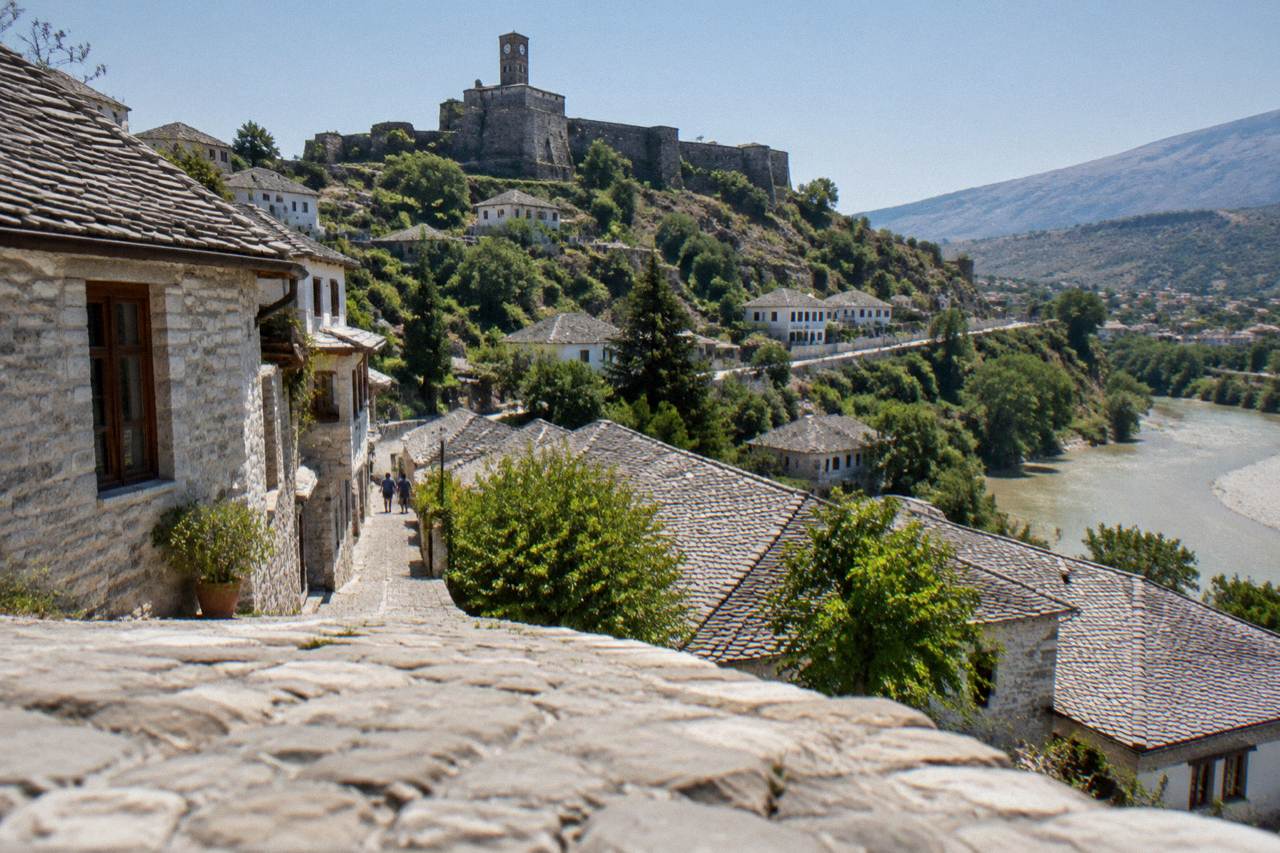
Gjirokaster is the other half of Berat's UNESCO listing, a stone-built town to the south that makes the most rewarding full-day excursion from the city of a thousand windows.
Short answer
Gjirokaster is the stone-roofed World Heritage town that shares its UNESCO listing with Berat, inscribed in 2005 with Berat added in 2008. There is no train; you travel by road, so most visitors take a full-day organized trip or drive. Carry lek for cash-only spots and check museum hours before you leave Berat.
Berat, in central Albania, is a UNESCO World Heritage Ottoman-era hill town on the Osum River, and Gjirokaster is the one destination that shares its World Heritage status. The two towns are protected together under a single listing, Historic Centres of Berat and Gjirokastra, which makes the trip south from Berat feel less like visiting somewhere new and more like reading the second half of one story. Gjirokaster's houses are built of stone and topped with heavy grey slate roofs, a striking contrast to the white Ottoman facades stacked above Berat's Osum riverbank. This guide covers how the day trip works, what to see when you arrive, and what is worth sorting out in Berat before you set off.
Why Visit Gjirokaster From Berat?
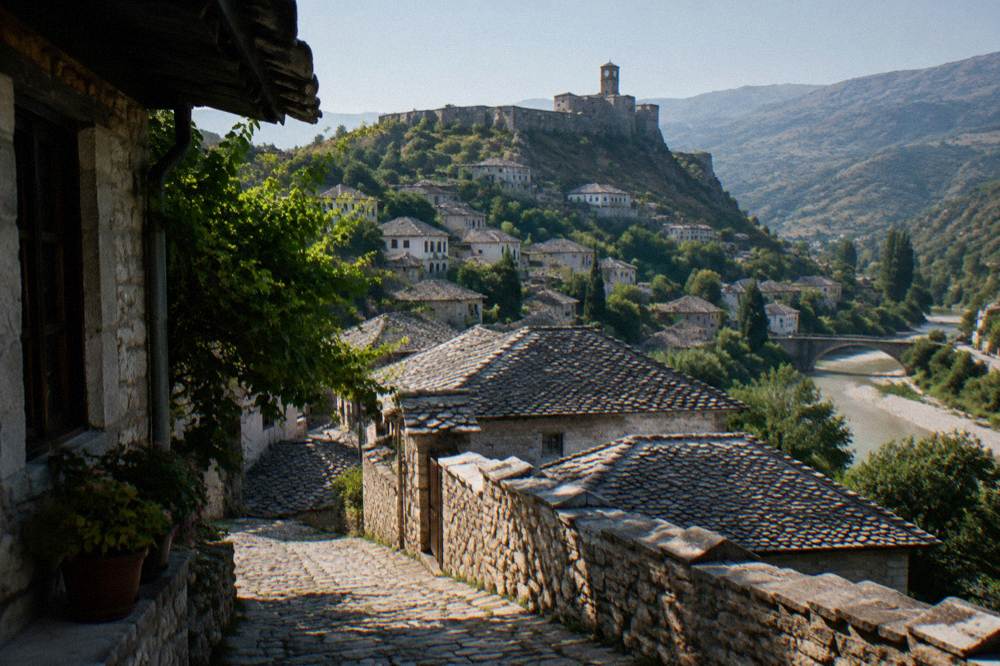
Gjirokaster sits on a steep hillside in southern Albania and is one of only two towns protected under the UNESCO listing Historic Centres of Berat and Gjirokastra, which was inscribed in 2005 when Berat was added to it in 2008. Its slate-roofed houses and fortified old core make it the most substantial historic destination within reach of a Berat base, and pairing the two towns is the classic itinerary of the region.
Gjirokastra came first in World Heritage terms. UNESCO inscribed it in 2005, and three years later the listing was extended to include the city centre of Berat, a decision the organisation announced in July 2008. The listing now covers both towns under one dossier, judged together under criteria (iii) and (iv) for what they show of Ottoman-era urban life in the Balkans. That shared status is the strongest reason to see both on one trip: you are not choosing between two rival towns but completing a single protected ensemble.
The character contrast is what most visitors remember. Berat earned its nickname, the city of a thousand windows, from the rows of white houses that climb the hillside below its castle, and UNESCO describes it as a rare example of a well-preserved Ottoman town. Gjirokaster reads differently, darker and heavier, built from the same regional stone tradition but expressed in fortress-like mansions rather than window-filled merchant houses. Photographers usually find that the two towns demand opposite treatment, which is part of the fun.
| Fact | Detail | Status |
|---|---|---|
| UNESCO property name | Historic Centres of Berat and Gjirokastra | Listing 569 |
| Gjirokastra inscription | 2005 | Original inscription |
| Berat inscription | 2008 | Added as an extension |
| Criteria | (iii) and (iv) | Joint assessment |
| Property area | 58.9 hectares | Both towns combined |
| Buffer zone | 136.2 hectares | Both towns combined |
If your time in Albania is short, this is the excursion to protect. Gjirokaster is the one nearby destination that can stand next to Berat in weight and reputation, and visitors who see only one of the two towns tend to spend their journey home wondering about the other.
How Do You Get From Berat To Gjirokaster?
There is no passenger train to Berat, and none onward to Gjirokaster: Albania's railway reconstruction between Tirana, Durrës and the airport carries a target of the end of 2027, and everything south of the capital runs on roads. From Berat you reach Gjirokaster by car, by taxi, or on an organized day trip, so the real choice is between a guided itinerary and driving the route yourself.
The rail point matters more than it sounds. Travellers sometimes assume a Balkan rail link exists between the two heritage towns, and it does not; the Durrës-Rrogozhinë tender winner is not even expected until November 2026, with construction to follow. Road travel is the entire picture for now, and the route crosses the mountains of southern Albania, which is scenic but demands a driver who is comfortable with winding roads.
For most visitors staying in Berat, the practical options are three. An organized day trip removes every decision: pickup, route, parking, and timing are handled, and the guide shapes what you see in Gjirokaster itself. A private car or hired driver gives the same freedom in the other direction, letting you stop in the countryside or leave early. Public transport exists in the region but runs on local logic rather than tourist timetables, so it suits travellers with plenty of time and tolerance for uncertainty. The dedicated Berat to Gjirokaster transport guide breaks the road options down in detail, including what to expect on departure days.
One planning note cuts across all three options. Since the trip is a road journey through mountain terrain, build buffer into your day rather than a tight schedule, and start from Berat with a full tank or a confirmed pickup. Drivers coming from Tirana first may find the Tirana to Berat route guide useful for the inbound leg before the southern run.
What Should You See In Gjirokaster On A Day Trip?
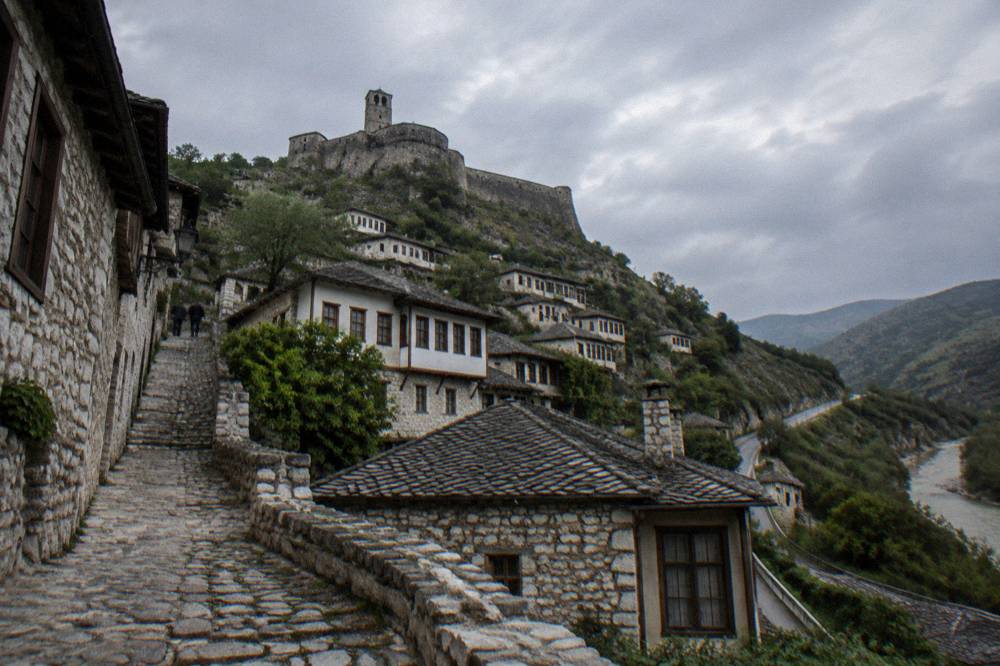
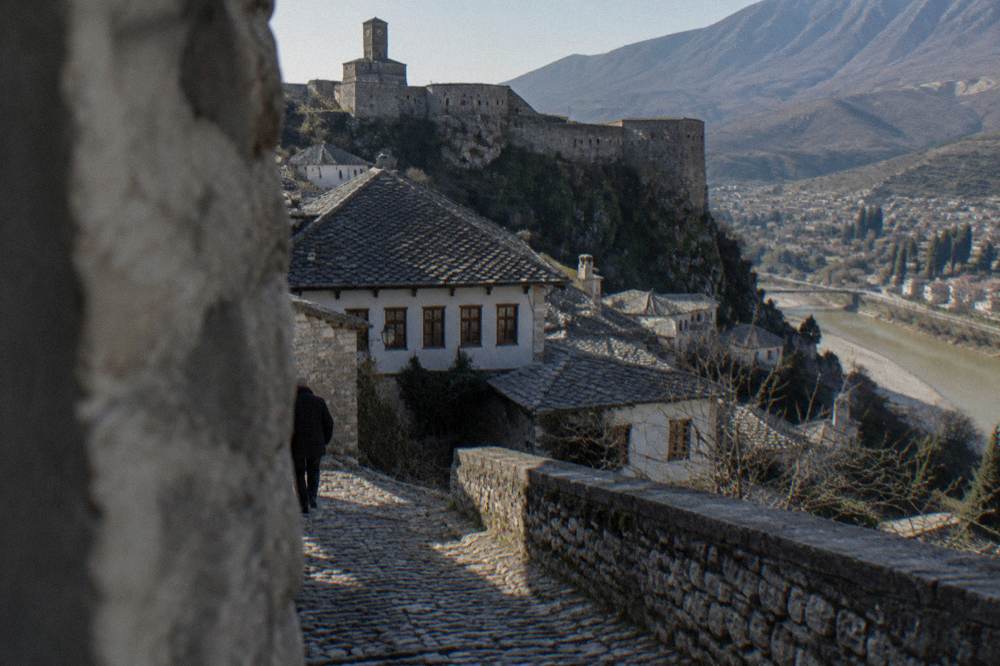
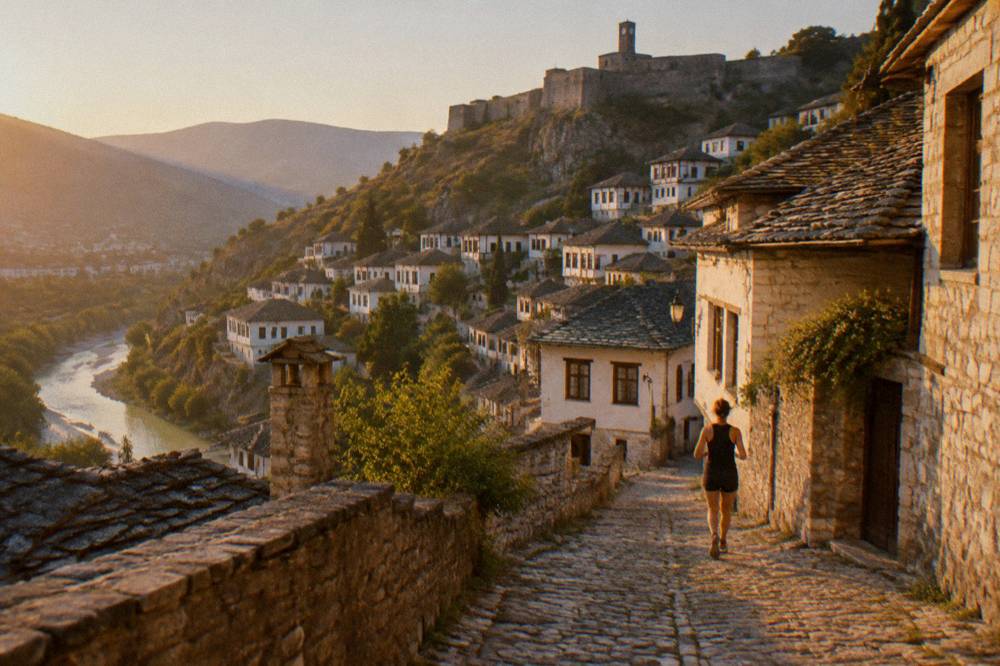
A day in Gjirokaster divides naturally into three layers: the castle that dominates the ridge above the town, the old bazaar street that runs through the historic core, and the stone mansions that give the town its character. Walk the town from the top down, castle first, then the bazaar, then the lanes, so the steepest climb comes while your legs are freshest.
The castle is the anchor of any visit. It sits above the rooftops with views across the valley, and its walls enclose enough space that you can spend a long while simply walking the circuit. Gjirokaster's fortress has been adapted and rebuilt many times over the centuries, and its present form reflects that layered history rather than a single era. Do not plan around specific opening hours published here; details like entry fees and seasons for Gjirokaster's sites are best checked with your tour operator or on arrival, because this site's verified fact base covers Berat's institutions in depth and the Gjirokaster side of the pair should not be guessed at.
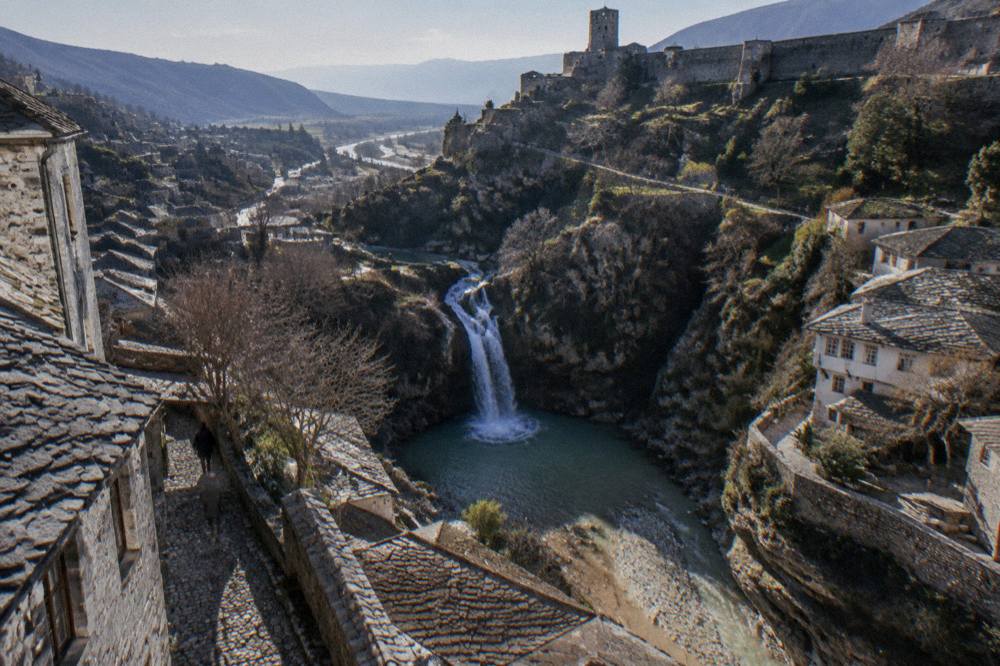
Below the castle, the old bazaar street is the commercial heart of the protected core, a cobbled lane lined with stone shops and houses. It is the place to buy the region's crafts and to sit with a coffee between walks. The lanes off it carry the mansions Gjirokaster is famous for, heavy buildings with thick stone walls and slate roofs built to house wealthy families through the Ottoman centuries. Those houses, not the castle alone, are why UNESCO protects the town as a whole.
A few practical habits make the day better. Wear shoes with grip, because the cobbles are worn smooth and steep in places. Carry cash in lek, because the old cores of Albanian heritage towns remain largely cash territory and card acceptance is patchy outside hotels and larger venues. And keep some water with you; summer heat in this part of Albania can top 40 °C, and the climb to the castle offers little shade. Visitors who want a structured version of exactly this kind of day can compare guided options on the site's day-trip pages.
Gjirokaster Or Berat: Which Suits Your Trip Better?
Berat suits travellers who want a base town with riverside atmosphere, white Ottoman facades, and enough guesthouses and restaurants to fill several days, while Gjirokaster rewards a shorter, more dramatic visit built around its castle and stone mansions. Most visitors answer the question by doing both, since the towns share one UNESCO listing and one story; but if you must pick a single overnight, Berat's infrastructure makes it the easier place to sleep.
The honest comparison starts with what each town does best. Berat is softer to look at and softer to travel in: the old town spreads along the Osum, the two historic quarters face each other across the water, and the old town guide shows how walkable the whole ensemble is. Gjirokaster is steeper, darker, and more vertical in every sense, with a castle that out-positions anything on the Berat side and streets that demand real effort in the heat.
The shared listing changes how you should think about the choice. Because UNESCO inscribed Gjirokastra in 2005 and extended the property to Berat in 2008, the two towns are assessed against the same criteria, (iii) and (iv), and the organization frames them as complementary examples of Ottoman urban heritage. Seeing only one is a legitimate trip; seeing both is the complete one.
| Question | Berat | Gjirokaster |
|---|---|---|
| UNESCO inscription year | 2008, added to the listing | 2005, original inscription |
| Signature look | White Ottoman houses above the Osum | Stone mansions with slate roofs |
| Anchor monument | Berat Castle, a lived-in quarter | The fortress above the town |
| Best role in a trip | Base town for several nights | Flagship day trip destination |
| Shared assessment | Criteria (iii) and (iv) | Criteria (iii) and (iv) |
For a longer head-to-head, the site's dedicated comparison, which is better, Gjirokaster or Berat, works through accommodation, food, and pace of travel in detail. The short version used by most independent travellers is simple: sleep in Berat, spend a day in Gjirokaster, and let the Berat Travel Guide pages handle the planning around both.
When Is The Best Time To Combine Both Towns?
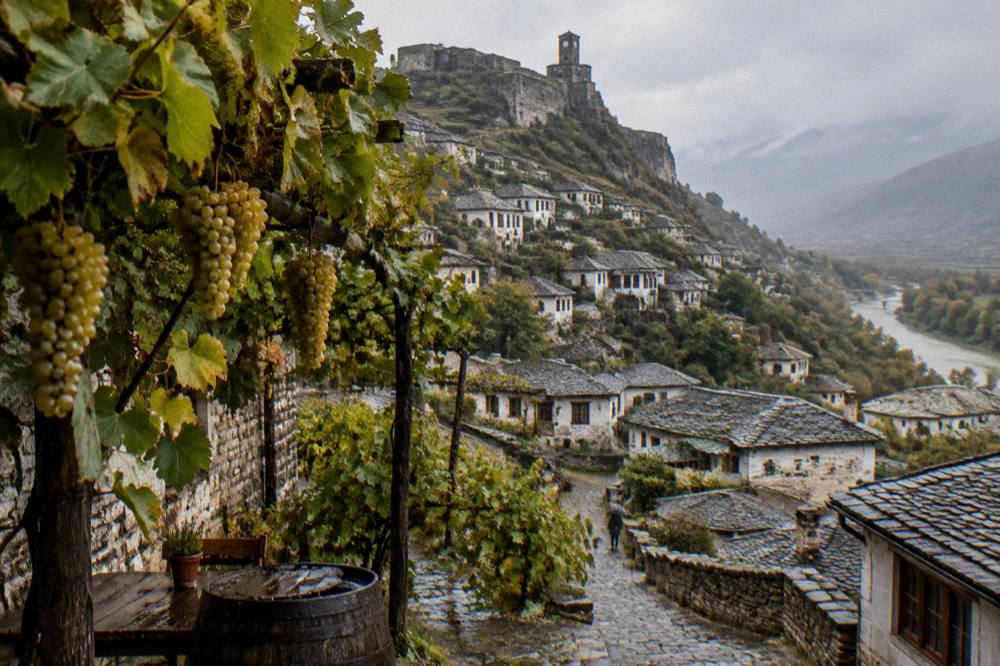
Late spring and early autumn are the best windows for combining Berat and Gjirokaster, because summer heat in this part of Albania can top 40 °C and the climbs in both towns become punishing by midday. October carries an extra draw on the Berat side: the Wine and Stories of Berat festival runs 2 to 4 October 2026, and August brings the annual Bektashi pilgrimage to Mount Tomorr.
Climate-wise, this is a hot, dry-summer region with wetter winters, and rain concentrates from November through January. No official station normals have been published for Berat, so treat any month-by-month temperature chart you see elsewhere with caution; the safe general rule is that July and August are the hottest and driest months and the shoulder seasons are milder. The Berat weather guide keeps the qualitative picture in one place.
Two dated events are worth planning around. The Wine and Stories of Berat festival, listed for 2 to 4 October 2026 on the municipal events calendar, brings Albanian and Kosovo wineries together with music, artisanal food, and a wine contest, and it turns the October shoulder season into the town's most sociable weekend. In August, the Bektashi pilgrimage to the tomb of Abaz Ali on Mount Tomorr draws enormous crowds, around 600,000 expected pilgrims in the 2026 edition, which ran 18 to 25 August with police traffic restrictions around Kulmak Tekke. That affects roads in the mountains south and east of Berat, so check the Mount Tomorr day-trip guide if your Gjirokaster trip overlaps.
| Period | What happens | Planning note |
|---|---|---|
| 2 to 4 October 2026 | Wine and Stories of Berat festival | Book Berat lodging early |
| 18 to 25 August 2026 | Bektashi pilgrimage, Mount Tomorr | Traffic restrictions near Kulmak |
| 1 May to 30 Sep | Berat museums open daily 9:00-18:00 | Longest sightseeing days |
| November to January | Wettest months of the year | Shorter museum hours apply |
| July and August | Hottest period; heat can top 40 °C | Climb early, carry water |
Wine is a strong autumn theme in the whole region, and visitors timing a Gjirokaster trip around the festival often add a winery day. The Berat wineries guide covers the estates around the town, where indigenous varieties like Shesh i Zi and the rare local white Puls are poured alongside regional raki. A guided version handles the driving between tasting rooms, which matters on a wine-focused itinerary.
The guided winery tour from Berat includes transfers and tastings, from $42, rated 4.9 from 385 reviews over about 3 hours, which pairs neatly with a festival visit.
What Should You Sort Out In Berat Before You Go?
Before leaving Berat for the day, sort out three things: museum hours and tickets if you want the Berat museums on another day, cash in lek because old-town shops and small eateries on both routes expect it, and your castle logistics, since car access into Berat's Kala quarter is being restricted and parking below the walls is the reliable plan. Each takes minutes and saves an hour of a day trip.
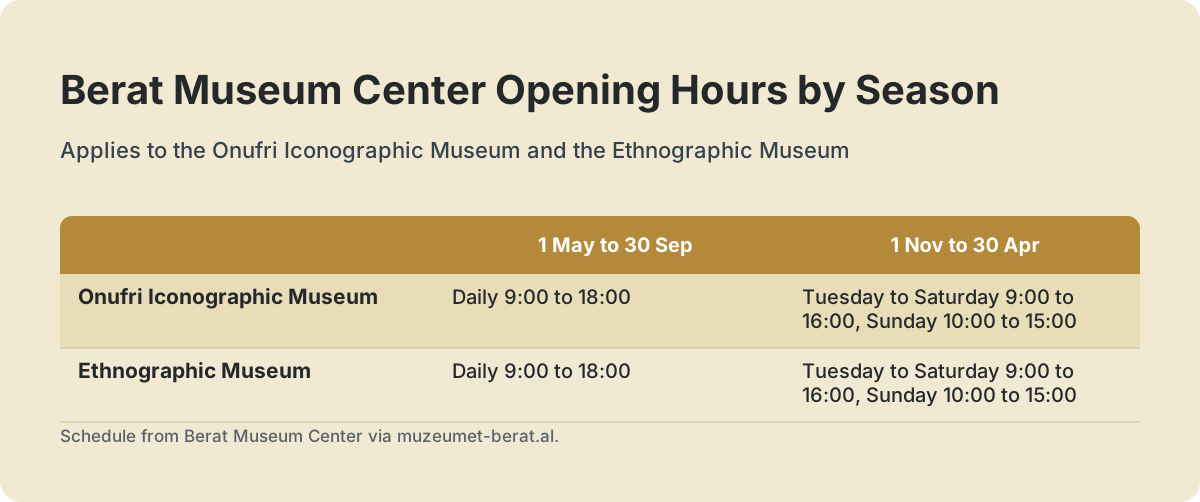
The Berat Museum Center runs a clear seasonal schedule that should shape any itinerary around your Gjirokaster day. From 1 May to 30 September both the Onufri Iconographic Museum and the Ethnographic Museum open daily from 9:00 to 18:00; from 1 November to 30 April they run Tuesday to Saturday 9:00 to 16:00 and Sunday 10:00 to 15:00. Online ticketing through e-Albania, launched in November 2025, covers the Berat museums among other national sites, so you no longer need to queue on the hill.
| Museum | 1 May to 30 Sep | 1 Nov to 30 Apr |
|---|---|---|
| Onufri Iconographic Museum | Daily 9:00-18:00 | Tue-Sat 9:00-16:00, Sun 10:00-15:00 |
| Ethnographic Museum | Daily 9:00-18:00 | Tue-Sat 9:00-16:00, Sun 10:00-15:00 |
Ticket prices are modest, and children under 12 enter both museums free.
| Ticket | Onufri Museum | Ethnographic Museum |
|---|---|---|
| Individual adult | 400 ALL | 300 ALL |
| Reduced | 200 ALL | 150 ALL |
| Ages 12-18 and students | 120 ALL | 90 ALL |
| Children under 12 | Free | Free |
| Audio guide | 500 ALL | Not listed |
There are also free-entry days worth knowing: 18 April, 18 May, 21 May, and 29 September for everyone, and 28 and 29 November for Albanian citizens only.
| Free day | Who enters free |
|---|---|
| 18 April | All visitors |
| 18 May | All visitors |
| 21 May | All visitors |
| 29 September | All visitors |
| 28 and 29 November | Albanian citizens only |
Money deserves a moment of preparation. Albania's currency is the lek, roughly 92 lek to the euro at recent official rates, and the euro is not legal tender even though some tourist businesses accept it informally and give change in lek. ATMs exist in Berat, but fees on foreign cards commonly run 500 to 800 lek per withdrawal, so one larger withdrawal beats several small ones.
| Money question | Answer for Berat and Gjirokaster |
|---|---|
| Local currency | Albanian lek (ALL) |
| Rough exchange rate | About 92 lek to 1 euro |
| Euro acceptance | Informal only in some businesses |
| Old-town payments | Largely cash |
| Typical ATM fee | 500 to 800 ALL per foreign-card withdrawal |
If you have not yet toured Berat Castle properly, do it before or after the Gjirokaster day rather than squeezing it into the same morning. The Berat Castle guide covers the walls, the churches, and the lived-in quarter inside, and a small-group castle and old town tour, from $44, rated 4.8 from 521 reviews, is the structured way to do it.
The same logic applies to safety preparation. Albania is broadly safe for visitors, the UK foreign office issues no advice against travel to any part of the country, and crime targeting tourists is rare; the is Berat safe guide carries the details, including emergency numbers, in one place. None of it should worry you, but knowing the numbers before a mountain drive is simply good practice.
Day Trips And Tours That Pair Well With A Gjirokaster Visit
The strongest pairings with Gjirokaster are the trips that use Berat as a hub: the Osumi Canyon and Bogove waterfall country to the northeast, the Mount Tomorr highlands, the wineries of the Berat hills, and the classical sites at Apollonia and Byllis to the west. One organized itinerary, From Tirana: Berat Unesco, Durres City and Roman Amphitheater, from $32 and rated 4.8 from 719 reviews, threads Berat into a wider route for travellers based in the capital.
Starting with that last one, because it answers a common situation: many visitors arrive in Berat on a day tour out of Tirana and only later decide to add Gjirokaster. The Berat UNESCO, Durres city and Roman amphitheater combo tour packages the Berat heritage stops with Durres and its Roman amphitheater, from $32, rated 4.8 from 719 reviews. If it fits your dates, Check availability on the live listing.
For independent travellers based in Berat, the regional pairings fall into two groups. Mountain and canyon country sits northeast of the town: the Osumi Canyon guide covers the protected natural monument near Çorovodë, where rafting runs with the spring snowmelt, roughly March to June depending on water, and tubing takes over for the calmer summer and autumn months. The Bogove waterfall guide, more precisely the Bogove waterfall walk, describes the short forest trail to the falls, and the Osumi rafting trips page lists the water-based options. To the west lie the classical sites: Apollonia and Byllis, both easy companions to a heritage-themed itinerary that already includes two UNESCO towns.
One canyon and waterfall combination stands out for visitors who want water and stone in a single day. The Osumi Canyon and Bogove waterfall classic tour, from $35, rated 4.8 from 418 reviews, runs 3 to 7 hours depending on the option chosen, and it makes a natural second excursion after a Gjirokaster day.
Further afield but still within the Berat orbit, Përmet and Benjë extend the southern route in the same direction as Gjirokaster, and the beaches near Berat guide covers the coast for a contrasting rest day. Where you sleep shapes all of this, and the where to stay in Berat guide sorts the Mangalem, Gorica, and castle-quarter options, from budget guesthouses to fuller-service hotels. Book ahead if your trip touches the October festival weekend or the August pilgrimage window, when regional lodging tightens.
Common Questions About Gjirokaster
Can you visit Gjirokaster as a day trip from Berat?
Yes. Gjirokaster is the standard full-day excursion from a Berat base, reached by road since no train serves either town. Most visitors take an organized day trip or a private car, and the shared UNESCO listing makes the pairing feel like one itinerary rather than two separate destinations.
Is Gjirokaster also a UNESCO World Heritage site?
It is, and in fact it came first. UNESCO inscribed Gjirokastra in 2005 under the listing Historic Centres of Berat and Gjirokastra, and Berat was added as an extension in 2008. Both towns are assessed together under criteria (iii) and (iv), covering a combined property of 58.9 hectares with a 136.2 hectare buffer zone.
Is there a train between Berat and Gjirokaster?
No. No passenger train reaches Berat at all, and rail reconstruction between Tirana, Durrës and the airport carries a target date of the end of 2027, with the Durrës-Rrogozhinë tender winner not expected until November 2026. All travel between the two heritage towns is by road.
Do you need cash in Gjirokaster?
Yes, carry lek. The old cores of Albania's heritage towns remain largely cash territory, the euro is not legal tender even where it is informally accepted, and change is usually given in lek anyway. The exchange rate runs at roughly 92 lek to the euro, and ATM fees on foreign cards commonly run 500 to 800 lek per withdrawal.
How does Gjirokaster compare with Berat?
Gjirokaster is steeper, darker, and built around stone mansions with slate roofs and a dominant fortress; Berat is the softer, whiter town of a thousand windows along the Osum, with the deeper base infrastructure. Most travellers sleep in Berat and give Gjirokaster a full day, which completes both halves of the shared UNESCO listing.
What is the best month to combine both towns?
October is a strong pick on the Berat side, since the Wine and Stories of Berat festival runs 2 to 4 October 2026. Late spring is equally good, with mild weather before the summer heat, which can top 40 °C in July and August. Avoid assuming any published month-by-month temperature table for Berat is official, because no station normals have been sourced.