Which Is Better, Montenegro Or Albania?
A head-to-head comparison of Montenegro and Albania for travellers, with Berat, the UNESCO Ottoman hill town in central Albania, as the anchor for the Albanian case.
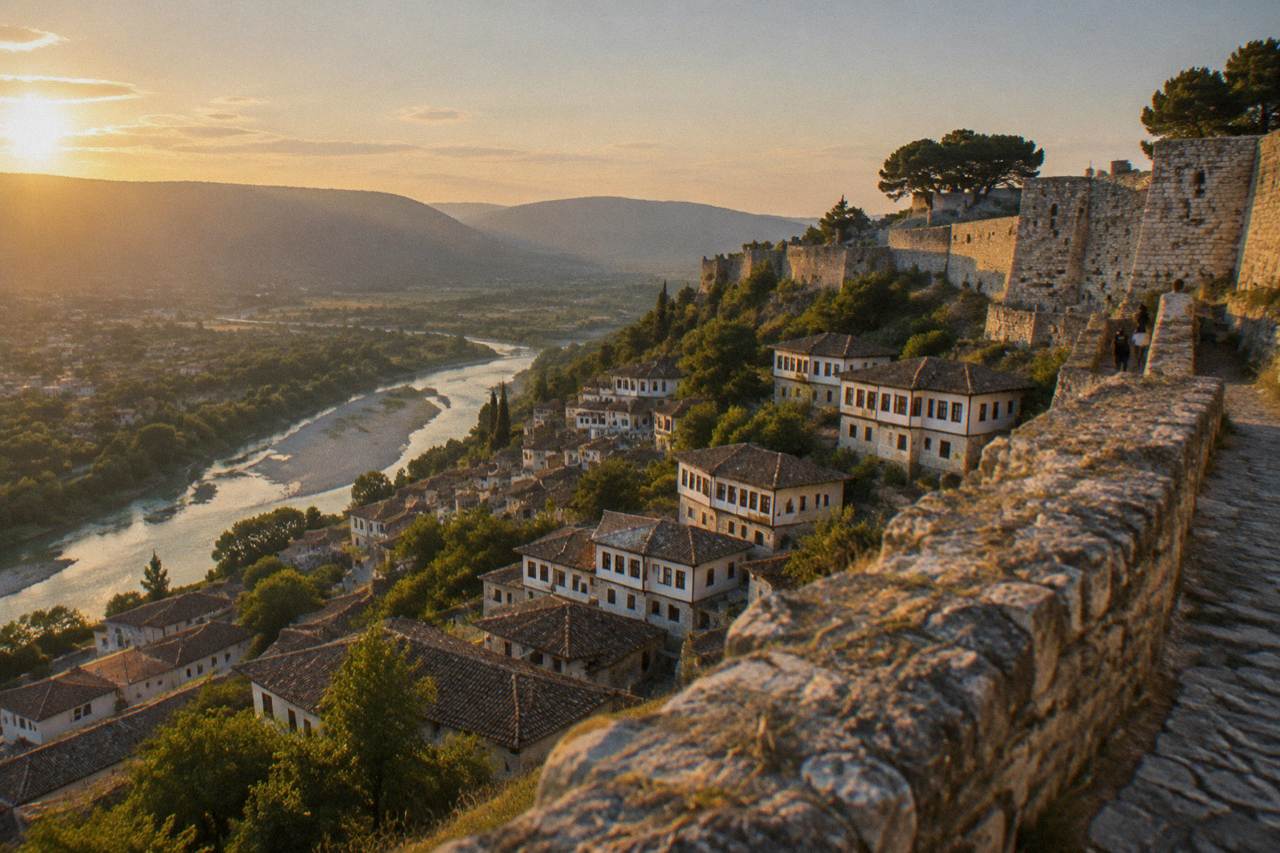
Berat, in central Albania, is a UNESCO World Heritage Ottoman-era hill town on the Osum River, and it is the strongest single argument in the "Montenegro or Albania" debate. Montenegro answers with a fjord-like bay, walled Kotor and a compact, euro-priced coastline that is easier to drive in a week. Albania answers with lower costs, a deeper UNESCO hinterland and towns like Berat where you can still watch daily life inside a heritage site rather than around a ticket booth. The honest answer depends on your budget, your tolerance for logistics and whether you want a coastline or a heartland.
Which Is Better, Montenegro Or Albania?
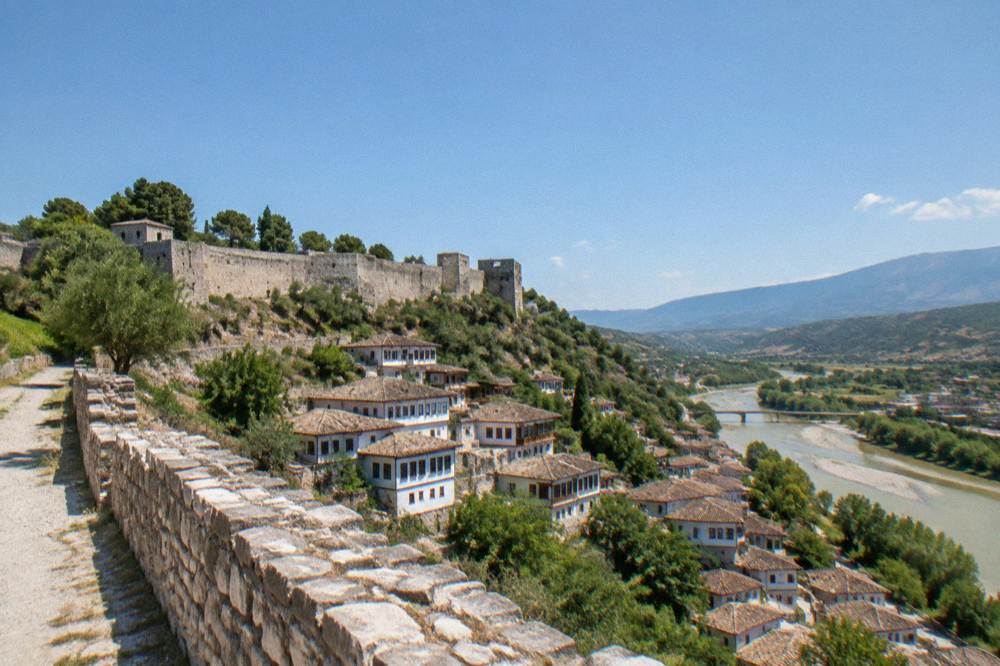
Albania is the better pick for travellers who want more history, more variety and lower costs per day, while Montenegro is better for a short, easy, scenery-first trip where polish matters more than price. Berat alone, a lived-in Ottoman hill town on the Osum River, offers an experience Montenegro's coast simply does not have: a UNESCO town you can sleep inside for the price of a dorm bed elsewhere.
Neither country is "better" in the abstract, so it helps to frame the choice around what each does with its size. Montenegro is the smaller of the two and its tourism is concentrated along the Adriatic: the Bay of Kotor, the old towns of Budva and Kotor, and mountain backdrops close to the water. Albania is larger and its highlights are more spread out: the southern Riviera, the Ottoman towns of Berat and Gjirokastra in the interior, Roman sites like Apollonia, and canyon country in the Skrapar region around Çorovodë.
The pattern that repeats across both is simple. Montenegro gives you a higher share of polished, walkable, coast-facing experiences within a short driving radius, priced in euro. Albania gives you more raw variety for less money, with the trade-off that moving between regions takes longer and standards swing wider between excellent and basic.
For most first-time visitors with a week or more, Albania rewards the effort. For a four-day coastal escape, Montenegro is hard to beat. And if your interest is Ottoman heritage towns rather than beaches, Albania wins that contest outright: Berat and Gjirokastra are jointly inscribed as the "Historic Centres of Berat and Gjirokastra", a World Heritage property Albania shares with no one, while Montenegro's marquee listing is its coastal and mountain scenery around Kotor.
If you are weighing Albania's case specifically around its most famous town, the deeper comparison continues at is Berat Albania worth visiting, and the two-country question narrows nicely at which is better Gjirokaster or Berat.
What Does Each Country Do Best?
Montenegro does compact Mediterranean scenery best: one bay, two or three old towns and dramatic mountains within a couple of hours of each other. Albania does range best: UNESCO Ottoman towns, a longer and emptier Riviera, Roman archaeology, wine country and canyons, all at lower prices. Berat is the flagship of Albania's interior offer.
Montenegro's strength is density. You can base yourself near the Bay of Kotor and reach most of what the country is famous for without ever planning a long drive. Its coastline is shorter, its tourism infrastructure along it is more mature, and its currency is the euro, which makes budgeting effortless for eurozone visitors and expensive for everyone else.
Albania's strength is depth. Berat, whose municipality counted 62,232 residents at the 2023 census, packs a castle quarter that people still live in, an icon museum inside a working church, and the white-walled Mangalem and Gorica quarters facing each other across the Osum. Beyond it, the country adds the southern beaches, the mountains of Tomorr National Park, and the Osum Canyons near Çorovodë, a protected natural monument where rafting runs on spring snowmelt and tubing carries the season into autumn.
The practical difference shows up in planning style. Montenegro suits a single base with day trips. Albania rewards a route: a few nights on the coast, a few in Berat, maybe Gjirokastra further south, with buses or a rental car stitching it together. Travellers who enjoy the stitching itself tend to love Albania. Travellers who want the stitching invisible prefer Montenegro.
The trio above is a fair sample of the Albanian side of the argument: a coast-to-heritage day tour, a winery tasting and a home cooking class, three experience types Montenegro's compact coast simply offers less of.
Which Country Is Cheaper For Travellers?
Albania is clearly cheaper. Its currency is the Albanian lek rather than the euro, and meals, museum tickets and guesthouses cost a fraction of Montenegro's coastal equivalents. Montenegro's euro pricing is convenient but puts every line item in the same expensive basket as the eurozone.
The cost gap is not subtle. Albania uses the lek, at roughly 92 lek to the euro, and the old town of Berat remains largely a cash economy that is cheap by European standards. Berat's two flagship museums are state-priced: the Onufri Iconographic Museum charges 400 lek for an individual ticket, with an audio guide at 500 lek, and the Ethnographic Museum charges 300 lek, with children under 12 free. Montenegro's prices sit in euro terms that feel closer to Croatia than to the Balkan interior.
| Item | Berat, Albania | Coastal Montenegro |
|---|---|---|
| Currency you pay in | Albanian lek (about 92 to the euro) | Euro |
| Cheap restaurant meal | Cheap by European standards, cash in lek | Noticeably higher in euro terms |
| Mid-range dinner for two | Cheap by European standards, pay in lek | Higher, euro-denominated |
| Cappuccino | Cheap by European standards, cash in lek | Higher, euro-denominated |
| Signature museum ticket | Onufri Museum, 400 lek | Kotor's old-town sights priced in euro |
| Typical guesthouse night | Cheap by European standards, cash in lek | Higher on the coast in peak season |
Accommodation tells the same story. Guesthouses in Berat were listed in 2026 at roughly $44 to $79 a night, and a centuries-old building inside the castle walls is being converted into an 8-room family guesthouse next to the Onufri Museum, adding heritage beds rather than pricing out the budget segment. Montenegro's coastal accommodation, by contrast, runs at euro rates that climb steeply in July and August.
None of this means Albania is free. Inflation reporting through 2025 and 2026 showed accommodation and services rising faster than the general rate, and tourism-linked sectors drove a large share of price increases. The gap is closing from the Albanian side, but for now a comparable itinerary still costs meaningfully less in Albania, as the broader breakdown at is Albania cheap or expensive shows.
Is Berat Or Kotor The Better Old Town?
Berat is the better old town to actually stay in, Kotor the better one to photograph from the water. Berat's Mangalem and Gorica quarters are lived-in, cheap and open without gates, while Kotor's walled core is more theatrical, more crowded in season and priced for cruise-ship traffic. For depth over drama, Berat wins.
Kotor delivers an instantly recognisable image: a walled medieval town at the head of a mountain-ringed bay, with fortifications climbing the hillside behind it. It is spectacular, and in July it is also the busiest small square in the region. The experience is concentrated, curated and photogenic. Other pages covering the same trip are gathered on Berat Travel Guide.
Berat works differently. UNESCO describes it as "a rare example of a well-preserved Ottoman town", and it was added to the World Heritage List in 2008 as an extension to Gjirokastra's 2005 inscription. Its famous stacked white houses, the "town of a thousand windows", are homes, not a stage set. The castle quarter at the top is still a neighbourhood, with guesthouses inside the walls and a new restriction on vehicle access from April 2026 that favours anyone arriving on foot. The castle walls still carry 24 defensive towers, about eight of the roughly 42 churches that once stood inside are preserved today, and the Onufri Museum holds the icons of Berat's most famous painter.
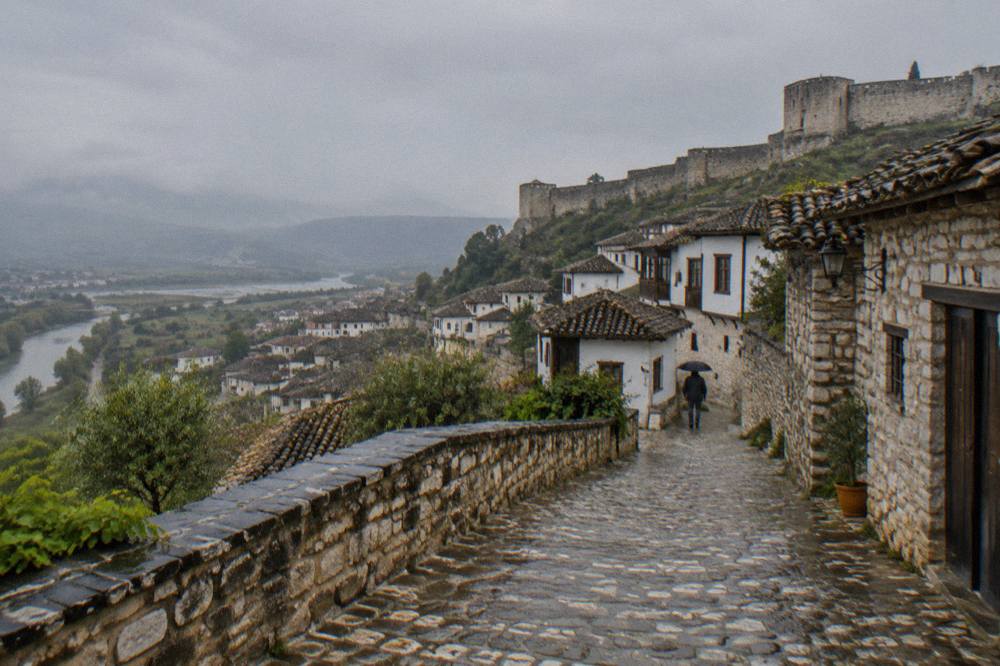
The honest verdict is that they are not really competing in the same category. Kotor is a coastal fortress town optimised for a half-day visit. Berat is a river town optimised for staying: two nights lets you do the castle and museums at walking pace, cross the Gorica Bridge on foot, and eat in the old town at interior-Albania prices. If you only have time for one old town in either country and heritage is the point, choose Berat and use a night saved on the coast to reach it.
How Do Entry Rules And Getting Around Compare?
Albania is not an EU member and not in the Schengen area, so its entry rules are its own: visa-free stays of up to 90 days in any 180 for UK and EU citizens, and up to a year for US citizens. Montenegro is also outside the EU but is a more mature, compact drive. Neither requires a visa for most Western travellers, so logistics, not paperwork, decides this round.
The entry side is more even than people expect. Both countries are outside the EU and outside Schengen, and both let most Western visitors in visa-free. Albania's rules are generous: UK and EU citizens get 90 days within any 180, and US citizens may stay up to a year without applying for a residency permit. Montenegro runs its own similar visa-free regime. The practical note for Albania is that days spent there do not count toward any Schengen 90/180 allowance, which matters for long-route travellers threading both regions.
Getting around is where the countries diverge. Montenegro's small size means the main coastal road connects nearly everything worth seeing, and drive times stay short. Albania's bus and furgon network reaches Berat from Tirana in around two and a half hours from the South-North terminal, with departures spread from early morning to late afternoon and fares paid in cash, a few hundred lek. There is no direct airport bus to Berat, so you change in Tirana, and no passenger train reaches the town; the rail reconstruction under way further north targets the end of 2027.
Within Berat itself, the town is walkable, with the castle quarter pedestrian-leaning since the April 2026 vehicle restrictions. A practical compromise many travellers use is a tour that bundles the coast and Berat: the Vlora, Zvernec, Apollonia and Berat day tour links the coast, an island monastery and Roman ruins with a full afternoon in the old town, which is a decent stress test of Albania's variety in a single day. If that loop feels right, Albania is your answer; if it sounds like a lot of driving, Montenegro's compactness will suit you better. For the wider planning picture, see how reliable are buses in Albania.
Which Country Should You Choose For Your Trip?
Choose Montenegro for a short, scenic, euro-priced trip built around one bay and a handful of old towns. Choose Albania for a longer, cheaper, more varied route built around Berat, the Riviera and the interior, where the food and wine culture alone, from Pupa Winery tastings to home cooking classes, repays the extra planning.
A useful tiebreaker is what you want to eat and drink. Montenegro's coast shares the Adriatic repertoire you will find across the water. Albania has its own table: qifqi rice dumplings, tavë kosi, japrak stuffed vine leaves, and a wine culture built on native grapes like Shesh i Zi, Shesh i Bardhë and the rare Berat-area Puls. Cobo Winery in the Berat region makes a traditional-method sparkling from Puls aged three years on its lees, which is a genuinely local experience with no Montenegrin equivalent.
That food-and-wine layer is where the Albanian interior quietly wins the value contest. Wine tastings and cooking classes in and around Berat are priced in a range that makes them easy to add to any itinerary, and the wineries of Roshnik and the surrounding villages sit within a short transfer of the old town. Montenegro can serve you well and scenically; Albania can feed you distinctively.
For the final decision, time and temperament settle it. With three days, fly into the nearer airport and stay compact: that favours Montenegro. With a week or more, or with a taste for Ottoman towns, canyons and vineyards over marinas, Albania is the stronger trip, and Berat is the place to anchor it. The most common regret reported on this route is not choosing the "wrong" country, it is rushing the one you picked.
Common Questions About Montenegro Or Albania
Which is better, Montenegro or Albania?
Albania is better for longer, cheaper, more varied trips built around heritage towns like Berat; Montenegro is better for short, compact, scenery-first coastal trips. Choose on trip length and budget rather than on any single ranking.
Is Albania cheaper than Montenegro?
Yes, and clearly. Albania pays in lek, with restaurant meals and coffee in Berat cheap by European standards, and flagship museum tickets of 300 to 400 lek, while Montenegro prices its coast in euro.
Do you need a visa for Albania or Montenegro?
Most Western visitors need no visa for either. Albania allows UK and EU citizens 90 days in any 180 and US citizens up to a year, and neither country is in the EU or the Schengen area.
Which country has the better old towns?
For staying in and exploring at walking pace, Berat's UNESCO-listed Ottoman quarters beat Montenegro's walled coastal towns on depth and price. For dramatic coastal theatre, Kotor is the stronger image.
Can you visit Berat and the Albanian coast on one trip?
Yes. Berat sits inland but is linked to the coast by road and by tours such as the Vlora, Zvernec, Apollonia and Berat day loop, which pairs island and Roman sites with an afternoon in the old town.
When is the best time to visit either country?
Late spring and early autumn suit both. Berat summers can top 40 °C, and the Wine & Stories of Berat festival in early October gives the Albanian shoulder season an extra reason to go.