Does Albania Have Mcdonald's?
Albania has no McDonald's, including in Berat, the UNESCO Ottoman hill town on the Osum River. Here is what the fast food scene actually looks like and what to eat instead.
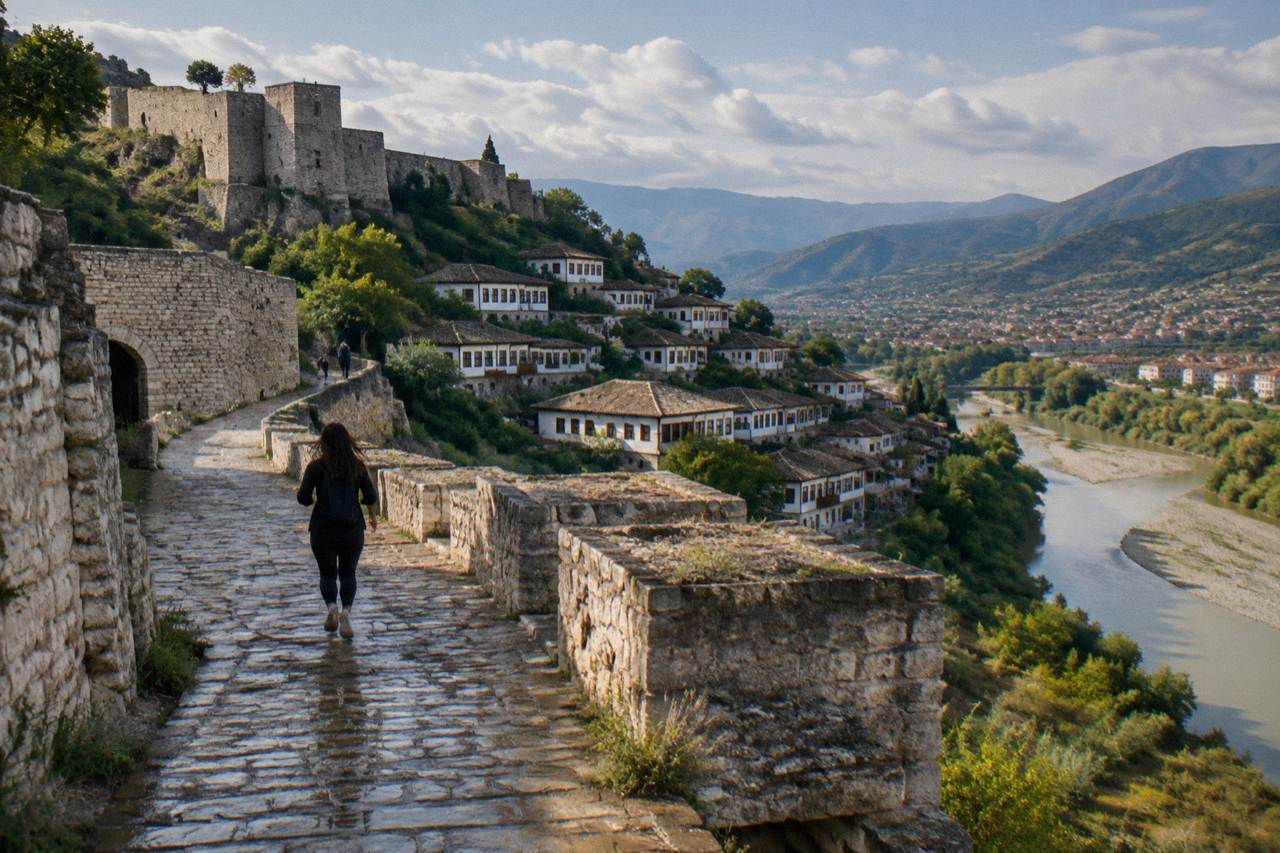
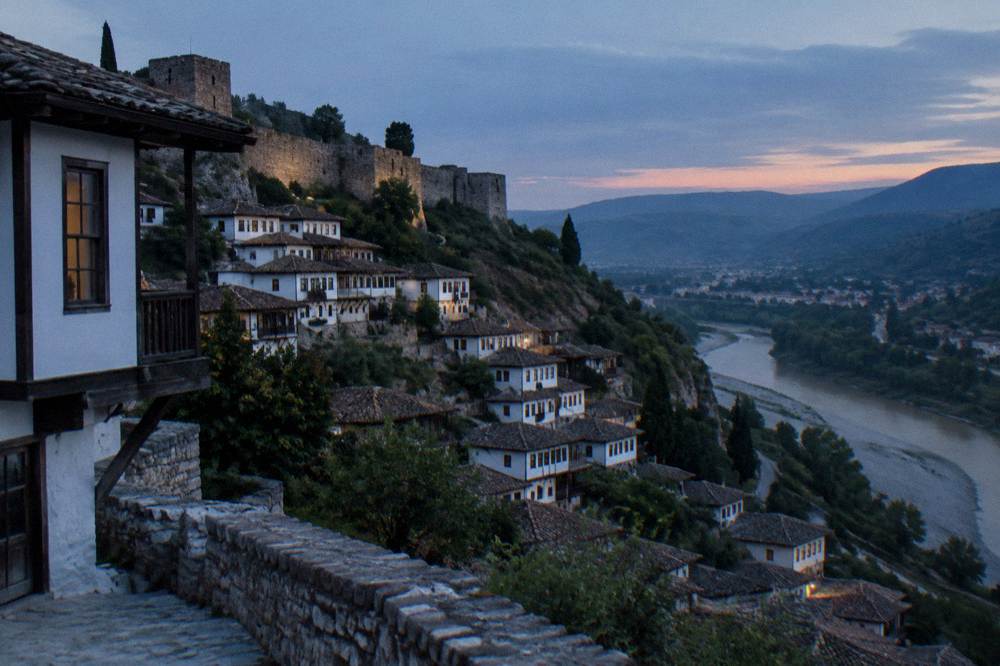
Berat, the UNESCO World Heritage Ottoman-era hill town on the Osum River in central Albania, has cobblestone lanes, a castle with 24 defensive towers, a wine festival each October, and no McDonald's anywhere within its boundaries. Nor does the rest of the country have one. Albania is one of the few countries in Europe where the golden arches have never opened a branch, and travellers who arrive expecting a familiar burger fallback are usually surprised by what they find instead: a genuinely local street food culture that costs a fraction of a combo meal and tastes of something you cannot get anywhere else.
Does Albania Have Mcdonald's?
No. Albania has no McDonald's, not in the capital Tirana, not on the coast, and not in Berat. The chain has never opened a branch in the country, so there is no Big Mac, no fries and no drive-through anywhere on Albanian soil. What fills the gap is a mix of local burger grills, kebab shops and byrek bakeries, plus regional chains you will not recognise, and in a town like Berat the traditional food is cheaper than fast food anyway.
That answer surprises people who assume every European country is saturated with American chains. Albania's market stayed largely in local hands after the communist era ended, and domestic quick-service brands grew up in the space a global giant might otherwise have taken. In practice this means the fast food you find in Tirana or Berat is local: qofte grilled on open counters, doner-style kebabs, and pizza sold by the slice, alongside the far older Albanian habit of eating byrek, the savoury filled pastry, standing up at a bakery counter.
For visitors the absence is not an inconvenience so much as a nudge. A visitor who wants a quick, cheap lunch in Berat ends up holding a paper sleeve of qifqi, Berat's own rice dumplings with mint and fennel, or a slice of byrek, rather than a tray of fries. The result, judging by how many people end up writing about the food rather than complaining about it, is that the missing chain rarely gets missed for long. If you are still weighing whether the town rewards the trip at all, the question is Berat Albania worth visiting has its own full answer.
Where To Eat Fast Food In Berat And Albania
The fast food you will actually find in Berat is local and informal: byrek bakeries, qofte and kebab grills, slice pizza counters, and small takeaway shops around the Old Town and the New Town boulevard. There are domestic burger chains in the bigger cities, but no international burger brand operates in Albania at all. Cheap eats cluster near the bus terminal, the Gorica Bridge end of Mangalem, and the promenade along the Osum.
Byrek is the true Albanian fast food. It is a flaky layered pastry filled with cheese, spinach or meat, baked in large trays and sold by weight or by the piece, and it has fed the country for far longer than any chain has existed. In Berat the bakeries in and around Mangalem and the New Town do steady trade from morning through the afternoon. Qofte, spiced meatballs served in bread with raw onion and a fierce red sauce, are the other classic, and kebab shops do a brisk late trade.
For sit-down meals the town's reputation rests on traditional cooking rather than speed. Berat specialties include qifqi, tavë kosi, lamb baked under a yogurt and egg crust, and japrak, stuffed grape leaves, and the places that serve them well are small family restaurants rather than franchises. The what is Berat famous for question is answered mostly by the architecture, but the food runs it a close second, and the local wine tradition matters just as much: the Berat region grows Shesh i Bardhë and Shesh i Zi, the native central Albanian grapes, alongside Puls, a rare local white.
If you are building a trip around eating rather than only sightseeing, a couple of food-forward options make sense alongside independent wandering.
The picks above mix a canyon adventure with a small-group castle and Old Town walk, which is a useful split if your group cannot agree on whether a holiday means adrenaline or museums. The trio covers the two most popular ways to spend a day out of the Old Town, and both kinds book up in the high summer weeks when Berat's guesthouses are full.
What A Meal Costs In Berat
Eating out in Berat is cheap by European standards, so carry cash in lek. A cappuccino or an espresso is cheap by European standards, and it is best to pay in cash in lek. The currency is the Albanian lek, at roughly 92 lek to the euro, and the Old Town is largely cash territory, so arrive with notes rather than relying on cards.
Those figures come from recent price reporting for the town, and they explain why the missing global chains are not much of a loss: the local equivalent of fast food is cheaper than a fast food combo almost anywhere in western Europe. A shot of raki, the grape spirit that ends most Albanian meals, is around two euros, and byrek with tea makes a light lunch for around four euros. Full traditional mains sit in the three to twenty euro range depending on where you eat.
| Item | Typical price in Berat | Notes |
|---|---|---|
| Cheap restaurant meal | Cheap by European standards, cash in lek | Basic local eatery, main dish |
| Mid-range dinner for two | Cheap by European standards; cash in lek | Three courses at a sit-down restaurant |
| Cappuccino | Café standard around the boulevard | |
| Espresso | Cheap by European standards, cash in lek | The local default coffee order |
| Raki, one shot | ~€2 | Usually offered after a meal |
| Byrek with tea | ~€4 | Bakery counter, the quick lunch |
One practical note: prices in the Old Town are quoted in lek, and euro is not legal tender in Albania, though some tourist businesses accept it informally and hand back change in lek, usually at a worse rate. The honest move is to pay in lek everywhere. If budget planning is the whole reason you are asking about cheap food, the broader question is Albania cheap or expensive covers accommodation and transport as well as meals.
Deciding what your food and activity budget actually buys is easier when the day's big item is settled early.
Booking the main day trip before you leave home also protects the rest of the plan: the popular canyon departures are the ones that sell out first in July and August, and once they are fixed, the food budget can flex around them.
Why Albania Never Got A McDonald's
No McDonald's franchise has ever operated in Albania, and the country's quick-service market developed around domestic brands, kebab shops and bakeries instead. There is no single official explanation, but the outcome reflects a small market that opened late, strong local competition in exactly the cheap-and-fast segment, and a food culture built on byrek and grilled meat rather than burgers.
Albania's consumer economy only really opened after the fall of one of Europe's most isolated communist regimes, and its restaurant sector grew up in that window as a patchwork of family businesses. Byrek bakeries needed almost no capital to start, and they already occupied the position a burger chain would want: fast, filling, cheap, everywhere. Domestic burger and pizza brands later took the slightly more formal end of the market in Tirana and the coastal cities.
For a traveller the interesting part is what the gap reveals. In countries where global chains are everywhere, the local fast food survives in their shadow. In Albania the local fast food is the fast food, and in Berat that means the quick lunch is qifqi or byrek rather than a burger and fries. Visitors who want the familiar can still find fried chicken and pizza in Tirana, but in Berat the pull of the traditional kitchen is strong enough that most people never bother looking. If you are curious how a whole trip around the country's food and landscapes stacks up, how many days should I spend in Berat is the practical companion question.
Traditional Albanian Food To Try In Berat Instead
Start with qifqi, Berat's own mint and fennel rice dumplings, then tavë kosi, lamb baked with yogurt and egg, and japrak, stuffed grape leaves. Add local cheese, olives and the region's Shesh and Puls wines, and finish with raki. These dishes are ordinary daily food in Berat, not museum cuisine, and they are served in small family restaurants across Mangalem and Gorica.
The wine deserves its own sentence. The Berat region's wineries work with indigenous varieties: Shesh i Zi for red, Shesh i Bardhë for white, Vlosh, and Puls, a rare local white that one family winery in the area also turns into a traditional-method sparkling wine aged three years or more on its lees. Guided winery visits from Berat typically include transfers, several wines, raki and snacks, and the region's wineries have been expanding their tasting rooms and vineyard paths. The Cobo Winery, one of the best known, has been publicly pushing its indigenous grapes and enotourism in recent coverage.
| Dish or drink | What it is | Typical price range |
|---|---|---|
| Qifqi | Rice dumplings with mint and fennel, a Berat specialty | within the €3–20 local meal range |
| Tavë kosi | Lamb baked under a yogurt and egg crust | €8–15 at traditional restaurants |
| Byrek with tea | Flaky filled pastry, bakery lunch | ~€4 |
| Japrak | Stuffed grape leaves | within the €3–20 local meal range |
| Local wine tasting | Regional Shesh, Vlosh and Puls pours at wineries and bars | check the room or listing |
The Slow Food movement has a community headquartered in Berat that works on preserving exactly these traditional recipes, and cooking classes in local homes teach a version of them to visitors. The lesson most people take away is that the food here is household cooking scaled up, which is why the mid-range dinner for two feels like good value rather than cheap eating.
Beyond The Food: What Fills A Day In Berat
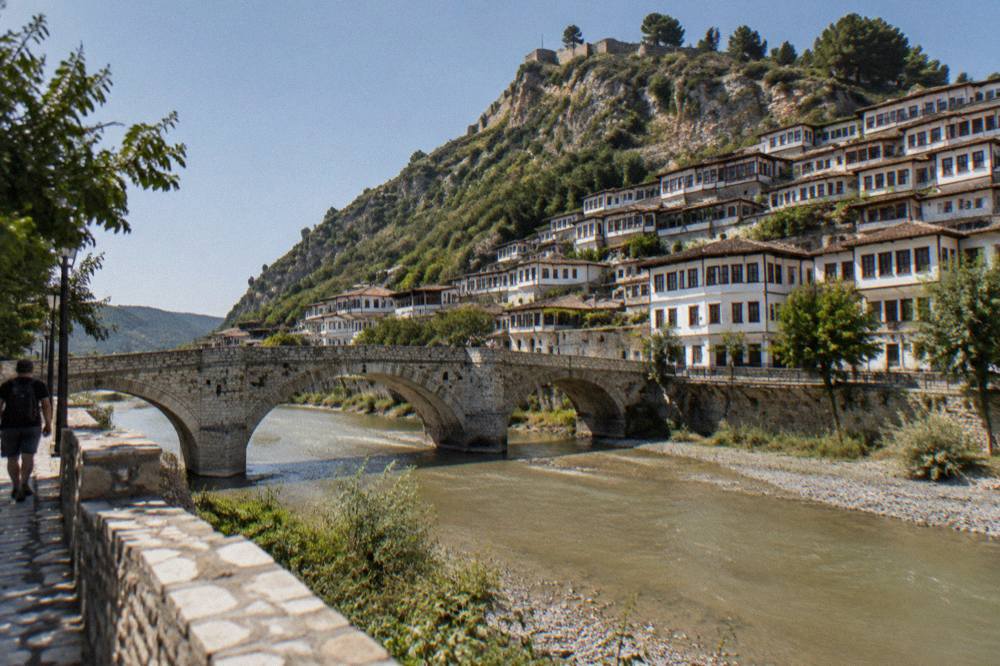
Berat's biggest draws are the castle quarter with its 24 towers, the stacked windows of Mangalem across the river, and the Osumi Canyon near Çorovodë to the south. The canyon is a protected natural monument with free rim viewpoints, and operators run rafting on the spring snowmelt, roughly March to June, then river tubing through the warmer months. Summer heat can top 40 °C, so water and shade matter.
The seasonal split matters when planning. Rafting runs in spring when snowmelt keeps the river high, and tubing takes over in the calmer summer and autumn water. The canyon's rim viewpoints, including a spot known locally as Vrima e Nuses, and the old Italian bridge can be visited free of charge, and the drive from Berat to the Çorovodë area runs on paved roads. Bogove waterfall, in Tomorr Mountain National Park, is a short forest walk from Bogovë village, and combines easily with a canyon trip.
The most direct way into the water is the seasonal rafting and tubing adventure on the Osumi Canyon, which picks up in Berat and runs three to six hours depending on the option and the season. It suits families with older children and hesitant first-timers as well as confident swimmers, since the operator supplies equipment and the tubing sections are calm. People who have done it tend to describe the canyon walls rather than the adrenaline, which is the honest selling point.
After a wet morning in the canyon, the evening loop writes itself: dry off, walk up through Mangalem's stacked houses, eat tavë kosi somewhere small, and finish with raki on a guesthouse terrace facing the lit windows across the Osum. That sequence, castle in the morning, canyon at midday, traditional dinner after dark, is the standard two-day Berat rhythm, and nobody misses the fries. This Berat Travel Guide site carries the full detail on each of those pieces, from the castle's museums to the canyon season.
If you are still mapping the wider trip, the comparisons that usually come up next are the prettiest town question, what is the prettiest town in Albania, and the head-to-head on the country's two Ottoman UNESCO towns, which is better Gjirokaster or Berat.
Common Questions About Fast Food In Albania
Does Albania have McDonald's?
No. There is no McDonald's branch anywhere in Albania, including Tirana and Berat. The quick-service market is made up of local burger grills, kebab shops, pizza counters and byrek bakeries.
Does Berat have any international fast food chains?
No. Berat's eating scene is almost entirely local: bakeries, family restaurants and small takeaway grills. Familiar international chains are absent, which is consistent with the rest of the country.
What is the Albanian equivalent of fast food?
Byrek, the flaky filled pastry sold by the piece at bakery counters, is the closest thing, followed by qofte meatballs in bread and doner-style kebabs. All are cheap, fast and available everywhere.
Is food in Berat expensive?
No. Eating out in Berat is cheap by European standards, and payment is in cash in lek. Traditional dishes mostly fall in the three to twenty euro range.
Can I pay by card at restaurants in Berat?
Largely no. The Old Town is mostly cash territory, with cards accepted at some hotels and larger venues. Carry lek, since the Albanian lek is the official currency and change from euro payments comes back in lek.