How Do You Pronounce The Name Berat?
The correct way to say Berat, the UNESCO World Heritage town in central Albania, with stress, syllables and the names you will hear around the old town.
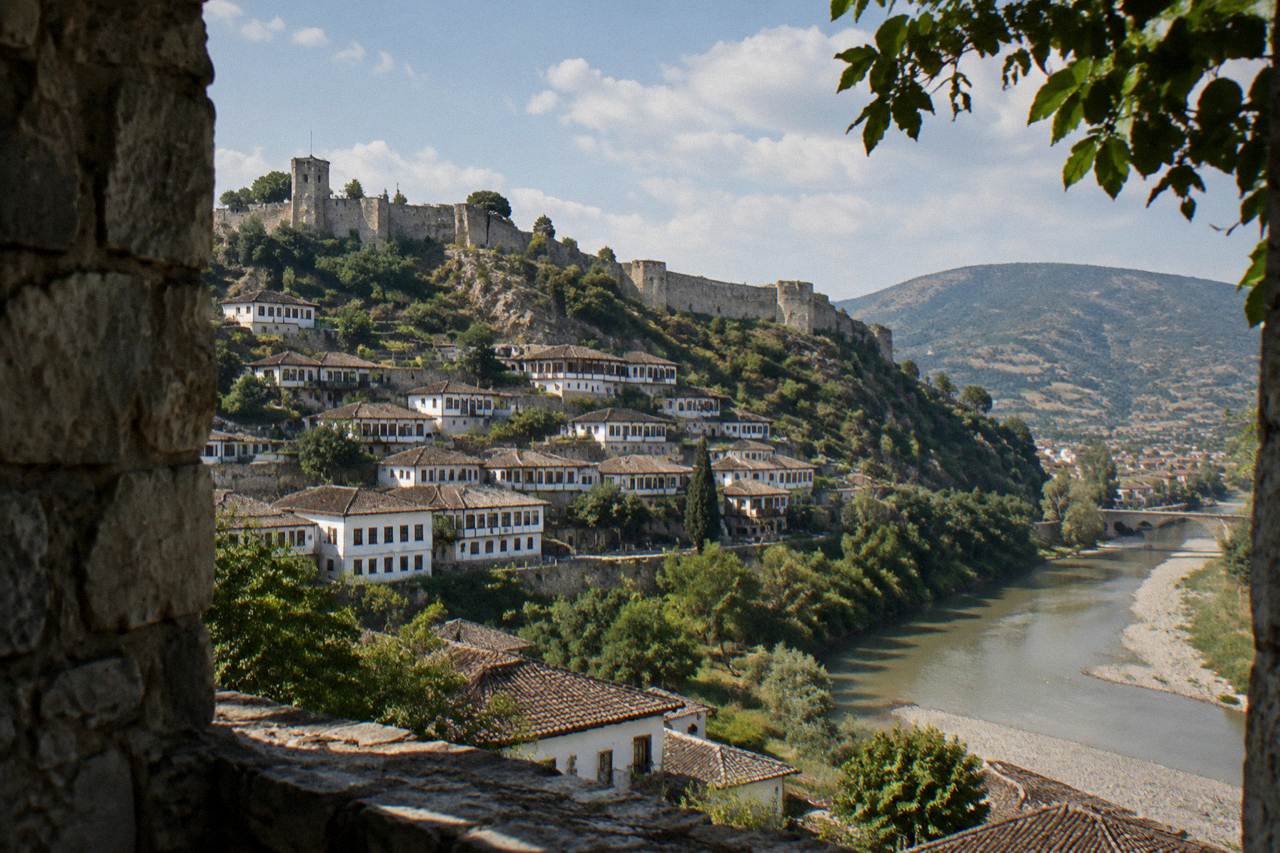
Berat, in central Albania, is a UNESCO World Heritage Ottoman-era hill town on the Osum River, and almost every traveller arrives knowing how it looks before knowing how it sounds. The name looks, to an English eye, as though it might rhyme with "carat" or "ferret", and both guesses are wrong. Albanian is a language where the stress usually lands late in the word, and this one is no exception. Get the stress right and the rest follows.
How Do You Pronounce The Name Berat?
Say it roughly beh-RAHT: two syllables, with the stress landing firmly on the second one. The first syllable is short and soft, like the "be" in "better", and the second is a clean "raht" that rhymes with "cot" rather than with "rat". Put together, it is beh-RAHT, never BEH-rat, and never anything with three syllables tucked inside it.
That second-syllable stress is the whole trick. English words of this shape tend to lean on the front, so an instinctive BEH-rat is the single most common slip visitors make. Albanian works differently: the default stress in most Albanian words sits on the final syllable, and Berat follows that rule exactly. When you hear the name from a local, the "rat" ending is the part that carries, and the opening "be" almost brushes past.
The vowel sounds matter less than the stress, but they still help. The first vowel is short, closer to the "e" in "bed". The second is open, the same "a" an Albanian speaker uses in a word like "mali", meaning mountain. Avoid the English habit of stretching the first vowel into "bee-rat"; nothing in the name justifies a long "ee". Keep the whole word brisk, two beats, weight at the end.
If it helps to anchor the word to something familiar, think of it as sharing its rhythm with a word like "bazaar": light start, heavy finish. Say "bazaar", then keep that pattern and swap the sounds for beh-RAHT. Most people land it on the second try once the rhythm is in their head. Once you have it, the name stops feeling foreign, which is roughly the point: Berat rewards a little effort with names, and this is the first one.
Why The Stress Falls On The Second Syllable
Albanian is one of Europe's oldest standing languages, and its words carry a strong, regular final stress that shapes every name you will hear in the region. Berat obeys that pattern, so the ending takes the weight. This is not a quirk of the town, it is a habit of the language, and once your ear accepts it, Mangalem, Gorica and the rest of the local vocabulary start sounding right too.
The practical payoff of this is bigger than one word. Walk through the old town and you will hear place names in the same rhythm: Mangalem, the Ottoman quarter on the western hillside, is pronounced with a steady, even roll, and Gorica, the quarter across the Osum River, sounds much as it looks. The Albanian habit of weighting word endings gives the whole town a particular music. Locals speak quickly but evenly, and place names rarely hide surprises once you trust the pattern.
A visitor who says beh-RAHT will be understood instantly anywhere in Albania, from Tirana bus terminals to guesthouse doorsteps in the old town. The reverse is also true: a strongly English BEH-rat with a flattened ending is still understood, but it marks you at once as a newcomer. Nobody is offended, Berat is a patient town with visitors, but the small correction, stress moved one syllable to the right, buys a surprising amount of goodwill.
The best place to train your ear is simply the street. Order a coffee, ask for directions to the castle, listen to the reply. Albanian speakers around the old town use the town's name constantly, in greetings, directions and recommendations, and the rhythm repeats until it sticks. For a wider sense of what the town is known for before you arrive, our piece on what Berat is famous for covers the nickname that came from those tiered white houses, the City of a Thousand Windows, a popular phrase used by Albanian media and the national tourism agency rather than an official designation.
A guided walk is also a fine way to hear the name in context, and a food-focused one adds the other half of local pronunciation: dishes. The Berat Guided Walking Tour with Food and Wine Tasting pairs the old town's alleys with stops for local tastes, and you can Check availability on the live listing before you travel. The tour page at Berat guided walking tour with tastings explains what the walk covers.
How The Name Looks To Albanian Speakers
Written down, Berat is simple for Albanian: five letters, no diacritics, no silent traps. Albanian spelling is highly phonetic, far more so than English, so an Albanian reader sees the word and says beh-RAHT without hesitation. That transparency works in your favour, because once you know the two sounds, the spelling never disagrees with you.
Where English spelling and English sound disagree constantly, Albanian keeps them aligned. This is worth knowing before you travel, because signs, menus and museum tickets in Berat are written in Albanian, and nearly every letter does what you expect. The town's own institutions follow the same spelling you know: the museums operate under the Berat Museum Center, and the town's UNESCO listing names the property "Historic Centres of Berat and Gjirokastra", with Berat added in 2008 as an extension of the 2005 Gjirokastra inscription.
One small point that interests travellers: when Albanian speakers refer to the town in a sentence, they often use the definite form, Berati, with an "i" appearing at the end, and the stress slides to that final syllable. You will hear "Berati" constantly in speech and see it on Albanian-language pages. It means "the Berat", in effect, the same way many Albanian place names take a definite ending in ordinary conversation. It is not a different town and not a different spelling of the name on maps; it is the grammar of the language doing its work.
The name also travels in translation surprisingly little. Unlike some European cities with drastically different names in each language, Berat is close to identical in the guides and maps you are likely to use. That consistency helps: whatever you book, from a castle walk to a cooking class, the name you type is the name you will hear. The tables below pull together the name facts worth keeping straight.
| Question about the name | The answer | Where it comes from |
|---|---|---|
| Standard spelling | Berat | Albanian spelling, five letters, no diacritics |
| Rough pronunciation | beh-RAHT, stress on the second syllable | Regular Albanian word stress |
| Definite form in speech | Berati, stress moving to the ending | Albanian grammar, used in everyday sentences |
| UNESCO property name | Historic Centres of Berat and Gjirokastra | World Heritage List, ID 569 |
| Year Berat was added | 2008, as an extension of Gjirokastra's 2005 inscription | UNESCO listing records |
| Popular nickname | City of a Thousand Windows | Albanian media and national tourism agency, not an official title |
How Locals Say The Names Around Town
The names inside Berat, Mangalem, Gorica, Kala, and the river Osum, are pronounced much as they are spelled, with the same late Albanian stress. Mangalem runs ma-ngah-lem, Gorica is go-REET-sah with the middle syllable lifted, and Kala, the castle quarter, is kah-LAH. None of them hide the traps that English place names do.
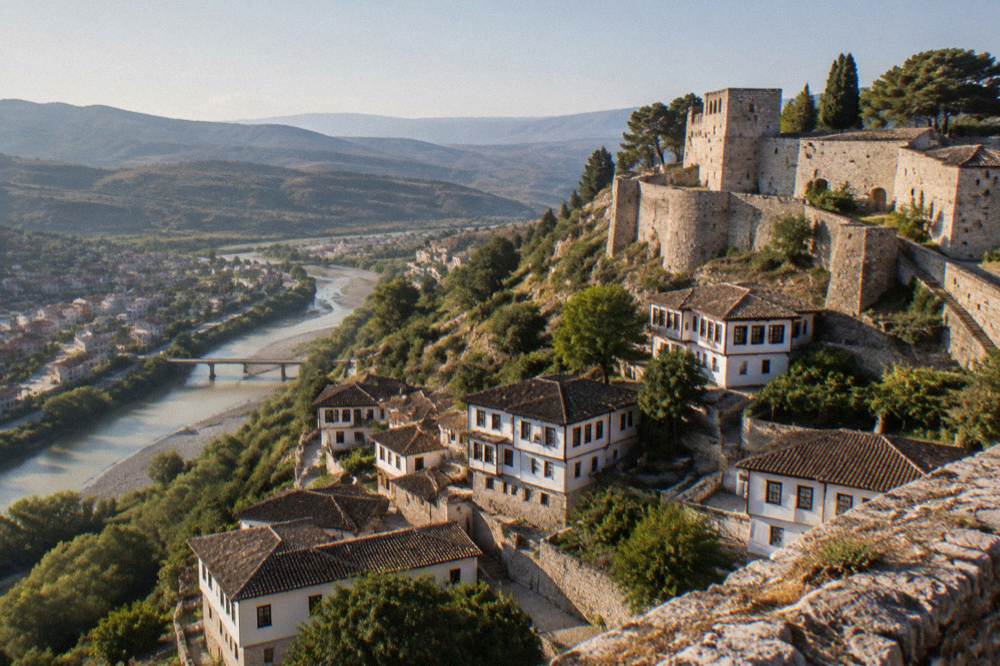
Hearing these names spoken is one of the quiet pleasures of a stay here, because the town is small enough that the same handful of names carries you everywhere. Mangalem is the quarter of stacked white houses on the hillside, Gorica is its mirror across the water, and Kala is the castle at the top where people still live and guesthouses operate inside the walls. The Osum River, which the name Osumi reflects in Albanian's ending pattern, divides the two halves of the old town, and the Gorica Bridge joins them.
| Name you will see | What it names | How it sounds |
|---|---|---|
| Mangalem | Ottoman quarter on the western hillside | even and rolling, roughly ma-nga-LEM |
| Gorica | quarter across the Osum River | go-REET-sah, stress in the middle |
| Kala | the castle quarter at the top | kah-LAH, stress at the end |
| Osumi | the river through town, in Albanian form | oh-SOO-mee |
| Çorovodë | town near Osumi Canyon in Skrapar | chor-vo-DEH, keep the diacritic in writing |
Away from the town itself, the wider region keeps the same rules. Çorovodë, the small town that serves as the gateway to Osumi Canyon, keeps its diacritics in Albanian and a final stress in speech. Bogovë, the village at the trailhead of the waterfall walk, follows the pattern too. These names matter if you head out of town for the canyon, where rafting runs in the spring snowmelt and tubing through the warmer months, and where the rim viewpoints charge no entrance fee. Our guide to Osumi Canyon covers the trips that use these names daily.
Where To Hear The Name Spoken Aloud
The fastest way to lock in the pronunciation is a table with locals, and Berat's food experiences put you at one. A cooking class in a family home, a winery tasting, or a guided walk with food stops all keep the conversation moving, and every mention of the town's name reinforces the rhythm you have just learned.
The Traditional Cooking Class with Wine Tasting at Home does exactly this. It places you in a local home for an afternoon of Albanian cooking and wine, and the setting is conversational rather than scripted. Details and booking are on the tour page at traditional cooking class with wine tasting at home, and the operator's live listing shows current availability. Hearing the town's name said over a shared table, between dishes, is how the sound finally settles into memory.
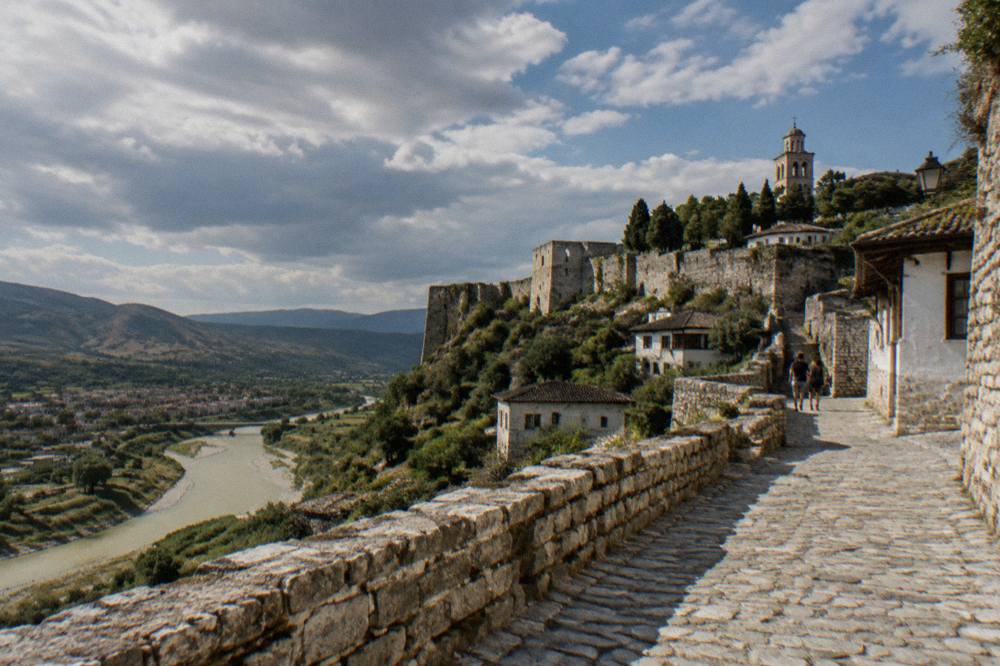
The same logic applies to the city's museum rooms, where guides and docents say the name dozens of times a day. The Berat Museum Center runs both the Onufri Iconographic Museum inside the castle and the Ethnographic Museum in the lower town, and both are easy places to hear unhurried, standard Albanian speech. The Ethnographic Museum reopened on 30 May 2026 after a three-year restoration, displaying around 1,300 objects, and the Onufri Museum counted 58,912 visitors between January and July 2026, a figure the state broadcaster reported as sixteen percent ahead of the same months in 2025.
Tickets for both museums carry real figures worth knowing before you go: the Onufri Museum charges 400 lek for an individual ticket with an audio guide at 500 lek, and the Ethnographic Museum charges 300 lek, with free entry for children under 12 at both.
| Museum | Individual ticket | Reduced | Children |
|---|---|---|---|
| Onufri Iconographic Museum | 400 ALL | 200 ALL, ages 12-18 and students 120 ALL | Free under 12 |
| Onufri audio guide | 500 ALL | Applies to the guide only | As ticket |
| Ethnographic Museum | 300 ALL | 150 ALL, ages 12-18 and students 90 ALL | Free under 12 |
What Else Travellers Ask Before They Say It Right
Most pronunciation questions arrive bundled with trip-planning ones: which town to choose, how long to stay, and what the country costs. Berat sits inside that whole cluster of questions, and the answers are easier to weigh once the town's name stops being a small obstacle on the way to reading about it. The pages below settle the questions visitors most often pair with the pronunciation one.
If you are weighing the town against its southern rival, the comparison piece on Gjirokaster or Berat helps, since both towns share one UNESCO inscription and very different personalities. If the real question is how long to stay, our answer on how many days to spend in Berat lays out a practical minimum for the castle, the quarters and a canyon day.
For travellers arriving from further afield, the practical pages matter too. The friendly to Americans question and the honest look at whether Albania is cheap or expensive both come up before a first visit, and both are easier to read once the town's name stops being a small obstacle. This site, the Berat Travel Guide, keeps the whole set together.
A premium food-and-history day is another way to hear the name used by people who earn their living explaining the town. The Berat History and Local Food experience is a full day built around the old town, its wine and its tables, and it sits at the top of this page's featured trio for good reason.
Between the walks, the tables and the museum rooms, the sound of Berat stops needing explanation within a day or two of arrival. The name behaves itself once you know the rule, and the rule is a single sentence: two syllables, stress on the end, short first vowel. Everything else you hear in town follows from it, from Mangalem to Gorica to the castle at the top.
Common Questions About Pronouncing Berat
How do you pronounce the name Berat?
Roughly beh-RAHT, two syllables, with the stress firmly on the second. The first vowel is short, like the "e" in "bed", and the second syllable rhymes with "cot". The stress pattern is the regular one for Albanian words, not a special case for this town.
Is Berat pronounced differently in Albanian?
The spoken sound is essentially the same, beh-RAHT. In everyday sentences Albanian speakers often use the definite form Berati, adding an ending "i" that takes the stress, so you will hear beh-rah-TEE in conversation. It is the same name with Albanian grammar attached, not a different spelling.
Do locals mind if visitors say BEH-rat?
No. Berat is used to visitors and a flattened English stress will still be understood everywhere in town. Moving the stress to the second syllable simply sounds more natural and is noticed as an effort, which locals tend to appreciate.
How do you say Mangalem and Gorica?
Mangalem rolls evenly, roughly ma-nga-LEM, and Gorica is go-REET-sah with the middle syllable lifted. Both follow the general Albanian habit of late or even stress. They name the two old quarters, Mangalem on the hillside and Gorica across the Osum River.
Does Berat mean anything in Albanian?
The town's nickname is the part that translates easily: the City of a Thousand Windows, a popular phrase used by Albanian media and the national tourism agency for the tiered white houses stacked on the hillside. It is a beloved description, but it is not an official UNESCO title; the World Heritage property is listed as the Historic Centres of Berat and Gjirokastra.
Will I be understood in Berat if I only speak English?
Yes, in the places visitors go. Guesthouses, museums, tour operators and many restaurants in the old town handle English, and younger Albanians widely do too. Learning the town's name and a greeting in Albanian still opens doors, and the pronunciation rule that governs Berat governs almost every other name you will need.