Berat History
Berat, in central Albania, is a UNESCO World Heritage Ottoman-era hill town on the Osum River, and its history is written in stone: a castle quarter still lived in, mosques and churches sharing the same walls, and museums that reopened only after years of restoration.
Short answer
Berat is a UNESCO World Heritage town in central Albania, inscribed in 2008 as an extension of Gjirokastra's 2005 listing. UNESCO calls it a rare example of a well-preserved Ottoman town. Its castle has 24 towers and about eight surviving churches, and its museums hold icons and around 1,300 ethnographic objects.
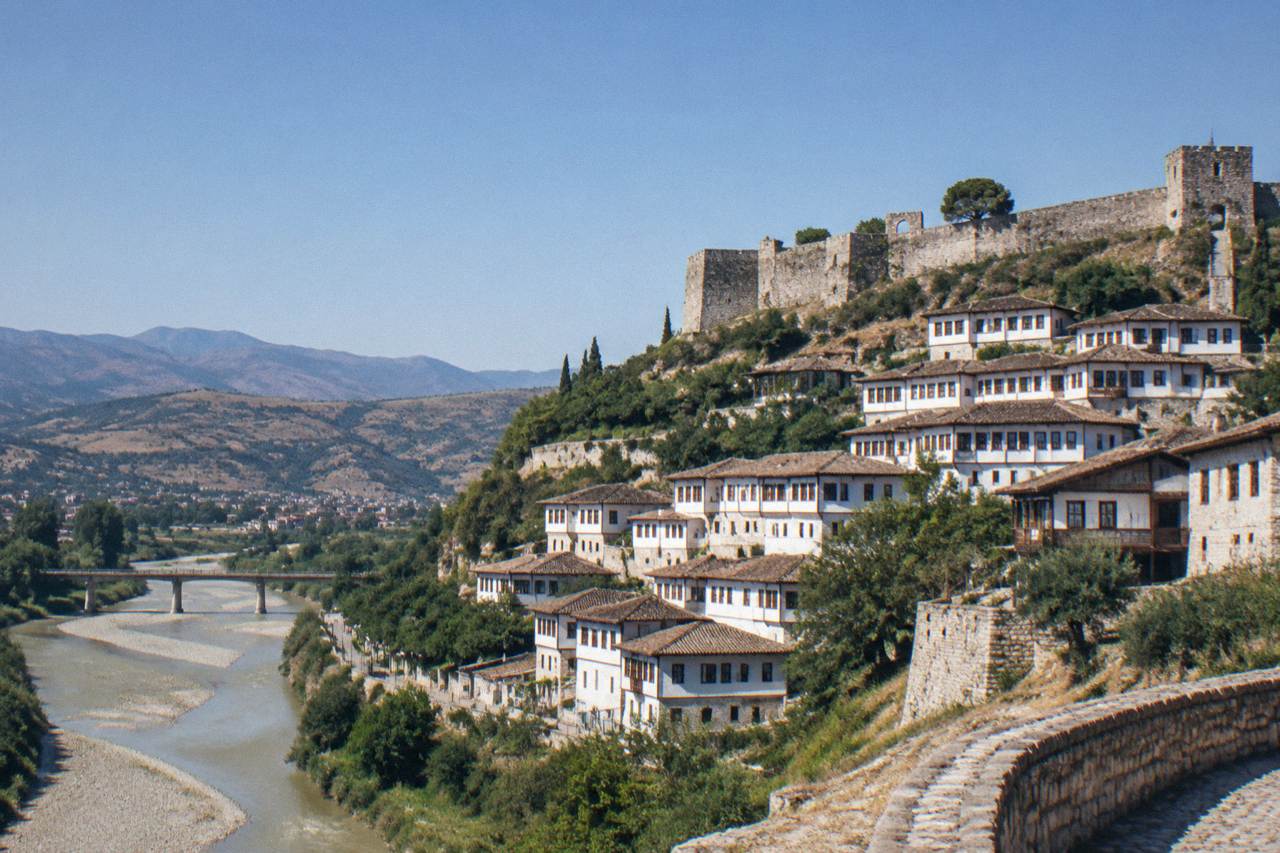
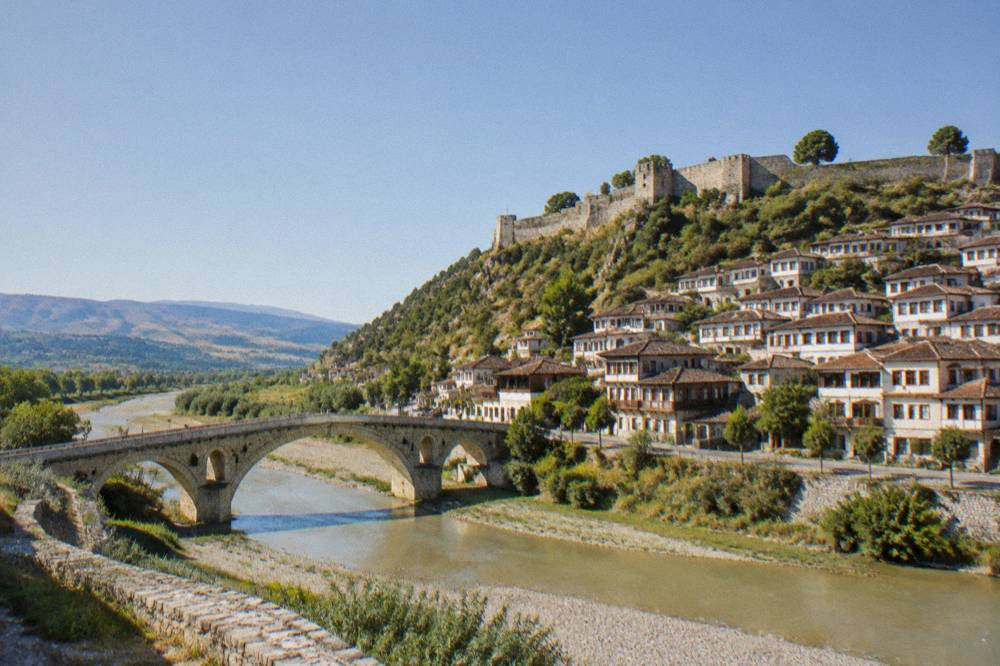
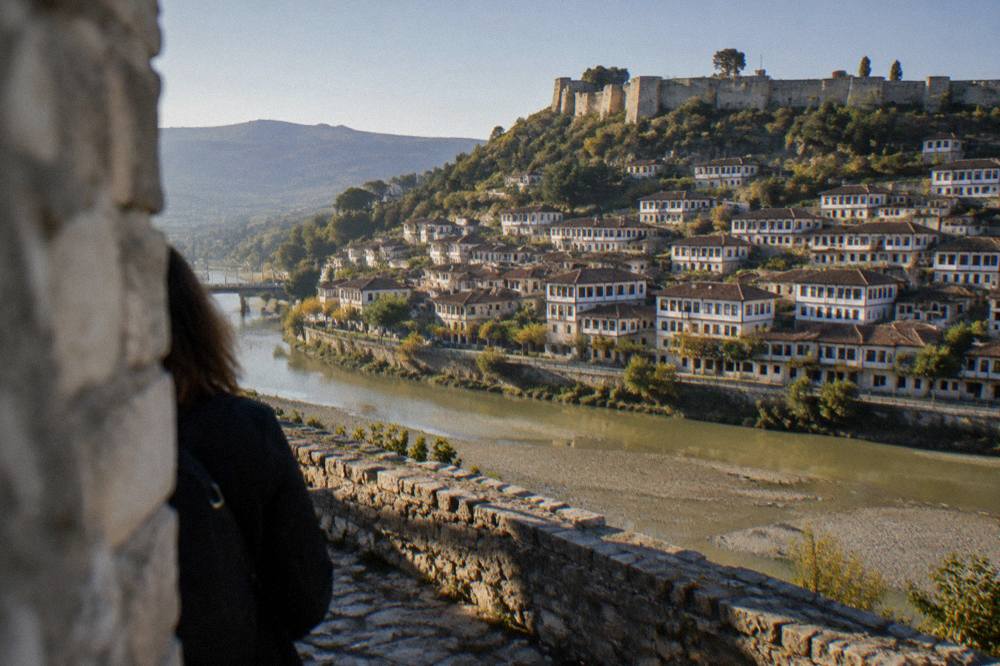
Berat, in central Albania, is a UNESCO World Heritage Ottoman-era hill town on the Osum River, and few towns anywhere let you read their whole history in a single glance. From the Gorica bridge you see the Mangalem quarter's stacked white houses climbing toward the castle, church towers and minarets rising from the same skyline, and a river that has carried Berat's trade, its floods and its pilgrims for centuries. UNESCO itself describes the town as "a rare example of a well-preserved Ottoman town", and that phrase, from the inscription record, is the best one-line summary of what you are looking at.
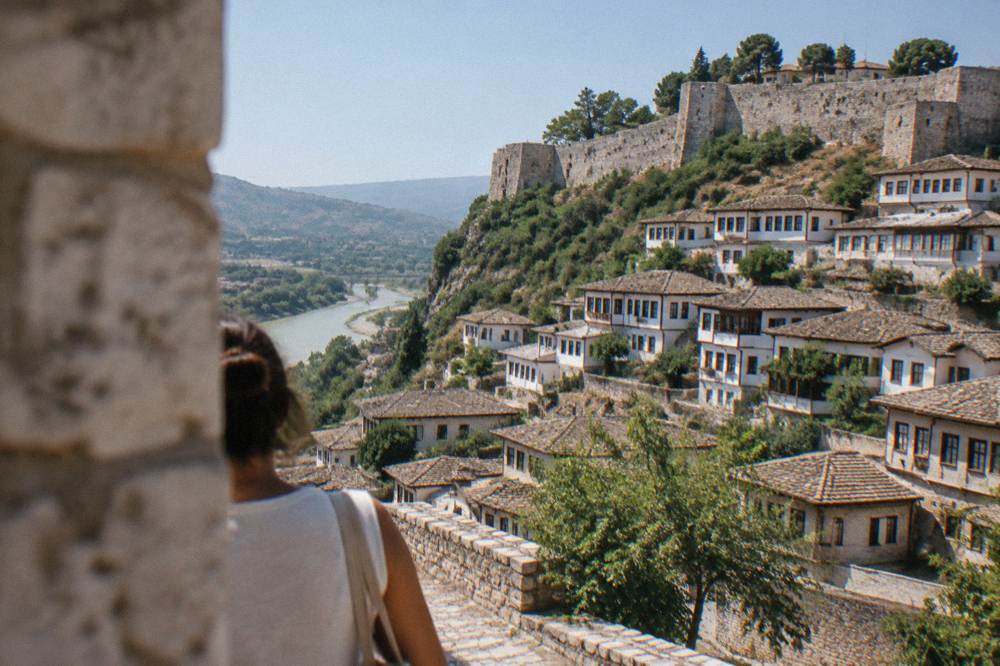
This page walks through the town's documented story: the fortress quarter at the top of the hill, the Christian and Islamic buildings that share it, the UNESCO listing that changed its modern economy, and the restorations and new rules reshaping a visit right now. Where a date or a figure appears, it comes from a verified source; where something is genuinely uncertain, the page says so. For the wider heritage context, see our guide to Berat's UNESCO listing, and for orientation on arrival, the Berat map and layout guide.
What Is The History Of Berat, Albania?
Berat's documented identity is a fortified hill town in central Albania whose castle quarter has been continuously inhabited, whose Ottoman-era houses gave it the nickname "the town of a thousand windows", and whose historic centre was added to the UNESCO World Heritage List in 2008 as an extension of Gjirokastra's 2005 inscription. The listing covers 58.9 hectares of property with a 136.2 hectare buffer zone across the two towns, recognised under criteria (iii) and (iv). The UNESCO citation notes that Berat, unlike its sister site, "bears the imprint of a more independent life style, linked to its handicraft and merchant functions". That is the core of the story: this was a working town of artisans, traders and clergy, not a seat of imperial power, and its architecture reflects that practical, mercantile character.
The town sits on the Osum River, with the Mangalem quarter climbing the western slope below the castle and the Gorica quarter facing it across the water. The two halves are joined by the historic Gorica bridge, and the whole composition is what earned the World Heritage designation. UNESCO's framing is architectural and urban rather than tied to a single dynasty: the value lies in how completely the Ottoman-era fabric survives, house by house and street by street.
That survival is unusually intact for the Balkans. The 2023 national census recorded 62,232 residents in the Berat municipality, and several thousand of them live within or directly around the historic fabric, which is precisely why the site behaves differently from a ruined citadel or an open-air museum. Shops inside the castle quarter sell to neighbours, not only to visitors, and the guesthouses inside the walls are family businesses in old buildings rather than purpose-built resorts. A visit is therefore a walk through a living district, with all the texture that implies.
Who Lived Inside Berat Castle?
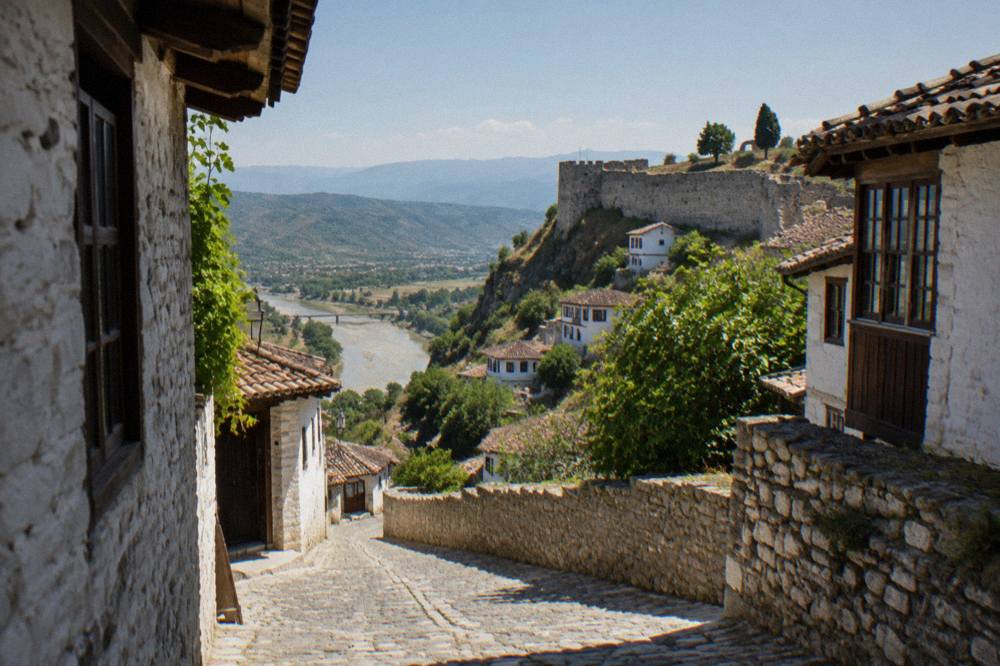
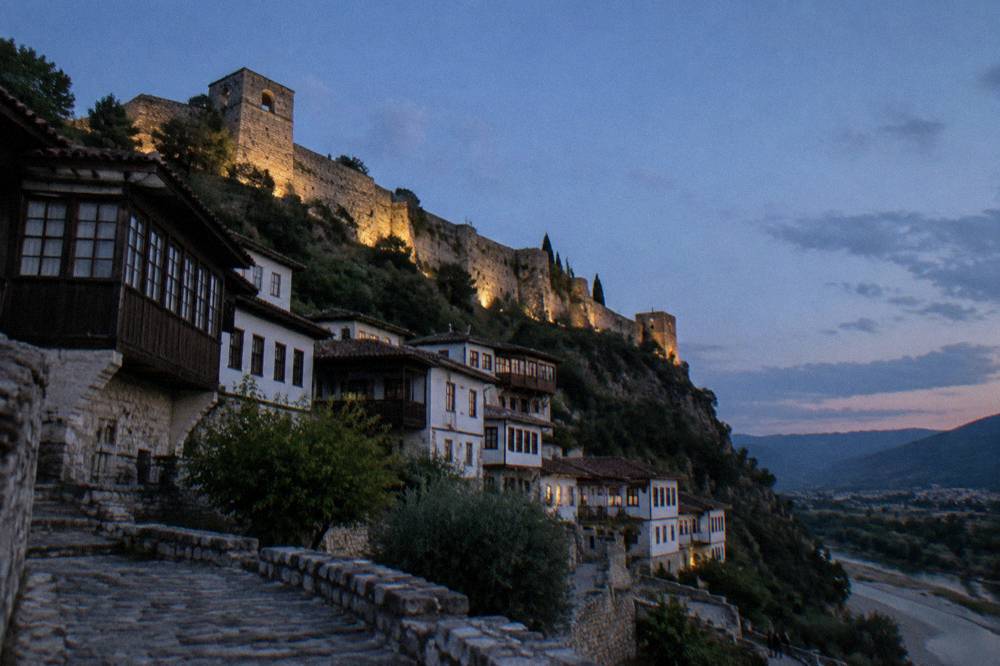
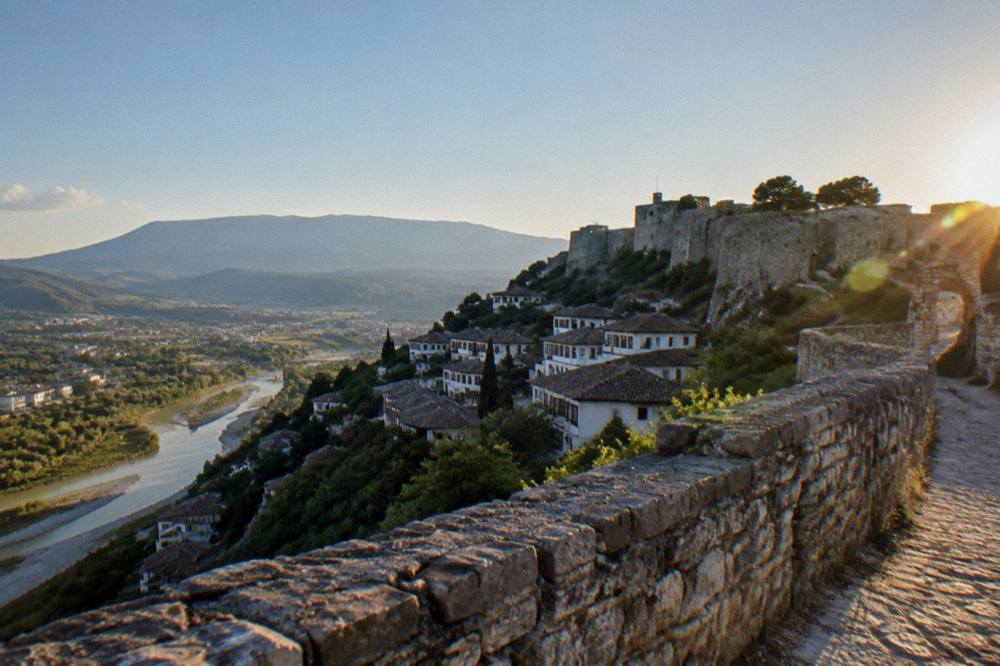
The castle of Berat, known locally as the Kala, is a walled quarter with 24 defensive towers in which about 42 churches once stood, of which roughly eight survive today, and it has always been a lived-in neighbourhood rather than an empty fortress, with families, guesthouses and the Onufri Museum inside the walls. The Red Mosque inside the fortress counts among the earliest Islamic buildings within it. Those figures come from the national tourism agency's own description of the site, and they capture the essential character of the place: a mixed Christian and Muslim community sharing one fortified hill, which is the defining historical pattern of the town below as well.
The churches inside the Kala were built, rebuilt and repurposed over centuries, and the survivors now include the Church of St Mary, which houses the Onufri Iconographic Museum. That reuse is itself a piece of history: the museum's collection of icons sits inside a functioning ecclesiastical building at the castle's heart, a few minutes' walk from private homes. The Red Mosque's ruins stand nearby, described by the tourism agency as among the fortress's earliest Islamic structures, a reminder that the quarter's religious communities were neighbours within the same walls.
The Kala remains a residential quarter, and that fact shapes everything about visiting it. A centuries-old building next to the Onufri Museum is being converted into an eight-room family guesthouse under a 2025 national investment scheme, so the pattern of habitation is actively continuing rather than being reconstructed for show. Car access into the castle quarter is being restricted; plan to park below and walk up. The uphill walk rewards you with the oldest layers of the town's fabric underfoot.
| Castle fact | Verified detail |
|---|---|
| Defensive towers | 24 around the walls |
| Churches historically inside | About 42 |
| Churches preserved today | About 8 |
| Earliest Islamic building | Red Mosque, among the earliest in the fortress |
| Current residents | Lived-in quarter with guesthouses inside the walls |
| Vehicle access | Car access into the castle quarter is being restricted; plan to park below and walk up. |
There may be a small heritage fee at the castle gate during staffed daytime hours; bring lek, since the old town is largely a cash economy and the fee situation is not settled in any official source. If you would rather have the castle's story explained than work it out from plaques, guided options exist: the History, Wine & Local Food tour from the operator's tour page pairs the historic centre with local food, and day tours from the coast and capital, such as the Berat UNESCO Heritage & Belshi Lake tour, cover the castle in a long day.
Which Museums Preserve Berat's Past?
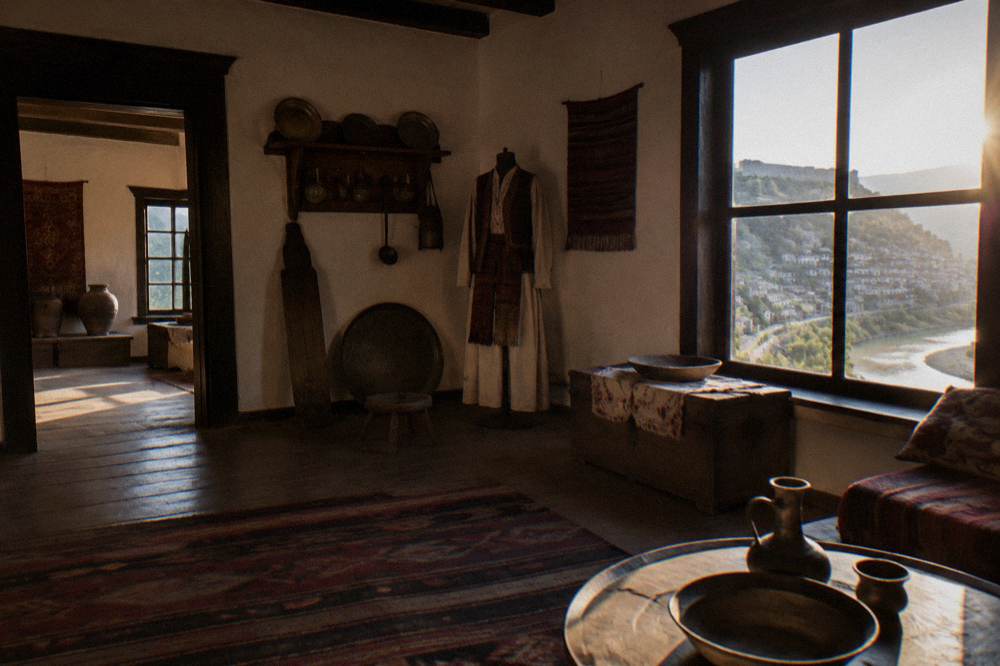
Berat's museums are run by the Berat Museum Center and consist of two anchor sites with fixed, published hours and prices: the Onufri Iconographic Museum inside the castle, at 400 lek for an individual ticket, and the Ethnographic Museum in the town below, at 300 lek, which reopened on 30 May 2026 after more than three years of restoration and now displays around 1,300 objects. Both keep the same seasonal schedule. From 1 May to 30 September they open daily from 9:00 to 18:00; from 1 November to 30 April they open Tuesday to Saturday 9:00 to 16:00 and Sunday 10:00 to 15:00, with national holidays included. Children under 12 enter free.
The Onufri Museum is the town's single biggest visitor draw by the numbers, and those numbers are recent: 58,912 visitors passed through between January and July 2026, up 16 percent on the 50,615 recorded for the same months in 2025, and roughly 14,000 came in August 2026 alone. The museum sits inside the Church of St Mary in the castle, so a visit combines architecture and collection in one stop. An audio guide costs 500 lek on top of the 400 lek ticket, and reduced rates apply for students and ages 12 to 18.
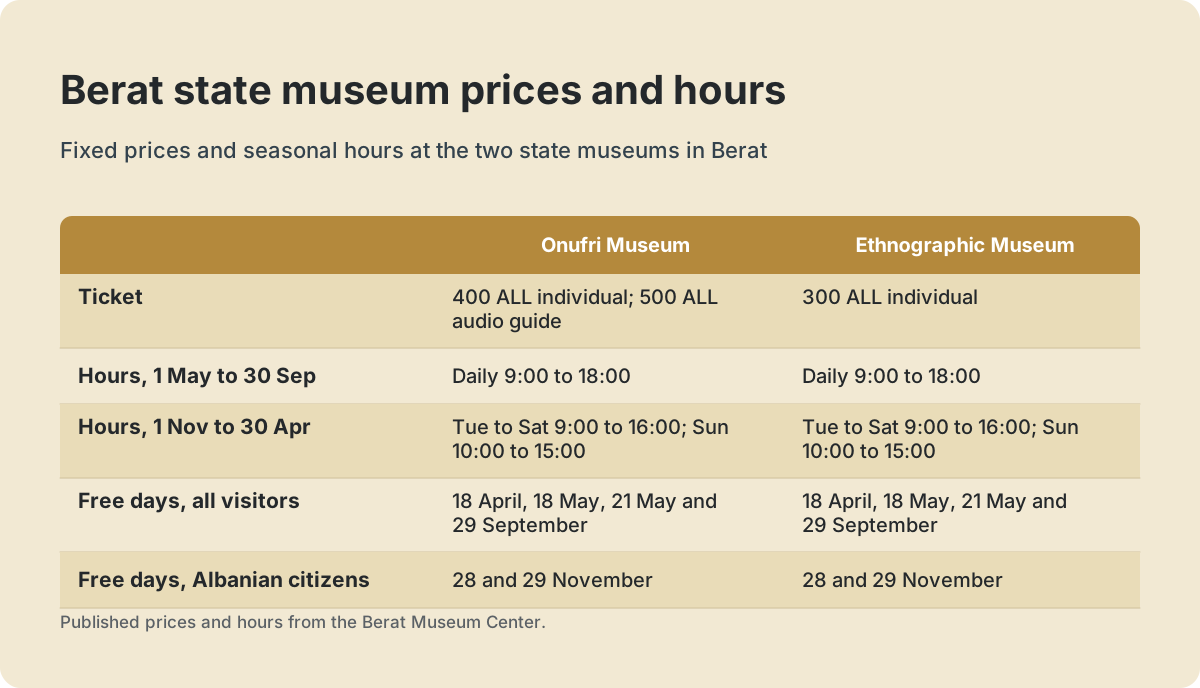
The Ethnographic Museum's reopening is one of the most consequential recent events for the town's cultural offer. Closed for more than three years while the building, lighting and displays were overhauled, it returned on 30 May 2026 with a redesigned presentation of traditional Berat domestic life timed for the 2026 season, and its first weeks drew more than 3,000 visitors, mostly foreign. A house museum that had been off itineraries since 2023 is suddenly back on them, which matters if you are planning around what was open in older guidebooks.
| Museum | Ticket | Hours (1 May to 30 Sep) | Hours (1 Nov to 30 Apr) |
|---|---|---|---|
| Onufri Iconographic Museum | 400 ALL individual; 500 ALL audio guide | Daily 9:00 to 18:00 | Tue to Sat 9:00 to 16:00; Sun 10:00 to 15:00 |
| Ethnographic Museum | 300 ALL individual | Daily 9:00 to 18:00 | Tue to Sat 9:00 to 16:00; Sun 10:00 to 15:00 |
| Solomon Museum | Hours and fee not verified | Founded 2018, only museum in Albania dedicated to the Jewish community | Not verified |
Beyond the big two, the Solomon Museum, founded in 2018 by Professor Simon Vrusho, is the only museum in Albania dedicated entirely to the Jewish community, and it tells a small but distinctive slice of the town's story; its current hours and admission are not published in any verified source, so check locally before making it a fixed stop. Since November 2025, online tickets for state museums, including Onufri, have been sold through the national e-Albania platform, which is worth knowing in the August peak when the castle gate gets busy.
Free admission days are fixed in the official museum calendar and apply at both state museums: 18 April, 18 May, 21 May and 29 September for everyone, and 28 and 29 November for Albanian citizens only. If your dates happen to line up with one of those, the two headline museums cost nothing.
How Did Berat Become A UNESCO World Heritage Town?
Berat entered the UNESCO World Heritage List in 2008, when the World Heritage Committee added the city centre of Berat to the existing Historic Centres of Gjirokastra property inscribed in 2005, creating the combined "Historic Centres of Berat and Gjirokastra" listing under dossier 569, recognised under criteria (iii) and (iv), covering 58.9 hectares of property and a 136.2 hectare buffer zone. The inscription record is precise about the character UNESCO was protecting: "a rare example of a well-preserved Ottoman town", with Berat distinguished from Gjirokastra by the imprint of its "independent life style, linked to its handicraft and merchant functions".
The listing changed the town's economic trajectory. Recognition brought restoration funding, visitor growth and international attention, and the practical evidence is visible in the project record: a state-party conservation report from January 2026 lists completed urban heritage projects in both the Mangalem and Gorica quarters, a new Gorica castle trail, upgraded parking near the Old Gorica Bridge and new tourism signage across the centre. A 290-metre EU-funded bridge over the Osum, completed around mid-2025, now connects the villages of Bilçë, Malinat and Zhitom to the town while diverting through-traffic away from the historic core, an infrastructure investment explicitly framed as safeguarding the heritage value.
UNESCO's oversight also constrains what can be built. The 2026 World Heritage Committee decision urged Albania to suspend the Shkëmbi Road project near the castle and works on the Osum riverbank until heritage impact assessments are completed, and the state report confirms the riverbank projects are on hold pending those assessments. For a visitor, this means the town you see is one whose development is actively negotiated between municipal ambitions and international heritage law, which is itself part of Berat's modern history.
| Year | Verified event in Berat's recent history |
|---|---|
| 2005 | Gjirokastra inscribed on the World Heritage List |
| 2008 | Berat's city centre added as an extension, creating the combined listing |
| 2018 | Solomon Museum founded by Professor Simon Vrusho |
| 2023 | National census records 62,232 residents in Berat municipality |
| 2025 | 290-metre EU-funded bridge over the Osum completed around mid-year |
| Nov 2025 | Online museum ticketing launched via e-Albania |
| Apr 2026 | Vehicle access restricted in the castle quarter |
| 30 May 2026 | Ethnographic Museum reopens after three years of restoration |
| Aug 2026 | Bektashi pilgrimage to Mount Tomorr runs 18 to 25 August |
What Has Changed In Berat Recently?
The verified recent changes are the Ethnographic Museum's reopening on 30 May 2026 with about 1,300 objects, the April 2026 restriction on vehicle access inside the castle quarter, the roll-out of the Smart Parking system at the castle under UNESCO monitoring, repairs to the stone access road to the castle begun in April 2026, and record museum attendance, with 58,912 Onufri visitors in the first seven months of 2026. Each of these has a direct effect on how a visit plays out, so it is worth knowing them before you arrive rather than after.
The vehicle restriction is the one most likely to touch your plans. Car access into the castle quarter is being restricted; plan to park below and walk up. The Smart Parking scheme, with barriers and planned electric shuttles, is under implementation and designed to let traffic only as far as the castle neck, prioritising pedestrians inside. In practice: if you are driving to Berat, plan to park outside the historic quarters and walk, a subject covered in detail in our driving and parking in Berat guide.
The museum reopening changes the shape of a day. Before May 2026, the town's offer was effectively the castle, the Onufri Museum and the streets; now the Ethnographic Museum adds a properly curated interior to the lower town, within easy walking distance of the Gorica bridge. Attendance figures show the effect is being felt beyond Berat itself, with the museum centre welcoming over 61,000 visitors across its sites in the first half of the high season. Summer 2026 also saw the August Bektashi pilgrimage to the tomb of Abaz Ali on Mount Tomorr, which ran 18 to 25 August with police traffic restrictions around the Kulmak Tekke, a period when mountain roads east of town are busier than usual. More of these guides are collected on Berat Travel Guide.
What Does A Visit To Historic Berat Cost?
The fixed, published heritage costs are the Onufri Museum at 400 lek per adult and the Ethnographic Museum at 300 lek per adult, with children under 12 free at both, reduced rates for ages 12 to 18 and students, and free entry for everyone on 18 April, 18 May, 21 May and 29 September; the castle grounds may carry a small daytime gate fee in the order of a few hundred lek, though no official current figure is published. At roughly 92 lek to the euro, the two museum tickets together come to a little over seven euros' worth of lek, which sets the tone for the town as a whole: modest, cash-friendly and inexpensive by European heritage standards.
Beyond tickets, the practical costs are the ones that actually vary. Meals in the old town run from cheap byrek-and-coffee stops to sit-down restaurants serving the local lamb-and-yogurt specialty, covered in our where to eat in Berat guide and what to eat in Berat overview; nightly accommodation in Berat's guesthouses and hotels sits in the mid-budget band detailed in the where to stay in Berat guide and the Berat costs breakdown. None of those figures belong to a specific published listing, so consult those dedicated pages rather than relying on a single number here.
| Free admission day | Who qualifies |
|---|---|
| 18 April | All visitors |
| 18 May | All visitors |
| 21 May | All visitors |
| 29 September | All visitors |
| 28 and 29 November | Albanian citizens only |
Two money details matter in the old town. Albania's currency is the lek, not the euro, and while euros are informally accepted by some tourist-facing businesses, change usually comes back in lek and the rate is often worse; the full picture is in our money and currency in Albania guide. Cards are accepted at some hotels and larger venues, but Mangalem and the castle quarter remain largely cash territory, so withdraw what you need.
How Do You Get To Berat To See Its History?
There is no train and no direct airport bus to Berat: visitors arrive by road, most commonly by bus or shared minivan from Tirana's South-North bus terminal in roughly two and a half hours with departures through the day, or by car, and Tirana International Airport connects through a change of transport in Tirana itself. The bus fare is paid in cash, a few hundred lek, and no booking platform is needed for most departures. The Berat bus terminal sits on the SH72 on the town's outskirts, a short taxi ride or a walk of fifteen to twenty minutes from the old town.
The rail situation is structural rather than temporary. The Tirana to Durrës line, including the airport link, is under reconstruction with a target around the end of 2027, and the Durrës to Rrogozhinë section has not yet awarded its construction contract, so no passenger train reaches anywhere near Berat. Road is the only realistic answer, which is covered stop by stop in our Tirana to Berat transport guide, the Tirana airport to Berat guide and the Berat bus station guide. If you are extending beyond Berat, the Berat to Gjirokastra guide and routes from Berat to the coast pick up the story at the town's other end.
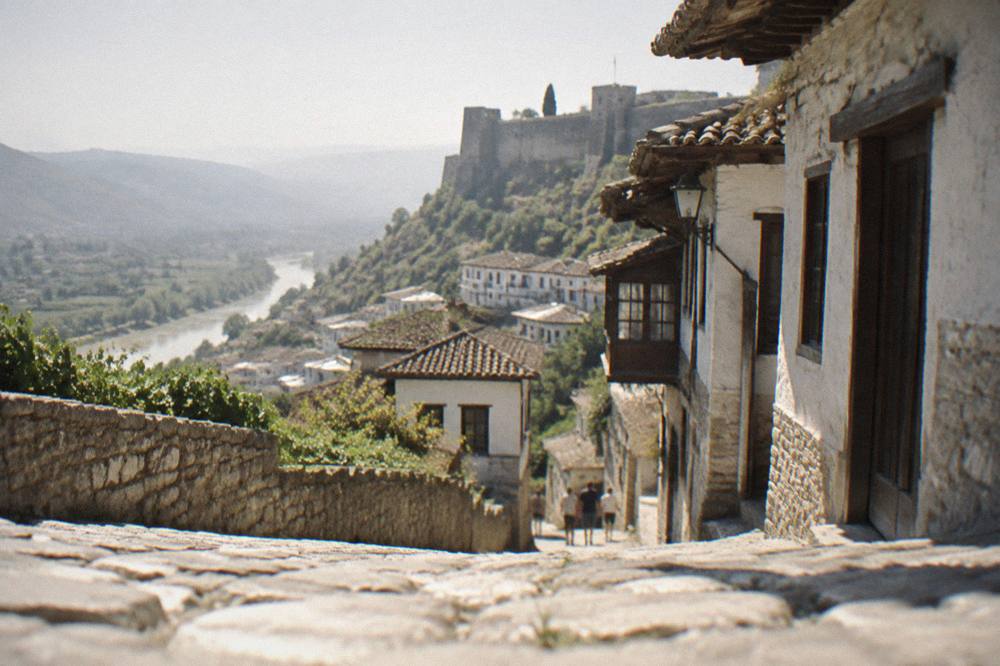
For a first visit built around the history itself, the practical shape is a walk: Gorica bridge, the Gorica quarter, Mangalem's stacked houses, then the climb to the castle and the Onufri Museum, with the Ethnographic Museum in the lower town before or after. That route is what the day tours essentially compress. If you prefer history delivered with context rather than walked cold, the operator's History, Wine & Local Food tour covers the old town with a local family lunch and wine, and there is a "Check availability" link on its live listing: Check availability. Our one day in Berat itinerary and two days in Berat itinerary build the same route at your own pace.
Where Does Berat's Story Continue Beyond The Town?
Berat's history extends into its surrounding landscapes: Mount Tomorr, whose 2,416-metre peak Çuka e Partizanit lies in the Berat and Skrapar region within a national park known for brown bears and birds of prey, is the site of the annual August Bektashi pilgrimage to the tomb of Abaz Ali, while the Osumi Canyon near Çorovodë is protected as a natural monument and the ancient sites of Apollonia, Byllis and the Ardenica Monastery ring the town at day-trip distance. These places are not footnotes: the pilgrimage has run for generations and drew around 600,000 pilgrims in 2026, and the canyon is the geological counterpoint to the town's architecture.
The relationship works both directions, and the recent infrastructure record shows it. The Berat to Ballaban road project, improving access toward the mountain's holy sites, was nearing completion as of September 2026, while a February 2026 forest fire in the national park occurred before two arrests were made, a reminder that the protected landscape is actively managed rather than frozen. In the canyon, the rafting season runs with the spring snowmelt, roughly March to May or June depending on water, and tubing takes over in the calmer summer and autumn months, with no entrance fee to view the canyon from its rim viewpoints.
For planning those extensions, the dedicated pages carry the detail: the Osumi Canyon guide, the Mount Tomorr guide, the Apollonia guide, the Ardenica Monastery guide and the Berat wineries guide, the last of which covers the modern chapter of an old story: Berat's wineries work with native grapes including Shesh i Zi, Shesh i Bardhë and the local Puls, and the town's "Wine & Stories of Berat" festival ran 2 to 4 October in its 2026 edition. A history of merchants and artisans ends, fittingly, with food and wine still made in the same hills.
| Berat by the numbers | Verified figure |
|---|---|
| Municipality population, 2023 census | 62,232 |
| World Heritage property area | 58.9 ha (both towns) |
| World Heritage buffer zone | 136.2 ha |
| Mount Tomorr highest point | 2,416 m |
| Castle defensive towers | 24 |
| Onufri Museum visitors, Jan to Jul 2026 | 58,912 |
| Objects in the reopened Ethnographic Museum | About 1,300 |
Whether you come for a long weekend from Tirana or as part of a wider Albania route, the history of Berat rewards slow walking and a little cash in your pocket. The stones do most of the storytelling; the museums fill in the rest.
Common Questions About Berat History
What Is the History of Berat, Albania?
Berat is a fortified Ottoman-era hill town in central Albania on the Osum River, continuously inhabited from its castle quarter down to its riverbank quarters. UNESCO inscribed its historic centre in 2008 as an extension of Gjirokastra's 2005 listing, describing it as a rare example of a well-preserved Ottoman town shaped by handicraft and merchant life.
How Old Is Berat Castle?
The castle quarter's walls carry 24 defensive towers and once contained about 42 churches, of which roughly eight survive. No verified foundation date is published in the available official sources, so treat specific century claims in older guidebooks with caution; what is certain is that the quarter has been continuously lived in and still is today.
When Did Berat Become UNESCO World Heritage?
In 2008, when the World Heritage Committee added Berat's city centre to the Gjirokastra property inscribed in 2005, creating the combined Historic Centres of Berat and Gjirokastra listing under criteria (iii) and (iv), covering 58.9 hectares of property and a 136.2 hectare buffer zone.
What Museums Tell Berat's History?
The Onufri Iconographic Museum inside the castle, at 400 lek, holds the icon collection; the Ethnographic Museum, at 300 lek, reopened on 30 May 2026 after more than three years of restoration with around 1,300 objects; and the Solomon Museum, founded in 2018, is Albania's only museum dedicated entirely to the Jewish community.
Can You Drive Into Berat Castle?
Car access into the castle quarter is being restricted; plan to park below and walk up. Most visitors should park below and walk up; the stone access road was also under repair from April 2026.
Is Berat Castle Free to Enter?
The castle grounds may carry a small daytime fee at the gate, in the order of a few hundred lek, but no official current figure is published, so bring cash. The state museums have firm published prices: Onufri at 400 lek and the Ethnographic Museum at 300 lek, with free entry for all on 18 April, 18 May, 21 May and 29 September.