What Is The Most Beautiful River In Albania?
The Osum River, the water that runs through Berat and carves Osumi Canyon, makes the strongest claim to being Albania's most beautiful river. Here is why, and how to see it.
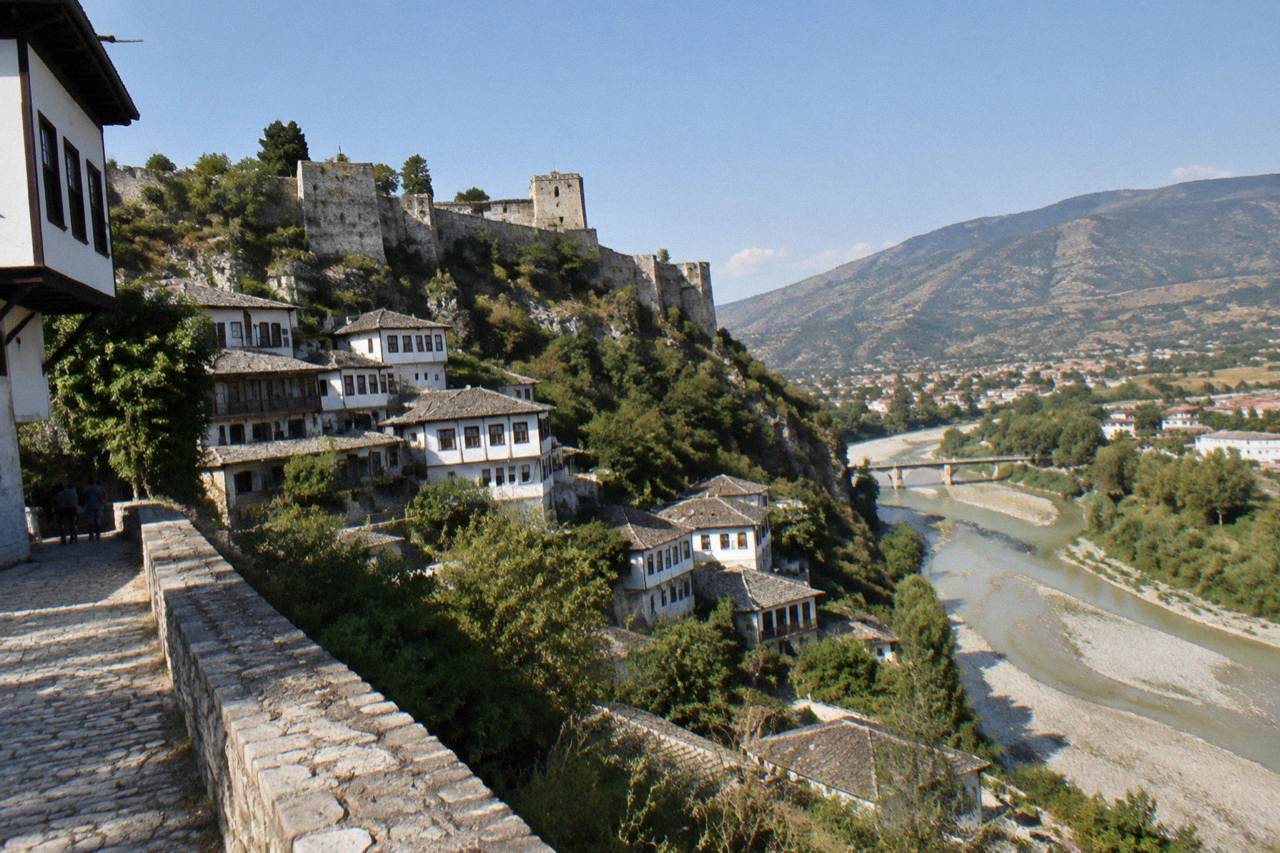
Albania's rivers are mostly wild, mostly unpolluted and mostly unknown, but the most beautiful of them is the Osum, the river that runs directly through Berat in central Albania and then cuts the Osumi Canyon into the limestone south of Çorovodë. Very few rivers anywhere offer this combination: a UNESCO World Heritage Ottoman town stacked above the water at one end, and a 40-metre-deep stone canyon at the other, with swimming holes, waterfalls and vineyards between. This page makes the case, in Berat's own verified terms, and tells you where and when to see the Osum at its best.
What Is The Most Beautiful River In Albania?
The Osum River, the water that flows through Berat, is the most beautiful river in Albania. It earns the title on two grounds no other Albanian river can match together: it runs beneath the UNESCO-listed Ottoman town of Berat, whose thousand-window houses rise straight off its banks, and downstream it carves Osumi Canyon, a protected natural monument near Çorovodë with sheer walls, cold pools and waterfalls. The Vjosa in the south is the better-known wild river, but the Osum is the one you can actually see beautifully.
That last clause deserves honest explanation rather than a slogan. Albania's most internationally famous river is arguably the Vjosa, celebrated abroad as one of Europe's last free-flowing rivers. The Vjosa's fame is about hydrology and conservation, and it is well earned, but a visitor standing on its gravel banks sees a wide, braided river in open country. The Osum delivers beauty of a more visual kind, and it delivers it twice, in two completely different landscapes.
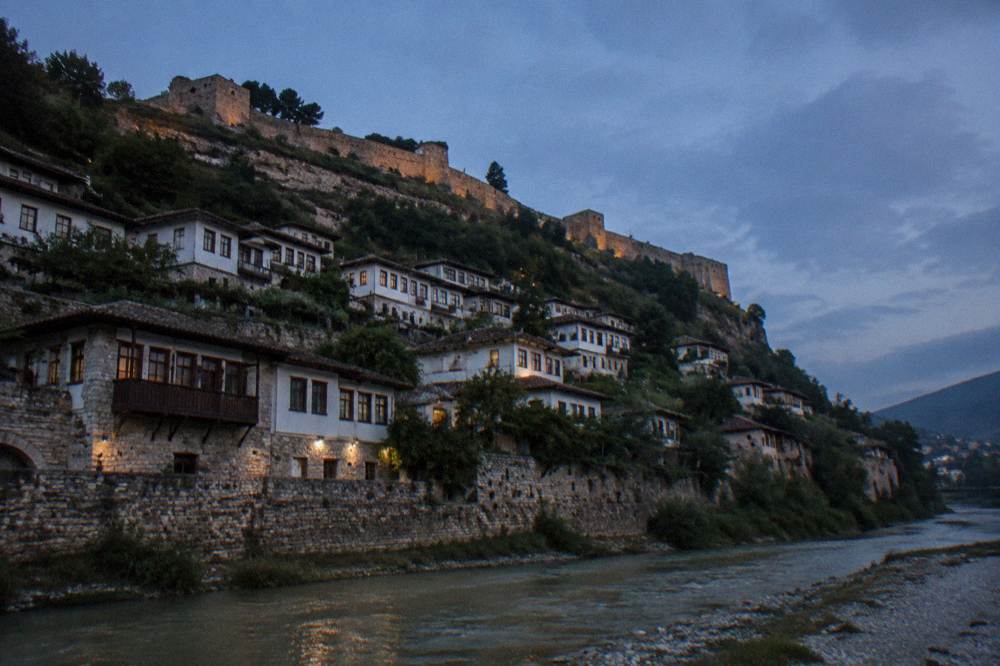
The first is Berat itself. The town, inscribed as part of the "Historic Centres of Berat and Gjirokastra" World Heritage property, sits on the Osum with the Mangalem quarter on one bank, Gorica on the other, and the Gorica Bridge stitching them together. UNESCO describes Berat as "a rare example of a well-preserved Ottoman town". The river is not beside that heritage, it is under it: the white houses climb the hillside straight up from the water, and the light on the Osum at dusk is the single most photographed scene in the city.
The second is the canyon. South of Berat, in the Skrapar region near Çorovodë, the Osum has cut a canyon that Albanian law protects as a Natural Monument, "Kanionet e Osumit". This is where the river stops being a gentle town stream and becomes the dramatic watercourse that rafting operators and hikers travel for. If you are weighing a first trip, is Berat Albania worth visiting? answers the broader question, and the answer runs straight through this river.
Why The Osum River Earns The Title Over The Vjosa
The Osum beats the Vjosa for a visitor's eye because it is beautiful in two contrasting ways at once: a heritage town on its banks and a deep stone canyon on its lower course. The Vjosa is magnificent but is essentially one thing, a wide untamed gravel river in a broad valley. The Osum, with Berat at one end and the canyon walls near Çorovodë at the other, gives an ordinary traveller more to look at per kilometre.
There is a practical argument too. The Osum is the only major Albanian river with a developed, seasonal tourism economy built directly on the water: spring rafting trips when the snowmelt is high, summer tubing when the level drops and the canyon pools warm up, and year-round rim viewpoints that cost nothing to stand at. No entrance fee is charged to view the canyon from the rim, including the known viewpoints such as Vrima e Nuses, the "Bride's Hole", and the old Italian bridge near the village of Blezënka.
The bridge story is a good example of how the Osum landscape keeps improving. In 2025 a new 290-metre EU-funded panoramic bridge over the Osum was completed upstream, connecting the villages of Bilçë, Malinat and Zhitom with Berat. Its purpose is partly to divert traffic away from the historic centre, which protects the very riverbank views that make the old town work. New infrastructure serving an old river, without wrecking it, is rarer than it sounds.
For travellers planning around water rather than just looking at it, the season matters more than the slogan. Spring snowmelt turns the canyon into a fast, cold, serious run; summer drops the river into its calm, swimmable mode. If you are timing a whole trip, what is the best month to visit Berat? covers the town side of that decision.
One way to reach this landscape without a steering wheel is on horseback. The countryside horseback riding tour from Tirana, Durrës or Golem spends five hours crossing exactly the kind of central-Albanian hill and valley country the Osum drains, ending near river landscapes rather than speeding past them on a highway, Check availability if a slow day suits your trip better than another bus.
Osumi Canyon: The Osum's Most Dramatic Stretch
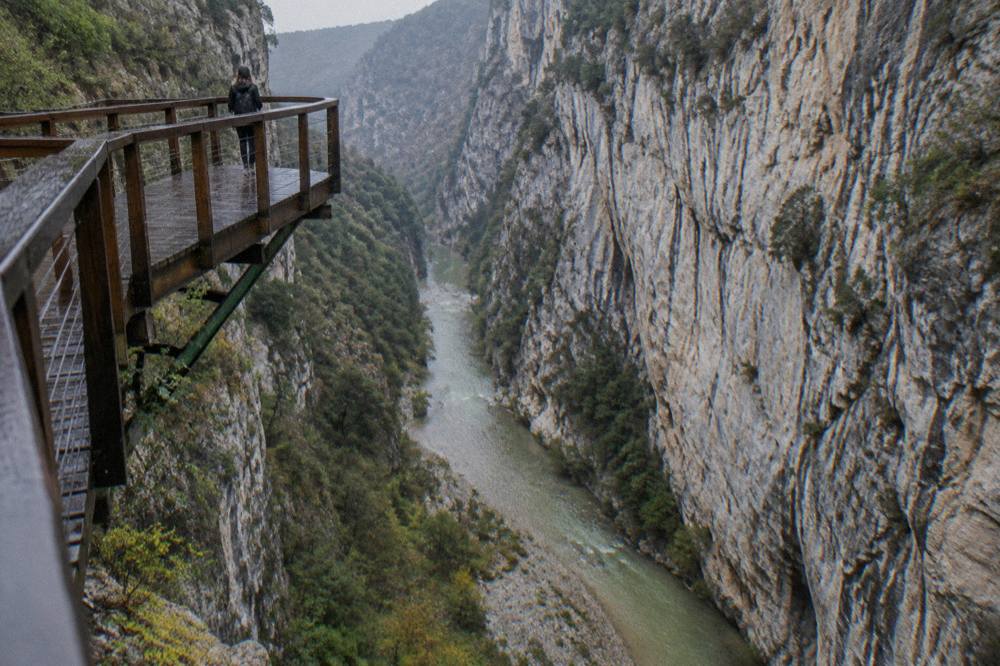
Osumi Canyon, near Çorovodë in the Skrapar region about an hour to an hour and a half south of Berat, is the stretch where the Osum becomes spectacular: the river narrows between high limestone walls, and the whole formation is protected as a natural monument. Rafting runs here in spring when snowmelt fills the bed, tubing and swimming fill the summer, and the rim viewpoints cost nothing at any time of year. The roads to the Çorovodë area are fully paved, with gravel tracks only on the deeper approaches.
The canyon works as a destination because you can consume it at three levels of effort. From the rim, on the SH72 road that follows the canyon, you get the viewpoints: Vrima e Nuses and the old Italian bridge are the named ones, and there is no gate, no ticket and no fee. From the water, licensed operators run the two seasonal sports. From the trail, short paths reach the riverbed in places where you can swim or float in the canyon's cold pools. Other pages covering the same trip are gathered on Berat Travel Guide.
The season is not a marketing choice, it is the river's own calendar. Operators run rafting roughly from the start of spring through to early or mid June, riding the snowmelt off the mountains; once the level drops, the same bed switches to tubing, which runs through the summer and into the autumn. Get the timing wrong and you will still enjoy the canyon, but you will be doing the wrong activity for the water in front of you.
| Osum experience | When it runs | What the water is doing | Effort level |
|---|---|---|---|
| Rim viewpoints | Year-round | Low or high, you look down either way | Minimal, drive-up viewing |
| Canyon rafting | Early spring to early or mid June | High, cold snowmelt, fast current | Moderate, guided only |
| River tubing | Mid June through summer into autumn | Lower, calmer, warmer pools | Easy, guided |
| Canyon swimming and floating | Summer | Lowest, warmest, slowest | Easy with a guide |
| Bogovë waterfall walk | Year-round, best in spring | Spring-fed, steady flow | Easy, roughly 30-60 minutes return |
The Bogovë waterfall row in that table is the canyon country's quiet second act. From the village of Bogovë a short forest walk of roughly 30 to 60 minutes each way leads to a waterfall and plunge pool inside Tomorr Mountain National Park. It is the gentlest possible introduction to the Osum's watershed, and it pairs naturally with a canyon viewpoint on the same day.
A day trip that strings the canyon, the waterfall and a raki-producing village together in one itinerary is the Osumi Canyon, Bogova Waterfall and rakia village tour from Berat. It exists because the canyon country is genuinely multi-stop: the water, the falls and the village distilleries sit along the same corridor south of town, and visitors who try to self-drive it spend the whole day wrestling with directions rather than looking at the water.
The Osum Through Berat: Bridges, Banks And Evening Light
In Berat itself the most beautiful river in Albania is at its most photogenic without any activity at all. The Osum runs between Mangalem and Gorica, the two historic quarters, crossed by the Gorica Bridge, with the castle above and the stone houses reflected below. The riverside promenade along Bulevardi Republika is the standard evening walk, and both banks are free, public and open at all hours. The new Bilça bridge upstream now carries the through-traffic, which keeps the historic banks quieter than they were.
The best simple plan is to walk one bank out and the other back, crossing on the old bridge in each direction. From the Gorica side you get the postcard view of Mangalem's windows stacked over the water; from the Mangalem side you get Gorica framed by plane trees. Photographers should note that the light hits the white houses hardest in late afternoon, and the best photography spots in Berat are nearly all on or beside this river for exactly that reason.
The river also explains the town's geography, which first-time visitors often misread. Berat is not one flat settlement but two hillside quarters facing each other across a watercourse, plus the castle above and the new town downstream. If you are deciding how long that layout needs, how many days should I spend in Berat? is the practical companion to this page, and the honest answer depends heavily on whether you add the canyon.
There is a small honest caveat about the water itself. The Osum in town is a working river: after heavy winter rain it runs brown with hillside sediment, and in high summer the level drops and the bed shows. Neither state lasts, and neither spoils the view from the bridge, but a visitor arriving in mid-winter after a storm should not expect the turquoise of the canyon publicity photographs, which are nearly all taken in spring and early summer.
When To See The Osum At Its Best
The best window for the full Osum experience is spring, roughly March through early June, when snowmelt fills the canyon for rafting and the banks of Berat are green; summer shifts the river into its calm, swimmable tubing mode and tops the town with serious heat. Autumn is the quiet compromise, with low water, soft light and the wine harvest arriving in the hills around the river. Winter is the least rewarding season for the water, though the Berat views hold.
Spring is when the river is most itself. The snowmelt off Tomorr, the 2,416-metre mountain whose national park sits just east of town, feeds the Osum's upper catchment, and the canyon operators run their biggest trips then. The trade-off is that the mountains can still be cold and the trail to Bogovë wet underfoot.
Summer is the tubing season and also the busy season, and one caution applies: heat in Berat can be serious, with a July 2026 day reported as the year's hottest in the country and readings in the city reaching the low forties in the shade. A canyon day, with its cold water and shaded walls, is actually a sensible way to spend an Albanian summer afternoon; the exposed viewpoint stops are the part to take slowly.
If the calendar offers you autumn instead, take it without regret. The water is low, the town is calmer, and Berat's wine culture, which grows on the hills the Osum drains, fills the first weekend of October with the "Wine & Stories of Berat" festival. The river gorge with a raki village in it is not a coincidence of geography: the same water that cuts the canyon irrigates the grapes and walnuts the region is known for, which is why a wineries of Berat day pairs so naturally with a river day.
Common Questions About Albania's Most Beautiful River
What is the most beautiful river in Albania?
The Osum, the river that flows through Berat and then cuts Osumi Canyon near Çorovodë, is the strongest answer. It is the only Albanian river with a UNESCO World Heritage town directly on its banks as well as a protected natural monument canyon on its lower course, and it can be seen on foot, by car or from the water.
Can you swim in the Osum River?
Yes, in summer. Guided tubing and swim-and-float trips run the canyon pools from mid June through the summer into autumn, when the water level drops and the current calms. Spring is for rafting instead, since the snowmelt makes the current too strong for casual swimming.
Is there an entrance fee for Osumi Canyon?
No. The canyon rim viewpoints, including Vrima e Nuses and the old Italian bridge, charge no entrance fee at any time of year. Only the on-water activities, rafting and tubing, are paid, and those run through licensed operators in season.
How far is Osumi Canyon from Berat?
The Çorovodë area of the canyon is roughly an hour to an hour and a half from Berat by road, on fully paved routes, with gravel or dirt tracks only on the deeper approaches into the canyon itself. Day tours from Berat cover the transfer, which is why most visitors do not self-drive it.
Is the Vjosa or the Osum more beautiful?
They are beautiful in different ways. The Vjosa is a wide, free-flowing gravel river in open country, celebrated for staying wild and undammed, while the Osum pairs a heritage town, Berat, with a deep limestone canyon. For pure scenery per kilometre, the Osum is the better river to visit as an ordinary traveller.
When is rafting season on the Osum River?
Roughly from early spring through to early or mid June, while the snowmelt off the mountains keeps the river high and fast. Once the level drops, operators switch to tubing, which then runs through the summer and into autumn. Check the operator's live listing for the current water state before booking.
The Osum is the reason Berat looks the way it does, and it is the best single answer to the question of Albania's most beautiful river. See it from the Gorica Bridge at dusk, then go see what it does to the limestone south of Çorovodë.