Berat Castle Photos
Berat, in central Albania, is a UNESCO World Heritage hill town whose window rows, castle walls and stone bridge make it one of the most photogenic small towns in the Balkans. This guide walks through every angle, every hour of light, and the practical rules of shooting a lived-in Ottoman town.
Short answer
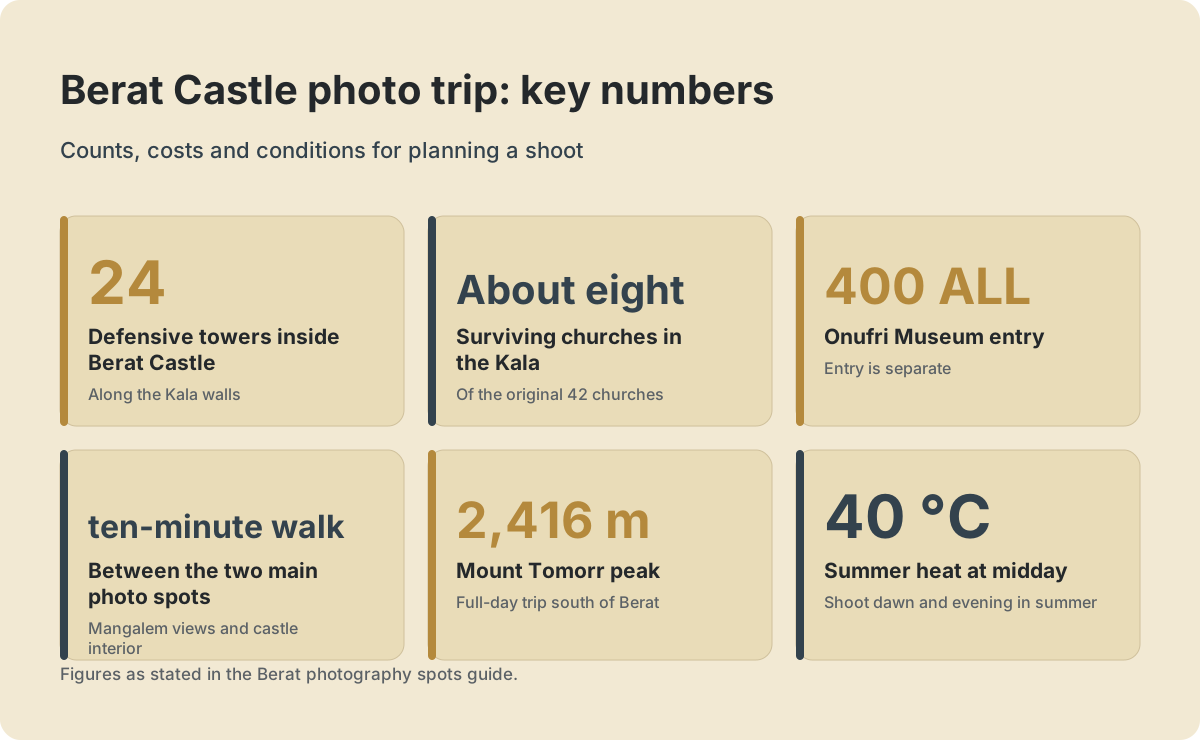
The best Berat Castle photos come from three positions: the Gorica riverbank for the full thousand-window stack of Mangalem, the castle walls themselves for the 24 towers and valley views, and Gorica Bridge at blue hour. Shoot early morning or late afternoon. Summer heat can top 40 °C, and the Onufri Museum inside the castle costs 400 ALL.
Berat, in central Albania, is a UNESCO World Heritage hill town on the Osum River, and it may be the most rewarding small-town photography destination in the Balkans. Whitewashed Ottoman houses climb the hillside in dense rows, each facade punched with half a dozen timber-framed windows, which is how the town earned its nickname, the city of a thousand windows. Above the old quarters sits Berat Castle, a lived-in fortress quarter whose walls still carry 24 defensive towers, and below it all the Gorica Bridge strides across the river. Every kind of photographer, from phone shooters to landscape specialists, finds something here within ten minutes of unpacking.
This guide covers the specific spots that make the classic Berat Castle photos, the hours of light that make them work, the gear that suits bright stone streets, and the etiquette of photographing a town where several thousand people actually live. It also ranges beyond the old centre, because some of the strongest frames in the region sit an hour or two out in the Skrapar canyons and on the slopes of Mount Tomorr.
Where Can You Take The Best Berat Castle Photos?
The two defining shots of Berat are the stacked window rows of Mangalem photographed from the Gorica riverbank, and the castle walls and towers photographed from inside the old town itself, and both sit within a ten-minute walk of each other. UNESCO inscribed Berat in 2008 as an extension of the Gjirokastra listing, describing it as a rare example of a well-preserved Ottoman town, and nearly every image that travels under that label comes from one of five positions.
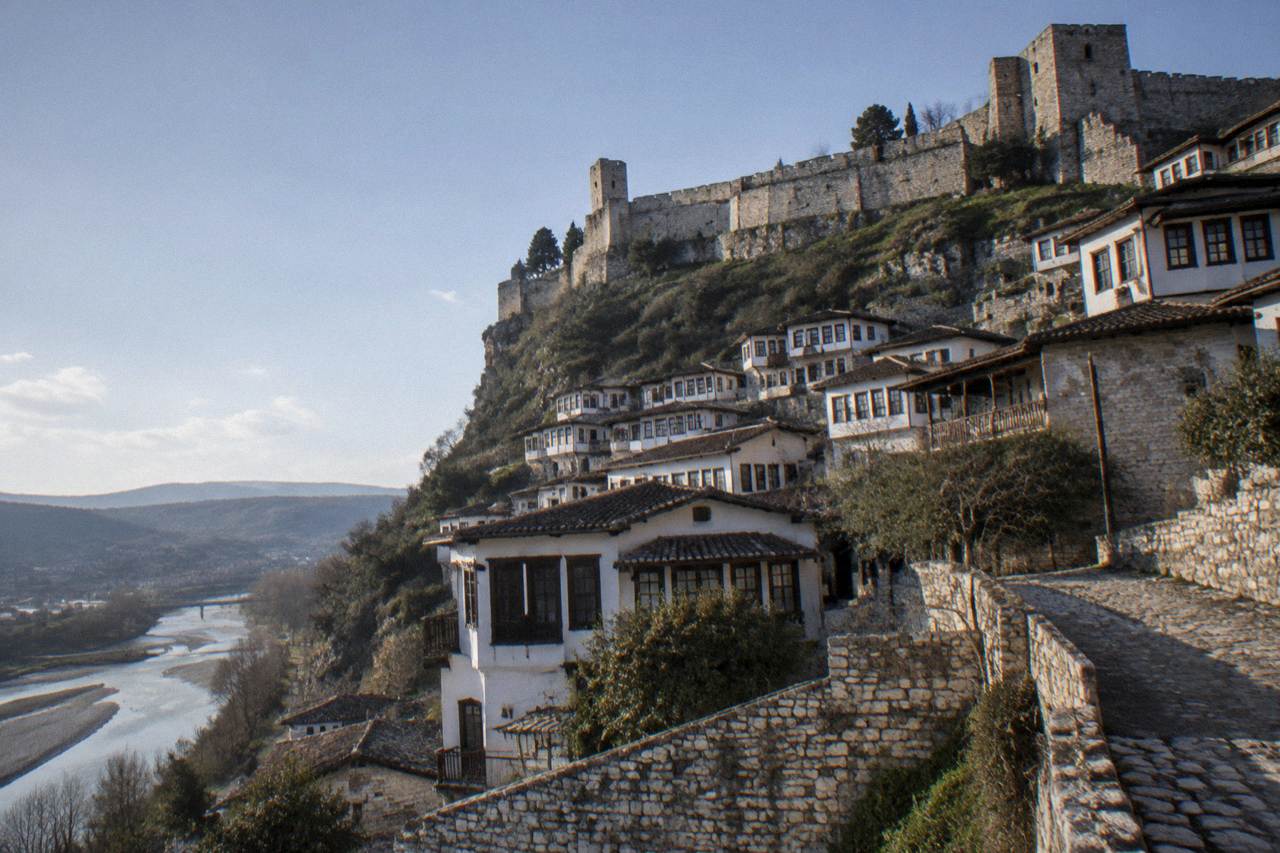
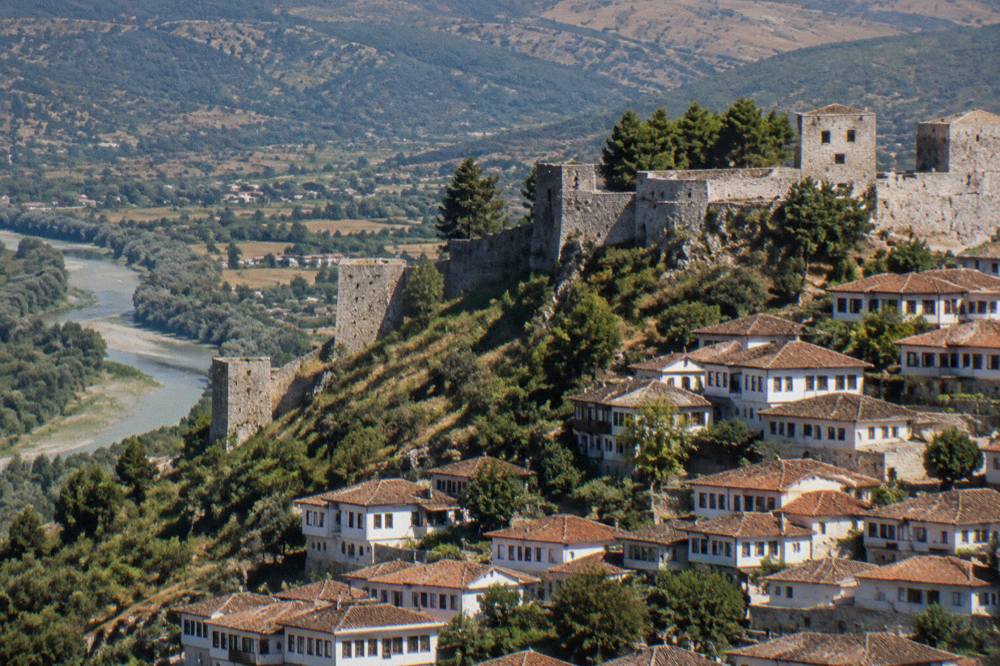
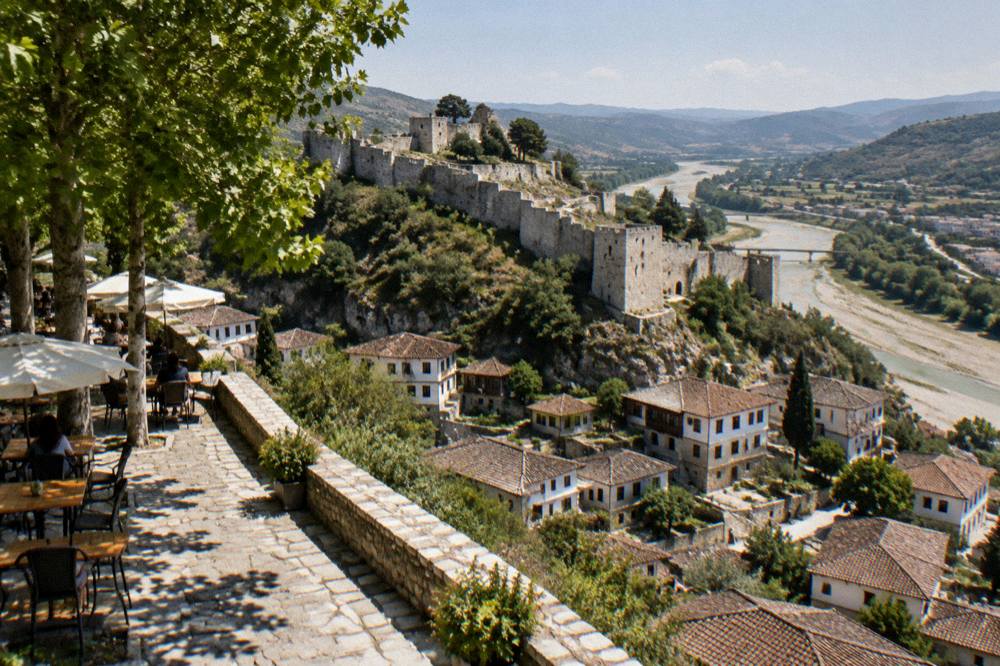
The classic postcard is shot from the Gorica side of the river. Stand on the far bank, or on the Gorica Bridge approach, and the whole Mangalem hillside fills the frame: white walls, dark window frames, red tile roofs rising toward the castle. Photographers who want the castle in the same shot should move downstream along the river path, where the fortress walls rise above the houses and the composition reads as one complete hill town. The town's UNESCO story is covered in depth in our Berat UNESCO heritage guide, which explains what made this skyline worth protecting.
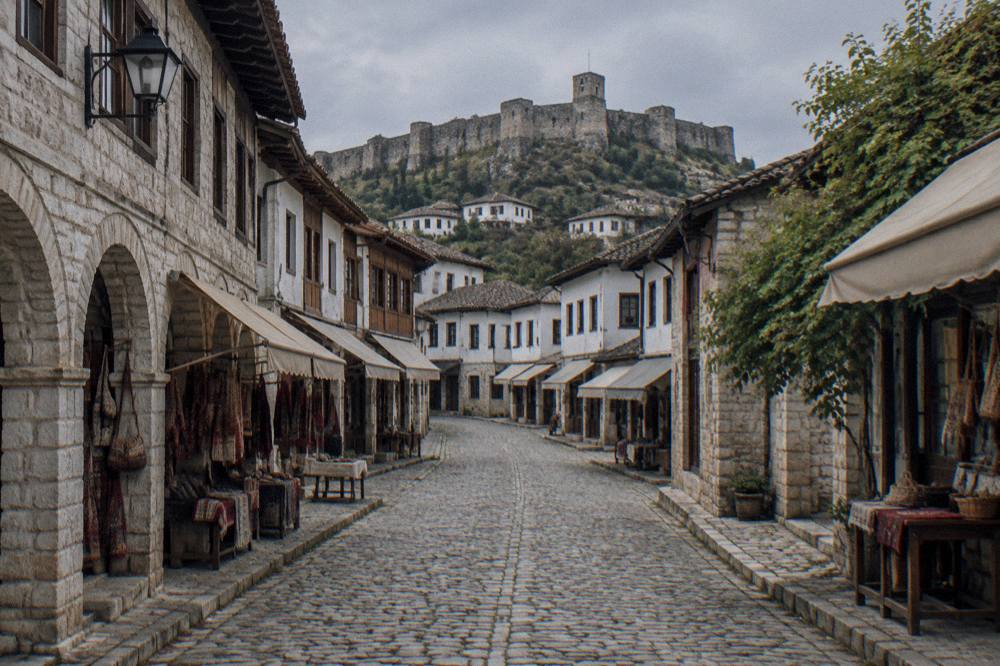
The second family of images comes from inside the Kala, the castle quarter, where the walls, towers and lanes give you something the riverbank cannot: depth. A wide lens pointed down a cobbled lane with grapevines overhead, stone houses on both sides, delivers the lived-in texture that separates Berat from the abandoned fortresses elsewhere in the Balkans. The town's layered past, Illyrian, Byzantine, Ottoman, is unpacked in the Berat history guide, and knowing a little of it changes what you point the camera at.
Here is the working shortlist, with the light each position needs:
| Spot | What You Photograph There | When The Light Works |
|---|---|---|
| Gorica riverbank, opposite Mangalem | The full thousand-window hillside | Late afternoon, sun angling across the facades |
| Downstream river path | Castle walls above the rooftops in one frame | Morning or late afternoon |
| Inside Berat Castle | The 24 defensive towers, lanes, valley views | Early morning, before day visitors arrive |
| Gorica Bridge | Stone bridge, river reflections, both quarters | Blue hour into evening |
| New Town boulevard, Bulevardi Republika | Plane trees, café terraces, street life | Evening, when the town comes out to stroll |
One practical note shapes the whole day: the castle sits at the top of a steep climb, and photographers hauling tripods should read how long it takes to walk up to Berat Castle before planning a sunset-and-return itinerary. The answer is friendlier than most people expect, but the hill is real.
What Time Of Day Gives The Best Light For Photographing Berat?
Morning and the hour before sunset are the two windows that matter in Berat, and midday is the one to avoid, because the white stone of the old town bounces hard light into every shadow. In summer the sun is punishing enough that shooting between late morning and late afternoon means harsh top light and heat that can top 40 °C. Blue hour, after the sun drops behind the hills, is when Gorica Bridge and the river reflections earn their reputation.
The shape of the valley drives everything. Mangalem faces roughly across at Gorica, so the window rows catch raking light in the late afternoon, when each dark timber frame throws a small shadow and the hillside reads in relief. Photographers who want that relief texture should be on the riverbank from about two hours before sunset until the light goes. Morning light is flatter on the facades but kinder inside the castle, where the lanes stay shaded and the towers catch the first sun.
Seasons change the palette more than the clock does. The light is qualitative in Berat, and the town has no official published climate normals, so treat the seasonal table below as a photographer's sketch rather than a meteorological record:
| Season | Light And Sky Character | What It Means For Your Photos |
|---|---|---|
| Spring | Soft, changeable skies, green hillsides | Best balance: comfortable walking, fresh colours, dramatic clouds |
| Summer | Hard, high sun, hazy horizons, serious heat | Shoot dawn and evening only; carry water; stone glare is severe |
| Autumn | Warm, low, stable light, vines turning | Arguably the strongest season for colour on the walls and in the vineyards |
| Winter | Low grey light, wet days, empty lanes | Moody frames of wet cobbles; snow is rare in the town itself |
The broader pattern is hot, dry summers and wetter winters, with rain peaking in the November-to-January stretch and July the driest month. The full planning picture, month by month, is in the Berat weather guide, and the honest answer for photographers is May, June, September and October: long golden hours, walkable hills, and skies with character.
If you are arriving from the capital rather than staying overnight, the Tirana to Berat transport guide explains the bus schedule reality, and the honest advice for photographers is that a day trip costs you either the morning or the evening, the two best hours.
Is A Guided Tour Worth It For Photographers?
A guided tour earns its place in a photography trip when it buys you timing and access rather than information: a local guide knows which lanes stay quiet, which courtyard doors open, and how the light falls at each hour, and for visitors on a tight schedule the right tour can compress a day of scouting into a single morning. The trade-off is pace, because a group moves on schedule, and a photographer chasing one perfect frame may not.
For most visitors the sweet spot is the Castle & Old Town small-group tour, which covers exactly the two zones this guide prioritises, the Kala and the old town below it, in a small-group format that keeps things flexible. Check availability if that format fits your dates; the details and current price sit on the operator's live listing. A guide who walks these lanes daily can tell you which tower gives the cleanest valley shot and where the day-trip crowds congregate, intelligence that takes solo visitors two or three visits to gather.
The day-trip format from Tirana or the coast is a different proposition, and photographers should be clear-eyed about it. A day trip delivers you to the viewpoints and takes you home, but the middle of the day is the weakest light and the thickest crowds. It works, and thousands of visitors do it happily, but if the photographs are the point of the journey, an overnight stay in the old town beats the bus both ways. Where to sleep, quarter by quarter, is covered in the Berat where to stay guide, and several guesthouses inside the castle walls themselves put you metres from the dawn shots.
Where Do You Shoot Mangalem's Thousand Windows From Across The Osum?
The thousand-window view of Mangalem is shot from the Gorica side of the Osum River, either from the riverbank path, from the Gorica Bridge, or from the lanes climbing into Gorica above the bridge, and each position changes the story: the riverbank gives the straight-on wall of windows, the bridge adds foreground geometry, and the Gorica lanes add depth and the church silhouette above the roofs.
Start on the bridge itself. From Gorica Bridge the window rows rise in front of you, and the stone parapet gives a strong foreground line, but be patient: the bridge carries foot and scooter traffic all day, and the frame you want will have someone in it. The riverbank path below, reached by stairs on either side, trades the elevation for a calmer angle and puts water in the foreground, which matters at blue hour when the reflections double the window lights.
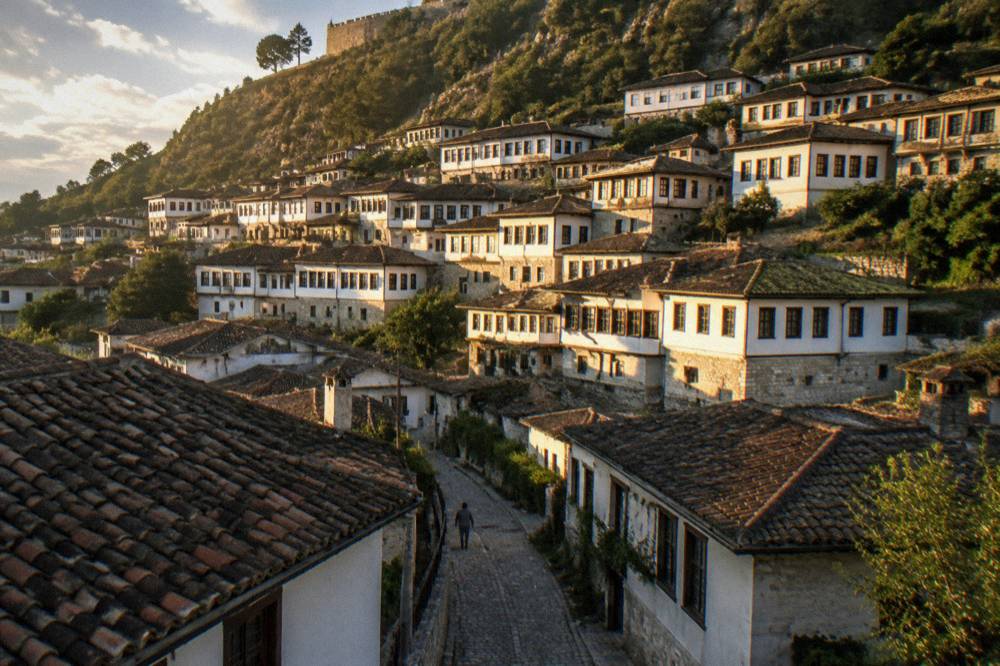
For depth, climb into Gorica itself. The lanes above the bridge stack their own white houses, and shooting back across the river puts Mangalem's hillside behind a foreground of Gorica rooftops and church towers, a composition the postcard shooters on the bridge never find. The quarter is residential, so work quietly, and keep the camera level rather than pointing into windows. A shot list keeps you honest when the light is moving faster than you are:
| Subject | Suggested Framing | Practical Note |
|---|---|---|
| Mangalem window rows | Long lens from the far bank, compressing the stack | Late afternoon for shadow in each frame |
| Gorica Bridge | Wide angle from the riverbank, bridge crossing the frame | Blue hour, tripod, long exposure |
| River reflections | Low angle from the water's edge | Calm evenings give clean mirrors |
| Gorica lanes | Mid-range, foreground lane with Mangalem beyond | Morning, lanes are quiet and shaded |
| Rooftop panorama | From the upper Gorica lanes, both quarters in one frame | Sunset hour, walk up early to scout |
The honest mistake most first-timers make is shooting Mangalem only once, from the bridge, in the middle of the day, and moving on. The hillside changes completely with the light: flat and graphic at midday, carved and three-dimensional in the last two hours of sun, and glittering after dark when the rooms light up one by one. Give it at least two sessions.
What Should You Photograph Inside Berat Castle Itself?
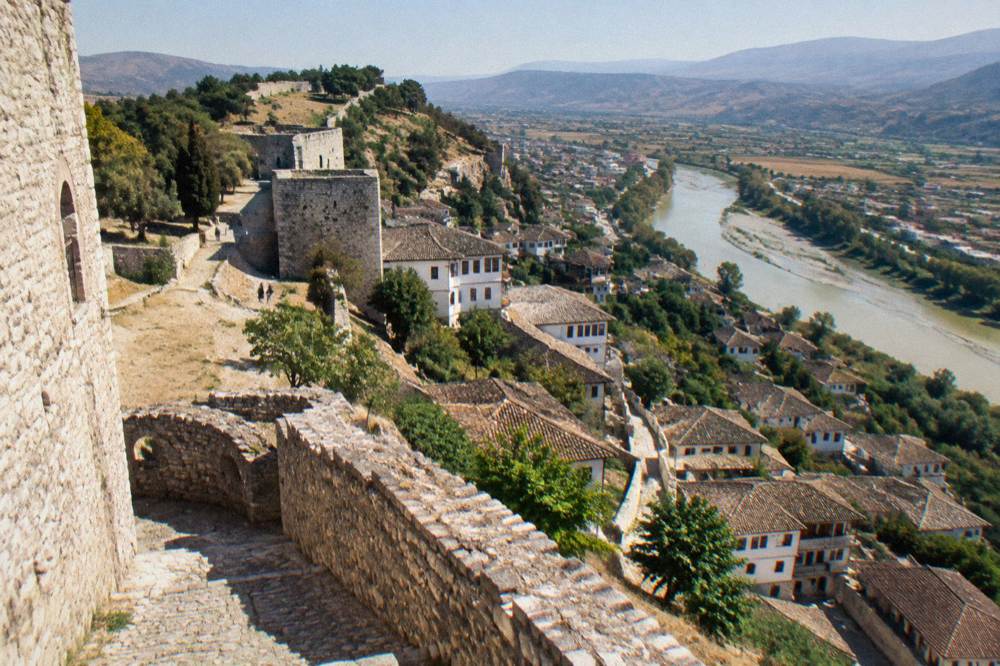
Inside the Kala the strongest subjects are the 24 defensive towers along the walls, the surviving churches of a quarter that once held about 42 of them, the Red Mosque ruin that stands among the earliest Islamic buildings in the fortress, and the lanes of the lived-in quarter where families still dry peppers and hang grapes over the cobbles. The valley panorama from the southern walls is the single most requested frame.
The castle is not a monument you photograph from one angle; it is a neighbourhood you walk through, and the best frames come from walking it twice, once in the first light of morning when the lanes are empty, and once in late afternoon when the low sun crosses the walls and the towers pick up warm colour. The Berat Castle attraction guide covers the history and layout in detail; for photography, the working route is to enter from the main gate, work the southern wall for the valley shot, then loop back through the residential lanes toward the Onufri Museum at the top.
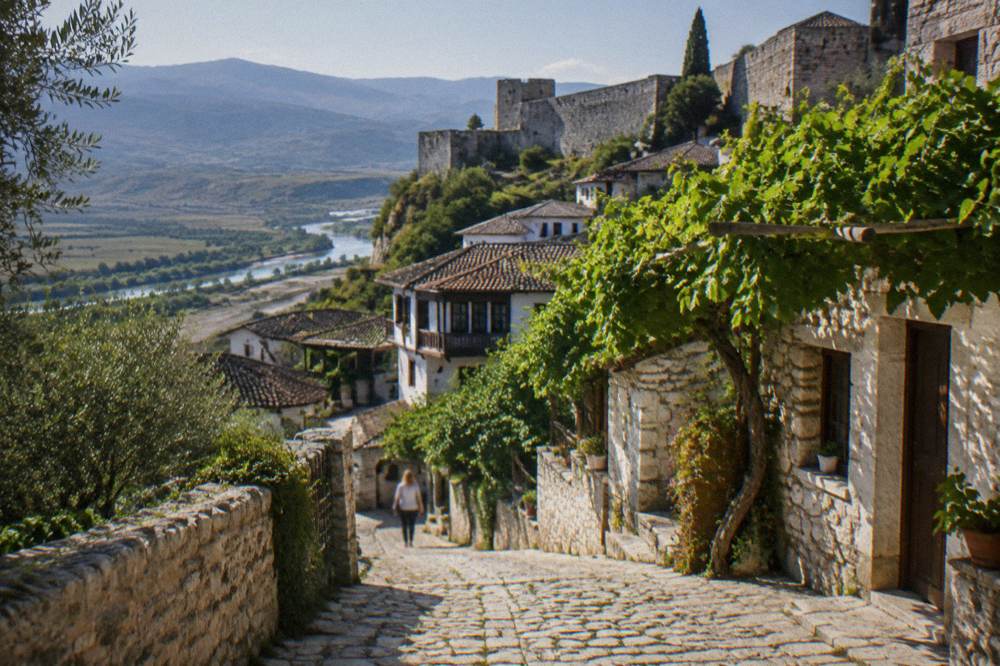
Car access into the castle quarter is being restricted under a project the municipality and UNESCO both describe as Smart Parking, with barriers planned to keep most vehicles out and the lanes pedestrian-first, so plan on parking below and walking up regardless of what a taxi driver tells you; the driving and parking in Berat guide has the current picture. There may be a small daytime charge at the castle gate, so carry lek.
Inside, the subjects sort into three groups:
| Subject In The Kala | What Makes It Photogenic | Practical Note |
|---|---|---|
| The wall towers | Rough stone against sky, repeated geometry | Late afternoon sun rakes the walls |
| The surviving churches | About eight of the original 42 remain, domed and walled | Most sit quietly in lanes, shoot respectfully |
| The Red Mosque | Among the earliest Islamic buildings in the fortress | Shoot the exterior |
| The Onufri Museum exterior | The church of St Mary, the museum's home | Museum entry is separate, 400 ALL |
| Residential lanes | Vines, cobbles, laundry, daily life | People live here: shoot lanes, not faces, without a greeting |
The valley panorama deserves patience. From the walls, the Osum River bends around both quarters, and the frame that includes the river, Gorica and the hills beyond needs the wide end of your lens and a steady afternoon. Hang around for the change of light even after you have the shot; the tonal shift in the last half hour before sunset is where the keepers come from. The wider set of guides lives on Berat Travel Guide.
How Do You Photograph Gorica Bridge And The Town After Dark?
Gorica Bridge is a blue-hour subject first and a daylight subject second, because the stone only separates from the water once the sky dims and the town lights come on, and after dark the whole river corridor, the bridge, the two quarters and the reflections, becomes the strongest night composition in central Albania. For visitors without a car, a dedicated evening tour solves the problem of catching that hour from Tirana.
The sequence matters. Arrive before sunset, shoot the bridge and riverbank in the last direct light, then hold position through blue hour, the twenty-odd minutes when the sky holds deep blue and the windows glow, and only then decide whether the fully dark hours are worth the wait. A tripod makes the difference after dark; handheld night frames from the bridge are possible on modern phones, but a long exposure smooths the river and doubles the reflections. Isolated, the town is quiet and considered safe to walk in the evening, and the Berat safety guide covers the practicalities, including ordinary caution with gear in any town at night.
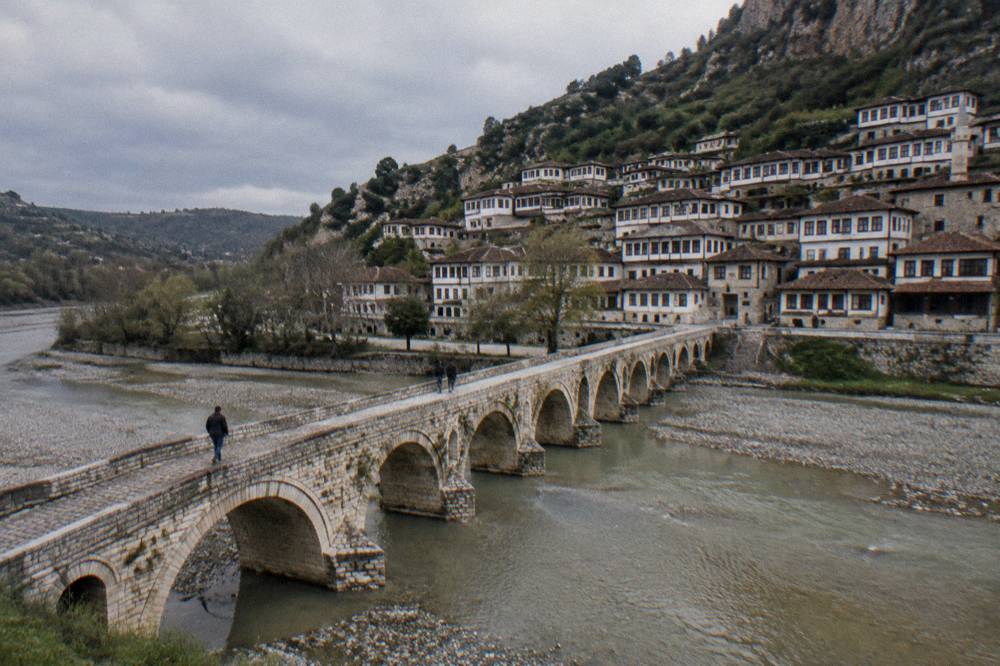
For photographers travelling from Tirana, the evening format solves the light problem, and one tour on the roster is built for exactly this: the UNESCO Berat City by Night tour, which lists a photography focus in its own description and runs as a full evening out of the capital.
The night shooting does not stop at the bridge. Bulevardi Republika, the new-town promenade, lights up in the evening and the café terraces fill, which makes it the one place in Berat where street photography comes easily after dark. The boulevard's plane trees and busy cafés are a different palette from the old quarters, and the contrast is part of the story: Berat is a working Albanian town, not a museum set.
What Photo Spots Lie Beyond The Town On Day Trips?
The strongest photography beyond Berat's old town sits in the Skrapar region to the south: the Osumi Canyon, protected as a natural monument, with vertical walls above the river; the Bogovë waterfall reached by a short forest walk; and Mount Tomorr, whose 2,416 m peak and Bektashi shrine make it the great backdrop and a full day's destination in its own right. Closer to hand, the Berat-region vineyards give you rows, cellars and tasting light.
The canyon changes character with the seasons and with it the photography. Spring snowmelt fills the Osum with whitewater, and the canyon reads as a rafting landscape, all speed and spray; through the summer and into autumn the water calms and the tubing season begins, and the walls reflect in still green pools. Operators run rafting roughly from late winter to early June and tubing from midsummer into autumn, so the trip you book shapes the shots you get. The full seasonal and practical picture is in our Osumi Canyon guide, and the classic combination trip, canyon plus waterfall, is the Osum Canyon & Bogove Waterfall tour, which pairs the rim and the falls in one day.
Mount Tomorr is the region's vertical statement. At 2,416 m, with the Kulmak Tekke and the tomb of Abaz Ali near the top, it is sacred to the Bektashi community, and every August the pilgrimage brings a scale of human presence no other Albanian mountain sees. For photographers outside pilgrimage week, it is alpine ridgelines and a holy site, shot with the respect a living shrine demands; the details are in the Mount Tomorr guide. The road up from the Berat side has been under an active upgrade project through 2026, which shortens access but means conditions change.
| Destination | Photographic Subject | How Photographers Usually Reach It |
|---|---|---|
| Osumi Canyon, Çorovodë area | Vertical canyon walls, river bends, rim viewpoints | Guided canyon and rafting tours from Berat |
| Bogovë waterfall | Forest trail, waterfall and pool, part of Tomorr park | Combined canyon-and-waterfall tours |
| Mount Tomorr | 2,416 m peak, tekke, alpine ridgelines | Guided hikes and jeep tours; road being upgraded |
| Berat-region wineries | Vineyard rows, cellars, local varieties like Puls | Winery tours with transfers from town |
| Riverside viewpoints around Berat | The new EU-funded 290 m panoramic bridge near Bilçë | Short drive or ride from town |
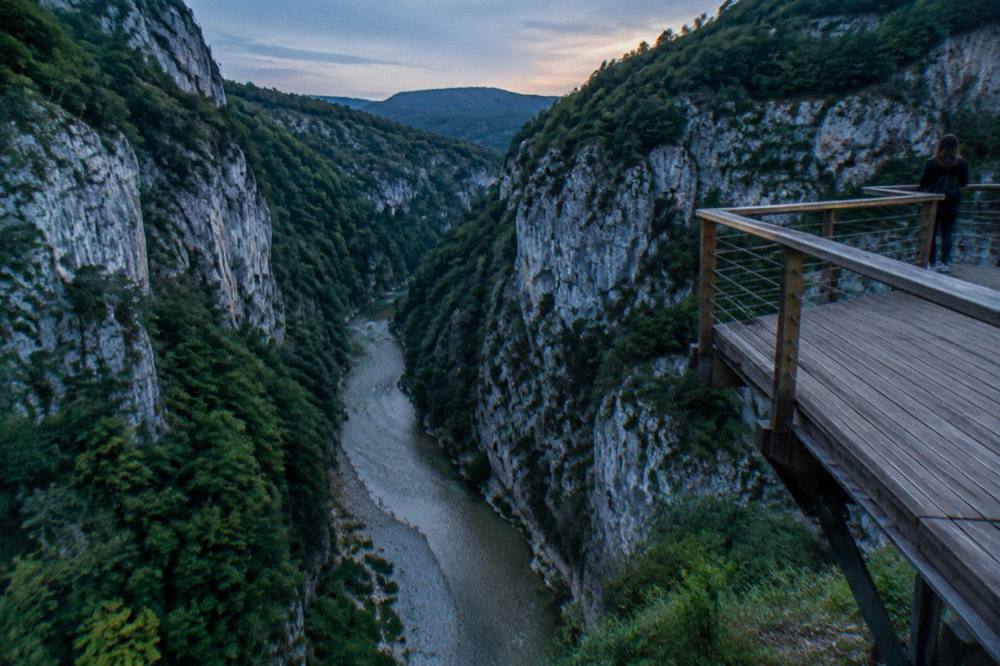
Closer to town, the ridgelines above Berat give the wide-town panorama that the riverside cannot: the whole UNESCO core in one frame, both quarters, the castle and the river bend. The ATV tour of the Berat countryside reaches hillside tracks that sedans cannot, and for photographers carrying a tripod it is a practical way to get above town for the sunset hour.
How Do You Photograph A Lived-In Town Respectfully And Without Crowds?
Berat's old quarters are home to several thousand people, so the working rule is to photograph lanes and architecture freely, greet people before pointing a camera anywhere near them, and skip frames of doorways, laundry and faces that you would not want a stranger taking of your own house, while the crowd problem solves itself with the clock: the day visitors concentrate between late morning and late afternoon, and the early hours belong to residents and the few photographers who set alarms.
The museum interiors are a separate case. The Onufri Iconographic Museum, inside the castle, holds the icon collection in the church of St Mary, and the Ethnographic Museum in the old town reopened on 30 May 2026 after three years of restoration with around 1,300 objects on display. Photography rules inside both museums vary and are set at the desk, so ask before raising a camera; the guard, not the guide, decides. What you can plan on are the hours and the tickets, which are published and stable:
| Museum | Ticket | Hours | What A Photographer Should Know |
|---|---|---|---|
| Onufri Iconographic Museum | 400 ALL, audio guide 500 ALL, reduced 200 ALL, ages 12-18 and students 120 ALL | 1 May-30 Sep daily 9:00-18:00; 1 Nov-30 Apr Tue-Sat 9:00-16:00, Sun 10:00-15:00 | Inside the castle; combines with a morning of wall shooting |
| Ethnographic Museum | 300 ALL, reduced 150 ALL, ages 12-18 and students 90 ALL | Same seasonal pattern as Onufri | Reopened 30 May 2026 after restoration, ~1,300 objects |
Both museums open free on 18 April, 18 May, 21 May and 29 September, and on 28 and 29 November for Albanian citizens, and online ticketing through the national e-Albania system has covered Berat's museums since November 2025. Those free days are also the museum's busiest days, so weigh the saving against the crowd.
The crowd rhythm follows the buses. Day tours from Tirana and the coast land mid-morning and leave in the late afternoon, which is exactly the window this guide has already told you to skip for the best light. Overlap works in your favour twice: an early start puts you inside the castle before the groups, and the evening puts the whole riverbank back in local hands. If you are staying overnight, the budget-friendly options in the old quarters are catalogued in the Berat hostels guide, and eating where the light is, rather than returning to your room, keeps the evening session alive; the Berat where to eat guide is the companion for that.
Respect extends to the sacred buildings. The mosques and tekkes of the old town are working religious buildings, and the churches inside the castle are, several of them, still consecrated. Dress codes and interior rules vary by building and by custodian; the standing advice is simple, ask, and accept a no. The frames you keep will be the ones you earned the right to take, and the town, which has been photographed intensively since it joined the World Heritage List, notices the difference between a visitor and a guest.
Common Questions About Photographing Berat
Where Is The Classic View Of The Thousand Windows?
From the Gorica side of the Osum River. The Gorica Bridge gives the straight-on postcard, the riverbank path below adds water and reflections, and the lanes climbing into Gorica give depth with rooftops in the foreground. Late afternoon light puts a shadow in every window frame, which is what makes the hillside read as three-dimensional.
Do You Have To Pay To Enter Berat Castle?
There may be a small daytime charge at the gate, and blogs quote figures around 300 lek, but no official current price is published, so the reliable advice is to bring a few hundred lek in cash and expect a modest fee during staffed hours. The Onufri Museum inside the castle has a firm published ticket, 400 ALL.
Is Photography Allowed Inside The Museums?
Rules are set at each museum desk and vary, so ask before shooting inside either the Onufri or the Ethnographic Museum. The castle lanes, walls and exteriors carry no restriction beyond ordinary courtesy.
What Lens Should You Bring To Berat?
One zoom covering roughly 24-70 mm equivalent handles almost everything in the old town, with a long lens around 70-200 mm for compressing the window rows from across the river. Add a tripod only if you plan blue-hour work at Gorica Bridge; otherwise travel light, because the hill up to the castle is steep and cobbled.
Is It Safe To Walk Around Berat At Night With A Camera?
Berat is regarded as a quiet, safe town and foreign visitor advice for Albania carries no warning against travel to any part of the country, but standard city caution applies: keep the camera strap on, avoid leaving gear unattended on café tables, and shoot the riverside with a friend after dark rather than alone.
Can You Photograph The Mosques And Churches Of The Old Town?
Exteriors are generally fine. Interiors of working religious buildings are a matter for the custodian, and the rule that never fails is to ask first and accept the answer, whether at the King Mosque, the Halveti Tekke or the churches inside the castle.