What Is The Most Beautiful Village In Albania?
An honest answer to Albania's most argued travel question, with the case for Berat's old town, the waterfall village of Bogovë and the wine villages of Roshnik.
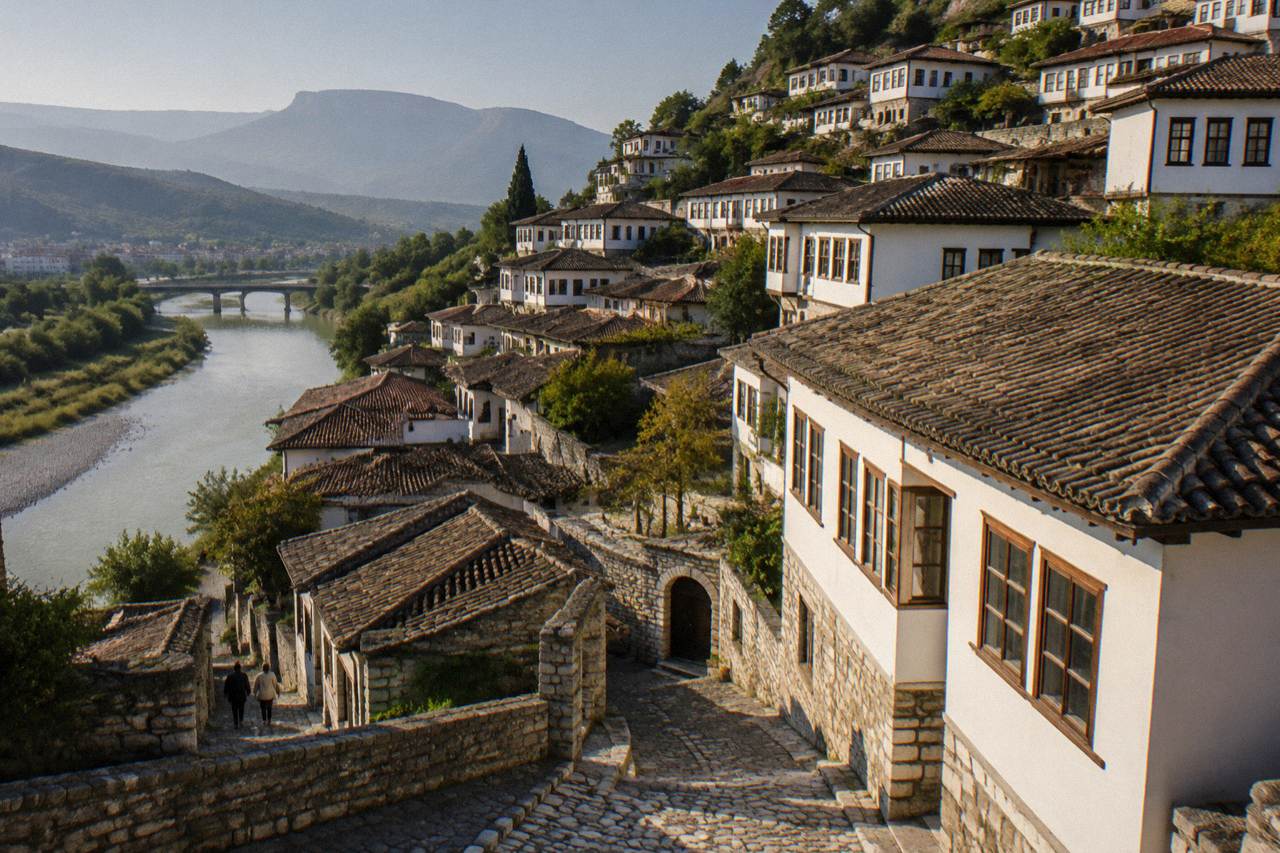
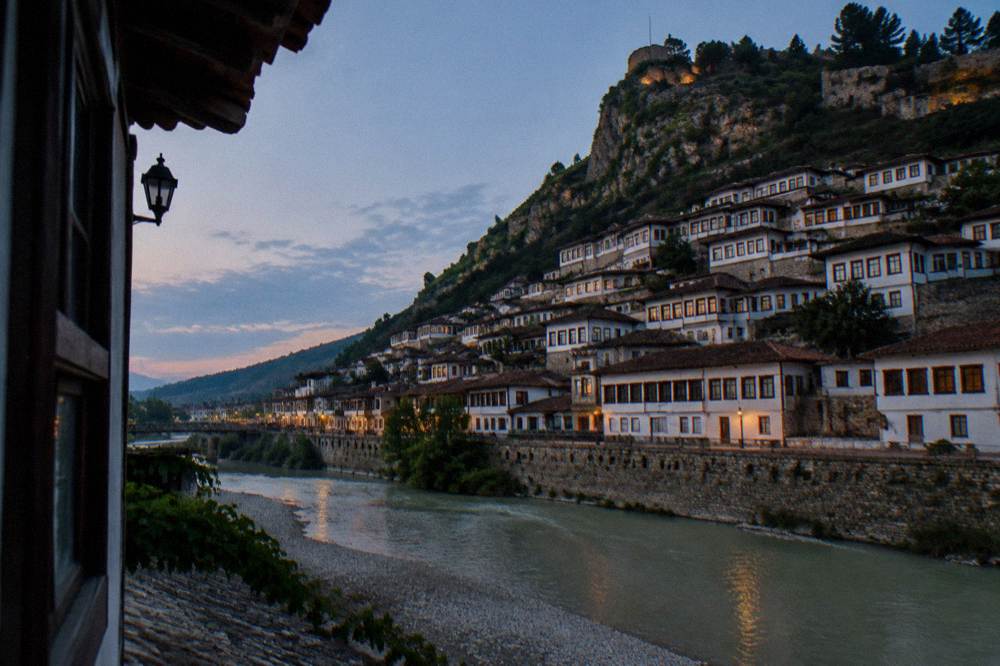
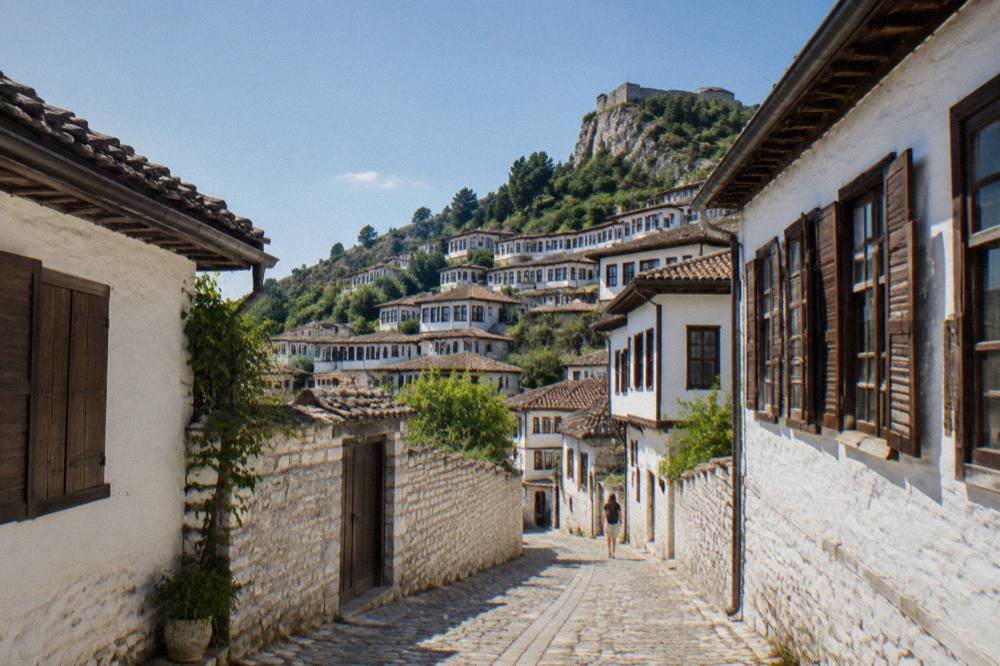
Berat, in central Albania, is the strongest honest answer to this question, even though it is a town rather than a village: a UNESCO World Heritage Ottoman-era hill town on the Osum River, added to the World Heritage List in 2008 as an extension of the Historic Centres of Berat and Gjirokastra. UNESCO describes it as a rare example of a well-preserved Ottoman town, and its stacked white houses in Mangalem and Gorica are what most people picture when they imagine beautiful Albania. For a true village, the small settlements in the hills around Berat, above all Bogovë below its waterfall, are the best contenders this site can verify.
The question is worth slowing down on, because "most beautiful" means different things to different people. Some want drama: peaks, gorges, a road that frightens the driver. Others want softness: stone lanes, café light, a bridge you cross twice because the first crossing was too quick. Albania offers both, and the national conversation about it, in forums and travel threads, circles endlessly around the northern mountain villages on one side and the Ottoman towns of the centre and south on the other. This page comes down firmly on the side of the centre, and it does so on the basis of what can actually be checked rather than repeated folklore.
What Is The Most Beautiful Village In Albania?
Strictly as a village, the honest answer from this site's reporting is Bogovë, the small settlement at the edge of Tomorr Mountain National Park below the waterfall most visitors reach from Berat. As a settlement of any size, nothing in Albania that this site can verify beats the old town of Berat itself: two Ottoman quarters facing each other across the Osum River, a lived-in castle above, and a UNESCO inscription earned in 2008 for the way the whole ensemble survived. The northern village of Theth gets named most often in general travel talk, but this build verified nothing about Theth, so it stays a rumour here rather than a recommendation.
The case for Berat is not a mood, it is a documented one. The World Heritage property, which Berat shares with Gjirokastra, covers 58.9 hectares with a buffer zone of 136.2 hectares, inscribed under criteria iii and iv. The castle quarter, the Kala, still has residents living inside its walls, guesthouses operating among them, and a building centuries old being converted into an eight-room family guesthouse next to the Onufri Museum. That is rare. Most fortress towns in Europe emptied out long ago; Berat's did not.
Then there is the river. Mangalem's windows face Gorica across the Osum, and the two quarters talk to each other across the water through the Gorica Bridge. A new 290-metre EU-funded panoramic bridge over the Osum, completed in 2025, now connects the villages of Bilçë, Malinat and Zhitom with Berat and diverts through traffic away from the historic centre, which is quietly one of the best things to happen to the old town's calm in years.
Why Do Travellers Keep Naming Berat Over Entire Villages?
Because Berat delivers the village fantasy, intimacy, stone, a skyline you can walk into, at a scale that still has streets worth getting lost in. Its castle walls carry 24 defensive towers, about 42 churches once stood inside them and around eight survive, and the whole ensemble is walkable in a day while still holding corners that feel undiscovered. A village gives you one view; Berat gives you a dozen, and every one of them is verified on the ground by the people who live there.
The museums anchor the argument. The Onufri Iconographic Museum, inside the Church of St Mary in the castle, holds the icon collection that gives Berat its artistic weight, and the Berat Museum Center publishes its own figures: an individual Onufri ticket at 400 lek, an audio guide at 500, and the Ethnographic Museum across the river at 300. Since November 2025, tickets for these state museums can also be bought online through the national e-Albania platform, which tells you something about how many people are now coming.
Numbers, in fact, are the quiet story here. The Onufri Museum alone recorded 58,912 visitors between January and July 2026, and the castle quarter kept functioning as a neighbourhood while absorbing them. That balance, a World Heritage site that is still partly a living village, is exactly what the "most beautiful" debate usually ignores.
For anyone weighing Berat against other Albanian towns, the honest framing is character rather than rankings. We have looked at that comparison directly in which is better, Gjirokastra or Berat, and the short version is that the two towns share one UNESCO inscription but not one personality. Berat is the softer, whiter, more livable half of the pair.
Which Small Settlements Around Berat Contend For The Title?
Four places in Berat's immediate region make a real claim: Bogovë, the waterfall village inside Tomorr Mountain National Park; Roshnik, the wine village on the slopes south of town; Çorovodë, the gateway to the Osumi Canyon; and the Kala, Berat's own castle quarter, which is technically a neighbourhood but behaves like a village of a few hundred souls. Each is reachable on a day trip from Berat, and each is beautiful in a way a camera actually captures.
Here is what each contender offers, with only what this site has verified:
| Place | What it is | The verified draw |
|---|---|---|
| Bogovë | Village at the edge of Tomorr Mountain National Park | Short forest walk to the Bogovë waterfall, roughly 30 to 60 minutes return |
| Roshnik | Wine village in the hills south of Berat | Family wineries pouring Shesh and Puls varieties, vineyard lunches |
| Çorovodë | Small town and gateway to the Osumi Canyon | Canyon protected as a Natural Monument, rim viewpoints free of charge |
| The Kala, Berat | Lived-in castle quarter | 24 defensive towers, around eight surviving churches, resident guesthouses |
Bogovë deserves the headline slot among these. The waterfall trail begins at the village and follows a narrow forest path to a pool that, in the hotter months, is exactly as tempting as it looks in photographs. A guided waterfall hike and wine tour from Berat, which this site features, combines the Bogovë walk with a winery stop in one day: Check availability. It is the single most efficient way to see both sides of the region's beauty, the wet green side and the amber cultivated side, without renting a car.
Roshnik's claim runs through the grape. The Berat region grows Shesh i Zi and Shesh i Bardhë, the native red and white varieties of central Albania, plus a rare local white called Puls, and the wineries around Roshnik pour all of them alongside raki and home-cooked food. A tasting visit here is less a tourist activity than an invitation into someone's courtyard.
Çorovodë is the rawest of the four. The Osumi Canyon above it, carved by the Osum river, is protected as a Natural Monument, and its rim viewpoints, including the opening known locally as the Bride's Hole and the old Italian bridge, cost nothing to stand at. Operators run rafting in spring when the snowmelt is high and tubing through summer and autumn when the water calms down.
What Makes A Village Beautiful In Albania Anyway?
A beautiful Albanian village needs three things working together: architecture that belongs to its slope rather than fighting it, water that shapes the setting, and people still living the place rather than performing it. Berat's region is unusual in scoring highly on all three, with a river splitting two Ottoman quarters, a national park rising behind a waterfall village, and working wineries rather than abandoned sets. Plenty of famous names in the country manage only one or two.
Consider the test cases. A village with perfect stone houses and no one in them photographs well and feels hollow by the second hour. A village with spectacular scenery and a road full of traffic never lets you hear itself. The settlements around Berat pass because they are economic places first: wine gets made in Roshnik, cheese and raki in the canyon villages, and the castle quarter still repairs its own cobblestone road, work that began again in April 2026 after damage from earlier works.
The intangible side matters too. Berat hosts Albania's Slow Food community, which works to keep traditional recipes in circulation at restaurants around the old town, and the dishes the region is known for, qifqi rice dumplings, tavë kosi, japrak stuffed vine leaves, are village food that never left the local tables. Beauty you can eat is a real category.
How Do You Visit These Places From Berat?
You base yourself in Berat and radiate outward: the waterfall walk at Bogovë, the wineries at Roshnik and the canyon at Çorovodë all sit within a day's return drive, and Berat itself is reached by bus from Tirana in roughly two and a half hours on services that run through the day from the capital's South-North terminal. No train reaches Berat, so road is the only option, and it is a good one once you are out of Tirana.
Guided options do most of the logistical work. A walking tour focused on the city's stacked windows and lanes covers the old town itself in a couple of hours.
For a taste of the wine village life without leaving town, there is also a youth-run bar pouring local wine with snacks in the centre.
Timing shapes the whole trip. The best months for combining a waterfall hike with canyon viewpoints are late spring through early autumn, and we break the seasons down in the best month to visit Berat. If wine rather than water draws you, the Wine and Stories of Berat festival on 2 to 4 October 2026 puts the region's wineries in one place.
Money is simple here. Albania uses the lek, roughly 92 to the euro, and the old town runs largely on cash, so withdraw before walking up to the castle. We cover the practical side in detail in money and currency in Albania.
The honest summary is this. If the question demands a single word, this site's word is Berat, with Bogovë as the strictly correct village answer just behind it. If the question demands a national verdict on every corner of Albania, it needs a site that verified those corners, and this one, a Berat Travel Guide, checks what it can reach. For more on what this town is actually known for, see what Berat is famous for, and for the town-versus-village debate in neighbouring regions, start with the prettiest town in Albania.
Common Questions About The Most Beautiful Village In Albania
What is the most beautiful village in Albania?
On this site's verified reporting, Bogovë near Berat is the strongest village answer, thanks to its waterfall setting inside Tomorr Mountain National Park. The old town of Berat, though technically a town, is the most beautiful settlement of any size this site can confirm.
Is Berat a village or a town?
Berat is a town, and the centre of a municipality of 62,232 residents at the 2023 census. Its castle quarter, the Kala, has the scale and quiet of a village while technically being a neighbourhood.
Why is Berat considered so beautiful?
Its Ottoman quarters of Mangalem and Gorica face each other across the Osum River in stacked white houses, beneath a castle that is still lived in. Berat joined Gjirokastra on the
Can you visit Bogovë and the wineries in one day?
Yes. Guided tours from Berat combine the Bogovë waterfall walk with a winery visit, and the region's wineries sit within a short drive of the trailhead, so a single day covers both.
Does the northern village of Theth not beat all of these?
Theth is the most-named answer in general travel talk about Albania, but this site has verified nothing about it, so it cannot honestly be recommended here. What can be said is that the Berat region's case rests on documented facts, from its UNESCO status to its museum visitor numbers.