What Is Traditional Albanian Food?
Traditional Albanian food explained from Berat: tavë kosi, byrek, qifqi, japrak, the wines of the Osum valley, and where to eat and cook them in Albania's city of a thousand windows.
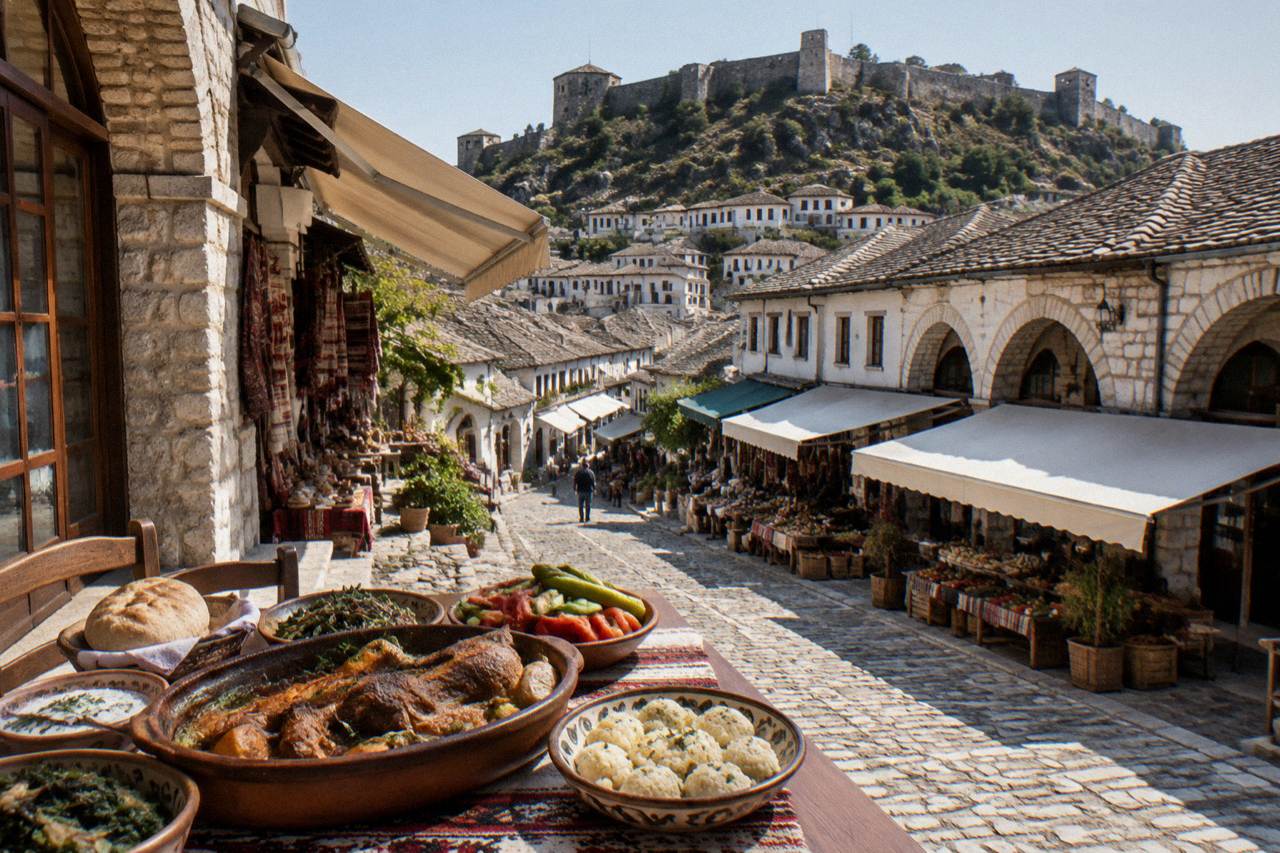
Berat, the UNESCO World Heritage Ottoman-era hill town on the Osum River in central Albania, is the kind of place where the question of food answers itself within an hour of arrival. You cross the Gorica Bridge into Mangalem, the white Ottoman houses stack up the hillside in front of you, and somewhere below a bakery is pulling byrek out of the oven while an old man carries a tray of it home for lunch. Traditional Albanian food is not a museum piece here. It is what people in Berat actually eat on Tuesday, and it is one of the quiet reasons travellers end up staying longer than planned.
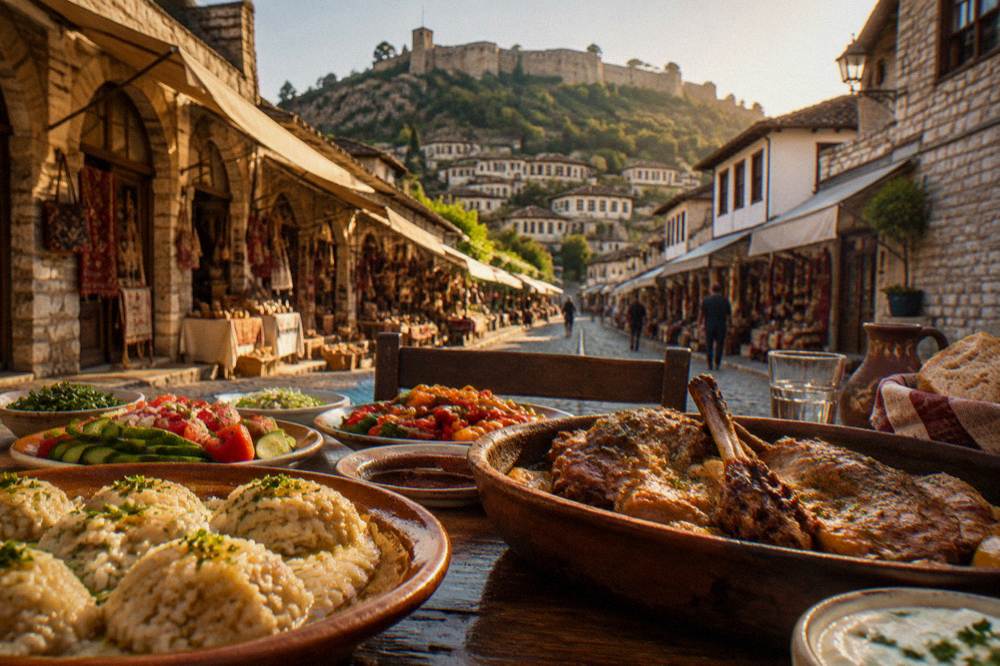
What Is Traditional Albanian Food?
Traditional Albanian food is the everyday cooking of a Balkan mountain country with an Ottoman past: baked savoury pies called byrek, slow-cooked lamb and veal stews, yogurt-based dishes like tavë kosi, stuffed vegetables and grape leaves, freshwater and Adriatic fish, sheep and goat cheese, olives, and bread at every meal, washed down with raki and the red and white wines of the central hills. In Berat specifically, the local table adds qifqi, crisp rice dumplings that are close to a town signature, and a winemaking tradition around indigenous grapes that goes back generations. It is hearty, seasonal, vegetable-heavy in ways people do not expect, and built around hospitality as much as ingredients.
The word that unlocks the cuisine is "shtëpia", the house. Albanian cooking is home cooking scaled up. Restaurants in Berat, from the small places in Mangalem to the garden terraces of Gorica, largely serve versions of what families in the region have cooked for a century: a pie, a baked dish, a stew, a salad of tomato and cucumber with feta-style cheese, and bread that arrives without being ordered because it is simply part of the meal. Nobody in Albania asks whether you want bread. The bread is assumed.
Two currents run underneath it. The first is the Ottoman inheritance, which shows up in the stuffed vegetables, the burek-style pies, the coffee culture and the syrupy sweets. The second is the mountain pantry of the interior: dairy, preserved meat, beans, cornbread and whatever the garden produced that week. Berat sits where those two currents meet, a market town on the river between the coast and the mountains, and its food shows both. If you want the full picture of where to eat it in town, our guide to eating in Berat goes restaurant by restaurant.
The Dishes That Define A Berat Table
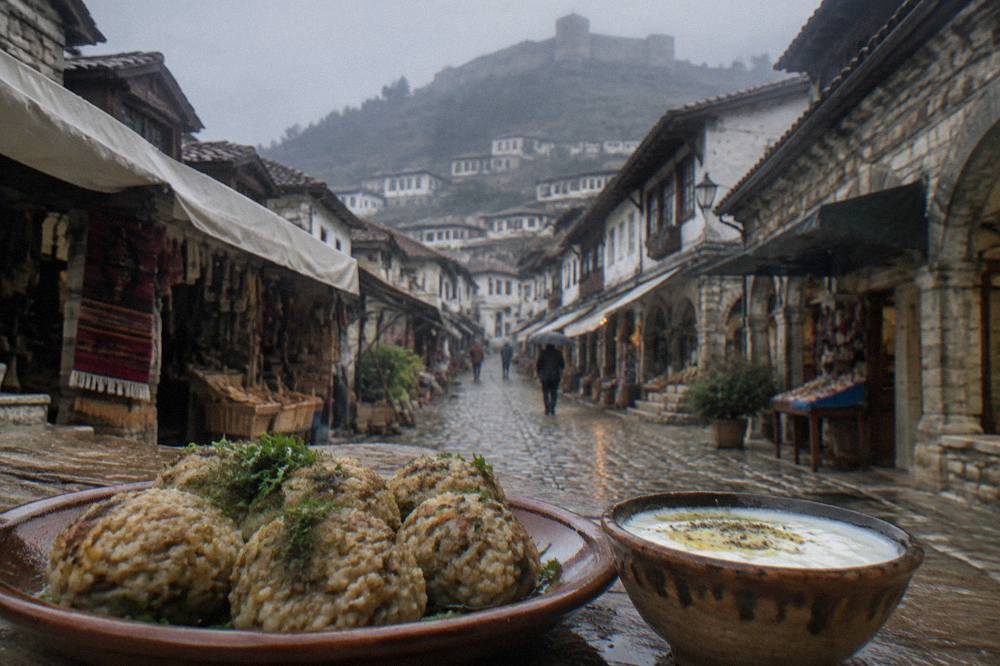
Five dishes do most of the work of defining Albanian food in Berat: tavë kosi, lamb baked under a blanket of yogurt and egg; byrek, the layered pie filled with cheese, spinach or minced meat; qifqi, Berat's own fried rice dumplings seasoned with mint and herbs; japrak, grape leaves stuffed with rice and meat; and fërgesë, a pan of tomato, pepper and cheese, sometimes with liver, baked until it bubbles. Around them sit grilled meats, köfte-style meatballs, tarator soup, and the long list of pickled vegetables that get a family through winter. None of it is fussy. It is food built to feed a table of cousins.
Byrek deserves its own paragraph because you will eat it constantly, usually standing up. It is a thin, hand-stretched pastry rolled around a filling, white cheese and spinach being the classics, then baked in a wide round tray and sold by the slice cut from a roll. In Berat it functions as breakfast, a mid-morning snack and an emergency dinner alike, and it costs very little. Paired with a glass of tea it is the most common cheap meal in the country. A slice and tea together typically run around four euros, though every byrektore sets its own price, so check the board. Other pages covering the same trip are gathered on Berat Travel Guide.
Here is the short version of what to look for on a Berat menu:
| Dish | What It Is | Notes For A Visitor |
|---|---|---|
| Tavë kosi | Lamb baked with rice in a yogurt, egg and butter sauce | Considered the national dish; order it once for the table |
| Byrek | Layered pie with cheese, spinach, potato or meat | Sold by weight or the slice; a breakfast staple |
| Qifqi | Fried rice dumplings with mint and herbs | A Berat specialty you rarely see elsewhere in Albania |
| Japrak | Stuffed grape leaves, sometimes with meat | Summer version uses fresh leaves |
| Fërgesë | Baked tomatoes, peppers and curd cheese | Rich; made with liver in the Tirana style |
| Speca me gjizë | Peppers stuffed with salted curd | Lighter, very common in central Albania |
The one thing to understand about ordering is that dishes arrive when they are ready, not in courses. A salad lands first, the byrek may come mid-meal, and the tavë kosi arrives when it arrives because it was baked for the whole evening's service anyway. Fighting this is pointless. Pour a glass of wine and accept the rhythm, because the kitchen is cooking the way it would for family.
If you are curious how this compares with the first meal of the day, we cover the pastries, eggs and preserves separately in what an Albanian breakfast looks like.
How Berat Eats Through The Day
A day of eating in Berat runs from byrek and coffee in the morning, through a long cooked lunch that is still the main meal for many families, to a lighter evening of grilled meat, meze or leftovers, with raki offered at almost any hour someone wants an excuse to open a bottle. Coffee is the connective tissue: an espresso or cappuccino costs a modest sum in a typical café, cheap by European standards, and nobody hurries you out of the chair. Lunch is where the serious cooking happens, and dinner starts late by northern European habits, often after eight.
Money goes a long way here, which is part of why the food culture is so accessible. Eating out in Berat is cheap by European standards, though you will want cash in lek. Raki, the grape or fruit spirit that closes most meals and opens most friendships, is poured by the shot at roughly two euros in most places. Albania is not an expensive country to eat well in, a point we unpack in more detail in is Albania cheap or expensive.
| Meal Or Item | Typical Cost In Berat | What To Expect |
|---|---|---|
| Byrek slice with tea | ~€4 | Standing breakfast at a bakery counter |
| Cheap restaurant meal | Cheap by European standards, cash in lek | One plate, bread, sometimes salad |
| Mid-range dinner for two | Cheap by European standards, cash in lek | Multiple dishes, wine or raki |
| Cappuccino | Cheap by European standards | Served slowly, unhurried café culture |
| Raki, per shot | ~€2 | Offered by hosts; refusing takes skill |
| Tavë kosi at a local spot | ~€8-15 | Price scales with the restaurant |
The numbers above are planning ranges drawn from current price reporting, not promises: every kitchen sets its own prices, and the smarter move is always to glance at the menu board before sitting down. What does not vary is the hospitality. It is genuinely difficult to leave an Albanian table hungry, and hosts treat a guest who eats well as a personal victory. If you are wondering whether the drinking culture that comes with that hospitality is for you, we cover it honestly in do they drink alcohol in Albania.
Wine, Raki And The Berat Wineries
Berat is one of Albania's real wine towns, with family wineries in the surrounding hills working indigenous grapes, Shesh i Zi for red, Shesh i Bardhë for white, the local Vlosh, and the rare Berat white called Puls, which Cobo Winery also turns into a traditional-method sparkling wine aged on its lees for three years or more. Raki, distilled from grapes or fruit, is the other half of the drinking culture, poured in small glasses before, during and after meals whether you asked or not. Together they make the Osum valley as much a food-and-drink destination as a sightseeing one.
The interesting part, and the thing a first page of search results will not tell you, is how deliberately the region is rebuilding around its own grapes rather than international varieties. Cobo, a family winery outside town, has been expanding its tasting rooms and vineyard paths specifically around autochthonous grapes, and its Puls-based sparkling wine, aged 36 to 40 months with zero dosage, is the kind of thing you simply cannot buy outside Albania in any quantity. The town also hosts the Slow Food Berat community, which works to keep traditional recipes in circulation, and each autumn the Wine & Stories of Berat festival fills three days with tastings from Albanian and Kosovo wineries.
A guided winery visit is the easiest way to taste this without renting a car, since the wineries sit in the hills around town and tastings usually come with olives, cheese and raki alongside the pours. One of the best-reviewed options is the Berat guided winery tour with transfers and tastings, which handles the driving and pours a structured tasting at the other end. If you would rather cook than sip, read on, because that is where Berat quietly excels.
Trying It Yourself: Cooking Classes Around Berat
The fastest way to understand Albanian food is to cook it with a family, and Berat has a small but genuine scene of home-based cooking classes where you shop, prep and eat a full multi-course meal in someone's house, learning japrak, byrek and the yogurt dishes that restaurants rarely make from scratch. Classes typically run three to four hours and end with the meal you cooked, plus wine and raki. It is the single most reliable answer to the traveller who says the food was the best part of Albania and wants to take some of it home.
The class that gets closest to the source is the traditional Albanian cooking class in a family home in Çorovodë, the small town in the Skrapar region upriver from Berat, in the canyon country. You cook in a family kitchen, which is the whole point: the recipes are the household's own, the pace is set by the grandmother in charge, and the meal you sit down to at the end is the same one the family would eat. Check availability on the live listing if that format appeals, since the small kitchen means small groups.
Closer to town, Mama Nina's cooking class in Berat itself covers the classic repertoire in about three hours, and there are also home-based classes that pair the cooking with drink tastings of raki and local wine. Any of them will teach you the two techniques that matter most in this cuisine: rolling byrek dough thin enough to read through, and getting the yogurt in tavë kosi to bake into a set, golden crust instead of curdling. Both are harder than they look, which is exactly why grandmothers are still in charge of them.
Whether you eat it or cook it, the food of Berat is reason enough on its own for the trip, and it pairs naturally with everything else the town does well. For the wider picture of what this hill town offers beyond the table, start with is Berat Albania worth visiting, and for timing your appetite around the seasons, see the best month to visit Berat.
Common Questions About Traditional Albanian Food
What is traditional Albanian food?
Traditional Albanian food is the home cooking of a Balkan country with an Ottoman inheritance: byrek pies, tavë kosi lamb baked in yogurt, stuffed vegetables and grape leaves, grilled meats, sheep cheese, olives and bread, finished with raki and local wine. In Berat the local table adds qifqi rice dumplings and the indigenous-grape wines of the surrounding hills.
What is the national dish of Albania?
Tavë kosi is generally treated as the national dish: lamb, and sometimes rice, baked in a sauce of yogurt, eggs and butter until the top sets and browns. It is on nearly every menu in Berat and is the one dish most visitors should order at least once.
Is Albanian food spicy?
No. Albanian cooking leans on herbs, mint, oregano and parsley, and on the vegetables themselves, rather than chilli heat. If you want heat, ask for a jar of the pickled chillies many households keep on the table.
Is food in Berat expensive?
It is one of the cheaper food scenes in Europe. Prices vary by restaurant, so check the board before you sit.
Do Albanians drink alcohol with meals?
Many do, especially wine and raki, and raki in particular is offered to guests as a matter of hospitality. Beer is widely drunk too. Refusing is possible, though hosts may need convincing.
What should I eat first in Berat?
Start with byrek and coffee for breakfast, order tavë kosi and qifqi at your first proper lunch, and drink a glass of local Shesh i Zi red with it. That single day covers the core of the cuisine.