Berat Traditional Food
Berat, a UNESCO World Heritage Ottoman hill town in central Albania, eats well above its size: village lamb casseroles, stuffed grape leaves, home raki and wine from grapes that grow nowhere else.
Short answer
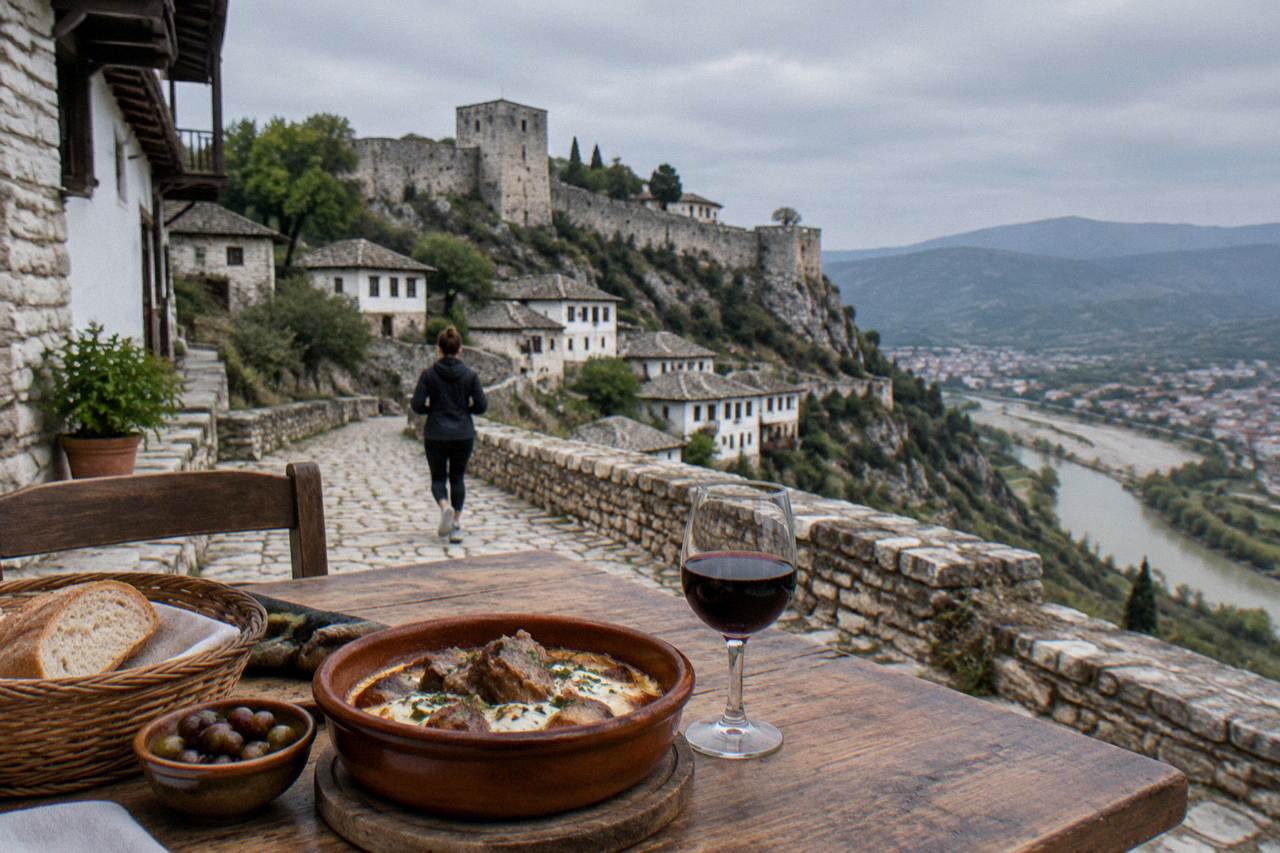
Berat's traditional food centres on tavë kosi, lamb baked in yogurt, plus qifqi rice dumplings, japrak stuffed vine leaves and byrek. Cooking classes and winery visits in the surrounding hills round out the food scene.
Berat, a UNESCO World Heritage Ottoman-era hill town in central Albania on the Osum River, has a food culture that most visitors arrive knowing nothing about and leave talking about. The town is famous for its windows, but the kitchens of Mangalem and Gorica hold their own story: lamb and yogurt casseroles baked slowly, vine leaves stuffed by hand, raki poured from unlabelled bottles, and wine pressed from grapes that barely exist outside this corner of the Balkans. This guide walks through the traditional food of Berat, dish by dish, with real prices in Albanian lek, the honest places to eat it, and the cooking classes and winery visits that turn a meal into a memory.
What Makes Berat Traditional Food Special?
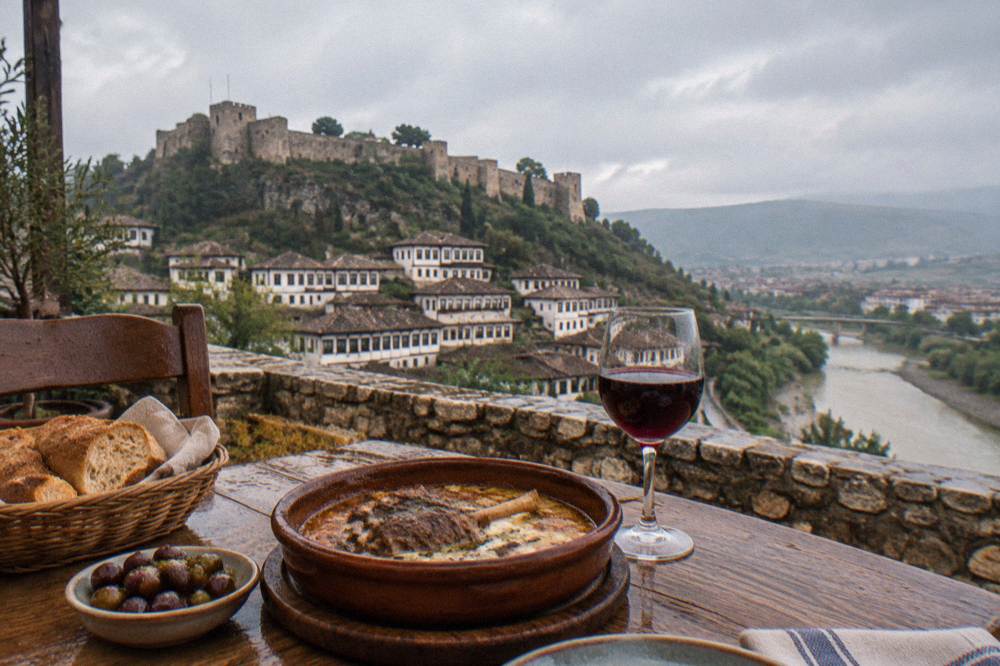
Berat's food is a home-cooking tradition rather than a restaurant tradition: the dishes are Ottoman-era village food, built on lamb, yogurt, vine leaves, garden vegetables and raki, and the best versions are still served in family homes and guesthouse kitchens rather than fancy dining rooms. The town's merchant past left a practical, unfussy cuisine. Berat grew rich on handicrafts and trade, and its kitchens fed households, not courts. That heritage survives in cooking classes held in local homes, in the Slow Food Berat community, which works to preserve traditional recipes at venues around town, and in restaurants that still cook from grandmothers' notebooks. Read more about the wider Albanian table in traditional Albanian food explained.
The setting matters too. Berat sits in a valley where the Osum River meets farmland, with Mount Tomorr rising behind it, so the ingredients are hyper-local: yogurt from village dairies, grapes from the hills of Roshnik, lamb from the Skrapar uplands. Nothing on a Berat plate travels far. That is the single biggest difference between eating here and eating in Tirana, where the supply chains are national rather than neighbourhood.
The other thing worth understanding before your first meal is that food here is social. Portions are generous, meals run long, and raki appears whether you asked for it or not. If you arrive expecting a quick dinner, you will get a slow one, and that is the point.
What Are The Signature Dishes Of Berat?
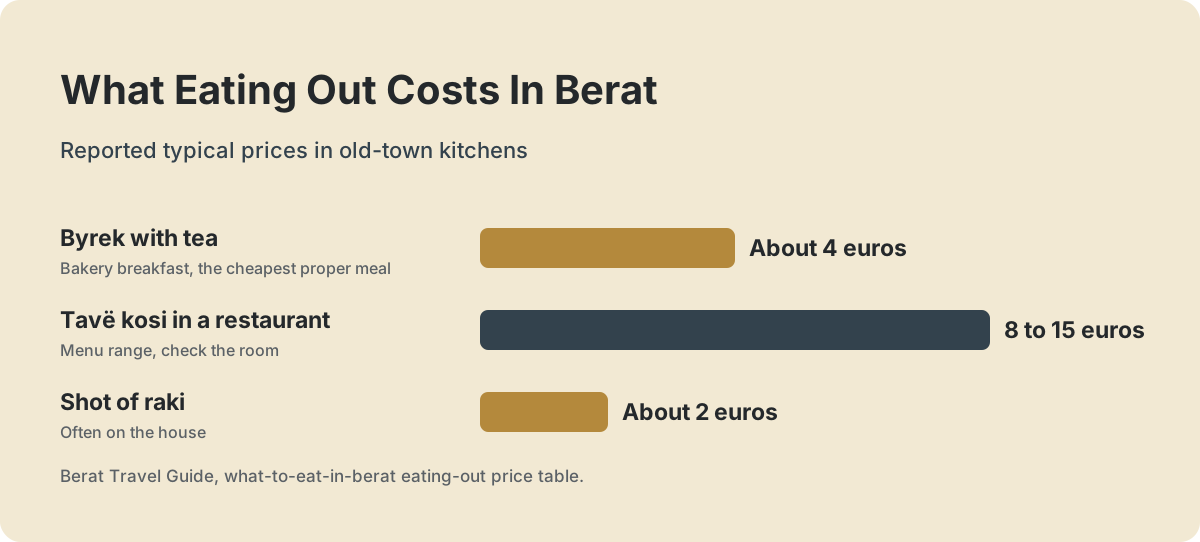
The five dishes to hunt down in Berat are tavë kosi, lamb baked in yogurt and eggs; qifqi, crisp rice dumplings with mint and fennel; japrak, vine leaves stuffed with rice and herbs; byrek, the flaky pastry pie filled with cheese or greens; and gliko, the preserved fruit served with coffee. Recent Berat food guides highlight tavë kosi, japrak and qifqi as the town's signature plates, with byrek the everyday street option and gliko the sweet that ends a meal. Reported restaurant prices run from about 4 euros for a byrek and tea up to 15 euros for a full tavë kosi with sides, and those are menu ranges to check on the day, not promises. You can work off the calories afterwards with the ideas in free things to do in Berat.
Tavë kosi is the one dish you should not leave without trying. It is baked lamb under a blanket of yogurt, egg and rice, browned in a clay dish until the top splits. It sounds heavy and it is, gloriously so, which is why locals eat it as a Sunday and celebration dish. In Berat it comes out of the oven rather than off a heat lamp, and the difference is obvious.
Qifqi are harder to find and worth the hunt. These are hand-rolled rice dumplings seasoned with mint and fennel and fried golden, served as a starter or a snack. Japrak, stuffed vine leaves, show up on nearly every traditional menu, usually at the start of the meal with a wedge of lemon. Byrek is the all-day food: buy a slice from a bakery, eat it standing, spend almost nothing.
| Dish | What It Is | When You Eat It |
|---|---|---|
| Tavë kosi | Lamb baked under yogurt, egg and rice in a clay dish | Lunch or Sunday dinner, the signature plate |
| Qifqi | Fried rice dumplings with mint and fennel | Starter or snack |
| Japrak | Vine leaves stuffed with rice and herbs | Starter, on most traditional menus |
| Byrek | Flaky pastry pie with cheese, spinach or pumpkin | Any time, from bakeries |
| Gliko | Preserved fruit, often fig or walnut, served with coffee | End of meal, with raki or coffee |
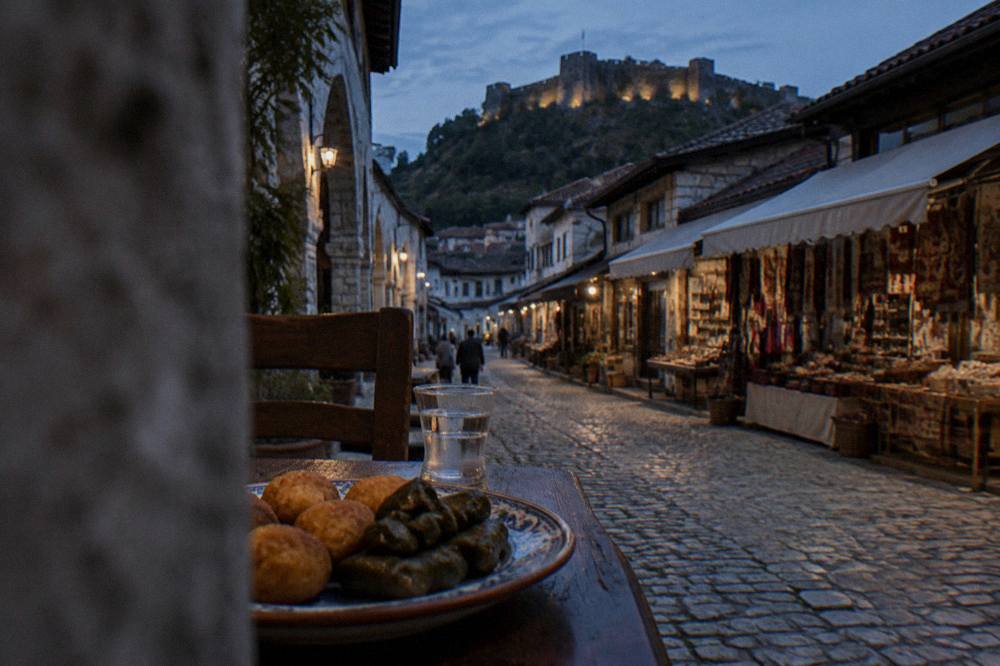
Beyond the plate, keep an eye out for the supporting cast: local cheese, olive oil, fig jam and preserved vegetables, which the town's festival showcases every autumn. A modest breakfast of byrek, white cheese and a glass of tea costs next to nothing and tastes like the valley itself. For planning around appetite and daylight, see Berat weather and seasons, since summer heat can push meal times late.
If you want to eat rather than only read, a guided experience is the efficient route. The selection below pairs a home cooking class with a food-focused city walk and a canyon-and-winery day out.
Can You Take A Cooking Class In Berat?
Yes, and it is arguably the best food decision you can make in Berat: several cooking classes run in local family homes, where you cook traditional dishes alongside the people who actually make them for their own families, then sit down and eat what you prepared with local wine included. The standout option on this site's roster is the cooking class with wine tasting at home, which takes place in a local home and combines hands-on cooking with a wine tasting, Check availability. Mama Nina's cooking class is the other household name, run by a local cook whose kitchen has become a stop in its own right.
A class solves the problem every food-motivated traveller has in a small town: restaurants show you the finished dish, but a home kitchen shows you the technique. You learn how the yogurt topping of tavë kosi is timed, how vine leaves are rolled tight enough to hold, and how raki is offered before, during and after. The classes are small, hands-on, and end around a shared table, which is exactly how Berat eats at home.
Book ahead for summer and festival weekends, when the popular kitchens fill up. Classes run with free cancellation on the live listings, so there is little risk in reserving a slot early and shifting it if your plans change.
Mama Nina's class in particular has become one of the town's food institutions. If a home kitchen feels like too much structure for one day, the Where To Eat guide covers the restaurant side of town in more depth.
Where Should You Eat Traditional Food In Berat?
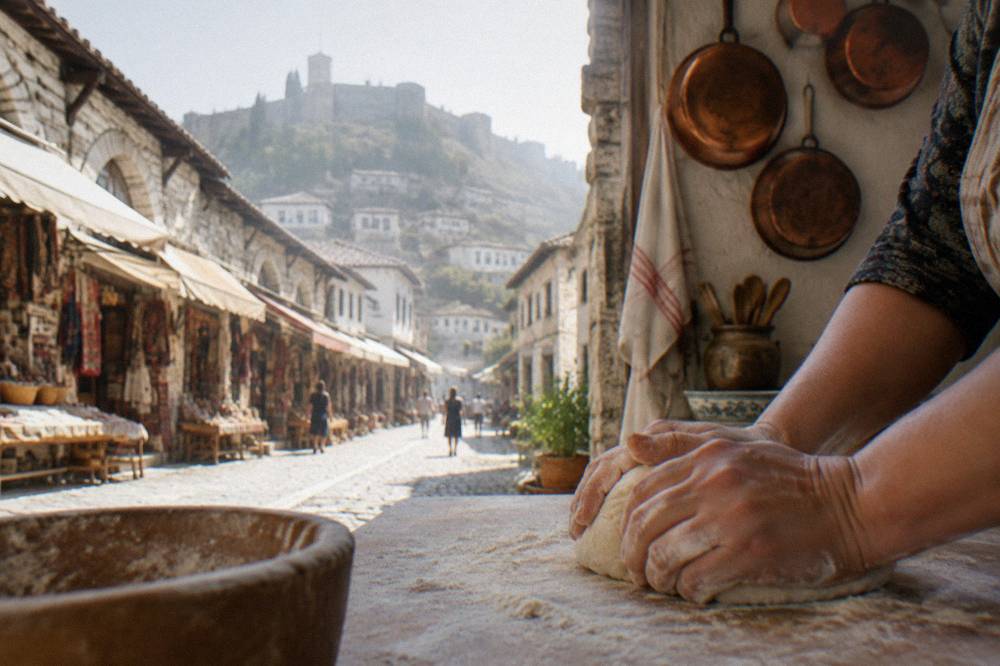
Eat in the old quarters: Mangalem on the west bank and Gorica on the east bank hold the family-run kitchens and guesthouse tables where traditional Berat cooking is actually served, and the named traditional-food addresses include Homemade Food Lili and Restaurant Klea, with Slow Food-linked venues like Castle Park and Tradita e Beratit carrying the heritage flag. The practical split is simple. Mangalem, the tiered Ottoman quarter below the castle, is closest to the sights and densest with guesthouse restaurants. Gorica, across the old bridge, is quieter, more residential, and in many views the prettier side to eat on. Recent guides to eating in Berat name Homemade Food Lili and Restaurant Klea as reliable spots for the traditional dishes, while the Slow Food Berat community lists Castle Park and Tradita e Beratit among its venues.
Do not over-plan this. Berat is small, the walk between quarters is five minutes across the Gorica Bridge, and half the pleasure is following your nose down a cobbled lane and taking the table that looks alive. What follows is the shortlist that carries the town's reputation. The rest of the planning pages sit on Berat Travel Guide.
| Place | Setting | What To Order |
|---|---|---|
| Homemade Food Lili | Family-run, home-style room | Tavë kosi, japrak, whatever the kitchen made that day |
| Restaurant Klea | Traditional dining room | Qifqi and the seasonal lamb dishes |
| Castle Park | Heritage venue outside the centre | Slow Food recipes, seasonal menus |
| Tradita e Beratit | Old-town setting | Regional classics with local wine |
| Guesthouse tables in Mangalem and Gorica | Small courtyards and dining rooms | Home cooking, often the day's single menu |
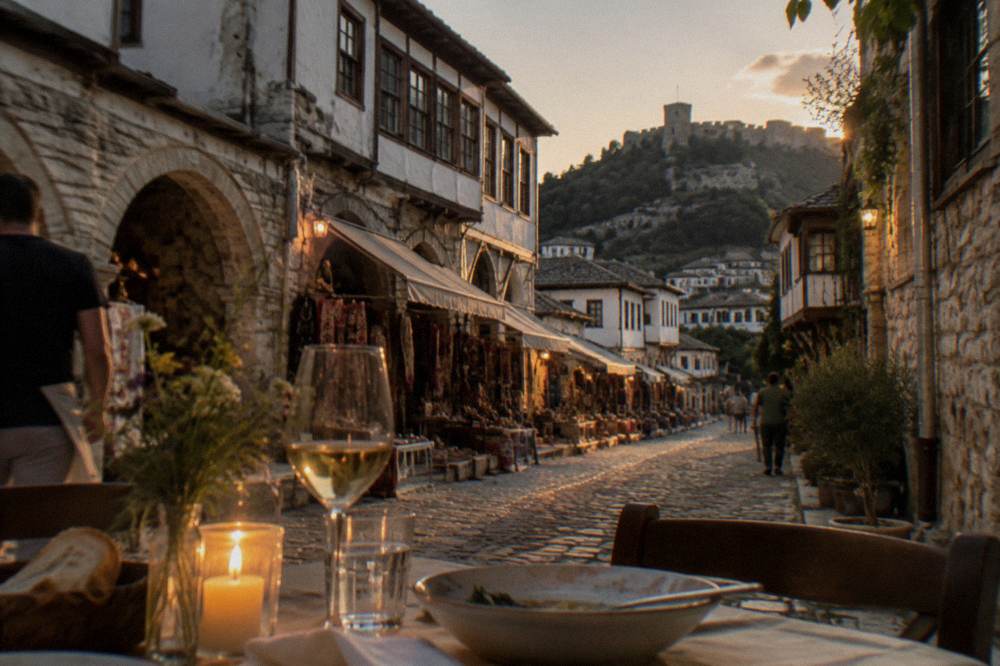
For orientation before dinner, the Berat map guide lays out the quarters and the bridge crossings, and Berat UNESCO heritage explained covers why the streets you are eating in look the way they do. If you are staying overnight to eat properly rather than day-trip, where to stay in Berat sorts the guesthouse quarters from the modern hotels.
How Much Does Eating Out In Berat Cost?
Eating in Berat is cheap by European standards, and a shot of raki in a bar runs about two euros. These figures come from recent price reports for the town and should be treated as planning ranges rather than guarantees; menus move with the season and the kitchen. The honest way to budget a food day in Berat is this: breakfast from a bakery costs almost nothing, lunch in a family restaurant is a modest lek note, and dinner for two with local wine lands somewhere in the low thousands of lek. For the fuller picture of accommodation, transport and activities alongside food, see the Berat costs guide.
| Item | Reported Typical Price | Note |
|---|---|---|
| Byrek with tea | About 4 euros | Bakery breakfast, the cheapest proper meal |
| Simple restaurant meal | Cheap by European standards, pay in cash in lek | One dish, no frills |
| Mid-range dinner for two | Multiple courses, local wine | |
| Tavë kosi in a restaurant | Roughly 8 to 15 euros | Menu range, check the room |
| Cappuccino | Old-town cafés | |
| Espresso | Cheap by European standards, cash in lek | Standing at the bar |
| Shot of raki | About 2 euros | Often on the house |
Two things bend the numbers. First, cash: old-town Berat remains largely cash territory, cards are patchy at smaller kitchens, and you will want lek, the local currency, in small notes. The money and currency in Albania guide covers exchange rates, currently roughly 92 lek to the euro, and ATM fees. Second, seasonality: accommodation and services led Albania's recent price rises, with tourism-linked sectors driving the majority of December 2025 increases, and food prices follow the same drift in peak summer, modestly in Berat and more sharply on the coast.
What Should You Drink In Berat?
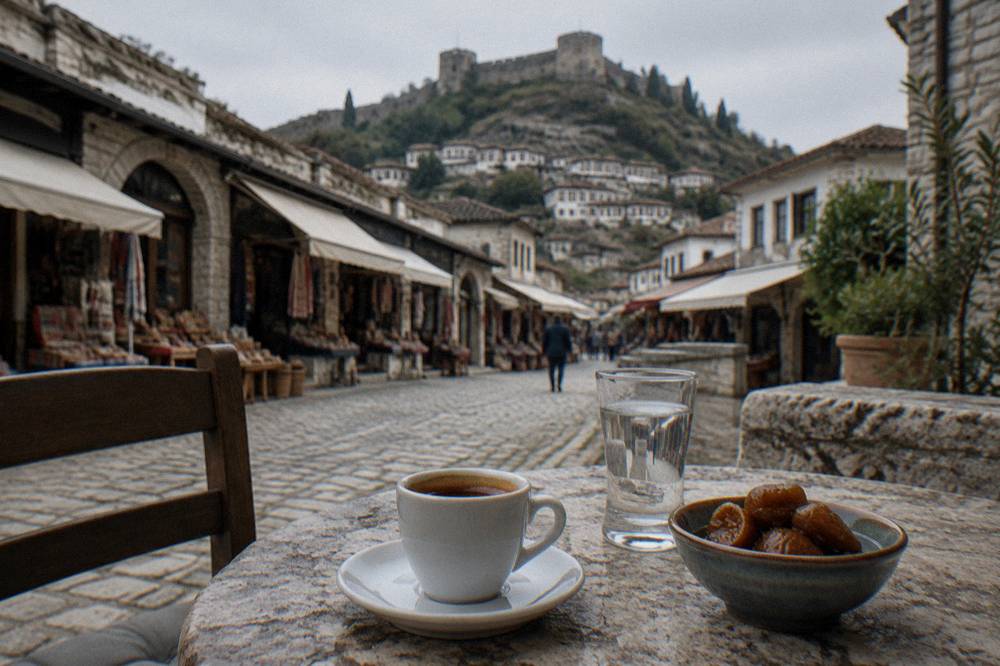
Drink local: Berat's wine comes from indigenous central Albanian grapes, above all Shesh i Zi for red and Shesh i Bardhë for white, plus the rare local white Puls, and the town's wineries, led by Cobo, also make Vlosh and even a traditional-method sparkling Puls, while raki, the fruit spirit, is poured constantly. The wine story here is genuinely unusual. Cobo Winery, a family producer in the Berat region, builds its range on autochthonous varieties and has leaned into wine tourism with new tasting areas and vineyard paths. Its sparkling Puls is aged 36 to 40 months on lees with zero dosage, a serious method for a grape that almost nobody outside Albania has heard of. Guided winery visits from Berat typically call at one or two estates in the surrounding hills with transfers included, tastings of several wines, raki and local snacks.
| Grape Or Drink | Type | What To Expect |
|---|---|---|
| Shesh i Zi | Red | The dominant native red of central Albania, medium-bodied |
| Shesh i Bardhë | White | The main native white, fresh and food-friendly |
| Puls (Pulëz) | White | A rare Berat-area grape, used still and as sparkling |
| Vlosh | Red | A local variety in Cobo's range |
| Raki | Fruit spirit | Grape or fruit spirit, served before meals and after, often as hospitality |
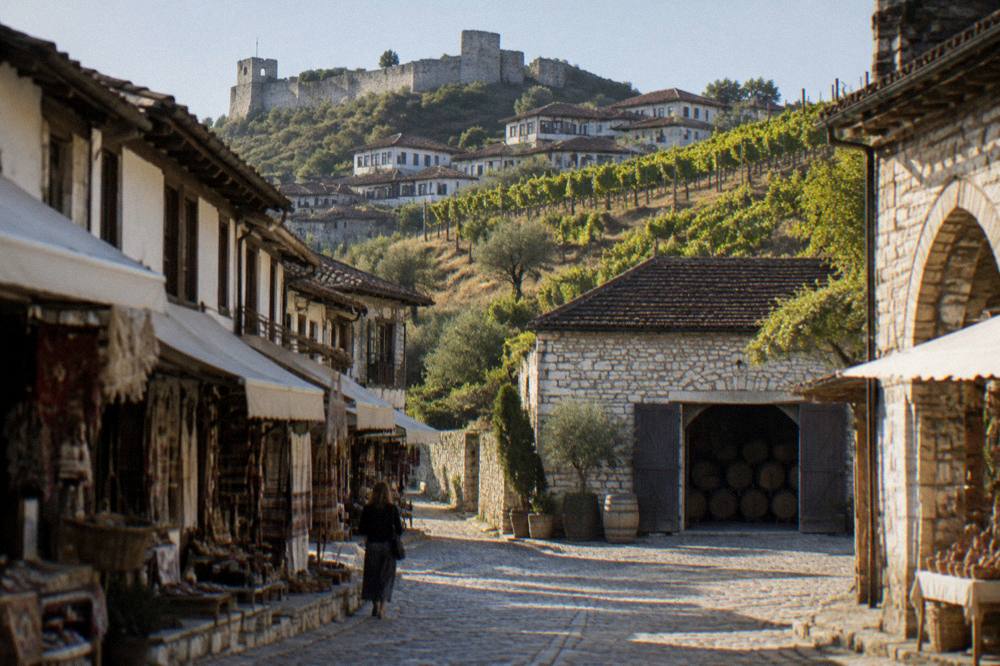
The wineries around Berat that appear on local tours include Cobo, Alpeta in the Roshnik hills, Luani, Nurellari, Edoni and Pupa, and the tasting rooms pair the wines with olives, cheese and other local products. Verified current tasting fees are thin on the ground, so treat any figure you see online as a guide and confirm with the operator's live listing before you go.
| Winery | Area | Notes |
|---|---|---|
| Cobo | Berat region | Autochthonous focus, sparkling Puls, tasting areas and vineyard paths |
| Alpeta | Roshnik | Puls wine and vineyard lunches |
| Luani | Berat region | Appears on guided winery itineraries |
| Nurellari | Berat region | Family producer on local tour routes |
| Edoni | Berat region | Appears on guided winery itineraries |
| Pupa | Berat region | Tastings and vineyard exploration |
The easiest way to taste without driving is a guided winery tour from town, with transfers and several wines, raki and snacks built in.
Which Food Tours And Tastings Are Worth Booking In Berat?
The food experiences worth booking in Berat fall into three shapes: a cooking class in a family home, a walking tour that combines the old town with food and wine tastings, and a canyon or mountain day that ends at a winery, and the best one depends on whether you want to cook, stroll or sweat first. The walking-with-food format suits a first day: you cover the castle-quarter lanes and earn lunch at the same time, with tastings folded into the route. The adventure-plus-wine format suits a second day, when you have seen the windows and want the river and the hills instead. And a private city tour with an optional wine tasting suits travellers who want the history without a group schedule. For more on pairing days, read how the town's food sits inside its wider appeal.
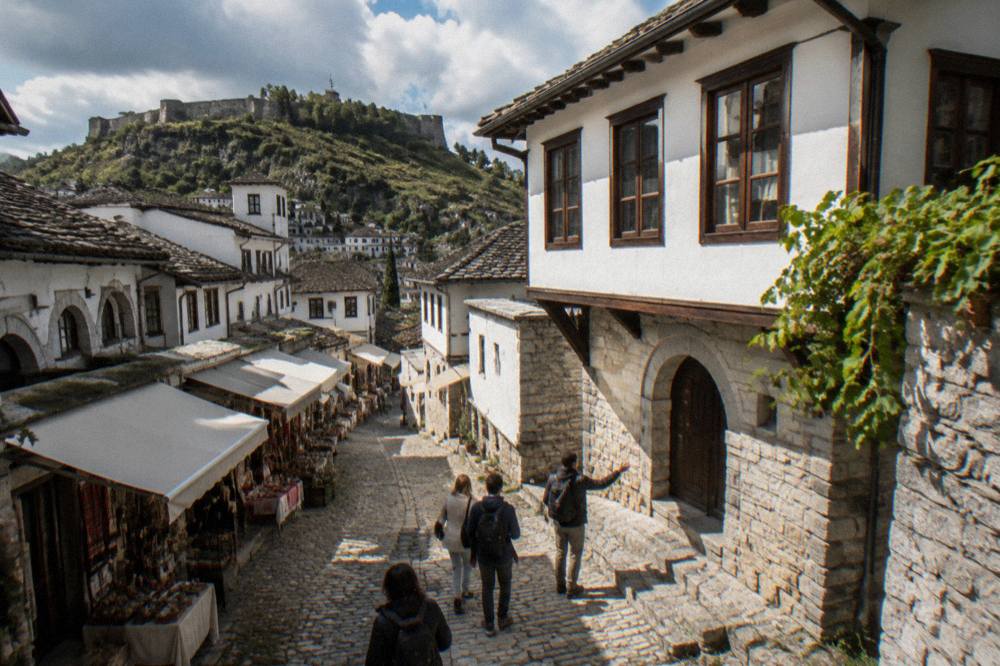
A guided walk with food and wine tasting is the most efficient first-evening move in Berat: it orients you, feeds you, and hands you a shortlist for the rest of your stay.
One honest note on expectations: not every product on a small-town roster carries a large review pool. Check the live listing for current ratings and review counts, and weight your decision accordingly. The walks, classes and winery visits above are the categories with established demand; the long tail of one-off experiences varies more.
When Is The Best Time For Food Lovers To Visit Berat?
Early October is the food lover's window: the Wine & Stories of Berat festival runs 2 to 4 October 2026 with wines from Albanian and Kosovo wineries, artisanal cheese and olive oil, fig and jam tours, cheese-making and a wine contest judged by Austrian and Italian oenologists. The festival turns the whole town into a tasting room for three days. Beyond it, spring and autumn suit food travel in Berat generally: summer heat can top 40 degrees in the shade, which pushes appetites toward the evening and makes midday walking uncomfortable. Autumn also delivers the grape harvest and the fig and walnut preserves that end up in gliko jars.
| Period | What Food Lovers Get |
|---|---|
| Early October | Wine & Stories of Berat festival, 2 to 4 October 2026 |
| Spring | Village lamb, fresh dairy, green japrak leaves |
| High summer | Long dinners, raki in the shade, festival-season crowds |
| Autumn | Grape harvest, fig and walnut preserves, gliko making |
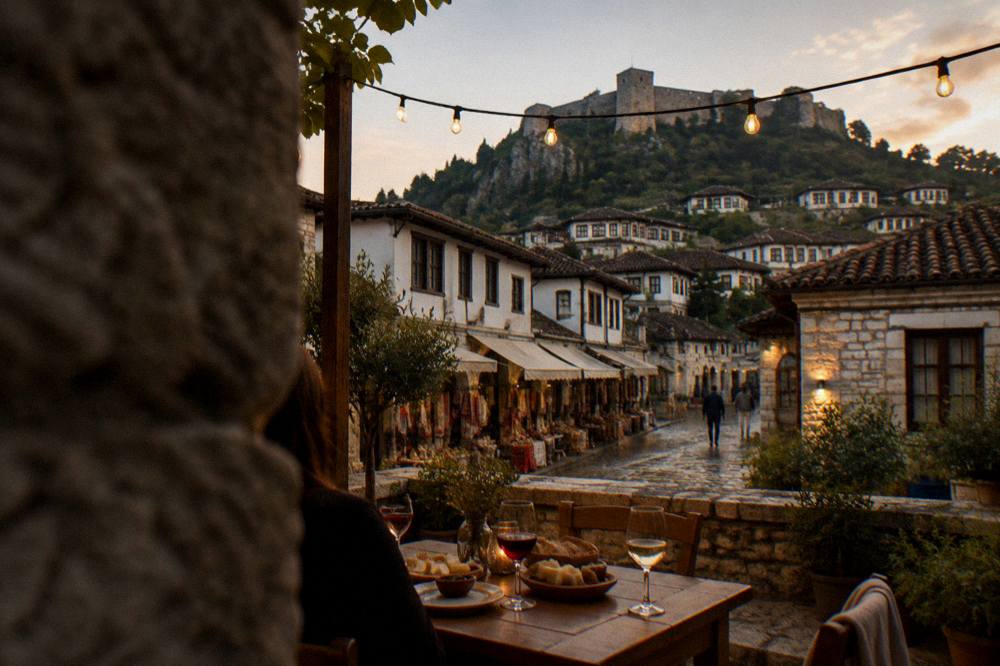
If you are timing a wider trip, the festival sits inside shoulder season, when guesthouse rates soften and the town is walkable in the afternoon. See where to stay in Berat for the quarters that put you inside walking distance of the festival action.
What Should You Know Before Eating Out In Berat?
Carry cash in lek, tip modestly, expect meals to run long, and plan around a town that is safe and walkable but largely cash-based: cards work at some hotels and larger spots, but the old town and Mangalem still mostly take banknotes, and ATM fees on foreign cards can run several hundred lek a withdrawal. That is the practical core of eating in Berat. Tipping is appreciated but modest, a rounding-up rather than a percentage. Service is unhurried by design; the kitchen cooks when the kitchen cooks. Street crime affecting visitors is rare, and official travel advice raises no objections to any part of Albania, though normal city caution applies late at night. Tap water quality draws mixed advice, so bottled water is the common choice at the table.
The last practical point is about pace. Berat rewards the second night: the first evening you find a restaurant, the second evening the restaurant finds you. Travellers working out how many days to spend in Berat often find two nights is the sweet spot for eating well without rushing.
However you build your food days in Berat, these three experiences cover the cooking, the walking and the wine sides of the town's table.
Common Questions About Berat Traditional Food
What are the signature dishes of Berat?
Tavë kosi, lamb baked under yogurt and eggs, is the signature dish, followed by qifqi rice dumplings, japrak stuffed vine leaves, byrek pastry pies and gliko preserved fruits served with coffee.
How much does eating out in Berat cost?
Treat these as planning ranges and check the menu on the day.
Can you take a cooking class in Berat?
Yes. Cooking classes run in local family homes, including the cooking class with wine tasting at home and Mama Nina's cooking class, where you prepare traditional dishes and then eat them with local wine.
What wine should you drink in Berat?
Drink local: Shesh i Zi red, Shesh i Bardhë white, the rare Puls white used also for a traditional-method sparkling wine, and Vlosh from producers such as Cobo, alongside plenty of raki.
When is the best time for food lovers to visit Berat?
Early October, when the Wine & Stories of Berat festival runs from 2 to 4 October 2026 with wineries from Albania and Kosovo, artisanal cheese, olive oil and a judged wine contest.
Where should you eat traditional food in Berat?
Eat in the old quarters of Mangalem and Gorica, at family-run kitchens such as Homemade Food Lili and Restaurant Klea, and at Slow Food-linked venues like Castle Park and Tradita e Beratit.