Mount Tomorr
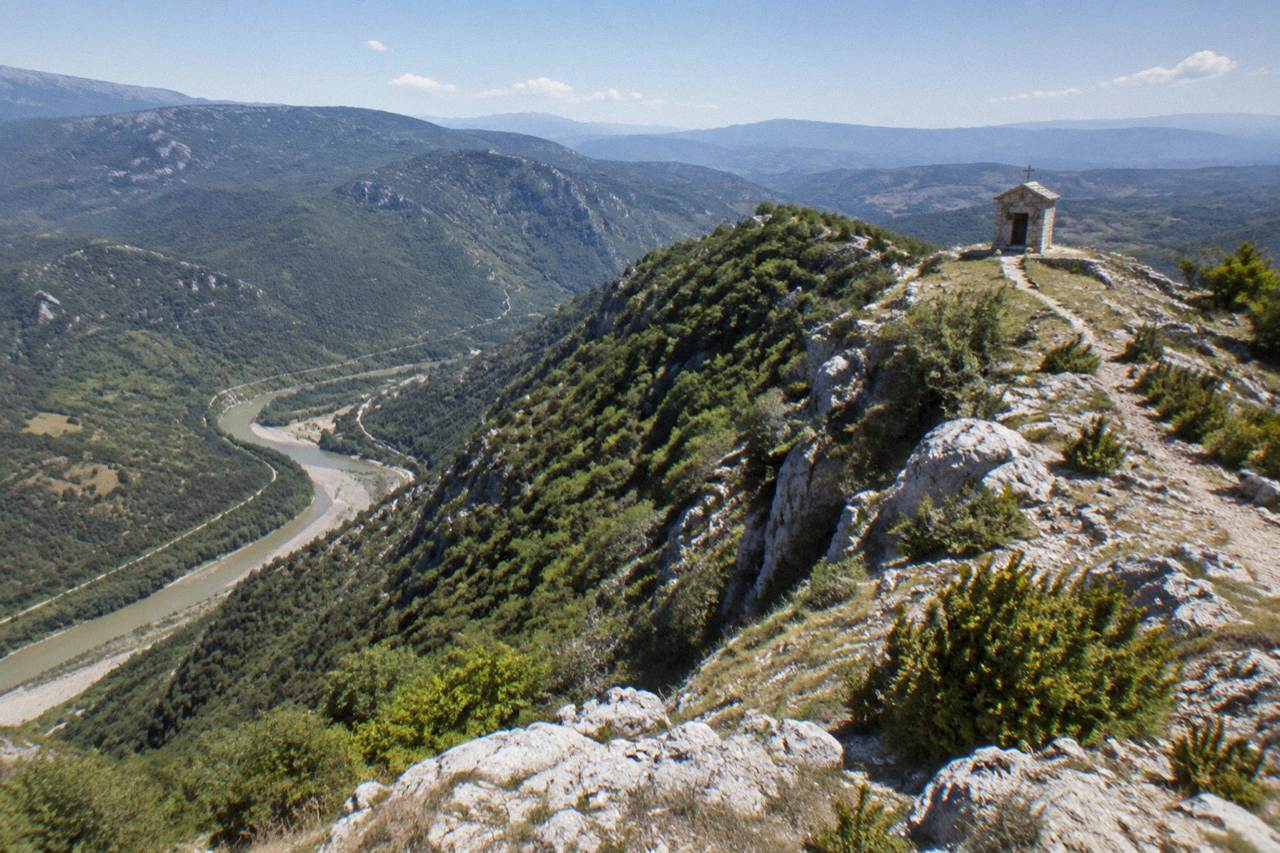
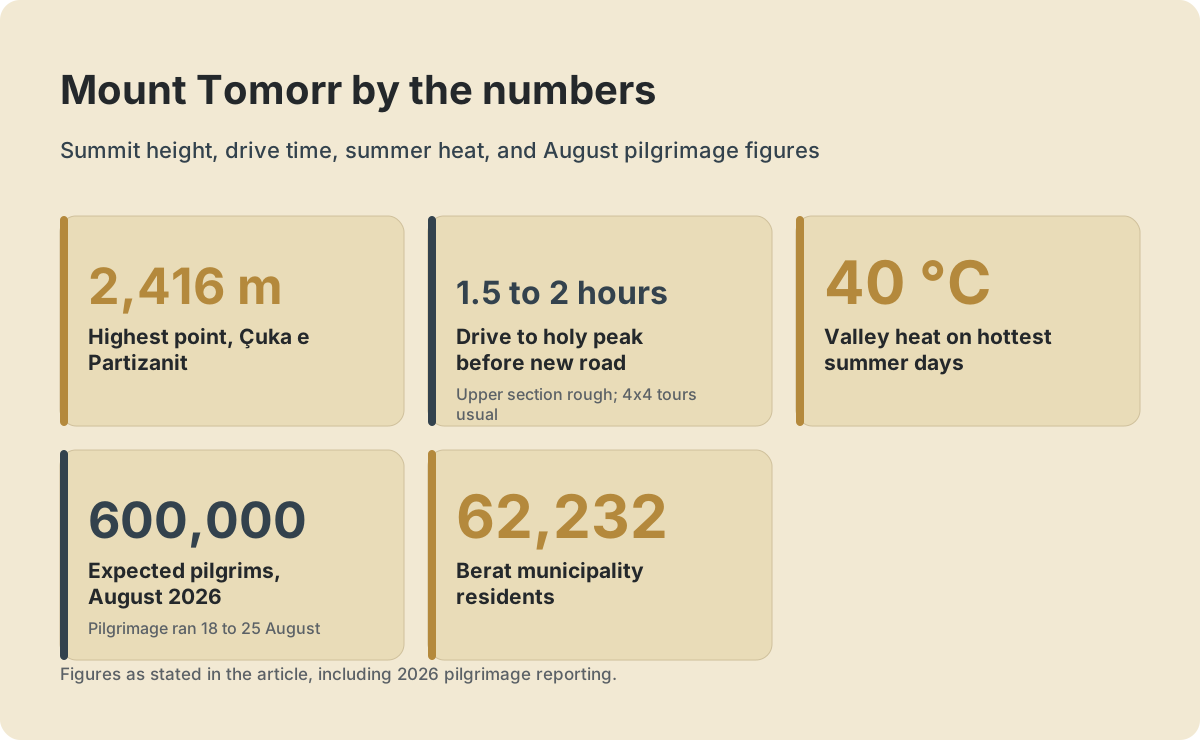
Mount Tomorr is the 2,416 metre massif that looms over Berat, the UNESCO listed Ottoman town on the Osum River in central Albania. It is a national park, a sacred Bektashi mountain, and the best high country day trip you can make from the city of a thousand windows.
Short answer
Mount Tomorr is the 2,416 m peak of Çuka e Partizanit, inside Mali i Tomorrit National Park in the Berat and Skrapar region of central Albania. It is sacred to the Bektashi community, whose pilgrimage to the tomb of Abaz Ali runs every August. A new road to the holy peak is under construction; the road is rough and 4x4 tours are the usual way up.
Mount Tomorr is the great mountain wall that rises directly east of Berat, the UNESCO World Heritage Ottoman era hill town on the Osum River in central Albania. From almost every rooftop terrace in Mangalem and Gorica, this is the view: a long, forested ridge that runs north to south and finishes in a rocky crown. Locals treat the mountain as part of the town's identity, and for travelers it offers the one thing the old town cannot, real high country within a short drive. This guide covers what Tomorr is, how to get there from Berat, what to do on and around it, and how to plan around the August pilgrimage that transforms the mountain every year.
What Is Mount Tomorr And Why Is It Sacred?
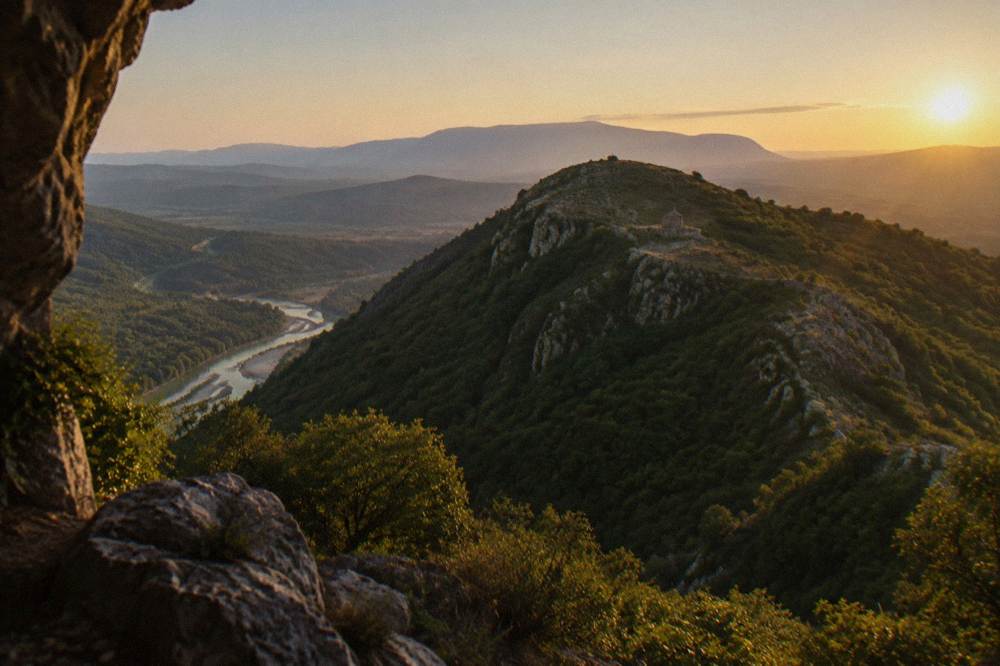
Mount Tomorr is a limestone massif in central Albania whose highest point, Çuka e Partizanit, stands at 2,416 m, making it the dominant summit of the Berat and Skrapar region and the heart of Mali i Tomorrit National Park. The mountain is sacred to Albania's Bektashi community: near the top sits the tomb of Abaz Ali, and the whitewashed Kulmak Tekke below the summit serves as the pilgrimage's focal point every August. UNESCO Berat lies at its western foot, and the mountain forms the permanent backdrop to the old town's stacked windows.
One correction is worth making early, because you will meet it constantly in travel content. Tomorr is often described online as Albania's second highest peak. That claim is wrong, and it circulates anyway, repeated from page to page without anyone checking it. What is verifiable is simpler: 2,416 m at Çuka e Partizanit, a genuinely high mountain by Balkan standards, and one that carries far more cultural weight than its raw elevation suggests. Treat any ranking you read elsewhere with suspicion and the number itself as solid.
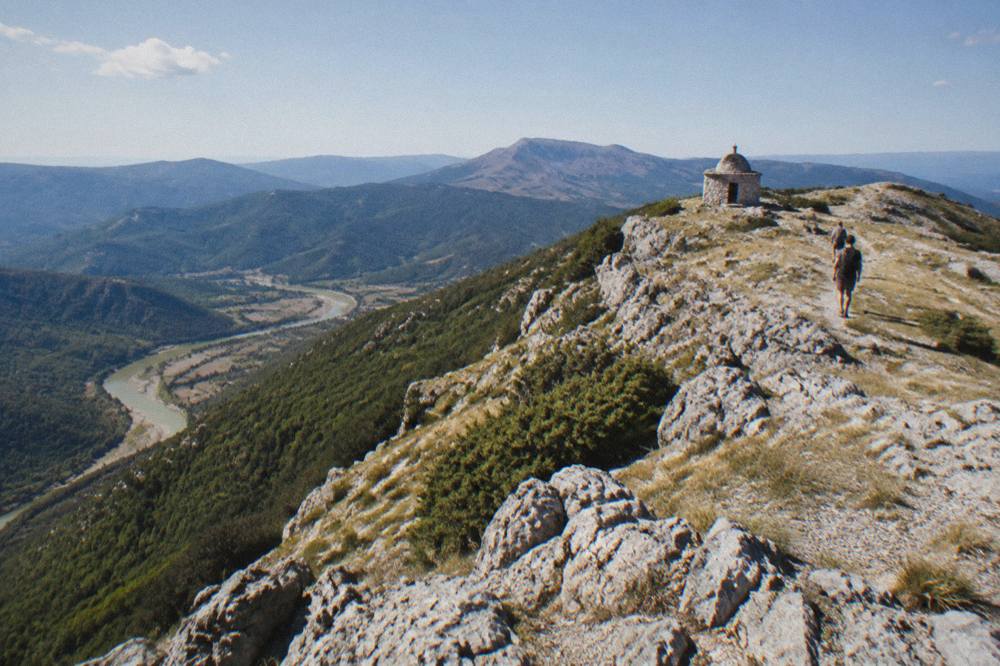
The park itself, Mali i Tomorrit National Park, covers ridge, forest and karst plateau on the Berat and Skrapar side of the mountain. Its protected wildlife list reads like a proper mountain ecosystem: brown bear, wolf and birds of prey are all cited by the national tourism agency for the area. That matters for how you behave up there. This is not a manicured sight; it is working high country where you keep to tracks, carry out what you carry in, and do not approach wildlife, however tempting a photo seems.
The sacred status deserves a little more explanation, because it explains the mountain's strange mix of quiet emptiness and sudden crowds. The Bektashi faith, a Sufi order with deep roots in Albania, holds Abaz Ali, also written Abbas Ali, in particular reverence, and his tomb near the summit is the destination of one of the country's most important annual religious gatherings. Outside that one week in August, the tekke and the trail are calm, and you will often share the summit area with more sheep than people. The same mountain can feel like two entirely different places depending on when you visit, which is why timing matters so much on this page.
For orientation while you plan, this Berat Travel Guide sits in the middle of a wider set of day trip pages covering everything from canyon rafting to mountain towns; Tomorr is the highest of them all.
| Feature | Detail |
|---|---|
| Highest point | Çuka e Partizanit, 2,416 m |
| Protected area | Mali i Tomorrit National Park |
| Region | Berat and Skrapar, central Albania |
| Notable wildlife | Brown bear, wolf, birds of prey |
| Sacred site | Tomb of Abaz Ali near the summit, Kulmak Tekke below it |
| Main annual event | Bektashi pilgrimage, every August |
How Do You Get From Berat To Mount Tomorr?
You reach Mount Tomorr from Berat by road, driving east out of the Osum valley, and access improved sharply in 2026: a newly built road to the holy peak has is rough; 4x4 tours are the usual way up. There is no rail option of any kind, since no passenger train reaches Berat at all, and there is no airport near the mountain. Most visitors either rent a car in Berat or join a guided day trip that includes transport.
The road story is genuinely the biggest news on this mountain in years. For a long time the pilgrimage route up Tomorr was a long, slow grind on rough track, which is one reason the August event was such a logistical operation. The new road to the holy peak, reported by the prime minister's office as it took shape ahead of the summer pilgrimage, changed that arithmetic completely. What used to be most of a morning's driving is now a short climb, and that reshapes what a casual visitor can do in a single day: summit area, tekke and back to Berat for a late lunch is now realistic.
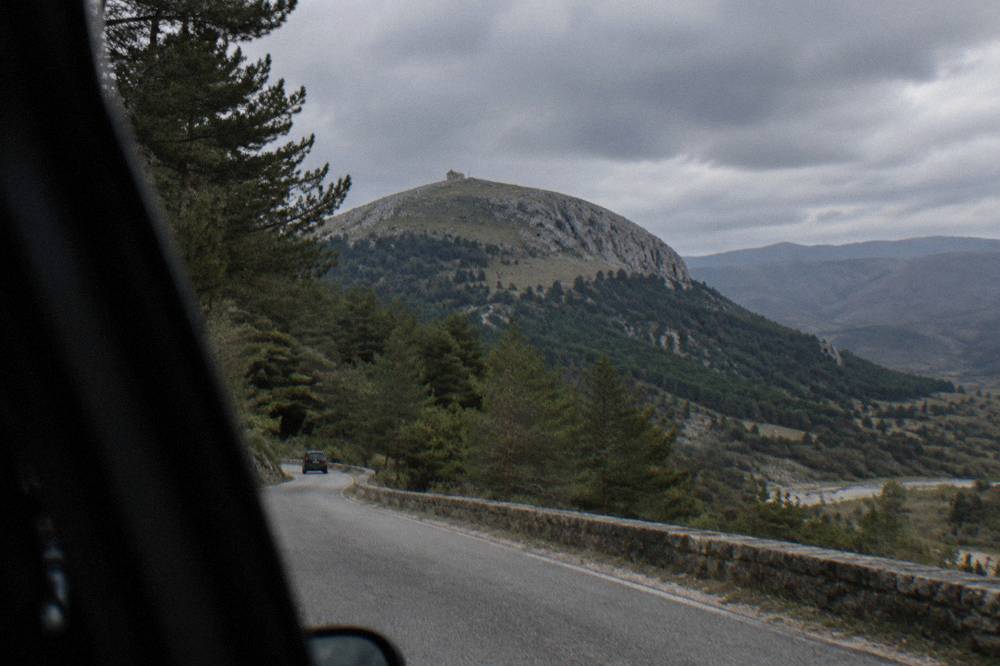
A second project matters too. The Berat to Ballaban road, the practical link between the town and the mountain's southern approaches, was reported in September 2026 as nearing completion, with fresh asphalt, signage and safety barriers going in. Roads in this part of Albania have historically been the weak link in any Tomorr plan, so two simultaneous upgrades in one year is a real change, not a cosmetic one. Drive defensively regardless: mountain roads here are narrow, and herds of sheep have right of way by ancient custom.
Practical notes for self drivers: fuel up in Berat before you climb, since there is nothing to buy on the mountain itself; carry cash in Albanian lek, because the high country is entirely cash territory; and check the weather before committing to the upper road, because summer heat in the valley can top 40 °C while the exposed summit ridge offers no shade at all. If you are coming from the capital rather than Berat, the journey adds the Tirana to Berat drive in front of the climb, so an early start is the difference between a relaxed day and a rushed one.
| Access fact | Status |
|---|---|
| Drive to holy peak before the new road | 1.5 to 2 hours |
| Drive to holy peak on the new road | Rough road, 4x4 tours usual |
| Berat to Ballaban road | Nearing completion, asphalt, signage, barriers |
| Passenger rail to Berat | None, no train reaches the city |
| Fuel and services on the mountain | None, stock up in Berat first |
What Are The Best Things To Do On And Around Mount Tomorr?
The best things to do on Mount Tomorr are visiting Kulmak Tekke and the tomb of Abaz Ali near the summit, walking the open ridge lines for views across central Albania, and pairing the mountain with nearby water features such as Sotira waterfall, the lakes of Dardhe, and the Bogove waterfall walk. All of these sit inside or beside the same national park, so one well planned day can take in a summit, a tekke, a waterfall and still have you back in Berat for dinner on the bulevard.
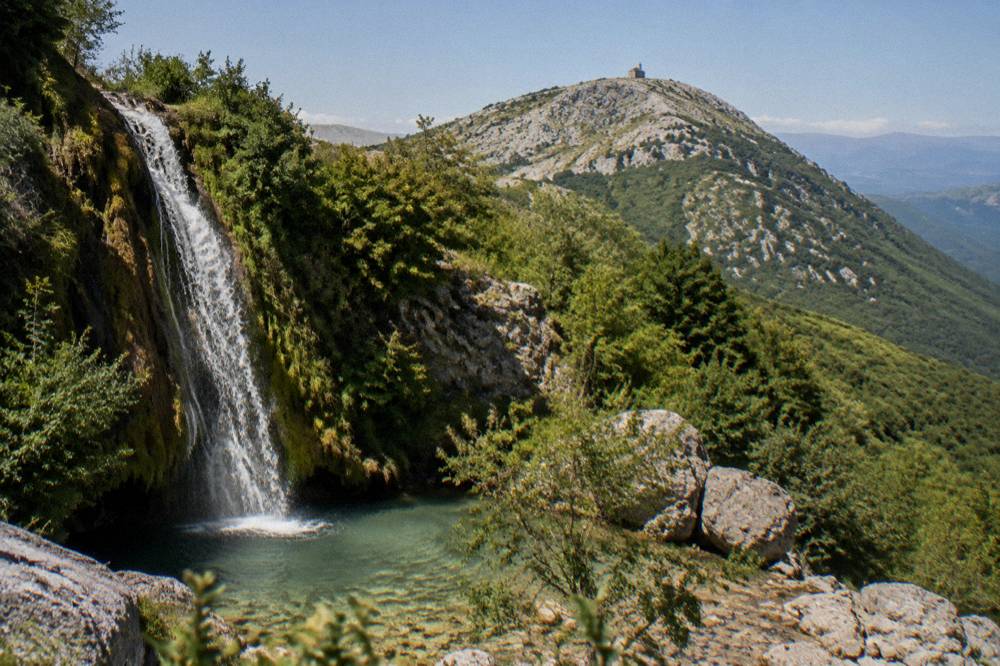
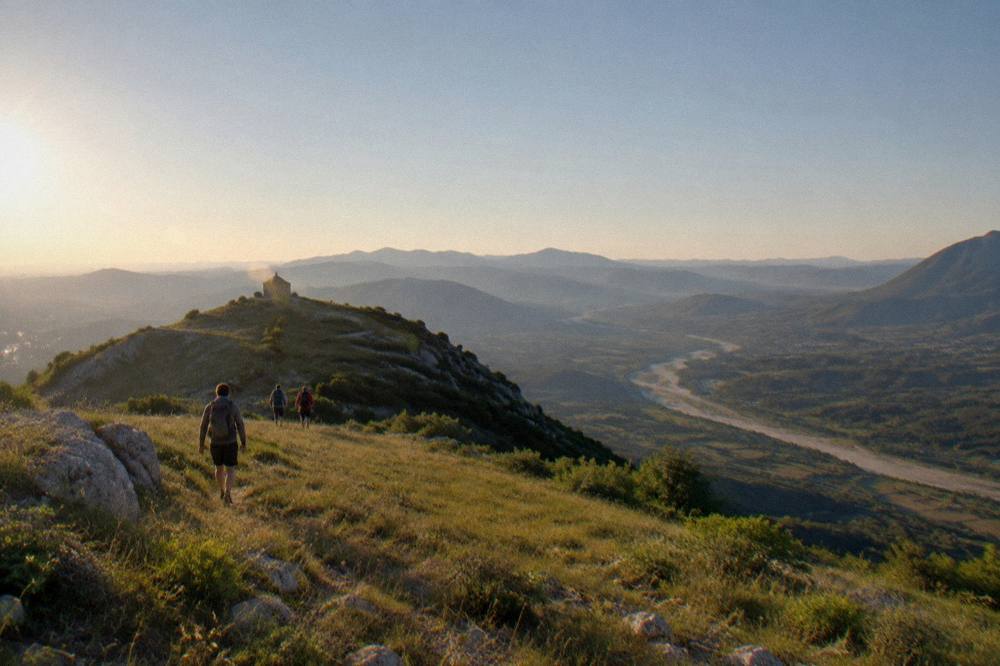
The summit area is the obvious headline. The ridge walk near Çuka e Partizanit gives a vast panorama: on a clear day you look west over the whole Osum valley and the red roofs of Berat, south toward the Skrapar highlands and the canyon country around Çorovodë, and east into the interior mountains that most visitors never see. There is no entrance fee and no gate; the mountain is open country, and the only tickets you will ever need here are for guided activities, not for standing on a viewpoint.
The cultural stops are just as rewarding as the views. Kulmak Tekke, the white walled Bektashi lodge below the summit, is the spiritual anchor of the mountain, and outside pilgrimage week it is a strikingly peaceful place, a building that looks impossibly remote until you remember the crowds it hosts each August. The tomb of Abaz Ali above it is the pilgrimage destination proper. Dress modestly if you intend to visit either, keep noise down, and remember that for many Albanians this is holy ground first and a tourist sight second.
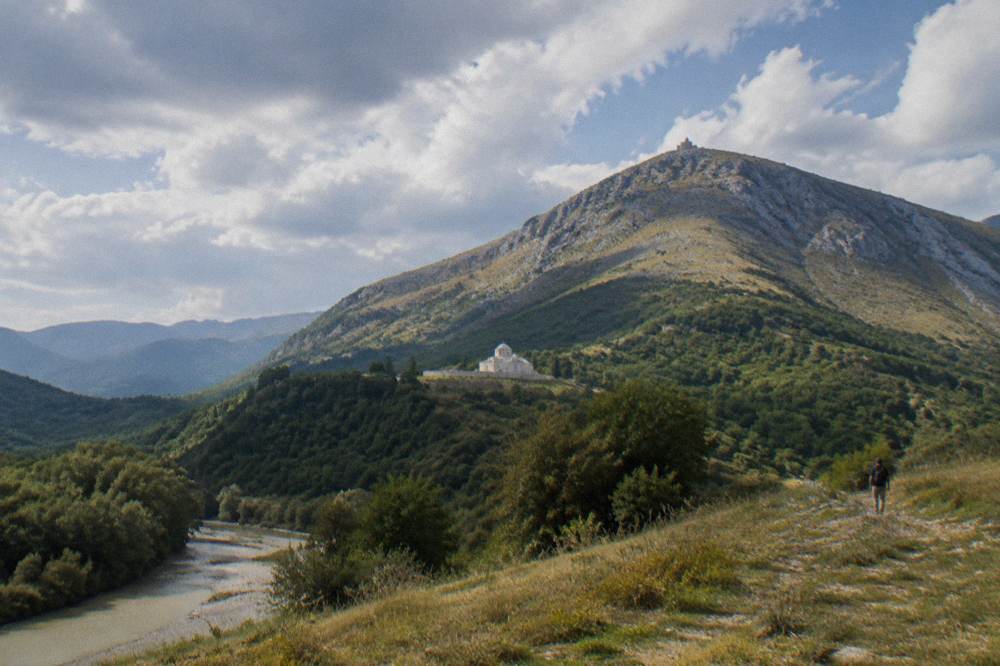
Water completes the picture. The Sotira waterfall, on the mountain's flank, is a classic Tomorr pairing and appears in most guided itineraries from Berat, often together with the summit area in a single outing. The lakes of Dardhe, high valleys holding small alpine lakes, are another signature sight and give the massif its softer, greener face. Further west, the Bogove waterfall is a short forest walk from Bogovë village, easy enough to bolt onto a mountain day if your legs still want more; our Bogove waterfall walking guide covers that route in detail. South of the massif, the Osum river has cut the canyon at Çorovodë, a protected natural monument with free rim viewpoints, and the Osumi Canyon day trip guide explains how to combine the two.
Guides add real value here, because the mountain's tracks are unmarked in places and the access roads reward local knowledge. The trip run by Explore Berat pairs Mount Tomorr with the Sotira waterfall, with pickup arrangements handled by the operator. Travelers who want the lakes rather than the waterfall side of the massif often prefer the Tomorr Mountain and Lakes of Dardhe day trip, which handles the driving and the route finding in one package.
| Activity on and around Tomorr | What it involves | Where |
|---|---|---|
| Ridge walking near the summit | Open high ground, wide views, no entrance fee | Upper massif |
| Kulmak Tekke visit | Bektashi lodge, modest dress expected | Below the summit |
| Tomb of Abaz Ali | Pilgrimage site, calm outside August | Near the summit |
| Sotira waterfall | Waterfall on the mountain's flank, common guided pairing | Tomorr flank |
| Lakes of Dardhe | Small alpine lakes in high valleys | Southern massif |
| Bogove waterfall | Short forest walk from Bogovë village | West of the massif |
When Is The Best Time To Visit Mount Tomorr?
The best time to visit Mount Tomorr is late spring through early autumn, with May, June and September offering the most comfortable balance of clear views, walkable trails and quiet roads, while mid July to mid August brings the highest heat in the valley below and the pilgrimage crowds on the summit in the third week of August. Winter access to the upper mountain is unreliable and the ridge is exposed, so the summit area is realistically a three season destination.
Berat's climate pattern, described qualitatively since no official station figures are published for the town, runs hot and dry in summer and wetter in winter, with rain concentrated from late autumn into January. Summer days in the valley are regularly in the low 30s °C and can, on the hottest days, top 40 °C, which was the case on 20 July 2026, reported as the hottest day of that year with the highest readings in the country recorded at Berat. Climbing an exposed ridge in that kind of heat is a bad plan; if you must travel in high summer, start at dawn and be off the open ground by late morning.
The pilgrimage week is the great exception to every seasonal rule. For roughly the third week of August the mountain fills with pilgrims, the road fills with buses, and police impose traffic restrictions and designated routes around Kulmak Tekke. That is either the single most interesting time to be there, if you want to witness one of the Balkans' most remarkable religious gatherings, or the single worst time for a quiet hike, if you do not. There is no middle option; pick a side and plan accordingly. Our Berat weather guide has more on how the seasons shape the whole region.
For a two destination day, spring is the cleverest slot. When the Osum runs high with snowmelt, the canyon rafting season is at its best roughly from March into May or early June depending on water, and our Osumi Canyon rafting guide covers that pairing, so a Tomorr morning and an afternoon on the river is a genuinely great mountain day.
| Season on Tomorr | What to expect |
|---|---|
| Spring | Snowmelt, green slopes, waterfall at full flow, rafting season below |
| Early summer | Long clear days, best summit views, valley heat building |
| Mid summer | Valley heat can top 40 °C, pilgrimage week in late August |
| Early autumn | Comfortable walking, quieter roads, first rains possible |
| Winter | Unreliable upper access, exposed ridge, wet valley weather |
What Happens During The August Bektashi Pilgrimage?
The Bektashi pilgrimage to Mount Tomorr takes place every August, and in 2026 it ran from 18 to 25 August, drawing an expected 600,000 pilgrims from Albania, the diaspora and abroad to the tomb of Abaz Ali and Kulmak Tekke, with police traffic restrictions and designated routes in force around the mountain during the week. It is one of the largest annual religious gatherings in the Balkans and it completely transforms both the mountain and, to a lesser degree, the roads around Berat.
The event is centered on the tekke and the tomb near the summit. Pilgrims climb, pray, share meals and camp on the high ground, and the mountain's normally empty slopes take on the feel of a temporary town. The 2026 edition was expected to draw around 600,000 people over the week, a number that dwarfs Berat's resident population of 62,232 in the whole municipality. Plainly, this is not a crowd you accidentally wander into: if you are in the region in late August you will know the pilgrimage is happening, and if you are not, you will notice nothing at all.
For visitors, the practical question is whether to engage or avoid. Engaging means respect first: modest dress, no drone flying over the gathering, photographs of people only with permission, and an understanding that this is a living religious event, not a festival staged for cameras. Avoiding is easy, since the restrictions apply to the mountain roads and the gathering stays up high; the old town, the castle and the museums of Berat operate as normal, and the coast is a few hours away. Either way, book accommodation far ahead if your dates overlap, because Berat's guesthouses fill.
Two smaller facts round out the mountain's recent news. A February 2026 forest fire on Tomorr burned pine before it was brought under control, with two people arrested on arson charges. Fires flared again near the Kulmak Tekke area during August 2026, affecting on the order of 15 to 22 hectares, but no full park closures were reported. The lesson for hikers is ordinary mountain sense: in dry late summer, be extremely careful with anything that could spark, and expect occasional smoke on the horizon.
| Pilgrimage fact | Detail |
|---|---|
| 2026 dates | 18 to 25 August |
| Expected attendance | Around 600,000 pilgrims |
| Destination | Tomb of Abaz Ali, Kulmak Tekke |
| Who travels | Pilgrims from Albania, the diaspora and abroad |
| Access during the week | Police traffic restrictions and designated routes |
| Effect on Berat town | Busy guesthouses, normal sightseeing |
What Should You Pack For A Day On Tomorr?
Pack for a mountain, not for a town stroll: sturdy walking shoes, layers for a summit that can be cool while the valley bakes, more water than you think you need, sun protection for the exposed ridge, cash in Albanian lek, and food, because there are no shops or services on the massif itself. A charged phone and a paper offline map or downloaded route complete the kit, since signposting on the higher tracks is thin.
The layers point surprises people. Berat in summer can be brutally hot, low 30s °C as a norm and above 40 °C on the worst days, and visitors set off from town in shorts and a T shirt. The summit ridge of a 2,416 m mountain is a different climate zone: wind, and on unsettled days, fast moving cloud and drizzle. The gap between trailhead comfort and ridge chill is the single most common packing error on this mountain, and it is easily avoided with one warm layer and a windproof.
Water and sun are the other pairing that matters. The upper mountain is open ground with no natural shade, the walk between road and ridge can take longer than it looks, and there is nowhere to refill. In the dry summer months the fire risk cuts both ways too: pack out every scrap of waste, and never light anything. The lek point is practical rather than scenic. The high country runs on cash, tips for local guides and any small purchases happen in Albanian currency, and old town Berat is itself largely a cash economy, so arrive on the mountain with notes already in your pocket rather than planning a withdrawal that cannot happen.
If all of this sounds like more logistics than you want to own, that is exactly what the guided day trip format solves. The Tomorr Mountain and Lakes of Dardhe day trip covers transport and route planning in one booking, which suits travelers who would rather think about the views than the vehicle.
Is A Guided Tour Of Mount Tomorr Worth It?
A guided tour of Mount Tomorr is worth it for most visitors, because the mountain's rewards depend on local knowledge: the right road for your chosen side of the massif, the track choices on poorly marked high ground, and the cultural context at the tekke that turns a white building into a story, and a guide handles all three. The independence to self drive is real, but the payoff for going alone is smaller on Tomorr than on Berat's flatter sights.
Consider what you actually give a guide credit for here. Roads: the new fast route to the holy peak is one thing, but the approaches to Sotira waterfall, the Dardhe lakes and the southern trails are another, and they are exactly where local drivers earn their fee. Weather judgement: guides know when the ridge will be in cloud and adjust the day. Culture: a Bektashi site explained is vastly more interesting than one photographed blind. None of this is esoteric knowledge; all of it is the difference between a good day and a wasted one.
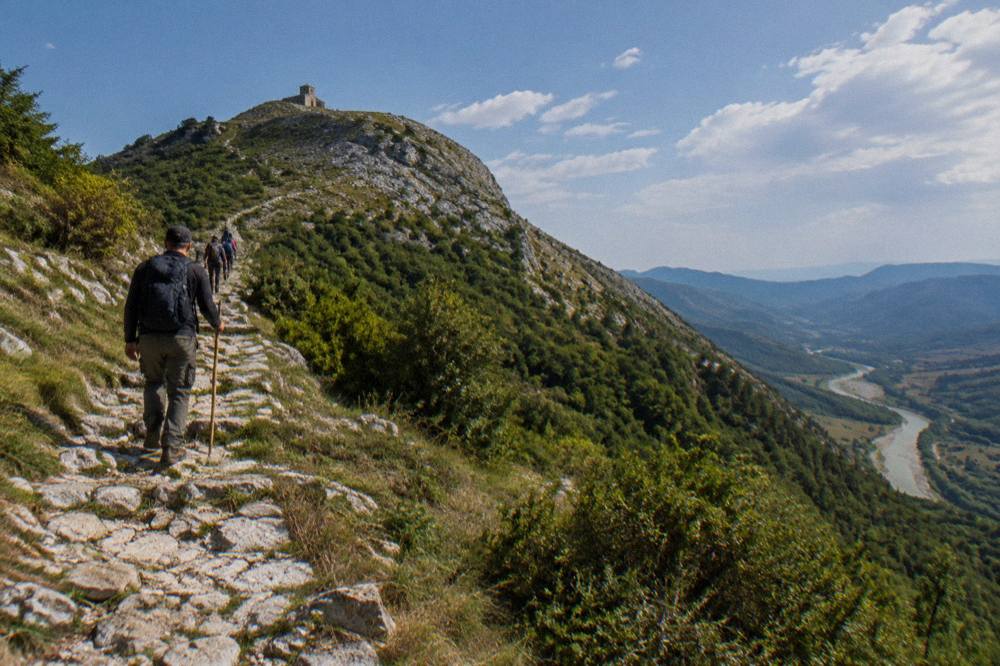
The guided formats split into three rough families, and the table below compares them honestly. The summit and waterfall format, like the Explore Berat trip covering Mount Tomorr and Sotira waterfall, is the classic choice and the one most travelers end up happiest with: Check availability on the operator's live listing. The lakes format swaps waterfall for alpine water and suits photographers. The mountain plus river format is the ambitious one, pairing high ground with canyon time, and it works best in spring when the Osum is high. For a fuller argument on the town itself, our page on whether Berat is worth visiting weighs the whole destination.
| Guided format | What you get | Best for |
|---|---|---|
| Summit and Sotira waterfall | Mountain high ground plus a waterfall, guided | First time visitors |
| Lakes of Dardhe trip | Alpine lakes and valley scenery, transport included | Photographers, gentle walkers |
| Tomorr plus canyon river day | Mountain morning paired with river time | Spring travelers, active groups |
The spring pairing deserves a solo mention because it is the best value day out of the whole region. Rafting and tubing on the Osum runs when the water is high, roughly March into May or early June, exactly the window when Tomorr's slopes are greenest and its waterfalls fullest. The combined rafting and tubing trip on the Osum Canyon from Berat is the established way to do the river half.
Where Can You Stay Near Mount Tomorr?
The best place to stay for a Mount Tomorr trip is Berat itself, using the old town quarters of Mangalem and Gorica or a guesthouse inside the castle walls, because the mountain is a short drive away and the town gives you evenings, restaurants and views that no village near the summit can match. There is no meaningful accommodation on the massif outside pilgrimage week, when camping fills the high ground.
Berat's guesthouse scene is unusually atmospheric. Inside the Kala, the castle quarter, a handful of family guesthouses operate within the walls, and a centuries old building next to the Onufri Museum is being converted into an 8 room family guesthouse, so the inside the castle option is growing. Down in Mangalem, the stacked window houses line the hillside below the castle, while across the Gorica bridge the Gorica quarter is quieter and leafier. Our where to stay in Berat guide sorts the neighborhoods property by property.
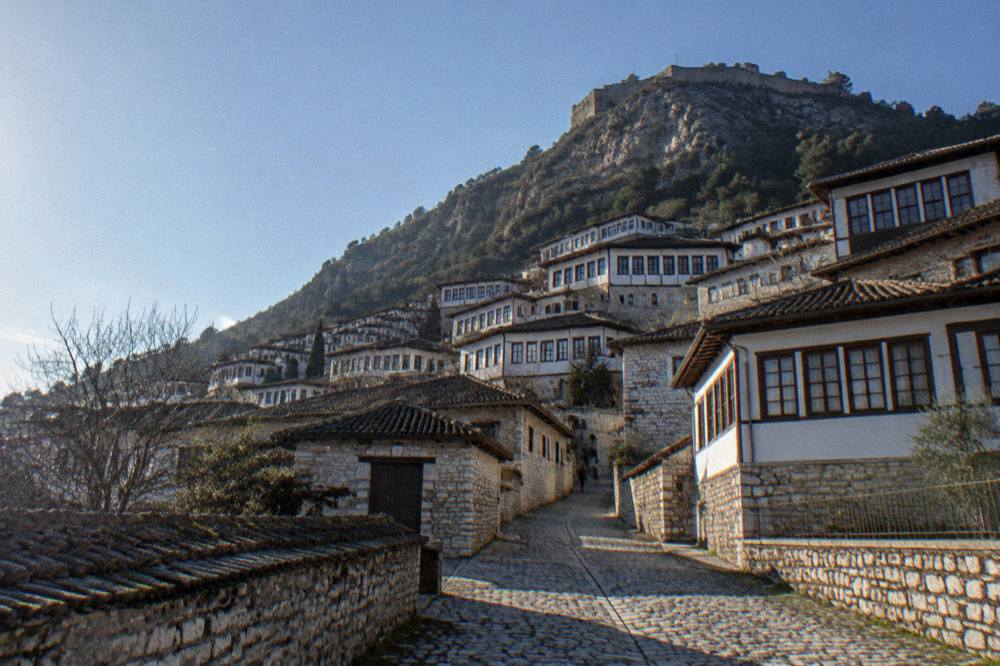
Two practical stay notes pair with the mountain specifically. First, parking in the historic quarters is limited and car access into the castle quarter is being restricted under the Smart Parking scheme, so a guesthouse with parking arranged matters more than usual if you are self driving to Tomorr. Second, in late August, pilgrimage week fills the town; if your dates collide, book months ahead or base yourself further afield and accept a longer morning drive. The Berat Castle guide explains the fortress quarter in depth if you want to sleep inside history.
Travelers who are not based in Berat at all also do Tomorr, usually from the coast around Durres or Golem on a long day out, and for them the sensible pattern is to pair the mountain region with a proper look at the town rather than rushing both. The Berat UNESCO city, castle and Mangalem tour from the coast exists exactly for that: it covers the old town's essentials in one organized day.
One last planning thought. Tomorr is the biggest day trip in Berat's orbit but not the only great one, and travelers with three or more days often pair it with the canyon, the wineries of the Berat region, or a run south to Gjirokaster, Albania's other UNESCO Ottoman town. Whatever mix you choose, respect the mountain's two rules: go prepared for real weather on real high ground, and treat the tekke and the tomb as the living sacred sites they are, not as props. Do that, and Mount Tomorr will hand you the most dramatic day out central Albania can offer.
Common Questions About Mount Tomorr
What Is Mount Tomorr And Why Is It Sacred?
Mount Tomorr is a 2,416 m massif in central Albania, whose highest point, Çuka e Partizanit, sits inside Mali i Tomorrit National Park above Berat. It is sacred to the Bektashi community: the tomb of Abaz Ali stands near the summit and Kulmak Tekke below it anchors an annual pilgrimage every August.
How Do You Get From Berat To Mount Tomorr?
You drive east out of Berat by road. A new road to the holy peak is rough going, and 4x4 tours are the usual way up, and the Berat to Ballaban road was nearing completion in September 2026. There is no train option, since no passenger rail reaches Berat at all.
When Is The Best Time To Visit Mount Tomorr?
Late spring through early autumn is the practical window, with May, June and September the most comfortable months. Mid summer valley heat can top 40 °C, and the third week of August brings the pilgrimage, with around 600,000 expected attendees in 2026 and traffic restrictions on the mountain roads. Winter access to the upper massif is unreliable.
What Happens During The August Bektashi Pilgrimage?
Every August, pilgrims travel to the tomb of Abaz Ali and Kulmak Tekke on Tomorr. The 2026 edition ran 18 to 25 August, with around 600,000 pilgrims expected from Albania, the diaspora and abroad, and police traffic restrictions and designated routes in force. The gathering stays on the mountain; sightseeing in Berat town continues as normal.
Is Mount Tomorr Albania's Second Highest Peak?
No. That claim is a common error in travel content. The verified figure is 2,416 m at Çuka e Partizanit, a genuinely high mountain and the dominant summit of the Berat and Skrapar region, but the second highest ranking you often read is not accurate.
Is A Guided Tour Of Mount Tomorr Worth It?
For most visitors, yes. The mountain's tracks are thinly marked in places, the access roads vary depending on which side of the massif you want, and the Bektashi sites are far more rewarding with cultural context. Guided trips from Berat typically pair the summit area with the Sotira waterfall or the lakes of Dardhe.