Tirana To Berat
Berat, a UNESCO World Heritage Ottoman-era hill town on the Osum River in central Albania, sits roughly two and a half hours south of the capital Tirana by road. This guide sets out every practical way to make the journey, what it costs, and what to do when the thousand windows come into view.
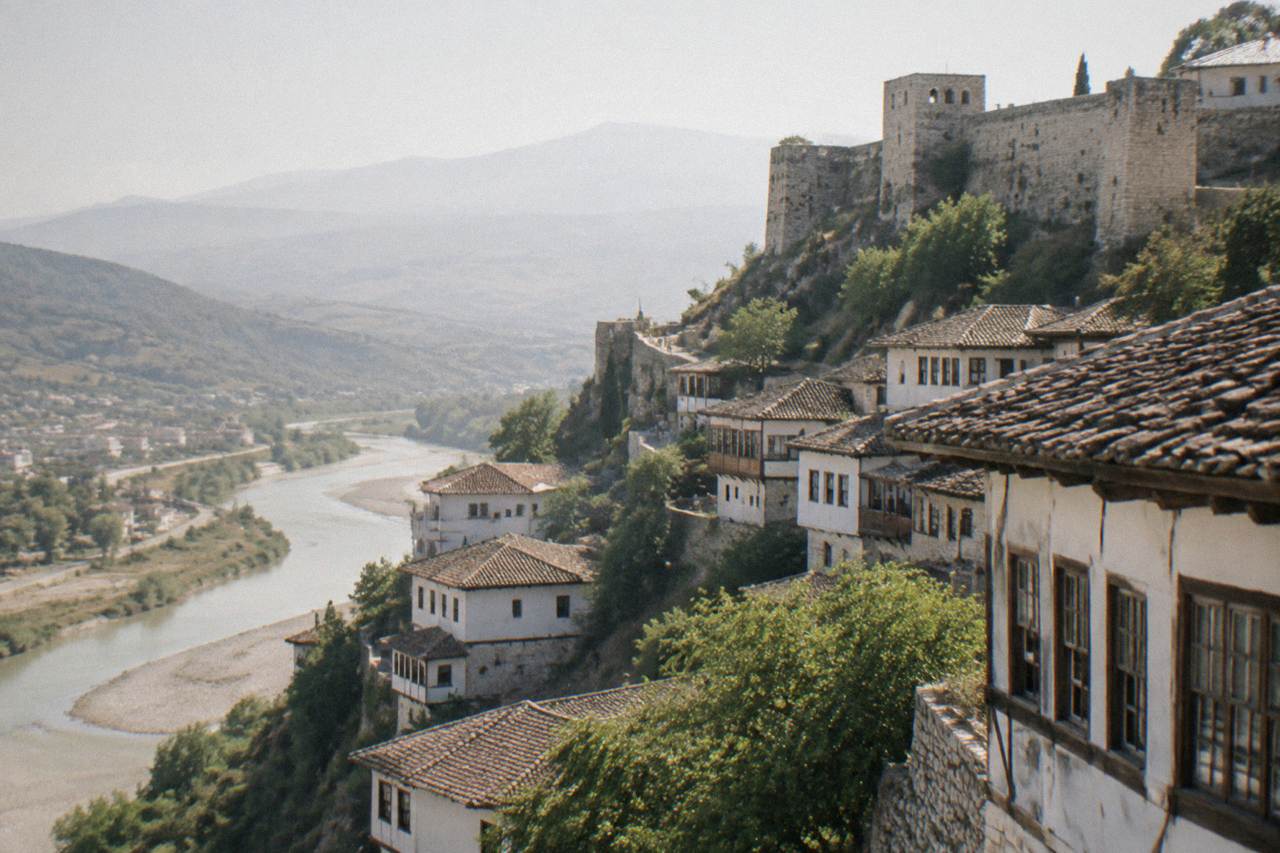
Berat, in central Albania, is the country's most photographed Ottoman town, a UNESCO World Heritage hill city on the Osum River where white houses stack up the hillside in rows of framed windows. Reaching it from Tirana, Albania's capital, is one of the easiest journeys a visitor to the country can make, but the details matter: which terminal the bus leaves from, what a day there should include, and whether an organised trip beats going alone. This guide covers the full route, the 2026 transport picture, costs in Albanian lek, and how to spend your hours once the bus rolls into the old town. Albania is not an EU member and not in the Schengen area, so the practicalities below are Albania-specific, not European-generic.
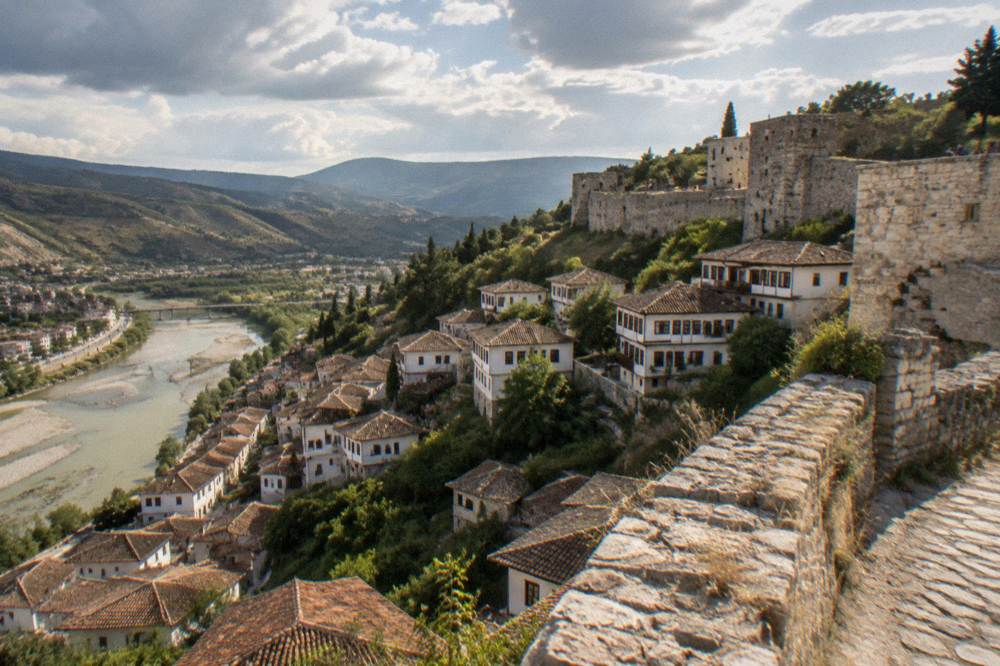
How Do You Travel From Tirana To Berat By Bus?
The standard public transport is the bus or shared furgon from Tirana's South-North terminal, Terminali i Autobuseve Jug-Veri, with frequent daytime buses costing a few hundred lek in cash. The journey takes about 2 hours 15 minutes to 2 hours 45 minutes and costs roughly 500-600 lek, around 6 euro, paid in cash, ideally in small notes. No advance booking is needed for most departures, though a few can be reserved through the GjirafaTravel platform.
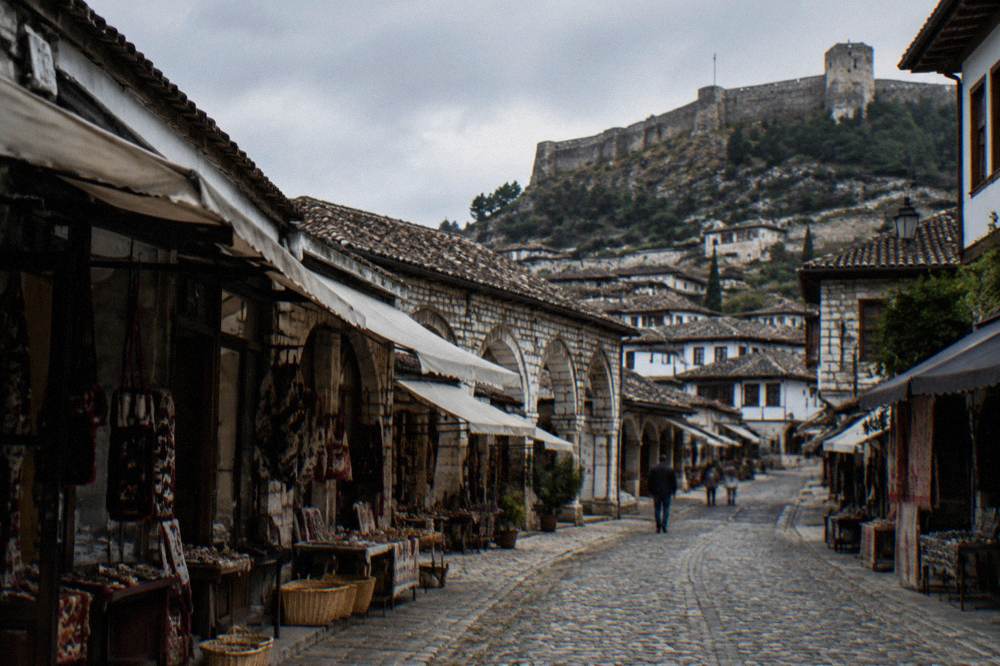
The route ends at Berat's bus terminal on the SH72 road, on the outskirts of town rather than in the historic centre. From there it is a walk of roughly 15 to 20 minutes, or a short taxi ride of about 2-3 euro, to reach Mangalem, Gorica or the old town. Some local buses also connect the terminal with the centre. If your guesthouse sits inside the old town, tell the driver or your host the street, because Mangalem and Gorica sit on opposite banks of the Osum and a wrong guess adds a bridge crossing with luggage in tow.
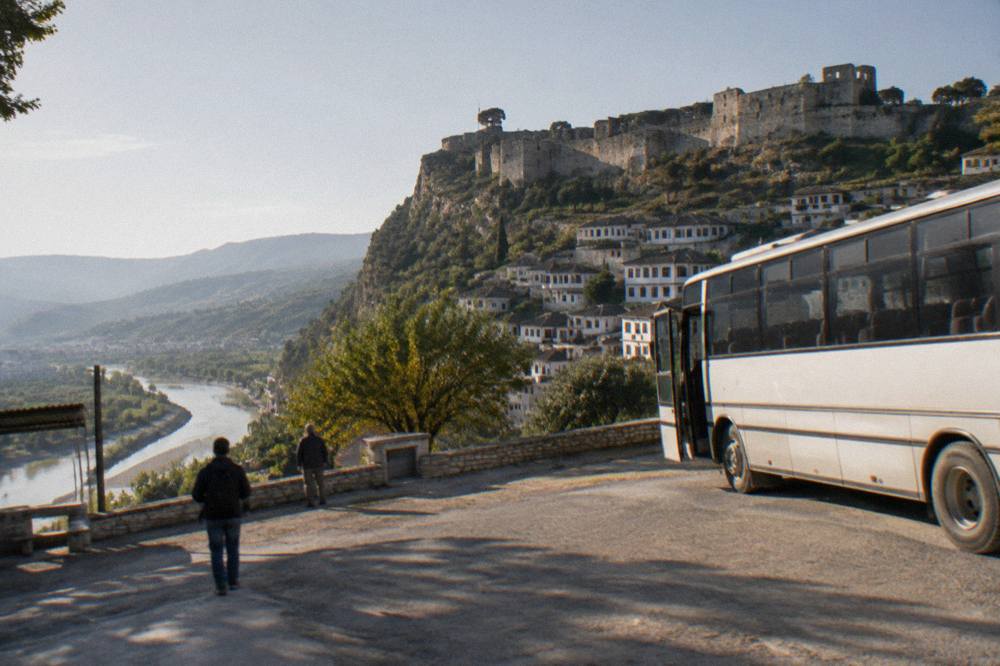
A few practical notes make the bus smoother than it sounds. Mornings run fuller than afternoons, especially in July and August when Albanian domestic tourism peaks, so the earliest departures are the safest bet in high summer. The ticket is bought on board or at the small kiosk beside the departure bays, and lek is what the driver wants, not card or euro. Luggage goes in the hold or the rear seats, and there are no reserved seats.
| What | Detail |
|---|---|
| Departure point in Tirana | Terminali i Autobuseve Jug-Veri (South-North terminal) |
| Daily departures | Frequent daytime buses, a few hundred lek, cash |
| Frequency and fares | Frequent daytime buses, a few hundred lek, cash |
| Journey time | About 2 hours 15 minutes to 2 hours 45 minutes |
| Fare | Roughly 500-600 lek (about 6 euro), cash |
| Booking | Mostly turn-up-and-go; a few seats via GjirafaTravel |
| Arrival point | Berat bus terminal, SH72, on the outskirts |
There is no direct airport bus from Tirana International Airport to Berat; anyone flying in needs to reach the South-North terminal in Tirana first and change there. There is also no passenger train option. The Tirana-Durres-Rinas railway is under reconstruction with a target of late 2027, and the Durres-Rrogozhine tender winner was expected in November 2026, so for now the road is the only way. Our page on getting from Tirana airport to Berat walks through that connection in more detail, and the Berat bus station guide covers the arrival end.
Is It Better To Drive Or Take An Organised Tour From Tirana?
Driving yourself gives total freedom to stop at Belshi Lake, wineries and viewpoints along the way, and rental cars in Albania run roughly 15-50 euro a day for an economy model, lower off-peak and higher in July and August. An organised tour removes the driving, parking and route-finding entirely and puts a local guide between you and the town's layered history. For a single day, the tour usually wins on value; for two days or more, a car starts paying off.
The driving case is real but conditional. An International Driving Permit is recommended for non-EU licences, mountain sections ask for steady nerves, and parking in Berat's historic core is limited, with a new vehicle restriction in the castle quarter since April 2026 that bars most non-resident cars from driving up. The rule of thumb in 2026 is simple: park low, walk up. Our driving and parking in Berat page has the full picture, including where the walkable parking sits relative to Mangalem.
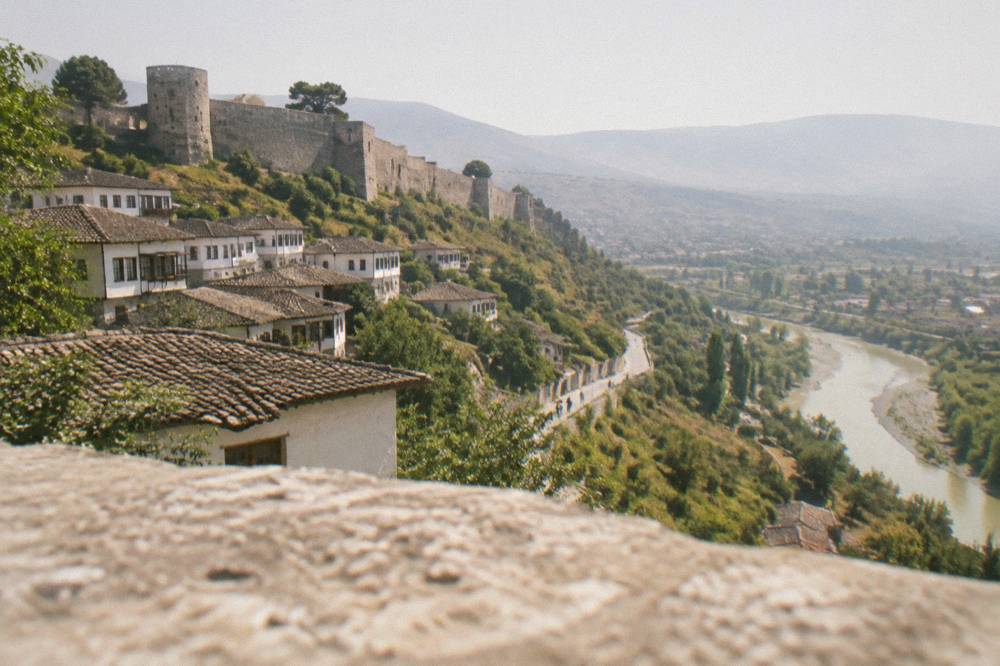
The tour case is strongest for visitors with one day. A guided trip from Tirana handles the early start, the castle climb and the old town orientation in a single package, and the strongest itineraries add a stop at Belshi Lake between the two cities. These are the three most bookable options on the route, compared side by side:
The first of those is the established heritage-and-lake format: a long day that pairs the castle and the old town with a lakeside stop, which is a lot of ground to cover without a guide doing the route work. The second swaps history for engine noise, an ATV circuit that suits travellers who want Berat's hills rather than its museums. The third is a cooking-class day built around a local family table, a different way entirely to spend the hours after arrival. All three can be booked through the operator's live listing.
If you are weighing a multi-day plan rather than a single outing, our one day in Berat itinerary shows how the hours actually fit together on the ground.
What Does A Guided Tirana To Berat Day Trip Include?
A typical guided day trip from Tirana includes round-trip road transport, a guided walk through Berat's castle quarter and the Mangalem old town, free time for lunch and photos, and on the lake itineraries a stop at Belshi Lake on the drive back. Durations sit around nine to ten hours door to door, so plan an early morning and a late evening.
The strongest-selling format on this route is the heritage-and-lake combination. It leaves Tirana in the morning, arrives in Berat with the day still ahead of it, and spends the middle of the day on the castle and the old town before rolling back past the lake. The featured option on this site, the Berat UNESCO Heritage and Belshi Lake Tour, is exactly that shape: Check availability to see current dates and seats.
What a guide genuinely adds in Berat is context the eye alone cannot supply. UNESCO inscribed the town, as an extension to the Gjirokastra listing, in 2008, describing it as a rare example of a well-preserved Ottoman town. The castle quarter, the Kala, still has city walls with 24 defensive towers; around 42 churches once stood inside, of which roughly eight survive. A guide who can point at a wall and explain which era built it turns a steep walk into a story. Travellers who prefer to move at their own pace can read our Berat history guide and Berat UNESCO heritage overview beforehand and self-guide with a map from our Berat map page.
How Much Does A Tirana To Berat Trip Cost Per Day?
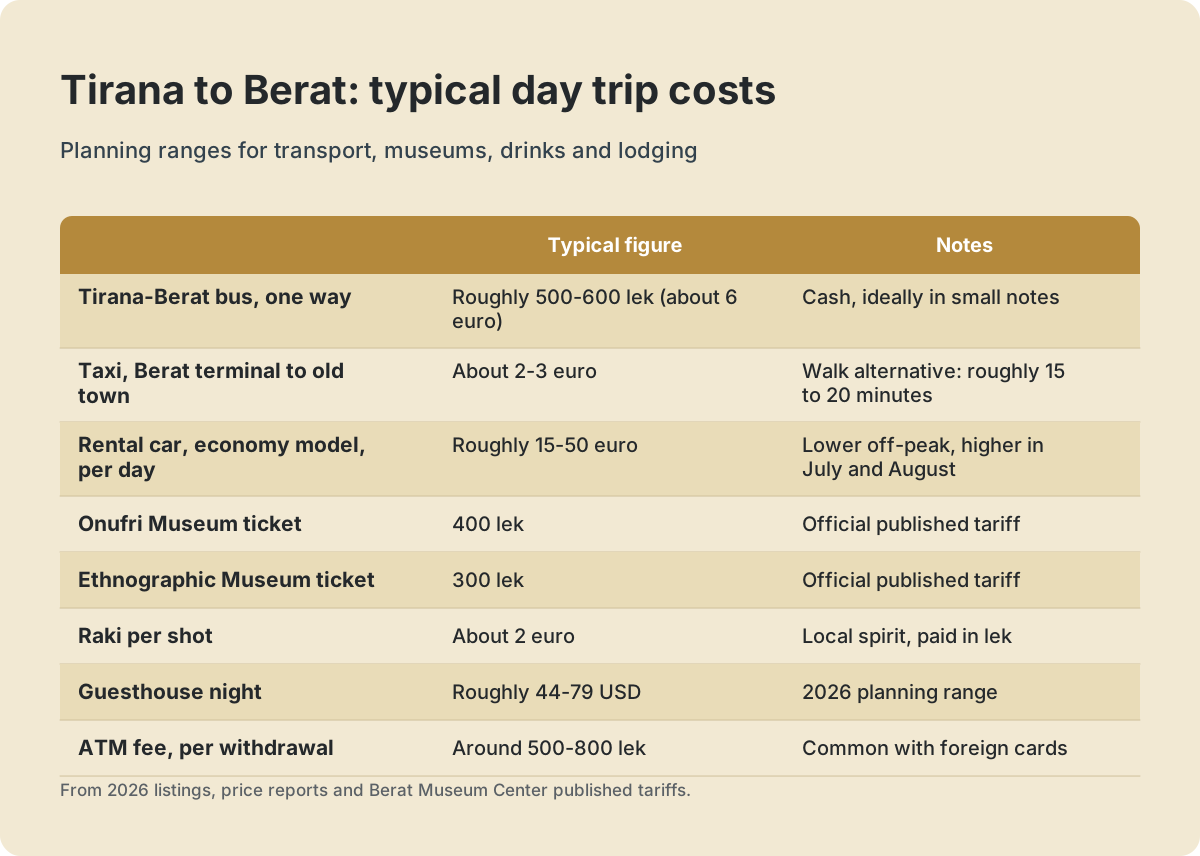
Counting transport, food, entry fees and a bed, a day in Berat is one of the cheapest World Heritage days in Europe: frequent daytime buses cost a few hundred lek each direction and take cash, and everyday costs like meals and coffee are Museum tickets are 400 lek for the Onufri and 300 lek for the Ethnographic Museum.
Those food and lodging figures are planning ranges drawn from 2026 listings and price reports, not promises: exact rates move with the season, so treat them as ballparks and check the specific venue. The museum figures, by contrast, are the official published tariffs of the Berat Museum Center. Dining in Berat is cheap by European standards, so carry cash in lek, and expect raki, the local spirit, to sell at around 2 euro a shot in old-town bars.
| Item | Typical figure (planning range) |
|---|---|
| Tirana-Berat bus, one way | Frequent daytime buses, a few hundred lek, cash |
| Cheap restaurant meal | Cheap by European standards, cash in lek |
| Mid-range dinner for two | Cheap by European standards, cash in lek |
| Cappuccino | Cheap by European standards, paid in lek |
| Raki per shot | About 2 euro |
| Onufri Museum ticket | 400 lek |
| Ethnographic Museum ticket | 300 lek |
| Guesthouse night | Roughly 44-79 USD |
Albania's currency is the lek, not the euro, and the exchange rate has been running at roughly 92 lek to the euro. Euro notes circulate informally in some tourist businesses but change is usually given in lek, and old-town Berat remains largely cash territory, with foreign-card ATM fees commonly around 500-800 lek per withdrawal. Our money and currency in Albania and Berat costs pages break all of this down, including which machines to avoid. Summer 2025 and 2026 saw modest price rises in Albanian tourism-linked services, and Berat is still widely described as good value relative to the coast.
When Is The Best Month To Make The Trip?
Late spring and early autumn, roughly May, June, September and early October, offer the best balance of mild walking weather, open museum hours and thinner crowds. July and August bring the hottest, driest conditions, summer heat can top 40 degrees Celsius, and the highest visitor numbers of the year. Winter is quieter, museums run shorter hours, and heavy rain concentrates from November through January.
Berat's climate is hot and dry in summer and wetter in winter, with rainfall peaking in the November-to-January window and July the driest month. There are no official published station normals for the town, so the honest advice is qualitative: summer days are for early starts and long lunch shade, spring and autumn are for walking the castle walls at noon, and winter visits trade green hills for empty lanes and low museum queues. The seasonal museum hours matter here: both Berat museums run 9:00-18:00 from May through September, then Tuesday to Saturday 9:00-16:00 and Sunday 10:00-15:00 from November through April. Our Berat weather page covers what to pack for each season.
| Period | Conditions | What it means for the trip |
|---|---|---|
| May-June | Mild, green, longer museum hours | Best overall walking weather |
| July-August | Hot and dry, busiest months | Early starts, midday shade, busier buses |
| September-early October | Warm, thinning crowds, harvest season | Wine at its freshest, ideal value window |
| November-April | Cooler and wetter, shorter museum hours | Quietest lanes, pack a rain layer |
One dated event is worth planning around: the Wine and Stories of Berat festival runs over the first days of October, in 2026 from 2 to 4 October, with Albanian and Kosovo wineries pouring in the town. Anyone making the trip in early October can pair the castle with a wine festival, though beds fill faster that weekend. The rest of the planning pages sit on Berat Travel Guide.
What Should You See Once You Reach Berat?
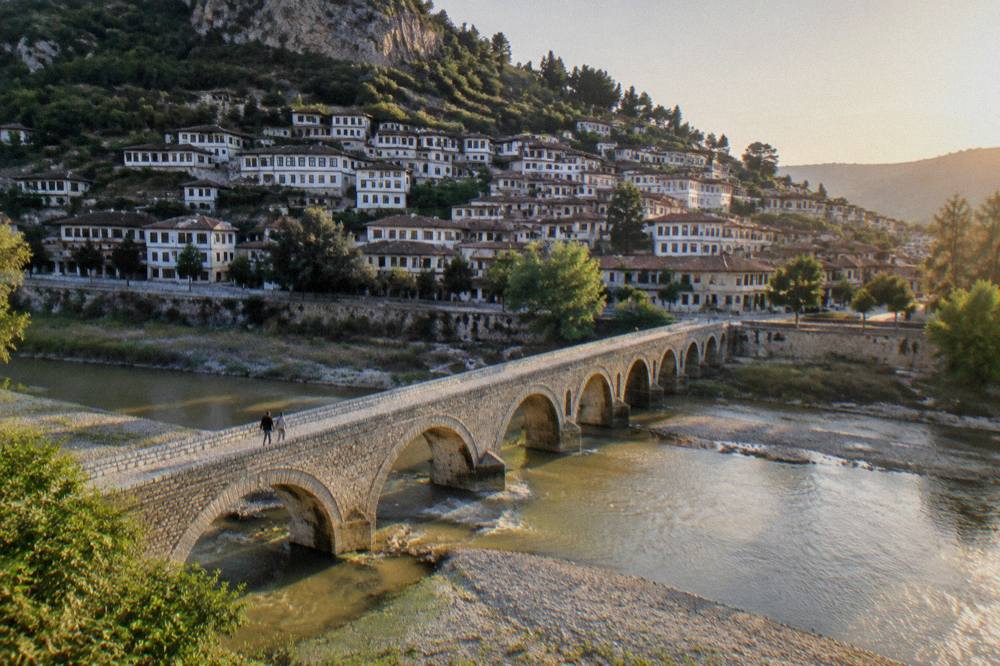
Spend the first hours on the castle quarter and the Onufri Museum, walk down through Mangalem's stacked windows to the Gorica Bridge, then cross to the Gorica side for the reverse view most visitors miss. Entry costs 400 lek for the Onufri Museum and 300 lek for the reopened Ethnographic Museum; the castle grounds may carry a small daytime fee at the gate, so bring lek. Allow a half day for the core sights and more for the museums.
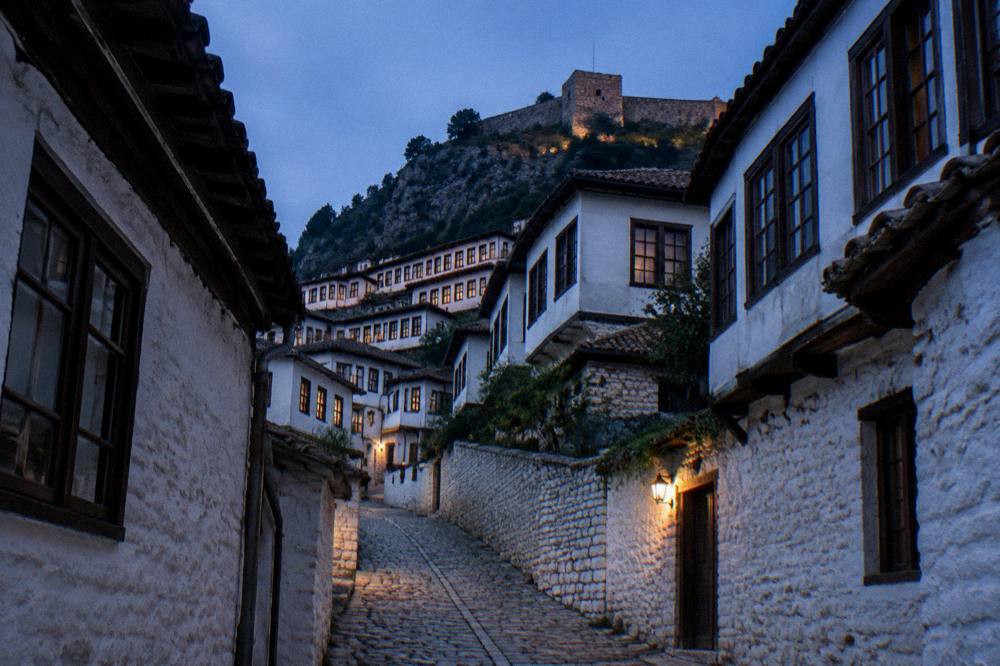
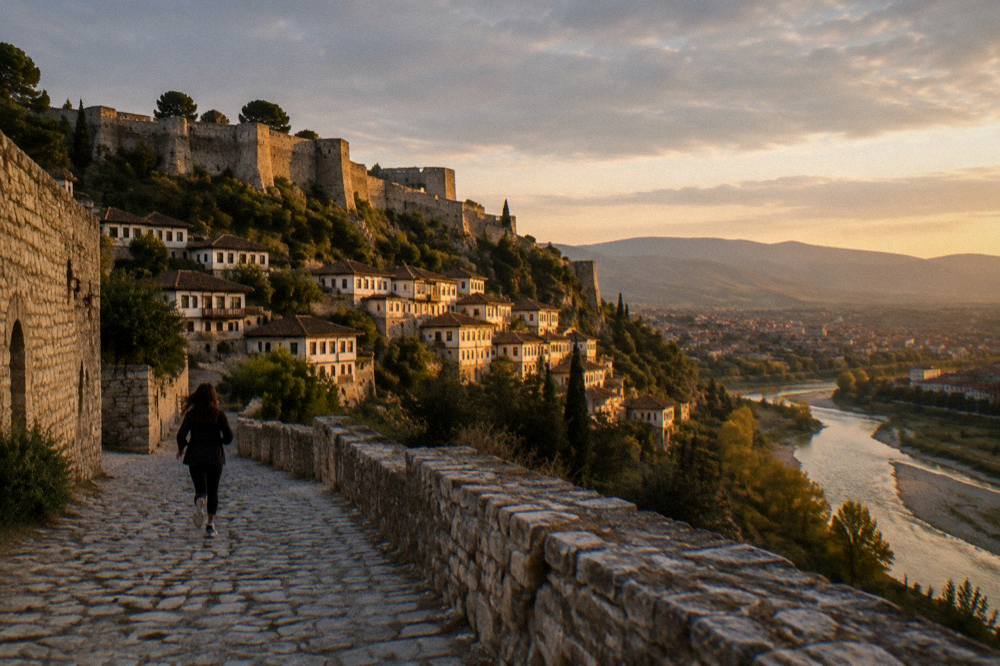
The Kala, the castle quarter, is not a monument behind a ticket booth, it is a lived-in neighbourhood with guesthouses inside the walls. Since April 2026, vehicle access up to the Kala has been restricted to residents, pre-booked hotel guests, licensed taxis and a few other categories, with a Smart Parking scheme being implemented to keep the upper lanes pedestrian-first, so the honest 2026 instruction is to park or be dropped below and walk up. Inside, the walls carry those 24 towers and the remains of around eight of the old churches, including the Red Mosque, one of the earliest Islamic buildings in the fortress.
Museums deserve the time most day-trippers do not give them. The Onufri Iconographic Museum, inside the Church of St Mary in the castle, holds the icon work of the master painter whose name the museum carries, and an audio guide costs 500 lek on top of the 400 lek ticket, with reductions for students and children under 12 free. The Ethnographic Museum, down in the town, reopened in May 2026 after a three-year restoration. A guided walking tour turns both into a connected story rather than two ticket stubs:
Beyond the walls, the town flattens into two easy circuits. Mangalem on the west bank is the postcard side; Gorica on the east bank is where the churches are quieter and the view back across the Osum is the famous one. Our old town guide, Mangalem and Gorica pages break each bank down street by street, and free things to do in Berat lists what costs nothing at all.
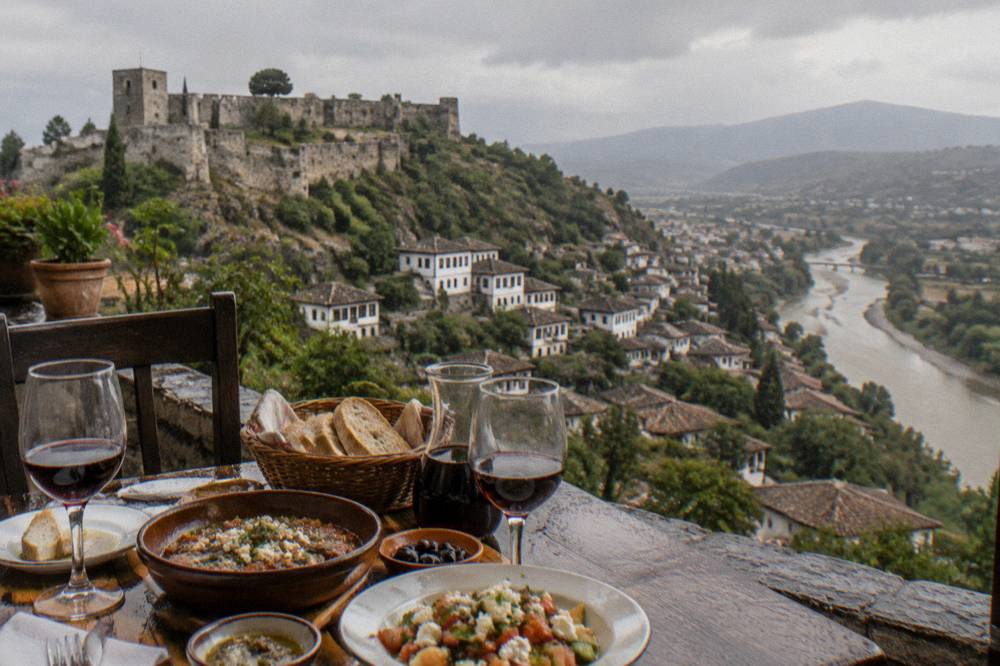
Wine is the other half of a Berat afternoon. The region's native grapes, Shesh i Zi and Shesh i Bardhe, plus the local white Puls, are poured at family wineries around the town, and a transfer-included tasting visit removes the drink-driving question entirely:
Where Should You Stay And Eat On An Overnight Stay?
Mangalem suits first-time visitors who want the postcard view from their window, Gorica trades that for quieter lanes and garden guesthouses, and the Kala inside the castle walls offers the most atmospheric beds in Albania, with breakfast above the rooftops. Guesthouse rooms typically list from about 44-79 US dollars a night in 2026, and the town's signature plates, tavë kosi, qifqi and japrak, run from a few euro upward.
Choosing the bank matters more than choosing the hotel. Mangalem puts you under the castle and beside the restaurants; Gorica puts you among churches and plane trees with a five-minute walk to everything. Inside the Kala, guesthouses operate within the walls and a centuries-old building next to the Onufri Museum was being converted into an eight-room family guesthouse through 2026. Note that some castle addresses involve a steep cobbled walk up with luggage, a fair swap for sunrise over the Osum but worth knowing before booking. Our where to stay in Berat and Berat hostels pages compare named properties by budget.
Eating well here requires no research, only appetite. Tavë kosi, lamb baked with yogurt and egg, is the national dish done best in its home region; qifqi, rice dumplings with herbs, is the street snack; japrak, stuffed vine leaves, is the household classic. Our where to eat in Berat and what to eat in Berat guides name the kitchens that matter. For travellers who want the recipes rather than the restaurant, a cooking class in a local family home, with raki and wine tastings folded in, is the fullest food experience in town:
For active travellers, the same hills that ring the town are rideable: an ATV circuit from Berat covers the ridgelines and river views in a few hours, and the Osumi Canyon, a protected natural monument near Çorovodë, is reachable as a day out from town with rafting in the spring snowmelt season and tubing through summer and autumn. Our Osumi Canyon, Bogove waterfall and hiking around Berat pages cover the outdoor options, including the free rim viewpoints.
Is The Tirana To Berat Route Safe For First-Time Visitors?
Yes, the route is considered safe and straightforward: the UK foreign office issues no advice against travel to any part of Albania, and the US State Department holds Albania at Level 2, exercise increased caution, its standard crime note rather than a destination-specific warning. Street crime affecting tourists is rare, the main hazards are road behaviour and summer heat, and the universal emergency number 112 works from any phone, with 129 for police, 127 for ambulance and 128 for fire.
The practical risks on this journey are unglamorous. Roads between Tirana and Berat are fully paved main routes, but Albanian driving norms ask for defensive attention, and summer heat above 40 degrees Celsius makes midday castle climbs a hydration project. Violent crime statistics in Albania have trended down, while reported crime overall rose in 2024-2025 largely on drugs and fraud cases that do not touch the tourist trail. In Berat itself, the police operations that made 2026 news were ordinary urban enforcement, none involving visitors.
| Situation | Number or answer |
|---|---|
| General emergency (any phone, no SIM needed) | 112 |
| Police | 129 |
| Ambulance | 127 |
| Fire | 128 |
| UK FCDO advice for Albania | No advice against travel |
| US State Department level | Level 2, exercise increased caution |
Money safety deserves one line: change lek at bank branches or ATMs attached to banks, since standalone machines in tourist spots carry the worst fees, and unlicensed street changers are exactly the fraud the police target. Tap water in Berat draws mixed advice, with the municipal supply rated generally safe by some trackers and bottled water recommended by others, so bottled water is the easy default. Our is Berat safe page expands on all of this, including solo and family angles.
For anyone stretching the trip beyond two days, Berat is a natural base for southern Albania: Gjirokaster, the other half of the UNESCO listing, is covered in our Berat to Gjirokaster guide, and the coast connections are mapped in getting from Berat to the coast and beyond. Mount Tomorr, whose summit at Çuka e Partizanit reaches 2,416 metres, dominates the eastern skyline and anchors the region's Bektashi pilgrimage each August.
Whichever way you make the journey, the pairing holds up: Tirana gives you the capital's noise and coffee culture, and Berat, two and a half hours south, gives you the quietest World Heritage lanes in the Balkans. Whether that is a bus ticket bought with small lek notes, a rental car pointed at the hills, or a seat on a guided day with the lake thrown in, the town at the end of the road repays every one of those hours.
Common Questions About Traveling From Tirana To Berat
How do I get from Tirana to Berat?
Buses and shared furgons leave from Tirana's South-North terminal, Terminali i Autobuseve Jug-Veri, with frequent daytime buses, a few hundred lek, cash. The trip takes around 2 hours 15 minutes to 2 hours 45 minutes and costs roughly 500-600 lek in cash. A guided day tour covering transport, the castle and Belshi Lake is the other popular option, and driving yourself with a rental car is straightforward on paved main roads.
How long does the bus from Tirana to Berat take?
About 2 hours 15 minutes to 2 hours 45 minutes, depending on the departure and traffic. No train alternative exists yet: the Tirana-Durres-Rinas railway is under reconstruction with a target of late 2027, so the road is currently the only public route.
Is there a direct bus from Tirana airport to Berat?
No. There is no direct airport-to-Berat service, so you need to travel from Tirana International Airport into the city and change at the South-North terminal for a Berat-bound bus or furgon. Allow extra time for that transfer when planning a same-day arrival.
Where does the bus arrive in Berat?
At the Berat bus terminal on the SH72 road, on the outskirts of town. From the terminal it is roughly a 15-20 minute walk or a short taxi ride of about 2-3 euro to Mangalem, Gorica or the old town, and some local buses connect the terminal with the centre.
Is one day enough for a Tirana to Berat trip?
Yes for the core sights: the castle quarter, the Onufri Museum, the Mangalem windows and the Gorica Bridge fit into one well-organised day, and guided day trips from Tirana are built on exactly that schedule. Two days lets you add wineries, the Ethnographic Museum, an Osumi Canyon outing or a cooking class without rushing.
Do I need cash for the Tirana to Berat journey?
Yes. Bus and furgon fares are paid in cash, in lek, ideally in small notes, and old-town Berat is largely a cash area, with foreign-card ATM fees commonly around 500-800 lek per withdrawal. Some hotels and larger venues take cards, but the journey itself and most small spending need lek.