Berat Weather
Berat, the UNESCO-listed Ottoman hill town in central Albania, sits far from any coast, and its weather runs to extremes: fierce dry summers and grey, wet winters. Here is what that means for planning a visit.
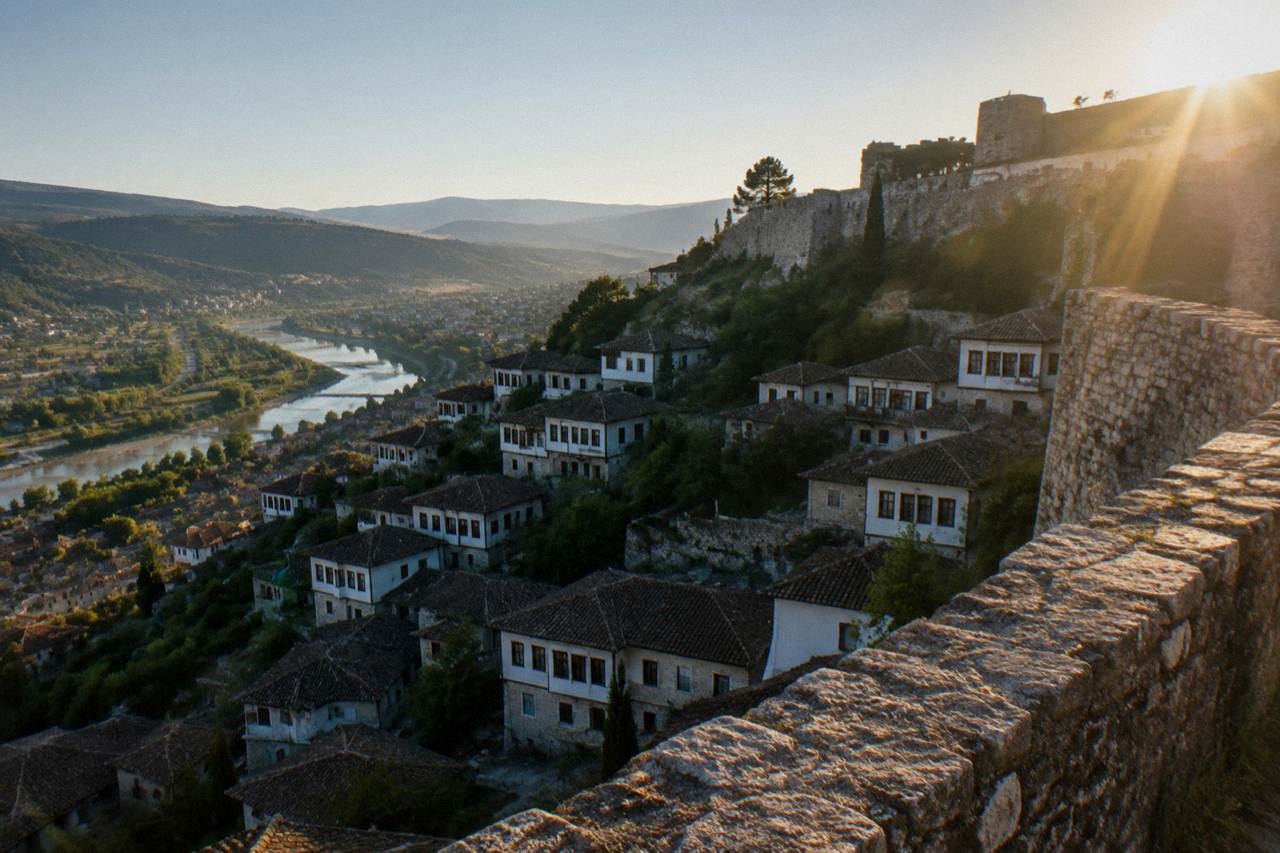
Short answer
Berat has hot, dry summers and wetter, mild winters. July and August days typically reach the low 30s °C and can top 40 °C in heatwaves, while November to January is the rainy stretch. Spring and autumn are the comfortable middle seasons, and the castle, museums and canyon activities each respond differently to the calendar.
Berat, in central Albania, is a UNESCO World Heritage Ottoman-era hill town on the Osum River, and its weather follows a simple inland Mediterranean pattern: long, hot, dry summers and mild, wetter winters. There is no sea here to moderate anything, no coast and no tide within an hour's drive, so the town heats up hard in July and August and turns grey and damp from late autumn into January. That rhythm shapes almost every part of a visit, from the hour you climb to the castle to the month the canyon rafting season opens and closes.
This guide describes Berat's seasons honestly. Albania's meteorological service publishes no station climate normals for Berat that we could verify, so we describe the seasons qualitatively rather than printing monthly temperature or rainfall tables, and we flag the one dated heat event that has been reported in the press. We also cover what the weather does to the cobbled alleys of Mangalem, the castle road, the Osumi Canyon, the museums, and your packing list, plus how to plan a Berat day trip around the forecast. Berat Travel Guide keeps the practical detail in one place.
What Is The Weather Like In Berat During The Year?
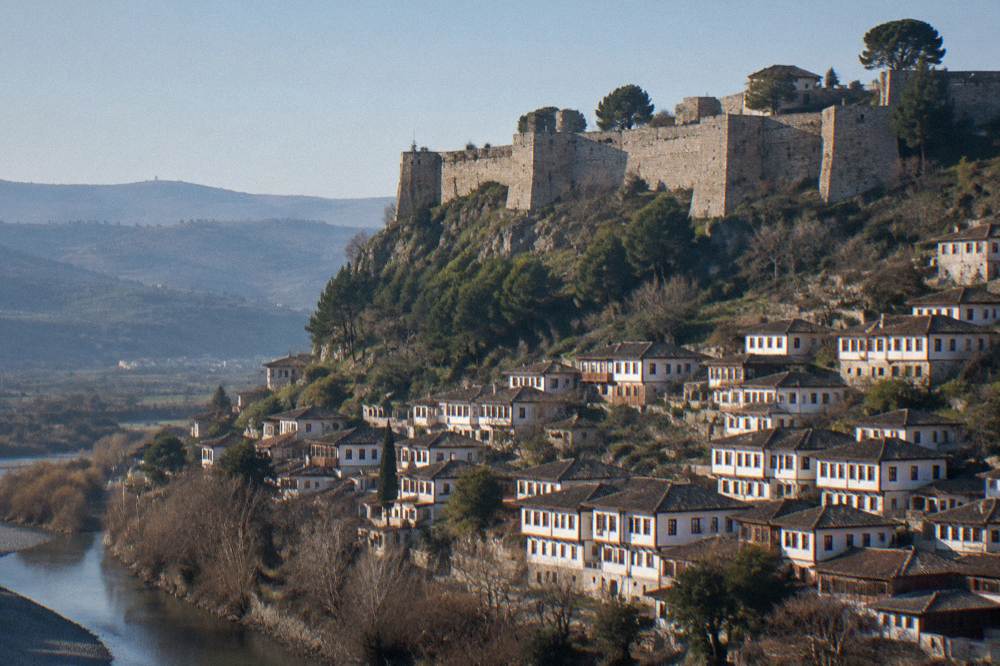
Berat, in central Albania, runs on two long seasons, a hot dry summer stretching from late May into September and a wet winter from November to February, with short shoulder seasons in April, May, late September and early October, and with July standing out as the driest month of the whole year. Summer days are typically hot, often in the low 30s °C, with almost no rain in July, the driest month of the year. Winter is mild rather than brutal: daytime temperatures usually sit above freezing, snow in the town itself is rare, but rain is frequent and persistent from November through January, when rainfall peaks. The transitions between them are brief.
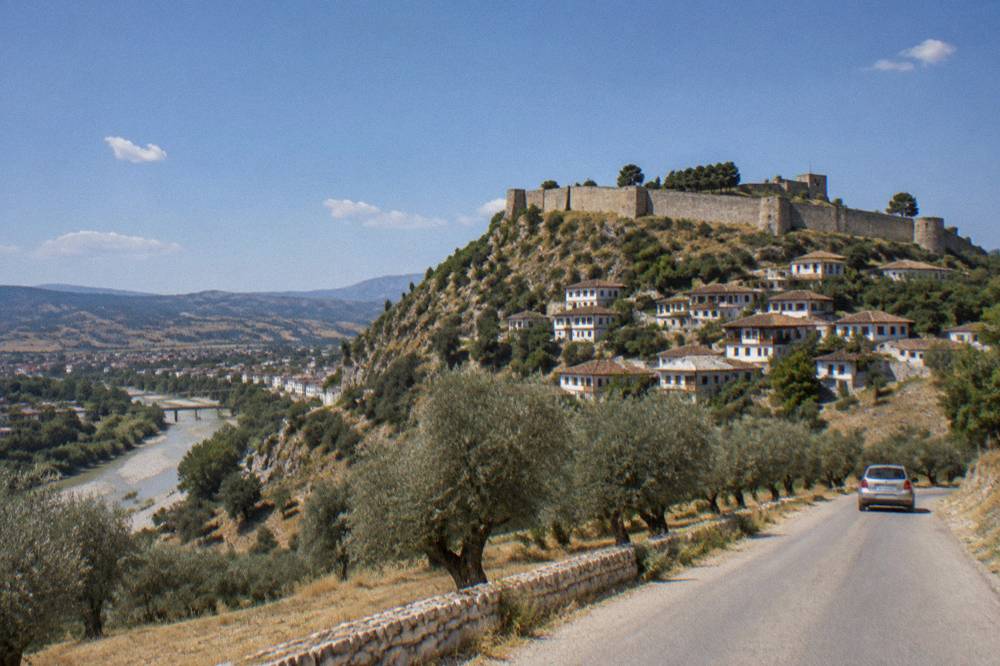
The reason for the pattern is geography. Berat sits in a valley on the Osum River, hemmed in by hills, with the massif of Mount Tomorr, whose highest point Çuka e Partizanit reaches 2,416 metres, rising to the east. Inland valley floors in this part of the Balkans bake in summer, because there is no maritime air to cool them, and they collect rain in winter as systems move in from the Adriatic. The hills around town turn gold and dry by August and green again by March.
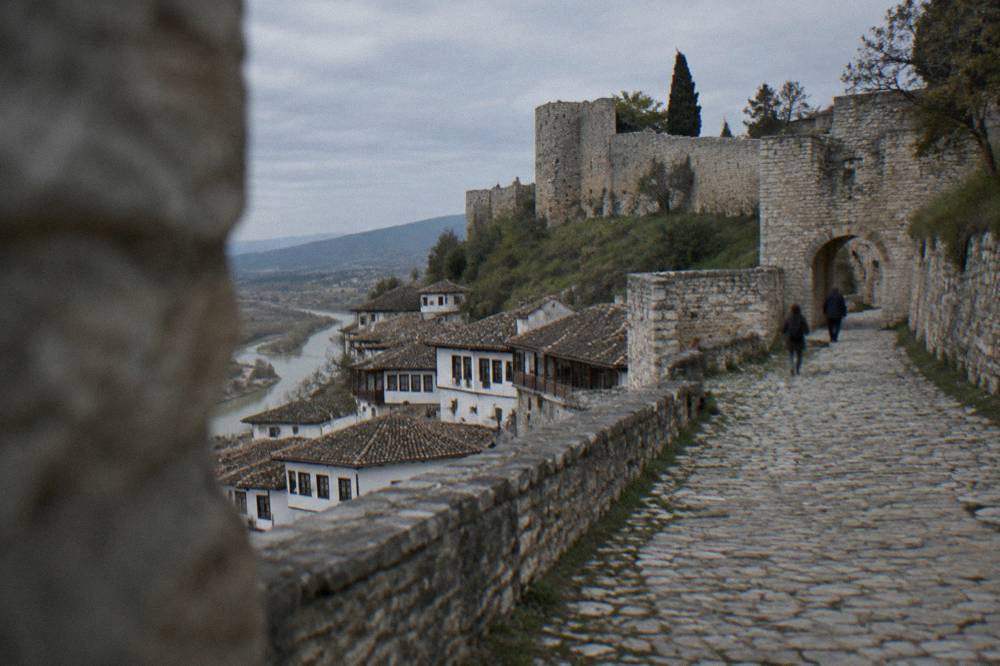
What locals plan around is not cold, it is rain and heat. The cobbled lanes of the old town drain poorly in a downpour, and the walk up to the castle, an uphill cobbled lane, becomes slippery when wet. In summer the opposite problem appears: the white stone of the old town reflects heat, and the middle of the day in July and August is genuinely hard work for sightseeing. Every practical recommendation in this guide flows from those two facts.
When Is The Best Time Of Year To Visit Berat?
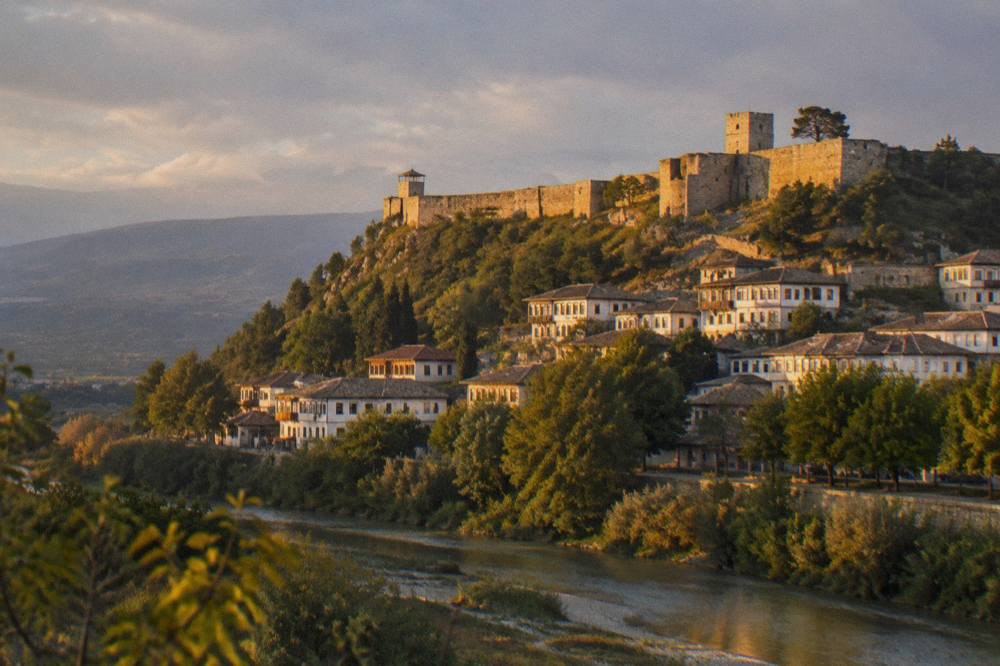
The most comfortable months for visiting Berat are late April, May, June, September and early October, when days are warm but not punishing, rain is less frequent than in winter, and the light is at its best for photographing the thousand windows of Mangalem. Spring brings green hills and flowing water in the canyons, which matters if you want rafting. September and October bring stable, warm days, harvest season in the surrounding vineyards, and the Wine & Stories of Berat festival, held 2 to 4 October 2026.
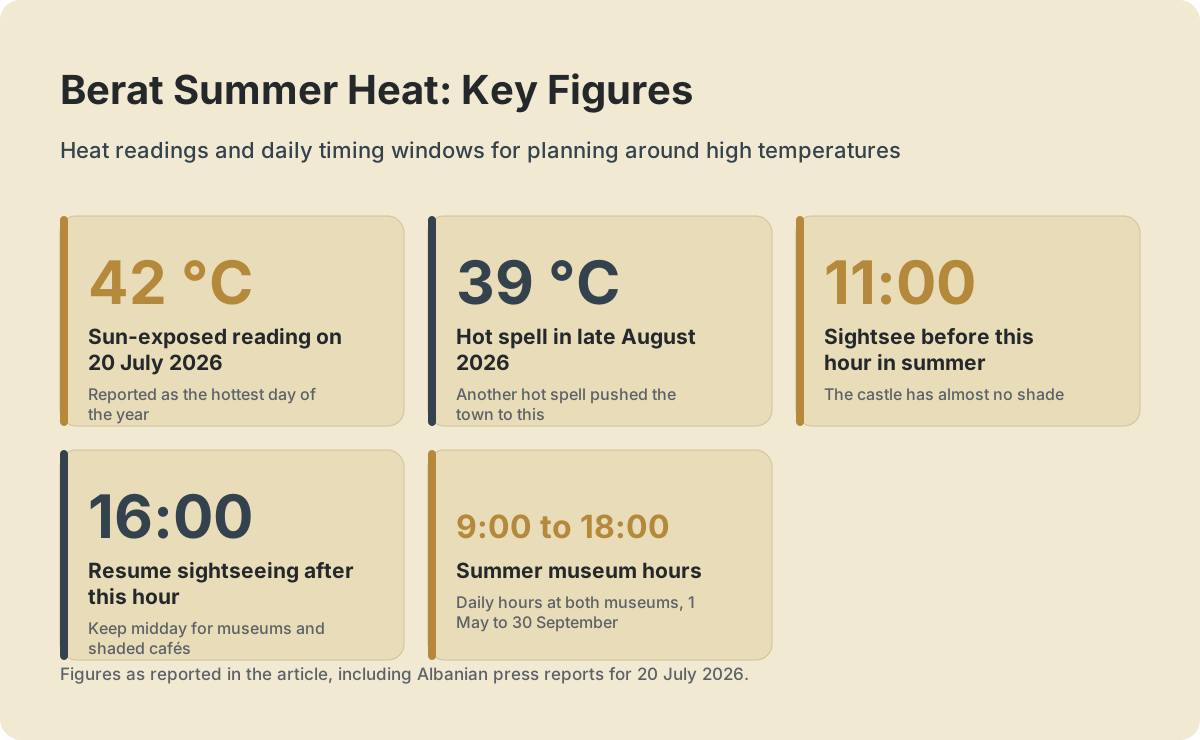
Each season trades something for something else. Summer gives you the longest days and the most reliable dry weather, but heat is a real constraint: 20 July 2026 was reported in the Albanian press as the hottest day of the year, with the highest values recorded in Berat and sun-exposed readings near 42 °C. Winter gives you empty guesthouses, museum halls to yourself and low prices, but short grey days and a real chance of steady rain. The shoulder months split the difference and are what most repeat visitors recommend.
If you are coming from Tirana or the coast for a single day, the season matters less than the hour you start. A morning departure lets you climb to the castle before the heat builds or before afternoon clouds gather, which is a pattern in every season. Our Berat day trip from Tirana planner breaks down the transport options, and the guide to getting from Tirana to Berat covers the buses and their roughly 2.5-hour journey in detail.
The festival calendar is worth syncing with. The Wine & Stories of Berat festival in early October pairs tastings from Albanian and Kosovo wineries with music and local food, timed to harvest. In late August the Bektashi pilgrimage to the tomb of Abaz Ali on Mount Tomorr draws very large crowds, with police traffic restrictions around the Kulmak Tekke between 18 and 25 August in the 2026 edition, which can affect road access on the mountain itself, though not the town.
How Does Summer Heat Affect Sightseeing In Berat?
Summer heat in Berat is a scheduling problem, not a reason to stay away: sightsee before 11:00 and after 16:00, keep the middle of the day for museums, covered restaurants and shaded cafés, and carry more water than feels reasonable. The castle has almost no shade, the walk up is exposed, and the Onufri Museum inside the castle, reachable by car to near the entrance gate, is the single best midday refuge in town. Evening is when the old town earns its reputation.
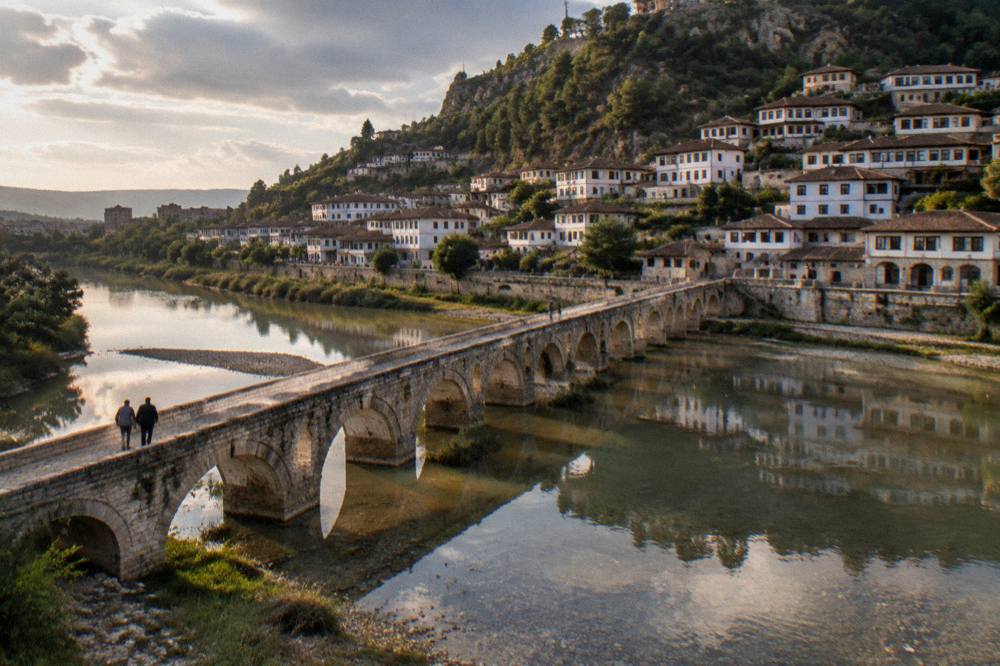
The practical summer rhythm most visitors settle into looks like this: an early climb to the castle while the stones are still cool, late morning in the Onufri Iconographic Museum or the Ethnographic Museum, a long shaded lunch, and then the evening stroll across the Gorica Bridge and along the river promenade once the heat breaks. The castle walls have 24 defensive towers and roughly eight of the about 42 churches that once stood inside the fortress are preserved, so there is plenty to see, but none of it is fast, and none of it is shaded.
Heat records are not a benchmark anyone should plan against, but the trend is clear. Local news reported Berat recording the country's highest values on 20 July 2026, with sun-exposed readings near 42 °C, and another hot spell pushed the town to 39 °C in late August 2026. In that weather the cobbled climb to the castle should be done at sunrise or skipped in favour of an air-conditioned day trip vehicle. For hydration and rest planning, see our Berat costs guide for what a coffee or a cold drink runs in lek, roughly 92 lek to the euro.
A guided tour genuinely helps in this season, because a guide sets the pace, knows which lanes hold shade at which hour, and includes indoor stops in the middle of the day. The castle and city guided UNESCO tour from Durrës is built exactly around that rhythm, and reviews on the live listing, 4.6 from 23 reviews at the time we checked the operator's page, mention the local tasting stop as the midday break. Summer visitors should also read our where to eat in Berat guide for the shaded terraces along the river.
What Is Winter Like In Berat?
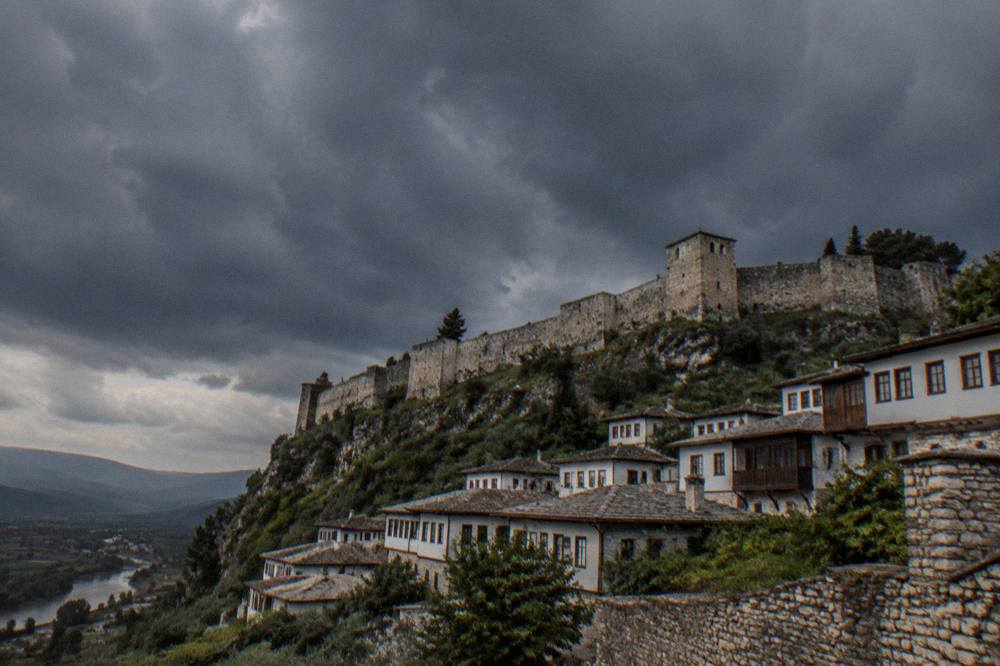
Winter in Berat, from November to February, is mild and damp rather than cold: rain is the defining feature, daytime temperatures usually sit above freezing, snow in the town itself is rare, and the hills around town go green and quiet. Rainfall in Berat peaks in the November to January window, and July is the driest month, so the seasonal contrast is stark. Guesthouses run quiet, museums run nearly empty, and the white houses of Mangalem photograph beautifully against heavy grey cloud.
The trade-offs are simple. Days are short, with dark falling by late afternoon, so the climbing, photography and river walking all need to happen in a compressed window. Rain makes the old town's steep cobbled alleys and the castle lane slick, so shoes with grip matter more than in summer. On the other hand, this is the season for the town's indoor pleasures: the Onufri Iconographic Museum inside the Church of St Mary in the castle, the Ethnographic Museum in the town below, long restaurant lunches of tavë kosi, and raki by a stove.
The museums are the reliable winter anchors. The Onufri Museum recorded 58,912 visitors between January and July 2026, up 16 percent on the same period in 2025, so the crowds are a summer phenomenon, and a winter weekday gives you the icon galleries nearly to yourself. Museum hours follow the seasons: from 1 May to 30 September both museums open daily 9:00 to 18:00, and from 1 November to 30 April they open Tuesday to Saturday 9:00 to 16:00 and Sunday 10:00 to 15:00. Winter visitors should also check the Ethnographic Museum guide, which reopened in May 2026 after a three-year restoration with around 1,300 objects on display.
Winter is also the season for wine and cooking indoors. A tasting at a family winery in the hills around Roshnik or a cooking class in a local home turns a grey afternoon into the best part of the trip, and both run year-round.
How Does Rain Affect Berat's Streets And Sights?
Rain in Berat affects three things above all: the cobbled climbs, which become slippery within minutes, the Osum River, which rises visibly from the Gorica Bridge, and your footwear, which needs real grip in every season, while the museums, the mosques and the covered restaurants of the old town lose nothing at all and stay open as normal. The old town's stone lanes are worn smooth by centuries of feet and polished further by rain, and the lane up to the castle is a sustained incline on stone. Nothing closes for rain in Berat; it just gets slower.
The river is the visible barometer. The Osum runs low and lazy in late summer and rises fast with the November rains and the spring snowmelt off the hills, a rhythm that also decides the canyon season covered below. Walking the banks along Bulevardi Republika after rain is pleasant, and the mist that sometimes sits on the hills around the Gorica quarter in a winter morning is one of the town's better photography moments, which our Berat photography spots guide covers in detail.
Two weather-adjacent practical notes from recent municipal planning are worth knowing. Car access into the castle quarter is being restricted, so plan to park below and walk up, which changes your calculation on a wet day. And repairs to the cobbled road up to the castle began in April 2026 after fresh damage was reported, so check locally before assuming a smooth surface in poor weather. Our driving and parking in Berat guide has the details.
| Condition | Where it bites in Berat | Practical response |
|---|---|---|
| Steady rain | Castle lane and Mangalem alleys become slick | Shoes with grip, walk pole if you use one, allow extra time uphill |
| Short heavy shower | Gorica Bridge and the river promenade briefly flood in patches | Wait it out over a coffee; showers often pass within the hour |
| Rising river | Osum runs high and brown after winter rain | Keep off low banks and skip any canyon water activity |
| Fog or low cloud | Castle views vanish; the town looks flat from above | Photograph Mangalem from Gorica side instead, at street level |
| Summer storm | Rare, but intense when it comes | Stay off the exposed castle walls during lightning |
How Does The Weather Shape Trips Around Berat?
The calendar decides almost everything outside the town: canyon water sports, the Tomorr mountain road, the vineyard season and the August pilgrimage all run to fixed seasonal windows, and planning around them is the difference between a great trip and a cancelled one. Rafting on the Osumi Canyon runs on spring snowmelt, roughly from February or March into early or mid June depending on water levels, while tubing takes over for the calmer, lower water of summer and autumn. The rim viewpoints, by contrast, are free of charge and open to view any time of year.
The Osumi Canyon near Çorovodë, protected as a natural monument, is Berat's headline outdoor trip and the most weather-dependent of them all. Operators describe the drive from Berat as roughly one to one and a half hours on fully paved roads, with gravel tracks deeper in, and the season split as rafting in spring and tubing from mid June into autumn. There is no entrance fee to view the canyon from the rim, including the Vrima e Nuses viewpoint and the Old Italian Bridge, so even out of season the drive is worthwhile. Our Osumi Canyon guide covers the viewpoints, and the Bogove waterfall guide describes the short forest walk from Bogovë village.
| Season | Canyon water level | What runs | Notes |
|---|---|---|---|
| Spring, roughly March to May or June | High with snowmelt | Rafting | The fast-water season; operators judge daily levels |
| Mid June onwards | Dropping, calmer | Tubing, swimming, floating | Better for families and non-swimmers |
| Late autumn | Low and slow | Rim viewpoints, short walks | No fee at the rim; pack warm layers |
| Winter | Cold and unpredictable | Viewpoints only | Water activities stop; roads can be wet |
Mount Tomorr to the east is the second weather system in the region, with its own microclimate at altitude. A new road to the holy peak is rough going, and 4x4 tours are the usual way up, with the Berat to Ballaban road project reported near completion, with asphalt, signage and barriers. The Bektashi pilgrimage each August draws huge numbers, around 600,000 expected in the 2026 edition, and police traffic restrictions apply around Kulmak between 18 and 25 August. Our hiking around Berat guide covers the walking side.
For a private, weather-flexible day out that mixes the town with the mountains, a private guided trip lets you shift the plan the night before if the forecast turns, which is exactly what a rigid group departure cannot do.
What Should You Pack For Berat Weather?
Pack for heat and cobbles in summer, layers and rain in winter, and grip in every season: the two constants year-round in Berat are smooth stone underfoot and uphill walking, so sturdy shoes matter more than anything else in the bag. Summer needs sun protection, a refillable bottle and light clothing, because the castle offers essentially no shade. Winter needs a proper waterproof, not a fashion jacket, and warm layers for evenings that feel damp rather than cold. Spring and autumn need both sets, halved.
The single most common packing mistake visitors report is footwear. The lane up to the castle is a sustained stone incline, the Mangalem alleys are stepped and worn, and rain polishes all of it. Trainers with flat soles are tolerable in dry weather and risky in wet. The second most common mistake is assuming card payment covers everything: old-town Berat is largely cash territory, so carry lek, and our money and currency in Albania guide explains what the ATM fees and exchange habits look like, with the lek at roughly 92 to the euro.
| Season | Footwear | Clothing | Extras |
|---|---|---|---|
| Summer, June to August | Breathable shoes with real grip | Light layers, hat, covered shoulders for churches | Sunscreen, refillable bottle, cash in lek |
| Shoulder, April to May and September to October | Walking shoes | Layers, light jacket for evenings | Compact rain layer, camera |
| Winter, November to February | Shoes with grip, water-resistant | Waterproof jacket, warm layers | Umbrella, small towel, spare socks |
One note on the heat for anyone booking a guided day: a full-day tour that includes the castle walk in mid July is a demanding object, and the best value version pairs the guided sightseeing with indoor tasting stops. The medieval castle and city guided UNESCO tour from Durrës does exactly that, pairing the castle and old-town walk with a local tasting, and its listing shows a 4.6 rating from 23 reviews. Book it for a morning start in high summer, and read our free things to do in Berat guide for the shaded, zero-cost ways to fill the midday gap.
How Does Berat Weather Compare With The Rest Of Albania?
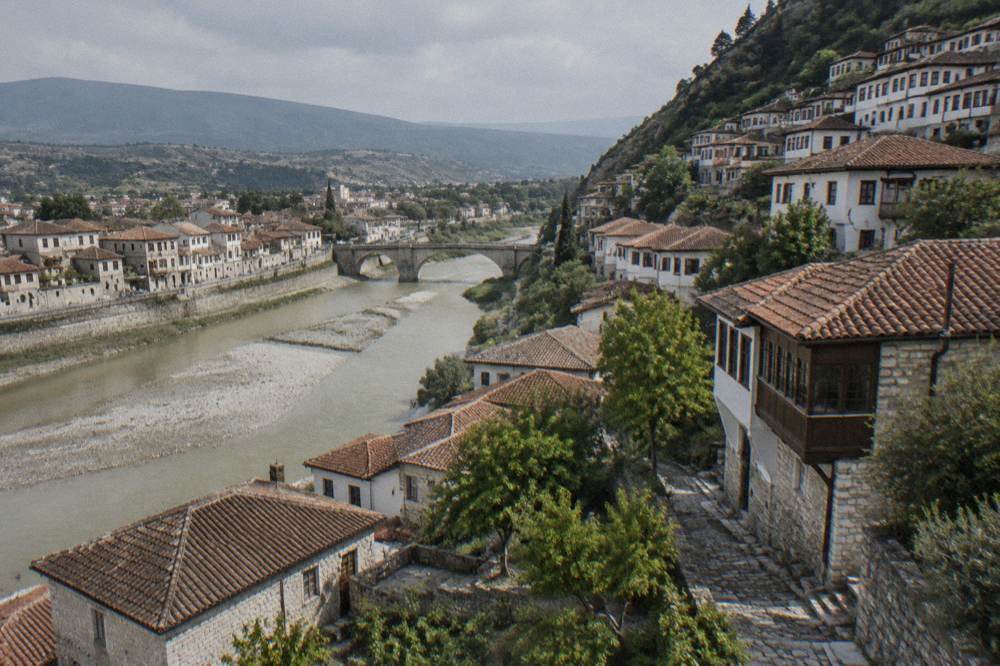
Berat sits in the inland central belt, so it is hotter in summer and drier-looking than the coast, colder at night than the Adriatic towns, and broadly comparable to Gjirokastër inland, while the mountains above it, Tomorr above all, hold a genuinely different climate. The Albanian Riviera keeps maritime air and evening breezes; Berat, an hour and more inland, bakes by day and cools sharply after dark in every season. Rainfall across the western lowlands follows the same November to January peak, so the wet season is shared.
The altitude difference is what surprises people. The town sits at low elevation in the valley, while Mount Tomorr's highest point Çuka e Partizanit reaches 2,416 metres, high enough to hold snow when the town below is in shirt sleeves. A heatwave day in Berat and a cold, wet morning on the pilgrimage road above Kulmak can be the same week. This is why canyon and mountain operators check conditions daily rather than trusting a town forecast, and why the Berat map guide is worth a read before plotting a loop.
Berat's summers have been drawing national attention for their intensity: local press reported the town recording the country's highest values on the hottest day of 2026, with sun-exposed readings near 42 °C. Coastal visitors surprised by the difference often reshuffle their itinerary once they feel the valley heat. Our guide to getting from Berat to the coast and beyond covers the escape routes when you want a sea breeze after a scorching inland stretch.
| Region | Summer character | Winter character | Versus Berat |
|---|---|---|---|
| Berat valley | Hot, dry, valley heat with little shade | Mild, damp, grey weeks | The baseline |
| Adriatic coast | Warm with sea breeze | Milder, windier, wetter | Cooler evenings in summer |
| Gjirokastër and the south inland | Hot, similar valley pattern | Colder nights in the hills | Comparable, chillier at altitude |
| Mount Tomorr, 2,416 m at the peak | Cool at altitude even in July | Snow and closures possible | Genuinely alpine, plan separately |
How Should You Plan A Trip Around Berat Weather?
Plan around Berat weather by anchoring the fixed indoor sights, the Onufri and Ethnographic museums, to the middle of the day or the wettest hours, keeping the castle and alleys for morning and evening, and leaving the canyon and mountain trips for their in-season months with a next-day fallback. Build each day as morning outdoors, midday indoors, evening strolling, and the seasons stop mattering quite so much. That structure survives heat, rain and short winter days equally.
Booking strategy matters here too. Cancellable products are the weather hedge: a guided tour or tasting you can move a day either way is worth more than a rigid one when the forecast is uncertain, and the operator listings on this site carry free cancellation before you travel. For transport, the buses from Tirana's South-North terminal run through the day, roughly hourly from early morning to late afternoon, taking about 2.5 hours, with the fare a few hundred lek paid in cash, and our Berat bus station guide and Tirana airport to Berat guide cover the connections. Arriving by early morning bus means you climb the castle before the day's worst weather, whatever the season.
| Weather scenario | Morning plan | Midday plan | Evening plan |
|---|---|---|---|
| Hot summer day | Castle at 08:00, done by 11:00 | Onufri Museum, long shaded lunch | Gorica Bridge stroll after 17:00 |
| Rainy winter day | Ethnographic Museum, coffee | Onufri Museum, long restaurant lunch | Early guesthouse evening, museums shut by 16:00 |
| Clear shoulder day | Castle and walls, unhurried | Riverside lunch, river promenade | Photography hour on the Gorica side |
| Unstable forecast day | Whatever is best right now | Tasting or cooking class, indoors | Fallback stroll, flexible |
The year's fixed points are worth writing into any plan. The Wine & Stories of Berat festival runs 2 to 4 October 2026, harvest season, the ideal pairing of good weather and local wine. The Bektashi pilgrimage runs 18 to 25 August with traffic restrictions on Mount Tomorr, peak heat in town and peak crowds in the region. The museum free days, 18 April, 18 May, 21 May and 29 September for all visitors, plus 28 and 29 November for Albanian citizens only, land in pleasant shoulder weather, though expect queues in mid morning.
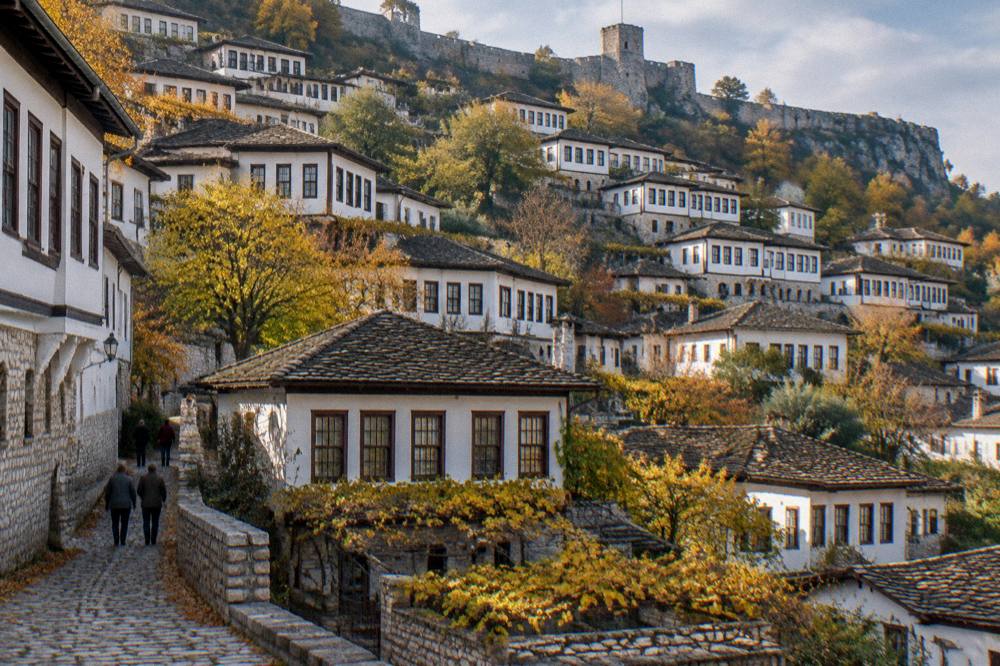
For overnight planning in any season, the where to stay in Berat guide explains the trade-offs between Mangalem, Gorica and the castle quarter, and the differences matter more in bad weather: the castle quarter is the furthest uphill walk on wet stone, while the new town near the boulevard is flat and closest to buses. Winter visitors on a budget should also check the Berat hostels guide, where the low-season rates make a long rainy stay genuinely cheap.
Whatever the forecast holds, the guided options below pair the castle, the old town and a tasting stop, and every one of them can be moved or cancelled before travel day if the weather turns on you.
Common Questions About Berat Weather
Is Berat too hot in summer?
Berat is very hot in July and August, typically in the low 30s °C and occasionally far beyond, with the highest values in the country recorded in the town on 20 July 2026 at sun-exposed readings near 42 °C. It is manageable if you sightsee before 11:00 and after 16:00, spend midday in the museums or shaded restaurants, and carry water for the unshaded castle walk.
Does it rain a lot in Berat?
Rain in Berat concentrates between November and January, when rainfall peaks, while July is the driest month. Summer weeks can pass with almost nothing, and even in winter the rain tends to come in grey, wet stretches rather than all-day storms. A real waterproof and shoes with grip cover the wet season.
Does it snow in Berat?
Snow in Berat town itself is rare, because winter daytime temperatures usually stay above freezing. What you are more likely to see is low cloud and mist sitting on the hills around the Gorica quarter, with snow visible at times on Mount Tomorr above, whose peak Çuka e Partizanit reaches 2,416 metres.
What is the best month to visit Berat?
Late April, May, June and September are the most comfortable months, with warm dry days and the green or golden countryside. Early October adds the Wine & Stories of Berat festival, held 2 to 4 October in 2026, timed to the harvest. August is the hottest and most crowded month in the museums.
When can you go rafting at Osumi Canyon?
Rafting on the Osumi Canyon runs on spring snowmelt, roughly from February or March into early or mid June depending on water levels, and tubing takes over for the calmer summer and autumn water. The rim viewpoints, including Vrima e Nuses and the Old Italian Bridge, have no entrance fee and can be visited in any season.
What should I wear for the walk up to Berat Castle?
Wear shoes with real grip and dress for the season: light clothing, a hat and water in summer, since the lane is steep, cobbled and unshaded, and a waterproof with warm layers in winter, when the same stones turn slick in rain. The walk is short enough to do in any weather with the right footwear.
The honest summary of Berat weather is that it is predictable in shape and extreme at the edges: two hot dry months, two wet grey months, and a long comfortable middle. Come in the shoulder seasons if you can, come early in the day if you cannot, and let the museums carry whatever the sky decides to do.