Berat Shopping
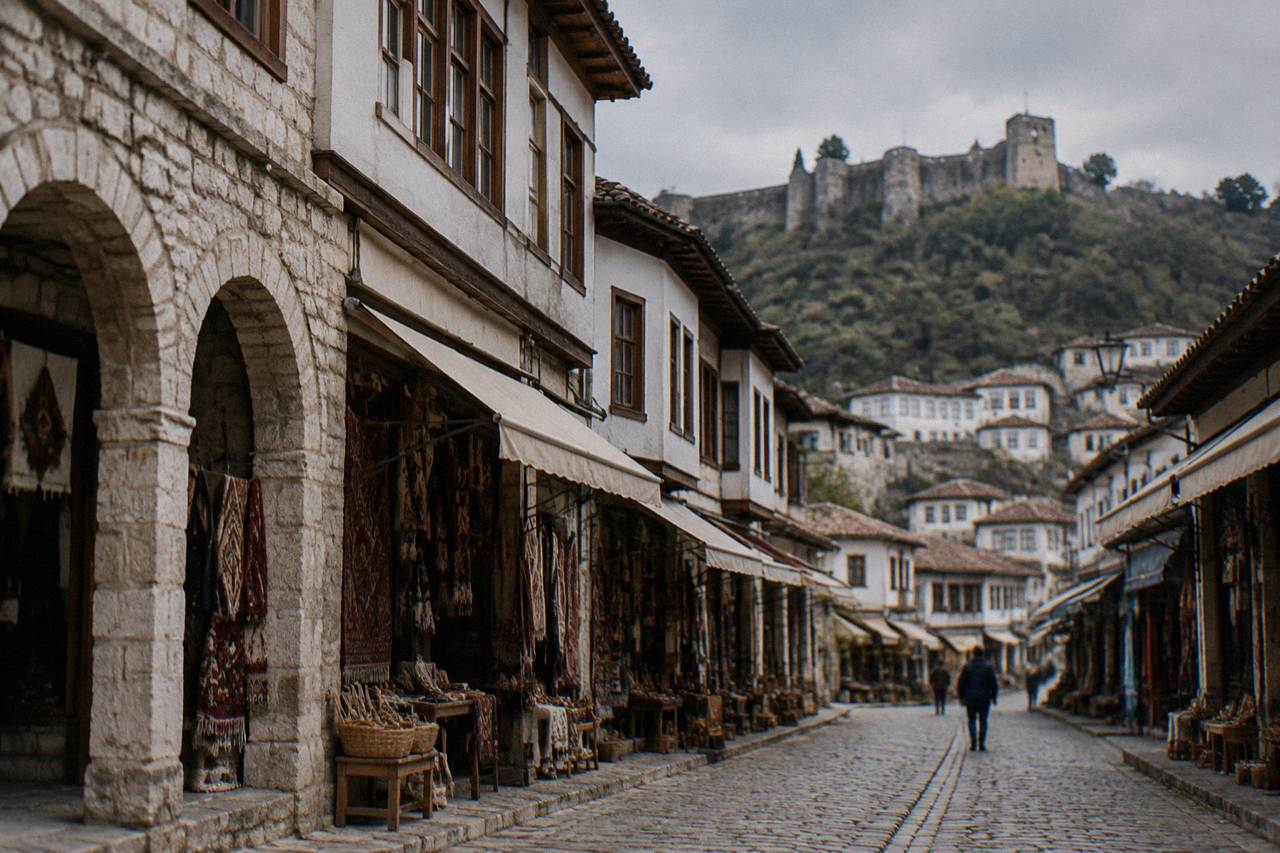
Berat, the UNESCO-listed Ottoman hill town in central Albania, is not a shopping mall destination. What it offers instead is a compact old town where raki, indigenous wine, olive oil and small crafts sit a few steps from the Osum River, at prices that still surprise visitors from Western Europe.
Short answer
Berat shopping means raki and indigenous wines from family wineries, olive oil and fig preserves, and small handicrafts sold in the Mangalem and Gorica quarters. Museum entry runs 400 lek at Onufri and 300 lek at the Ethnographic Museum, and the old town is largely cash, so carry Albanian lek.
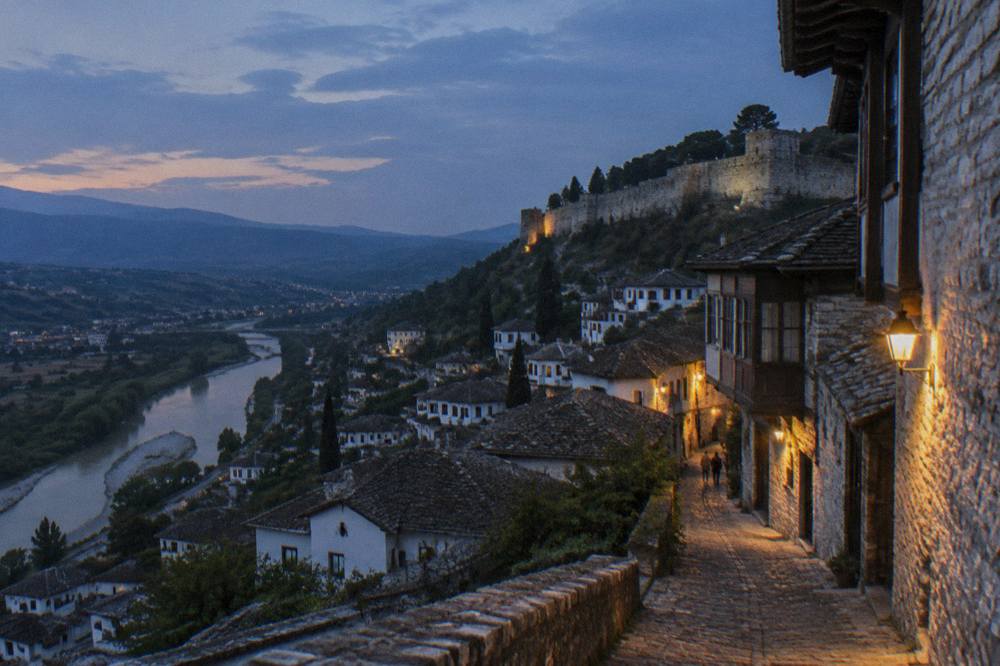
Berat, a UNESCO World Heritage Ottoman-era hill town in central Albania, straddles the Osum River with its white-walled Mangalem quarter stacked on one bank and Gorica facing it across the water. Shopping here is a small-scale, slow pleasure: a handful of streets, family-run cellars, and stalls that close when the light goes. Nobody comes to Berat for retail therapy in the mall sense, and that is exactly the point. The town's commercial life, its raki, its olive oil, its indigenous grapes, and its quietly expanding wine tourism, tells you more about central Albania than any souvenir rack ever could.
What Should You Buy In Berat?
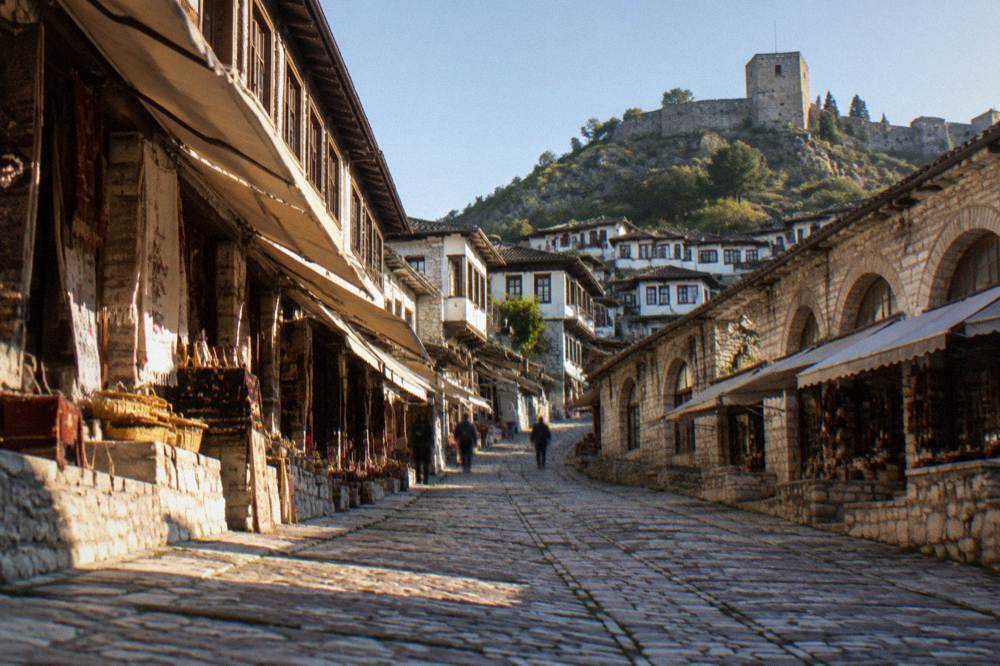
The five purchases that genuinely say Berat are raki, wine from indigenous Albanian grapes, olive oil, fig and jam preserves, and small handmade goods sold in the old-town quarters. Everything else in the shops is generic Balkan souvenir stock, magnets, t-shirts, printed scarves, that you could buy in any Albanian town, so spend your lek on the edible and drinkable things the region actually produces. Wineries around Berat work with Shesh i Bardhë, Shesh i Zi, Vlosh and Puls, four grape varieties you will rarely find on a shelf at home, and raki remains the default Albanian gift. A bottle or two travels well if you pack it carefully, which is more than can be said for most souvenirs.
Food is the strongest category by far. The Berat region's gastronomy leans on lamb and yogurt dishes, stuffed grape leaves, and qifqi, the local rice dumplings seasoned with mint or fennel, though those last two are things you eat on the spot rather than carry home. For take-home food shopping the practical list is shorter: raki, wine, olive oil, and the sweet preserves that show up at local food events. The town's food culture is documented in detail on our companion page, what to eat and where in Berat, which is worth reading before you decide what deserves suitcase space.
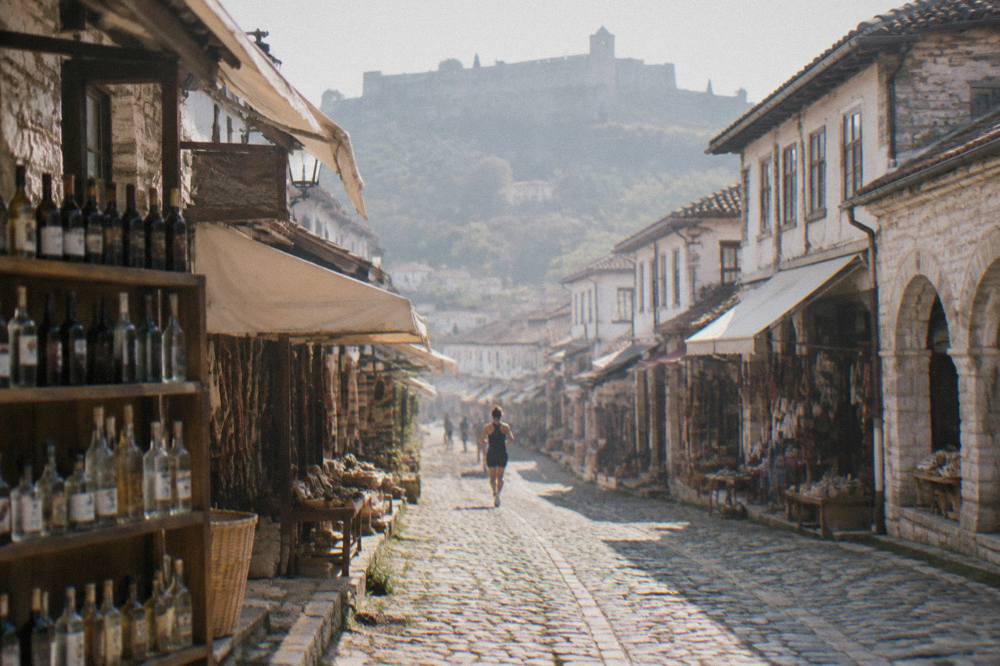
The table below keeps the list honest: each item is either made in or characteristic of the Berat region, not imported souvenir stock.
| Item | Why It Says Berat | Where To Look |
|---|---|---|
| Raki | Albania's traditional fruit spirit, served as a greeting gift | Old-town shops and winery cellars |
| Indigenous-variety wine | Shesh i Bardhë, Shesh i Zi, Vlosh and Puls grapes grown in the region | Wineries around Berat and wine-focused tours |
| Olive oil | Central Albanian groves supply the region's tables | Food shops and winery visits |
| Fig jam and preserves | Fruit preserves appear at local food events and food fairs | Food shops in the old town |
| Handmade crafts | Small workshops and stalls in the historic quarters | Mangalem and Gorica lanes |
| Qifqi | Berat's own rice dumpling with mint or fennel | Eaten fresh at local restaurants, not taken home |
One honest caveat: apart from wine and raki, whose producers are well documented, specific artisan shops in Berat come and go faster than any guide can track. Treat the craft stalls as browsing, and put your real money in the bottles.
Where Are The Best Shopping Streets And Quarters In Berat?
Shopping in Berat sorts itself into four zones: Mangalem, the stepped Ottoman quarter on the west bank; Gorica, the quieter historic quarter across the Osum; Kala, the castle quarter at the top of the hill; and the new-town boulevard, where everyday Albanian retail actually happens. Visitors do most of their souvenir buying in the first two, but the boulevard is where you buy batteries, phone credit, and the practical things a long stay requires.
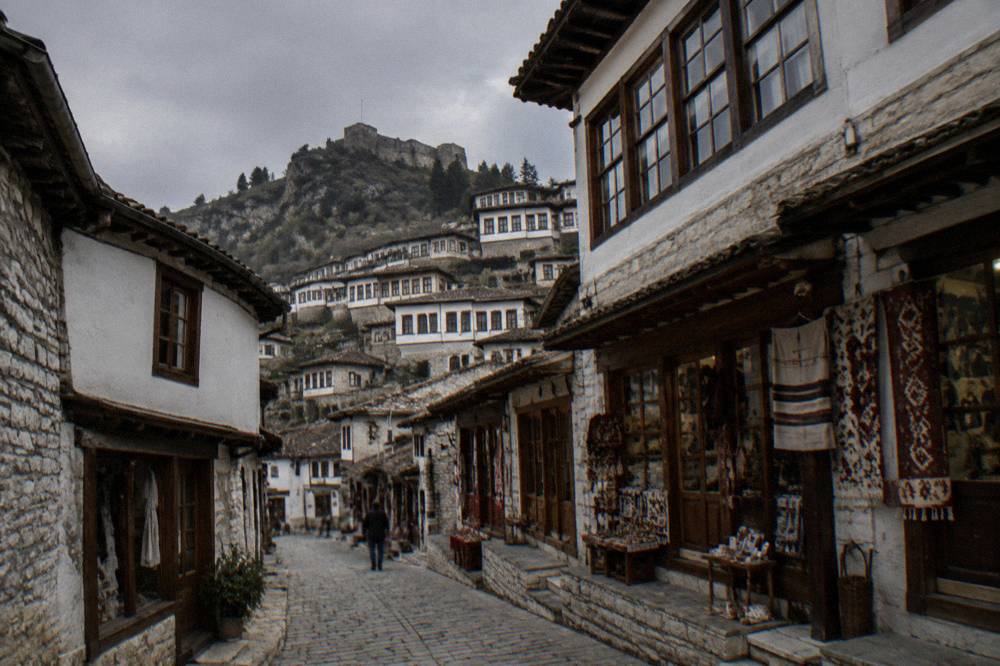
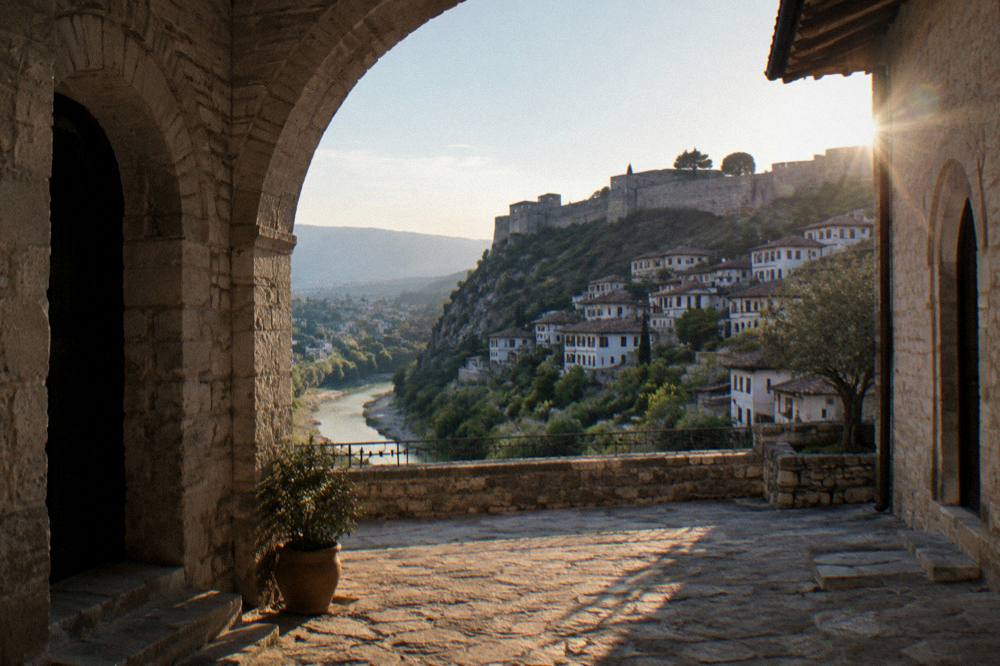
Mangalem is the busiest of the historic quarters. Its lanes climb from the river toward the castle, and the ground floors of many houses hold small shops, cafés, and guesthouses. This is where you will find the densest concentration of stalls aimed at visitors. Gorica, across the Gorica Bridge, trades on atmosphere: fewer shops, more silence, and houses with carved wooden ceilings in the local style. The walk between them, over the old stone bridge, is one of the town's defining experiences, and it is mapped out with walking directions on our Berat map and orientation guide.
| Area | Character | Best For |
|---|---|---|
| Mangalem | Stepped lanes, visitor-facing shops and cafés | Souvenirs, raki, wine, crafts |
| Gorica | Quieter, historic houses, fewer stalls | Browsing, photographs, a slower coffee |
| Kala (castle quarter) | Lived-in fortress quarter with guesthouses and views | Books, icons, small gifts near the museum |
| New-town boulevard | Everyday Albanian retail and services | Practical buys, pharmacies, phone credit |
The castle quarter deserves a specific note. It is a lived-in neighbourhood, not a museum shop, and since April 2026 vehicle access into the Kala has been restricted to residents, pre-booked guests, licensed taxis, and similar categories, so the sensible pattern is to park below and walk up. Shopping inside the walls is light: a few stalls and the museum ticket desks. If your day is built around the castle, the Ethnographic Museum reopened on 30 May 2026 after a three-year restoration, and its displays of local crafts are the best context you will get for what the stalls downstairs are selling.
What Local Wine Can You Bring Home From Berat?
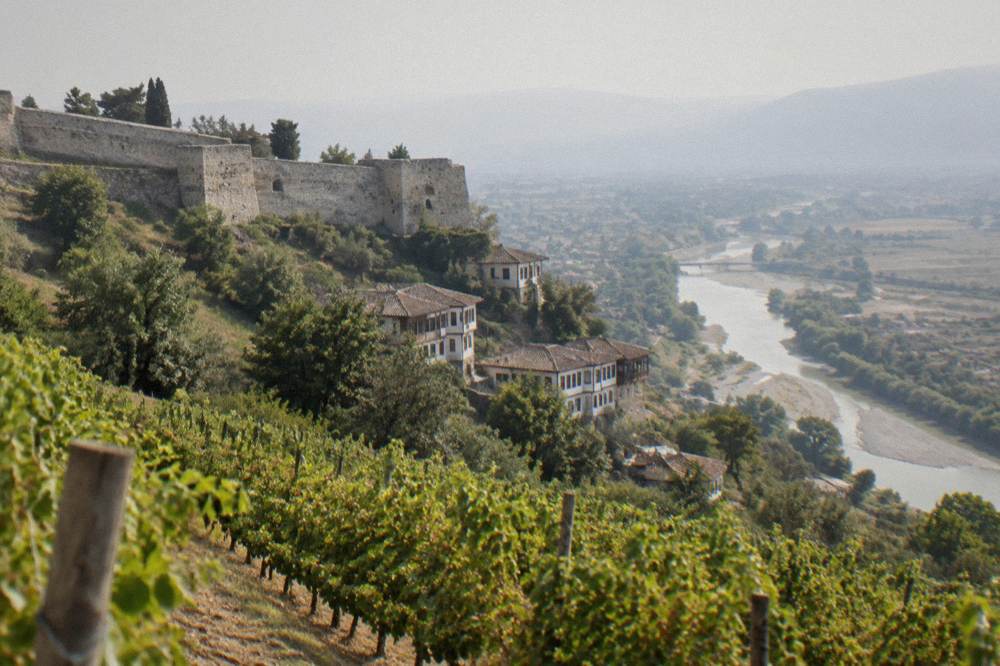
Berat is one of the most credible wine shopping stops in Albania because its wineries work with grapes you cannot buy abroad: Shesh i Bardhë (white), Shesh i Zi (red), Vlosh, and Puls, a rare Berat-area white that at least one local producer, Cobo Winery, turns into a traditional-method sparkling wine aged 36 to 40 months on its lees. A bottle of indigenous-variety wine is the single most defensible souvenir the town sells.
Cobo Winery, a family producer in the Berat region, has pushed hard into indigenous varieties and wine tourism, with new tasting areas and vineyard paths, and tastings served alongside local products such as olives and cheese. Other regional names that appear on Berat-area tour itineraries include Alpeta near Roshnik, Luani, Nurellari, Edoni, and Pupa. You do not need to drive yourself to any of them: a guided winery tour with transfers handles the roads, and it is the easiest way to taste before you commit suitcase space. A good number of visitors combine the old town in the morning with a cellar in the afternoon, and the wineries around Berat page covers the full picture.
| Grape | Type | Notes For Shoppers |
|---|---|---|
| Shesh i Bardhë | White | Central Albania's dominant white variety |
| Shesh i Zi | Red | The standard native red of the region |
| Vlosh | Red | Regional variety used by Cobo Winery |
| Puls (Pulëz) | White | Rare Berat-area grape; used for still and traditional-method sparkling wine, zero dosage |
The sparkling Puls is the conversation piece. It is a traditional-method wine, bottle-aged for three years and more, from a grape that essentially exists only in this corner of Albania. If you find a bottle, it is the souvenir that will still be talked about at Christmas.
A guided winery visit with transfers and tastings is the low-effort version of this outing, and it pairs naturally with a morning in the old town.
Are There Markets And Food Shops In Berat?
Berat does not have a famous covered market hall, and you should not plan your day around one. Food shopping happens in small grocers, bakeries, and old-town shops selling cheese, oil, raki, and preserves, plus everyday produce shopping in the new town where locals actually buy their vegetables. The honest framing: come for the cellars and grocers, not for a grand market spectacle.
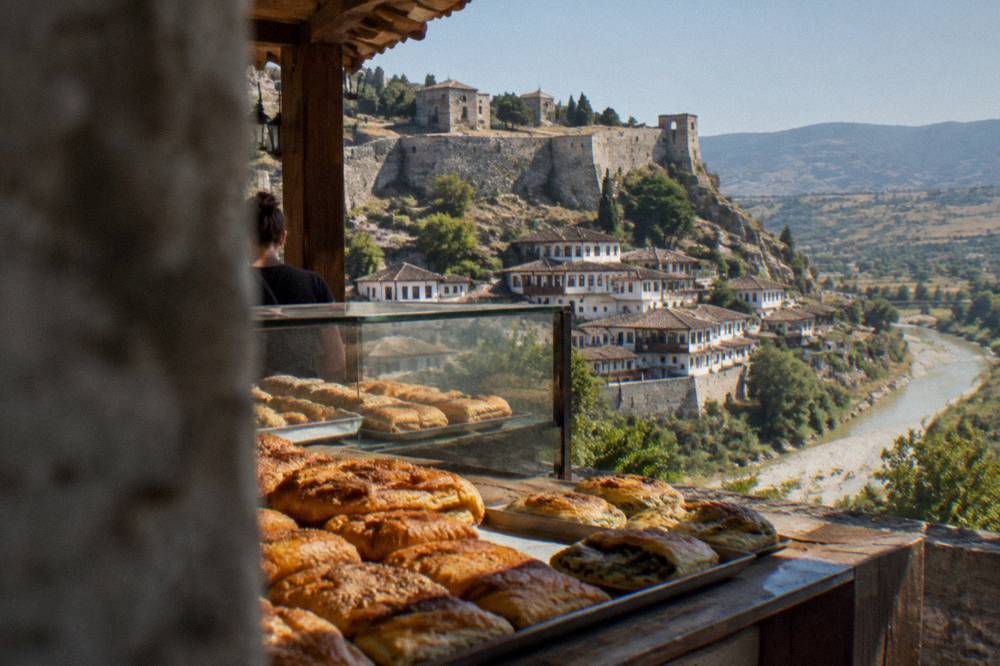
What you can count on is a cluster of small food shops in and around the old town, and a broader everyday retail scene along the new-town boulevard. Bakeries are the reliable constant of any Albanian town, and byrek, the savoury pastry sold by weight, doubles as breakfast and as a market snack. The town's restaurants do the rest: places serving qifqi, tavë kosi, and japrak are documented on our where to eat in Berat page, and several double as small shops for preserves and oil.
For a sense of what everyday spending looks like, Berat is cheap by European standards, so carry cash in lek. Raki sells for roughly two euro a shot in bars. Treat these as planning ranges, not guarantees; menus move.
| Everyday Buy | Reported Price (2026) |
|---|---|
| Mid-range dinner for two | Cheap by European standards, pay in cash in lek |
| Raki (per shot in a bar) | ~€2 |
Food shopping in Berat is also the best argument for slowing down. A cooking class in a local home turns the shopping list into the lesson: you buy, or are shown, the ingredients, then cook them. Several operators run exactly this format, with local wine tasting folded in, and it converts a shopping afternoon into the most memorable hours of the trip.
That format suits a food-first traveller more than a day-tripper passing through, so weigh how much of your schedule the kitchen deserves. If shopping is your only aim and the clock is short, the guided old-town loop below does the job in a single block of time.
What Do Berat's Museums Sell, And What Do Tickets Cost?
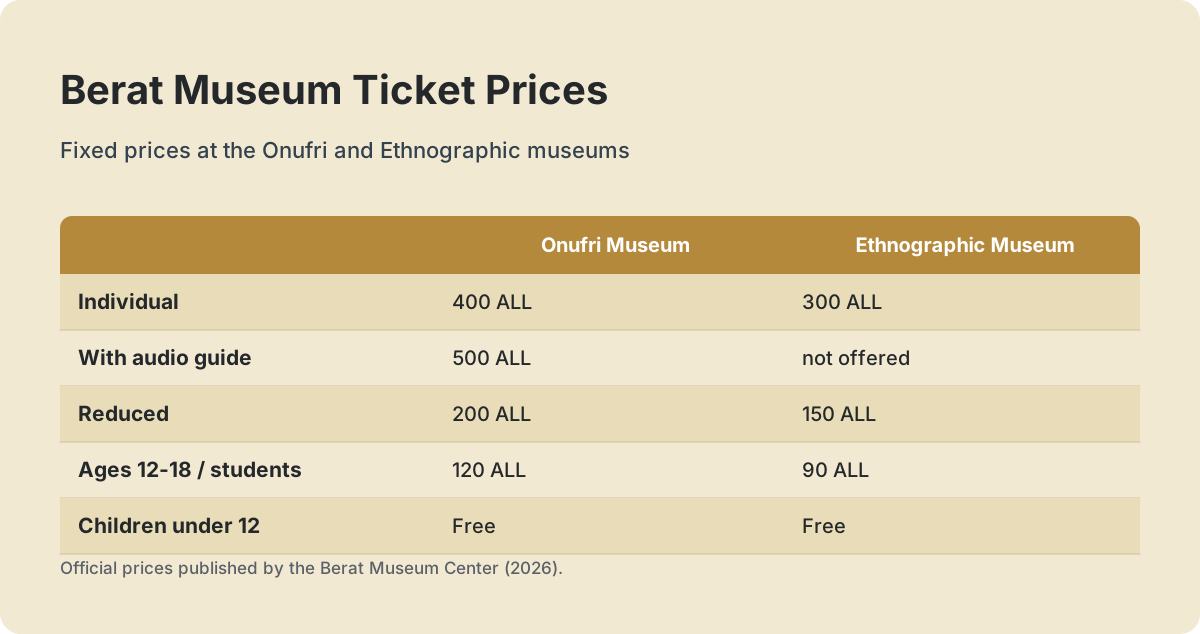
Museum tickets are the fixed-price part of Berat shopping: the Onufri Iconographic Museum inside the castle charges 400 lek individual, 500 lek with an audio guide, 200 lek reduced, and 120 lek for ages 12 to 18 and students; the Ethnographic Museum charges 300 lek individual, 150 lek reduced, and 90 lek for the same age band, with children under 12 free at both. Those figures are official, published by the Berat Museum Center, and they are the only admission prices in town you can plan to the lek.
The Onufri Museum, housed in the Church of St Mary inside the castle, holds the town's icon collection and draws serious crowds: 58,912 visitors between January and July 2026, with May the busiest month at more than 17,000. The Ethnographic Museum in Mangalem reopened on 30 May 2026 after more than three years of restoration with around 1,300 objects on display, and its rooms of looms, costume, and household craft are effectively a catalogue of what Berat's artisans historically made. Between the two, the Ethnographic is the more shopping-relevant stop: it shows you the textile and woodwork traditions that the stalls downstairs echo. More of these guides are collected on Berat Travel Guide.
| Ticket | Onufri Museum | Ethnographic Museum |
|---|---|---|
| Individual | 400 ALL | 300 ALL |
| With audio guide | 500 ALL | not offered |
| Reduced | 200 ALL | 150 ALL |
| Ages 12-18 / students | 120 ALL | 90 ALL |
| Children | Free (under 12) | Free (under 12) |
Bring documentation for any discount or free category, because staff are required to ask. Note the free admission days too: 18 April, 18 May, 21 May, and 29 September for everyone, and 28 and 29 November for Albanian citizens only.
When Are Berat Museums And Shops Open?
Both Berat Museum Center sites run on a fixed seasonal clock: from 1 May to 30 September they open 9:00 to 18:00 every day, and from 1 November to 30 April they run Tuesday to Saturday 9:00 to 16:00 with Sundays 10:00 to 15:00, with national holidays open. Private shops follow looser rhythms: old-town stalls open late morning and wind down by evening, and Sunday opening is thinner than on weekdays.
The seasonal split matters for trip planning. A summer visitor gets long museum evenings and daylight past the ticket desks; a winter visitor gets shorter hours and a Tuesday-closed museum day in the cold half of the week. October sits in a gap the official site does not cover, so check before you go if you are travelling then. Online ticketing via e-Albania, launched in November 2025, covers Onufri among other state museums, so advance booking is now possible in principle.
| Period | Hours | Days |
|---|---|---|
| 1 May - 30 September | 9:00 - 18:00 | Daily |
| 1 November - 30 April | 9:00 - 16:00 | Tuesday to Saturday |
| 1 November - 30 April | 10:00 - 15:00 | Sunday |
| National holidays | Open | Per official listing |
For shops, the same logic as anywhere in the Balkans applies: mornings are for locals, late morning to mid-afternoon is the productive browsing window, and don't count on anything being open after dark except cafés, bars, and restaurants. The town's evening scene is covered in our guide to Berat after dark.
Can You Pay By Card When Shopping In Berat?
In the old town, assume cash. Berat's historic quarters remain largely a cash economy: cards are accepted at some hotels and larger establishments, but Mangalem's stalls, the bakeries, the grocers, and quite possibly your guesthouse bill will want Albanian lek. ATMs exist and charge foreign cards a fee commonly in the 500 to 800 lek range, so the cheap move is one larger withdrawal at a bank branch rather than repeated small ones.
The currency itself is straightforward. Albania uses the lek, not the euro; the Bank of Albania's official rate has run at roughly 92 lek to the euro and about 80 lek to the US dollar. Euro notes are accepted informally by some tourist-facing businesses, but change usually comes back in lek and at rates that rarely favour you, so paying in lek is the better default. Old or torn foreign notes get refused, and small lek notes are what the market stalls want. The full money picture, including the country's banking changes, is on our money and currency in Albania page, and day-to-day spending levels are broken down in what Berat costs.
A final practical note: unlicensed currency exchange is a live enforcement issue in Berat, with police measures reported against illegal exchange operators in July 2026. Use a bank, an ATM attached to a bank, or the exchange offices attached to recognised institutions, and keep receipts.
Where Should You Stay For Shopping And Sightseeing In Berat?
Staying in Mangalem puts the shops, the river, and the castle walk on your doorstep; Gorica trades the convenience for quiet lanes and garden terraces; sleeping inside the castle walls, in one of the guesthouses of the Kala, is the atmospheric extreme. Reported 2026 nightly rates put typical guesthouses in the region of $44 to $79 and hotels roughly $43 to $86, with high season pushing the upper end.
The trade-offs are simple. Mangalem means steps: you will climb them, repeatedly, and the reward is being two minutes from everything. Gorica means a bridge crossing to the main action, which is a five-minute inconvenience and a nightly pleasure. The Kala means hauling luggage up a cobbled road to a fortress that has restricted vehicle access, which is a genuine consideration with a suitcase. Our full where to stay in Berat guide works through the neighbourhoods property by property, and the budget options are collected in the Berat hostels roundup.
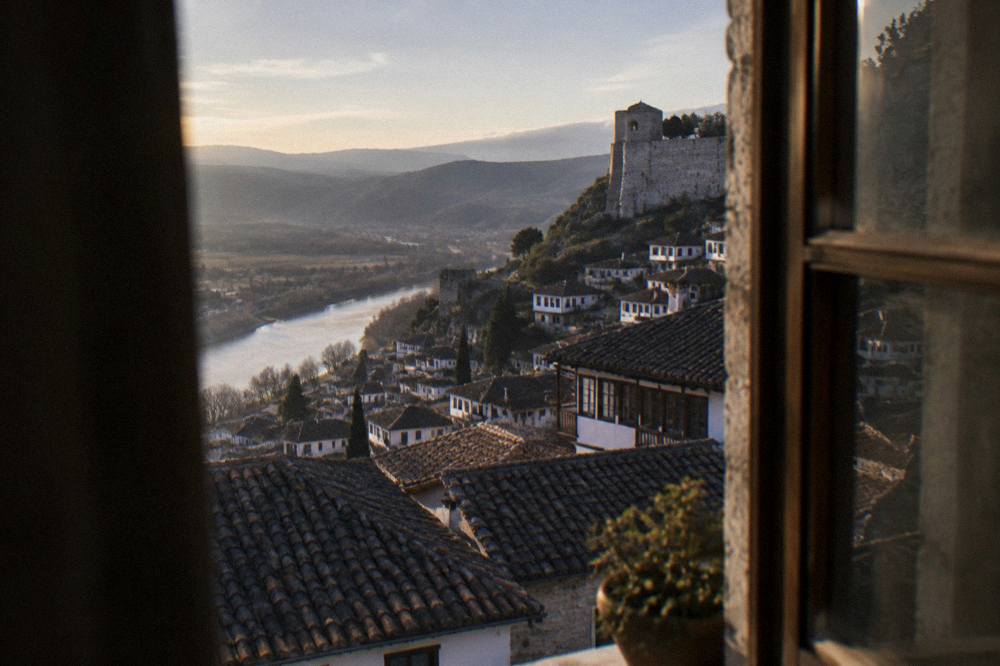
One local development worth knowing: a centuries-old building inside the castle, next to the Onufri Museum, is being converted into an eight-room family guesthouse under a national investment scheme, which will make sleeping inside the walls easier to book than it has been. Treat shopping-area choice as a sightseeing decision first and a retail decision second; everything in Berat is within a half-hour walk.
How Do You Get To Berat, And Is A Guided Day Worth It?
Berat sits roughly two and a half hours from Tirana by road, with buses and furgons running from the capital's South-North terminal through the day for a fare in the few-hundred-lek range paid in cash, and no direct airport connection, so you change in Tirana. There is no passenger train to Berat; the drive on the SH72 is the whole story, which is why so many visitors solve the transport question with a guided day trip and shop where the bus stops.
The practical detail is on our Tirana to Berat transport guide, and the airport changeover is walked through in getting from Tirana airport to Berat. The bus terminal itself sits on the SH72 on Berat's outskirts, about fifteen to twenty minutes on foot or a short taxi ride from the old town, a detail covered in our page on Berat's bus station.
For shoppers, the guided-day option has one specific advantage: the driver stores your purchases. A day trip that pairs the UNESCO old town with Belshi Lake, running the castle, Mangalem, and a lakeside stop into a single loop from Tirana or Durres, is the format most first-time visitors choose, and it leaves the wine and oil buying to the end of the day rather than the start. The operator's live listing carries the current schedule and departure points: Check availability.
If you would rather be walked through the quarters by a local expert before you spend anything, a premium guided walking tour of the old town is the natural first hour of the day, and it ends you in exactly the lanes where the shops are.
However you arrive, the pattern that works is the same: walk first, buy last. See the castle in the cool of the morning, take the bridge to Gorica while the light is still good, and leave the raki, the wine, and the olive oil for the hour before you leave, when you know exactly how much space the suitcase has left. Berat rewards the unhurried, and its shops are no exception to that.
Common Questions About Shopping In Berat
What should I buy in Berat?
Raki, wine from indigenous varieties like Shesh i Zi, Shesh i Bardhë, Vlosh, or Puls, olive oil, and fig or fruit preserves are the purchases that genuinely come from the Berat region. Handmade crafts in Mangalem and Gorica are worth browsing, but the bottles travel better and mean more.
Can I pay by card in Berat?
Assume cash in the old town. Cards work at some hotels and larger businesses, but stalls, bakeries, and grocers generally want lek. ATMs are available, and foreign-card fees commonly run 500 to 800 lek, so withdraw once at a bank branch rather than repeatedly.
How much do museum tickets cost in Berat?
The Onufri Iconographic Museum charges 400 lek for an individual ticket, 500 lek with an audio guide, 200 lek reduced, and 120 lek for ages 12 to 18 and students. The Ethnographic Museum charges 300 lek individual, 150 lek reduced, and 90 lek for ages 12 to 18 and students. Children under 12 are free at both.
When are Berat's museums open?
Both museums open 9:00 to 18:00 daily from 1 May to 30 September. From 1 November to 30 April they run Tuesday to Saturday 9:00 to 16:00, and Sunday 10:00 to 15:00, with national holidays open. October hours are not published on the official site, so confirm before an autumn visit.
Is there a market in Berat?
There is no famous covered market hall. Food shopping happens in small grocers, bakeries, and old-town food shops, with everyday retail along the new-town boulevard. Plan around cellars and shops rather than a market spectacle.
Can I buy Berat wine to take home?
Yes, and it is the best souvenir the town sells. Wineries around Berat produce from indigenous varieties, including a traditional-method sparkling Puls aged 36 to 40 months on its lees. A winery tour with transfers lets you taste before you buy and spares you the driving.