Berat Trip Cost
Berat, a UNESCO World Heritage Ottoman-era hill town on the Osum River in central Albania, is one of the most affordable heritage destinations in Europe. Here is what each part of the trip actually costs, in Albanian lek.
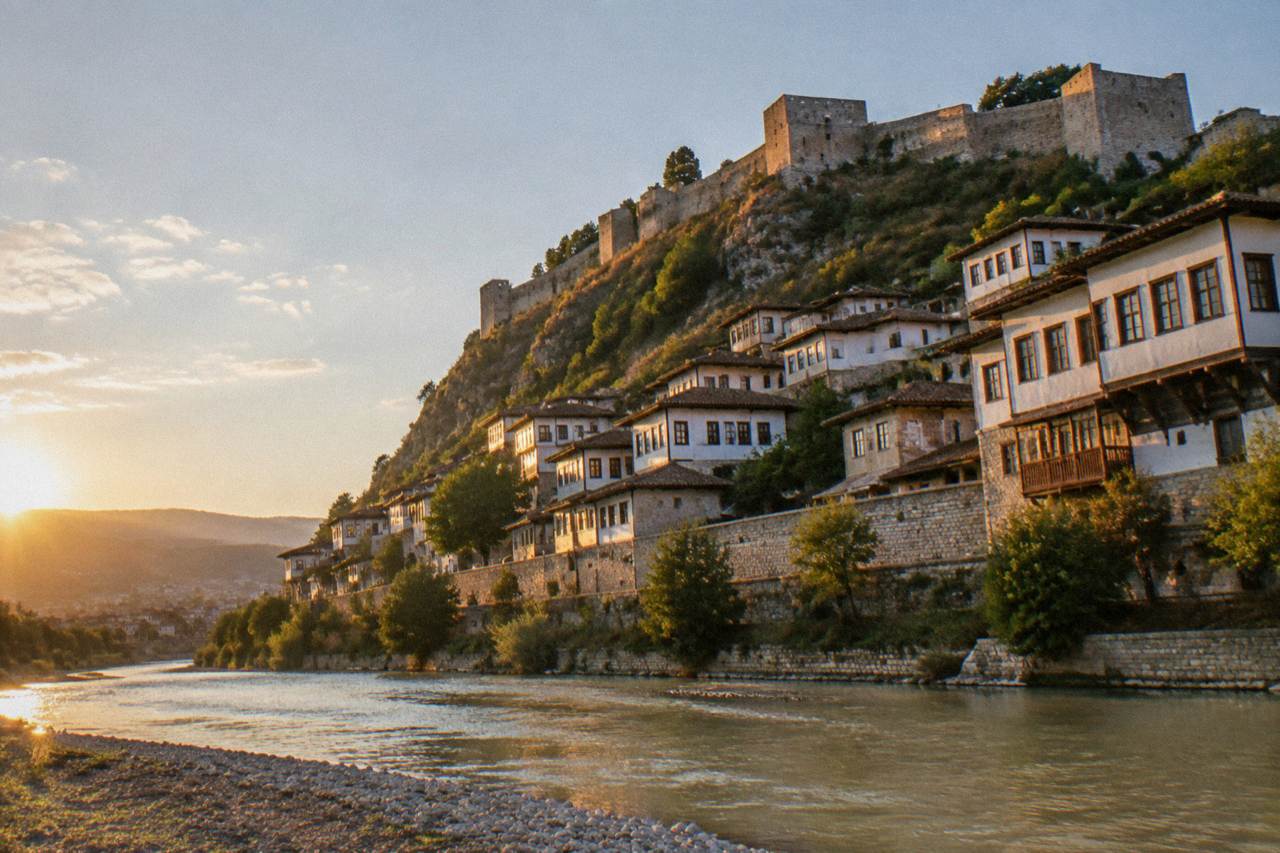
Berat, the UNESCO World Heritage Ottoman town on the Osum River in central Albania, has built its reputation on two things at once: a hillside of white houses stacked like windows, and prices that still surprise visitors arriving from elsewhere in Europe. The currency is the Albanian lek, roughly 92 to the euro and about 80 to the US dollar, and the old town is largely cash territory, so planning in lek from the start saves both money and time. This guide walks through every cost layer of a Berat trip, from the bus out of Tirana to the museum tickets, the plates of tavë kosi, the wine tastings and the bed for the night.
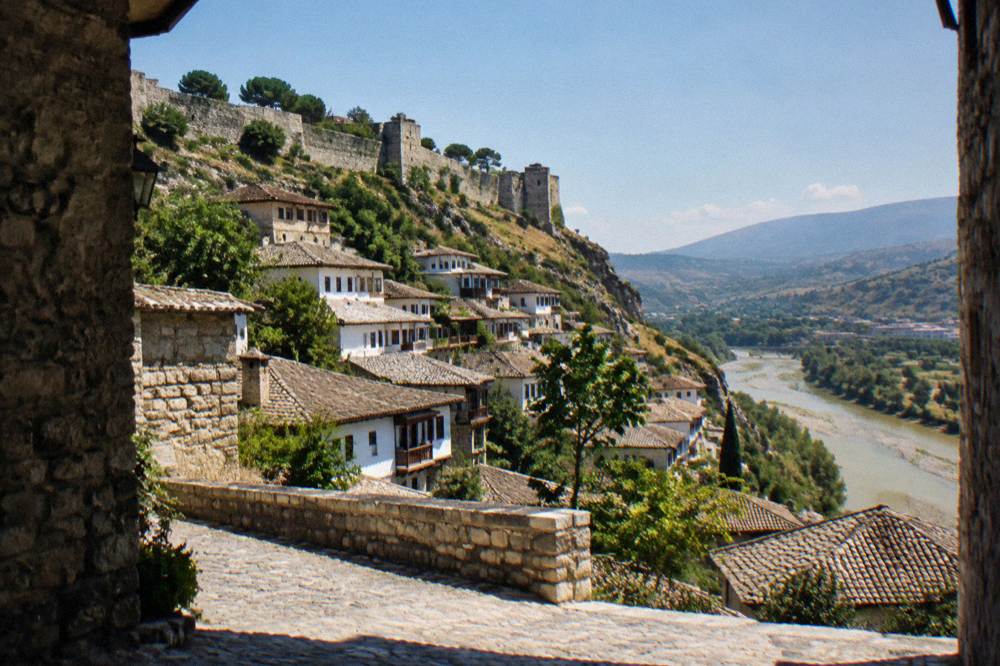
How Much Does A Trip To Berat Cost Overall?
A budget traveller builds a Berat day from small line items: museum tickets at 300 to 400 ALL and no local transport at all, because the old town is walked end to end. The largest single cost is the bed, with guesthouses from roughly $44 to $79 a night and hotels from about $43 to $86. Those figures are line items, not promises: accommodation swings with the season, and summer is the peak. What keeps Berat inexpensive is structure. The old town is compact enough to walk everywhere, the castle grounds may carry only a small gate fee, and two full days cover nearly every headline sight.
It helps to think of a Berat budget in four layers: getting there, sleeping, eating and drinking, and paying for experiences. Each layer behaves differently. Transport is a fixed, small cost decided mostly by where you start. Lodging is the biggest single line and the most seasonal. Food is consistently cheap in lek terms, and experiences range from free walking tours to canyon rafting days that cost as much as everything else combined.
One note on the money itself: Albania is not in the eurozone, and the lek is the only legal currency, though some tourist businesses informally accept euros and give change in lek at a worse rate. The practical move is to withdraw lek, carry small notes, and use cards only where they are clearly accepted. The full picture on cash, cards and exchange is covered in the Berat Travel Guide money pages, including money and currency in Albania if you want the detail.
| Layer | Budget day | Mid-range day |
|---|---|---|
| Sleep | Dorm bed or basic room | Guesthouse double |
| Eat | Cheap by European standards, cash in lek | |
| See | One museum ticket, 300-400 ALL | Both museums plus audio guide |
| Move | On foot | Local taxi, 2-3 euro short hops |
What Does Getting To Berat Cost?
Most visitors reach Berat by bus or furgon from Tirana's South-North terminal, a journey of about two hours fifteen minutes to two hours forty-five minutes that costs a few hundred lek per person each way, paid in cash, with frequent daytime buses. That single line item is the whole backbone of a budget Berat trip. There is no direct airport bus from Tirana airport to Berat, so the standard route is the airport bus into Tirana, then the terminal, then Berat, a sequence spelled out in the Tirana airport to Berat guide.
Driving yourself changes the arithmetic. Rental cars in Albania run roughly 15 to 50 euro a day for an economy model, lower off-peak and higher in July and August, and the drive from Tirana is a comfortable half-day. Fuel, tolls where they apply and old-town parking all sit on top. If you are weighing that against the bus, the driving and parking in Berat page covers where you can actually leave a car, because the historic quarters are not built for it.
One structural point worth knowing before you budget: no passenger train reaches Berat. The national railway is under reconstruction, with the Tirana-Durrës-Rinas line targeting the end of 2027 and the Durrës-Rrogozhinë tender winner expected in November 2026, so rail is not an option for this trip and should not appear in any cost plan. The bus is the floor price; a rental car is the flexible middle; a private transfer is the ceiling.
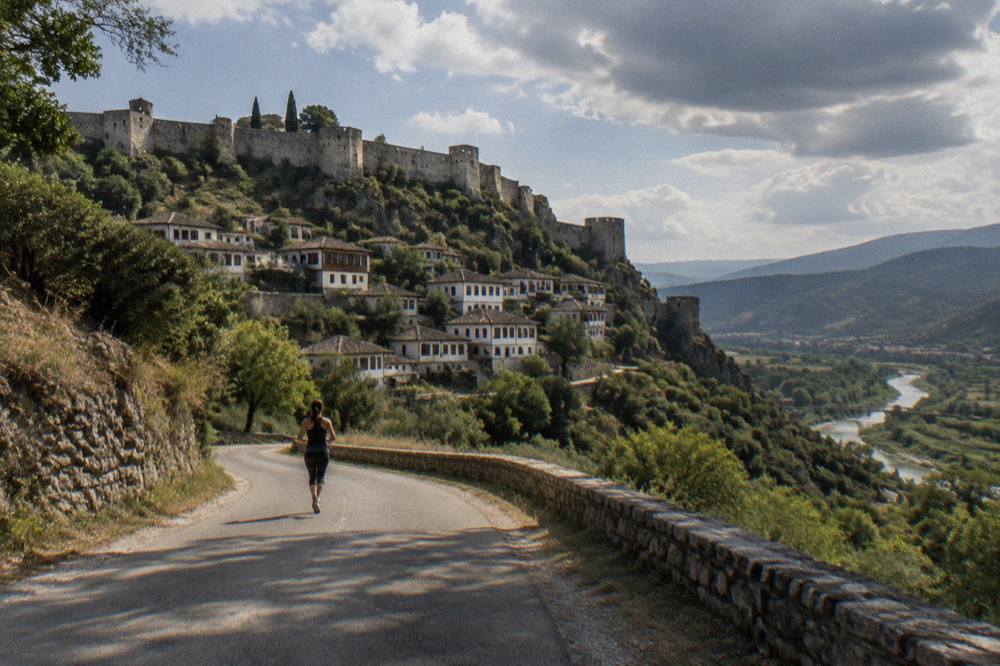
Arriving in Berat itself costs almost nothing. The bus station sits on the SH72 on the outskirts, about 15 to 20 minutes on foot from the old town, and a taxi for that hop costs about 2 to 3 euro if you have bags. There is no local transport pass worth buying for a visit of a day or two; the town simply does not need one. A one day in Berat walking plan is genuinely walkable end to end.
| Option | Cost | Notes |
|---|---|---|
| Bus or furgon from Tirana | A few hundred lek | Frequent daytime buses; cash |
| Taxi, bus station to old town | About 2-3 euro | 15-20 minute walk otherwise |
| Economy rental car | About 15-50 euro per day | Higher in July-August; IDP recommended for non-EU licences |
| Train | Not available | No passenger rail reaches Berat |
For anyone starting from the capital without a car, a fixed-price day tour removes the transport question entirely. The Roman Amphitheater combo day trip from Tirana pairs Berat with Durrës in one booked seat, and Check availability on the operator's live listing to see the current price, which sits mid-range for guided day trips out of Tirana.
What Are Museum And Castle Entry Fees In Berat?
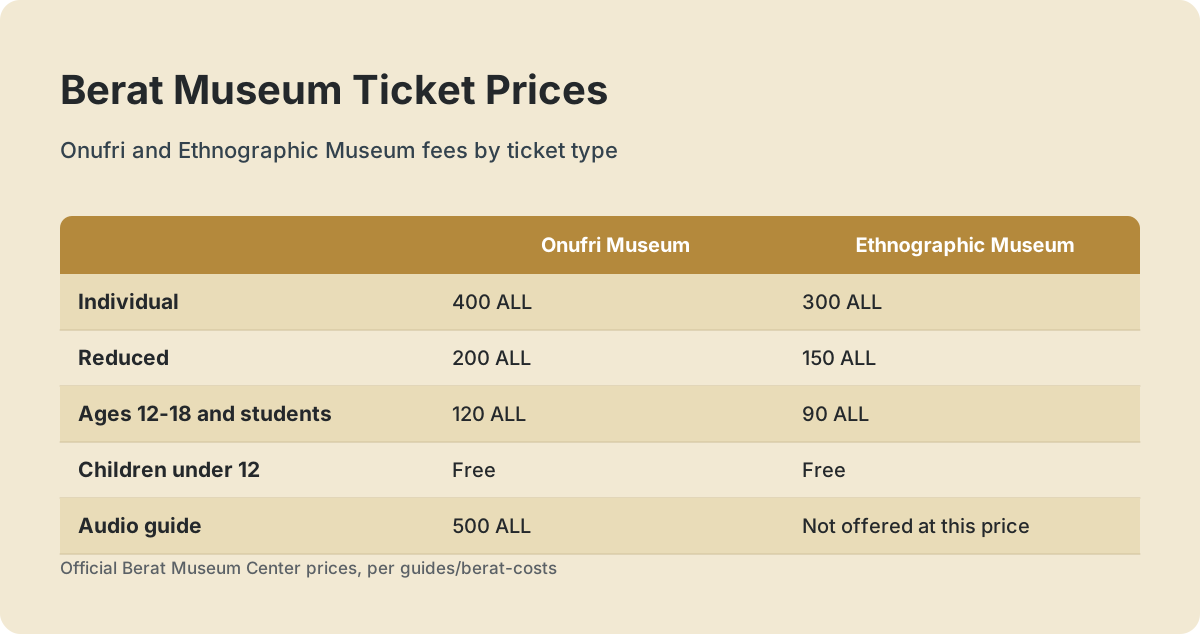
Entry to Berat's two headline museums is straightforward: the Onufri Iconographic Museum charges 400 ALL and the Ethnographic Museum charges 300 ALL, while reduced tickets cost 200 and 150 ALL respectively, student rates are 120 and 90 ALL, and children under 12 enter free of charge. Those are the official Berat Museum Center prices, and they are the only attraction fees in town you can budget to the lek before you arrive. The castle grounds above Mangalem are a different case: the Kala is a lived-in quarter, there may be a small fee at the gate in daytime, and outside staffed hours pedestrian access is generally unrestricted, so carry a few hundred lek and expect the gate rather than the wall to be the question.
The museum hours follow two seasons. From 1 May to 30 September both museums open daily 9:00 to 18:00. From 1 November to 30 April they run Tuesday to Saturday 9:00 to 16:00 and Sunday 10:00 to 15:00. October sits in a gap on the official page, so do not plan around a published October schedule; check before you go or build slack into the day. Since November 2025 you can also buy tickets online through the national e-ticketing system, which saves the queue in peak months without changing the price.
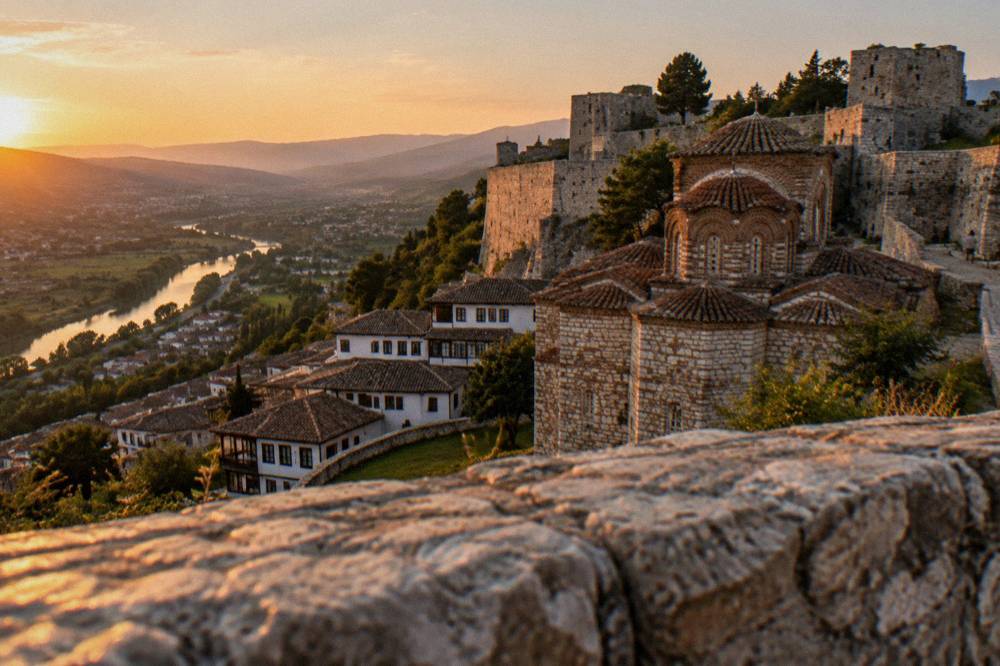
The audio guide at Onufri costs 500 ALL on top of the 400 ALL ticket, a worthwhile add-on only if you plan to linger on the icons rather than pass through. There are also genuinely free days: 18 April, 18 May, 21 May and 29 September are free for everyone, and 28 and 29 November are free for Albanian citizens only. If your dates are flexible, those four days remove the museum line from the budget entirely, and the free things to do in Berat page lists what else costs nothing in this town, which is a lot.
| Ticket | Onufri Museum | Ethnographic Museum |
|---|---|---|
| Individual | 400 ALL | 300 ALL |
| Reduced | 200 ALL | 150 ALL |
| Ages 12-18 and students | 120 ALL | 90 ALL |
| Children under 12 | Free | Free |
| Audio guide | 500 ALL | Not offered at this price |
A final word on the castle hill itself. Car access into the castle quarter is being restricted; plan to park below and walk up. Budget travellers lose nothing by this, since the walk up from Mangalem is short and steep and costs exactly zero, but anyone who imagined driving to the castle gate should shift that plan to legs or a licensed taxi.
How Much Does Food And Drink Cost In Berat?
Eating out in Berat is cheap by European standards, with payment usually in cash in lek, so food is the layer of a Berat trip that barely dents the budget. Those are 2026 price reports and they hold up across the old town and the new town alike. The classic local plates, qifqi rice dumplings, tavë kosi lamb in yogurt and japrak stuffed vine leaves, mostly sit in a 3 to 15 euro band depending on the room, and a byrek with tea makes a working lunch for around 4 euro.
The cheapest reliable pattern is to eat one proper restaurant meal a day and fill the rest from bakeries and market stalls. Old-town restaurants aimed squarely at visitors cost more than the places Berat families use, and the difference is a few hundred lek rather than a doubling. If you are building the trip around food, the where to eat in Berat and what to eat in Berat guides name the dishes and the rooms worth the walk.
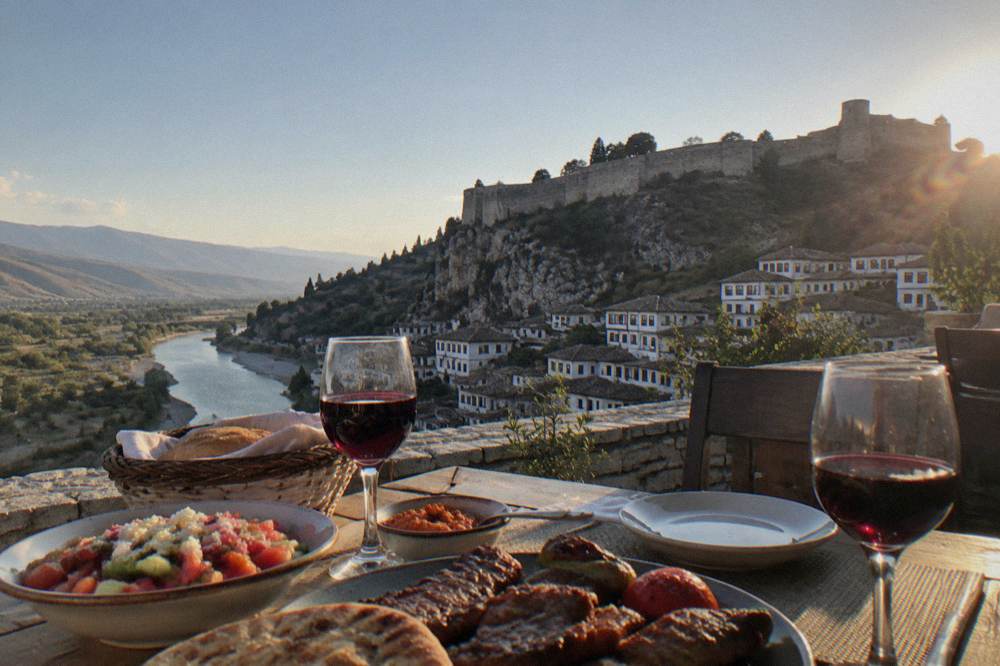
Wine deserves its own line in a Berat budget. The Berat region grows native grapes, Shesh i Zi and Shesh i Bardhë for the mainstream bottles and Puls, a rare local white that one family winery turns into a traditional-method sparkling aged on its lees, so a tasting here is not a generic pour. Exact current tasting fees at the wineries are not published in verified listings, so treat any figure you see online as unconfirmed and ask the room. A light, cheaper alternative in town is the wine tasting with snacks at a youth-run bar, one of the more social ways to spend an evening; the current price is on the operator's live listing.
| Item | Typical price |
|---|---|
| Raki, a shot | About 2 euro |
| Byrek with tea, working lunch | About 4 euro |
| Tavë kosi at a restaurant | About 8-15 euro |
What Do Berat Tours And Experiences Cost?
Paid experiences in Berat start from 19 US dollars for a two-hour premium guided walking tour, from 42 dollars for a three-hour winery visit with transfers and tastings, from 34 dollars for canyon rafting and tubing, and up to 107 dollars for a full-day canyoning adventure, while tip-based free walking tours cost nothing up front. Those starting prices come from the operators' own listings, and every one of them moves with season and demand, so treat the live listing, not this page, as the price of record. What varies most is not the ticket but the format: a city walk, a wine afternoon and a canyon day are three different budgets.
Walking tours are the entry-level spend and, for a town whose whole value is in its streets, arguably the best value. The Premium Walking Tour of Berat with Expert Guides runs two hours at 19 dollars from and holds a 4.9 rating from 190 reviews, a review pool large enough to mean something. On the tip-based side, GuruWalk runs genuinely free, tip-based walks of the old town led by local guides, which cost whatever you hand over at the end and nothing before it. Between the two, a visitor can spend almost nothing, a little, or the same as a museum ticket and lunch.
Day trips from Tirana or the coast compress the whole Berat cost question into one payment, which is why they suit first-time visitors with limited days. The Berat and Durrës combination that includes the Roman amphitheater is the site's featured pick for this reason: transport, the castle and a guided old-town walk arrive as a single figure, and free cancellation is standard on most of these operators' listings. It pairs naturally with the Berat day trip from Tirana itinerary if you are planning the wider route.
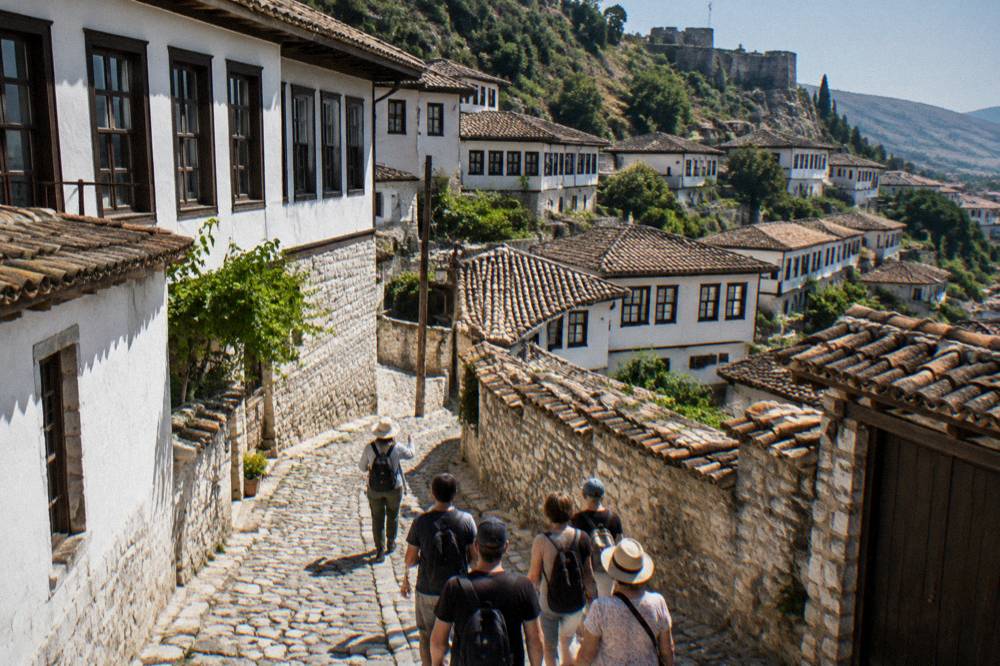
The adventure side of the region costs more because it involves gear, transport and guides. Osumi Canyon, the protected natural monument near Çorovodë, is a seasonal economy: operators run rafting in spring when snowmelt fills the river, roughly into early or mid June, and switch to tubing through the summer and autumn. The rafting and tubing adventure from Berat runs 3 to 6 hours from 34 dollars with a 4.8 rating from 538 reviews, and the season, not the price, is the constraint to check first. The canyon viewpoints themselves, the rim and the old Italian bridge, carry no entrance fee at all, so a self-drive canyon day can be one of the cheapest big-landscape days in Albania.
| Experience type | Starting price | Format |
|---|---|---|
| Tip-based free walking tour | Tip only, GuruWalk | About 2 hours, old town |
| Premium guided walking tour | From $19 | 2 hours, expert guides |
| Winery tour with transfers | From $42 | 3 hours, tastings included |
| Canyon rafting and tubing | From $34 | 3-6 hours, seasonal |
| Full canyon day with waterfall | From $35 | 3-7 hours |
Where To Stay In Berat On A Budget?
Typical Berat guesthouses and hotels are cheap by European standards, with the high season pushing rates upward, and the cheapest real saving is not the room but the location: sleeping inside Mangalem or Gorica removes every taxi fare from the trip. Those are 2026 listing ranges, so check the room rather than the range. A dorm bed in one of the town's hostels sits below that guesthouse floor and is covered in the Berat hostels guide, while the full neighbourhood-by-neighbourhood breakdown lives in where to stay in Berat.
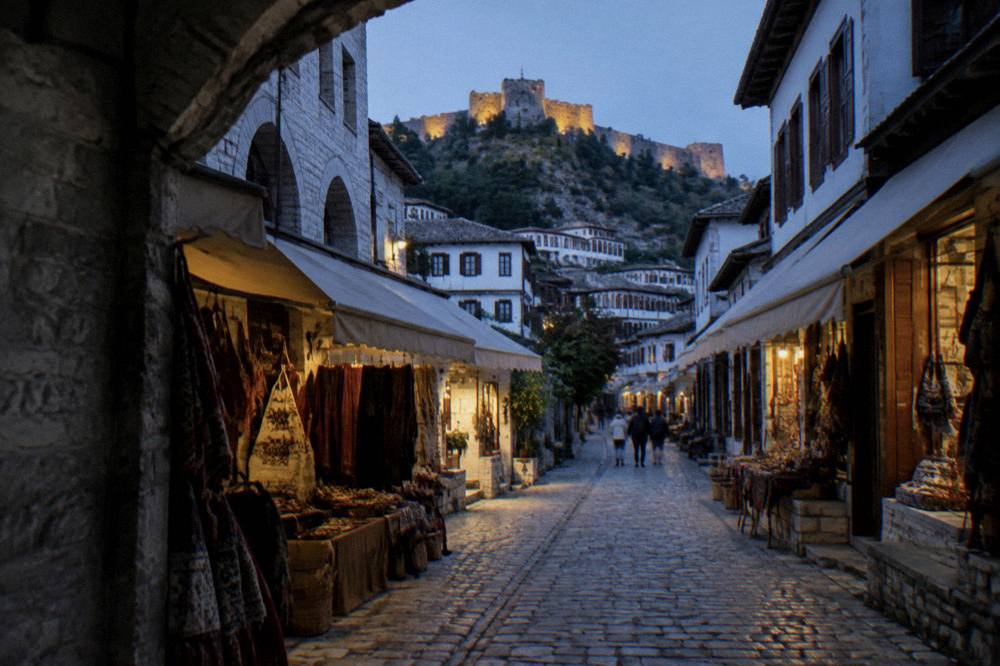
The three sleeping choices each carry a hidden cost line. Staying inside the castle walls, in the Kala quarter, buys sunrise over the Osum valley and loses easy parking, and one centuries-old building next to the Onufri Museum is being converted into an eight-room guesthouse, so the in-castle supply is small and books out first. Mangalem, the town of a thousand windows itself, puts the walk to the castle at your door. Gorica, across the river, is quieter and often a few hundred lek cheaper, with the trade of one bridge crossing each way.
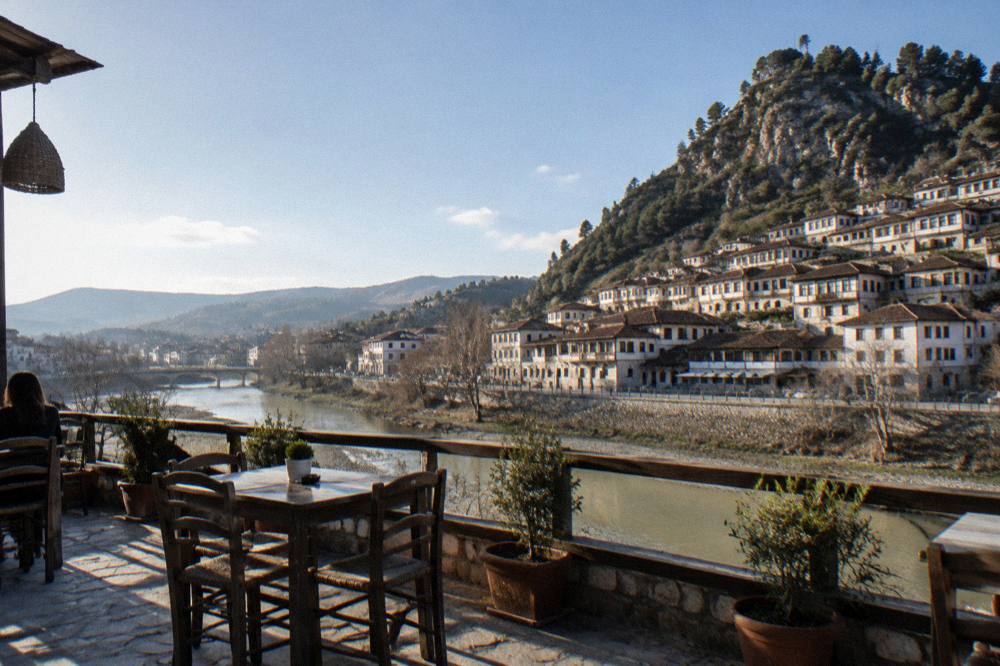
Timing moves the price more than the room does. July and August are the peak, the museum visitor numbers make that plain, and the same guesthouse can cost noticeably less in spring or autumn. The climate argument matters too: Berat summers are hot and dry, with heat that can top 40 °C on the worst days, and winters are wetter and quiet, a pattern described qualitatively in the Berat weather guide because no official station normals exist for the town. Shoulder-season booking is the single biggest saving available on a Berat trip.
| Neighbourhood | Character | Cost behaviour |
|---|---|---|
| Kala, inside the castle | Heritage rooms, no real parking | Small supply, books out first |
| Mangalem | Old town core, castle at the door | Peak rates July-August |
| Gorica | Quieter, across the Osum | Often slightly cheaper |
| New town | Practical, near the boulevard | Cheapest, short walk to sights |
How To Keep Your Berat Trip Cost Low?
The five biggest savings on a Berat trip are travelling by bus instead of renting a car, visiting on a museum free day, eating one restaurant meal a day and filling up on bakery food, walking rather than taxiing, and going in shoulder season when rooms drop and the town is quieter. None of that requires sacrifice in a town whose main sights are free to look at. The castle walls, the Gorica Bridge, the riverside boulevard and the thousand-window views from both banks cost nothing, which is why a low budget in Berat still feels like a full trip.
It is worth being honest about where the money goes if you are not careful. Cards are not reliably accepted in the old town, so cash-poor visitors end up withdrawing small amounts repeatedly and paying ATM fees that can run 500 to 800 ALL per withdrawal on foreign cards. The fix is simple: withdraw once, at a bank branch machine rather than a standalone tourist one, and carry lek. Similarly, euros accepted informally almost always mean change in lek at a worse rate, so decline the convenience.
The one cost nobody should economise on is a licensed guide where the terrain demands it. Canyon and mountain trips around the region, at Tomorr or in the Osumi gorges, are priced around gear, safety and local knowledge, and the cheap end of that market is the wrong place to shop. In town, the costs that reward spending are the museums at 300 to 400 ALL and, for many visitors, one guided walk that turns a pretty hillside into a story. Safety context for the wider region is in the is Berat safe guide, which is a planning page rather than a spending one.
| Saving | What it cuts |
|---|---|
| Bus from Tirana instead of a car | About 15-50 euro per day of rental, plus fuel |
| Museum free days, 18 Apr, 18 May, 21 May, 29 Sep | The 400 ALL and 300 ALL tickets |
| One restaurant meal a day | Hundreds of lek per person per day |
| Walk instead of taxi | 2-3 euro per short hop |
| Shoulder-season rooms | Seasonal, check the listing |
What Does A Two-Day Berat Trip Cost In Total?
A two-day trip prices out from its parts rather than a headline total: frequent daytime buses from Tirana costing a few hundred lek each way, both museums at 400 and 300 ALL, with food and a guesthouse stay cheap by European standards and best handled in cash in lek. figure is a verified line item, and the choices, not the town, set the final bill. Add a canyon day and the total climbs by the price of that adventure. Swap the bus for a rental car and the arithmetic tilts toward flexibility and away from economy.
The margins come from choices, not luck. Go in October for the Wine & Stories of Berat festival, held 2 to 4 October in 2026 after the 3 to 5 October 2025 edition, and the wine line of the budget becomes the point of the trip rather than a line item, with tasting fees to confirm on the spot. A two-day plan with the days sequenced is laid out in the two days in Berat itineraries and the wider route options in getting from Berat to the coast and beyond.
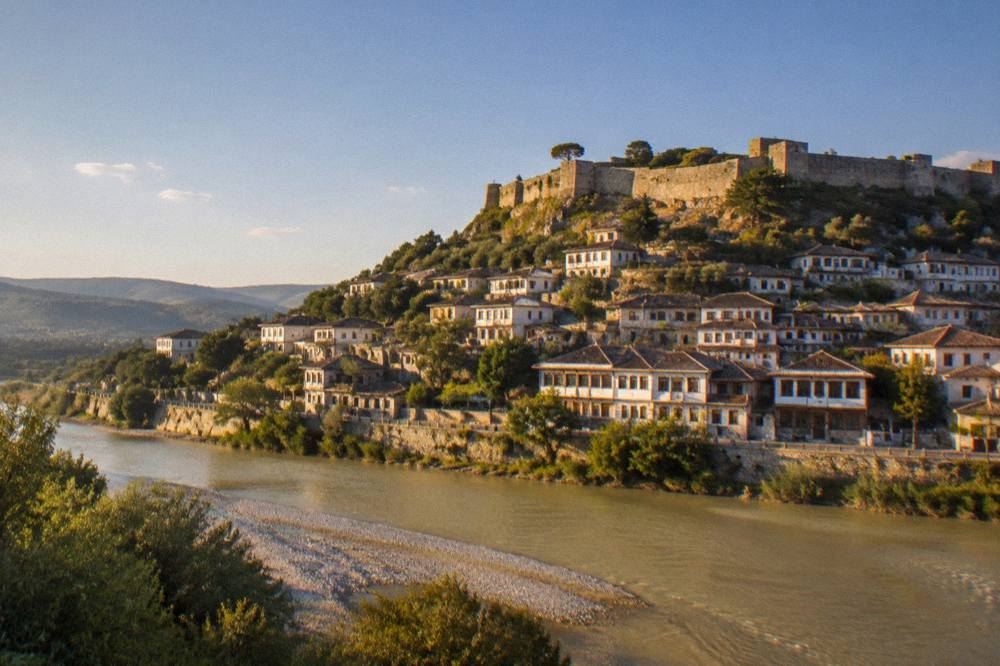
For a sense of scale, the itemized costs above, two days of buses, both museum tickets, the meals and one guesthouse night, come to roughly what a single night costs in many Western European heritage cities, and they buy a UNESCO-listed Ottoman town, two serious museums, a castle you can sleep inside, a river valley and some of the least expensive wine in Europe. Berat is not cheap because it is undiscovered; it is cheap because Albania's costs sit below the eurozone's, and the tourism sector, which drove a large share of the country's late-2025 price rises, has still not closed that gap. Prices will drift up, which is the best argument for going sooner rather than later.
Common Questions About Berat Trip Costs
How much does a day in Berat cost?
A budget day is built from small items: a cheap meal, a cappuccino, a museum ticket at 300 to 400 ALL and no transport costs, because the old town is walked end to end. The largest line is the room, with guesthouses from about $44 to $79 a night.
Is Berat expensive to visit?
No. Berat is one of the more affordable UNESCO towns in Europe. Food, museum entry and local transport all cost a fraction of Western European equivalents, and the only meaningful line items are accommodation, which is seasonal, and optional tours.
How much is the Berat Castle entry fee?
There is no verified official fee for the castle grounds; there may be a small fee at the gate in daytime, so bring a few hundred lek. The Onufri Museum inside the walls costs 400 ALL and the Ethnographic Museum in town costs 300 ALL, both official prices.
Can I visit Berat museums for free?
Yes, on 18 April, 18 May, 21 May and 29 September entry to the Berat museums is free for everyone, and 28 to 29 November are free for Albanian citizens. Children under 12 are free year round.
How much is the bus from Tirana to Berat?
A few hundred lek per person each way, paid in cash, on a journey of about 2 hours 15 minutes to 2 hours 45 minutes, with frequent daytime buses from Tirana's South-North terminal.
Should I pay in euro or lek in Berat?
Lek. The Albanian lek is the only legal currency, the old town is largely cash, and while some businesses informally accept euros, change comes back in lek at a worse rate. Roughly 92 lek makes one euro.