Is Albania Warm All Year Round?
No, Albania is not warm all year round. Berat has hot dry summers and cool wet winters; here is what each season actually feels like and when to go.
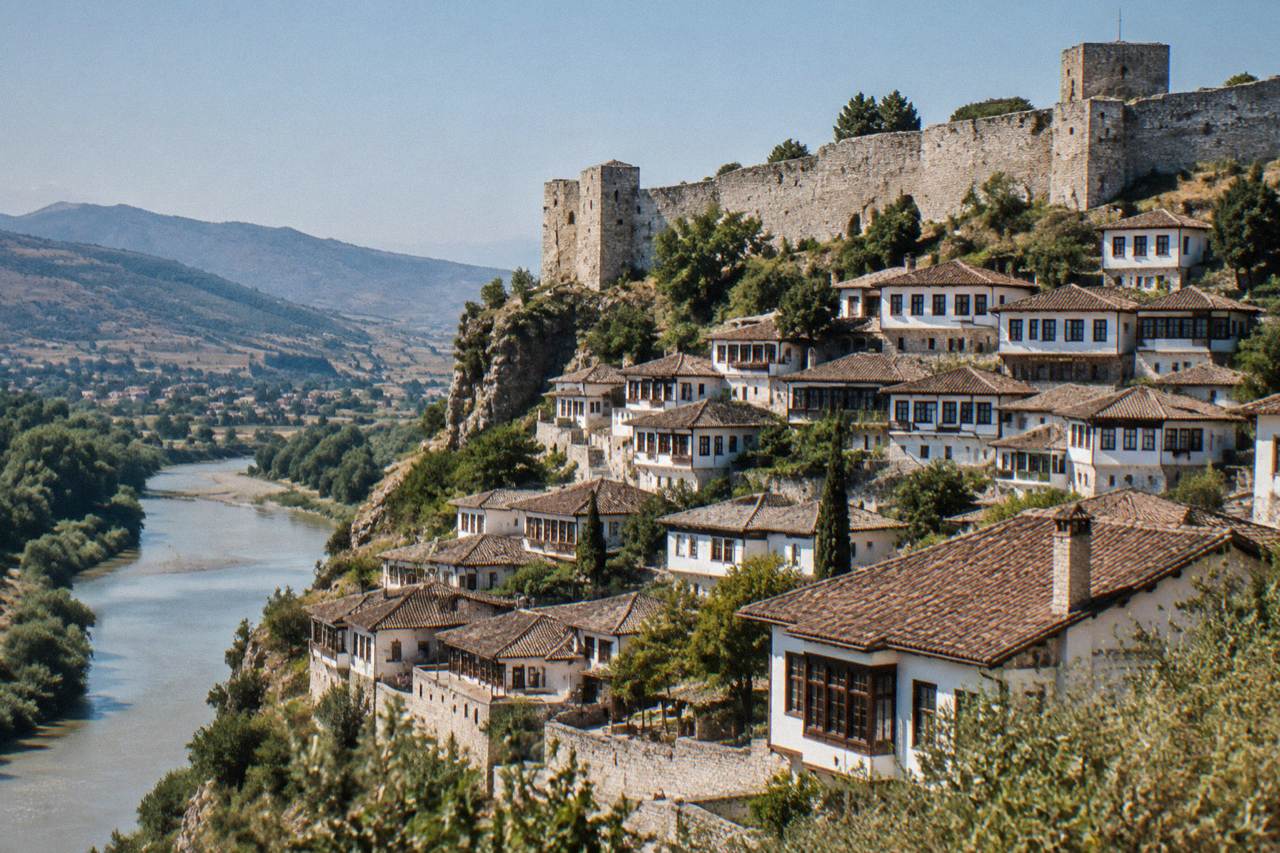
Albania is not warm all year round, and anyone telling you otherwise has only seen the country in July. Berat, the Ottoman-era UNESCO World Heritage hill town in central Albania, sits inland on the Osum River, and its climate runs in genuinely distinct seasons: long, dry, seriously hot summers, short changeable springs and autumns, and winters that are wet and cool enough to make a jacket non-negotiable. This page walks through what each season actually feels like in Berat, when the heat becomes a planning problem rather than a selling point, and how to pick a week that matches what you want to do, from castle walking in Mangalem to swimming in Osumi Canyon.
Is Albania Warm All Year Round?
No. Albania is warm for roughly seven or eight months of the year and genuinely cool for the rest, and Berat, in central Albania, shows that swing clearly. Summers are long, dry and hot, with daytime heat that can push past 40 °C, while winters are wet, grey and cool, with snow a rarity in the town itself but common on Mount Tomorr above it. Spring and autumn are the mild, comfortable middle seasons most visitors enjoy most.
That is the honest version, and it matters because a lot of travel copy about Albania leans on Mediterranean postcard imagery and quietly skips the winter half of the calendar. Albania sits on the Balkan peninsula with a short Adriatic and Ionian coastline, but Berat itself is entirely inland, sheltered in a river valley, and its weather behaves accordingly. Summer days are cloudless for weeks on end; November, December and January are the wettest months of the year; July is the driest.
No official station climate normals were published for Berat in the sources behind this site, so this page deliberately avoids monthly temperature tables and rainfall averages, which circulate widely on secondary climate sites but cannot be verified against a primary record. What is verified is the character: hot, dry summers, wetter winters, and a shoulder season on either side that is neither. One dated data point does stand out: 20 July 2026 was reported as the hottest day of that year, with the highest values recorded in Berat itself, sun-exposed readings near 42 °C, which tells you how extreme the peak of summer can get in this particular valley.
For a fuller month-by-month take on timing, the guide to Berat weather and seasons goes deeper, and the question of the best month to visit Berat is answered on its own page. The short answer to this one, though, is simple: warm, yes, for most of the year; warm all year round, no.
How Hot Do Berat Summers Actually Get?
Very hot, and for longer than many visitors expect. Berat's summer runs from late May into September, with July and August the peak, and days in the low 30s °C as the normal state of affairs rather than the exception. On the hottest days, readings have topped 40 °C in the town, with 20 July 2026 reported as the hottest day of the year nationally, its highest values recorded in Berat. The heat is dry rather than humid, but midday is still a poor time to climb the castle.
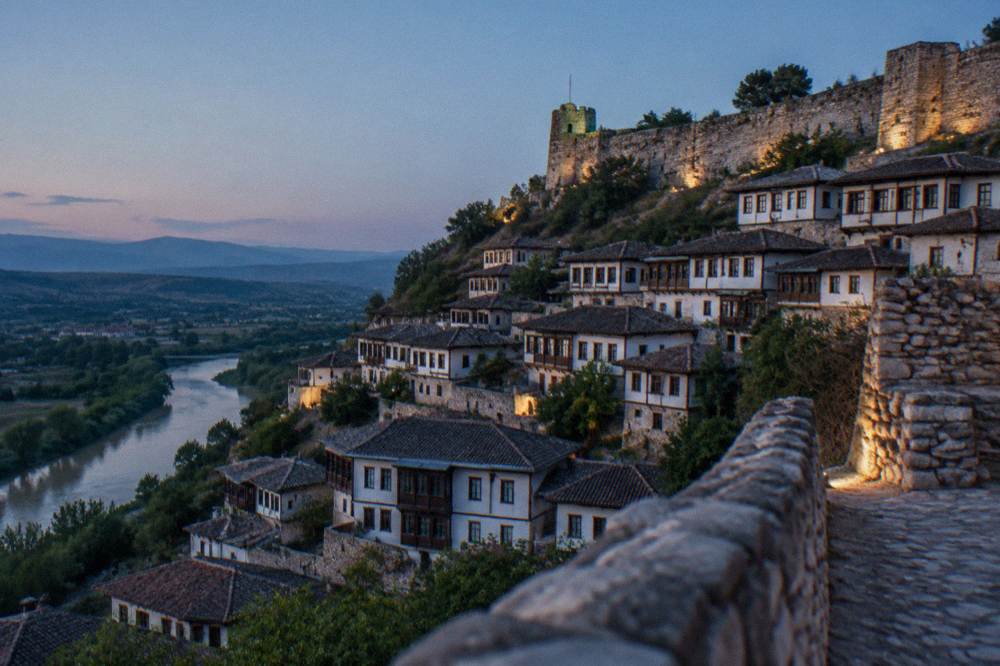
The practical consequence is that summer in Berat is a rhythm-of-day problem. Locals and experienced visitors shift the sightseeing into the morning, take the early afternoon slowly, and come back out in the evening, when the white houses of Mangalem and Gorica glow in low light and the stone streets of the old town finally cool. The walk up to Berat Castle is exposed stone the whole way, with almost no shade, so doing it at eight in the morning rather than one in the afternoon changes the experience completely.
The dryness helps. This is not a humid coastal swelter; evenings in summer usually drop into the low twenties or below, and guesthouses with terraces in Gorica are at their best at that hour. Still, anyone arriving in July or early August expecting gentle warmth should recalibrate: this is a valley that can bake, and hydration, a hat and a refillable bottle are not optional extras.
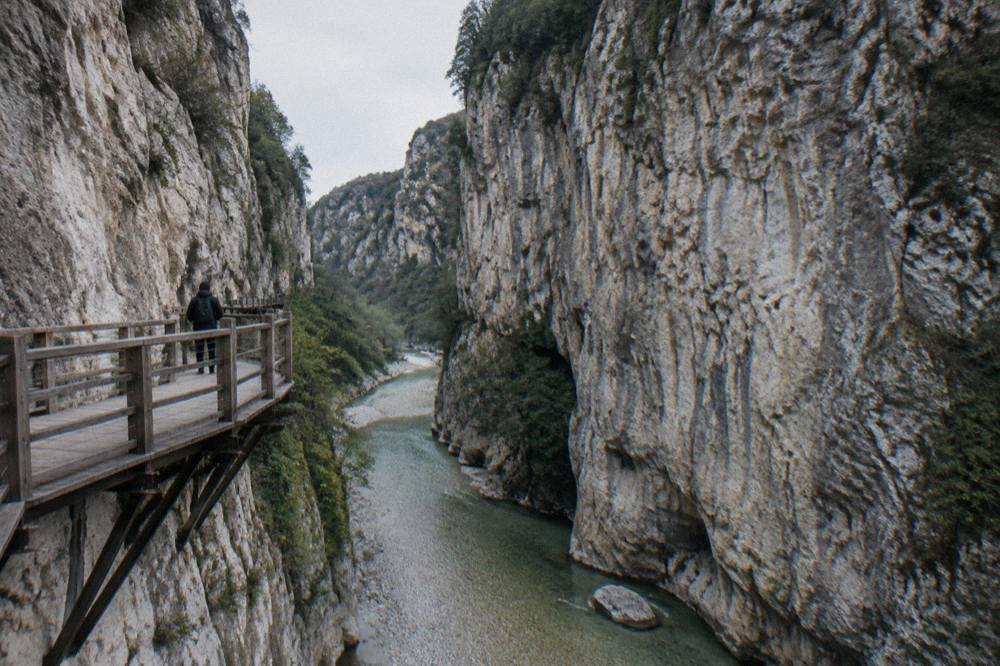
For visitors who do come in the heat and still want to be active, the smart move is a water day. The Osumi Canyon, about an hour and a half south of Berat near Çorovodë, is a protected natural monument where operators run tubing and river trips through the summer exactly because the canyon water stays cold when the town above it is scorching.
What Are Albanian Winters Like In Berat?
Cool, wet and quiet, but far from arctic. Berat's winter, roughly December through February, brings the year's heaviest rain, daytime temperatures that feel more like a mild European winter than a Mediterranean one, and cold nights. Snow is rare in the town itself because temperatures usually sit above freezing, but the mountains above, including Mount Tomorr at 2,416 m, hold snow and look spectacular from the old town's viewpoints.
The winter character is really the story of light and water rather than cold. The Osum River runs fuller after the autumn rains, the stone lanes of Mangalem glisten, and the town moves at its slowest pace of the year. Museums helpfully adjust: the Onufri Iconographic Museum and the reopened Ethnographic Museum keep winter hours from 1 November to 30 April, Tuesday to Saturday 9:00-16:00 and Sunday 10:00-15:00, with full summer hours of 9:00-18:00 returning from 1 May to 30 September. An Onufri ticket is 400 lek, an Ethnographic ticket 300 lek, and both museums sit within walking distance of each other.
Winter is also when the year's calendar flips to indoor things: guesthouse cooking, raki by a wood stove, and long dinners of tavë kosi. The trade-offs are real, though. Some canyon activities stop entirely, days are shorter, and a wet February week can feel more like a study trip than a holiday. Travellers who want warmth, not just the absence of crowds, should not book January in Berat expecting T-shirt weather.
Here is how the year broadly breaks down around the town:
| Season | Rough months | Character in Berat | What it means for plans |
|---|---|---|---|
| Summer | June to early September | Hot, dry, cloudless; peak days can top 40 °C | Sightsee early and late; water activities at midday |
| Autumn | Mid-September to November | Warm start, cooling fast, first heavy rains late | Best balance of warmth and light in September and October |
| Winter | December to February | Wet, cool, quiet; snow rare in town, common above | Museums, food, guesthouses; many canyon trips pause |
| Spring | March to May | Warming, greening, showers easing toward May | Rafting season on spring snowmelt; castle walks comfortable |
The festival calendar follows the same curve. The Wine and Stories of Berat festival lands on 2-4 October 2026, early enough in autumn to still feel like summer's last weekend, while the big mountaintop event of the year, the Bektashi pilgrimage to the tomb of Abbas Ali on Mount Tomorr, runs in late August when the heat is at its height.
When Can You Swim And Raft Around Berat?
Water season in the Berat region splits in two. Rafting on the Osumi Canyon runs in spring, roughly from March to early June, when snowmelt from the mountains above fills the river, while tubing, swimming and floating take over from around mid-June and carry on through the summer into autumn, when the water calms and warms. Canyon rim viewpoints, including the striking Vrima e Nuses, are free to visit at any time of year.
That split is worth understanding because the same canyon serves two completely different trips. In spring, the Osum runs high and fast through its walls, and rafting operators run the rapids while the level lasts; by high summer the river drops and settles, which is exactly when swimming, floating and tubing tours become the thing to do, often paired with a walk out to Bogove Waterfall in the hills above. The seasons are set by the water, not by a calendar someone invented, so exact start and end dates flex a little year to year. The full index of guides sits on Berat Travel Guide.
The full-day swim, float and Bogove Waterfall trip from Berat is the natural summer choice: it pairs canyon time in the water with a short forest walk out to the falls near the village of Bogovë, all with transfers and equipment handled, and it exists precisely because July and August heat in the town makes cold river water the best afternoon in the region. Its full details, price and reviews are on the Osumi Canyon swim and float tour page, and you can Check availability for your dates directly.
For travellers planning a wider trip, the choice between spring and summer water is also a choice of weather everywhere else. A spring rafting week pairs well with green hills and full waterfalls; a summer tubing week pairs with long evenings, guesthouse terraces and the festival calendar. The guide to Osumi Canyon rafting and tubing lays out the two seasons side by side.
When Is The Best Time To Visit Berat If You Want Warmth?
For most visitors the answer is late May to mid-June or September to mid-October, the two shoulders either side of the heat. Both windows give warm, often hot days without the July extremes, long daylight, and a town still fully open for business. September is the pick if you also want the water activities, because tubing season is still running while the worst of the heat has usually passed. October adds the wine festival.
This is where the honest answer to the year-round question becomes a planning advantage. Because Albania is not uniformly warm, the calendar is not uniformly crowded either, and the shoulder seasons in Berat are genuinely sweet: the light in October is arguably the best of the year for photographing the thousand windows, the guesthouses in Gorica and inside the castle walls are easier to book, and the Osum River still carries enough water to look dramatic from Gorica Bridge.
Different travellers should aim at different windows, though, and the table below matches warmth expectations to what each week of the year actually delivers:
| What you want | Best window | Why that window |
|---|---|---|
| Hot beach-adjacent days, water fun | Late June to early September | Peak warmth; tubing and swimming season in the canyon |
| Warm sightseeing without extremes | Late May to mid-June | Heat building but not yet peaking; castle walks still comfortable |
| Best all-round value and light | September to mid-October | Warm days, softer light, Wine and Stories festival on 2-4 October |
| Rafting on high water | March to early June | Snowmelt fills the Osum while the town stays mild |
| Quiet, indoor, budget travel | November to February | Cool and wet, but museums, food and guesthouse fires carry the trip |
Two caveats keep this honest. First, October is a transition month, and late October can turn cool and wet, so "mid-October" is the safer outer edge for warmth seekers. Second, none of this is a guarantee of specific temperatures; it is a description of how the seasons characteristically behave in a valley where no official station record is published, so pack one warm layer even in September.
Budget follows the same curve as warmth: the high-season months cost more and fill faster, the shoulder months are cheaper, and winter is cheapest of all. The question is Albania expensive or cheap to visit covers the money side in detail, and how many days to spend in Berat helps once you have picked your window.
Does Albania Stay Warm Enough For Year-Round Travel?
Yes, with an asterisk. Nothing about Berat's winter closes the country off: roads stay open, guesthouses run, museums keep winter hours, and the town is at its calmest and cheapest. But "travelling in Albania year-round" and "Albania being warm year-round" are two different claims, and only the first one is true. Warm-weather activities cluster between April and October, and the canyon water calendar is the clearest single marker of where the warm season actually sits.
That canyon marker is a useful one for the whole country, not just Berat. When operators are running tubing and swimming trips on the Osum, the rest of central and southern Albania is warm too: the coast, the Riviera, Gjirokastra's stone streets, the vineyards around Berat where Shesh i Zi and the local white Puls grapes ripen through the summer. When the water trips pause and the rafting season begins on cold snowmelt instead, the country has shifted to its other face, the one with fog on the Osum, fireside raki and empty castle lanes, and that face has its own fans.
For the majority of readers the planning takeaway is straightforward. Come in July or August if maximum heat and full summer energy are the point, and plan your days around it. Come in late September or early June if you want warmth you can actually walk around in. Come between November and February knowing exactly what you are choosing: a cool, wet, quiet, inexpensive version of one of the Balkans' most photogenic towns, best experienced through its food, its museums and its guesthouses rather than through its trails and its rivers.
And if the deciding factor is choosing between Albania and its neighbours on climate, the comparison pages help: which Balkan country is best to visit and the best month to go to Albania both take the weather question wider than this town.
Common Questions About Albania's Year-Round Warmth
Is Albania warm all year round?
No. Albania is warm for most of the year, roughly April through October, but winters are cool and wet, especially inland in towns like Berat. Summer is genuinely hot and can top 40 °C on peak days, while December to February brings the heaviest rain and the coolest temperatures. Spring and autumn are the mild, comfortable middle.
Is Berat hot in summer?
Yes. July and August days normally sit in the low 30s °C, and peak heat has been recorded above 40 °C in the town, with 20 July 2026 reported as the hottest day of that year nationally. The heat is dry rather than humid, and evenings cool down, so early morning and evening are the best hours for the castle walk.
Does it snow in Berat in winter?
Rarely in the town itself, because winter temperatures usually stay above freezing. Snow does settle on the mountains above Berat, including Mount Tomorr at 2,416 m, which often carries a white cap visible from the old town's viewpoints through the colder months.
What is the coldest month in Berat?
January is typically the coldest part of the year, sitting inside the wettest stretch from November through January. Days are cool rather than freezing and nights are properly cold. Museums switch to winter hours from 1 November to 30 April, opening Tuesday to Saturday 9:00-16:00 and Sunday 10:00-15:00.
When can you swim in Osumi Canyon near Berat?
Swimming, floating and tubing trips generally run from around mid-June through the summer into autumn, once the river calms from the spring snowmelt. Rafting takes the earlier window, roughly March to early June, when the water runs high. Exact dates shift with the river level each year.
Which months are best if I want warmth without extreme heat?
Late May to mid-June and September to mid-October. Both shoulders give warm days, long daylight and a fully open town without the July peak. September also keeps the canyon water activities running, and early October adds the Wine and Stories of Berat festival, held 2-4 October in 2026.