Which Is The Best Country To Visit On The Balkans?
Albania makes the strongest single-country case on the Balkans, and Berat, its UNESCO-listed Ottoman hill town, is the reason most visitors give. Here is how the region compares.
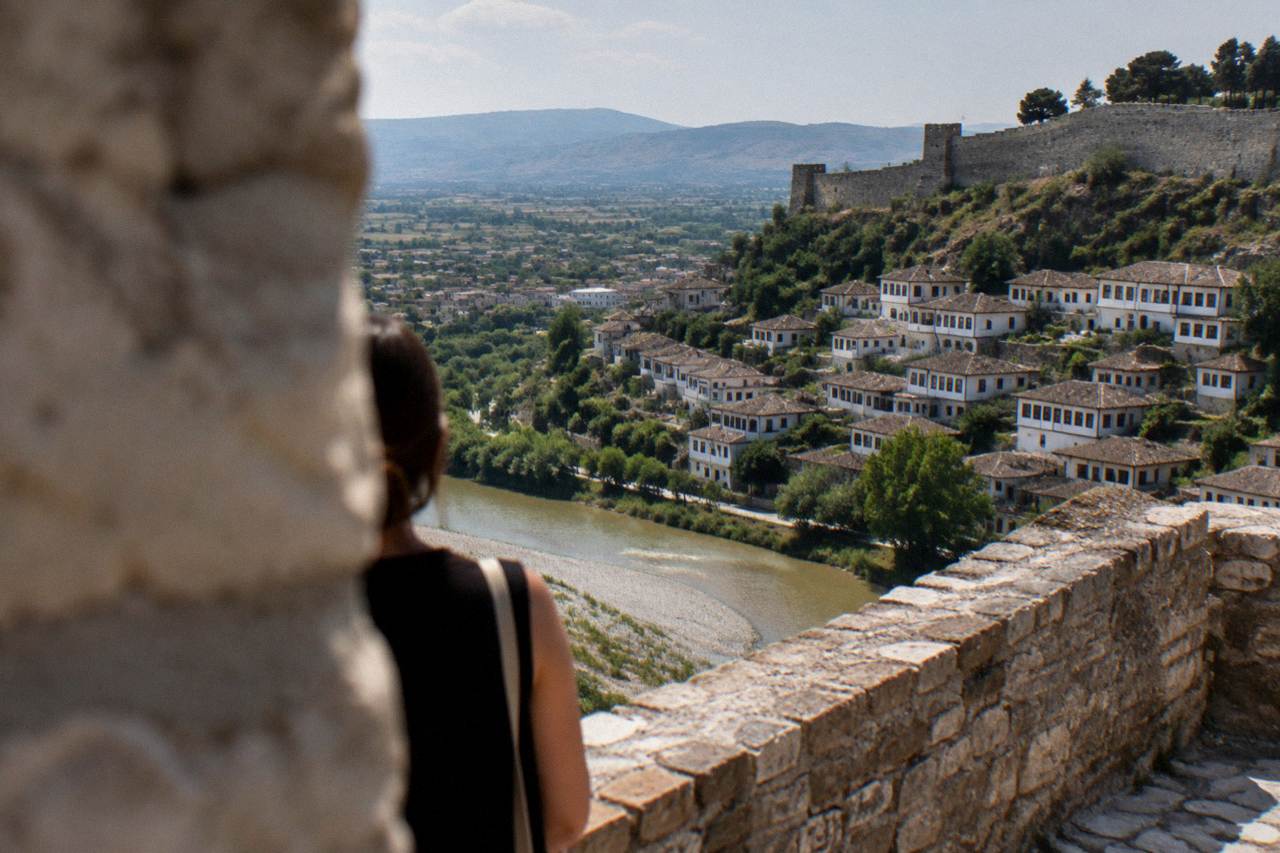
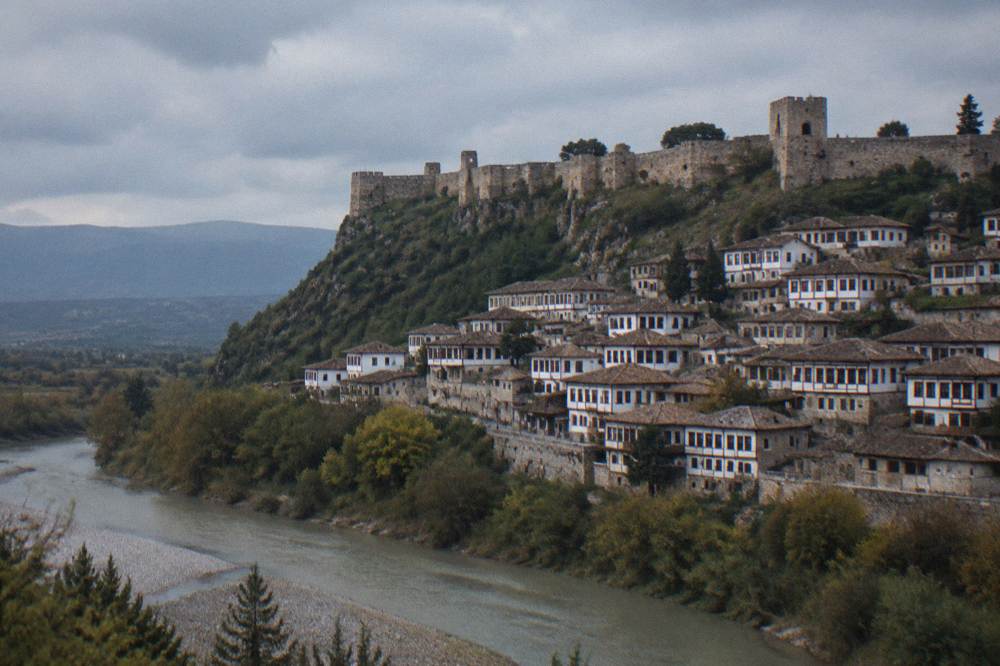
Berat, a UNESCO World Heritage Ottoman-era hill town in central Albania on the Osum River, is the single most persuasive exhibit in the argument over which Balkan country deserves your trip. Its white houses stack up the hillside in the Mangalem quarter, its castle walls still carry 24 defensive towers, and the whole ensemble was added to the World Heritage List in 2008 as an extension of the Historic Centres of Berat and Gjirokastra. UNESCO calls it "a rare example of a well-preserved Ottoman town". That verdict matters because the question of the best country to visit on the Balkans usually gets answered with coastlines or capitals. Albania answers it with a town like this, plus everything packed around it.
Which Is The Best Country To Visit On The Balkans?
Albania is the best country to visit on the Balkans for most travellers: it stacks a UNESCO-listed Ottoman town, a 2,416-metre sacred mountain, protected canyons and an unspoiled coast into one small, cheap, visa-generous package. Berat Montenegro and Greece win single battles on scenery and beaches, but no other Balkan state delivers this range of sights, prices and ease in one trip.
The honest answer depends on what you want. Croatia and Greece are easier and more polished; Slovenia is greener; Montenegro has the most dramatic fjord-like bay. But those advantages come with Western-level prices and crowds that peak in July and August. Albania gives you the same Ottoman old towns, the same turquoise water and equally wild mountains at a fraction of the cost, before mass tourism has fully remodelled it.
The country also rewards a decision quickly. Tirana's airport connects to the rest of Europe, a bus ride of about two and a half hours on roughly hourly departures drops you in Berat for a few hundred lek, and from there the castle, the Gorica quarter across the river, the Osumi Canyon and Mount Tomorr are all within a day's reach. That concentration is what tips the overall verdict. A traveller picking one country for a week gets more varied days in Albania than anywhere else in the region.
Why Albania Builds The Strongest Case
Albania's case rests on three pillars: cost, access and density of sights. The lek trades at roughly 92 to the euro, US citizens may stay up to a year without a residency permit, and the country is not in the EU or the Schengen area, so days spent there never eat into a Schengen 90-day allowance. Add a UNESCO town, a 2,416-metre national park mountain and a canyon network, and the value case closes itself.
Start with the practicalities, because they decide trips. UK and EU citizens enter visa-free for 90 days in any 180-day period, and Albania is neither an EU member nor part of Schengen, which means a Balkan itinerary that mixes Albania with Greece or Croatia does not create a border-stamp headache. The currency is the Albanian lek, the euro is only accepted informally in some tourist businesses, and the old town of Berat remains largely cash territory, so carry notes.
The density argument is harder to quantify but easy to feel. From Berat you can reach the Osumi Canyon, the Bektashi pilgrimage site on Mount Tomorr at 2,416 metres, the wineries of the Roshnik hills and the archaeological sites of Apollonia and Byllis without ever booking a second hotel. Few one-hour driving radii in the Balkans contain a World Heritage town, a natural monument canyon, a national park and a working wine region all at once.
| Albania headline | Figure | What it means for a visitor |
|---|---|---|
| Berat added to UNESCO World Heritage List | 2008 | Extension of the 2005 Gjirokastra inscription |
| Berat Castle defensive towers | 24 | Lived-in fortress quarter, still inhabited |
| Churches once inside the castle walls | about 42, eight preserved | Rare density of Ottoman-era ecclesiastical buildings |
| Mount Tomorr highest point | 2,416 m | Main peak Çuka e Partizanit, national park |
| Onufri Museum visitors, Jan-Jul 2026 | 58,912 | Up 16 percent on the same period of 2025 |
| Exchange rate | ~92 ALL per EUR | Official Bank of Albania mid-rate |
Those numbers describe a country still on the way up rather than one already saturated. The Onufri surge, the museum reopening and the autumn wine festival all landed within a single year, and none of it has produced the crush you meet in Dubrovnik in August. Momentum without saturation is the sweet spot, and Albania is sitting in it.
What Berat Delivers That Other Balkan Towns Cannot
Berat delivers a complete, lived-in Ottoman townscape rather than a restored film set: 24 castle towers, eight surviving churches inside the walls, the Onufri Iconographic Museum at 400 lek entry, and an Ethnographic Museum that reopened on 30 May 2026 after three years of restoration with about 1,300 objects. Few Balkan towns put this much walkable heritage inside two riverbanks.
The castle quarter, known locally as Kala, is not a monument fenced off behind turnstiles. People live there, guesthouses operate inside the walls, and a centuries-old building next to the Onufri Museum is being converted into an eight-room family guesthouse. Walking up means passing houses, gardens and the Red Mosque, one of the earliest Islamic buildings in the fortress. The walk from the old town is short enough that visitors ask about it constantly, and the answer is a steady uphill lane rather than a hike.
Both main museums sit under the Berat Museum Center, and their tickets are among the best value in the Balkans. Hours shift with the seasons: from 1 May to 30 September both open daily 9:00-18:00, while from 1 November to 30 April they run Tuesday to Saturday 9:00-16:00 and Sunday 10:00-15:00. Online tickets have been available through the national e-Albania portal since November 2025.
| Museum | Individual ticket | Reduced | Ages 12-18 and students |
|---|---|---|---|
| Onufri Iconographic Museum | 400 ALL | 200 ALL | 120 ALL |
| Ethnographic Museum | 300 ALL | 150 ALL | 90 ALL |
| Children under 12, both museums | Free | - | - |
| Onufri audio guide | 500 ALL | - | - |
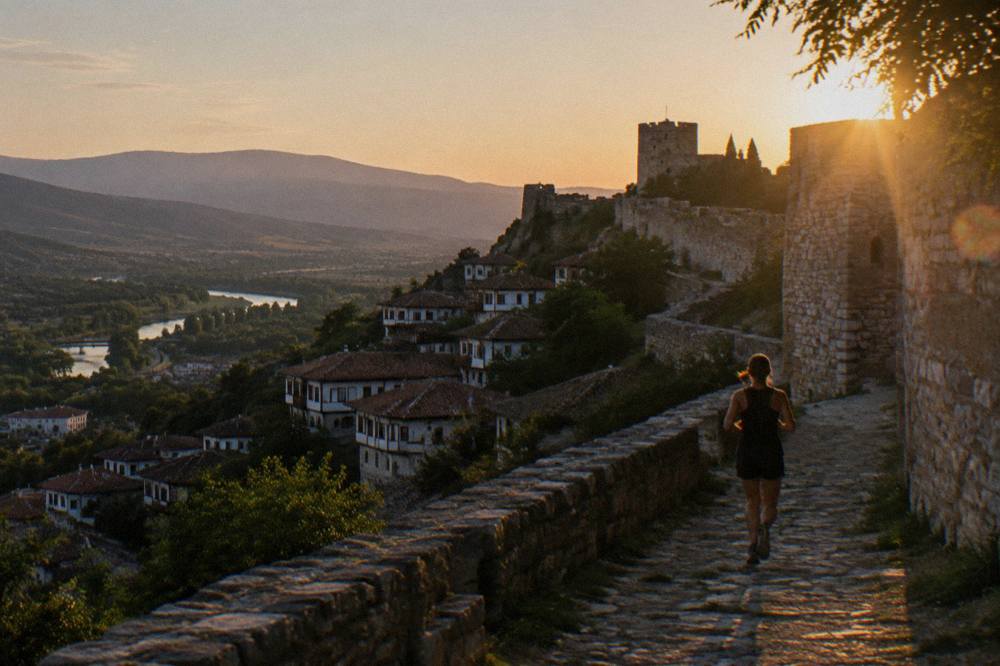
The town's nicknames tell you what later guidebooks repeat. Berat is the City of a Thousand Windows for the stacked rows of white facades opening over the river, and photographers plan whole trips around the light on Mangalem in the late afternoon. If you are weighing Albania against its neighbours, the comparison usually comes down to Berat against Gjirokastra, the country's other stone World Heritage town, and the honest answer is that they are different experiences: Berat is brighter, wetter in feel and fuller of everyday life, Gjirokastra grimmer, grander and more fortress-like. Our sister article on Gjirokastra compared with Berat breaks that choice down in detail.
Whether the whole country justifies the journey is a fair follow-up question, and it is one we answer directly in is Berat Albania worth visiting. The short version: the town alone justifies a long weekend, and the region around it doubles the stay.
How Albania Compares On Cost And Practicalities
Albania is the cheapest mainstream destination on the Balkans alongside North Macedonia. Montenegro and Greece cost roughly double for the same plate. Croatia, in high season, costs triple. The lek-based economy keeps the gap wide even as prices drift upward.
Albanian tourism prices rose through 2025 and 2026 as the sector grew, with accommodation and services inflation running hotter than the general rate of about 2.2 to 2.3 percent, but the base is so low that the region still trails. A traveller can eat twice as well in Berat as in Kotor for the same money, and the quality of simple places, grilled meat, byrek, tavë kosi, homemade raki, has not been flattened for tour groups yet.
| Everyday item in Berat | Typical price (planning range) |
|---|---|
| Cheap restaurant meal | cheap by European standards, cash in lek |
| Raki, a shot | around 2 EUR equivalent |
| Tirana-Berat bus | frequent daytime buses, a few hundred lek, paid in cash |
Practicalities follow the same pattern. Buses and furgons leave Tirana's South-North terminal roughly hourly through the day, the ride takes about two and a half hours, and you pay the conductor in cash, small notes preferred. There is no passenger rail line to Berat; the national railway is under reconstruction elsewhere with a target date of end-2027 for the Tirana-Durrës-airport stretch. For most visitors the bus is the whole transport story, and it works.
Card acceptance is thin in the old town, so budget in lek. ATMs are easy to find near the boulevard, and foreign-card fees of 500-800 lek per withdrawal are common, so larger, less frequent withdrawals save money. More detail on the currency question, including where the euro is and is not accepted, sits in our guide to money and currency in Albania, and the broader value question is covered in is Albania cheap or expensive.
What Nature Sits Within Reach Of Berat
The Osumi Canyon, a protected natural monument near Çorovodë, sits about an hour to an hour and a half from Berat on paved roads, with no entrance fee to view it from the rim. Bogove waterfall is a short forest walk from Bogovë village, and Mount Tomorr rises to 2,416 metres inside a national park that hosts an annual Bektashi pilgrimage each August. This is the widest nature range of any Balkan heritage town.
The canyon is the headline. Its walls cut deep along the Osum river, viewpoints like Vrima e Nuses above the gorge are free to reach, and the water level dictates the sport: operators run rafting in spring, roughly from March to May or June depending on snowmelt, then switch to tubing through the warmer months when the river calms. The transformation from thundering spring channel to swimmable summer flow is genuine, not marketing, and it means the canyon answers for two completely different kinds of traveller within one season.
For visitors who want the canyon with gear, transport and guides handled in one booking, the seasonal adventure runs three to six hours depending on water and group, pairing rafting or tubing with local guides and full equipment; its tour page lists the current price and departure days, and you can Check availability before committing. A classic canyon and Bogove waterfall tour over three to seven hours suits travellers who prefer dry land, and its details are on the canyon and Bogove waterfall listing.
Tomorr is the other pole. Its main peak, Çuka e Partizanit, reaches 2,416 metres, the mountain sits inside Mali i Tomorrit National Park with brown bear and wolf cited in its wildlife, and the Bektashi pilgrimage to the tomb of Abaz Ali draws enormous crowds each August; the 2026 edition ran 18-25 August with police traffic restrictions around the Kulmak Tekke. A new road to the holy peak has shortened the drive toward the shrine considerably. Planning around late August means either joining the pilgrimage traffic or avoiding the mountain entirely.
The same region answers for wine. The hills around Roshnik hold family wineries such as Cobo, working with native grapes including Shesh i Zi, Shesh i Bardhë and the local white Puls, and the town hosts the Wine & Stories of Berat festival over the first days of October each year, the 2026 edition on 2-4 October. Few one-week destinations anywhere offer a canyon, a 2,416-metre pilgrimage mountain and a native-grape wine region in the same drive.
How To Plan An Albania-First Balkan Trip
Plan four to seven days: two in Berat for the castle, Mangalem, Gorica and the museums, one for a canyon or winery day trip, one or two for the coast or Gjirokastra, and a buffer day, because buses run on their own rhythm. Visit in May, June, September or early October for mild weather and the wine festival, and carry cash in lek throughout.
Berat rewards a base rather than a drive-by. The standard advice is to sleep inside or beside the old town, walk up to the castle in the early morning before the tour groups from Tirana arrive midday, and give the museums a full afternoon. The question of how many days to spend in Berat has a short answer: two nights minimum, three if a canyon day is on the list. Timing matters too, and the guide to the best month to visit Berat lands on the shoulders of the season, when summer heat that can top 40 °C has passed and the Osum still carries enough water for rafting.
Beyond Berat, the classic Albanian arc runs south: Gjirokastra for the stone old town, the coast for the water, and back north through Apollonia. Travellers with more time cross into North Macedonia for Ohrid or into Montenegro for the bay, and that is the honest structure of a Balkan trip: Albania is the best single country, but the region itself is the real prize. If your interests lean toward stone towns rather than beaches, the question of the prettiest town in Albania has strong contenders beyond Berat. The Berat Travel Guide covers each of them in depth.
For Americans, the logistics are unusually forgiving: US citizens may stay up to a year without a residency permit, longer than almost anywhere in Europe, and the practicalities are covered in detail in is Albania friendly to Americans. Safety questions have an equally calm answer: the UK Foreign Office advises against no part of Albania, though standard city-centre caution applies, and our what to be careful of in Albania page lists the few real watchpoints, including occasional unlicensed currency changers.
Common Questions About The Best Balkan Country To Visit
Which is the best country to visit on the Balkans?
Albania, for most travellers. It combines a UNESCO-listed Ottoman town (Berat), a 2,416-metre sacred mountain, a protected canyon and an unspoiled coast at the region's lowest mainstream prices, with generous visa rules for US, UK and EU citizens. Croatia, Montenegro and Greece each win a single category, but none matches Albania's overall range per day and per euro.
Is Albania safe compared with other Balkan countries?
Yes. The UK Foreign Office advises against travel to no part of Albania, and violent crime targeting foreigners is rare. The US State Department maintains a Level 2 advisory, exercise increased caution, which is standard for the region. Ordinary city precautions, watching bags at night and avoiding unlicensed currency changers, cover the realistic risks.
Is Albania cheaper than Croatia or Greece?
Substantially. Meals, guesthouses and local transport run well below Croatian or Greek prices, and the gap is widest outside the July-August coastal peak. Berat remains largely cash-based in lek, which keeps card surcharges and tourist markups low. Prices are drifting up as tourism grows, so the advantage is real but narrowing year on year.
How many days should a first Albania trip take?
Four to seven. Give Berat two days for the castle, the museums and the Mangalem and Gorica quarters, add a canyon or winery day trip, then spend the remaining days on Gjirokastra, the coast or both. Travellers who rush Berat into a half-day from Tirana consistently regret missing the castle at dawn and the museums.
Do you need a visa to visit Albania?
Most Western visitors do not. US citizens may stay up to one year without a residency permit, while UK, EU, Schengen, Canadian and Australian citizens get 90 days in any 180-day period. Albania is not in the Schengen area, so those days never count against a separate Schengen allowance. Passports should be valid for at least three months beyond departure.
What is the single best month for an Albania-first trip?
September, with early October a close second. The summer heat, which can top 40 °C in July, breaks, the sea is still warm, rafting water may still run in the canyon early in the month, and the Wine & Stories of Berat festival opens in the first days of October. May and June are the best spring alternative.