Onufri Museum Berat
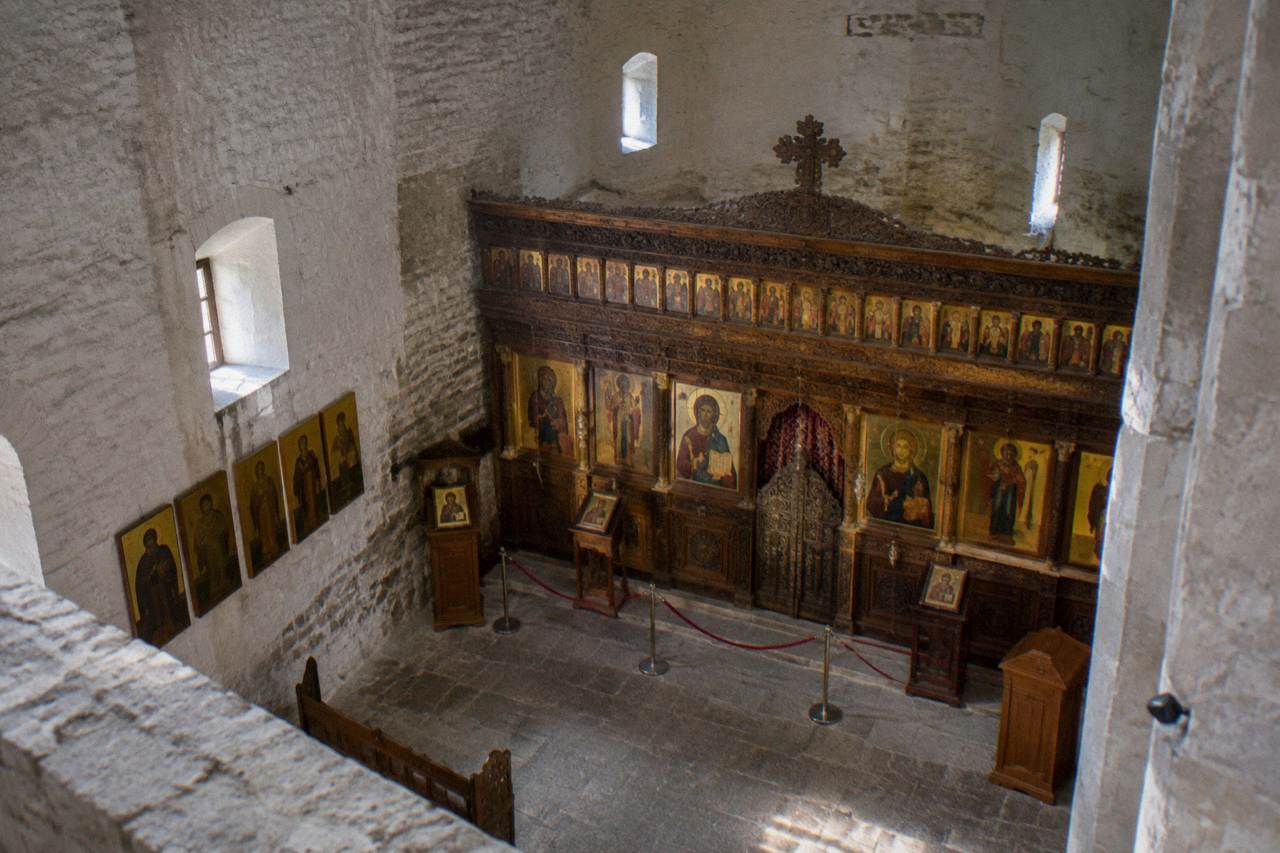
The Onufri Iconographic Museum sits inside the Church of St Mary within the walls of Berat Castle, in the UNESCO World Heritage old town of Berat, central Albania. It holds the painted icons of the Berat school, and it is the single most visited museum in the city.
Short answer
The Onufri Museum is inside Berat Castle, within the Church of St Mary. Admission is 400 lek, an audio guide is 500 lek, and children under 12 enter free. From May to September it opens 09:00-18:00; in winter, Tuesday to Saturday 09:00-16:00. Allow about an hour inside, plus the walk up through the castle quarter.
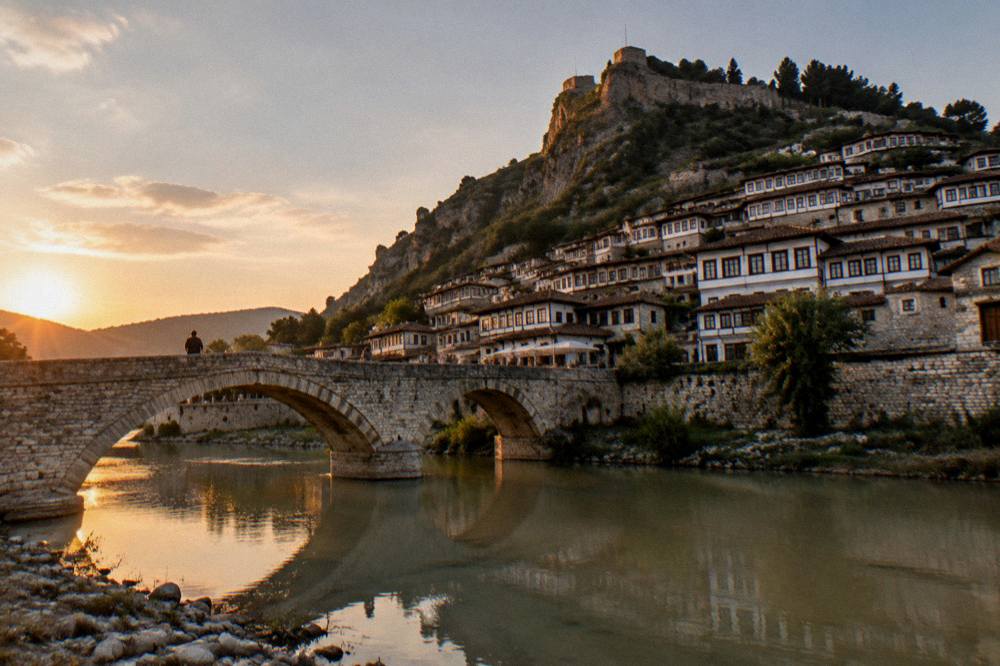
Berat, in central Albania, is a UNESCO World Heritage Ottoman-era hill town on the Osum River, and its most concentrated collection of art sits high above the river inside the walls of the castle. The Onufri Iconographic Museum occupies the Church of St Mary within the Kala, the fortress quarter that UNESCO, together with Gjirokastra, inscribed as the Historic Centres of Berat and Gjirokastra. Berat was added to the original 2005 listing in 2008, and the citation calls it a rare example of a well-preserved Ottoman town. The museum is named after Onufri, the most celebrated icon painter of the Berat region, whose work anchors a collection of painted panels that once hung in the town's many churches. Visitors reach it by walking up through the castle quarter, past houses where people still live, and through a gate where a small heritage fee may be collected in daylight hours. This guide covers the verified opening hours, ticket prices and free entry days, what you will actually see inside, and how to fit the museum into a day in Berat.
What Is The Onufri Museum In Berat?
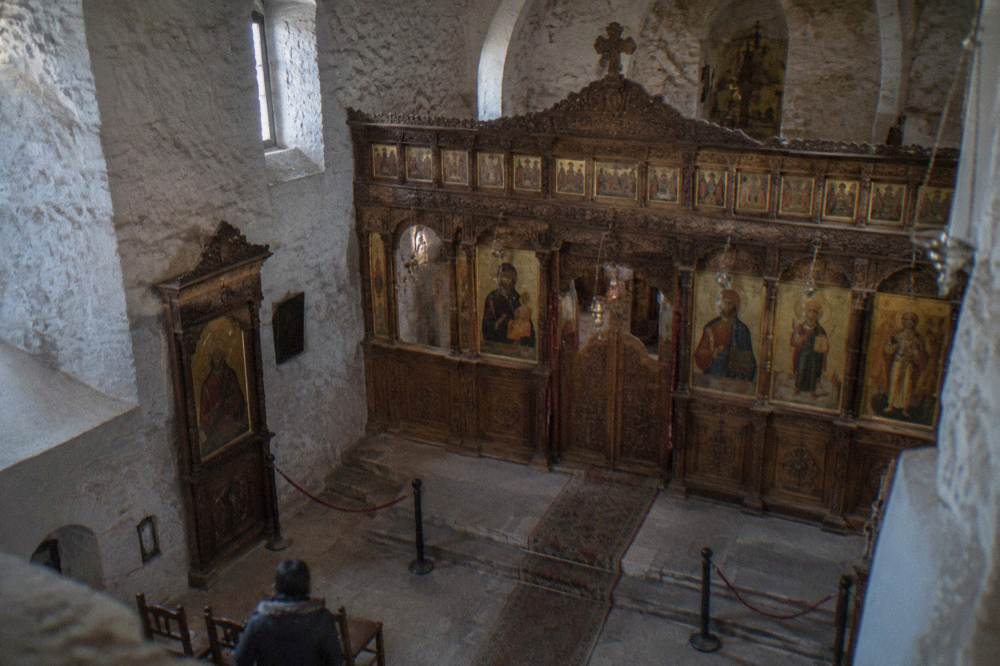
The Onufri Iconographic Museum is an art museum of Orthodox religious painting housed inside the Church of St Mary, within the walls of Berat Castle, and it is the centrepiece of a visit to the Kala quarter. It is named after Onufri, the region's most celebrated master of the icon, and its collection draws on the churches of Berat and the surrounding villages, many of which once stood inside the fortress itself.
The museum is one of two institutions run by the Berat Museum Center; the other, the Ethnographic Museum, reopened in May 2026 in the lower town after more than three years of restoration, and the two are often visited on the same day. Where the Ethnographic Museum shows how households in this Ottoman merchant town lived, the Onufri Museum shows what its churches looked like at the altar. That division matters when you plan: the icons are up the hill, inside the castle, and the domestic collections are down in Mangalem.
Berat Castle is a lived-in quarter, not an empty monument. Roughly forty-two churches once stood inside its walls, of which about eight survive in some form today, and the fortress also contains the Red Mosque, counted among the earliest Islamic buildings in the fortress. The Church of St Mary, the building the museum occupies, sits at the heart of this ensemble. The wall circuit, with its twenty-four defensive towers, still defines the walk around the quarter, and the museum is the natural terminus of that walk. For the broader picture of the fortress, see our guide to Berat Castle and its walls.
The museum's standing has grown quickly. The Berat Museum Center recorded 58,912 visitors to the Onufri Museum between January and July 2026, up sixteen percent on the 50,615 of the same period in 2025, and August 2026 alone brought roughly 14,000 more. Those are museum-center figures reported through the national news agency, and they make a simple point: this is the busiest cultural site in the city, and the queue at the ticket desk in midsummer reflects that.
Where Is The Onufri Museum And How Do You Get There?
The museum stands inside Berat Castle, at the top of the Kala quarter above the Mangalem district, roughly a ten to fifteen minute uphill walk from the old town on stepped stone lanes. Most visitors arrive in Berat by bus or furgon from Tirana's South-North terminal, a journey of about two and a half hours, then walk or take a short taxi ride from the bus station to Mangalem before climbing to the castle gate.
If you are coming from the capital, buses and furgons leave Tirana's Terminali Jug-Veri through the day, roughly hourly from early morning to late afternoon, and the fare is a few hundred lek paid in cash. There is no direct airport bus from Tirana airport to Berat; you change in Tirana. Our Tirana to Berat transport guide covers the schedules in detail.
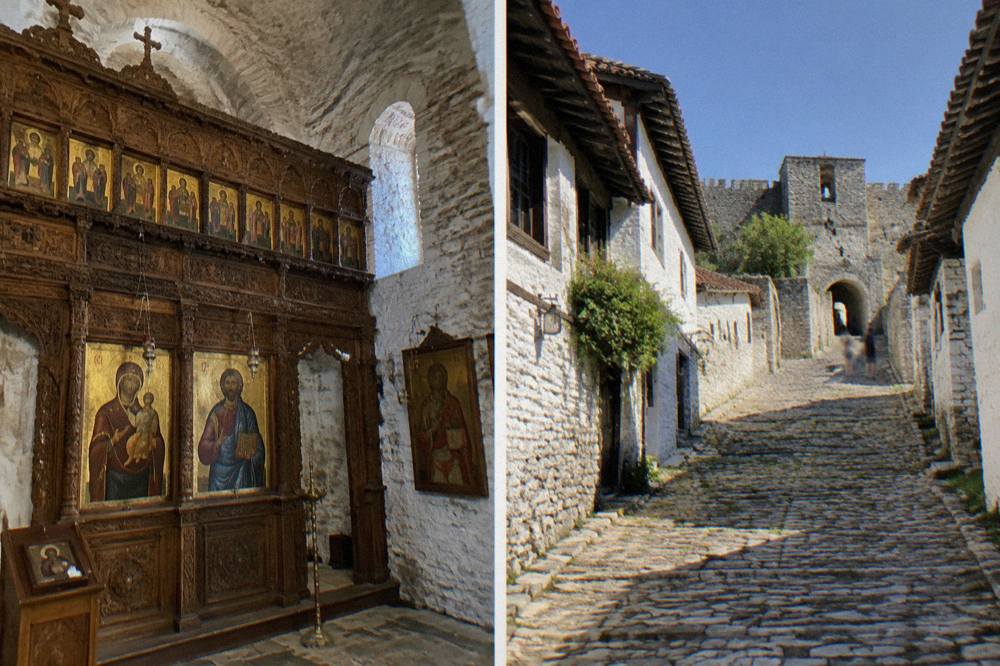
Once in the old town, the climb is straightforward but steady. You walk up from Mangalem through the castle's residential streets, which are cobbled and stepped in places, so wear shoes with grip rather than smooth soles. Since April 2026 vehicle access into the Kala quarter has been restricted to residents, pre-booked hotel guests, licensed taxis and similar categories, so day visitors should simply park below and walk up. That restriction is part of the Smart Parking scheme the municipality has been implementing to keep traffic out of the heritage quarter.
For travelers without a car, a guided option removes all of the logistics at once. The Berat UNESCO and Belshi Lake day trip from Durres, Golem or Tirana bundles the castle, the museum quarter and a lake stop into a single loop with transport included, and Check availability if that format suits your itinerary. It is the option most independent travelers settle on when they have exactly one day and no rental car.
If you prefer to explore on foot with a local expert at your own pace, the premium expert-guided walking tour covers the old town with a guide whose reviews sit at the very top of the roster, and it pairs naturally with an independent visit to the museum afterwards.
What Are The Onufri Museum Opening Hours And Ticket Prices?
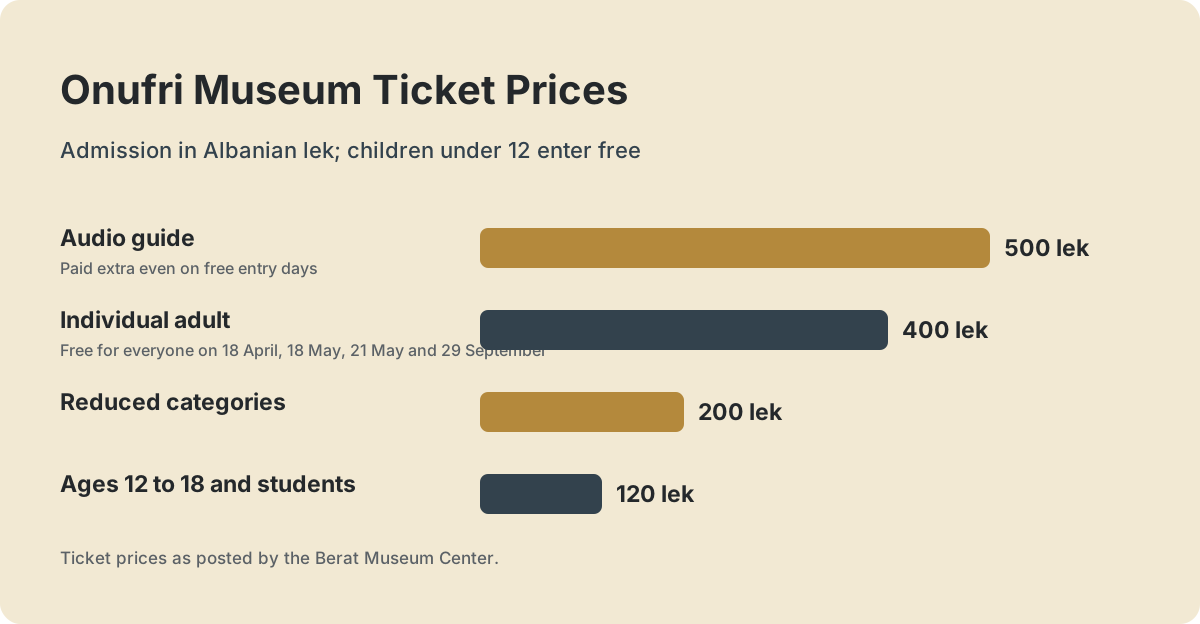
The Onufri Museum charges 400 lek for an individual adult ticket, with an audio guide at 500 lek, a reduced rate of 200 lek, 120 lek for ages 12 to 18 and students, and free entry for children under 12. From 1 May to 30 September it opens daily 09:00-18:00; from 1 November to 30 April it runs Tuesday to Saturday 09:00-16:00 and Sunday 10:00-15:00, and it opens on national holidays.
These are the official figures published by the Berat Museum Center. One gap matters: October hours are not published on the official page, so if you are visiting in October, check hours at the gate rather than trusting a blogger's guess. Do not confuse the museum's own figures with the castle grounds fee either; the gate at the castle may charge a small heritage fee in daytime in the summer months, so carry lek for both.
| Ticket type | Price |
|---|---|
| Individual adult | 400 lek |
| Audio guide | 500 lek |
| Reduced categories | 200 lek |
| Ages 12-18 and students | 120 lek |
| Children under 12 | Free |
| Season | Days | Hours |
|---|---|---|
| 1 May - 30 September | Daily | 09:00 - 18:00 |
| 1 November - 30 April | Tuesday - Saturday | 09:00 - 16:00 |
| 1 November - 30 April | Sunday | 10:00 - 15:00 |
| National holidays | Open | Holiday opening applies |
Free entry days are fixed and published: 18 April, 18 May, 21 May and 29 September for everyone, and 28 and 29 November for Albanian citizens only. If your dates happen to line up with one of the four universal free days, you save the 400 lek admission, though the audio guide is still a paid extra.
| Free entry date | Who qualifies |
|---|---|
| 18 April | Everyone |
| 18 May | Everyone |
| 21 May | Everyone |
| 29 September | Everyone |
| 28 November | Albanian citizens only |
| 29 November | Albanian citizens only |
Since November 2025, tickets for state cultural sites in Albania, including the museums in Berat, can be bought through the national e-Albania online ticketing service, which launched for museums and heritage sites on 6 November 2025. Buying online is useful in the July-August peak, when walk-up demand is at its highest. Discounts and free categories require documentation, so carry a student card or a child's ID if you plan to claim one.
A practical note on money: Albania's currency is the lek, old-town Berat is largely a cash economy, and the euro is not legal tender here even if some tourist businesses accept it informally. Card acceptance in the castle quarter is patchy. Bring notes in small denominations for the gate, the museum desk and the coffee stops on the way down.
What Will You See Inside The Onufri Museum?
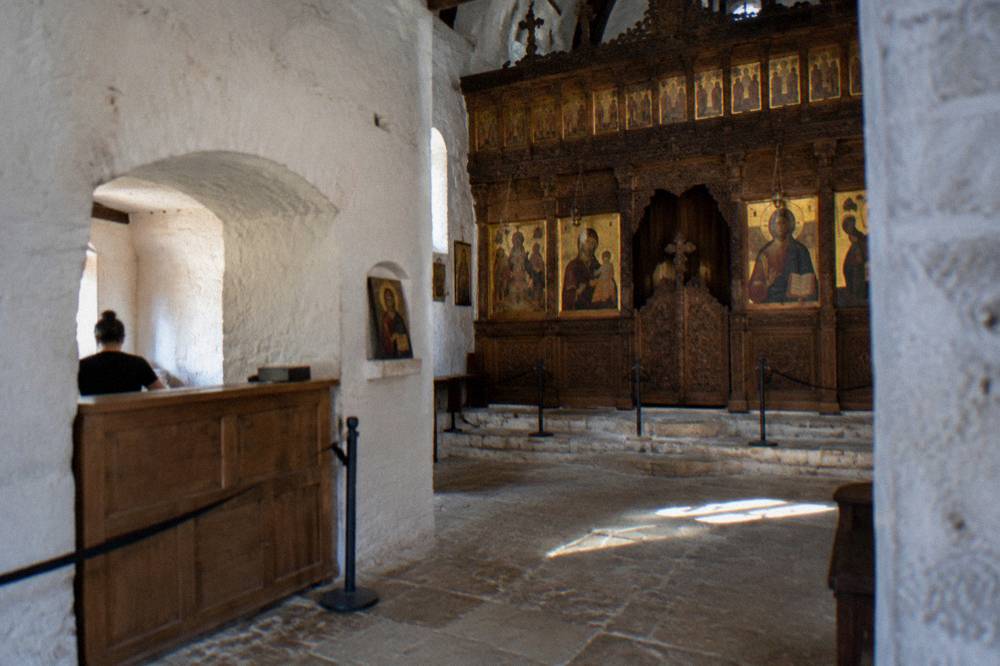
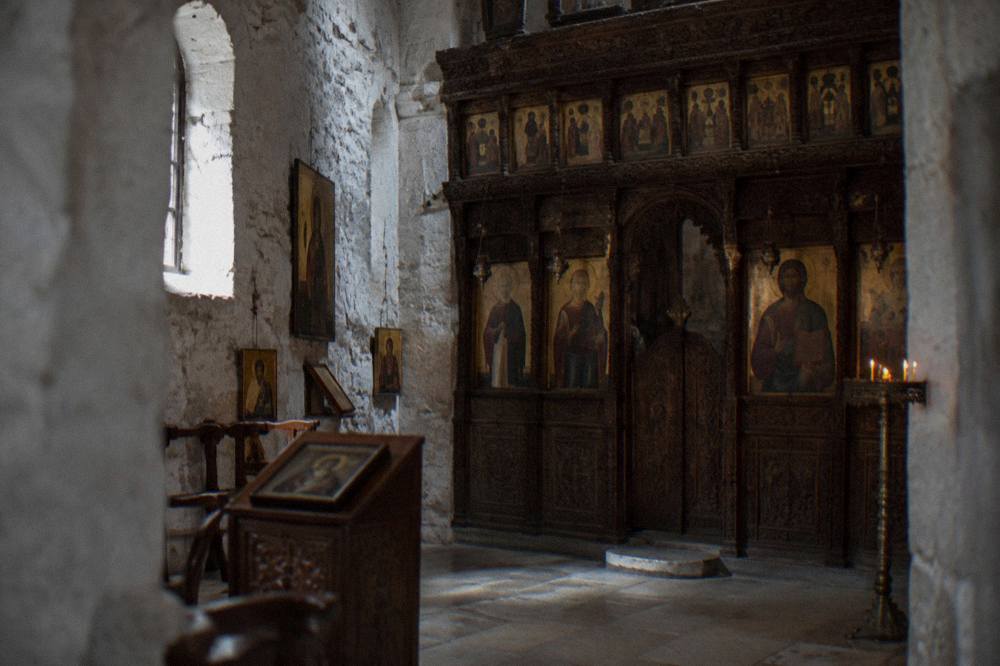
The museum's core collection is a large body of Orthodox icons and liturgical art gathered from the churches of Berat and its region, displayed inside the Church of St Mary, whose stone interior, wooden iconostasis and painted surfaces are themselves part of the exhibit. The collection is organised around the Berat school of icon painting and its most famous name, Onufri.
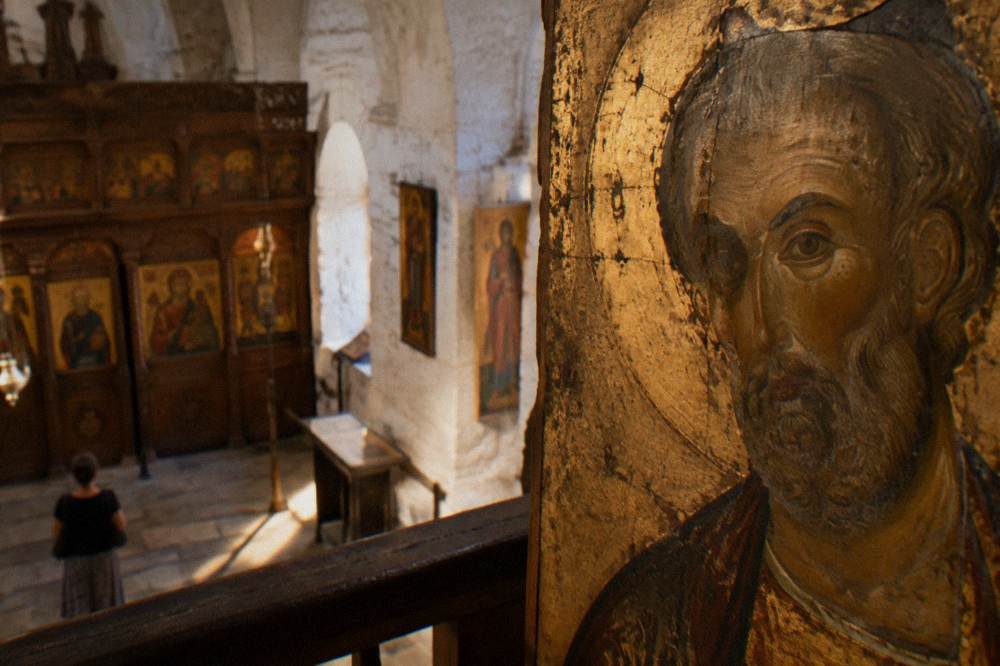
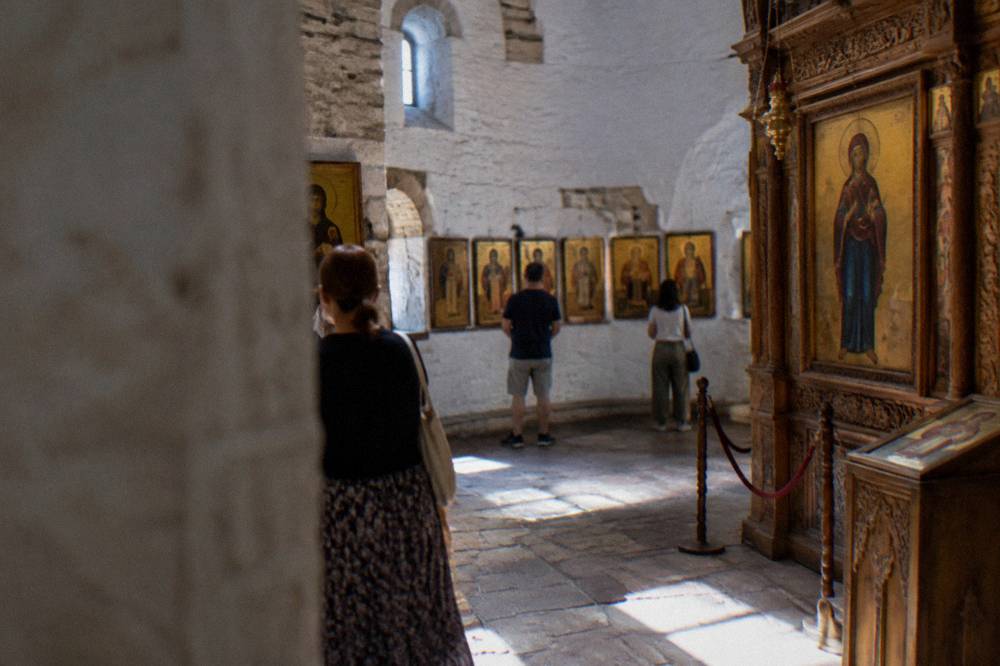
The Church of St Mary, sometimes called the Dormition church, is the museum's container and its biggest single object. You enter through the church porch, buy your ticket, and step into a nave whose walls carry the visual language of Orthodox Albania: panels of saints, feasts and hierarchs, gilt catching the light from small windows. Icons in this tradition are not easel paintings; they were made for altars and processions, and the museum keeps them in the setting they were made for, which is precisely why this collection reads differently from a conventional gallery of framed works.
Around the collection, the castle quarter gives the museum its frame. The walls with their twenty-four towers, the surviving churches of the roughly forty-two that once stood here, and the Red Mosque, one of the earliest Islamic buildings in the fortress, all sit within a few minutes' walk of the museum door. Walking out of the church and back through the quarter is part of the visit, not an afterthought.
Visitors often pair the museum with a meal or a tasting afterwards, and Berat makes that easy. The city is a wine town: the regional wineries pour native varieties like Shesh i Zi, Shesh i Bardhe, Vlosh and Puls, and a guided winery tour with transfers and tastings is a natural afternoon complement to a morning of icons. Our Berat wineries guide sets out the full picture for planning.
A word on how the two halves of the day fit together. The winery tours run with hotel transfers, so you do not need to worry about driving after a tasting, and most finish by early evening, which leaves the sunset hour free for the Mangalem viewpoint. Book the tasting for the afternoon and keep the morning for the climb, since the castle hill has almost no shade by midday in summer.
How Much Time Do You Need At The Onufri Museum?
Most visitors spend between forty minutes and an hour inside the museum itself, plus the walk up through the castle quarter and the walk back down, which together make the visit a half-day undertaking in practice. With the castle walls, the surviving churches and a view over Mangalem and Gorica, the Kala quarter easily fills a full morning or afternoon.
The honest planning answer depends on how you like museums. If you read every label and take the audio guide, budget an hour to an hour and a half inside. If you move quickly and mainly want the highlights, forty minutes covers the church and the main walls of icons. Add the castle circuit around the quarter, and the total time on the hill grows accordingly. Other pages covering the same trip are gathered on Berat Travel Guide.
For a two-centre day, the pairing that works best is the Onufri Museum in the castle and the Ethnographic Museum in the lower town. The Ethnographic Museum reopened on 30 May 2026 after a restoration lasting more than three years, and it now displays around 1,300 objects of domestic life. A combined ticket structure across the two is not published on the official page, so pay at each desk: 400 lek at Onufri, 300 lek at the Ethnographic Museum.
| Stop | Admission | What it covers |
|---|---|---|
| Onufri Museum | 400 lek | Icons inside the Church of St Mary, castle quarter |
| Audio guide at Onufri | 500 lek | Commentary on the icon collection |
| Ethnographic Museum | 300 lek | Reopened interiors, around 1,300 domestic objects |
| Castle grounds | Small fee may apply in daytime | Walls, towers, quarter, views |
Families should know the pricing works in their favour: children under 12 enter both museums free, and ages 12 to 18 pay the reduced student rates at each. The climb, not the ticket, is the real cost with children, so bring water and plan the castle walk for the morning in summer, when afternoon heat can top 40 °C in Berat, as it did in late July 2026 when the city recorded the country's highest readings of the year.
What Else Should You See Around The Onufri Museum?
The museum sits inside a dense cluster of sights: the castle walls and towers immediately around it, then the mosques and churches of Mangalem and Gorica below, including the King Mosque, the Lead Mosque, the Bachelor's Mosque and the Gorica Bridge across the Osum. Most can be covered on foot in a single day, since the historic core is compact.
Inside the Kala, take twenty minutes for the wall walk. The towers and the views over the tile roofs of Mangalem, the Osum River and the Gorica quarter on the far bank are the reward for the climb, and they cost nothing beyond the castle grounds fee if one is being collected that day.
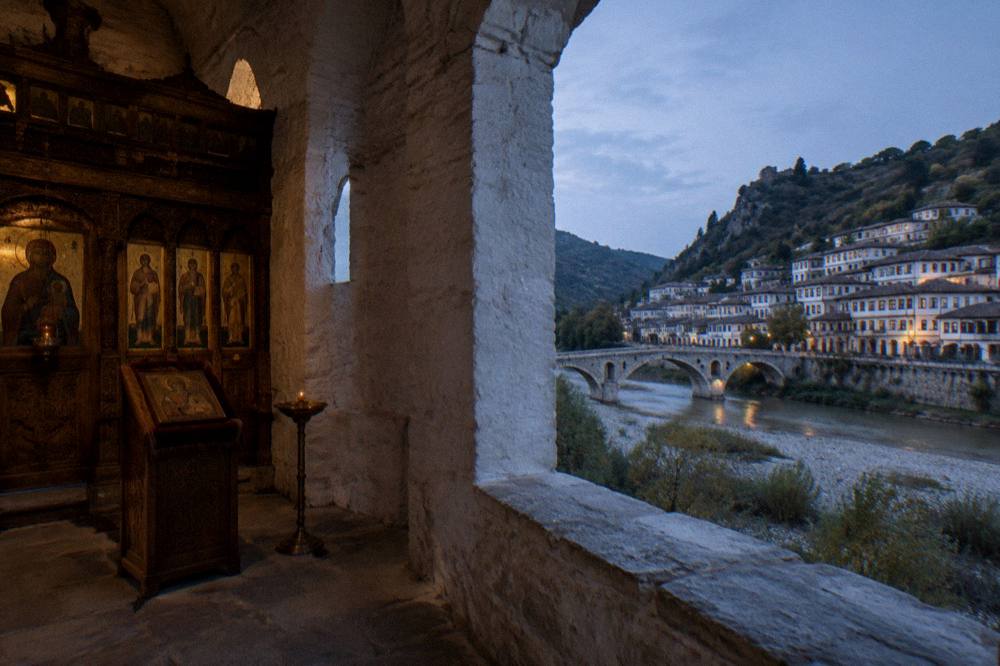
Down in the town, the religious buildings of the Ottoman period cluster within a few minutes of each other. The King Mosque and the Lead Mosque anchor the Mangalem side; the Bachelor's Mosque and the Halveti Tekke sit nearby; and across the Gorica Bridge the Gorica quarter mirrors Mangalem with its own rows of windows. For a sense of the whole ensemble, our old town walking overview lays out a route.
Beyond the town itself, the Osumi Canyon and the Skrapar region make the strongest day trip from Berat for travelers with a second full day. The canyon is protected as a natural monument, has no entrance fee to view from the rim, and the rafting and tubing seasons follow the river's level: rafting in spring on snowmelt, tubing through summer and autumn. Our Osumi Canyon guide covers it fully, and the seasonal rafting and tubing adventure is the roster's most-reviewed way to get on the water.
When Is The Best Time To Visit The Onufri Museum?
The museum is at its calmest on weekday mornings outside the July-August peak, and its hours are longest in summer, when it opens daily until 18:00. Winter visits are quieter but the museum closes earlier and rests on Mondays outside the Sunday opening, so check the seasonal table before you travel. October hours are not published; ask at the gate.
Berat's climate is straightforward: hot, dry summers and wetter winters, with rain concentrated in the late autumn and winter months. Summer afternoons on the exposed castle hill are the least comfortable time to climb, so an early start serves two purposes, a cooler walk and a thinner crowd at the ticket desk. The visitor numbers tell the story of when everyone else comes: May 2026 was the museum's busiest month, with more than 17,000 visitors, part of the 58,912 recorded from January to July.
| Period | Museum hours | Visitor pattern |
|---|---|---|
| May - September | Daily 09:00 - 18:00 | Longest hours; peak crowds in July and August |
| November - April | Tue-Sat 09:00 - 16:00, Sun 10:00 - 15:00 | Quietest; earlier closing; some winter closures |
| 18 April, 18 May, 21 May, 29 September | Free entry for everyone | Popular with local visitors |
| October | Not published | Check hours at the gate |
One event reshapes the town each autumn: the Wine and Stories of Berat festival, held 2-4 October in 2026, brings wineries from Albania and Kosovo to the city for three days of tastings, music and food. If your trip lands on those dates, the museum is a natural morning activity before the festival program takes over the afternoon and evening.
Travelers coming from Tirana for a single day can make the museum the anchor of the itinerary and still be back in the capital by night, since the bus connection each way runs about two and a half hours. For those who would rather not manage buses at all, the UNESCO Berat city by night tour from Tirana is built around photography and evening light, a different way to see the same hill town.
Planning A Museum Day In Berat, Step By Step
A workable day starts with the morning climb to the castle and the Onufri Museum, continues with the wall walk and views, descends through Mangalem for lunch and the mosques, and ends with the Ethnographic Museum or a Gorica stroll across the bridge. Carrying lek, arriving early and checking October hours at the gate are the three details that most often catch visitors out.
The order matters more than people expect. The castle climb is best done before the heat and before the coach groups, so the museum first, the walls second, then downhill for everything else. If you are staying overnight, the evening light on the thousand windows of Mangalem is the town's signature view, and it costs nothing.
Practical questions follow the same rhythm as the practical answers. The most common ones are below, drawn from what visitors ask about the museum most often.
Common Questions About The Onufri Museum In Berat
Is the Onufri Museum worth visiting?
Yes. It is the single most visited museum in Berat, it holds the region's principal collection of icons inside a genuine church interior, and it sits inside the castle quarter that most visitors climb the hill for anyway. An hour inside is enough for most people, and the ticket is modest at a few hundred lek.
How much does the Onufri Museum cost?
An individual adult ticket costs a few hundred lek, payable in cash. The audio guide is 500 lek, reduced categories pay 200 lek, ages 12 to 18 and students pay 120 lek, and children under 12 enter free. On 18 April, 18 May, 21 May and 29 September, entry is free for everyone.
What are the Onufri Museum opening hours?
From 1 May to 30 September the museum opens daily 09:00-18:00. From 1 November to 30 April it opens Tuesday to Saturday 09:00-16:00 and Sunday 10:00-15:00, and it opens on national holidays. October hours are not published, so check at the gate if you visit then.
Is the Onufri Museum inside Berat Castle?
Yes. The museum occupies the Church of St Mary inside the Kala, the castle quarter at the top of the hill. You reach it on foot through the castle's residential streets, and vehicle access into the quarter has been restricted since April 2026, so plan to walk up.
Can you buy Onufri Museum tickets online?
Yes. Since 6 November 2025, tickets for Albania's state museums and heritage sites, including the Berat museums, are sold through the national e-Albania online ticketing service. Walk-up tickets at the desk are still available in normal operation.
How long does a visit to the Onufri Museum take?
Count on forty minutes to an hour inside the museum, longer if you take the audio guide. With the climb up through the castle quarter, the wall walk and the descent, the museum anchors a half-day of any Berat itinerary.