What Is The Safest City In Albania?
Berat, a UNESCO World Heritage Ottoman hill town in central Albania, is the safest city in Albania for visitors: low violent crime, a walkable old town, and no travel warnings. Here is why, plus practical safety tips.
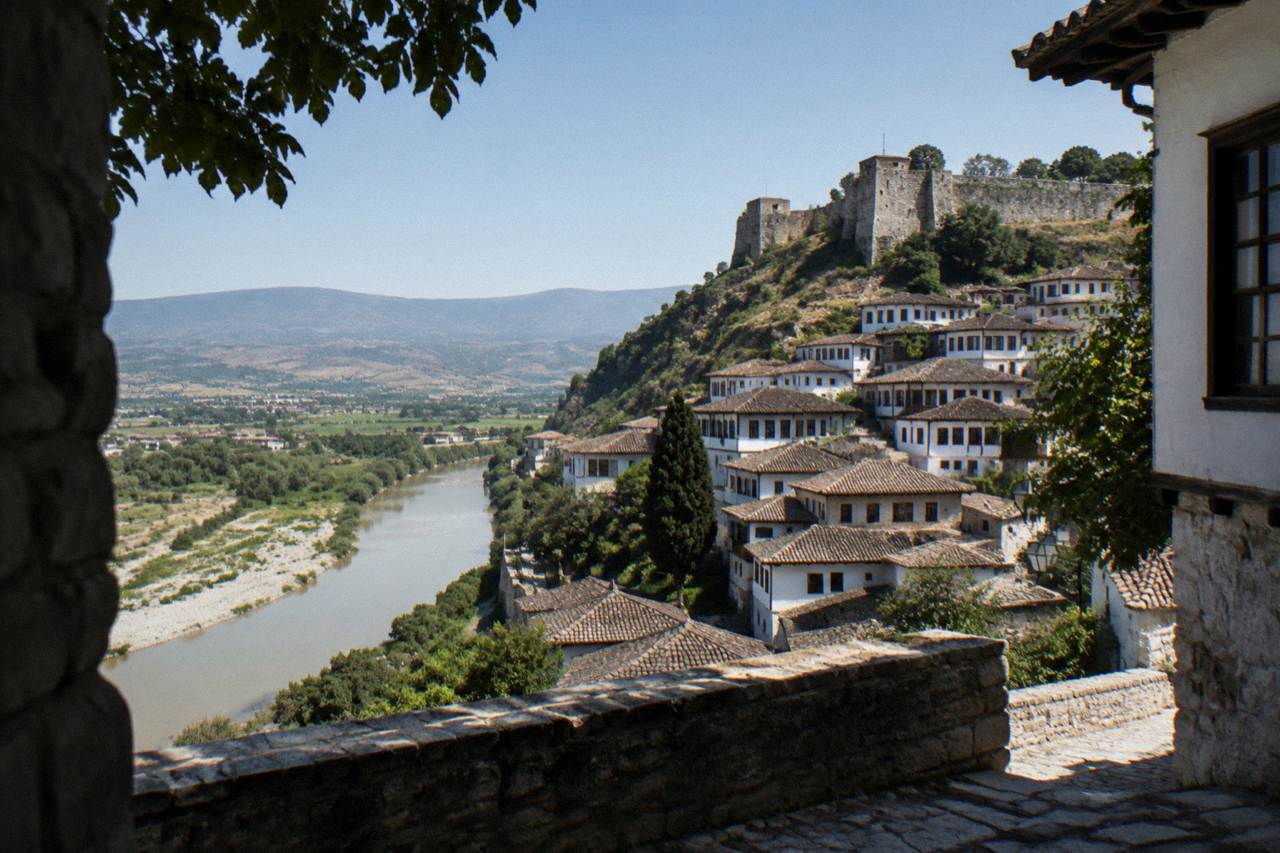
Berat, in central Albania, is a UNESCO World Heritage Ottoman-era hill town on the Osum River, and it is the answer most travellers and local voices give when asked which Albanian city feels safest. The claim is not based on a published city-by-city crime index, because no such index was sourced for this article, so no statistic is quoted here. It rests on something more practical: the UK Foreign Office advises against travel to no part of Albania, the US State Department holds the whole country at Level 2, "Exercise Increased Caution", which is the same level attached to popular destinations across Europe, and Berat itself is a small, tourism-dependent heritage town where the risks a visitor actually faces are petty and largely avoidable with ordinary care. The Berat municipality counted 62,232 residents at the 2023 census, which makes it a modest regional centre rather than a big city, and small heritage towns of that scale in Albania have very little of the urban street crime that concentrates in the capital.
What Is The Safest City In Albania?
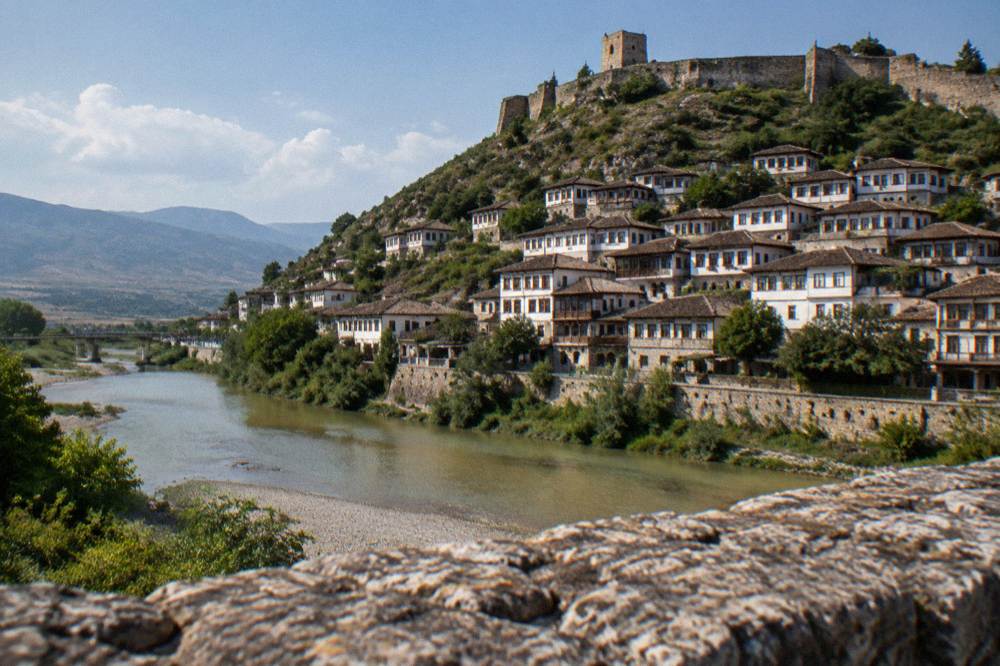
Berat, the UNESCO World Heritage town in central Albania on the Osum River, is the safest city in Albania for visitors. Violent crime against travellers there is rare, the UK Foreign Office advises against travel to no part of the country, and the town's compact historic quarters, Mangalem and Gorica, are calm at night in a way larger Albanian cities are not. No official city-level crime ranking exists, so this rests on government travel advice and Berat's character as a small, tourism-driven heritage town.
That answer deserves unpacking, because "safest" means two different things to two different travellers. For the family deciding where to base a first Albanian trip, safe means walkable streets, honest guesthouse hosts and no sense of threat after dark. For the solo visitor, it means a place where you can wander with a camera without becoming a mark. Berat delivers both. Its old town is built for walking: the Mangalem and Gorica quarters face each other across the Osum, joined by the Gorica Bridge, and the castle lanes above are residential, lived-in and quiet by late evening. There is no nightlife district with late-night crowds, which is precisely why nothing that happens in such districts happens here.
The honest caveat is that no sourced Albanian crime statistic ranks cities against each other, and this page does not invent one. What can be stated firmly comes from governments: the UK Foreign Office "does not advise against travel to any part of Albania" and notes that reports of crime specifically targeting foreigners are rare. The US State Department's Albania advisory is Level 2 across the entire country, citing crime generally, not any particular city. In other words, official advice treats the whole nation as broadly similar, and Berat's smaller scale, UNESCO status and dependence on visitor goodwill put it at the comfortable end of that picture.
Why Berat Has A Strong Claim On The Title
Berat earns the safest-city reputation through structure, not statistics: a 2023 census population of 62,232, an economy anchored in heritage tourism, and a historic core with almost no through-traffic at night. Visitors walk between Mangalem, Gorica and the castle at all hours, guesthouse owners know their guests by name, and the most common complaint recorded in traveller reviews is a steep hill, not a safety scare. There is simply less opportunity for the urban crime that big cities generate.
Consider how the town is physically organised. The historic centre is a protected World Heritage property, inscribed with Gjirokastra as the "Historic Centres of Berat and Gjirokastra" in 2008, and UNESCO itself describes Berat as "a rare example of a well-preserved Ottoman town". Protection of that kind brings policing attention, restoration investment and a municipal interest in keeping the visitor experience spotless. In 2026 alone the Ethnographic Museum reopened after a three-year restoration with roughly 1,300 objects, and the Onufri Museum inside the castle recorded 58,912 visitors from January to July, a 16 percent rise on the same period of 2025. A town that busy with sightseers, and that invested in them, keeps its streets ordered.
Local familiarity does the rest. Berat's guesthouse culture means a host is usually the first point of contact for anything that goes wrong, from a lost passport to a strange dog on a castle lane. First-time visitors arriving from Tirana often tell us the contrast is the first thing they notice: fewer crowds, fewer touts, more greetings from people sitting out on their stoops. If you are still weighing whether the town merits the trip at all, the companion page on whether Berat is worth visiting covers the value question in detail, and our Berat Travel Guide home page lays out the full destination picture.
How Albania's Overall Safety Picture Compares
Albania as a whole is a moderate-risk, low-violence destination by the standards of official travel advice: the UK Foreign Office advises against no part of the country, the US State Department rates it Level 2, "Exercise Increased Caution", and an OSAC security report notes violent crime falling while street crime like opportunistic theft persists in urban areas at night. None of that advice singles out any city, including Berat, as a place to avoid.
The two advisories travellers actually check say almost the same thing. The UK Foreign Office, updated in August 2026, notes that crime and violence exist in some areas but that reports of crimes targeting foreigners are rare, and its emergency guidance lists 112 as the general number, with 127 reaching an ambulance and 128 the fire service. The US State Department holds Albania at Level 2, which asks for increased caution rather than reconsidering travel, the same tier applied to many mainstream European holiday destinations. For context on what those levels mean in practice, and where Albania sits among its neighbours, the Balkans comparison page on which is the best country to visit on the Balkans is useful reading.
| Advisory source | What it says about Albania | What it says about Berat specifically |
|---|---|---|
| UK Foreign Office | No advice against travel to any part of Albania; crime targeting foreigners reported as rare | Nothing negative; Berat appears on no warning list |
| US State Department | Level 2, "Exercise Increased Caution", citing crime generally across the country | No city-specific restriction anywhere in Albania |
| OSAC security report, July 2026 | Violent crime down about 3 percent year on year for a fifth straight year; street crime common in urban areas at night | No Berat-specific incidents involving travellers |
Two practical points follow from the table. First, the general caution level applies evenly, so choosing Berat over Tirana does not change your official risk category; it changes your exposure, because there is simply less nightlife crowding and fewer anonymous late-night streets. Second, the OSAC report's warning about urban street crime at night is worth internalising everywhere in the country: keep bags closed and phones off café tables, habits that cost nothing. Female travellers planning a broader route may also want the dedicated guidance on what to wear in Albania as a female, which folds safety and cultural norms together.
What To Watch Out For In Berat Specifically
The realistic risks in Berat are mundane: opportunistic theft in crowded spots, uneven cobbles and steep castle lanes that punish unsuitable shoes, stray dogs around the outskirts, and summer heat that can top 40 °C in July and August. None of these is unique to Berat, none involves violence, and all are managed with ordinary city sense plus sun protection, decent footwear and a bottle of water.
The castle hill deserves the most respect. The lanes up to the Kala are stone-paved, steep and, in places, poorly lit once the day-trippers leave, and repairs to the cobbled access road only began in April 2026 after earlier surfacing deteriorated. Walk up in daylight, wear shoes with grip, and if you visit in the height of summer, start early: Berat recorded the country's hottest readings of 2026 on 20 July, with shade temperatures reported around 42 °C, so midday climbs are genuinely unpleasant. Vehicle access into the castle quarter is also being restricted under the municipality's Smart Parking scheme, which means more walking, so plan accordingly. For anyone who prefers not to navigate the lanes alone on a first visit, a guide solves several problems at once, and the Premium Walking Tour of Berat with Expert Guides covers the old town with someone who knows every corner, with Check availability on the operator's live listing.
Around the outskirts, stray dogs are the one topic official advice does address: the OSAC report notes their numbers and recommends caution, and a rabies vaccination is suggested for anyone planning extended outdoor time in Albania generally. In town, the other recurring nuisance is less dramatic: taxi and exchange practices. Stick to bank branches and their ATMs rather than standalone machines, as foreign-card fees of several hundred lek are common and unlicensed exchange operations were raided by police in Berat as recently as July 2026. The local currency is the Albanian lek, roughly 92 to the euro, and old-town Berat remains largely a cash place, so withdraw sensibly at a bank. Our money and currency in Albania guide covers this end to end.
| Everyday risk in Berat | Where it shows up | The easy countermeasure |
|---|---|---|
| Opportunistic bag or phone theft | Busy viewpoints and café terraces in Mangalem | Keep valuables closed and off table edges |
| Uneven, steep paving | Castle access lanes and Gorica's stepped alleys | Sturdy shoes, daylight for the climb |
| Stray dogs | Outskirts, castle roads, walking trails | Give them space; ask locals about problematic animals |
| Summer heat | July and August afternoons, especially the climb | Start early, carry water, use sun protection |
| Card fees and informal exchange | Standalone ATMs and unofficial changers | Use bank ATMs and pay in lek |
Which Parts Of Berat Feel Safest After Dark
Mangalem and Gorica, the two historic quarters facing each other across the Osum River, are the safest and most comfortable parts of Berat at night, along with the riverside promenade that links them. They are residential, gently lit, and busy enough with diners and guesthouse traffic to feel secure without feeling crowded. The castle lanes above are best saved for daylight; the new-town boulevard is fine but plain, and the bus-station edge of town has no reason to hold you after dark.
Gorica, on the east bank, is arguably the most restful base of all: it is the quieter of the two old quarters, its cobbled lanes hold small guesthouses and restored houses, and crossing the Gorica Bridge on foot at night, with the white houses lit above the river, is one of the town's signature moments rather than an anxious one. Mangalem, the "thousand windows" quarter, has more restaurants and evening footfall, so if you want people around after dinner, that is the side to choose. Neither quarter has a late-night drinking strip, and that absence is the point: there is no zone where alcohol, crowds and visitors mix past midnight. If you are choosing between an Albanian base town more broadly, the comparison of Gjirokastra or Berat and the page on the prettiest town in Albania both weigh scenery, safety feel and atmosphere.
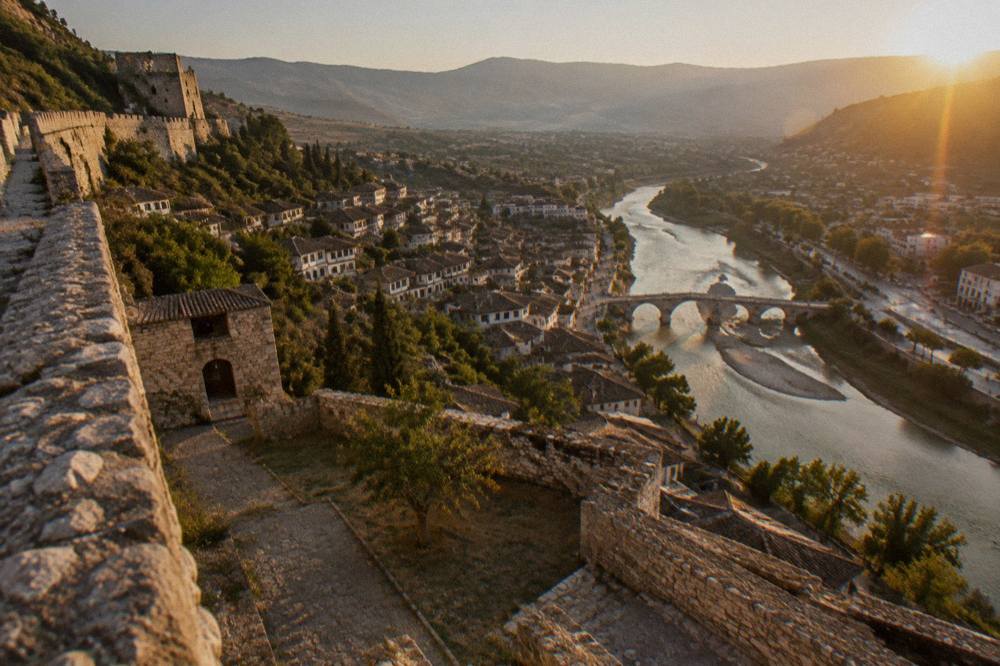
One structural point is worth knowing because it explains the calm. Car access into the castle quarter is being restricted; plan to park below and walk up. Fewer cars means quieter lanes and a more pedestrian night, which is unusual for a European town of any size. For where to actually sleep, the where to stay in Berat guide maps the safe, atmospheric options across all three quarters.
Practical Safety Tips For First-Time Visitors
The habits that keep you safe in Berat are the habits that keep you safe anywhere in small-town Europe, plus a few Albania-specific ones: carry lek in cash, save 112 in your phone for emergencies, do the steep walks in daylight, avoid standalone ATMs, and keep your wits on long rural drives. Albania is not in the EU or the Schengen area, so days spent here do not count against your Schengen 90/180 allowance, and entry rules differ by passport.
Start with the boring essentials. UK citizens enter visa-free for up to 90 days in any 180-day period, with a passport valid at least three months beyond departure. EU citizens get the same 90 days and may use national ID cards, while US citizens can stay visa-free for up to one year. In an emergency, 112 is the general number and works from any phone, 127 reaches an ambulance, 128 the fire service and 129 the police; the UK Foreign Office confirms these. Save them before you need them.
Beyond that, Berat-specific planning mostly concerns terrain and season. The best months are the shoulder seasons, when the heat has passed but the rivers still run high enough for canyon trips; the page on the best month to visit Berat breaks that trade-off down. Visitors heading into the Osumi Canyon or up Tomorr, the 2,416-metre mountain that dominates the region, should go with operators rather than alone, because trails are unsignposted in places and the canyon is a protected natural monument with seasonal water levels rather than a managed park. Berat is also an easy town for a short visit; if you are allocating days, how many days to spend in Berat has a clear answer.
For travellers whose safety question is really a "is Albania friendly" question, the evidence is encouraging rather than merely neutral. Reports of crime targeting foreigners are rare in official guidance, the Bektashi pilgrimage to Mount Tomorr drew around 600,000 pilgrims in August 2026 without incident reported in national coverage, and the everyday experience visitors describe is hospitality rather than hostility. Americans weighing the trip specifically can read is Albania friendly to Americans, and anyone worried about the country's rougher reputation should start with what to be careful of in Albania, which separates the real cautions from the folklore.
Common Questions About Safety In Berat And Albania
What is the safest city in Albania?
Berat, the UNESCO World Heritage Ottoman town in central Albania on the Osum River, is the safest city in Albania for visitors. Violent crime against travellers is rare, the UK Foreign Office advises against no part of the country, and Berat's small scale, residential historic quarters and tourism-dependent economy keep it calm day and night.
Is Berat safe to walk around at night?
Yes, in the historic quarters. Mangalem and Gorica are residential, gently lit and busy with diners until late evening, and the riverside promenade between them is a normal place for an evening stroll. The steep castle lanes above are better saved for daylight, mainly because of uneven stone paving and limited lighting rather than any crime concern.
Are there any areas to avoid in Albania?
No government advises avoiding any specific area. The UK Foreign Office advises against travel to no part of Albania, and the US State Department's Level 2 caution applies to the country generally, not to particular cities. Ordinary city sense around bags, phones and late-night streets covers the real risks.
Is crime against tourists common in Albania?
No official statistic supports that fear, and none is invented here. UK guidance states that reports of crime targeting foreigners are rare, and an OSAC report notes violent crime falling year on year for a fifth consecutive year. The offences that do occur are opportunistic street theft in crowded urban areas at night.
What is the emergency number in Albania?
112 is the general emergency number and works from any phone. An ambulance answers on 127, the fire service on 128, and the police on 129. UK Foreign Office guidance confirms these numbers, and 112 can be dialled without credit or a SIM in place.
Is Berat safe for solo female travellers?
Berat is regarded as one of the more comfortable Albanian towns for solo travellers, largely because its evening streets are quiet and residential rather than crowded. No Berat-specific incident data exists for solo women, so no claim is made beyond that. Standard precautions after dark, the same ones you would take anywhere, apply.