Holy Trinity Church Berat
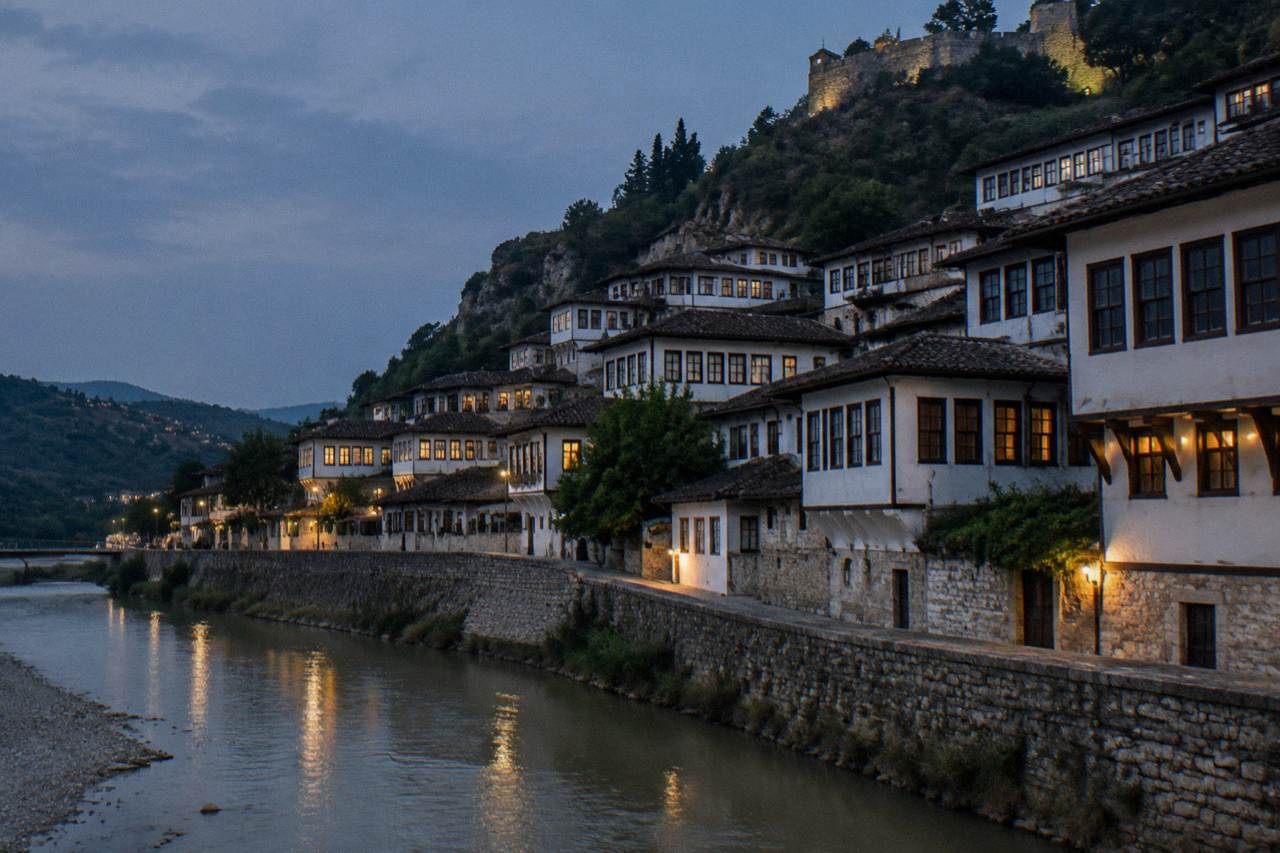
The Holy Trinity Church is a quiet Orthodox presence inside Berat's UNESCO-listed old town in central Albania, best visited as part of a slow walk through the stone lanes, mosques and museums that surround it.
Short answer
The Holy Trinity Church is a small Orthodox church inside the UNESCO World Heritage old town of Berat, in central Albania. It is a living parish church rather than a ticketed museum, so there is no published entry fee or schedule. Plan around it: allow two days for the old town, museums from 300-400 lek, and budget meals from a few hundred lek.
The Holy Trinity Church stands inside the UNESCO-listed old town of Berat, in central Albania, a hill town of Ottoman-era houses stacked above the Osum River and known across the Balkans as the city of a thousand windows. It is not a museum, not a ticketed monument and not a headline sight; it is a small, working Orthodox church that belongs to the everyday fabric of the old town. That is precisely its appeal. This guide covers where it sits, what to expect from a visit, which sacred sites and museums to pair it with, and the practical details, hours, fees, money and transport, that shape a trip to Berat.
What Is The Holy Trinity Church In Berat, Albania?
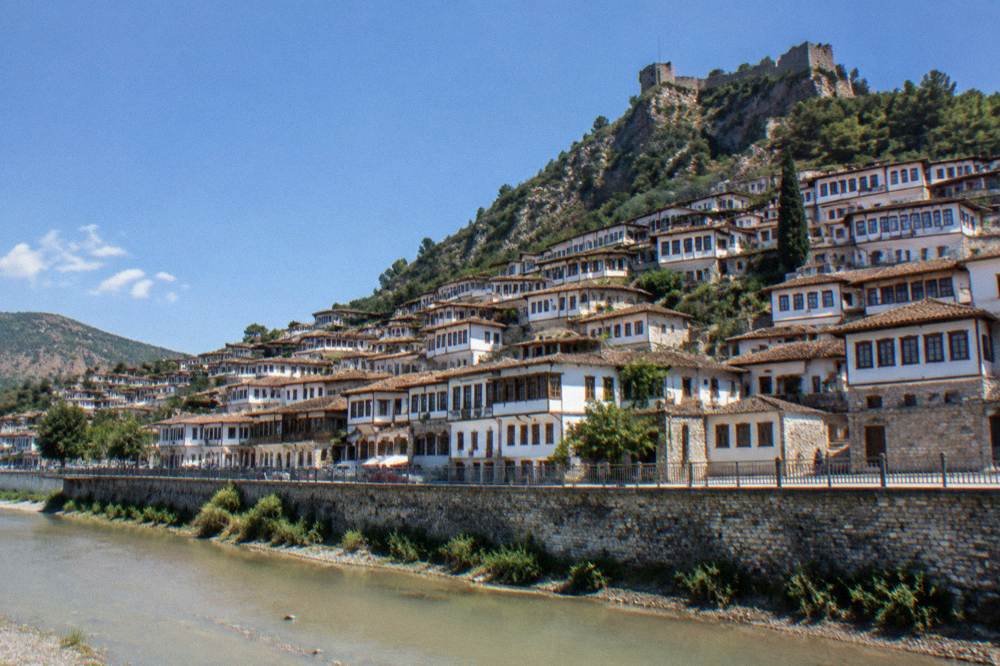
The Holy Trinity Church is a small Orthodox church inside the World Heritage old town of Berat, the Ottoman-era hill city in central Albania on the Osum River. It is a living place of worship rather than an attraction with a ticket office, part of the dense layering of churches and mosques that helped earn the town its UNESCO inscription. A visit takes minutes rather than hours, and it works best folded into a walk through the lanes around it.
Berat holds an unusual place in Albanian religious history. For centuries the town mixed Orthodox Christian and Muslim communities within a single fortified landscape, and the surviving skyline reflects that: church towers, minarets and the long castle ridge all share one silhouette. UNESCO recognized this when it added Berat, as an extension to Gjirokastra, to the World Heritage List in 2008 under the name "Historic Centres of Berat and Gjirokastra". The organization describes Berat as "a rare example of a well-preserved Ottoman town".
The Holy Trinity Church belongs to that heritage but has none of the visitor infrastructure of the big sights. There is no published schedule of hours, no official ticket, no gift shop. What published operational detail exists for Berat's churches tends to attach to the castle's Church of St Mary, which houses the Onufri Iconographic Museum, or to the town's other museum properties. For a small parish church, the honest answer is that you walk up, you look, and if the door is open and no service is running, you step in quietly.
That honesty matters, because a lot of online content about minor Balkan churches is invented filler: invented opening hours, invented entry fees, invented founding dates. Nothing in this page's verified research supports a founding date or a set schedule for this particular church, so none is printed here. Treat it as a five-minute pause in a longer walk, and plan the day around the sights that do publish their details.
| Fact | Detail |
|---|---|
| Country and region | Central Albania, inland, on the Osum River |
| Town status | UNESCO World Heritage, listed 2008 as extension to Gjirokastra |
| Property name | Historic Centres of Berat and Gjirokastra |
| Inscribed area | 58.9 hectares, with a 136.2 hectare buffer zone |
| Municipality population | 62,232 residents (Census 2023) |
| Landscape | Ottoman-era houses in Mangalem and Gorica, castle ridge above |
Where Does The Church Sit In The Old Town Of Berat?
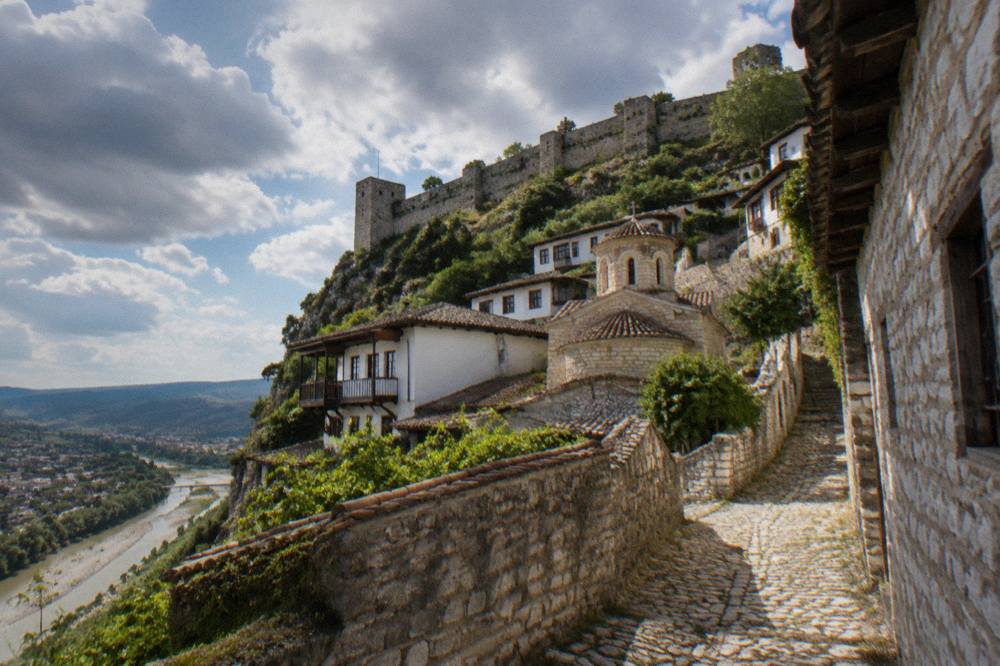
The church sits within the compact old town core, on the same hillside as the Mangalem quarter, between the castle ridge above and the Osum River below. Everything in historic Berat is within walking range of everything else: the Gorica Bridge, the boulevard, the museum quarter and the castle entrances are all part of one walkable townscape, so no separate transport or ticketed transfer is needed to reach it.
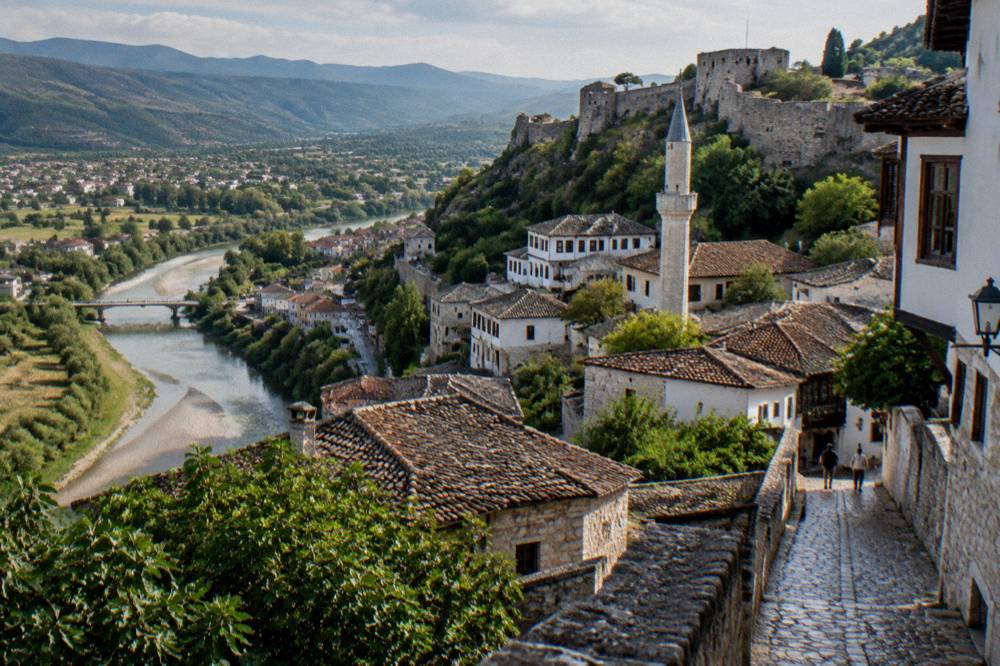
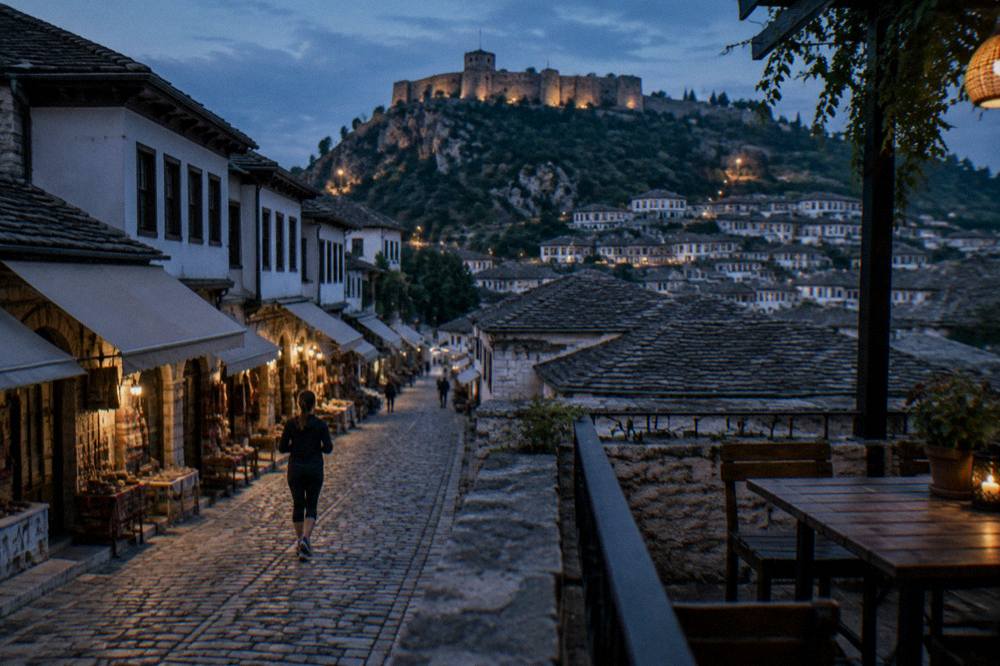
The geography of Berat is simple and worth understanding before arrival. The old town straddles the Osum River. On one bank, Mangalem, the quarter of stacked white houses that gives Berat its thousand-windows nickname, climbs steeply toward the castle. On the other, Gorica, a quieter residential quarter of cobbled lanes, curves around the hill. The two are stitched together by the historic Gorica Bridge, one of the town's most photographed structures and a natural waypoint on any walk.
A sensible route to the church is to start on the boulevard in the new town, cross into the old town streets of Mangalem, work uphill through the lanes, and let the church be one stop among several on the way to or from the castle. Coming down, the historic Gorica Bridge carries you across the river to the Gorica quarter, whose restorations, funded through Albania's urban-tradition projects, were listed as completed in Albania's January 2026 report to UNESCO.
Distances are short but the terrain is not flat. The climb from the river to the castle gate is steep in places, on cobbled and paved slopes. Wear shoes with grip, carry water in summer, and expect to pause. This is a town built for walking at an unhurried Balkan pace, not for rushing between sights on a schedule.
One transport change matters for 2026 and later: car access into the castle quarter, the Kala, is being restricted; plan to park below and walk up. If you are driving, park below and walk up. The restriction is part of a wider "Smart Parking" scheme designed to cut traffic inside the heritage core, and it reinforces the basic rule of visiting Berat on foot.
What Can You See Inside And Around The Church?
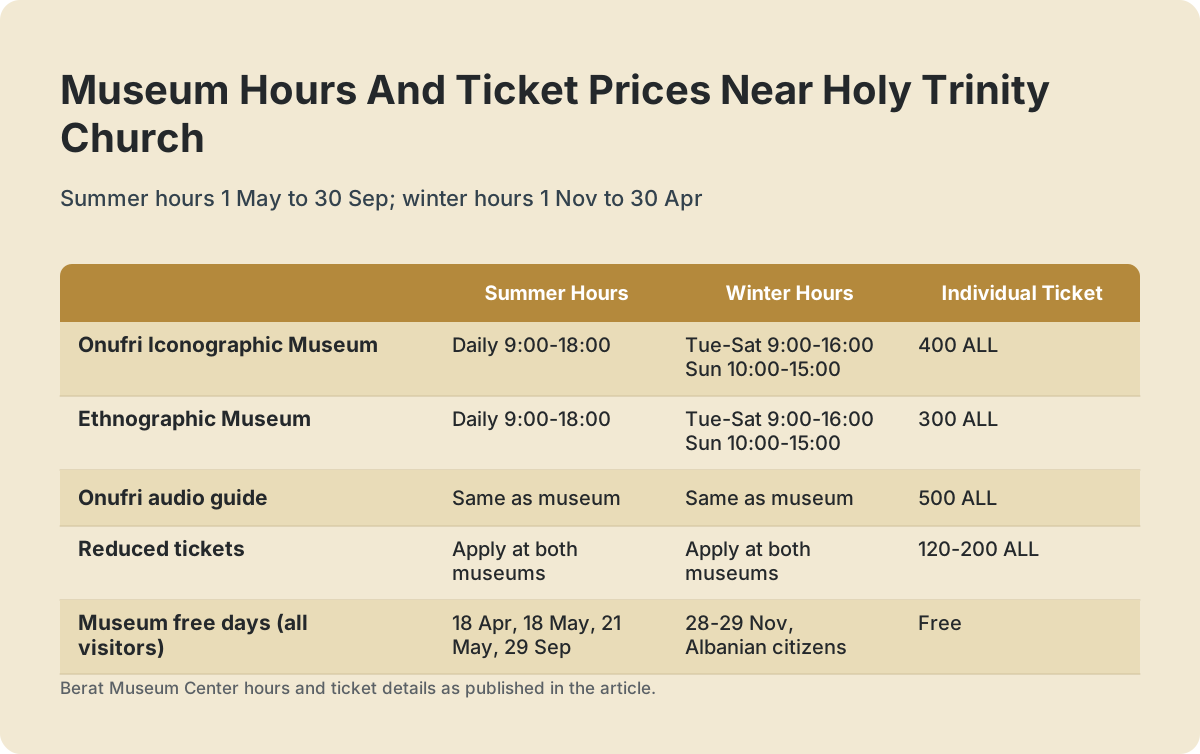
Inside, expect a modest Orthodox parish interior rather than a grand painted church: the reward is the setting, the quiet, and the contrast with the far richer interiors of Berat's museum churches. Around it, the walk delivers the castle, the Onufri icons, the Ethnographic Museum and the mosques of the lower town, all within the same hillside. Plan the church as a short stop inside a loop that takes in the major sights.
The most visited interiors in Berat are elsewhere, and they are excellent. The Church of St Mary inside the castle houses the Onufri Iconographic Museum, which holds the icons of Onufri, the celebrated painter whose work defines the Berat school of icon painting. The museum published a 400 lek individual ticket and a 500 lek audio guide on its official site at the time of this build, with reduced rates for students and young visitors. The Ethnographic Museum, in a grand Ottoman house in Mangalem, reopened on 30 May 2026 after more than three years of restoration and now displays around 1,300 objects; its individual ticket is 300 lek.
Around the church itself, the lanes of Mangalem are the real exhibit. The stacked houses, each with rows of window-filled facades, were built by merchant and craft families, and UNESCO's citation notes that Berat "bears the imprint of a more independent life style, linked to its handicraft and merchant functions". Walking those lanes, with laundry strung between stone walls and guesthouse terraces above, explains the town better than any single building can.
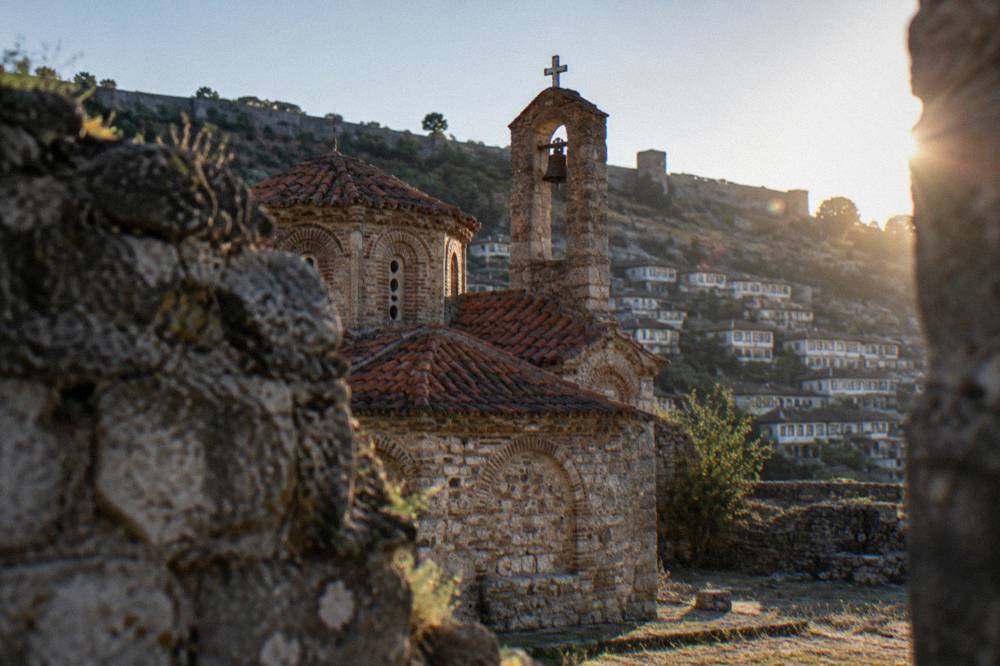
Visitors who arrive from the coast rather than from Tirana often build the same day differently, and the tour market reflects that. Travelers coming up from Vlora can combine the Zvernec monastery island, the archaeological park of Apollonia and Berat in a single long day trip, while those based in Durres or the Golem beach strip most often take a Berat city-and-castle day tour. For anyone staying in Berat itself and wanting a contrast day on the water, the Osumi Canyon rafting and tubing run is the town's most established outdoor product.
If you are planning independently rather than booking anything, the same logic applies: pick one anchor per half-day. The castle and Onufri Museum together fill a morning. The lower town's mosques, the Ethnographic Museum and a slow wander through Mangalem fill an afternoon. The Holy Trinity Church slots into either block without costing you more than a few minutes.
How Does The Church Fit Into Berat's UNESCO Heritage?
The church is part of the fabric that UNESCO inscribed when it extended the 2005 Gjirokastra listing to Berat in 2008, under criteria iii and iv, valuing the town's rare surviving Ottoman townscape. It is not individually listed: World Heritage status attaches to the whole historic centre, 58.9 hectares of it, which is why modest parish churches, ordinary houses and cobbled lanes all carry the same protection.
That distinction answers a question visitors often ask on site. There is no blue plaque, no separate monument marker, no fee, because the listed thing is the ensemble, not the individual building. UNESCO's 2008 decision added "the city centre of Berat" to the existing Gjirokastra property precisely because the two towns together illustrate a rare, well-preserved Ottoman urban type. Berat's version is distinguished by its Christian and Muslim buildings standing within one townscape.
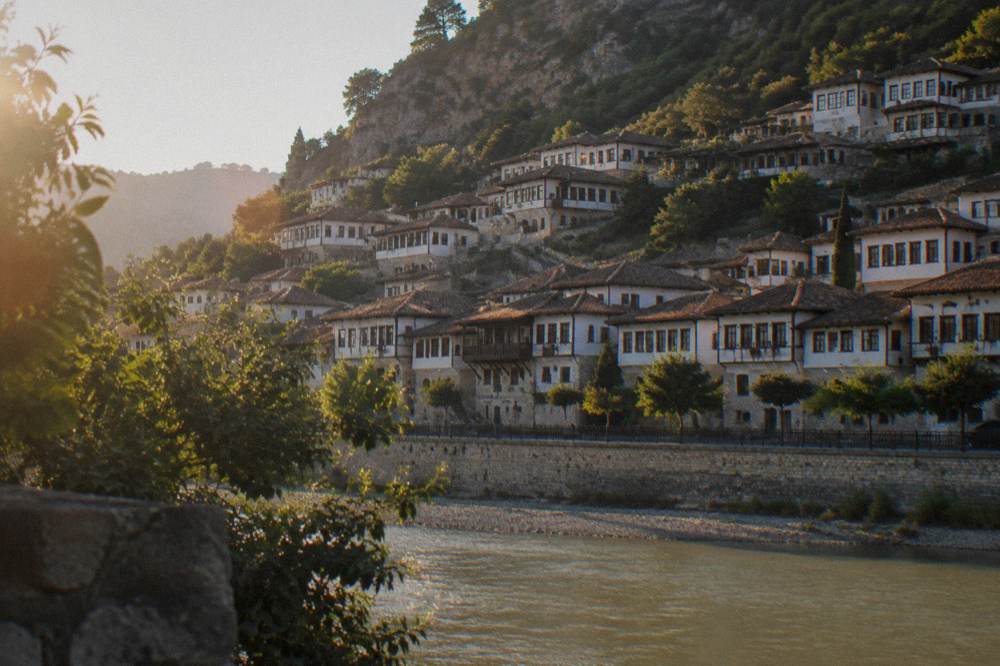
The listing also brings obligations, and Berat's are visibly in motion. Albania's January 2026 State of Conservation report recorded completed restoration projects across the Gorica quarter, the Mangalem quarter, the Gorica castle trail and parking near the Old Gorica Bridge. In mid-2026 the World Heritage Committee, in decision 48 COM 7B.27, urged Albania to suspend the Shkëmbi Road and Osum riverbank projects until heritage impact assessments are completed, and those assessments are in progress. A new 290-metre EU-funded panoramic bridge over the Osum, completed to divert through-traffic away from the historic centre, is the clearest physical result of that protective pressure.
For a visitor, all of this means two things. First, the old town you walk through is actively maintained and actively contested, and parts of it may be scaffolded at any given moment. Second, the quiet lanes, including the one around the Holy Trinity Church, are protected precisely because they are ordinary. Respect the residential character: these are people's homes, with guesthouses among them, not a theme park.
Since the region around Berat is also an outdoor destination, many visitors split their stay between heritage walking and canyon time. If a day on the Osumi Canyon appeals, the rafting and tubing adventure that runs from Berat covers the river in roughly half a day door to door.
Which Sacred Sites Should You Pair With The Church?
Pair the Holy Trinity Church with the Onufri Museum inside the castle for Orthodox art, the Ethnographic Museum for domestic Ottoman life, and the King, Lead and Bachelor mosques in the lower town for the Islamic half of Berat's shared skyline. St Michael's Church on the castle ridge and St Demetrius Cathedral on the boulevard complete the set. Doing all of them takes one full, unhurried day.
The pairing is not arbitrary. Berat's World Heritage value rests on the coexistence of traditions, and a visit that sees only churches or only mosques misses the point of the place. The practical route is to cluster: castle sights in the morning, lower-town mosques and the cathedral in the afternoon, with the Holy Trinity Church encountered en route through the lanes.
| Site | Tradition | Location | What You Get |
|---|---|---|---|
| Onufri Iconographic Museum (Church of St Mary) | Orthodox | Inside the castle | Icons of the Berat school, 400 lek ticket |
| Ethnographic Museum | Secular, Ottoman house | Mangalem | Reopened 2026, around 1,300 objects, 300 lek |
| King Mosque | Muslim | Lower old town | One of Berat's principal historic mosques |
| Lead Mosque | Muslim | Below the castle wall | Historic mosque near the riverbank |
| Halveti Tekke | Bektashi Sufi | Mangalem | A surviving Sufi lodge in the old lanes |
| St Michael's Church | Orthodox | Castle ridge | A painted church with wide views |
| St Demetrius Cathedral | Orthodox | Boulevard | Cathedral of the town, central and easy |
| Red Mosque ruins | Muslim | Inside the castle | Among the earliest Islamic buildings in the fortress |
Guided walks tie these threads together efficiently. A premium guided walking tour with expert local guides covers the old town's churches and mosques in about two hours and suits a first morning, and the same family of products extends into evening photography walks. For visitors who prefer a structured castle day, a small-group castle and old town tour is the middle option between a free walk and a private guide.
A note on etiquette covers all of the buildings in the table above, including the Holy Trinity Church. Shoulders and knees covered in churches and mosques, quiet voices, no flash photography where interiors are painted, and a small donation in churches that welcome it rather than a fixed fee. On days when a service is running, simply come back later; the town is small enough that this costs you nothing.
What Opening Hours And Entry Fees Apply Nearby?
The Holy Trinity Church itself publishes no hours or fee, so plan around the institutions that do: the Berat Museum Center runs Onufri from 9:00 to 18:00 and the Ethnographic Museum on the same clock from 1 May to 30 September, with shorter winter hours, and tickets are 400 lek and 300 lek respectively. Online tickets have been available through Albania's e-Albania portal since November 2025, and museum free days exist on set national dates.
The museum hours are the single most useful scheduling fact in Berat, because almost every other sight follows daylight rather than a clock. The castle grounds are a lived-in quarter, open around the clock, though a small heritage fee may be collected at the gate during staffed daytime hours, so carry some lek. The official position on that gate fee is not settled in any primary source this site could verify, so bring a few hundred lek and expect nothing more than a modest charge.
| Institution | Summer Hours (1 May to 30 Sep) | Winter Hours (1 Nov to 30 Apr) | Individual Ticket |
|---|---|---|---|
| Onufri Iconographic Museum | Daily 9:00-18:00 | Tue-Sat 9:00-16:00, Sun 10:00-15:00 | 400 ALL |
| Ethnographic Museum | Daily 9:00-18:00 | Tue-Sat 9:00-16:00, Sun 10:00-15:00 | 300 ALL |
| Onufri audio guide | Same as museum | Same as museum | 500 ALL |
| Reduced tickets | Apply at both museums | Apply at both museums | 120-200 ALL |
| Museum free days (all visitors) | 18 Apr, 18 May, 21 May, 29 Sep | 28-29 Nov, Albanian citizens | Free |
Two footnotes on that table. October is not listed on the museum's own seasonal-hours page, so if you travel in that month, check locally or online before counting on a specific closing time. And children under 12 enter free, with student and reduced rates requiring documents, so carry identification for discounts.
What Is The Best Time Of Day To Visit And Photograph?
Late afternoon and early evening are the best hours: the low sun rakes across Mangalem's west-facing windows, the day-trip crowds have started leaving, and the summer heat has eased. In July and August, when Berat's heat can top 40 °C, do the castle climb before mid-morning, keep the lower-town mosques and the church for late afternoon, and save the riverbank and the Gorica Bridge for the last light.
Berat's climate has no official published station normals, so describe it honestly: hot, dry summers and wetter winters, with rainfall concentrated in the late-autumn and winter months and July the driest. The practical consequence is that light and heat, not rainfall, drive your daily rhythm for most of the year. Summer 2026 saw Berat record the country's highest readings on its hottest day, and shade is scarce on the castle slope.
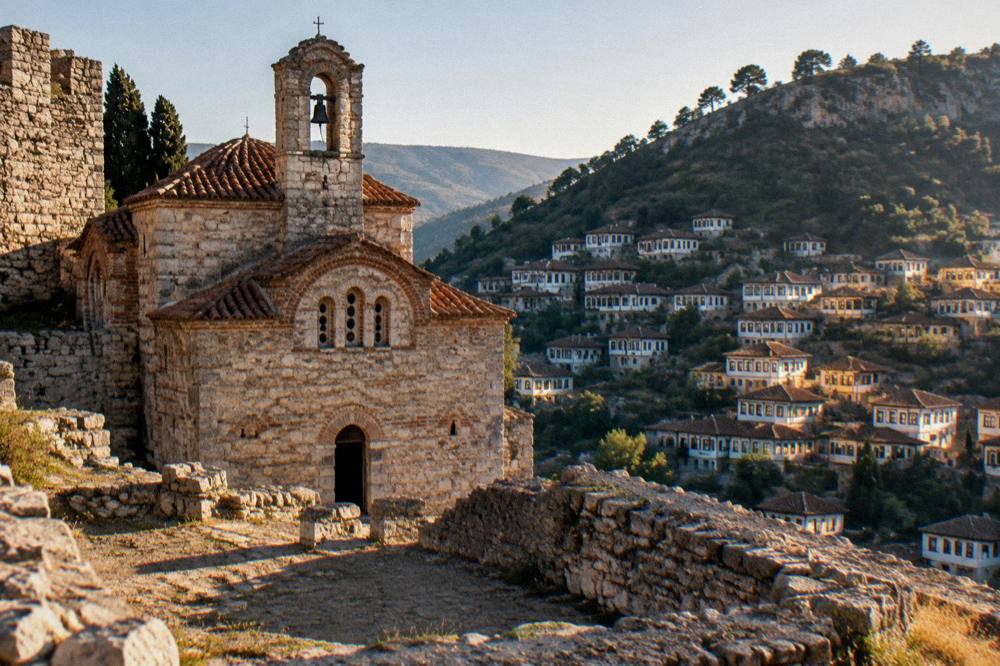
Photographically, the town divides into two classic shots. The thousand-windows wall of Mangalem photographs best with mid-morning or late-afternoon side light, while the classic panorama of the Gorica quarter and the bridge across the river works in the hour before sunset, from the Mangalem side of the valley. The castle walls at golden hour, with the Osum valley opening behind, are the third staple. A modest phone camera is genuinely enough; the subject is doing the work.
For travelers who want a guide for the photographic side of the day, a night-focused city tour with a photography emphasis exists in the roster, as do castle-focused small-group tours that time the climb sensibly.
Season by season, spring and early autumn give the most comfortable walking temperatures and fewer midday crowds. Winter is quiet, some guesthouses close or reduce rates, and the museum hours shorten, but the lanes photograph beautifully after rain. Whenever you go, the planning pages on Berat's weather carry the qualitative picture in more detail.
How Much Time Should You Spend In The Old Town?
One full day covers the castle, Onufri Museum, the lower-town mosques and a proper Mangalem wander, but it feels rushed. Two days is the sweet spot: the first for the castle and museums, the second for Gorica, the riverbank, the Ethnographic Museum and a slower church-to-mosque loop that actually absorbs the town. Anything beyond two days opens the canyon, winery and mountain country around Berat.
The case for two days is not the number of sights, it is the pace. Berat rewards the second morning, when you have stopped checking things off and start noticing doors, courtyards and the way the light moves across the hillside. Most first-time visitors who stay one night say they wish they had stayed two; most who stay two say the town earned it.
| Day | Morning | Afternoon | Evening |
|---|---|---|---|
| Day one | Castle climb, Onufri Museum, St Michael's | Lower-town mosques, cathedral, Holy Trinity Church | Dinner in Mangalem, first riverbank walk |
| Day two | Ethnographic Museum, Gorica quarter loop | Free time, guesthouse terrace, shopping in the lanes | Gorica Bridge and the thousand-windows view at sunset |
| Add-on day | Osumi Canyon rafting or tubing | Return transfer, rest | Winery visit or cooking class |
Where you sleep shapes the trip more than in most towns. Sleeping inside Mangalem or the castle puts you in the postcard at dawn and dusk; Gorica is quieter and suits families; the new-town boulevard is convenient and cheaper. The guide to where to stay in Berat breaks the quarters down, and the eating guide for Berat does the same for the town's inexpensive kitchens.
Food deserves its own sentence or two. Berat's cooking leans on qifqi rice dumplings, tavë kosi, lamb baked under yogurt and egg, and japrak, stuffed vine leaves, all of it served at prices that still surprise visitors from western Europe. Local meals run from a few hundred lek for byrek and tea to mid-teens for a full traditional dinner for one, and raki is poured generously at both ends of a meal. Slow Food has a community based in Berat, and the town's restaurants lean on local, seasonal ingredients.
What Does A Trip To Berat Cost?
Berat remains one of the better-value heritage destinations in Europe: budget meals and a cappuccino cost little by European standards, guesthouse beds remain affordable, and the two main museums together cost 700 lek in cash. Carry cash in lek, since the old town is largely a cash economy and foreign-card ATM withdrawals commonly carry fees of 500-800 lek.
The currency is the Albanian lek (ALL), and the Bank of Albania's official rate has run at roughly 92 lek to the euro and about 81 lek to the dollar in late September 2026. Euros are accepted informally by some tourist-facing businesses, but change comes back in lek and the exchange is usually unfavorable, so withdraw lek and pay in lek. Albania is not in the eurozone and not an EU member; there is no border logic that makes euros the local currency here.
| Item | Typical Figure | Notes |
|---|---|---|
| Cheap restaurant meal | Cheap by European standards, cash in lek | Basic local kitchens, one dish |
| Mid-range dinner for two | Cheap by European standards | Traditional restaurant, several courses |
| Cappuccino | Café standard | |
| Espresso | Cheap by European standards, pay in cash lek | Old-town cafés |
| Raki by the shot | Around €2 | Often offered on the house |
| Guesthouse night | Cheap by European standards, cash in lek | Mangalem and Gorica listings |
| Both main museums | 700 ALL combined | Onufri plus Ethnographic, full adult rate |
Those figures are planning ranges drawn from 2025 and 2026 cost reporting, not promises: prices move with the season and inflation in Albania's tourism sector has been real, with accommodation and services running roughly 6.5 percent higher in recent measurements. Check the actual menu or listing rather than budgeting to the lek. Product figures for tours, ratings and durations are not typed on this page at all; they render in the booking blocks from verified operator data.
Getting there is cheap too. Buses and shared furgons run from Tirana's South-North bus terminal to Berat through the day, take about two and a half hours, and cost a few hundred lek paid in cash. There is no direct airport bus and no passenger train to Berat; the railway reconstruction underway in the west of the country is aimed elsewhere and does not serve the town. The Tirana to Berat transport guide covers terminals and timing in detail.
What Should You Know Before You Go?
Before you travel, sort four things: entry rules, money, safety and season. Albania is not in the EU or Schengen; UK, EU and most Western visitors enter visa-free for 90 days in any 180, and US citizens may stay up to a year without a residence permit. Bring lek in cash for the old town, take normal urban precautions at night, and dial 112 for emergencies, with 127 for ambulance and 129 for police.
Entry rules are simple but often misread. Albania is a candidate country in EU accession negotiations, with all negotiating clusters opened and the first chapters provisionally closed in mid-2026, but it is not yet a member. Days spent in Albania do not count against your Schengen allowance. Passports for UK visitors need three months of validity beyond departure, and the same practical rule of thumb serves everyone.
Safety is a normal-city question, not a special one. The UK foreign office carries no advice against travel to any part of Albania, and the US State Department rates the country Level 2, exercise increased caution, on general crime grounds. Street crime, opportunistic theft and late-night discretion are the practical points; incidents targeting tourists in Berat are rare. The safety guide for Berat goes further on neighborhoods, stray dogs and tap water.
Money and cards: Visa and Mastercard work at some hotels and larger venues, but Mangalem's lanes, small kitchens and museum ticket desks are cash territory. Use bank-branch ATMs rather than standalone machines, and decline the machine's offer to convert the charge for you. Tap water quality gets mixed advice, with municipal sources judged generally fine and some official advisories recommending bottled water, so bottled water is the easy default.
Respect for religious sites, covered earlier, applies to the Holy Trinity Church as much as to the mosques. And one small practical habit: keep a paper card from your guesthouse with its name in Albanian. The old town's lanes all look alike after dark, and the name is more useful than a map pin.
What Lies Beyond The Old Town Of Berat?
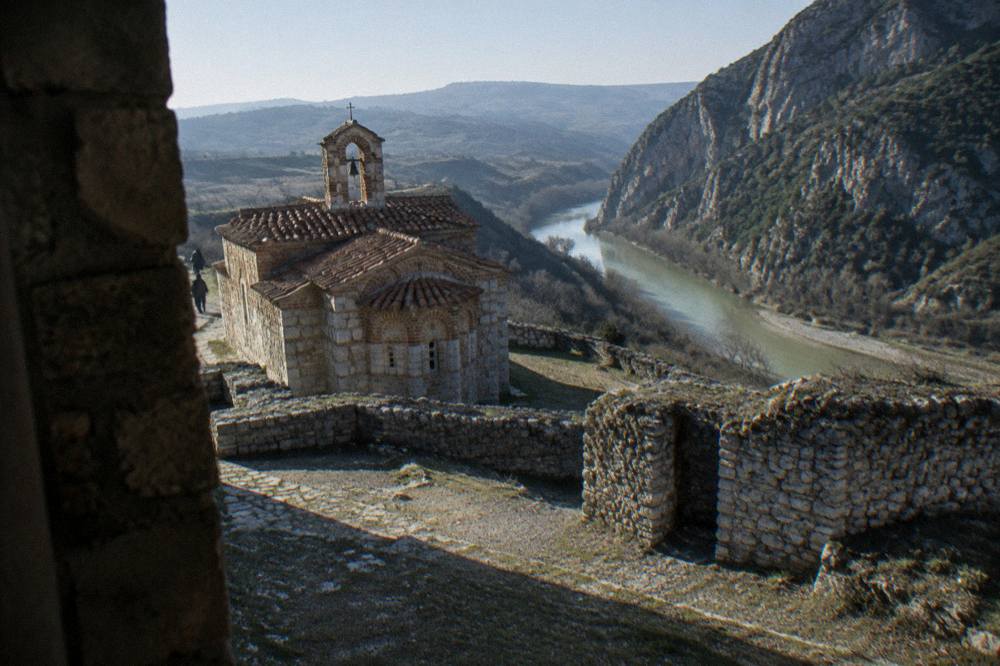
Beyond the old town, the Osumi Canyon is the headline trip: a protected natural monument near Çorovodë with free rim viewpoints and seasonal rafting and tubing on the river. Nearer options include the wineries of the Roshnik hills, and farther afield the ruins of Apollonia and the UNESCO town of Gjirokastra make full-day pairings. Mount Tomorr, at 2,416 metres, dominates the skyline to the east.
The canyon is Berat's adventure wing. The gorge is roughly an hour to an hour and a half from town on paved road, the rim viewpoints such as the Bride's Hole and the old Italian bridge are free to visit, and the river inside runs rafting trips in spring, when snowmelt swells it, and tubing through summer and autumn as levels drop. The seasons matter: if you want white water, come in spring; if you want a calmer float with swimming stops, come in summer. Bogovë waterfall, a short forest walk from its village, often rides along on the same day.
The town's featured canyon product is a rafting and river-tubing adventure with swimming and lunch, Check availability, and the same product family runs from short tubing floats to full canyoning days at Bigazi waterfall. The Osumi Canyon guide covers the seasons, the viewpoints and the drive in depth.
Wine is the other half of the countryside around Berat. The hills south of town hold family wineries working with native grapes: Shesh i Zi and Shesh i Bardhë from central Albania, plus local white varieties, and one Berat producer making a traditional-method sparkling from local fruit aged on its lees. Tastings usually come with olives, cheese and raki, and the wineries around Berat are close enough to be a half-day.
If you have a third day or are routing onward, two excursions stand out. Apollonia, the ancient ruin city on the plain west of Berat, pairs with the coast on a loop toward Vlora. Gjirokastra, the stone-roofed UNESCO town to the south, makes a natural second heritage stop after Berat, and the Gjirokastra day trip page covers the route. This Berat Travel Guide site carries the full set of those pairings, each with its own verified practical detail.
Common Questions About The Holy Trinity Church In Berat
What Is the Holy Trinity Church in Berat, Albania?
A small Orthodox parish church inside the UNESCO-listed old town of Berat, in central Albania. It is a living place of worship, not a museum, and it is part of the mixed church-and-mosque townscape that earned Berat its World Heritage listing in 2008.
Where Does the Church Sit in the Old Town of Berat?
In the walkable old town core on the Mangalem hillside, between the castle ridge and the Osum River. The whole historic centre, including the Gorica Bridge, the museums and the castle gates, is covered on foot in one or two days.
What Are the Opening Hours and Entry Fees for the Holy Trinity Church?
None are published, because it is a working parish church rather than a ticketed site. The museums that publish details nearby charge 400 lek for Onufri and 300 lek for the Ethnographic Museum, with seasonal hours from 9:00 to 18:00 in summer.
Which Other Sacred Sites Should You Pair With the Church?
The Onufri Museum inside the castle, St Michael's Church on the castle ridge, St Demetrius Cathedral on the boulevard, and the King, Lead and Bachelor mosques in the lower town. Together they show both halves of Berat's religious heritage in a single day of walking.
How Much Time Should You Spend in the Old Town?
Two days is the comfortable answer. One packed day covers the castle, Onufri and the lower-town mosques, but a second day lets you add Gorica, the Ethnographic Museum and a slower loop, or a canyon or winery trip outside town.
What Does a Trip to Berat Cost?
Less than most of Europe: expect cheap meals by European standards, affordable guesthouse nights, and both main museums for 700 lek combined. Carry lek in cash, since the old town runs largely on it.