Berat Old Town
The Berat Old Town is the UNESCO-inscribed heart of a hill town in central Albania, where the stone quarters of Mangalem, Gorica and the Kala castle rise above the Osum River. This guide covers what to see, where to eat, how long to stay and what a visit actually costs.
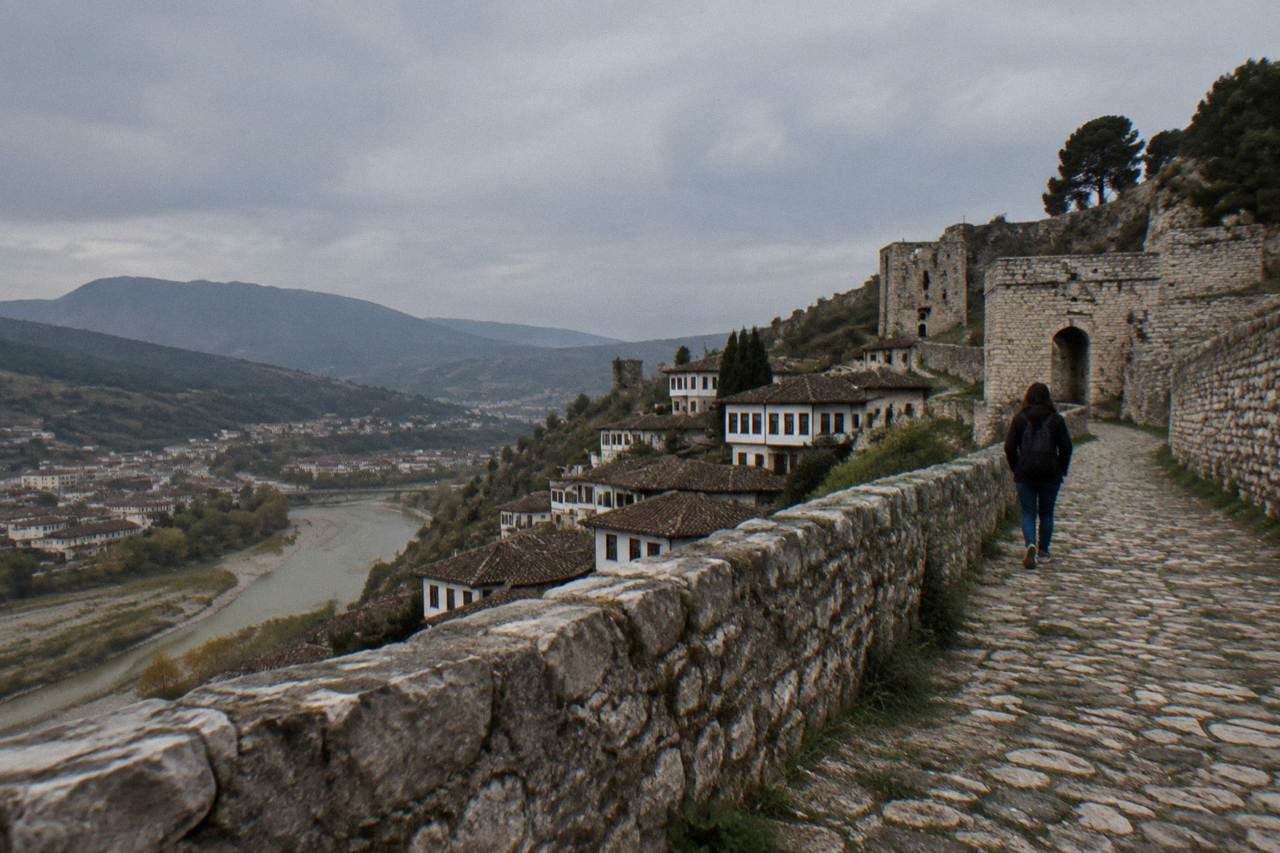
Short answer
The Berat Old Town is a UNESCO World Heritage site in central Albania, added to the list in 2008 as an extension of the Historic Centres of Berat and Gjirokastra. Plan on two days: one for the Kala castle and the Onufri Museum (400 ALL entry), one for Mangalem, Gorica and the riverside. Most old-town streets are free to wander on foot.
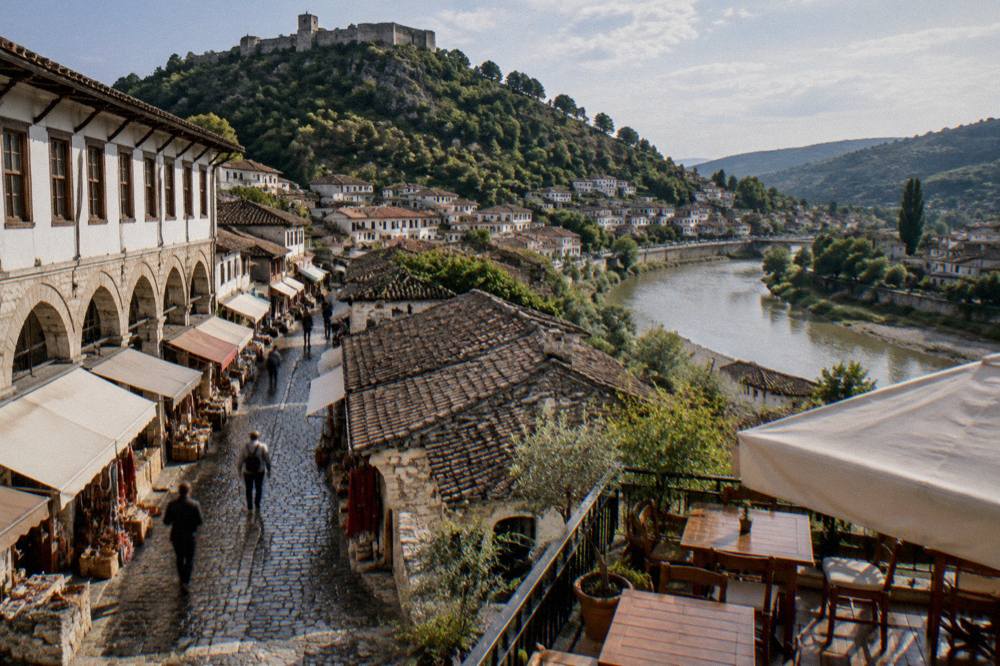
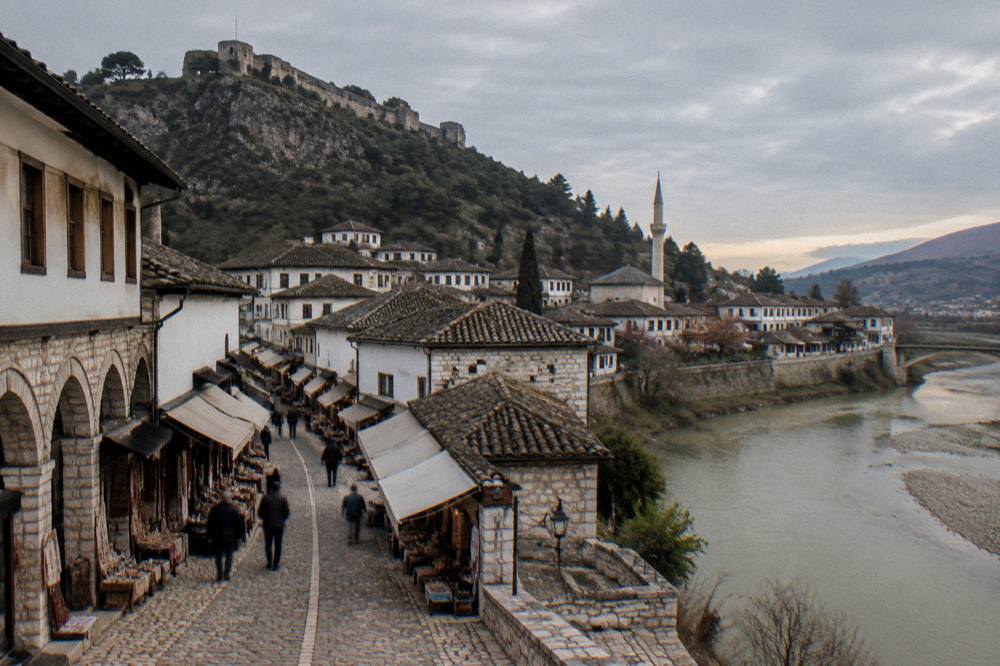
Berat, a UNESCO World Heritage Ottoman-era hill town in central Albania on the Osum River, holds one of the most complete historic townscapes in the Balkans. The town was added to the World Heritage List in 2008 as an extension of the "Historic Centres of Berat and Gjirokastra", a listing that had begun with Gjirokastra in 2005. UNESCO describes Berat as "a rare example of a well-preserved Ottoman town", and the description holds on almost every lane of the old quarters: white houses stacked in tiers above the river, each façade punched with rows of windows that earned the city its nickname, the town of a thousand windows. This Berat Travel Guide page walks the old town street by street, from the castle at the top to the mosque-lined boulevard at the bottom.
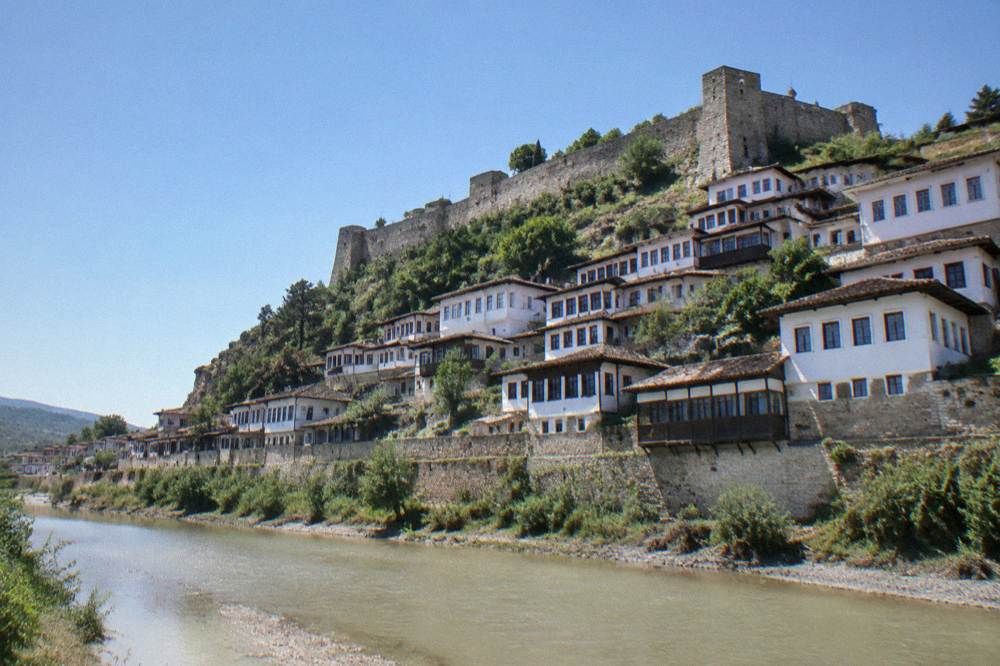
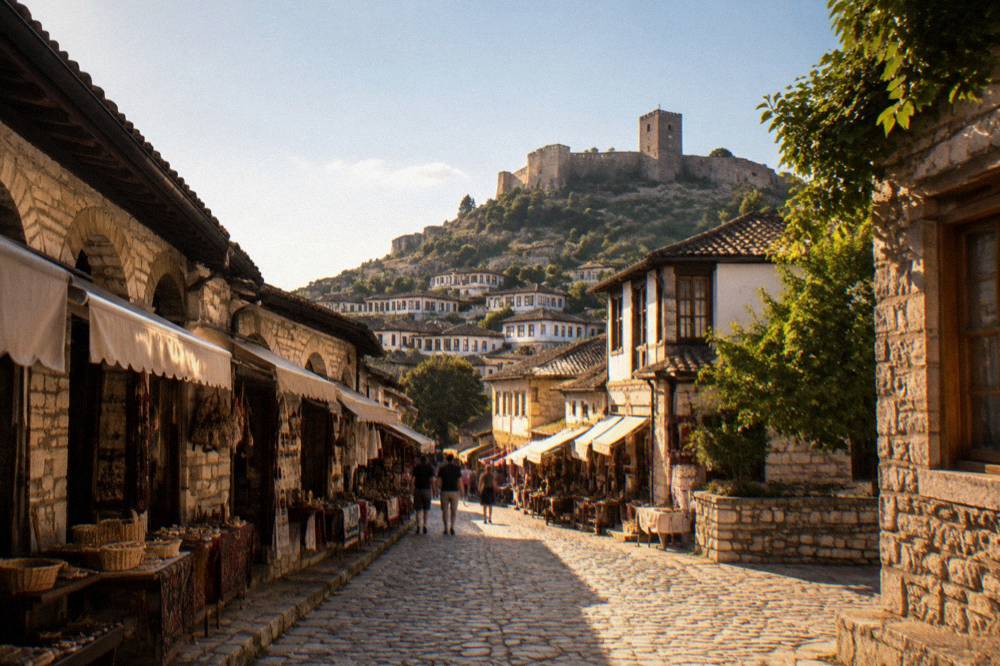
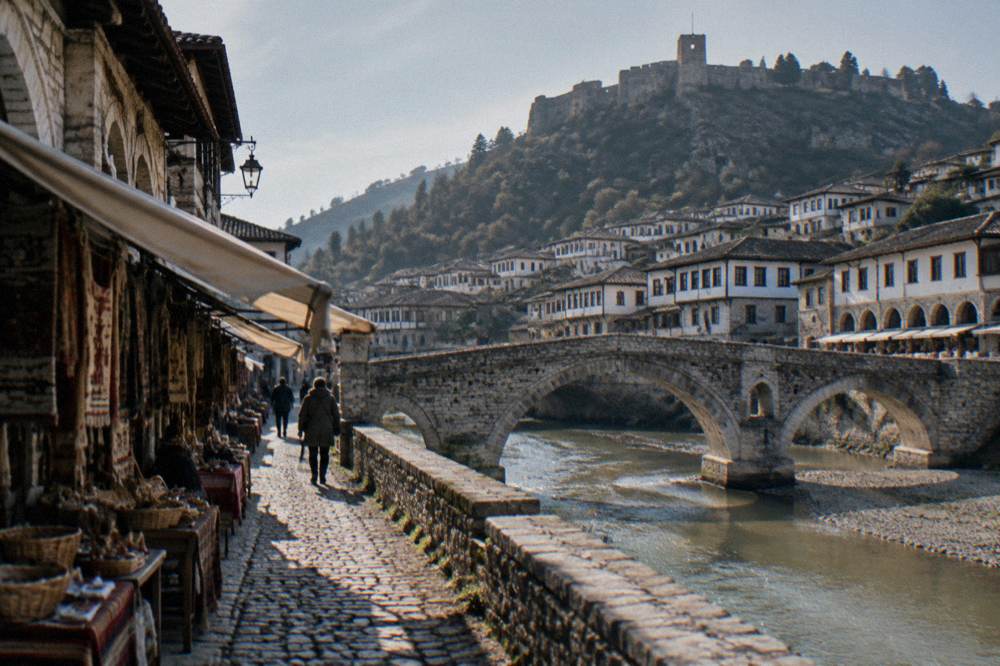
Before the detail, the shape of the place. The old town spreads across three linked areas: Mangalem on the west bank below the castle, Gorica on the east bank, and the Kala, the castle quarter, on the hill above Mangalem. The Osum River divides Mangalem from Gorica, and the Gorica Bridge, an old stone arch bridge, carries walkers between them. The whole ensemble is small enough to cross on foot in under an hour, yet dense enough to fill two comfortable days. Visitors with only a single day should read one day in Berat planning advice and be selective, because the uphill walk to the castle eats time and energy in summer heat.
What Is The Berat Old Town And Why Is It UNESCO Listed?
The Berat Old Town is the historic core of Berat in central Albania, inscribed by UNESCO in 2008 as part of the "Historic Centres of Berat and Gjirokastra", a World Heritage property listed under criteria (iii) and (iv) with a combined protected area of 58.9 hectares and a buffer zone of 136.2 hectares. UNESCO cites Berat as a rare surviving Ottoman town where Christian and Islamic monuments coexist within an unbroken residential fabric.
The listing rests on continuity. Where many Ottoman towns in the region were rebuilt or erased, Berat's quarters kept their domestic architecture, their places of worship and their street patterns. The World Heritage documentation notes that Berat "bears the imprint of a more independent life style, linked to its handicraft and merchant functions", and that character is visible in the craftsmen's houses of Mangalem, which were built narrow and tall to fit the hillside plots, with window rows facing the view rather than the street grid.
Religious tolerance is the second pillar. Within a few hundred metres the old town holds Christian Orthodox churches, among them the Church of St Mary inside the castle that now houses the Onufri Iconographic Museum, and a family of mosques including the King Mosque, the Bachelor's Mosque, the Lead Mosque and the Red Mosque up in the Kala. The Halveti Tekke sits between them. Each has its own page in this guide's attraction section if you want depth, starting with the Berat Castle guide and the Gorica Bridge guide.
The protected quarters are living neighbourhoods, not open-air museums. Around 62,232 people lived in the Berat municipality at the 2023 census, and families still occupy houses inside the castle walls, a point that matters for how you behave on the lanes: quiet at night, no drone photography over rooftops without asking, and a general willingness to greet people you pass. That lived-in quality is what UNESCO's monitoring reports keep returning to, both as the town's charm and, with traffic pressure growing, as its vulnerability.
| Feature | Detail |
|---|---|
| UNESCO property name | Historic Centres of Berat and Gjirokastra (list ID 569) |
| Berat added to the list | 2008, as an extension of the 2005 Gjirokastra inscription |
| Criteria | (iii) and (iv) |
| Property area (both towns) | 58.9 hectares |
| Buffer zone (both towns) | 136.2 hectares |
| Old quarters | Mangalem, Gorica, Kala |
| Municipality population, 2023 census | 62,232 |
How Do You Spend One Perfect Day Walking The Old Town?
A one-day route that works: start at the Gorica Bridge at morning light, cross into Mangalem, walk the steep lane up to the Kala castle, spend the middle of the day in the castle quarter and the Onufri Museum, descend to the Boulevard Republika mosques in the late afternoon, and end on the east bank at sunset looking back at the thousand windows. The whole loop is walkable, though the climb to the castle is steep and takes real effort in heat.
The order matters because of the light. The famous window façades of Mangalem face east across the river, so morning is when photographers get the classic postcard view from the Gorica bank. That is also the coolest hour for the castle climb, which is the single most demanding part of the day. Bring water; the castle lanes offer almost no shade between late morning and late afternoon, and summer heat in Berat can top 40 °C.
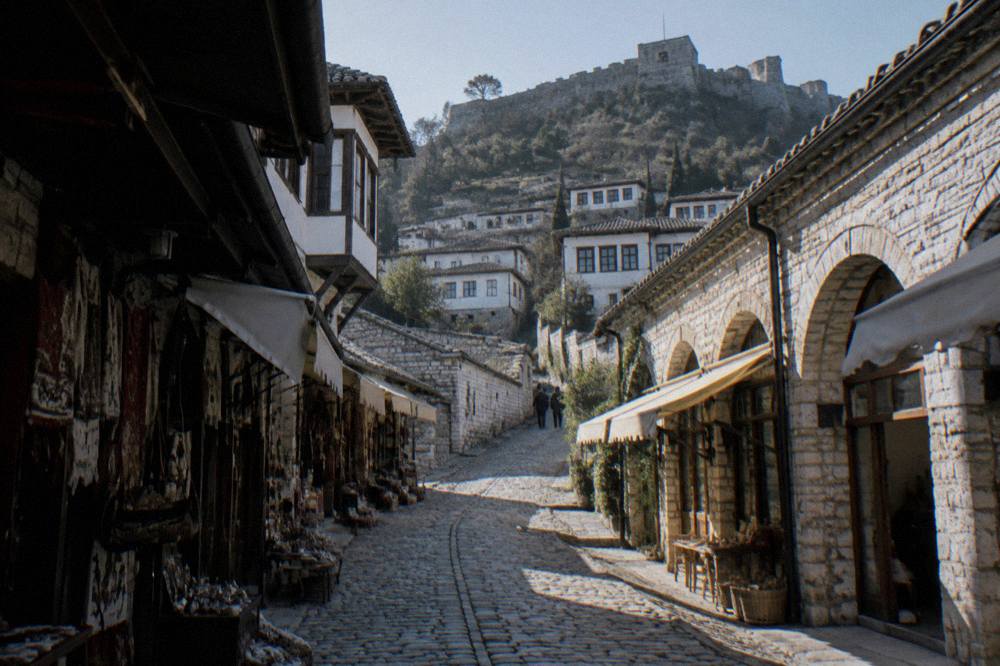
Inside the Kala, the reward is spatial rather than monumental. The castle-city walls carry 24 defensive towers, and about 42 churches once stood inside, of which roughly eight survive in some form. The Red Mosque, among the earliest Islamic buildings in the fortress, still shows its surviving minaret base. The quarter is residential today: guesthouses operate inside the walls, and a centuries-old building next to the Onufri Museum was being converted into an eight-room family guesthouse under the 2025 National Investment Scheme. Walk the full wall circuit while you are up there; the view down the Osum valley is the best in town.
For travellers who would rather have a local unlock the lanes, a guided walk changes the experience completely, and there are several formats to compare:
A history-and-food option such as the Berat History & Local Food tour pairs the quarter's story with its table, which suits visitors who want context but not a lecture. If you would rather move at your own pace, the route below stands alone perfectly well. Just remember that the castle's surface is worn stone and loose gravel in places, so shoes with grip beat sandals.
| Time | Where | Why it works at that hour |
|---|---|---|
| Early morning | Gorica Bridge and east bank view | Mangalem's window façades catch the first light; cool air |
| Morning | Climb through Mangalem to the Kala | Steepest section done before the heat builds |
| Midday | Castle walls, Onufri Museum | Museum offers shade and the town's finest icons |
| Late afternoon | King Mosque, Halveti Tekke, Bachelor's Mosque | Flat walking on the boulevard as temperatures ease |
| Sunset | Gorica bank of the Osum River | The thousand-windows view with the day's best colour |
Which Museums And Landmarks Should You See First In The Old Town?
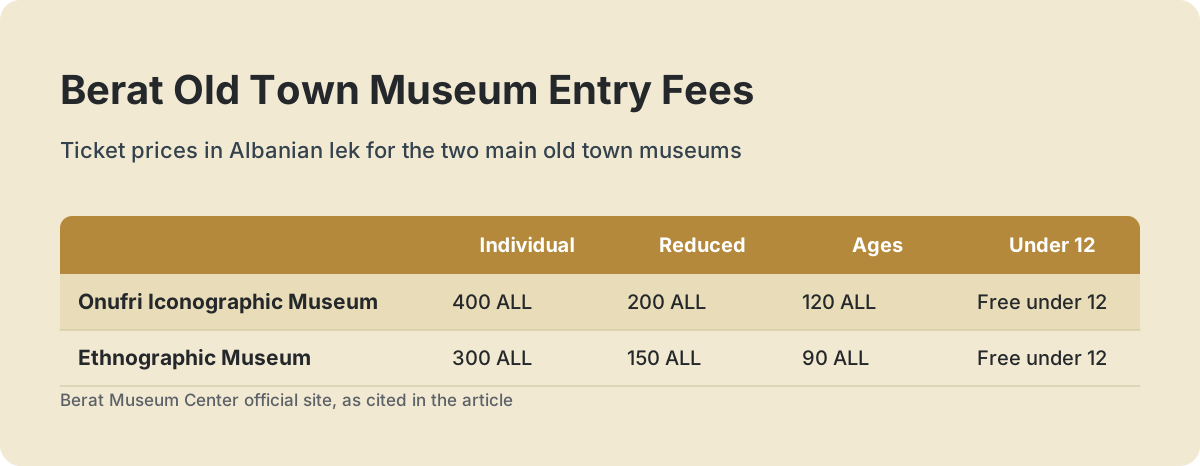
See the Onufri Iconographic Museum first, entry 400 ALL, because it explains the icon-painting tradition that shaped every church in the old town; then the Ethnographic Museum, 300 ALL, which reopened on 30 May 2026 after three years of restoration with around 1,300 objects on display; then the Gorica Bridge and the mosque group on the boulevard, which cost nothing to view from outside.
The Onufri Museum sits inside the Church of St Mary in the castle quarter, so it combines naturally with the wall walk. The museum holds the works of Onufri, the celebrated head of the Berat school of icon painting, and of his successors. Its ticket structure is clear from the Berat Museum Center's official site: 400 ALL individual, 200 ALL reduced, 120 ALL for ages 12 to 18 and students, children under 12 free, and a 500 ALL audio guide. Tickets can also be bought online through the e-Albania ticketing portal launched in November 2025, which covers museums in Berat alongside other national heritage sites.
The Ethnographic Museum, in a grand Ottoman house in Mangalem, is the newer story. It reopened on 30 May 2026 after a restoration that lasted more than three years, with roughly 1,300 objects arranged across the house's period rooms. Entry is 300 ALL, reduced 150 ALL, ages 12 to 18 and students 90 ALL, under 12s free. The house itself, with its guest room, kitchen and courtyard layout, teaches you as much about how Berat families lived as any label can.
The Solomon Museum, founded in 2018 by Professor Simon Vrusho, is the only museum in Albania dedicated entirely to the Jewish community, and it belongs on the list for anyone with an interest in the town's layered history. Its hours and fee are not published in a verified source, so check locally before walking over.
| Museum | Entry (individual) | Reduced | Ages 12-18 / students | Children |
|---|---|---|---|---|
| Onufri Iconographic Museum | 400 ALL | 200 ALL | 120 ALL | Free under 12 |
| Ethnographic Museum | 300 ALL | 150 ALL | 90 ALL | Free under 12 |
Free-entry days announced by the Berat Museum Center are worth planning around if your dates allow. The museums also publish fixed seasonal hours, which shift between the summer and winter seasons, so a winter visitor finds shorter days than a summer one.
| Free-entry day | Who it applies to |
|---|---|
| 18 April | All visitors |
| 18 May | All visitors |
| 21 May | All visitors |
| 29 September | All visitors |
| 28 and 29 November | Albanian citizens only |
For many visitors the castle-and-food pairing is the most efficient way to buy context, and the small-group Berat Castle & Old Town tour covers the core landmarks with a guide who handles the pacing. Check availability on the operator's live listing if that format appeals.
Where Should You Eat And Drink In Mangalem And Gorica?
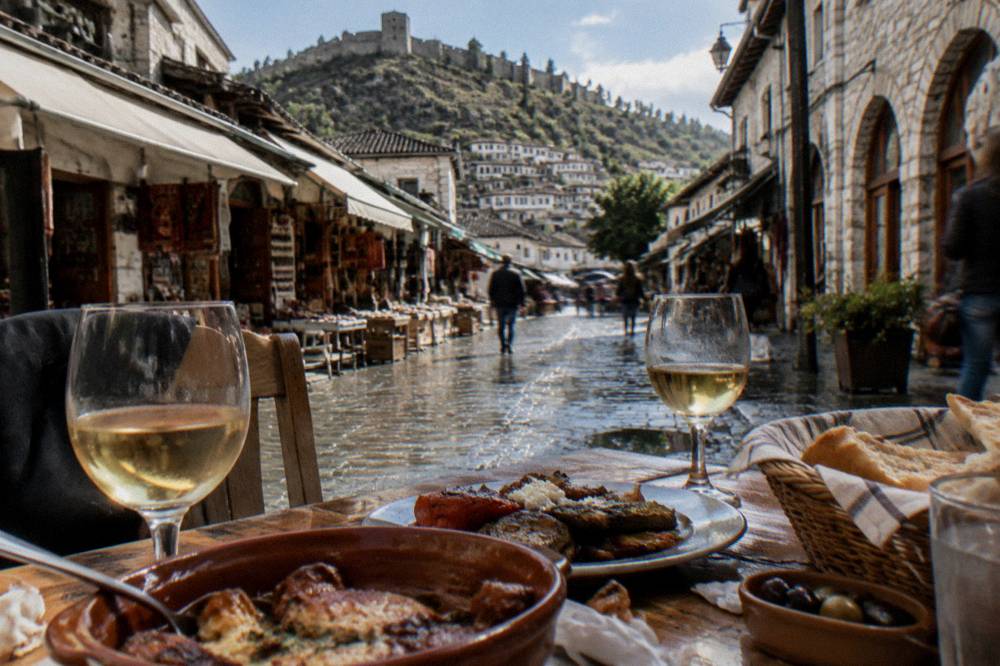
Eat in Mangalem or Gorica rather than the new town, because the old quarters carry both the atmosphere and the traditional cooking: qifqi, the local rice dumplings with mint and fennel, tavë kosi, lamb baked under a yogurt and egg crust, and japrak, stuffed grape leaves, are the three dishes the region is known for, and the town's white Puls wine and its raki are the local pours. The Slow Food Berat community is headquartered here and works to keep those recipes on menus.
The old town's eating is grounded in the region's products rather than in visitor tastes. Berat sits in wine country: the Shesh i Zi and Shesh i Bardhë grapes of central Albania and the rarer Berat-area white Puls all grow in the surrounding hills, and wineries such as Cobo in the Berat region make wine from Shesh i Bardhë, Shesh i Zi, Vlosh and Puls, including a traditional-method sparkling Puls aged on its lees. Some restaurants pour these local labels; many more pour raki, the fruit brandy that opens and closes Albanian meals. A fuller rundown lives in where to eat in Berat.
| Dish or drink | What it is |
|---|---|
| Qifqi | Berat's signature rice dumplings, seasoned with mint and fennel and fried |
| Tavë kosi | Lamb baked with yogurt, eggs and rice, a national dish with strong Berat roots |
| Japrak | Stuffed grape leaves, a Slow Food Berat favourite |
| Puls wine | A rare Berat-area white grape, made still and sparkling |
| Raki | Fruit brandy, commonly grape, served as a welcome or a digestif |
For visitors who want the food story told rather than just served, a cooking class or a winery visit turns a meal into the trip's best memory, and there are well-reviewed options across both formats. A guided walk with food and wine tasting moves between the quarters with tastings built in, which suits a short stay.
Practical money notes matter here. The currency is the Albanian lek, not the euro, and the old town is largely cash territory: cards are accepted at some hotels and larger restaurants, but many small kitchens and guesthouses want lek. Euros are sometimes accepted informally in tourist-facing businesses, with change usually given in lek and at a worse rate, so paying in lek is the better habit. ATMs exist in Berat, and foreign-card fees can be high, so withdraw once rather than in dribs and drabs. The deeper detail is in the money and currency guide and in is Albania cheap or expensive.
Do You Need A Guided Tour To Enjoy The Berat Old Town?
No, the Berat Old Town is compact, signposted and entirely walkable alone, and many visitors do it happily with a map and two days; but a guide adds real value in three places, the castle's history, the icon tradition inside the Onufri Museum, and the food culture of the quarters, and travellers on a tight schedule often get more from one guided walk than from two days of self-direction.
The honest comparison is about depth. Berat's lanes are self-explanatory as scenery; the reasons those lanes look the way they do are not. Why the houses stacked vertically, why a mosque and a church share a wall line, why the icon painters of the Berat school mattered: those are the stories a guide carries. The premium expert-guided walking format is the classic choice here, a two-hour walk with a local guide that leaves the rest of your day free.
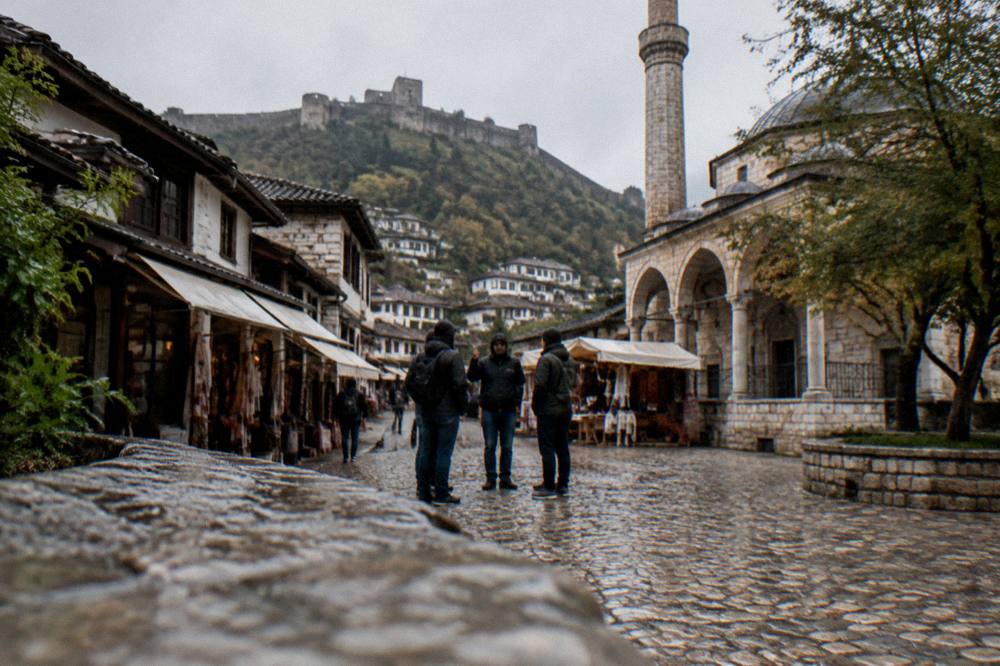
Guided formats come in several shapes and it pays to match the format to your energy. Some walks focus on photography and run into the evening, some pair the walk with tastings, some head out of town to wineries in the surrounding hills. If your base is the coast or Tirana, a day trip that bundles transport, a guide and free time removes all the logistics; the trade-off is a shorter, faster visit than an overnight stay allows. How many days to spend comes down to appetite, and how many days in Berat is enough is the question to settle before booking anything.
Where Should You Stay Inside The Berat Old Town?
Stay in Mangalem for the classic thousand-windows atmosphere and the walk to the castle, in Gorica for quieter lanes, garden guesthouses and the best view back across the river, or inside the Kala itself for the rare experience of sleeping within castle walls, accepting that everything you need is then a steep walk away.
Each quarter has a distinct character. Mangalem is the postcard: tiered houses, rooftop terraces, restaurants and bars, and the steepest lane to the castle. Gorica, across the bridge, is calmer, with restored historic houses and the sunset view of Mangalem's façades. The Kala is the most unusual: a handful of guesthouses operate inside the walls, and a centuries-old building next to the Onufri Museum was being converted into an eight-room family guesthouse. The trade is simple: atmosphere versus convenience, because the climb up with luggage is real.
One planning note affects anyone driving: vehicle access into the castle quarter is being restricted, with a municipal system limiting entry to residents, pre-booked hotel and restaurant guests, licensed local taxis and similar categories, so if your guesthouse is inside the walls you should confirm arrival arrangements with the host before you drive up. The full rundown of neighbourhoods, properties and parking is in where to stay in Berat.
| Quarter | Atmosphere | Best for | Trade-off |
|---|---|---|---|
| Mangalem | Postcard lanes, terraces, busy evenings | First visits, photographers, short stays | Steepest lanes, most foot traffic |
| Gorica | Quieter, garden houses, river views | Couples, longer stays, sunset views | Cross the bridge for castle and museums |
| Kala (castle) | Sleeping inside the walls, silent nights | Heritage immersion, star viewing | Climb up and down daily, plan car access |
When Is The Best Time Of Year To Visit The Old Town?
Late spring and early autumn are the best times to visit the Berat Old Town, when the walking is comfortable, the castle climb is bearable and the river still carries water; summer brings the hottest conditions, with Berat heat capable of topping 40 °C, and winter is wetter and quieter, with museums on their shorter seasonal hours, so the trade is between comfort and atmosphere.
The climate pattern is straightforward: hot, dry summers and wetter winters, with rainfall concentrated in the late-autumn-to-winter stretch and the driest spell in high summer. There are no official published station normals for Berat, so the honest advice is qualitative: expect serious heat in July and August, mild shoulder seasons either side, and cool, damp but far from closed winter months. If your dates are flexible, the best month to visit Berat digs into the trade-offs.
Two date-specific events can anchor a trip. The Bektashi pilgrimage to Mount Tomorr, at the tomb of Abaz Ali high above Berat, runs annually in August, and the 2026 edition drew enormous crowds with police traffic restrictions around the Kulmak Tekke; the town fills up in that window. In early October the "Wine & Stories of Berat" festival takes over the town with tastings from Albanian and Kosovo wineries, judged by international oenologists, alongside artisanal cheese and olive oil events; the 2026 edition ran from 2 to 4 October. The wine festival is arguably the single best weekend of the year to combine the old town with its vineyards, and the Berat wineries guide covers the visiting options.
How Much Does A Visit To The Berat Old Town Actually Cost?
A day in the Berat Old Town costs very little in absolute terms: the two main museums together are 700 ALL, roughly seven euros at about 92 lek to the euro, the streets, bridge and viewpoints are free, and food and guesthouse beds set the real budget, with cheap restaurant meals running to a few hundred lek and guesthouses in 2026 listings starting around 44 US dollars a night; the castle grounds may carry a small daytime heritage fee at the gate, so bring lek.
The honest budget picture splits into fixed and variable parts. The fixed part is small: museum tickets, and possibly a modest gate fee for the castle grounds in daytime hours, for which no official current figure is published, so carry a few hundred lek in cash and treat any fee as pocket change. The variable part is food and bed, and both are moderate by regional standards. Meals in Berat are cheap by European standards, and raki is inexpensive, though exact prices vary, so carry cash in lek. Those are planning ranges, not promises: check the menu before you sit.
| Cost item | Planning figure | Notes |
|---|---|---|
| Onufri Museum entry | 400 ALL | Audio guide 500 ALL extra |
| Ethnographic Museum entry | 300 ALL | Reopened May 2026 |
| Castle grounds | Small possible daytime fee | No verified current figure; bring cash |
| Cheap restaurant meal | Inexpensive; cash in lek is best | Cheap by European standards |
| Mid-range dinner for two | Cheap by European standards | Pay in cash in lek |
| Cappuccino | Cheap by European standards, pay in cash in lek | Aggregated 2026 price reports |
| Guesthouse night | From about 44-79 USD | 2026 accommodation listings |
Getting there is cheap too. Buses and furgons run to Berat from Tirana's South-North bus terminal, taking about two and a half hours, with fares of a few hundred lek paid in cash; the Tirana to Berat guide covers timetables and the terminal layout. No passenger train reaches Berat, and there is no direct bus from Tirana's airport, so overland visitors change in Tirana. Safety is rarely a live concern: UK travel advice notes no areas of Albania under a travel warning, though the US advisory asks for increased caution overall, and is Berat safe addresses the practical side for solo and family travellers.
For anyone weighing Berat against the other candidate towns of the region, the comparison guides are worth a skim before committing days: which is better Gjirokastra or Berat and what is the prettiest town in Albania both come down on different sides depending on what a traveller wants from a town. Berat's old quarters win on intimacy and food culture; its rivals win on other axes.
If one guided experience is worth fitting into the budget, the small-group castle and old town walk is the most efficient single purchase for a first visit.
Whichever format suits you, book the walking slots for the cooler end of the day and leave the middle hours for a long lunch in Mangalem or Gorica, which is the old town's own rhythm and a better plan than fighting the midday sun on the castle lanes. With that decided, the last comparison worth making is between the three guided options this page recommends, side by side.
Common Questions About The Berat Old Town
Is the Berat Old Town the same as the Berat Castle?
No. The old town spans three quarters: Mangalem below the castle, Gorica across the river, and the Kala, which is the castle quarter on the hill. The castle is one part of the old town, and the whole ensemble is inside the UNESCO World Heritage property.
How long does it take to walk around the Berat Old Town?
Crossing the old town on foot takes under an hour at a steady pace, but a real visit needs a day for the castle, the Onufri Museum and the two riverside quarters, and two days is the comfortable standard. The climb to the castle is steep and slows most visitors down, especially in summer heat.
Do you need tickets for the Berat Old Town itself?
No. The streets, the Gorica Bridge, the riverside promenade and the viewpoints are free public space. Tickets apply to the museums: 400 ALL for the Onufri Iconographic Museum and 300 ALL for the Ethnographic Museum. A small daytime fee may apply at the castle gate, so carry some lek.
Can you stay inside the Berat Old Town?
Yes. Guesthouses operate in Mangalem, Gorica and inside the castle walls, including a conversion of a centuries-old building next to the Onufri Museum into an eight-room family guesthouse. Vehicle access into the castle quarter is restricted, so confirm arrival arrangements with your host.
Is the Berat Old Town walkable for older visitors or children?
The boulevard, the bridge and the riverside are flat and easy. Mangalem's lanes are cobbled and sloped, and the climb to the castle is a genuine uphill walk on worn stone. Older visitors and families with small children often prefer a licensed taxi up and a walk down.
When is the Berat Wine and Stories festival held?
The "Wine & Stories of Berat" festival runs over three days in early October, with the 2026 edition held from 2 to 4 October. It brings Albanian and Kosovo wineries, music, artisanal cheese and olive oil events, and a wine contest judged by international oenologists.