Lead Mosque Berat
The Lead Mosque is one of the quietest stops in Berat, Albania: a small Ottoman-era mosque with a lead-sheathed dome in the old lower town, best understood on a walk that links it to the castle, the Gorica quarter, and the museums above.
Short answer
The Lead Mosque in Berat, central Albania, is a small Ottoman-era mosque in the old lower town beneath the castle, named for the lead plates that sheath its dome. You see it from the outside on any walk up from Mangalem; it is close to Berat Castle, where the Onufri Museum charges 400 ALL and the Ethnographic Museum 300 ALL.
Berat, in central Albania, is a UNESCO World Heritage Ottoman hill town strung along the Osum River, and the Lead Mosque is one of the small, quietly important buildings that make the lower old town feel like a single continuous monument rather than a collection of photo stops. The mosque takes its name from the lead plates that sheath its dome, a construction detail that survived centuries of weather and turnover in a town where almost everything else is whitewash, stone, and glass. It sits in the old lower town below the castle, on the walking line between the Gorica bridge and the fortress gates, which is exactly why most visitors meet it without planning to.
Berat earned its World Heritage inscription as part of the property "Historic Centres of Berat and Gjirokastra", added to the existing Gjirokastra listing in 2008, and UNESCO describes the town as a rare example of a well-preserved Ottoman town. The Lead Mosque belongs to the layer of that story most visitors under-notice: the working religious architecture of the lower town, built for everyday prayer rather than imperial display. This guide covers what the mosque is, exactly where it sits, what you can actually see there, how it compares with Berat's other Ottoman mosques, which sights pair with it, and the practical details of visiting, all from verified local information. The site's own Berat Travel Guide covers the rest of the town, from the King Mosque to the Gorica Bridge.
What Is The Lead Mosque In Berat?
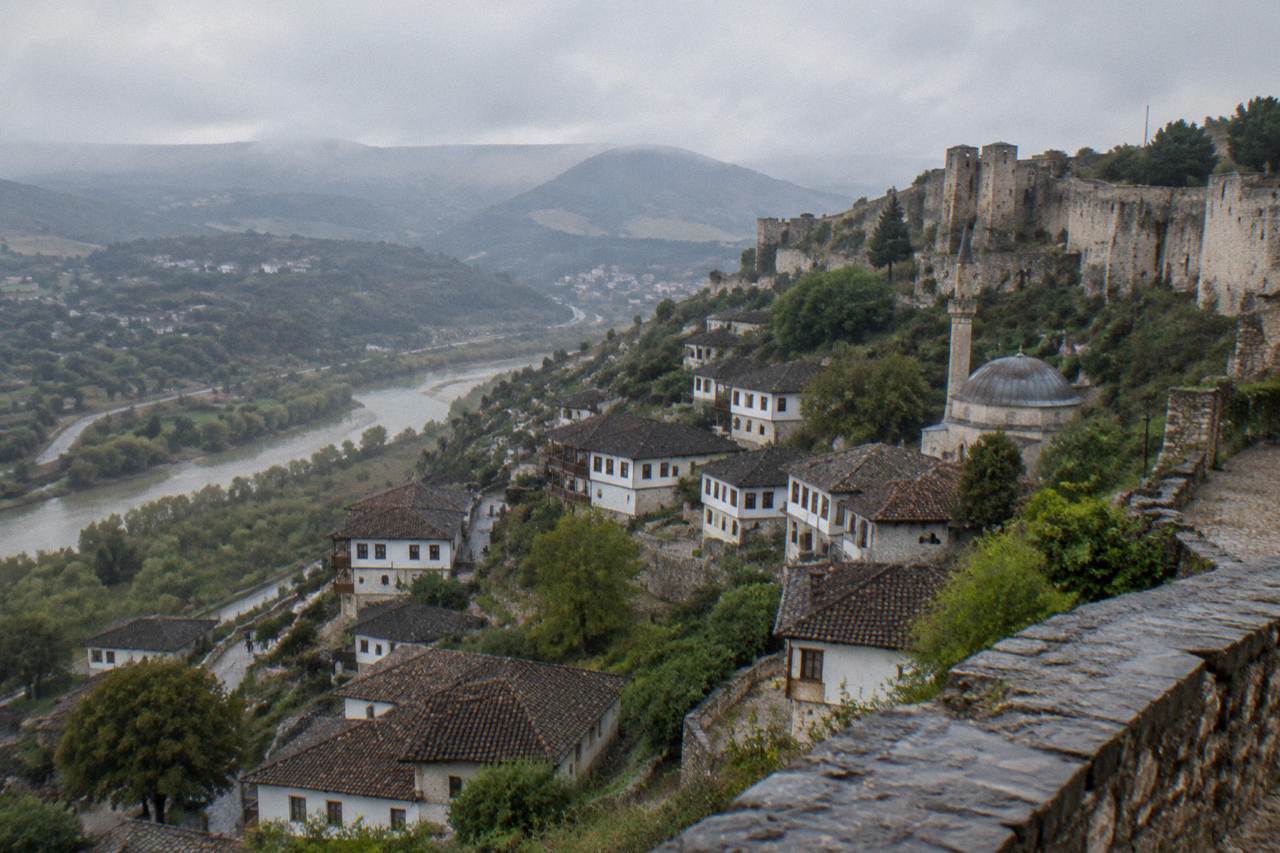
The Lead Mosque is a small Ottoman-era mosque in Berat, Albania, whose dome is sheathed in lead plates, the detail that gives the building both its Albanian name and its standing among the town's historic religious buildings. It stands in the old lower town beneath the castle, on the natural walking route between the river quarter and the fortress, and it is best appreciated from outside as part of that route. No published opening hours or admission arrangements exist for the building itself.
That last point matters more than it sounds. Many of Berat's mosques are heritage buildings rather than active places of worship, and their interiors open irregularly, when a caretaker is present or a conservation project requires access. The Lead Mosque is in this category. The reliable way to see it is as a stop on foot: you walk the lanes of the lower town, you reach the mosque, you look at the dome, the stone walls, and the way the building folds into the hillside streets around it, and you continue on toward Berat Castle. Treat an open door as a bonus, not a plan.
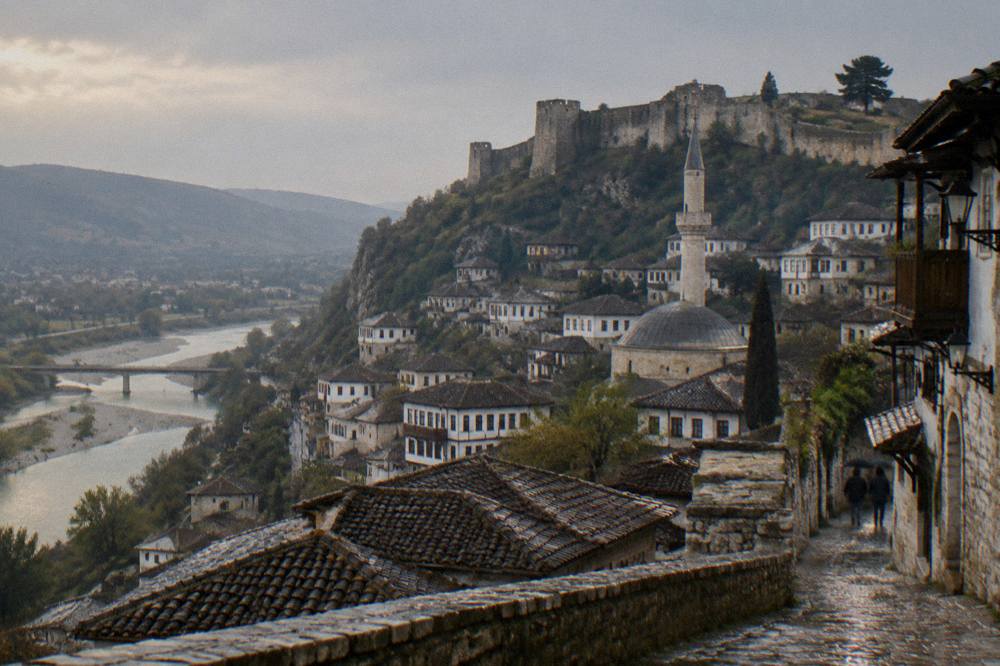
The leadwork is the signature. Ottoman builders used lead sheeting on domes across the empire because it is durable, malleable, and weathers to a soft grey that sits comfortably against stone and whitewash. In Berat, where the skyline is otherwise defined by the stacked windows of Mangalem and the long ridge of the fortress, a grey lead dome reads as a deliberate accent. Photographers who know the town consistently put it on the shortlist of small buildings worth a frame, alongside the Red Mosque inside the castle walls, whose ruins are counted among the earliest Islamic buildings in the fortress.
Context helps too. The mosque belongs to the same Ottoman centuries that produced the King Mosque, the Bachelors' Mosque, and the Halveti Tekke, and it belongs to the same conservation framework: Albania's heritage system lists historic buildings as cultural monuments, which gives them legal protection and, in theory, a maintenance schedule. The 2026 UNESCO state of conservation reporting on Berat records completed restoration projects across the Mangalem and Gorica quarters, the Gorica castle trail, and parking works near the Old Gorica Bridge, part of a longer heritage-led programme for the whole old town. No specific 2026 restoration or closure is reported for the Lead Mosque itself, which means there is no news to plan around and no reason to delay a visit.
Where Is The Lead Mosque And How Do You Reach It?
The Lead Mosque stands in the old lower town of Berat, Albania, a short walk uphill from the Gorica bridge and the riverfront, on the route most people take toward the castle on foot. Almost every visitor reaches it by walking, because the historic quarters are compact, pedestrian in character, and increasingly managed for foot traffic rather than cars. Allow a relaxed half day for mosque, castle, and museums together.
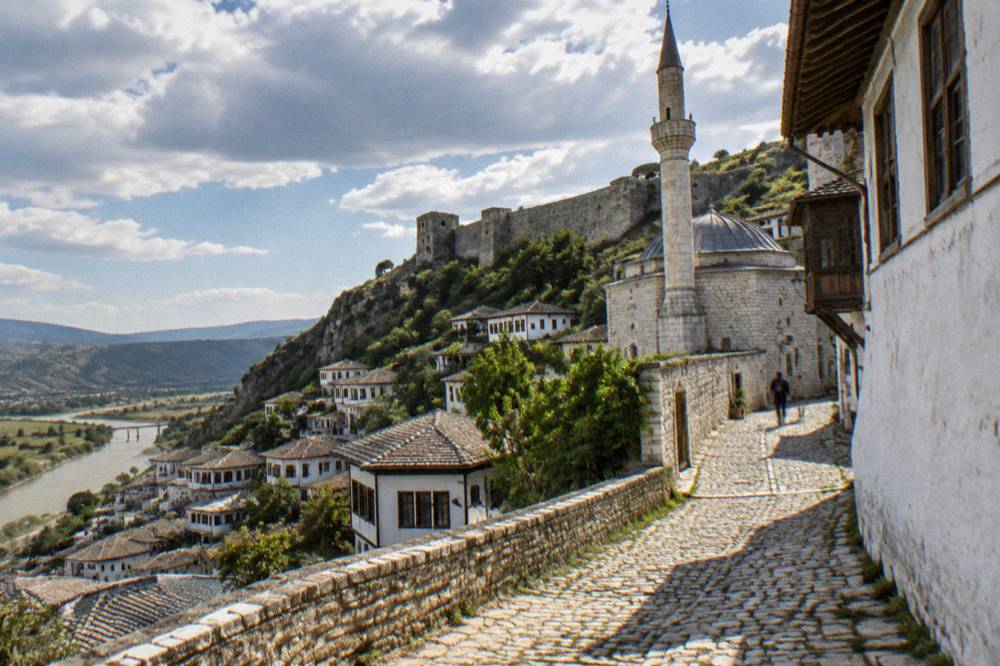
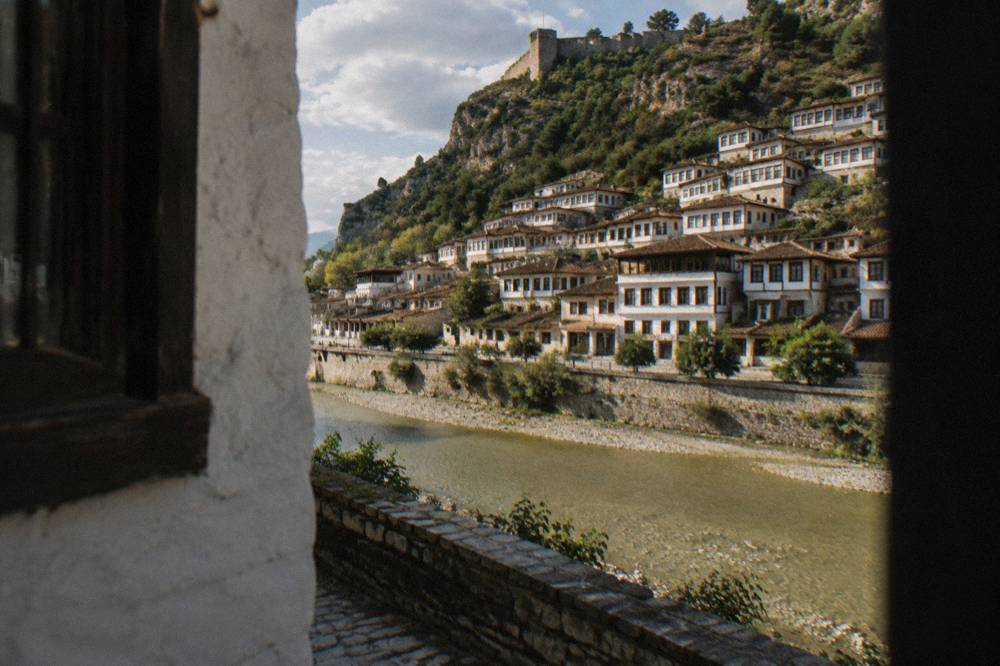
The walking geography is simple. The old town is split by the Osum River: Mangalem on one bank, Gorica on the other, joined by the historic Gorica bridge. The Lead Mosque sits in the lower town on the castle side, woven into the streets that climb from the river toward the fortress ridge. The walk from the bridge to the castle gate passes through these lanes, and the mosque sits along the way, which is why guides use it as a narrative stop: the Ottoman town at street level before the imperial view from the walls.
One recent change genuinely affects arrival by car. Car access into the castle quarter is being restricted; plan to park below and walk up. The practical translation is simple: park below and walk up. A UNESCO state of conservation report from January 2026 describes the associated "Smart Parking" project at Berat Castle as under implementation, with barriers and shuttle provisions intended to calm traffic around the heritage core. For the Lead Mosque this is not a problem at all, since the whole point of the lower town is to walk it.
If you are arriving from outside Berat, the verified basics are these:
| Arrival route | The verified reality |
|---|---|
| Bus or furgon from Tirana | Departs Tirana's South-North bus terminal, roughly 2.5 hours to Berat, fare a few hundred lek paid in cash |
| From Tirana airport | No direct bus to Berat; transfer through Tirana first |
| By train | No passenger rail line reaches Berat; national reconstruction projects are elsewhere |
| By car | Drive to the edge of the old town, park below, and continue on foot |
The full transport picture, including the airport transfer detail, is covered in the site's guide to the route from Tirana to Berat. Once you are in the old town, distances stop mattering: the mosque, the bridge, the castle gate, and the museums all sit within one continuous stroll.
For visitors who prefer a structure to their wandering, a guided walk compresses the lower town into a coherent story in about two hours, with the mosque stops included.
The trio above is deliberately mixed: an expert-led walking tour of the town itself, a canyon-and-waterfall adventure for the active day, and a premium castle-and-lake excursion for the wider region. The walking option is the natural fit for this page, since the Lead Mosque is a walking sight by definition, and the format suits travellers who want Ottoman-era context delivered on the spot rather than assembled later from guidebooks.
What Can You See At The Lead Mosque Today?
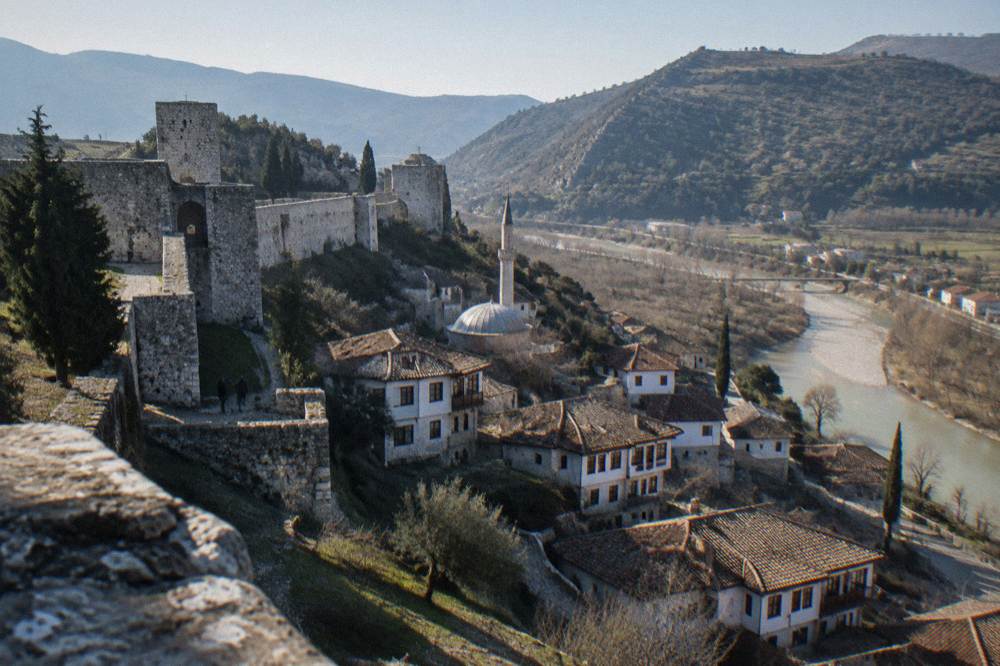
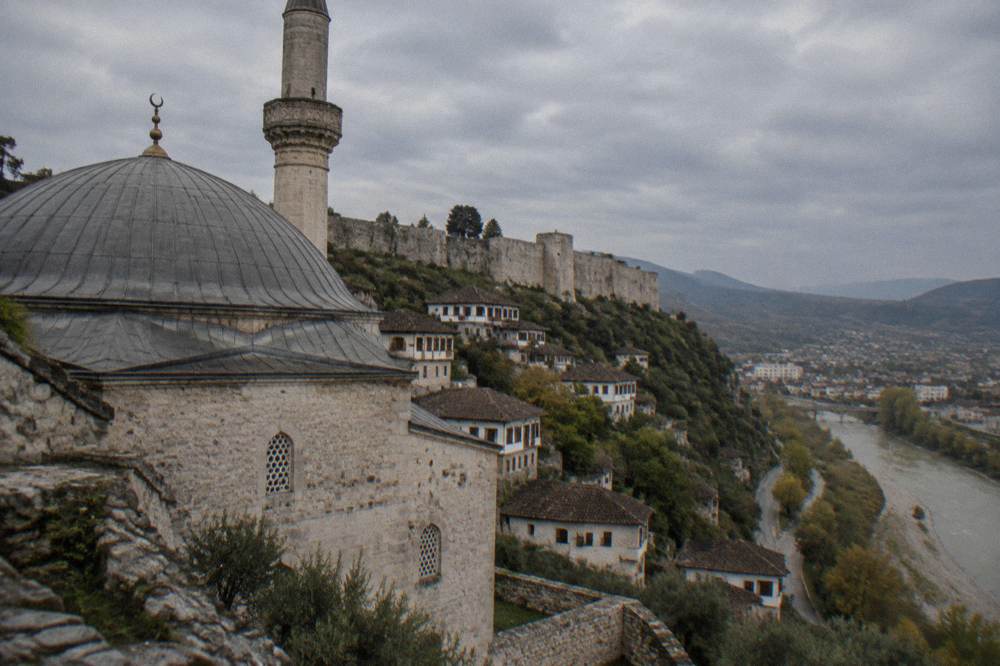
What you see today at the Lead Mosque is a protected historic building in the heart of Berat's lower town: a compact stone mosque with its lead-covered dome intact, set among lived-in streets, best viewed from the small surrounding lanes rather than from a single fixed angle. The interior is not part of a regular visiting offer, so plan an outside visit and let the building's street setting carry the experience.
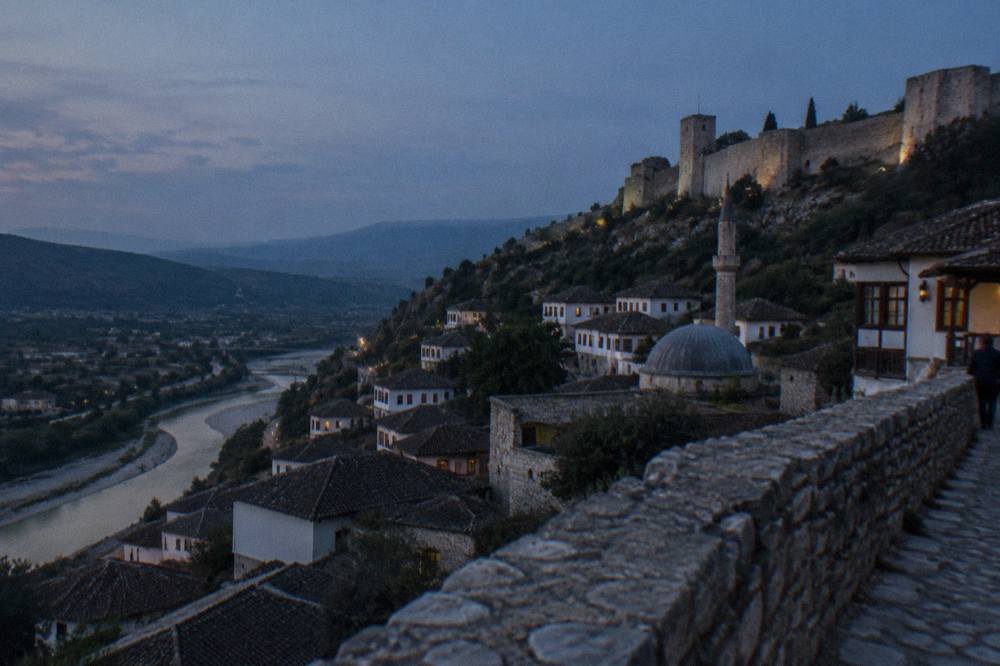
The mosque rewards slow looking. Stand back far enough to see the dome against the hillside and you understand why the builders put lead there: the material catches the light differently from whitewash, marking the building as sacred infrastructure in a streetscape of houses. Move closer and the masonry tells the second story, the one about age and survival, since a building of this kind carries its centuries in repaired walls, adjusted openings, and the wear around its entrance. The minaret, or what remains of it, completes the composition; heritage documentation of Berat's mosques records partial loss and repair across several of the town's minarets over the years, and the Lead Mosque's profile shows that history plainly.
The surroundings are half the sight. The lower town around the mosque is ordinary in the best sense: residents carry shopping up the lanes, guesthouses hang laundry, cats claim the sunny corners. This is the texture that separates Berat from museumified heritage towns elsewhere, and it is why the mosque is best photographed early or late, when the light is low and the streets are quiet. The town's old town guide maps the wider quarter if you want to extend the walk beyond the mosque toward Gorica or the boulevard.
A note on expectations, honestly stated: this is not a grande mosque experience with a visitor centre, ticket desk, and fixed open hours. It is a small protected building on a public street. If your heart is set on going inside Ottoman-era religious buildings in Berat, the museums are the reliable answer, and the next two sections of this guide cover them in detail, with verified hours and fees. The mosque's role is to anchor the street-level layer of the town, the layer the walls above were built to protect.
How Does The Lead Mosque Compare With Berat's Other Ottoman Mosques?
Berat holds several historic Ottoman mosques, and the Lead Mosque is the quiet, street-level member of the group: smaller than the King Mosque in the centre, older in atmosphere than the Bachelors' Mosque in Mangalem, and less ruined than the Red Mosque up in the castle. Each sits in a different quarter, so a route that strings them together doubles as a complete tour of the town's Ottoman geography, achievable entirely on foot in a few hours.
The comparison works quarter by quarter. The King Mosque belongs to the central religious complex, the institutional face of Ottoman Berat, with its associated tekke buildings nearby. The Bachelors' Mosque sits in Mangalem, famously painted and photographed under the stacked windows. The Red Mosque stands inside the castle walls, a fragmentary survivor counted among the earliest Islamic buildings in the fortress, its surviving walls a stop on the castle circuit. The Lead Mosque, in the lower town, is the domestic-scale counterweight to all three: the mosque as neighbour rather than landmark.
| Ottoman religious building | Where it sits | What it gives a visitor |
|---|---|---|
| Lead Mosque | Old lower town below the castle | A lead-domed survivor among lived-in lanes, seen on foot |
| King Mosque | Central old town near the bazaar area | The grand institutional mosque of Ottoman Berat |
| Bachelors' Mosque | Mangalem quarter | The painted favourite under the famous windows |
| Red Mosque | Inside Berat Castle | Early fortress mosque, now a photogenic ruin |
| Halveti Tekke | Old town religious complex | A Sufi lodge completing the Ottoman sacred landscape |
This is where a guide earns their fee. The differences between these buildings are the differences of Ottoman urban design, of neighbourhood, congregation, and hierarchy, and a good guide explains them while moving you between quarters at a pace that keeps the story intact. The premium expert-guided walk on this site's roster, which you can also read about on the tour page, is built around exactly this kind of town-wide route, and it pairs naturally with a mosque-focused walk like this one. Check availability if a guided version appeals, since the walking season fills earlier than people expect.
For travellers who prefer to walk with a local at tip-based pricing, GuruWalk lists a free Berat Castle Tour led by a local guru that covers the fortress end of this same geography, and a cluster of other GuruWalk free walks in the old town. The free format suits first-day orientation; the premium format suits visitors who want depth on the Ottoman layers specifically.
Which Nearby Sights Pair Best With The Lead Mosque?
The best pairings with the Lead Mosque are Berat Castle above it, the Onufri Iconographic Museum inside the castle, the reopened Ethnographic Museum in the lower town, and the Gorica bridge across the Osum, all within the same compact walk and all covered by verified visiting information. A realistic day covers the mosque, the castle walls, one museum, and the bridge, with lunch in Mangalem between the castle and the river.
The castle is the headline. The fortress quarter above the mosque is still lived in, with guesthouses operating inside the walls and, as of September 2026, a centuries-old building next to the Onufri Museum being converted into an eight-room family guesthouse under a national investment scheme. The walls enclose 24 defensive towers, and the site's documentation records that some 42 churches once stood inside, of which around eight survive. Come down from the walls at golden hour and the whole lower town, lead dome included, reads as one composition. Note that a small fee may be asked at the castle gate in daytime; bring lek.
| Museum | Summer hours (1 May to 30 Sep) | Winter hours (1 Nov to 30 Apr) |
|---|---|---|
| Onufri Iconographic Museum | Daily 9:00 to 18:00 | Tue to Sat 9:00 to 16:00, Sun 10:00 to 15:00 |
| Ethnographic Museum | Daily 9:00 to 18:00 | Tue to Sat 9:00 to 16:00, Sun 10:00 to 15:00 |
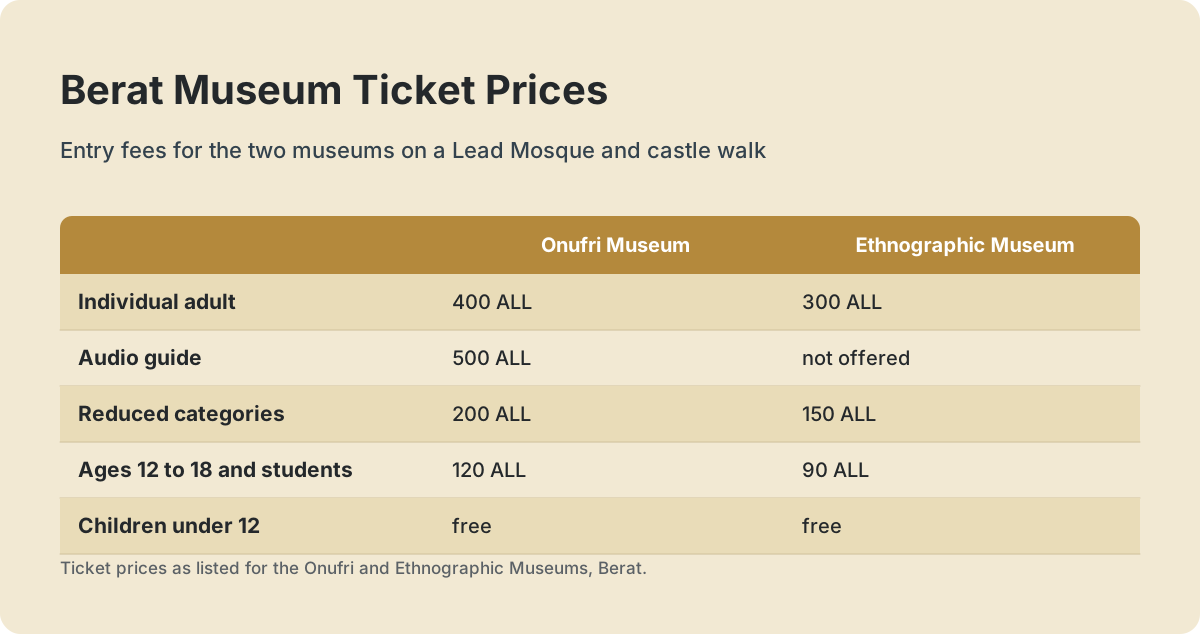
| Ticket | Onufri Museum | Ethnographic Museum |
|---|---|---|
| Individual adult | 400 ALL | 300 ALL |
| Audio guide | 500 ALL | not offered |
| Reduced categories | 200 ALL | 150 ALL |
| Ages 12 to 18 and students | 120 ALL | 90 ALL |
| Children under 12 | free | free |
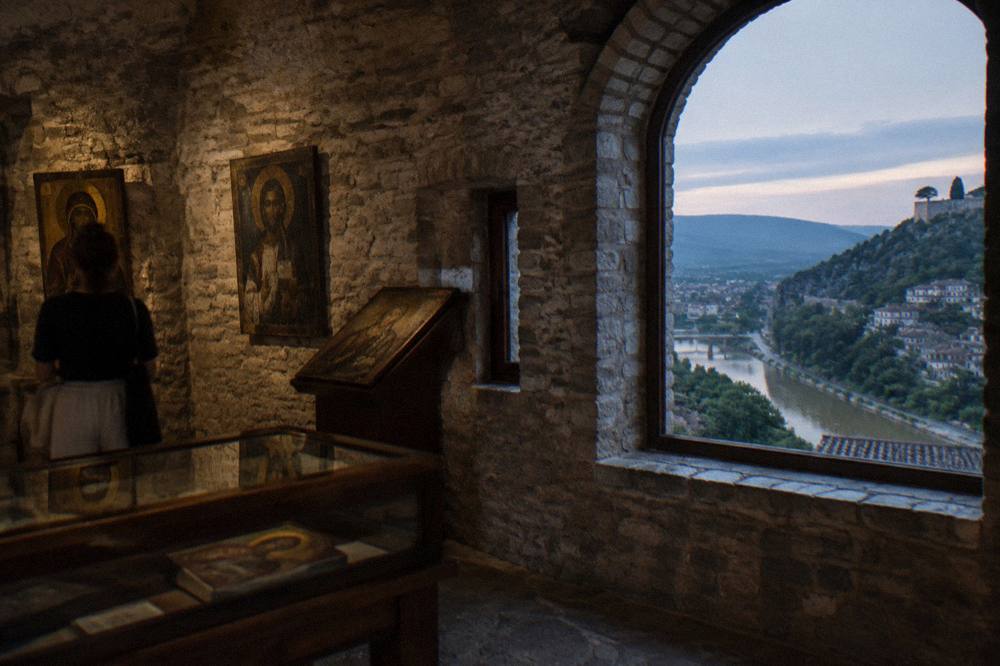
The Ethnographic Museum is the pairing that surprises people. It reopened in May 2026 after a three-year restoration and now displays around 1,300 objects, arranged to show how Berat households actually lived, which is the same social world the Lead Mosque served as a place of prayer. The Onufri Museum, housed in the Church of St Mary inside the castle, holds the iconographic heritage of the town's most famous painter and is the single most visited museum site in Berat; online ticketing through e-Albania, launched in November 2025, now covers it. Across the river, the Gorica Bridge and the Gorica quarter complete the loop, and the St Michael's Church viewpoint gives the postcard view back over Mangalem, dome and all. Visitors with a full second day often add the wineries around Berat or the Osumi Canyon.
When Is The Best Time To Visit The Lead Mosque And The Lower Town?
The best time to see the Lead Mosque and Berat's lower town is spring through early autumn, with late spring and early autumn the sweet spot: warm, walkable, and outside the peak heat that hits the unshaded lanes in July and August. Summer afternoons in Berat can top 40 °C, and the mosque route is entirely on foot, so timing your walk matters more than the season you choose.
Berat's climate is Mediterranean inland: hot, dry summers and wetter winters, with rain concentrated in the late-autumn and winter months and the driest stretch in high summer. No official station normals are published for the town, so the honest advice is qualitative: expect serious heat in July and August, mild shoulder months, and cool, damp, occasionally crisp winter days when the lanes empty and the light turns soft. The verified temperature datapoint worth carrying is that July 2026 produced the hottest day of the year, with the highest readings in the country recorded in Berat, and shade temperatures reported at 42 °C. Walking the mosque-to-castle route at midday in that weather is a mistake; by 8 a.m. it is a pleasure.
The calendar adds one strong reason to pick early October: the Wine & Stories of Berat festival, confirmed for 2 to 4 October 2026, three days of Albanian and Kosovo wineries, music, and local food events around the town. A mosque-and-castle walk in the morning, a festival afternoon, and an evening on the riverfront is a near-perfect Berat day. The site's Berat weather guide tracks the seasonal picture in more depth, and the wider where to stay in Berat article handles the quarter-by-quarter choice for each season, from Mangalem guesthouses to the quieter Gorica side.
Seasonal logic also applies to the canyon options that fill the active half of most Berat itineraries. Rafting on the Osum runs in spring, roughly March to June depending on water levels, with tubing through the summer and autumn months; the canyon is close enough to Berat that a morning in the lanes and an afternoon on the water is a normal pairing. Visitors who book both a walking day and a canyon day tend to rate the combination higher than either alone, because the two show opposite faces of the same region: the built heritage of the old town and the raw gorge country of Skrapar. A guided winery visit, with transfers and tastings included, is the third leg of that stool, and suits travellers whose interest in Berat leans toward its vines rather than its walls.
What Does A Visit To The Lead Mosque Area Cost?
A visit to the Lead Mosque itself costs nothing to plan around, since the building is seen from public streets; the real costs in the same walk are the castle gate, where a small daytime fee may apply, the Onufri Museum at 400 ALL, the Ethnographic Museum at 300 ALL, and food and drink, with a cheap restaurant meal in Berat running to a few hundred lek and a coffee costing around 100 to 150 ALL.
The honest framing is that the mosque is one of the genuinely free pleasures of Berat, and the rest of the day is inexpensive by European standards. Museum tickets are the main fixed cost, and the tables above carry the exact verified figures. Free admission days exist for all visitors on 18 April, 18 May, 21 May, and 29 September, with 28 and 29 November free for Albanian citizens only, so a spring or autumn trip can coincide with a free museum day if you plan around it.
| Practical item | Verified figure or fact |
|---|---|
| Currency | Albanian lek (ALL), roughly 92 lek to the euro |
| Lead Mosque viewing | free, from public streets |
| Castle gate | small fee may apply in daytime; bring lek |
| Onufri Museum ticket | 400 ALL |
| Ethnographic Museum ticket | 300 ALL |
| Bus from Tirana | a few hundred lek, paid in cash |
| Emergency numbers | police 112, ambulance 127, fire 128 |
Cash matters more here than most visitors expect. The old town and Mangalem remain largely cash territory, with cards accepted at some hotels and larger establishments but not reliably in small shops, cafés, or family restaurants. ATMs exist in Berat, but withdrawal fees on foreign cards commonly run from 500 to 800 ALL, so a single larger withdrawal beats several small ones. The euro is not legal tender in Albania; some tourist-facing businesses accept it informally, but change is usually given in lek, at a worse effective rate, so paying in lek is the better default. The site's Berat costs guide and the money and currency article cover this in full, and the question is Albania cheap or expensive is answered at national level in a separate piece.
How Do You Visit The Lead Mosque Respectfully?
Visit the Lead Mosque respectfully by treating it as a protected religious building, not a prop: walk the surrounding lanes quietly, dress modestly with shoulders and knees covered, keep your voice low near the entrance, and photograph the building and its dome from public streets rather than crowding doorways. Never enter unless clearly invited, and if the door is closed, the outside visit is the complete experience.
These are small habits, but in a lived-in heritage quarter they are the difference between a welcome guest and a nuisance. The lower town is home to residents, and mosque buildings, active or dormant, carry meaning for the local community. Modest dress is the simplest signal of respect and costs nothing: a light scarf and covered knees work in any season, and the same clothing standard serves the churches and museums higher up the hill, including the St Demetrius Cathedral and the Holy Trinity Church. Footwear etiquette follows the local norm if you are ever invited in: shoes come off at the threshold.
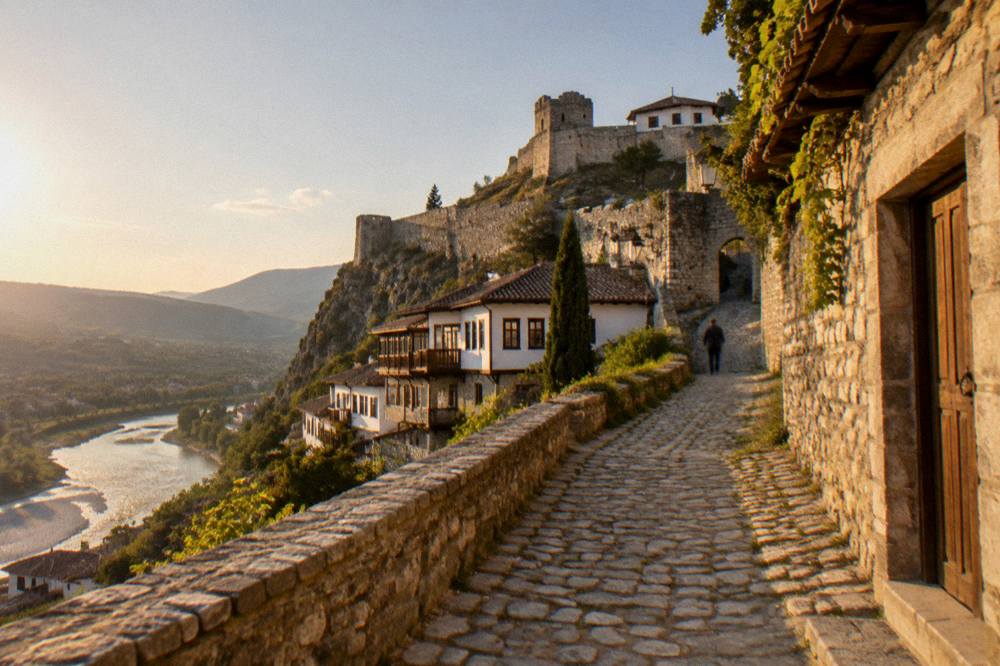
There is also a safety-and-etiquette overlap worth stating plainly. Albania is a generally safe country for visitors, with no official advisory against travel to any part of it, and Berat is among its calmest destinations. Ordinary precautions apply in the old town lanes, which are steep, cobbled, and badly lit in stretches at night. For orientation on this front, the site's is Berat safe guide covers the practical detail, and the where to eat in Berat article handles the other half of a respectful visit, which is spending your money at family-run tables rather than passing through the town without touching its economy.
The last habit is the easiest: go early. A morning walk from the Gorica bridge, past the Lead Mosque, and up to the castle gates delivers the lanes at their quietest, the light at its kindest, and the museum queues at their shortest, and it leaves the whole afternoon for the canyon, the wineries, or a slow lunch overlooking the stacked windows. That is the shape of a good Berat day, and the Lead Mosque is the quiet hinge in the middle of it.
For travellers building out from this walk, the trio below spans the three directions most visitors take next: a deeper guided walk of the town, a canyon and waterfall adventure in Skrapar, and a premium castle-and-lake excursion for the wider region around Berat.
Common Questions About The Lead Mosque In Berat
What is the Lead Mosque in Berat?
It is a small Ottoman-era mosque in the old lower town of Berat, Albania, named for the lead plates that sheath its dome. It is one of the town's protected historic religious buildings and is seen as a stop on foot, on the walking route between the Gorica bridge and the castle.
Where is the Lead Mosque located?
It stands in the old lower town beneath Berat Castle, on the castle side of the Osum River, woven into the lanes between the riverfront and the fortress ridge. It is reached on foot in a few minutes from the Gorica bridge and the Mangalem quarter.
Can you go inside the Lead Mosque?
There is no regular public opening arrangement for the interior, so plan an outside visit. Heritage mosques in Berat open irregularly, when a caretaker is present. The outside, the lead dome, and the street setting are the reliable experience.
Is there an entry fee for the Lead Mosque?
No fee applies to viewing the mosque from the public streets around it. The nearby castle gate may charge a small daytime fee, and the Onufri Museum charges 400 ALL with the Ethnographic Museum at 300 ALL.
When is the best time to visit the Lead Mosque?
Late spring through early autumn is ideal, with early morning the best hour for light and quiet. Summer afternoons can top 40 °C in Berat, and the mosque route is entirely on foot, so walk before the heat builds.
Which sights pair best with the Lead Mosque?
Berat Castle with its 24 towers, the Onufri Iconographic Museum inside the castle, the reopened Ethnographic Museum in the lower town, and the Gorica bridge across the Osum all sit within the same compact walk and make a full day.