King Mosque Berat
The King Mosque, Xhamia e Mbretit in Albanian, anchors the lower Mangalem quarter of Berat in central Albania, a UNESCO World Heritage Ottoman hill town on the Osum River. This guide covers where it sits, how to reach it, what you can see, and what to pair with a visit.
Short answer
The King Mosque (Xhamia e Mbretit) stands in the Mangalem quarter of Berat, central Albania, the UNESCO-listed Ottoman town on the Osum River. It is one of several historic mosques in a compact, walkable old town, and you can see it, the Gorica Bridge and Berat Castle comfortably in one day on foot.
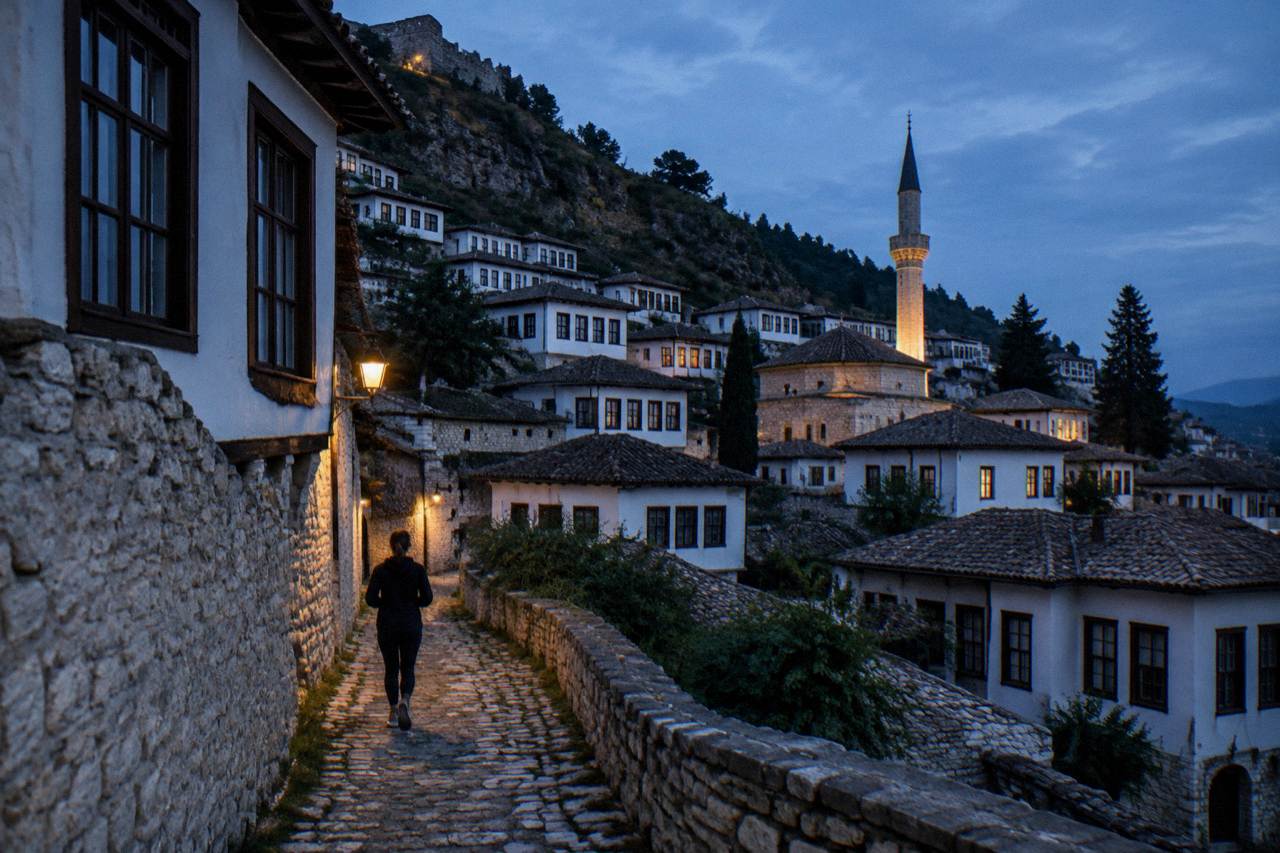
The King Mosque in Berat, an Ottoman-era hill town in central Albania inscribed on the UNESCO World Heritage list, sits in the lower Mangalem quarter where the white-windowed houses begin their climb toward the castle. Albanian speakers know it as Xhamia e Mbretit, the King's Mosque, and it has served the neighbourhood around it for centuries as a working place of worship rather than a museum piece. Berat itself is a town of 62,232 residents in the municipality, according to the 2023 census, and the mosque sits within a historic core that UNESCO calls "a rare example of a well-preserved Ottoman town". That core is compact, walkable and free of traffic in its oldest lanes, which makes a visit here one of the easiest heritage stops in the Balkans.
This Berat Travel Guide article gathers what a visitor to the King Mosque actually needs: where it is, how to reach it from Tirana or your guesthouse, what you can expect to see inside and around it, how it compares with the town's other mosques, and what else in Berat rewards a longer stay. Nothing here is padded. The practical details below come from the site's verified fact base, and where a figure could not be verified, such as the mosque's own founding date, the text says so plainly rather than repeating a legend.
What Is The King Mosque In Berat?
The King Mosque, known in Albanian as Xhamia e Mbretit, is a historic Ottoman mosque standing in the Mangalem quarter of Berat, the UNESCO World Heritage town in central Albania on the Osum River. It functions as a neighbourhood landmark and a working religious building, one of several mosques that gave old Berat its distinct skyline of minarets, cobbled lanes and stacked white houses.
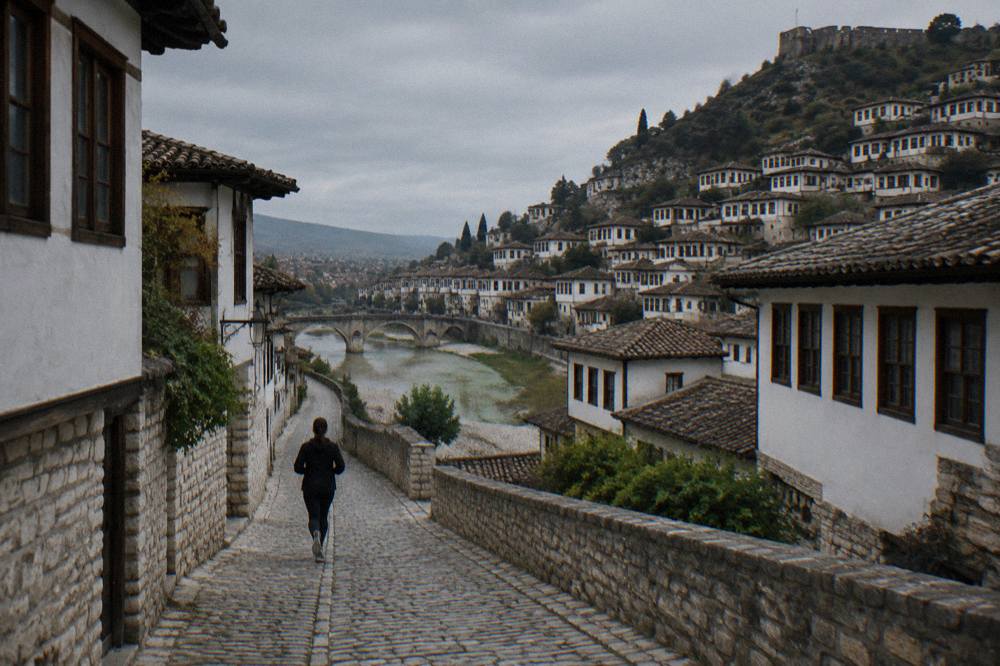
Berat earned its UNESCO inscription in 2008, when the city centre was added to the Historic Centres of Berat and Gjirokastra property that had first listed Gjirokastra in 2005. The inscription covers 58.9 hectares of property with a 136.2-hectare buffer zone across the two towns, and the citation praises Berat as a rare surviving Ottoman town. The King Mosque belongs squarely to that story. Mangalem, the quarter it occupies, is the famous district of windows that photographers come for, and the mosque's minaret is one of the vertical accents that break the horizontal rows of houses.
Something first-time visitors often miss is that Berat is not a museum village with one showpiece monument. It is a lived-in town where the quarters, the castle and the river all belong to one walkable ensemble. The mosques sit inside that ensemble. You do not buy a ticket to a "mosque district"; you simply walk down from the castle, cross the Gorica Bridge, drift along the riverbank, and find places like the King Mosque, the Bachelor's Mosque, the Lead Mosque and the Red Mosque woven into ordinary streets where people live, cook and hang laundry. That intimacy is the town's real character.
The mosque's own history resists tidy summary, and honest guides should say so. Widely repeated founding dates circulate in tourist copy, but none of them is confirmed in an official source, so this guide does not print one. What is verifiable is its place in the Ottoman urban fabric of Mangalem, its continued role as a Muslim place of worship in a town with a substantial Muslim heritage, and its survival through the communist period, when religious practice in Albania was suppressed nationally. The building you stand beside today is part of a religious revival that has continued since the fall of that regime.
Where Is The King Mosque And How Do You Reach It?
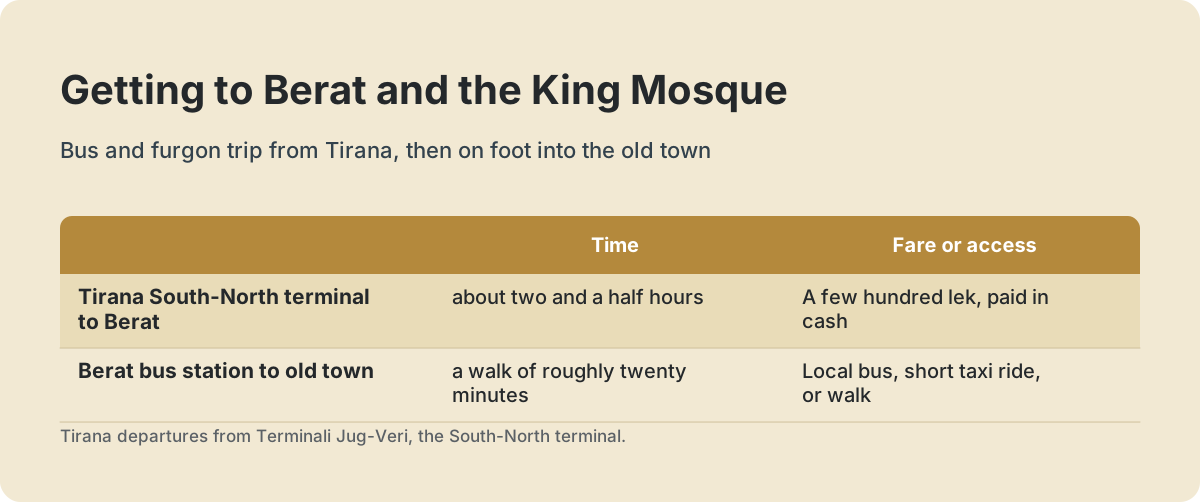
The King Mosque sits in the Mangalem quarter on Berat's western side of the Osum River, in central Albania, within a few minutes' walk of the Gorica Bridge and the base of the hill that carries Berat Castle. Most visitors arrive on foot from the old town, or by bus from Tirana's South-North terminal, a journey of roughly two and a half hours.
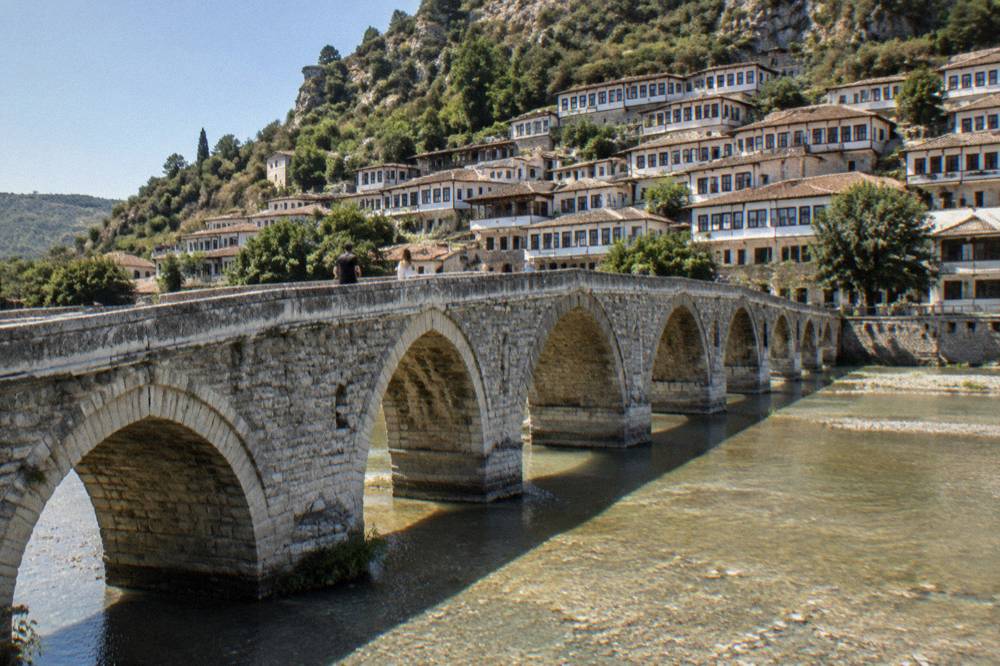
If you are already in Berat, the mosque needs no planning. Mangalem's lanes are pedestrian in character, guesthouses sit throughout the quarter, and the walk from one end of the old town to the other is short enough that the mosque, the riverbank and the castle gate can all be covered in a relaxed morning. The castle quarter sits above you to the west; Gorica, the quarter across the historic Gorica Bridge, lies opposite on the eastern bank. The mosque is therefore a natural waypoint between the two.
Visitors coming from the capital have a straightforward run. Buses and furgons, the shared minibuses that thread the country, leave from Tirana's South-North bus terminal, Terminali Jug-Veri, with departures roughly hourly through the day from early morning until late afternoon. The trip takes about two and a half hours, and the fare is paid in cash, a few hundred lek, so arrive with small notes. Berat's bus station sits on the SH72 on the town's outskirts; from there the old town is reachable by local bus or a short taxi ride, and many people simply walk in. There is no direct bus from Tirana's airport to Berat, so airport arrivals transfer through Tirana first, and there is no passenger train to Berat at all.
| Route or approach | What to expect |
|---|---|
| Tirana South-North terminal to Berat | Buses and furgons roughly hourly, early morning to late afternoon, about two and a half hours |
| Fare from Tirana | A few hundred lek, paid in cash on boarding |
| Tirana airport to Berat | No direct service; transfer through Tirana's South-North terminal |
| Berat bus station to old town | Local bus, a short taxi ride, or a walk of roughly twenty minutes along the approach roads |
| Within the old town | On foot only in practice; Mangalem's lanes are narrow and quiet |
One practical note worth repeating for anyone booking accommodation: car access into the castle quarter is being restricted; plan to park below and walk up. The King Mosque itself sits below the castle in Mangalem, so most drivers park at the edge of the old town and walk. If your guesthouse is inside the walls, confirm with the host where to meet, since the restriction is managed case by case.
For travellers who prefer not to organise transport at all, a guided day trip is a reasonable alternative, and the roster below offers a cross-section of what is available, from a big-sightseeing day out of the capital to hands-on local experiences.
What Can You See Inside And Around The King Mosque?
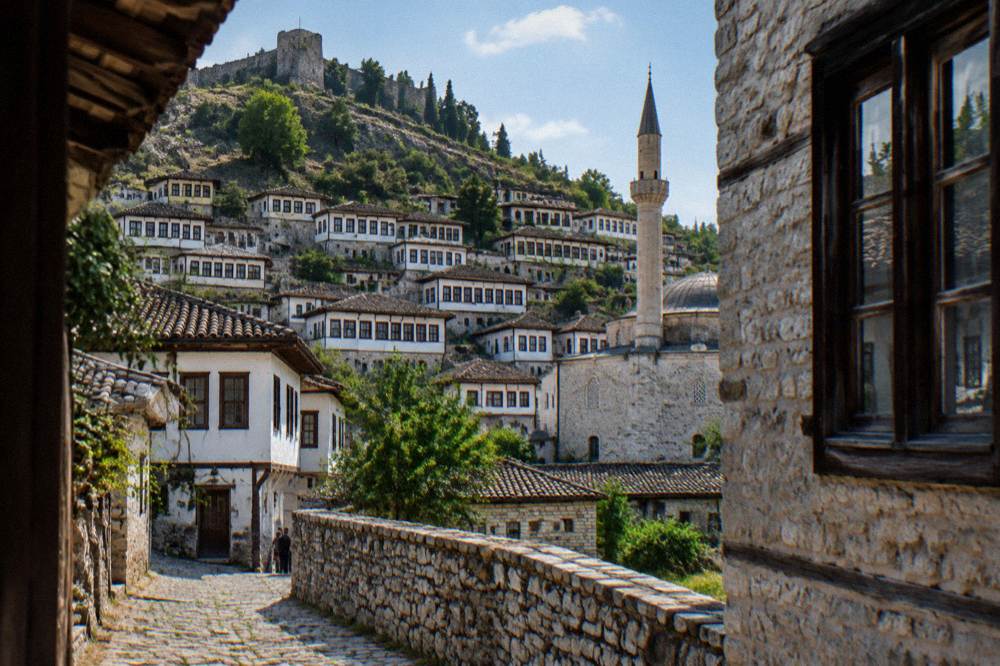
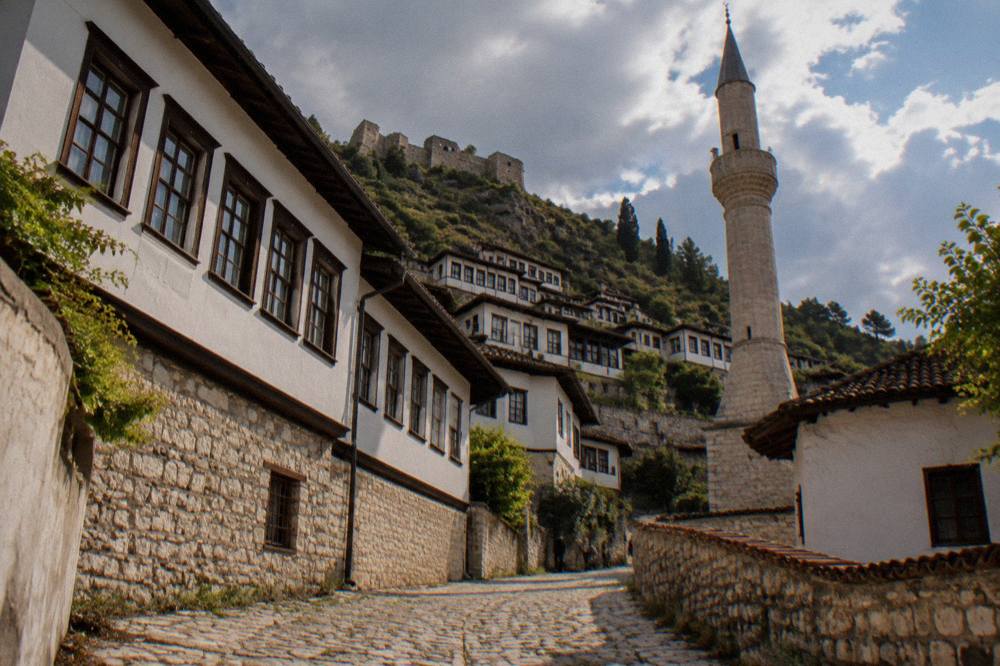
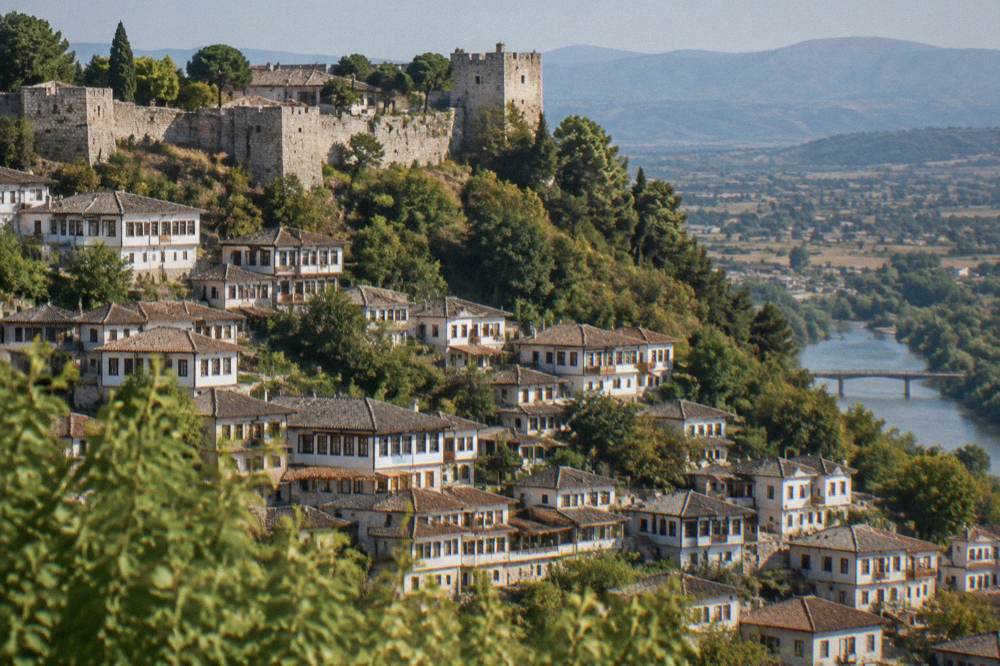
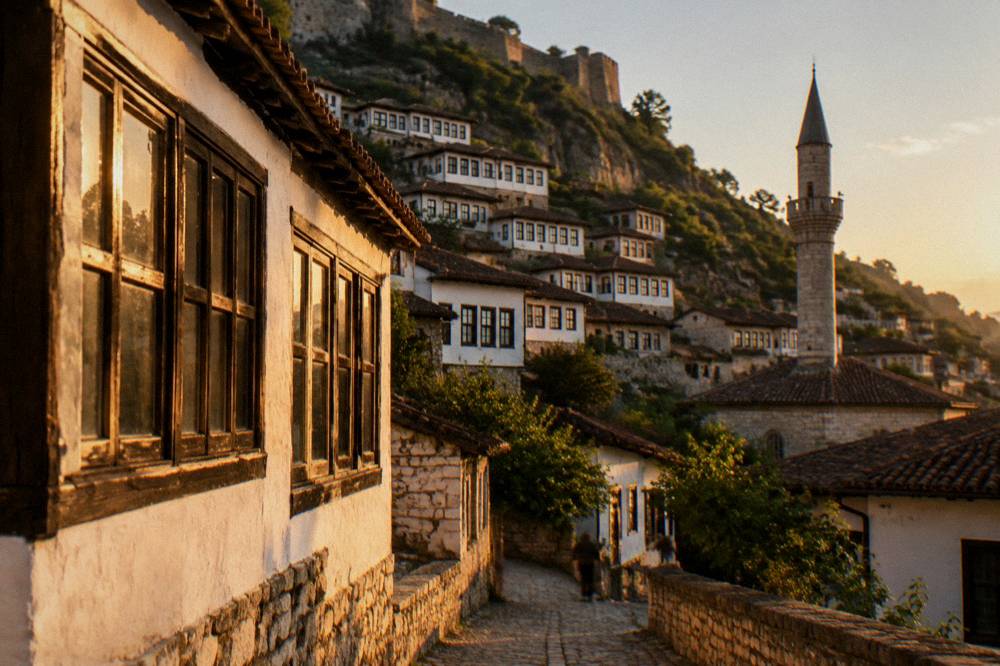
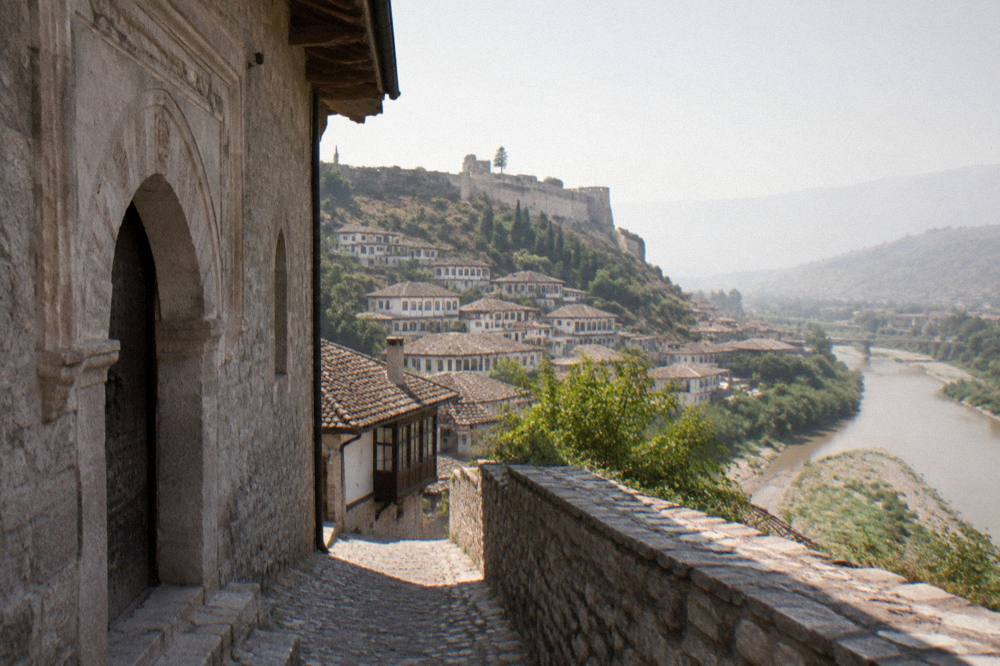
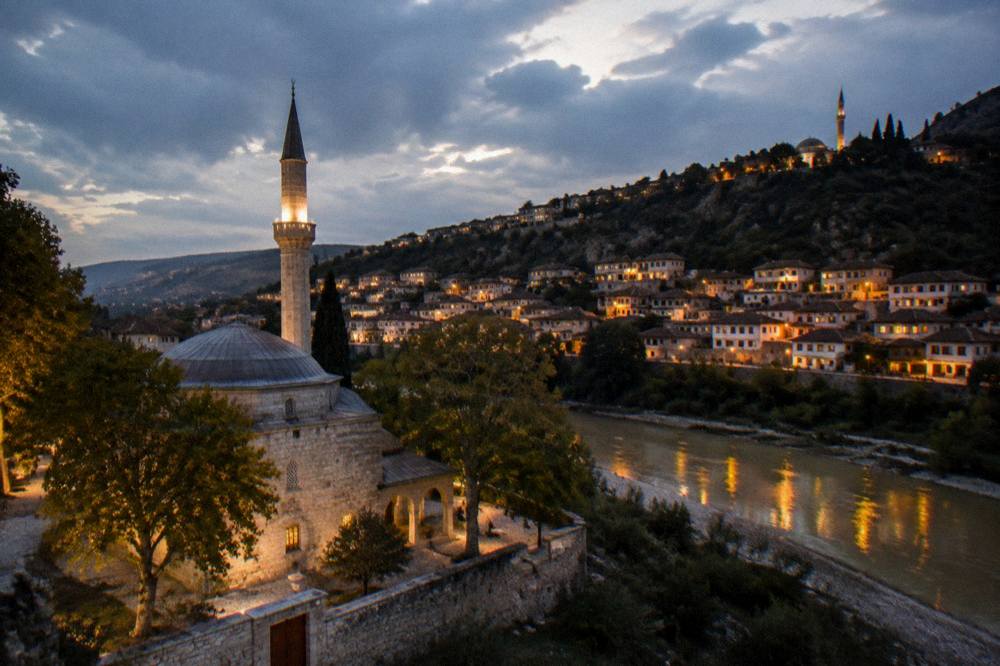
From the outside, the King Mosque offers a stone minaret, a low domed body and the weathered textures typical of Ottoman religious architecture in Berat, set among the lanes of Mangalem. The surrounding quarter supplies the spectacle: stacked whitewashed houses, cobbled alleys climbing toward the castle, and the Osum River below. Treat the mosque as an architectural pause in a neighbourhood built for wandering.
Inside, expectations should be calibrated. It is a working mosque, not a ticketed attraction with interpretation panels and fixed hours for tourists. Access for non-worshippers depends on prayer times, whether the door is open and whether a caretaker is present, and it can vary from day to day. Modest dress applies without exception: covered shoulders and knees, shoes removed before entering, and silence during prayer. Women should carry a scarf for head covering. If the interior is closed on the day you pass, the exterior and the setting still reward the walk, and the neighbourhood itself is the main event.
Around the mosque, Mangalem unfolds in a sequence of postcard views. The lanes rise steeply behind it, each turn revealing another stack of windows against the hillside, and at the top of it all stands Berat Castle, a lived-in fortress quarter with walls, towers and views across the whole valley. Fresh research for this site found that a recent round of restoration projects in the Mangalem quarter, funded under Albania's heritage programme, is recorded as completed in the January 2026 state-of-conservation report to UNESCO, so the quarter's public surfaces have been stabilised and improved in the last few years. That work is one reason the lanes are as tidy as they now are.
Berat's sightseeing rhythm rewards slow days, but not everyone has slow days. If you have only a single one, the classic route is to start at the castle in the cooler morning hours, walk down through Mangalem past the King Mosque, cross the Gorica Bridge into Gorica, and end with food or wine in the old town. Travellers pairing the mosque with a longer outing sometimes add a canyon adventure on the Osumi near Çorovodë, reachable in roughly an hour to an hour and a half on paved roads, and the Osum Canyon day trip pairs naturally with a heritage morning. That combination is exactly what the featured experience below covers, with a rafting and river tubing trip on the Osum and a Check availability link to the operator's live listing.
How Does The King Mosque Compare With Berat's Other Mosques?
Berat holds several historic mosques within a small radius: the King Mosque in Mangalem, the Bachelor's Mosque in the same quarter, the Lead Mosque by the castle approach, and the Red Mosque inside the castle walls. Each contributes a different silhouette and atmosphere, and a visitor who walks between them covers the whole vertical span of the old town, from the river lanes to the fortress ridge.
The Red Mosque, recorded among the earliest Islamic buildings within the fortress, is the one inside Berat Castle, and its ruined red-brick body has been noted as under restoration in recent reporting, though that status is unconfirmed and visitors should simply expect a fragile fragment rather than a complete building. The Red Mosque inside the castle pairs naturally with a castle morning, since you pass it on the way in. The Bachelor's Mosque, smaller and set in the lower town, has an interior famous among heritage writers for painted decoration, and the Bachelor's Mosque in Mangalem is close enough to the King Mosque to see both within minutes. The Lead Mosque, known in Albanian as Xhamia e Plumbit, sits near the base of the castle hill and takes its name from its lead-covered dome; the Lead Mosque by the castle completes the set. This site carries a separate page for each, so you can dig into any one of them.
| Mosque | Where it stands | What distinguishes it |
|---|---|---|
| King Mosque (Xhamia e Mbretit) | Mangalem quarter | Neighbourhood landmark among the lanes of windows, working mosque |
| Bachelor's Mosque | Lower Mangalem | Small scale and celebrated painted interior |
| Lead Mosque (Xhamia e Plumbit) | Base of the castle hill | Lead-sheathed dome, quiet setting below the fortress |
| Red Mosque | Inside Berat Castle | Fragmentary early fortress mosque in red brick |
Honesty compels a note on attribution: the founding dates for these buildings vary wildly across guidebooks and blog posts, and none of the figures circulating could be confirmed against an official source for this site. Where a date is not verified, this guide leaves it out. What you can verify on foot is the architecture, the setting and the role each building still plays in the town's daily life. For many visitors that is enough, and a guide who knows the town's stories, whether a paid expert walk or a free tour, adds the narrative layer that the buildings themselves do not announce.
That is a real option here. Berat has a healthy supply of guided walking experiences, and a premium two-hour expert-guided walk is one of the most booked ways to get the town's history in one pass, with the castle, the mosques and the quarters explained along the way.
When Is The Best Time To Visit The King Mosque?
Spring and early autumn are the most comfortable seasons to visit the King Mosque and Berat generally, with mild temperatures for the castle climb and the walking lanes. Summer brings heat that can top 40C in central Albania, winter is wetter and quieter, and shoulder months balance weather, crowds and opening hours at the town's museums.
Berat's climate is best described in plain terms, because no official station normals have been published for the town: hot, dry summers, and wetter winters with rainfall concentrated in the November-to-January stretch. July and August are the driest and busiest months, and summer heat in this part of Albania is genuinely serious; in July 2026 the hottest day of the year was recorded in Berat, with reported readings around 42C in the shade. Sightseeing in that weather means starting at dawn, resting at midday and resuming in the evening, which happens to suit mosque photography well, since the low evening light across Mangalem is the town's best. Shoulder seasons avoid both extremes.
| Season | Conditions and what they mean for a visit |
|---|---|
| Spring | Mild days, green hillsides, comfortable walking for castle and mosque circuits |
| Summer | Hot and dry, heat that can top 40C; sightsee early and late, rest at midday |
| Autumn | Cooling days, October wine festival season, harvest colour on the valley slopes |
| Winter | Wetter and quiet, short days, museums on winter hours, fewest visitors |
One calendar item worth building a trip around: the "Wine & Stories of Berat" festival runs in early October, with the 2026 edition confirmed for 2 to 4 October, filling the town with wineries from Albania and Kosovo, food stalls and music. A visit timed to that weekend combines the mosque, the castle and the town's food culture in one stay, and the tourist office's event listings are the place to confirm details nearer the time.
A practical note for anyone pairing the mosque with museum visits: the Berat Museum Center's two museums run seasonal hours, listed below from the official site, and there is a set of free-admission days across the year.
| Museum period | Onufri Museum and Ethnographic Museum hours |
|---|---|
| 1 May to 30 September | Daily 9:00 to 18:00 |
| 1 November to 30 April | Tue-Sat 9:00 to 16:00, Sun 10:00 to 15:00 |
| National holidays | Open |
The Onufri Iconographic Museum sits inside the castle and the Ethnographic Museum in the lower town, so both slot neatly onto the mosque walk. Full details are on this site's pages for the Onufri Iconographic Museum and the reopened Ethnographic Museum in Berat.
What Should You Know About Dress, Entry And Etiquette?
Visitors to the King Mosque should dress modestly with shoulders and knees covered, remove shoes before entering, keep voices low and avoid interrupting prayer. Women should bring a headscarf, everyone should step back during the call to prayer, and a small donation is a courteous gesture if you enter as a guest. Photography inside depends on the caretaker's permission.
Mosque etiquette in Albania follows the same broad courtesies as elsewhere in the Muslim world, and Berat's congregations are used to visitors, so nobody expects perfection, only respect. The essentials are simple. Enter without shoes. Keep clothing loose and covering. Leave dogs, picnics and loud conversations outside. If the congregation is praying, wait rather than walk through. Ask before photographing people at worship, and accept a no gracefully. A quiet "myrësi" or a nod goes further than a camera.
| Situation | Courteous response |
|---|---|
| Arrival and dress | Shoulders and knees covered, women with a headscarf, shoes off at the door |
| During the call to prayer | Pause outside and let worshippers gather without obstruction |
| During congregational prayer | Wait outside or at the back; do not walk through the prayer rows |
| Photography | Ask the caretaker first; never photograph worshippers without permission |
| Children and noise | Normal, but step out if a service is under way |
| Leaving | A small donation in the box is welcome but not demanded |
Two local realities sit around any mosque visit in Berat. The first is money: Albania's currency is the lek, the euro is not legal tender though some tourist businesses accept it informally, and the old town runs largely on cash. Roughly 92 lek makes one euro at recent official rates, so carry lek in small denominations for bakery stops, taxis and any donation box. The second is safety: the UK foreign office issues no advice against travel to any part of Albania, and this site maintains a fuller page on safety and practical concerns in Berat. Normal urban precautions after dark apply, as they would in any town.
What Else Should You Combine With The King Mosque?
A King Mosque visit slots naturally into a half-day loop of Mangalem, the Gorica Bridge, Gorica quarter and Berat Castle, all walkable from the mosque itself. Add the town's museums for a full cultural day, the Osum Canyon for adventure, and the Berat-region wineries for an afternoon of tastings among vineyards that UNESCO-listed stone architecture somehow never manages to overshadow.
Start with the loop. From the mosque, walk uphill through Mangalem to the castle, spend an hour or two on the walls and the Red Mosque, then descend and cross the Gorica Bridge over the Osum into the Gorica quarter, whose restored historic lanes are part of the same completed heritage programme. Return across the bridge at golden hour, when the windows of Mangalem face the setting sun and the town delivers its famous view. That single circuit captures the essence of Berat in a few hours.
For the second half of the day, the vineyards call. Berat is one of Albania's wine heartlands, and its wineries work with native grapes like Shesh i Zi and Shesh i Bardhë plus the local white Puls, rescued in recent years for both still and traditional-method sparkling wines. A guided winery tour with transfers is the relaxed way to do it, and it is the pairing many visitors choose for an afternoon after a morning of stone and minarets. The wineries around Berat have a dedicated page on this site with the full picture.
Food deserves its own mention, because Berat's cooking tradition is distinct, with Slow Food activity in the town and dishes like tavë kosi and japrak on local tables; this site's pages on where to eat in Berat and the wider old town of Berat cover the practicalities. Finally, for visitors based in Tirana or the coast, a structured day trip can bundle the castle, the quarters and the mosque into one guided outing, sometimes with Roman sites like Durres or Apollonia added to the route.
Do You Need A Guided Tour To See The King Mosque?
No, you do not need a guided tour to see the King Mosque itself, since Mangalem is freely walkable and the mosque sits on public lanes. A guide adds value for context, language and access to interiors or stories the buildings do not explain on their own, and Berat offers both paid expert walks and free tip-based tours alongside full day trips for visitors short on time.
The free options deserve a specific mention, because Berat is unusually well served. GuruWalk, the platform for tip-based walking tours, lists several free walks in the town, and on the popular Free Walking Tour Berat the guru leads a roughly two-hour circuit of the old town, castle approach and riverbank, with guests tipping at the end. The model suits budget travellers and first orientation equally well; take the walk on day one, then revisit what it opened up. For visitors who prefer a paid small-group format, the premium expert-guided walks and the food-and-wine walks described earlier in this guide are the standing options.
Beyond the town itself, guided trips reach places that independent travel makes slow. The Osumi Canyon, protected as a natural monument near Çorovodë in Skrapar, is roughly an hour to an hour and a half from Berat on paved roads, and its rafting and tubing season depends on river levels, with rafting running in spring while snowmelt fills the gorge and tubing through the warmer months. The canyon rim viewpoints are free to visit; the water activities are where guides and equipment matter. This site's pages on the Osum Canyon day trip and the wider rafting scene cover the details.
For a full sampler of what is available around the mosque, from adventure to cooking classes, the selection below pulls the three experiences this site most often pairs with a Berat stay.
Common Questions About King Mosque Berat
Is the King Mosque in Berat open to visitors?
The mosque is a working place of worship rather than a ticketed attraction, so access for visitors depends on prayer times and whether a caretaker is present. The exterior and its setting in Mangalem can be seen at any time from the public lanes, and the interior can usually be viewed outside prayer times with modest dress and permission.
Is there an entrance fee for the King Mosque?
No fee is charged for entering a working mosque as a respectful visitor, though a small donation is a courteous gesture if a box is provided. This is separate from the town's museums: the Onufri Museum charges 400 lek and the Ethnographic Museum 300 lek, with reduced rates and free-admission days on the official museum site's calendar.
How old is the King Mosque?
Founding dates circulating in tourist copy could not be confirmed against an official source, so this site does not print one. What is verifiable is the mosque's place in Berat's Ottoman architectural fabric, in a town UNESCO describes as a rare example of a well-preserved Ottoman town and which joined Gjirokastra on the World Heritage List in 2008.
How do I get to the King Mosque from Tirana?
Take a bus or furgon from Tirana's South-North terminal, Terminali Jug-Veri; departures run roughly hourly from early morning to late afternoon and the trip takes about two and a half hours, with the fare of a few hundred lek paid in cash. From Berat's bus station on the SH72, reach the old town by local bus, a short taxi ride or on foot, then walk into Mangalem.
What should women wear to visit the King Mosque?
Women should cover shoulders and knees, wear loose clothing and carry a scarf to cover the head inside the prayer space. Shoes are removed at the door by everyone. If you are touring the whole town in one day, a light scarf packed in your bag solves the mosque stop without planning the outfit around it.
Can I see the King Mosque and Berat Castle in one day?
Yes, comfortably. The mosque sits below the castle in Mangalem, and a single loop covering the mosque, the Gorica Bridge, the Gorica quarter and Berat Castle takes only a few relaxed hours on foot. Adding the Onufri Museum inside the castle and the Ethnographic Museum in the lower town turns the same loop into a full cultural day.