Permet And The Bënja Thermal Springs Day Trip From Berat
Berat, the UNESCO World Heritage Ottoman-era hill town on the Osum River in central Albania, sits close enough to the Vjosa valley to make Permet and the Bënja thermal springs a realistic, rewarding day trip, and this guide sets out how to plan it: the drive south, the springs themselves, the town, the food, and the season that suits you.
Short answer
Permet is a small river town in the Vjosa valley south of Berat, in central Albania, best known for the Bënja thermal springs beside the Langarica canyon, its riverside plane trees, and gliko fruit preserves. Most visitors do it as a full day trip by car from Berat, and pay in Albanian lek, roughly 92 to the euro.
Berat, the UNESCO World Heritage Ottoman-era hill town on the Osum River in central Albania, is a natural base for some of the country's most satisfying drives, and the run south to Permet is one of them. Permet is a small river town in the upper Vjosa valley, close to Gjirokaster, best known for riverside plane trees, easygoing cafe life, gliko, the preserved-fruit specialty sold in jars all over town, and above all for the Bënja thermal springs spilling down a rock face beside the Langarica canyon. It is a full day out, almost always done by rental car or with a private driver, and it rewards travellers who like their scenery big, their roads winding, and their swimming holes warm.
This page covers the whole trip: what the drive involves, what the springs are actually like, what to do with your hours in Permet itself, the food worth crossing the valley for, the seasons, the budget, and how the day compares with other options from Berat such as the Berat Travel Guide picks for the Osumi Canyon and Gjirokaster. Before setting out, it is worth reading up on how to spend your time in the old town, because a Permet day usually starts and ends in Berat, and the light on Mangalem's windows is at its best early and late.
What Is Permet And Why Go There From Berat?
Permet is a compact market town in the upper Vjosa valley, south of Berat and roughly on the way to Gjirokaster, known for its plane-shaded riverfront, its jars of gliko, and its position as the gateway to the Bënja thermal springs and the Langarica canyon. The town itself is not a museum piece like Berat; its appeal is atmosphere rather than monuments. You come for the combination: a warm swim in a canyon, a slow riverside lunch, and one of the great drives in the southern Balkans, all reachable from Berat in a single, well-planned day. Berat is a UNESCO World Heritage town, a rare example of a well-preserved Ottoman town, inscribed as part of the Historic Centres of Berat and Gjirokastra in 2008; Permet is its rural, hot-springs counterpart, and the contrast is the point.
The reason to pair the two is practical as much as scenic. Berat has the guesthouses, the guided tours, and the transport links, while Permet and Bënja are the kind of places that work best when you arrive early and leave late, exactly what a day trip from a comfortable base allows. If you are still deciding whether Berat itself justifies the journey, read is Berat, Albania, worth visiting; most travellers find two or three days in town plus one or two day trips is the sweet spot.
Who the trip suits is easy to sum up. Swimmers and canyon lovers get the springs; photographers get the Langarica gorge and the Vjosa bends; food-motivated travellers get gliko, river trout, and raki tastings; and anyone tired of walking Berat's steep cobbles gets a day on the road with almost no climbing. Families manage it comfortably, provided the car time is broken up, which the suggested stops below do for you.
What Stops Fill The Drive Between Berat And Permet?
The standard route runs south out of the Berat region toward Tepelenë, at the confluence of the Vjosa and Drino rivers, then climbs along the Drino valley toward Permet, with the Bënja springs a short drive beyond the town in the Langarica canyon. Tepelenë is the natural halfway break: a small, low-key town on the Vjosa, famous as the home base of Ali Pasha, the Ottoman-era ruler whose fortifications still shape towns across southern Albania. A coffee stop here costs very little, and it splits the drive cleanly in two. The road then follows the Drino valley, one of the emptiest, most photogenic stretches of main road in the country, with Gjirokaster's stone houses visible on the hillside if you take the fork toward it.
Travellers with more than a day often combine the two: read the Gjirokaster day trip from Berat guide for how the towns pair, since Gjirokaster's old town shares Berat's UNESCO inscription as part of the Historic Centres of Berat and Gjirokastra, inscribed in 2005 with Berat added in 2008. The combined loop is too much for one day; choose one valley or commit to two.
Two practical notes shape the drive. First, fuel up before leaving the Berat area and again in Tepelenë or Permet; stations exist along the route but spacing is uneven and opening hours can be short in villages. Second, the Albanian lek is the local currency, roughly 92 lek to the euro, and rural petrol stations, spring-side kiosks, and village lunch spots are overwhelmingly cash territory, so withdraw in Berat. The wider money picture is covered in the costs in Berat guide.
A sensible stop plan looks like this:
| Stop | What It Is Known For | How It Fits the Day |
|---|---|---|
| Berat departure | UNESCO old town, castle walls, and guesthouses | Leave early, before the day heat builds |
| Tepelenë | Vjosa and Drino confluence, Ali Pasha heritage | Coffee and fuel break at the halfway mark |
| Drino valley drive | Open valley scenery, sheep flocks, roadside springs | Photo stops without leaving the car |
| Permet town | Plane trees, riverfront cafes, gliko shops | Late-morning arrival and lunch base |
| Bënja thermal springs | Warm springs beside the Langarica canyon | Main event; allow a long, unhurried visit |
What Are The Bënja Thermal Springs And Langarica Canyon Like?
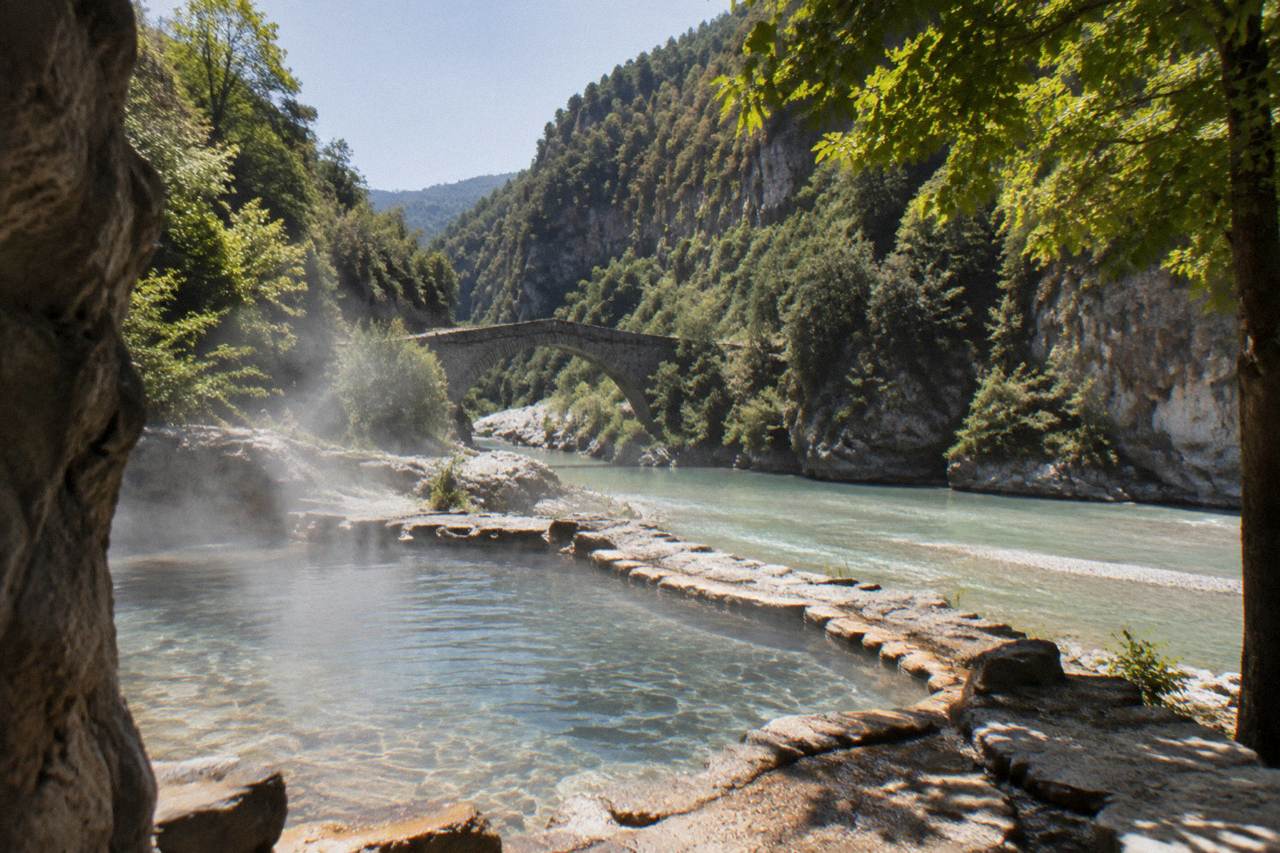
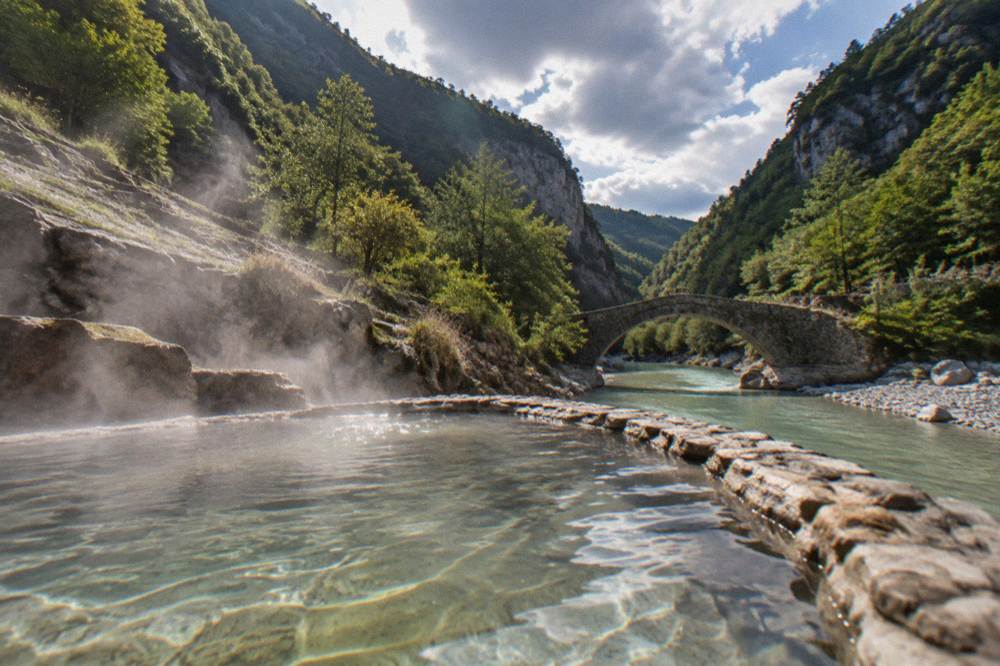
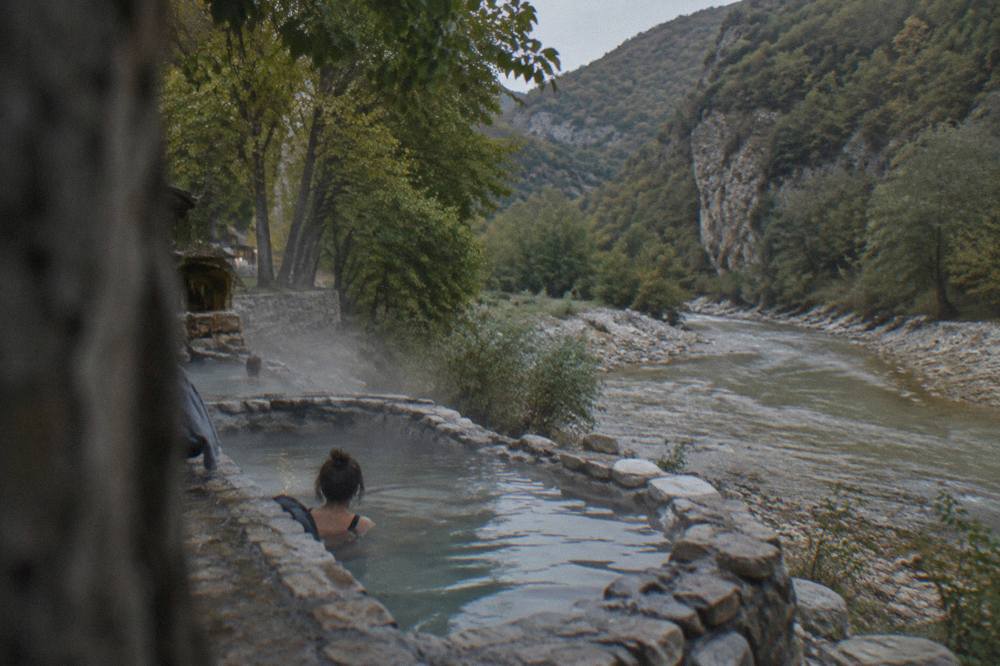
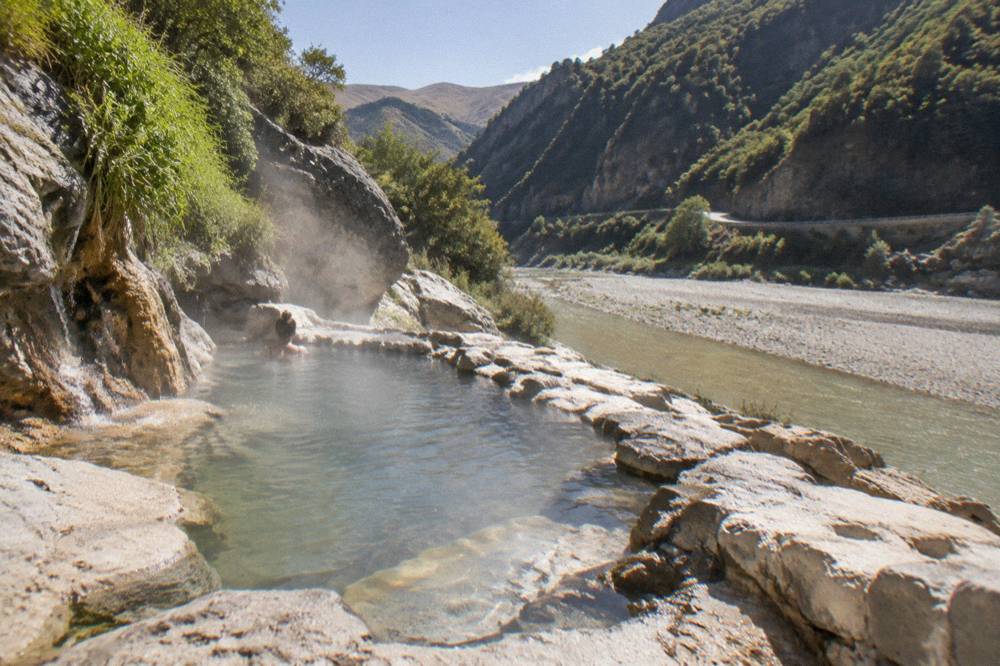
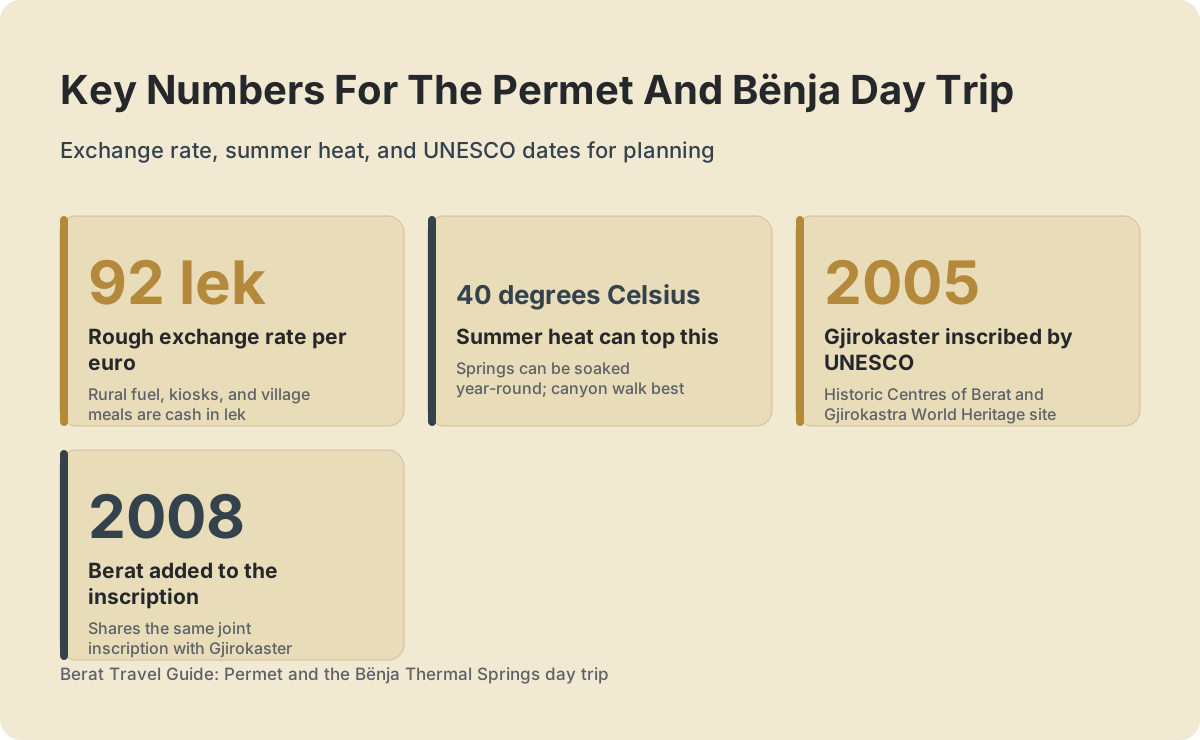
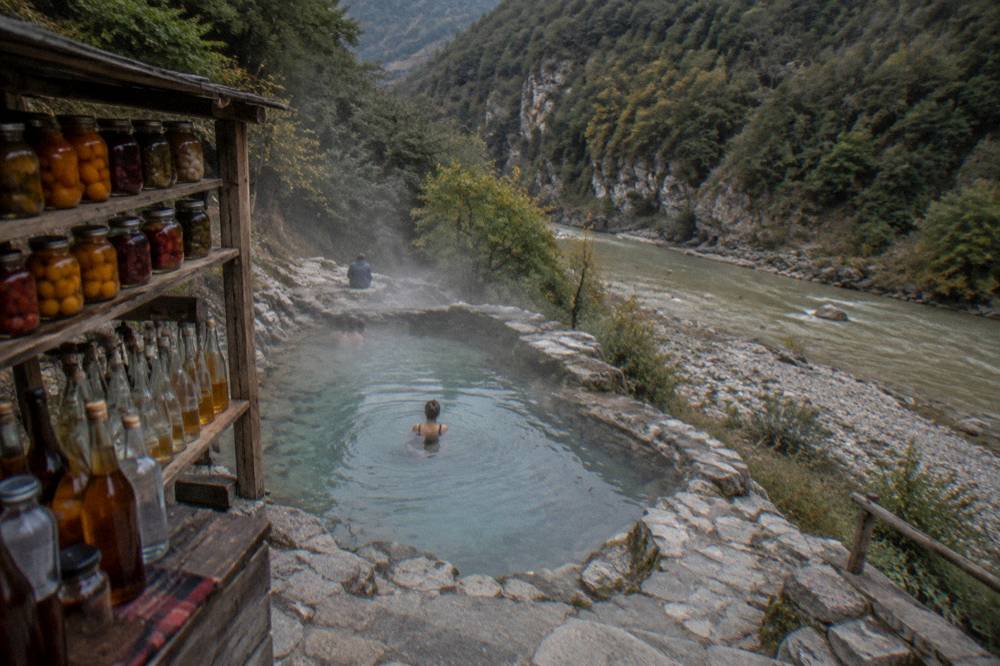
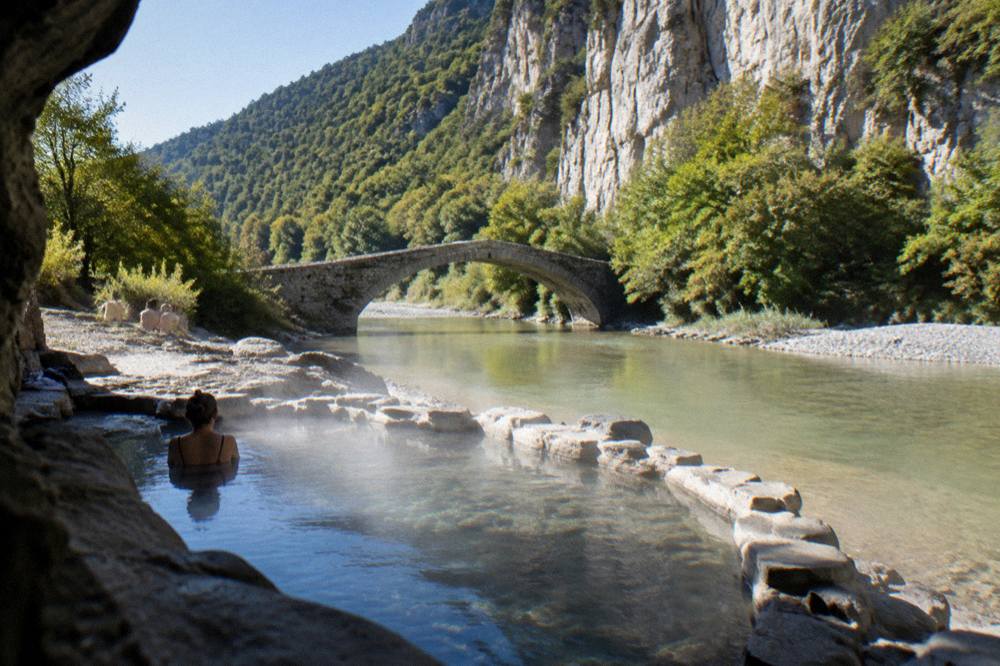
The Bënja thermal springs are a series of warm mineral pools and rivulets seeping from a pale rock face at the mouth of the Langarica canyon, a short drive from Permet, where warm water mixes with the cold river and visitors wade, soak, and swim beneath high canyon walls. The setting is the draw as much as the water: the Langarica, a tributary of the Vjosa, has carved a narrow gorge with cliffs, caves, and a striking old Ottoman stone bridge at the approach, and the springs sit right where the gorge opens out. There is no resort infrastructure; you change behind rocks or in the open, the ground underfoot is gravel and rock, and the mood is entirely rustic. That is precisely why people love it.
The water itself varies in temperature from spot to spot, warmer where it emerges and cooler where it meets the river, so you can move between pools until one feels right. Locals credit the springs with therapeutic properties, a belief that predates modern tourism by generations, and you will often see families soaking at weekends. Go in the morning on a weekday if you can: the pools sit in a canyon that loses light early, and the car park area fills quickly in high summer. Do not expect changing rooms, lifeguards, or signage in English; bring a towel, sandals with grip, and a bag for rubbish.
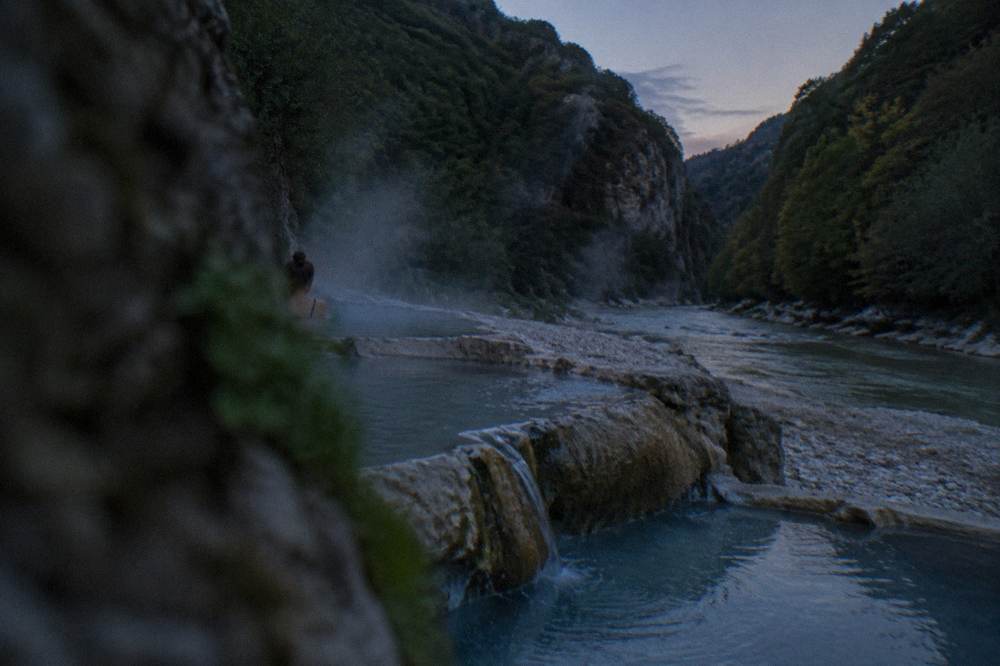
If soaking is not your thing, the walk up the Langarica canyon is: the trail into the gorge is one of the best short canyon walks in southern Albania, with the river sliding between walls, gravel beaches to rest on, and the option to turn around whenever the footing gets serious. Allow more time than you think you need, because almost everyone underestimates how long they linger. And if warm-water canyon swimming appeals enough to build a whole trip around water, the options back in Berat are strong: see canyon adventure tours from Berat for the wider region.
For balance, one caution belongs here rather than later. The path from the parking area to the springs is short but rough, and wet rock near the water is slippery year-round. Sturdy sandals or light walking shoes matter more than swimwear style, and anyone with limited mobility will find the last stretch genuinely awkward. Go slow, and the place repays every step.
What Should You Do With Your Hours In Permet Itself?
Permet rewards a slow afternoon rather than a checklist: walk the riverfront plane trees, shop for gliko and local raki, eat a long lunch or early dinner of river fish or lamb, and, if the timing works, drive up to a viewpoint over the Vjosa before heading back toward Berat. The town centre is small enough to see on foot in an hour, and that is its charm. The plane trees along the river are the signature image; in summer their shade is the coolest place in the valley, and the cafes under them serve the town's unhurried version of an evening pase. Souvenir shopping here is actually useful, unlike in most towns: gliko, fruit preserved in thick syrup, comes in dozens of varieties, from walnut to plum to watermelon rind, and a jar or three travels well and costs little in lek.
A good plan is to arrive, walk the riverfront, do your gliko and raki shopping before it gets hot, then head to Bënja for the springs in the early afternoon when the canyon has warmed up, and return to Permet for a late riverside meal before the drive north. Two or three hours in town, three or four at the springs, and the day fills itself without strain. Sunday brings a market feel to the centre, and weekends generally feel more local than touristy; this is a town that still runs on its own rhythm.
One worthwhile addition for the drive back, if you still have daylight: the ridge roads south and east of town give broad views over the Vjosa's braided channels, one of the last big wild river systems in Europe, and photographing the valley at golden hour is the single best souvenir of the day. If water landscapes are your reason for travelling, also consider the Osumi Canyon day trip, which runs from Berat in the opposite direction and offers rim viewpoints, waterfalls, and seasonal rafting, or the dedicated Bogove waterfall guide for a shorter, closer water excursion.
And a note for your return evening: after a long driving day, the temptation is to collapse, but Berat at night is one of its best moods. The Berat castle and old town small-group tour is a relaxed way to cover the city side of your trip the following morning, with a guide handling the hills and the history. Check availability for your dates before you leave home.
How Does Permet Compare With Other Day Trips From Berat?
Permet and Bënja are the best choice from Berat for thermal water, river landscapes, and food shopping; the Osumi Canyon and rafting trips beat it for adrenaline and proximity, Gjirokaster wins for Ottoman architecture, and the wineries and beaches fill other niches entirely. The honest framing is drive time versus reward: Permet is the longest of the standard Berat day trips, so you commit a large share of the day to the road, and what you get back is the most varied single day available from the city: hot springs, canyon walking, riverfront town life, and serious food. Travellers who want maximum scenery per hour behind the wheel should pick the Osumi Canyon instead.
| Day Trip From Berat | Best For | Character | Watch Out For |
|---|---|---|---|
| Permet and Bënja | Hot springs, canyon, gliko, river valley | Long scenic drive, rural and rustic | Longest drive; cash only; rough footing at springs |
| Osumi Canyon | Canyon viewpoints and walks | Big gorge scenery, close to Berat | Water level varies; best in season |
| Osumi rafting and tubing | Adrenaline and river swimming | Guided, wet, seasonal | Runs spring to autumn depending on water |
| Gjirokaster | Ottoman old town, bazaar, castle | Historic, food-oriented | Steep streets; combine with a museum day |
| Berat wineries | Wine, raki, long lunches | Easy, half-day friendly | Needs a driver or a tour |
| Beaches near Berat | Sea day, swimming | Summer only; longest transfers | Not really a Berat day trip; see the coast guide |
For the water-sports side of the comparison, the region around Berat has a deep roster. Rafting on the Osumi runs in the spring, when snowmelt from the mountains fills the gorge, and tubing carries the season through summer and into autumn when the water calms. One popular option combines rafting, tubing, swimming, and lunch in a single guided outing, with hotel pickup in Berat, and it suits travellers who want the canyon from the inside rather than the rim.
For a harder-edged day, canyoning trips in the same gorge rope you down waterfalls and into pools, a full-day commitment with guides and gear included. Check the operator's listing for what the day includes, age and fitness requirements, and the season window, because high water in spring can shift the format.
Permet, in short, is the connoisseur's pick: the slowest, warmest, most food-friendly of the day trips, but the one that demands a full day and a car. If that trade does not suit, every row in the table above is covered in its own guide elsewhere on this site.
What And Where Should You Eat In Permet?
Permet's food identity rests on three pillars: gliko, the preserved-fruit specialty sold in jars everywhere; river trout and lamb cooked simply in the town's taverns; and raki, distilled from local fruit and offered at almost every meal and shop counter. Lunch in Permet is a genuine event rather than a refuelling stop, and it is the reason many travellers rank the day among their best in Albania. The tavernas along the river serve the standard southern repertoire: roast lamb, byrek, stuffed peppers, yogurt-based stews, and whatever the river and the gardens produced that week. Portions run large and prices run low, and in the villages around Permet the farmhouse kitchens do the same things a little better.
Two things are specific enough to plan around. First, gliko is not a dessert so much as a ritual accompaniment to raki, served in small slivers the way olives are elsewhere; buy jars from the shops around the centre, where the variety is widest, and expect to pay in lek. Second, the raki here is fruit-based and often homemade, so a polite sip offered by a shopkeeper is a local custom, not a sales pitch. For context on the broader Albanian table, the what to eat in Berat guide covers the dishes you will meet, and the Berat wineries page covers the vines closer to home, where the same valley hospitality shows up as vineyard lunches and tasting pours.
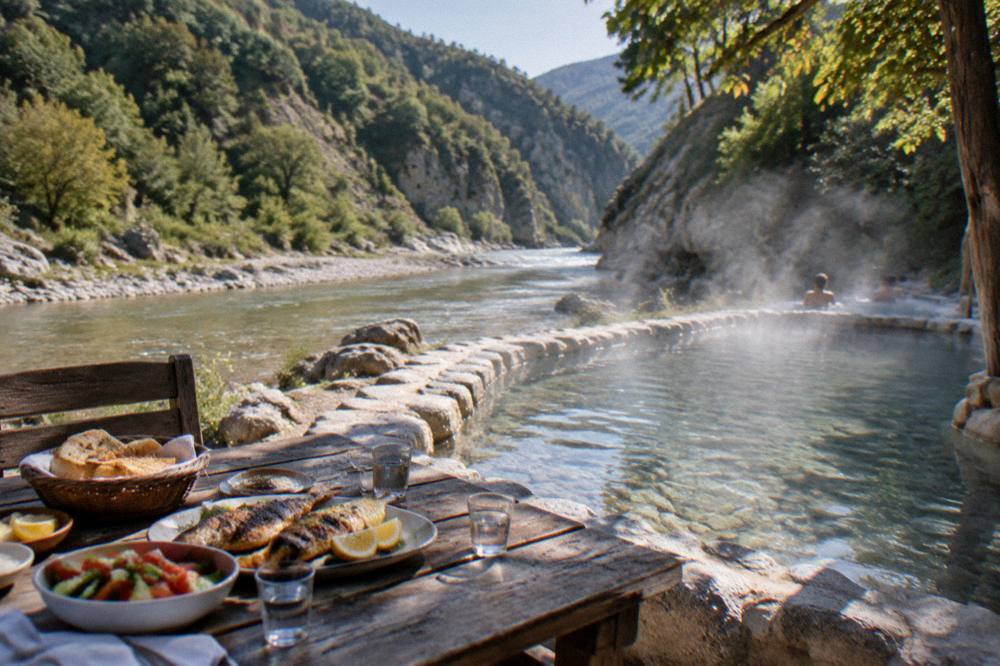
A useful pattern for combining food and scenery: bookend the day with meals. A quick coffee in Tepelenë on the way down, a long riverside lunch in Permet after the springs, and a light dinner back in Berat, where guesthouse kitchens reliably feed late-returning travellers. If you would rather have food and waterfall scenery organized for you, there are guided outings that pair a waterfall hike with winery stops and tastings, all from Berat and back in an afternoon-plus.
What a day's eating actually costs is best benchmarked with the figures reported for Berat, a few hours north, since no verified Permet-specific price list exists; small valley towns generally run at or below Berat levels:
| Item | Reported Figure in Berat | Notes |
|---|---|---|
| Cheap restaurant meal | Cheap by European standards, cash in lek | Basic sit-down lunch |
| Mid-range dinner for two | Cheap by European standards, paid in cash in lek | Three courses at a taverna |
| Cappuccino | Cafe standard | |
| Espresso | Cheap by European standards | The local default order |
| Exchange rate | Roughly 92 lek per euro | Move with the market; check before travel |
When Is The Best Time Of Year To Visit Permet And Bënja?
Late spring, summer, and early autumn are the seasons for a Permet and Bënja day trip: the springs can be soaked year-round, but the canyon walk, the riverside lunches, and the drive itself are at their best when days are long, dry, and warm, with summer heat in the region capable of topping 40 degrees Celsius. The climate of inland southern Albania runs hot and dry in summer and wetter in winter, and the Vjosa valley concentrates that pattern: in July and August the plane-tree shade is not a luxury, water at the springs matters more than warmth, and you should plan the canyon walk for morning. Spring brings green hills, fuller rivers, and the best conditions for combining the trip with rafting season back in the Osumi gorge, while autumn softens the light, empties the roads, and suits photographers best.
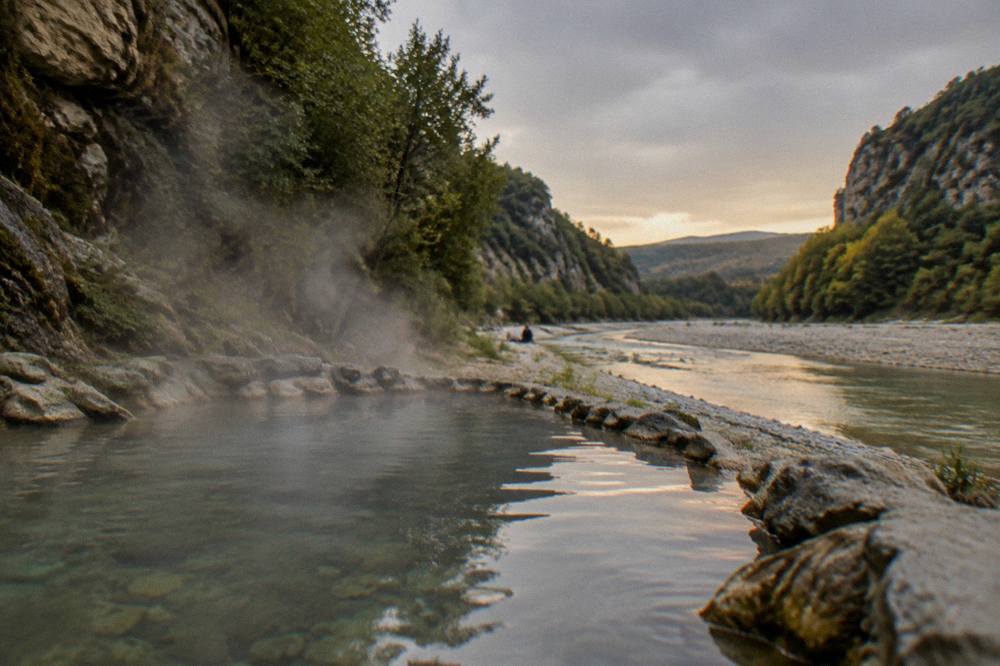
Winter trips are possible but change shape: the springs are arguably at their most atmospheric in cold weather, when steam rises off the pools, but days are short, rain can close the canyon walk, and riverside Permet largely shuts down off-season. If your dates are fixed by school holidays or a wider Balkan itinerary, the Berat weather guide breaks the seasons down for the base town, and the advice transfers to the valley with one adjustment: Permet runs a few degrees warmer and drier in every season.
Timing within the day matters almost as much as timing within the year. Leave Berat early, reach Permet mid-morning while shops are open, hit the springs after the surface has warmed but before the canyon loses the sun, and eat late. That single structure solves most of the day's friction points, from parking to heat to hunger.
How Do You Get To Permet And Back From Berat In A Day?
Almost everyone does the Permet and Bënja trip by rental car or private driver, leaving early from Berat, breaking the drive at Tepelenë, and returning after an early dinner; there is no practical guided day tour from Berat covering Permet, and public transport connections are thin enough that most sources simply recommend driving. Rental cars are available at Tirana's airport, in Tirana, and in Berat itself, and an international driving permit is recommended for non-EU licence holders. The roads on this route are mainly main roads, and the section beyond Permet to Bënja is a short local road; the canyon approach and parking are unpaved but ordinary in dry conditions.
Three practical rules cover the rest. Carry lek in cash for fuel, springside kiosks, and meals, since card acceptance thins out fast outside towns. Build slack into the return leg: the drive back after dark is doable but less pleasant, and mountain roads in the region can carry livestock and loose gravel. And check your guesthouse's advice on local parking before you set out; Berat's own old-town parking situation, including the car restrictions being introduced around the castle quarter, is covered in the where to stay in Berat guide, and returning to a badly parked car at eleven at night is nobody's favourite memory.
For travellers without a car, the honest options are a private driver arranged through a Berat guesthouse, an overnight in Permet reached by whatever bus or shared minibus happens to be running, or a swap of destination: the other day trips in the comparison table above are far easier to reach from Berat, and several, like the rafting and winery options, include hotel pickup. If the point of the day is a guided experience rather than Permet specifically, let the tour do the driving.
What Should You Pack And How Should You Budget The Day?
Pack for two climates in one day: swimwear, a quick-dry towel, and grippy sandals for the springs and canyon; a layer for the evening drive back; cash in lek for everything; sun protection for the exposed pools; and a bag for gliko jars, which are the one purchase most travellers regret not buying more of. The springs are low-frills, so bring what a rustic swimming hole requires: water shoes beat flip-flops by a wide margin, and a dry bag or at least a zip lock protects your phone near the water. For the canyon walk, ordinary walking shoes are fine; the trail is short and the obstacles are gravel and wet rock rather than exposure.
Budgeting the day comes down to four spending moments: fuel, food, springs-area extras, and shopping. Food follows the Berat benchmark table above, fuel is priced at the pump in lek, and shopping is entirely under your control, which is exactly the problem: gliko jars and raki bottles add up because they are cheap, varied, and genuinely hard to find outside the valley. Everything on the day is paid in lek; the euro is not legal tender in Albania, though some tourist businesses will accept it informally and give change in lek, usually at a worse rate, so do not plan on it. Albania is not an EU member, so do not expect euro pricing or EU banking norms anywhere in the valley.
| Item | Why It Earns Space | Season Notes |
|---|---|---|
| Grippy sandals | Springs and wet rock are slippery all year | Non-negotiable |
| Quick-dry towel | No facilities at the pools | Dries on the drive |
| Water shoes or light hikers | Short canyon walk, gravel surfaces | Spring and autumn best underfoot |
| Layer or light jacket | Evening drive back over the passes | Essential in spring and autumn |
| Lek in cash | Fuel, kiosks, meals, gliko | No reliable cards beyond town |
| Sun hat and sunscreen | Pools sit in open rock, shade is partial | Critical in midsummer |
| Reusable bag | Jars and bottles travel better padded | Year-round |
With packing and money settled, the last decision is the shape of the week: a Permet day slots best into the middle of a stay, after you have walked Berat's castle and Mangalem and before you fill the final days with closer trips. Travellers with a full week often add beaches near Berat for a sea day, or push east into the Mount Tomorr highlands for a cooler contrast to the hot valley.
Common Questions About Permet And Bënja
Can you visit the Bënja thermal springs as a day trip from Berat?
Yes. Most travellers drive from Berat in the morning, stop in Tepelenë on the way, spend the early afternoon at the springs and in the Langarica canyon, eat in Permet, and return after an early dinner. It is a full day on the road, so an early start matters more than pace.
Do you need a car for the Permet and Bënja trip?
In practice, yes. There is no practical guided day tour from Berat covering Permet, public transport connections are thin, and the springs sit beyond the town on a local road. A rental car or a private driver arranged through your guesthouse is the standard approach.
Is swimming at the Bënja springs safe?
For competent swimmers, generally yes, with care. The pools mix warm spring water with cold river water, footing is rough gravel and rock, and there are no lifeguards, changing rooms, or formal facilities. Wear grippy sandals, avoid wet rock at speed, and keep children close.
What is gliko, and why is Permet famous for it?
Gliko is fruit preserved in thick syrup, walnuts, figs, plums, cherries, even watermelon rind, jarred and served in slivers alongside raki. Permet is its home territory, and shops around the town centre sell the widest variety; jars travel well and make the trip's most useful souvenir.
When should you not do the Permet day trip?
Avoid short winter days if the canyon walk and riverside time matter to you, and treat midday in high summer with respect, since inland heat in the region can top 40 degrees Celsius. Rainy spells make the canyon approach less pleasant and the drive longer, so check the forecast before committing.
Can you combine Permet and Gjirokaster in one day from Berat?
Not comfortably. Both are full days on their own, and the two towns sit in different valleys. Choose one for the day trip, or build an overnight route that reaches Gjirokaster and returns through Permet on a second day.