Berat With Kids
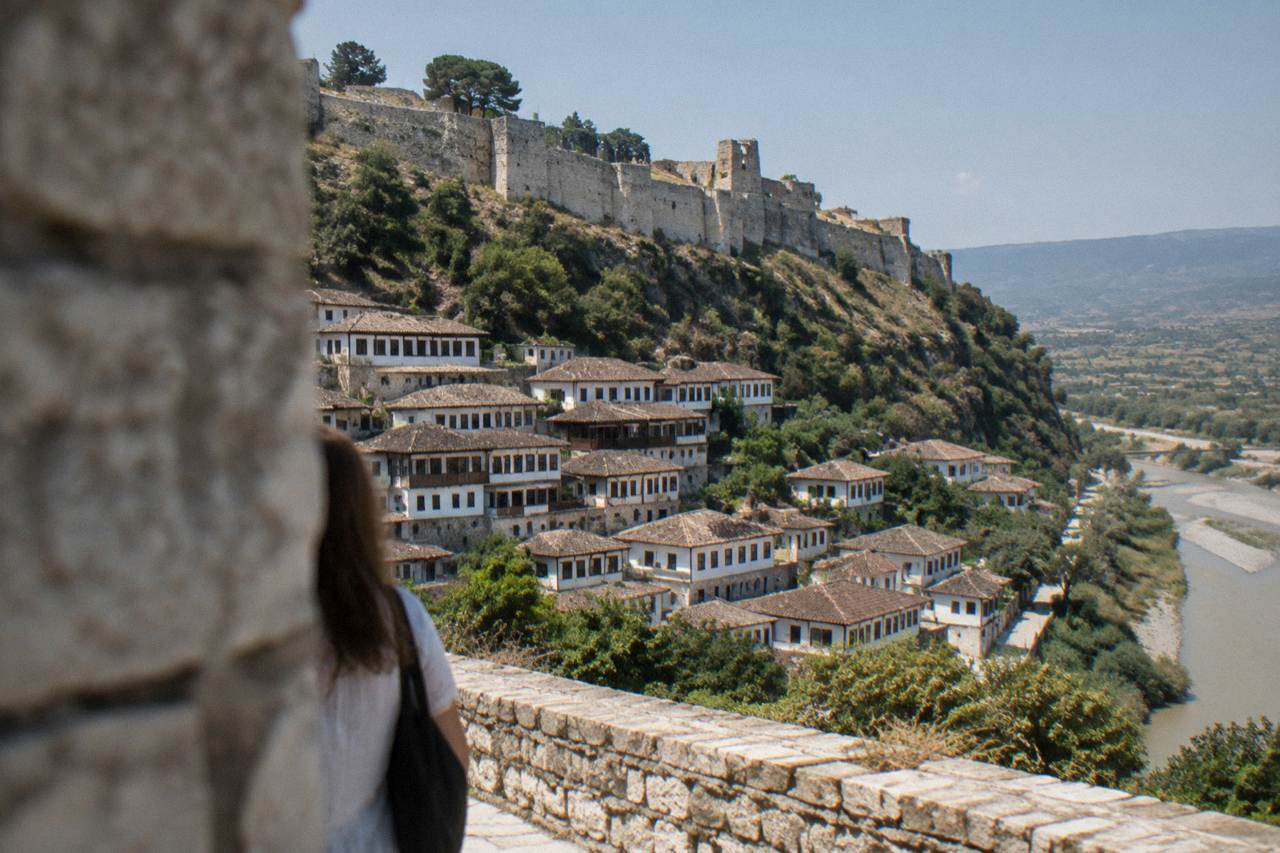
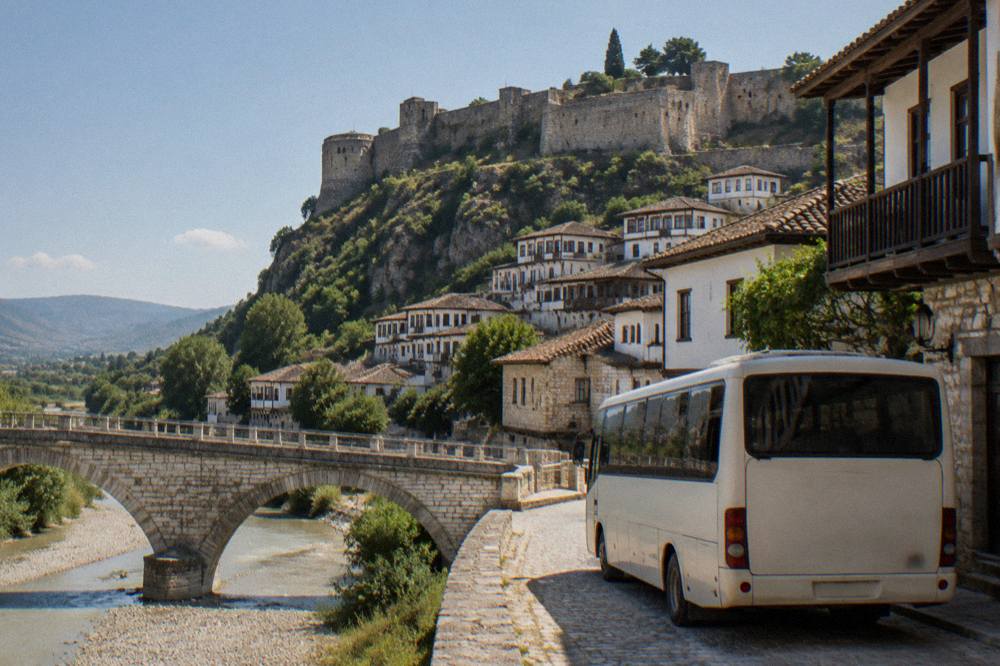
Berat, in central Albania, is a UNESCO-listed Ottoman hill town of white windowed houses stacked above the Osum River, and it happens to be one of the most manageable small cities in the Balkans for families.
Short answer
Berat works well with kids: it is compact, walkable, cheap by European standards, and full of castles, riverbanks and easy day trips into the Osumi Canyon. Plan one or two days in town, use lek for everyday spending, avoid the hottest midsummer afternoons, and book family-sized tours ahead in peak season.
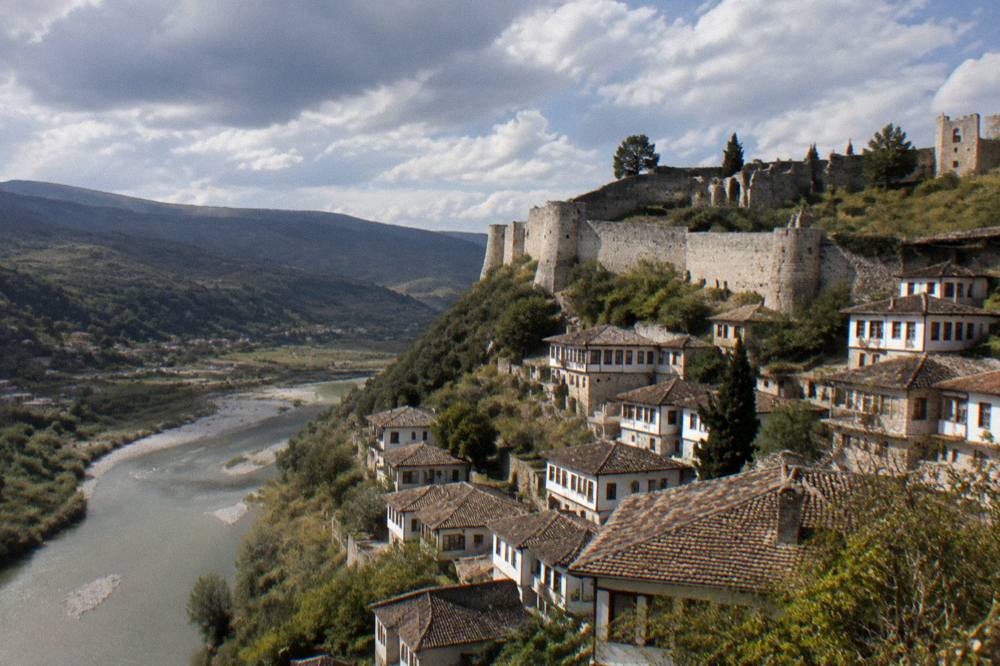
Berat, in central Albania, is the town the postcards call the City of a Thousand Windows: a UNESCO World Heritage site where white Ottoman houses stack up a hillside above the Osum River, crowned by a castle quarter that people still live inside. For families it is close to ideal. The old town is small enough that nobody gets exhausted walking it, the castle walls and river bridges give children something physical to climb, look at and cross, and the surrounding region adds canyon tubing, waterfalls and wineries within an hour or two of the town centre. Prices are low by western European standards, though the old town still runs largely on cash, so bring lek rather than relying on cards.
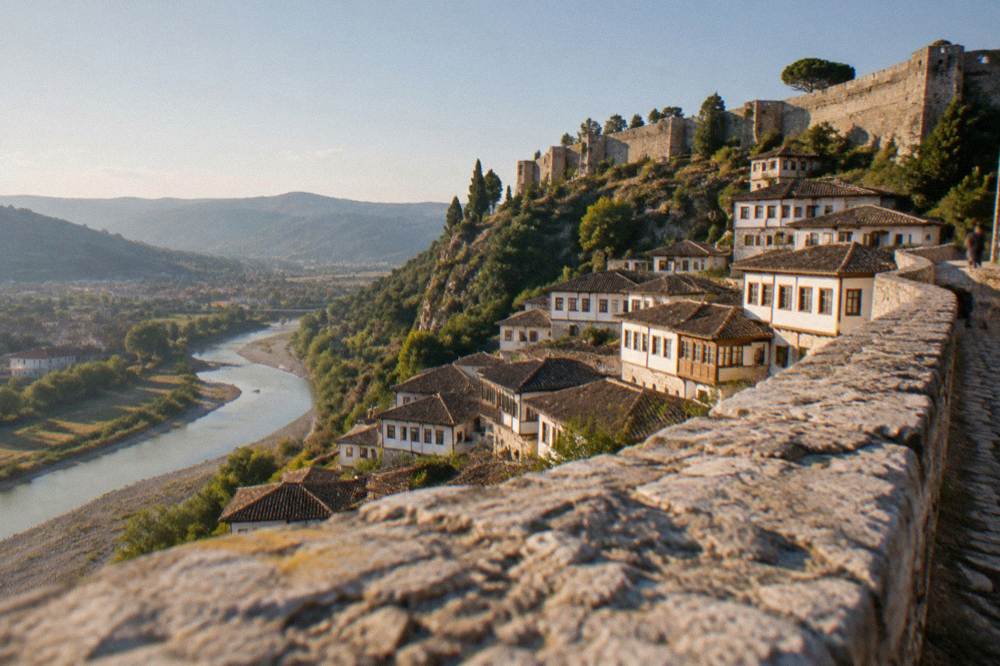
This page lays out a practical family itinerary: what Berat is like with children in tow, which sights hold their attention, how to structure one or two days, and which tours, restaurants and beds suit families best. The short version is simple. Give the castle half a day, the two riverside quarters the rest, and save one day for the Osumi Canyon or a winery visit if your children are old enough for it. If you are still deciding whether the town deserves your holiday time at all, start with the wider case for the destination on Berat Travel Guide.
Is Berat In Albania A Good Place To Visit With Kids?
Yes, Berat suits families unusually well for a UNESCO-listed old town, because the entire sightseeing core is compact, mostly pedestrian in feel, and cheap to visit, and the big-ticket experiences (a real castle people live in, a river to cross, canyons and waterfalls nearby) are exactly the things children remember. The one honest warning is climate and terrain: summer heat can top 40 °C, and the climb to the castle is a sustained uphill walk on stone.
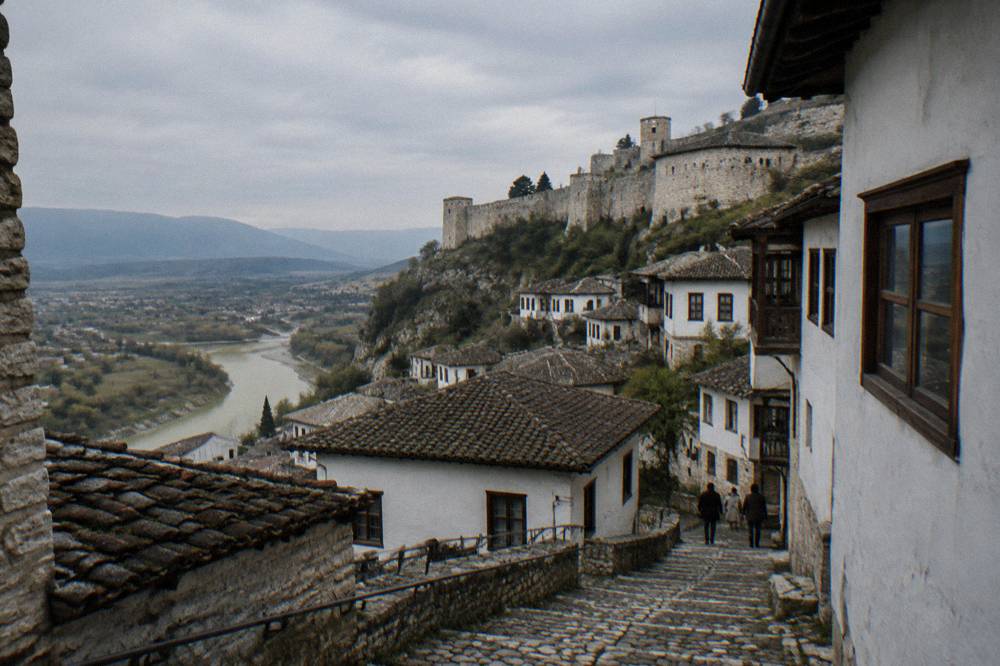
Berat was added to the UNESCO World Heritage List in 2008 as an extension of the Historic Centres of Gjirokastra, and the organisation describes it as "a rare example of a well-preserved Ottoman town". That heritage is not behind glass here. The castle quarter, the Kala, is a lived-in neighbourhood with guesthouses operating inside the walls, so children are exploring a working hilltop village rather than a roped-off monument. Around 42 churches once stood inside the fortress and roughly eight survive, alongside the Red Mosque, one of the earliest Islamic buildings in the fortification. For a child, none of the dates matter; what matters is that the place looks like a storybook castle and has real towers, 24 of them along the walls.
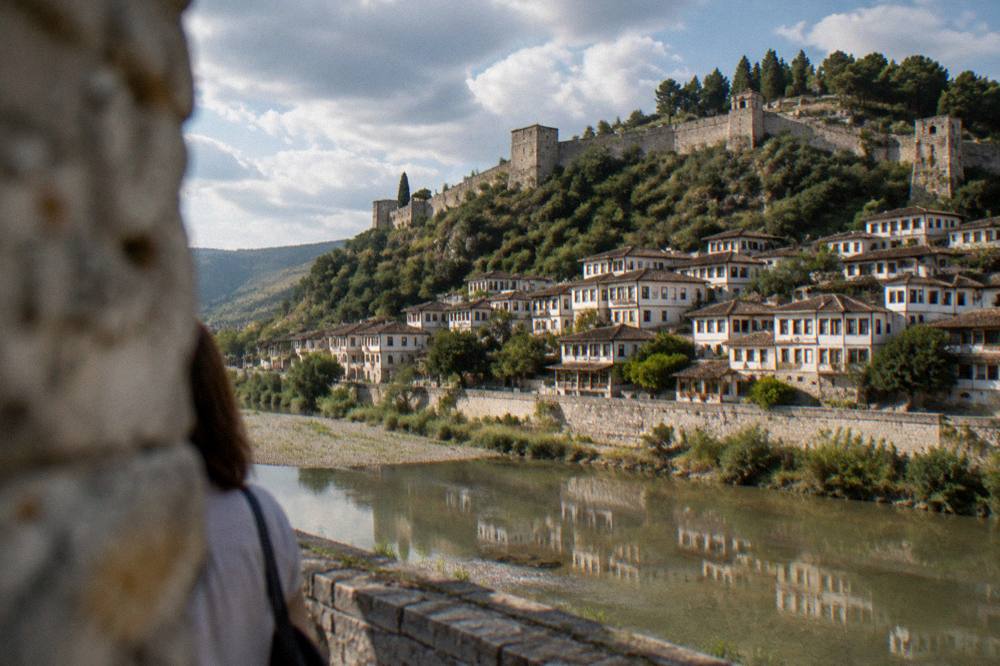
Practicalities lean family-friendly too. The Berat municipality counted 62,232 residents at the 2023 census, so this is a small city, not a sprawling capital. Distances between the sights are short, and the two main quarters, Mangalem on one side of the river and Gorica on the other, face each other across the Osum with a historic bridge between them. Kids get a satisfying sense of achievement just walking from one bank to the other and looking back at the windows.
The main compromises are these. The walk up to the castle is steep and cobbled, so very young children will want a carrier or a long slow climb with breaks, and a stroller is more hindrance than help on the kalldrëm stones. Midsummer afternoons are genuinely hot; July 2026 saw the highest values recorded in Berat during the year's hottest day, with shade readings reported around 42 °C, so summer visits should shift sightseeing to morning and evening. And the old town largely runs on cash: cards are accepted at some hotels and larger restaurants, but Mangalem and the lanes around it remain lek territory. Plan for that and the rest is easy. For the broader safety picture, see the site's Berat safety guide.
What Are The Best Things To Do In Berat With Kids?
The five activities that reliably work with children are the castle quarter and its walls, the Gorica Bridge and the Gorica lanes across the river, the two Berat Museum Center museums inside and below the castle, the Osum riverfront promenade, and a seasonal trip to the Osumi Canyon for tubing or a waterfall walk. Together they fill two full days without a single long car transfer in between.
The castle comes first, and it deserves the freshest legs of the day. Inside the walls the lanes open into small squares, ruined churches and viewpoints where the whole white cascade of Mangalem drops away below. The Onufri Iconographic Museum sits inside the castle in the Church of St Mary, and its painted icons are vivid enough that even restless children will find something to stare at. The museum had 58,912 visitors between January and July 2026, up 16 percent on the same period a year earlier, and May is its busiest month, so June and September mornings are the calmer bets.
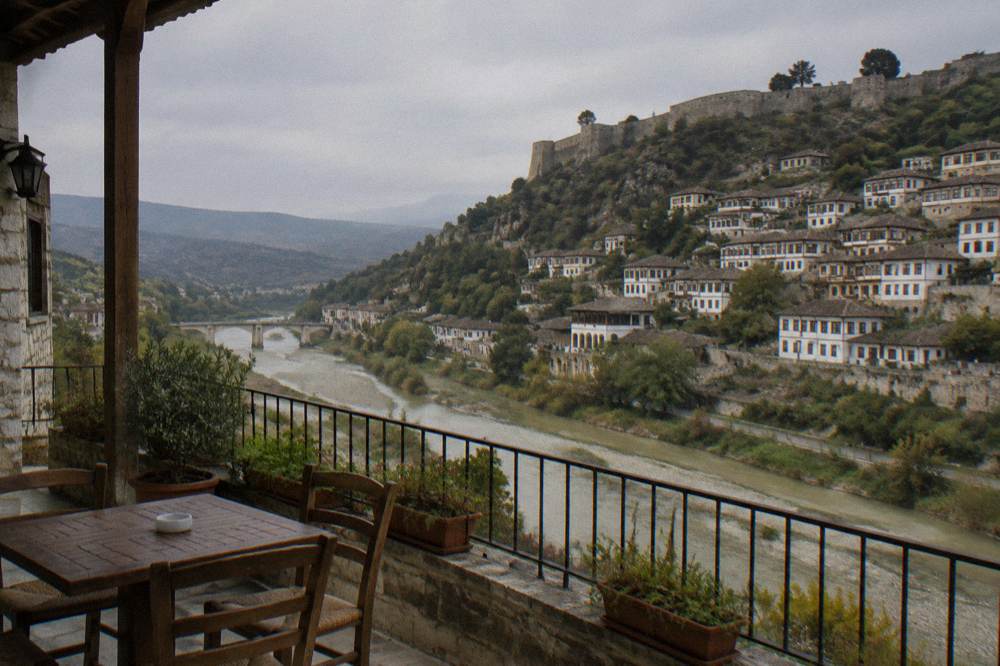
Down below, the two riverbank quarters are where families spend the easy hours. Mangalem's stacked houses with their rows of windows give the town its nickname, and Gorica, across the Gorica Bridge, is the quieter, leafier side. The bridge itself is the classic first "achievement" walk for children: cross it, turn around, take the photograph. The promenade along the Osum is flat, shaded in stretches, and ideal for an ice cream stop while parents recover from the hill.
Museums reward a short visit rather than a long one. The Ethnographic Museum, in a historic house below the castle, reopened on 30 May 2026 after more than three years of restoration with around 1,300 objects on display: traditional rooms, textiles, tools and costumes that give children a concrete picture of how families lived here long before package tourism. Tickets for both museums are modest and reduction-friendly, which matters when travelling as four or five.
For a change of scale, the region beyond town is the real playground. The Osumi Canyon near Çorovodë, protected as a natural monument, is a gorge of cliffs and river bends where operators run rafting in spring, when snowmelt swells the water, and river tubing through summer and autumn, when the current is calmer and better suited to children. There is no entrance fee to view the canyon from the rim, and Bogovë village gives access to the Bogove waterfall on a short forest walk that families can manage comfortably. Full detail on both sits in the site's Osumi Canyon guide.
Three of the region's best family-compatible options, chosen for a mix of transport included, easy pacing and a summer water activity, are below. All are booked through the operator's live listing.
The tubing option deserves a note here because it is the one most parents ask about. The Original Osumi Canyon River Tubing Tour runs a short, water-level float on the canyon river that suits confident swimmers and adventurous tweens better than nervous five-year-olds, and the season, roughly June into autumn, is exactly when families are in Berat anyway. Spring rafting is a different product entirely: higher water, colder conditions, older children.
How Do You Plan One Perfect Family Day In Berat?
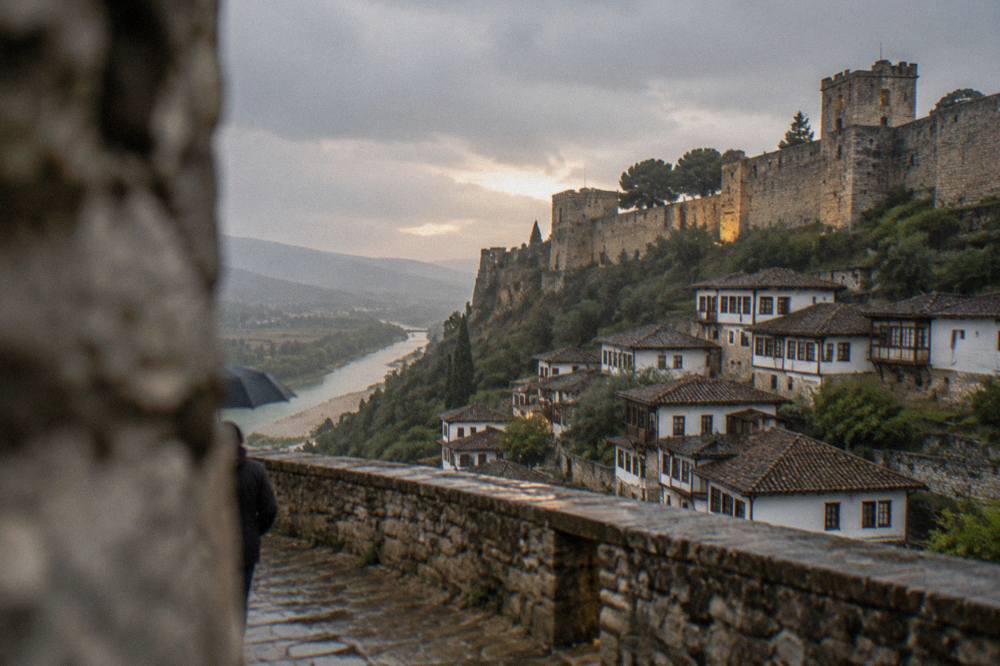
Start early with the castle while the stone paths are still cool, spend the middle of the day at the museums and a long family lunch in Mangalem, cross to Gorica in the late afternoon when the light hits the windows, and finish on the river promenade before dinner. That single-day shape covers everything essential, needs no car, and builds in the rest stops children actually require.
The order matters more than the content. The climb to the Kala is the day's hardest physical task, and doing it at nine in the morning rather than two in the afternoon is the difference between a happy day and a mutiny. Going up first also means you descend into lunch, which is the natural reward structure of any good family itinerary.
A worked one-day plan, with no fixed clock times so you can shift it to your children's rhythm:
| Part of the day | Where | Why it works for kids |
|---|---|---|
| Early morning | The Kala castle quarter | Steep climb done in cool air; towers, lanes and viewpoints to explore freely |
| Late morning | Onufri Museum inside the castle | Short visit, vivid icons, indoor cool-down after the walls |
| Midday | Lunch in Mangalem | Long slow meal in shade; the hardest walking is done for the day |
| Early afternoon | Ethnographic Museum | Traditional rooms children can picture instantly; 45 minutes is plenty |
| Late afternoon | Gorica Bridge and Gorica lanes | Easy flat walking, the classic photo, a playground of cobbled lanes |
| Evening | Osum riverfront promenade | Flat, sociable, ice cream, parents get a sit-down |
Two practical warnings belong right here. First, car access into the castle quarter is being restricted; plan to park below and walk up. If you are staying in the Kala, confirm your guesthouse has registered your booking; if not, park below and walk up. Second, a small heritage fee has been reported at the main castle gate in daytime, and no official current figure is confirmed, so carry a few hundred lek per adult and treat any fee as part of the day's cash budget.
If you have a second day, the natural extensions are the canyon or a winery, both covered later on this page, or a slower day of the old town's less obvious corners. The site's one day in Berat and two days in Berat itineraries cover the same ground in more depth for readers who want a second opinion on pacing.
Which Berat Tours And Tickets Suit Families Best?
Families based in Berat itself usually need no tour at all for the old town, but guided products earn their price when transport is included: the day trips from Tirana, Durrës and the coast that bundle driving, castle entry guidance and a Belshi Lake stop, plus the seasonal canyon tubing trips, are the ones that genuinely help parents. Museum tickets are cheap enough to buy on the spot in lek.
The distinction is between products that solve a problem and products that add commentary. If you are already sleeping in Berat, walking the castle and the two quarters with your children, at their pace and with your own explanations, costs nothing beyond museum tickets and beats a two-hour guided walk for most under-tens. If you are arriving from Tirana or the coast, however, a day trip with transport included removes a two-plus-hour drive each way, a rental car decision and a parking hunt, which for many families is worth more than any guiding.
The featured option on this site is the Berat UNESCO Heritage and Belshi Lake Tour from Tirana, a daily departure that pairs the old town with a lake stop, which children tend to rate higher than a second hour of Ottoman architecture. Its price and current rating render on the live listing rather than on this page: Check availability. It is the strongest fit for families who want the castle, the windows and something open-air in one package.
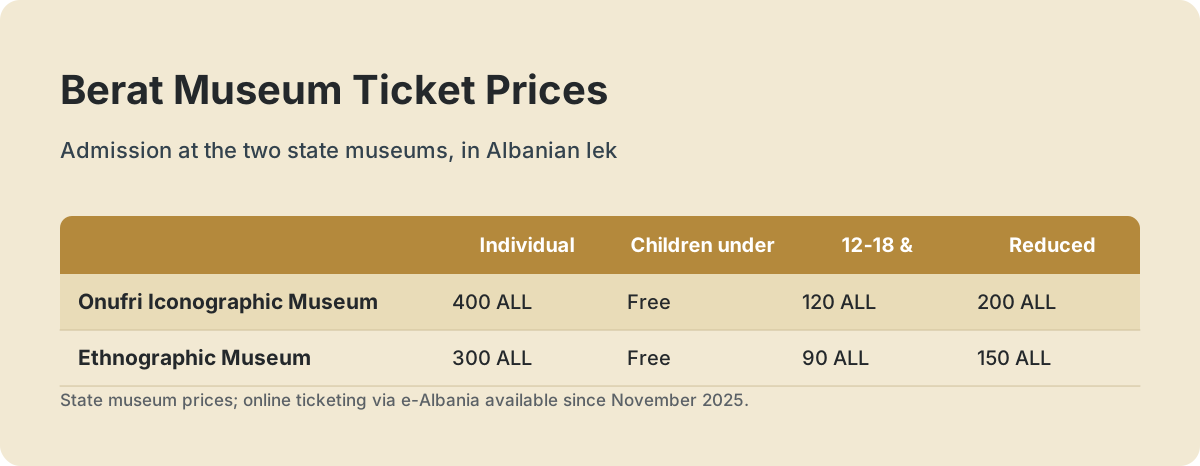
Museum tickets are the other line item, and the Berat Museum Center publishes them plainly:
| Museum | Individual | Children under 12 | Ages 12-18 and students | Reduced |
|---|---|---|---|---|
| Onufri Iconographic Museum | 400 ALL | Free | 120 ALL | 200 ALL |
| Ethnographic Museum | 300 ALL | Free | 90 ALL | 150 ALL |
An audio guide at Onufri costs 500 ALL if you want it. Tickets also went digital: e-Albania launched online ticketing for state museums and heritage sites in November 2025, covering the Berat museums among others, which lets you skip a queue with children in tow. Free admission days exist, 18 April, 18 May, 21 May and 29 September for everyone, with two November dates reserved for Albanian citizens, so a spring or late-September visit can quietly include free museums.
For families who want a guide in the old town without a full day tour, the free-walking option deserves a mention. GuruWalk lists several tip-based Berat walks, including a free walking tour rated 4.88 from 515 reviews, in which the guide is tipped at the end rather than paid a ticket price up front; children are usually welcome, and the informal pace suits families better than a fixed premium walk. It is the cheapest way to get the stories behind the windows.
Where Should Families Stay In Berat With Kids?
The family-friendly sweet spot is Mangalem for the postcard atmosphere and short castle walk, Gorica for space, gardens and quieter nights, and the Kala itself for the memorable experience of sleeping inside a real castle, accepting that everything must be carried up on foot. All three areas are safe, walkable and a short distance apart.
Each quarter trades one thing for another, and knowing the trade before booking saves a stressful arrival. Mangalem puts you at the foot of the castle climb with restaurants on the doorstep; the stacked-window views are the reason you came. Gorica, across the bridge, is calmer in the evenings and has some of the newest and most generous family rooms: a recently restored boutique property on Rruga Stiliano Bandilli has drawn high guest ratings since opening. Inside the castle walls, guesthouses offer the unforgettable version, and a centuries-old building next to the Onufri Museum is being converted into an eight-room family guesthouse under a 2025 national investment scheme, so the stock of castle beds is growing.
Parking, not charm, is usually the deciding factor for driving families. Space in the historic areas is limited, and the same castle access restrictions noted above apply to hotel guests only if their stay is pre-booked with the guesthouse, so confirm before you arrive. Guesthouse rates keep a family room within reach, though peak summer weeks push higher. The full neighbourhood-by-neighbourhood breakdown, with named properties and the parking notes, is in the site's where to stay in Berat guide.
A simple comparison of the three areas for families:
| Area | Best for | Trade-off |
|---|---|---|
| Mangalem | Views, restaurants, shortest castle walk | Busiest lanes, thinnest walls, some street noise |
| Gorica | Quieter nights, gardens, family rooms | Everything crossed via the bridge, a few extra minutes on foot |
| Kala (castle) | Sleeping inside a fortress, sunrise over the town | Bags carried uphill, vehicle access restricted, fewer dinner options |
What Should Families Eat In Berat, And Where?
Berat's food is one of its best family assets: portion sizes are generous, dishes are simple and grilled or baked rather than spiced, meals out cost a fraction of western European prices, and children can eat well from the shared plates that Albanian restaurants naturally serve. Expect qifqi, tavë kosi, byrek and grilled meats, with a full casual dinner for a family typically running to tens, not hundreds, of euros.
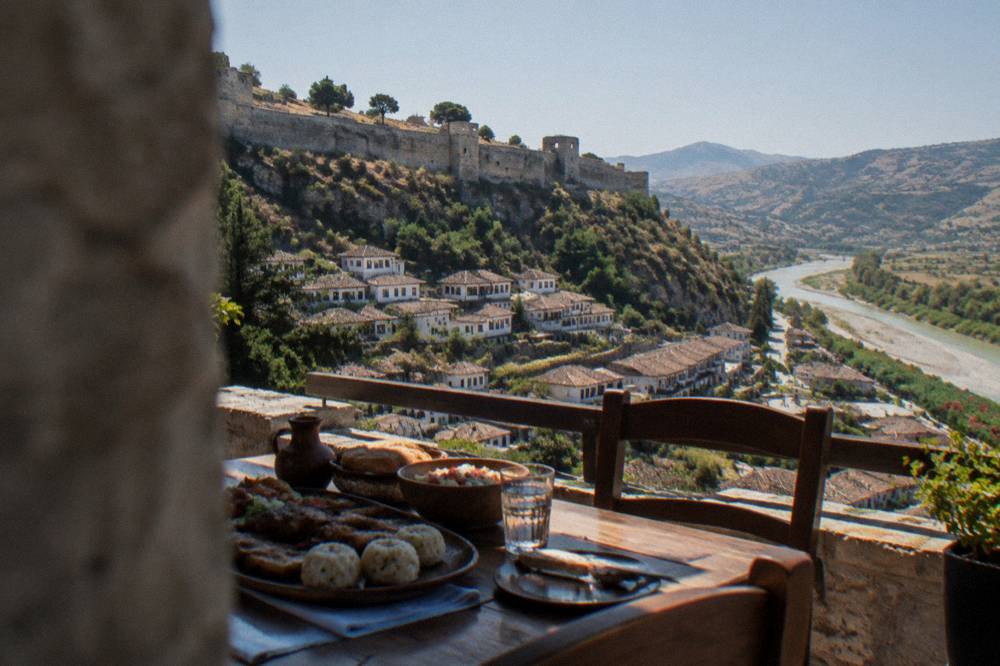
The local dishes translate directly to children's plates. Qifqi, rice dumplings baked with herbs, are the perfect finger food; tavë kosi, lamb baked under yogurt and egg, is mild and soft; byrek, the flaky filled pastry sold by the slice, solves any lunch emergency; and japrak, stuffed vine leaves, appear on most traditional menus. Eating out in Berat is cheap by European standards, with payment in cash in lek, which makes treating the whole family to dinner out feel normal rather than extravagant.
Where matters as much as what. Mangalem's lanes hold the traditional restaurants with terraces where children can see the whole town while eating; Gorica's quieter side suits a slow family lunch; and the promenade handles the ice cream stops. Two family-run institutions in the old town are repeatedly recommended for homestyle cooking, and a cooking class turns the meal itself into the activity: Mama Nina's cooking class in Berat, rated 4.8 from 242 reviews, has families cooking, then eating, their own lunch, which for many children is the most engaging hour of the whole trip.
For parents who want a quiet taste of the region's other specialty, wine, Berat is a genuine wine town. The local grapes are native ones, Shesh i Zi for red and Shesh i Bardhë for white, alongside Puls, a rare white variety rescued around Berat and used even for a traditional-method sparkling wine aged on its lees. A guided winery tour with transfers and tastings, rated 4.9 from 385 reviews, includes the driving and lets one parent enjoy the glasses properly, and the surrounding villages hold several family-run cellars with vineyard lunches; the site's Berat wineries page maps the options.
A pocket menu for fussy and adventurous eaters alike:
| Dish | What it is | Kid verdict |
|---|---|---|
| Qifqi | Baked rice dumplings with mint and fennel | Easy win, eaten by hand |
| Tavë kosi | Lamb baked with yogurt and egg | Mild, soft, familiar comfort food |
| Byrek | Flaky pastry with cheese, spinach or meat | The universal backup lunch |
| Japrak | Vine leaves stuffed with rice and herbs | For the braver ones, one-leaf testing allowed |
| Fërgesë | Baked peppers, tomato and cheese | Dippable, scoopable, shareable |
When Should Families Visit Berat, And What Is The Weather Like?
Berat has hot, dry summers and wetter, milder winters, so the best family months are the shoulders: May, June, early July, September and early October, when the climbing and walking are comfortable, the museums and canyon trips are running, and the summer crowds have thinned. July and August work, but only with an early-start, long-lunch, evening-walk rhythm.
No official weather-station averages have been published for Berat in a verifiable form, so this page stays qualitative, which honestly suits family planning better than a temperature chart would. Summer days are hot and dry, with rain rare in July, and 20 July 2026 was reported as the hottest day of the year nationally, with the highest values recorded in Berat and shade readings around 42 °C. That is not a month for midday castle climbs with a six-year-old. Winters are wet rather than white, with rain peaking from late autumn into January, though snow rarely settles in the town itself.
One October event changes the calculus for food-loving families: the Wine & Stories of Berat festival runs over three days, 2-4 October in 2026, filling the town with winery stalls, music, artisanal cheese and olive oil stands, and a wine contest judged by international oenologists. Parents taste, children eat, and the town is at its most sociable. The trade-off is that accommodation fills, so book early for that weekend.
Season by season for families:
| Season | Family fit | Watch-outs |
|---|---|---|
| Spring (April-May) | Green hills, comfortable walking, free museum days in April and May | Occasional showers; canyon rafting in high water is for older kids only |
| Early summer (June) | Warm but not extreme, tubing season starts | Book rooms ahead |
| High summer (July-August) | Long evenings, full activity calendar | Heat can top 40 °C; shift everything to morning and evening |
| Autumn (September-October) | The best all-round stretch; wine festival in early October | First rains return late in the season |
| Winter (November-March) | Quiet, cheap, atmospheric | Wettest months; museums on shorter winter hours |
The detail behind these patterns, including what to pack, is in the site's Berat weather guide.
Is Berat Safe, Affordable And Practical For Families?
Berat is safe, walkable and one of the cheapest UNESCO old towns in Europe to visit as a family: crime affecting tourists is rare, British travel advice reports no warnings against any part of Albania, emergency numbers are simple, and everyday costs, museum tickets, meals and casual stays, run well below western European levels. The practical hurdles are cash reliance, summer heat and limited parking, not danger.
On safety, the picture is steady. UK Foreign Office advice reports no travel warnings for any part of Albania, and notes that crime reports targeting foreigners are rare; US guidance for the country is a standard Level 2 advisory, the same "exercise increased caution" category that covers much of Europe. Ordinary city sense applies: keep bags closed on the promenade and watch children near the riverbank edges. The emergency numbers are 112 for general use, with ambulance 127, fire 128 and police 129 also in service, and 112 works from any phone even without credit.
On money, the currency is the Albanian lek, roughly 92 lek to the euro, and it is the only legal tender, though some tourist businesses informally accept euro notes and give change in lek. ATMs exist but fees on foreign cards commonly run to several hundred lek, so withdraw larger amounts less often, and remember the old town is largely cash territory. Albania is not in the European Union and not in the Schengen area, so entry rules are separate: UK, EU and most western visitors stay visa-free for 90 days in any 180-day period, and US citizens may stay up to a year. Families from the EU can enter on ID cards; everyone else brings passports valid three months beyond departure.
On practicalities, the big ones for families:
| Question | Short answer |
|---|---|
| Getting there from Tirana | Buses and furgons from Tirana's South-North terminal, roughly a 2.5-hour ride, a few hundred lek paid in cash |
| Trains | No passenger train reaches Berat; skip the idea entirely |
| Cards vs cash | Lek cash for daily spending; cards at some hotels and larger spots |
| Water | Locals drink the municipal supply, from Bogova Spring; bottled water is the cautious family choice |
| Stray dogs | Present in Albania generally; teach children not to approach them |
| Language | English is widely spoken by younger Albanians, including in tourism |
Budget-conscious families can dig deeper into costs, including the national price context, in the site's is Albania cheap or expensive answer. If Berat has won you over, the wider itinerary options, from a Tirana pairing to a southern road trip, start with the site's Berat day trip from Tirana and Tirana-Berat-Gjirokaster road trip planners.
What Family Day Trips From Berat Are Worth The Drive?
The four that repay the drive with children are the Osumi Canyon for tubing and waterfall walks, the Bogove waterfall for a short forest trail, Mount Tomorr for the big-mountain view and the new road to the pilgrimage site, and the ancient sites of Apollonia or Byllis for the run-around-a-ruin experience. All sit within the Berat region's own day-trip radius.
The canyon is the headline, and the right product depends on the season and the child. Spring brings snowmelt and proper rafting; summer and autumn bring tubing, the calmer, warmer float that suits families best. The classic short float is The Original Osumi Canyon River Tubing Tour, rated 4.7 from 728 reviews, a half-day water experience that pairs with the Bogove waterfall for a full day out; the canyon rim viewpoints, including the Bride's Hole and the old Italian bridge, cost nothing to look at if someone in the family prefers dry land.
Mount Tomorr, whose summit Çuka e Partizanit reaches 2,416 metres, dominates the skyline south and east of the town, and the road up to the holy peak is rough and 4x4 tours are the usual way to reach the shrine of Abbas Ali. Note the calendar if your trip falls in the second half of August: the annual Bektashi pilgrimage draws huge crowds, with around 600,000 expected in 2026, and traffic restrictions apply around the Kulmak Tekke, so a mountain day that week needs planning or postponing.
The ancient sites give children the space that old towns deny them. Apollonia's ruined city and its hilltop setting invite hours of low-stakes exploring, and Byllis, higher and emptier, feels like a private discovery. Both are covered in the site's Apollonia guide, and if the holiday stretches south, Gjirokaster, the other half of the UNESCO inscription, makes an excellent second stop, detailed in the site's Gjirokaster page and the getting from Berat to Gjirokaster logistics guide.
For a final pairing of the region's two most family-proven guided days, from the transport-included old town trip to the summer canyon float:
Common Questions About Visiting Berat With Kids
Is Berat With Kids A Realistic Trip?
Yes. Berat in central Albania is a compact, walkable UNESCO old town where the main sights, a castle, a river bridge and two historic quarters, sit within fifteen minutes of each other, and costs are low enough that a family day out rarely strains the budget. The castle climb and summer heat are the only real challenges, and both are managed by starting early.
How Many Days Do Families Need In Berat?
One day covers the castle, the Onufri Museum and both riverbank quarters. Two days add a relaxed museum-and-food day or a canyon or winery trip. Families who want the Osumi Canyon, Bogove waterfall and Mount Tomorr without rushing usually stay three.
Is The Walk Up To Berat Castle Too Hard For Children?
It is a sustained uphill walk on cobbled stone, fine for most children old enough to walk a hill, slow with a toddler, and impractical with a stroller. Carry water, go in the morning, and use carriers for the very young. Vehicle access into the castle quarter has been restricted since April 2026, so plan to walk up rather than drive.
Can You Do The Osumi Canyon Trips With Children?
Yes, in the right season. Summer and autumn tubing on the Osumi river is the calm, family-suitable option, while spring rafting runs on snowmelt and suits older, confident children. The canyon rim viewpoints charge no entrance fee, and the Bogove waterfall involves a short forest walk from Bogovë village.
Do Museums In Berat Charge For Children?
Children under 12 enter both the Onufri Iconographic Museum and the Ethnographic Museum free. Ages 12 to 18 and students pay reduced rates at both, 120 lek at Onufri and 90 lek at the Ethnographic Museum, and several dates each year are free for everyone.
Should Families Pay For A Guided Tour In Berat?
If you are staying in Berat, usually no: the old town is small and self-guided works well, and a tip-based GuruWalk free walking tour covers the stories cheaply. If you are coming from Tirana or the coast, a day tour with transport included is worth it purely for the driving it removes.