Red Mosque Berat
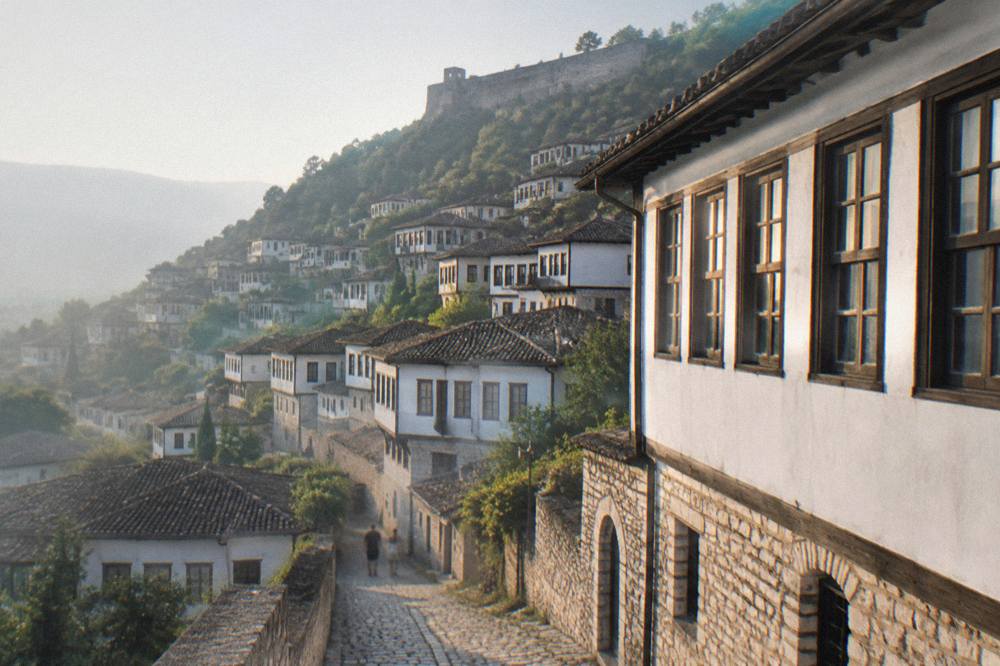
Inside the walls of Berat Castle, above the stacked white houses of Mangalem, the Red Mosque is a short stop that most travellers make without knowing what they are looking at. This page explains what it is, how to reach it, and what to pair it with.
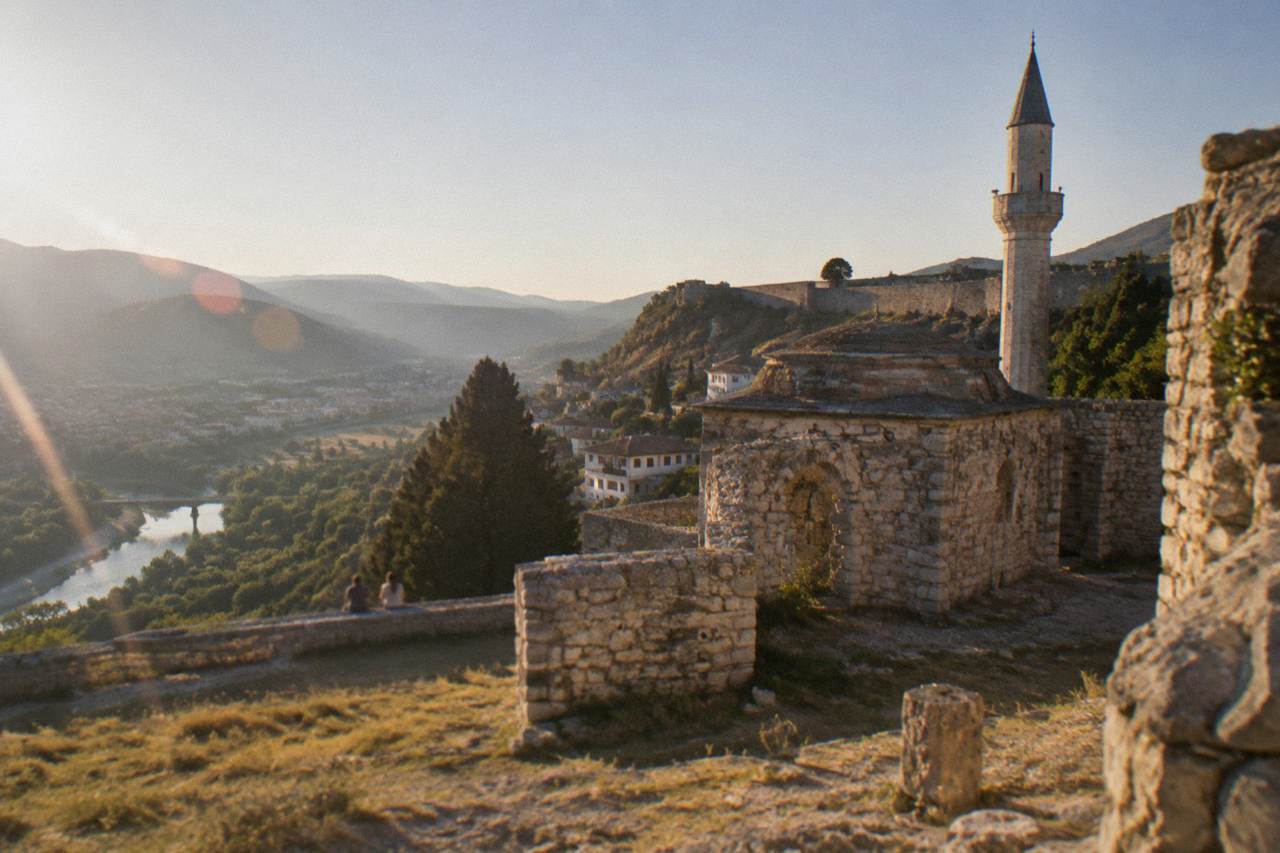
Short answer
The Red Mosque is a small ruined mosque inside Berat Castle in Berat, central Albania, counted among the earliest Islamic buildings raised in the fortress. Plan a short stop beside the Onufri Museum, whose individual ticket is 400 lek, and allow time for the uphill walk from Mangalem.
Inside the walls of Berat Castle, above the white Ottoman houses of Mangalem in Berat, a UNESCO World Heritage town in central Albania on the Osum River, stands a small stone relic that most visitors walk past in under a minute. The Red Mosque is not a functioning prayer hall and has no ticket office of its own. It is a fragment of the fortress's Islamic past, one of the earliest of its kind inside these walls, and it sits directly on the route every castle visitor walks between the gate and the Onufri Museum. That makes it one of the easiest sights in Berat to see and one of the easiest to miss, because nothing on the ground explains it.
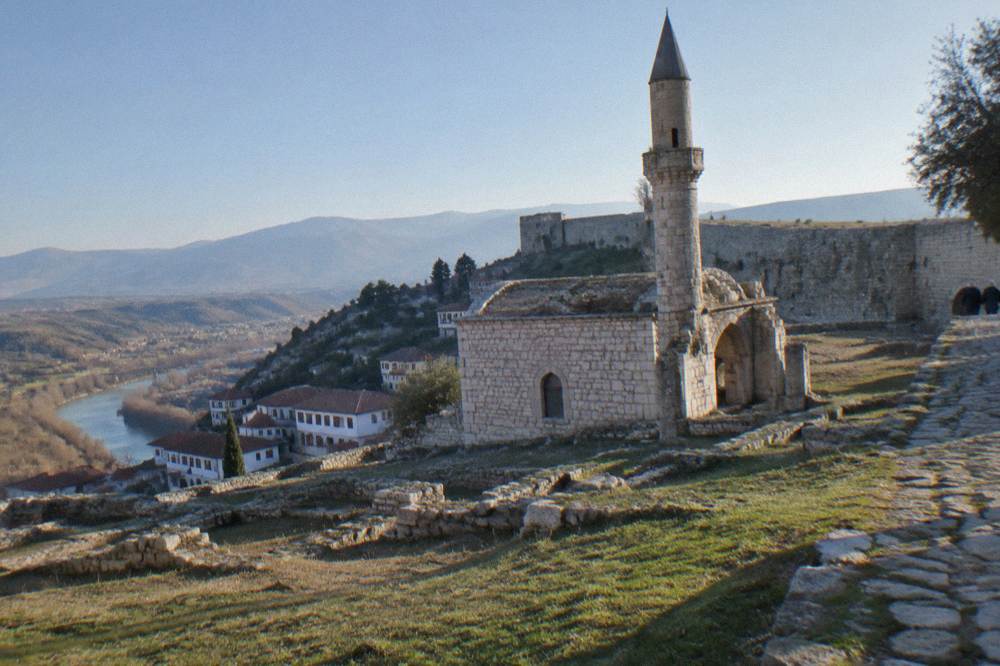
What Is The Red Mosque In Berat Castle?
The Red Mosque, known in Albanian as Xhamia e Kuqe, is a small ruined mosque set inside Berat Castle in Berat, Albania, a UNESCO World Heritage Ottoman hill town on the Osum River. The national tourism agency counts it among the earliest Islamic buildings raised within the fortress. What survives today is fragmentary stonework and a recognisable minaret rather than a working prayer hall, and one 2025 report describes the structure as under restoration, though no official confirmation of those works has been published.
The castle itself, known locally as the Kala, is the reason the mosque exists where it does. Berat's fortress grew as a lived-in quarter rather than a pure military enclosure, and its builders raised churches and mosques side by side inside the same walls. The national tourism agency records that the castle walls carry 24 defensive towers and that about 42 churches once stood inside, of which roughly eight are preserved today. The Red Mosque belongs to the other half of that story: the Islamic buildings that shared the fortress with them, and its age places it among the earliest of them.
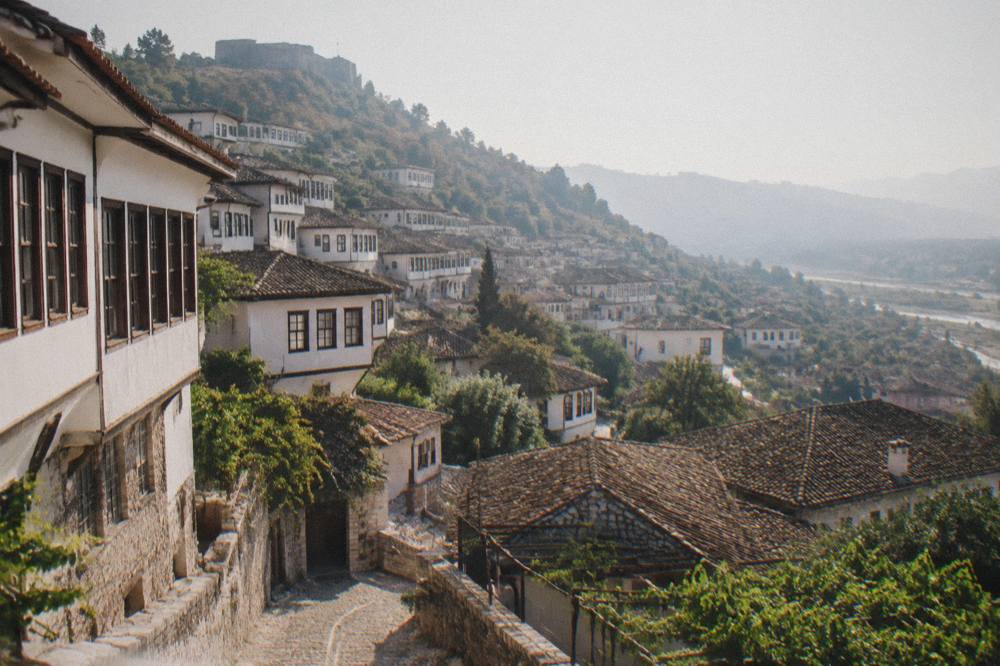
The setting explains the UNESCO listing as much as any single building. Berat was added to the World Heritage List in 2008 as an extension of the Historic Centres of Berat and Gjirokastra, a property inscribed in 2005 under criteria three and four, covering 58.9 hectares with a 136.2-hectare buffer zone across both towns. UNESCO describes Berat as a rare example of a well-preserved Ottoman town, and the castle quarter with its mixed religious buildings is a large part of why that description holds. A visit to the Red Mosque is really a visit to that layered townscape, compressed into one small ruin.
| What | The verified figure |
|---|---|
| UNESCO property | Historic Centres of Berat and Gjirokastra, list entry 569 |
| Berat's inscription | Added in 2008 as an extension to the 2005 Gjirokastra inscription |
| Property size | 58.9 hectares, with a 136.2-hectare buffer zone, both towns combined |
| Castle walls | 24 defensive towers |
| Churches inside the walls | About 42 once stood, about 8 preserved |
| Red Mosque's standing | Among the earliest Islamic buildings in the fortress, per the national tourism agency |
| Berat municipality population | 62,232 at the 2023 census |
Where Is The Red Mosque And How Do You Reach It?
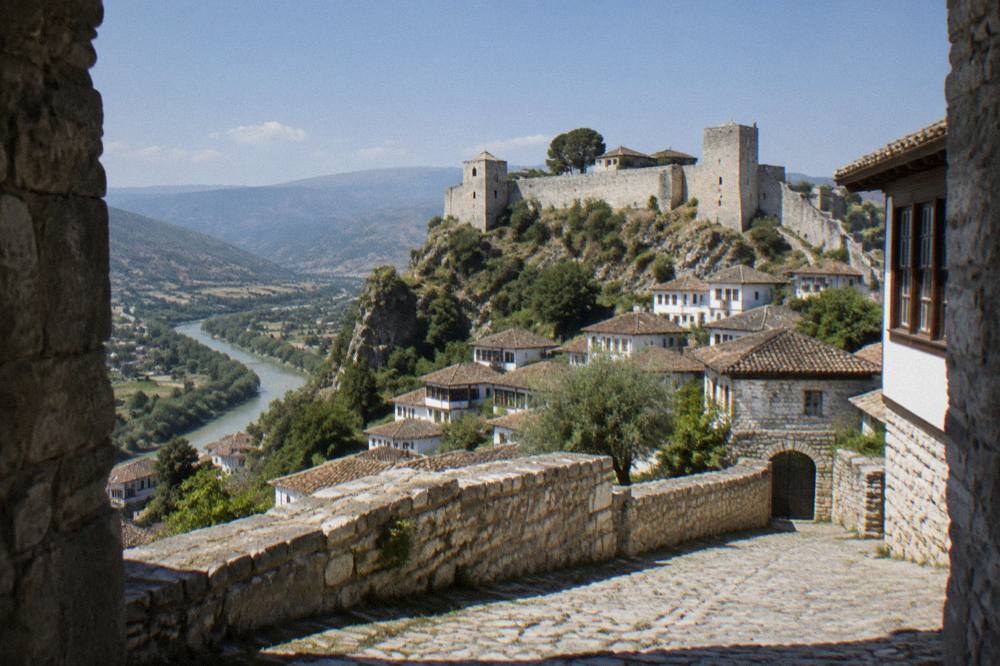
The Red Mosque sits inside the Kala, the castle quarter that crowns the hill above the Mangalem quarter, so reaching it means reaching the castle. Most visitors walk up from Mangalem on the steep cobbled path. Car access into the castle quarter is being restricted; plan to park below and walk up. From Tirana, buses leave the South-North terminal and take about two and a half hours to Berat.
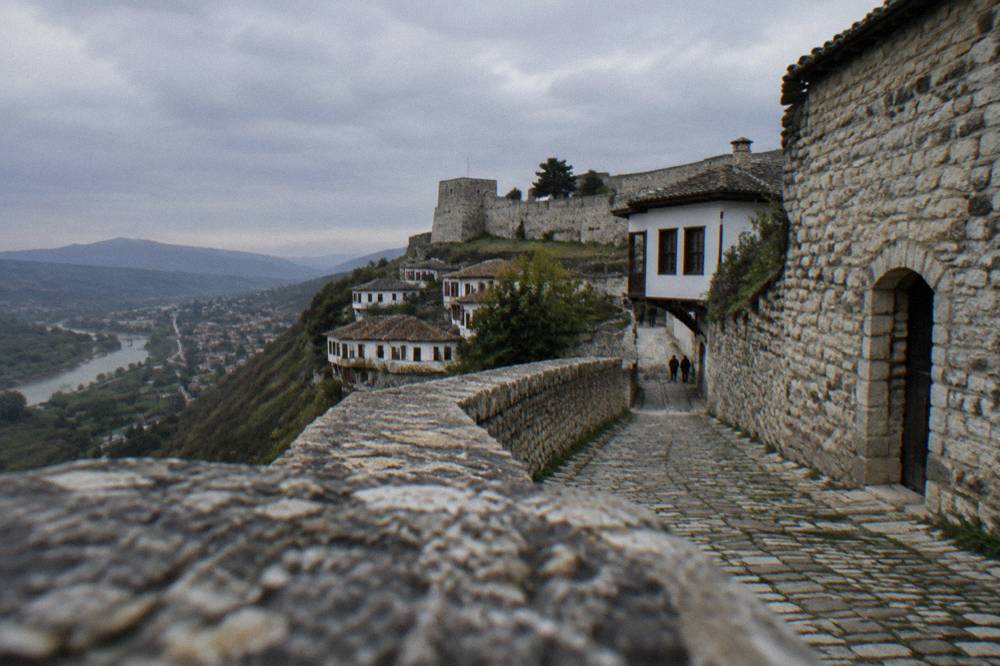
The climb is part of the experience. The path rises through the castle's lower reaches on stone paving that has seen better days: repairs to the cobbled access road, the kalldrëm, began in April 2026 after fresh damage was reported to the surface laid a few years earlier. Wear shoes with grip. Once through the gate you are inside a functioning neighbourhood, with guesthouses, churches and the museum cluster spread along the lanes, and the Red Mosque stands along the way. The whole visit works as a loop: up one path, along the walls, past the mosque and the Onufri Museum, and down the other side.
Getting to Berat in the first place is straightforward but requires a little planning. Buses and shared furgons leave Tirana's South-North bus terminal, the Terminali i Autobuseve Jug-Veri, roughly hourly from early morning to late afternoon, and the fare is paid in cash, a few hundred lek. There is no direct bus from Tirana's airport to Berat, so fly-in visitors take the airport bus into Tirana and change at the terminal. Berat's own bus station sits on the SH72 road on the outskirts, from where local buses and taxis cover the last stretch to Mangalem.
| Option | The essentials |
|---|---|
| Tirana to Berat bus | Departs the South-North terminal, roughly hourly from early morning to late afternoon, about 2.5 hours, cash fare of a few hundred lek |
| Tirana airport to Berat | No direct service; take the airport bus to the Tirana terminal and change |
| Train | No passenger train reaches Berat; the Tirana to Durrës line is under reconstruction with a target of end-2027 |
| Arriving in Berat | The bus station sits on the SH72 on the outskirts; continue to Mangalem by local bus or taxi |
Plenty of travellers prefer to let someone else handle the transfer and the climb. Guided day trips from Tirana, Durrës and the coastal resorts bundle the castle, the old town and often a food or wine stop into a single outing, and the strongest ones walk you through the Kala with a guide who can put names to buildings like the Red Mosque. The three options below are the ones this site's editors would shortlist for a castle-focused visit.
What Can You See At The Red Mosque Today?
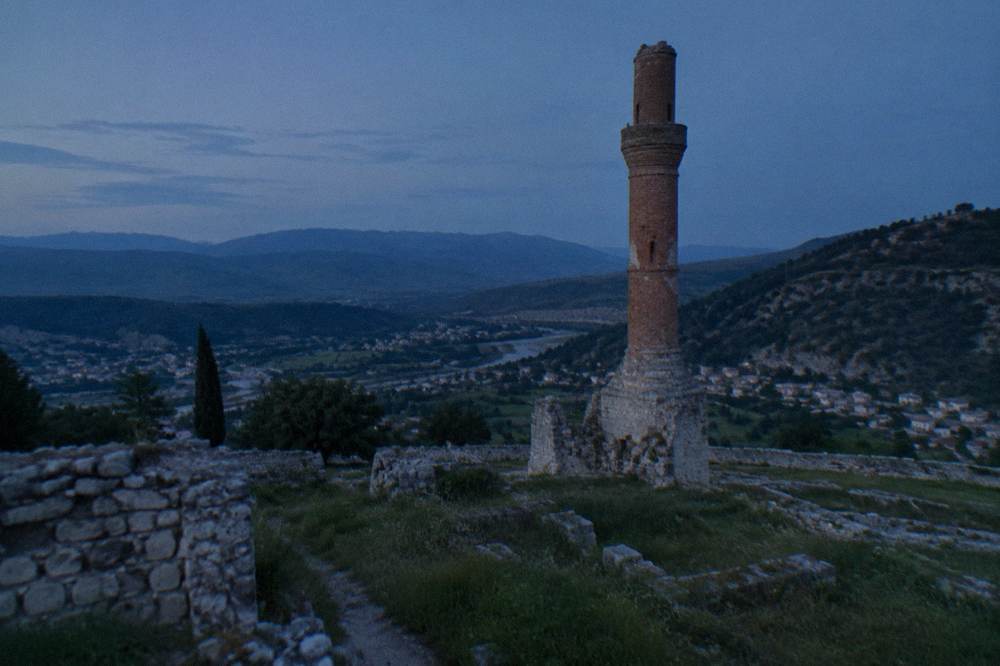
What you see is an evocative fragment rather than a restored monument: substantial stone walls, the base and shaft of a round minaret, and open sky where the prayer hall once stood. There is no functioning interior to enter and no separate ticket, so the mosque works as a short stop on the walk between the castle gate and the Onufri Museum. One 2025 report describes restoration works, unconfirmed officially, so scaffolding may be present. Treat it as a five-minute stop on the castle circuit.
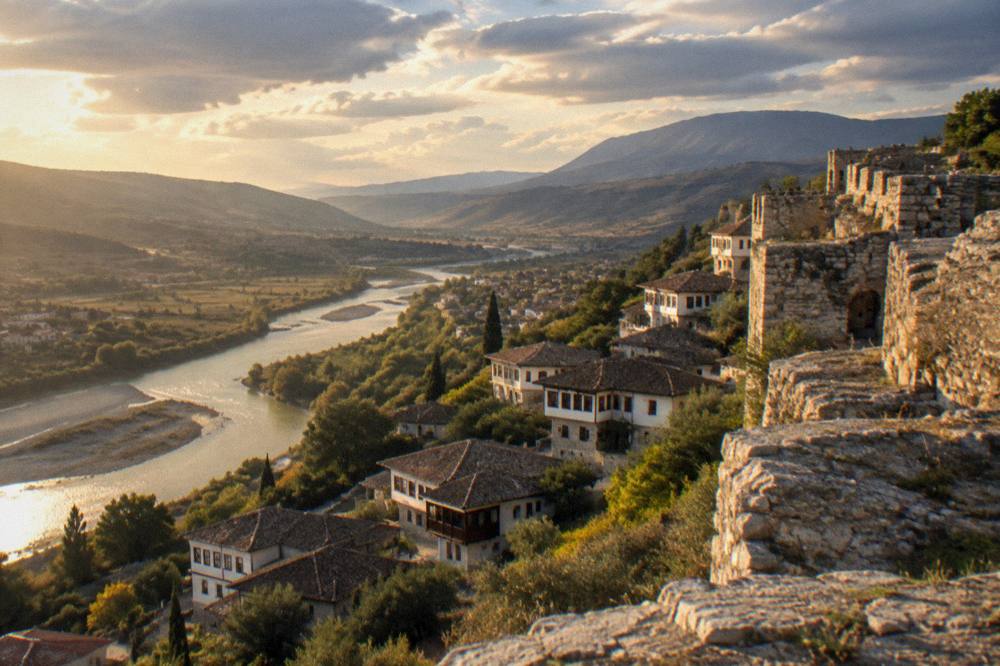
Photographically, the ruin rewards a slow lap. Morning light comes over the eastern walls and warms the stonework, while late afternoon throws long shadows across the lane and silhouettes the minaret against the sky. Because the castle quarter is open around the clock as a lived-in neighbourhood, photographers chasing specific light can time a return without worrying about closing hours, though the museums inside the walls keep fixed times. Look also at the surroundings: the ruin sits in a dense cluster of churches, guesthouse gardens and views down over the Osum valley, and the contrast between the fortress stones and the white town below is the picture most people actually remember from Berat.
The honest planning note is that the Red Mosque is a small part of a big half-day. The castle, the Onufri Iconographic Museum, the walls and the viewpoints together are the draw, and the mosque is one stop inside it. Build the visit around the museums' opening hours and let the mosque slot in naturally on the walk.
Many visitors then give Berat a second act on water. The Osumi Canyon, protected as a natural monument near Çorovodë, is the region's other headline landscape, and a canyon day pairs naturally with a castle day. The canyoning adventure at Bigazi Waterfall, this site's featured canyon trip from Berat, is the boldest version: waterfall rappels, swimming holes and a guided descent through the gorge, run by an operator with a strong review record. Check availability if the idea appeals, since canyon trips depend on water levels and weather.
How Does The Red Mosque Compare With Berat's Other Mosques?
Berat keeps several historic mosques, and the Red Mosque is the only one of them inside the castle walls. The others stand in the lower town: the King Mosque, the Lead Mosque and the Bachelor's Mosque, each of which has its own page in this site's attractions section. Visitors short on time should see the Red Mosque as part of the castle circuit and then descend into the old town, where the lower mosques and the Halveti Tekke cluster within a compact walk of each other.
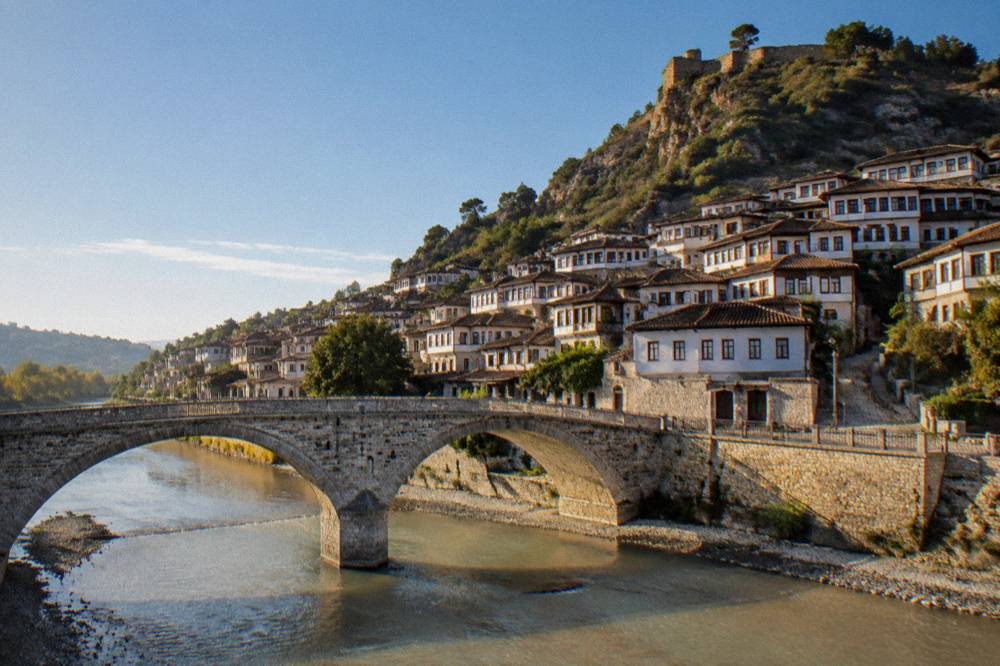
The King Mosque is the grand statement of the set, the Lead Mosque the most atmospheric siting beside the river greenery, and the Bachelor's Mosque the most photographed silhouette against Mangalem's white walls. The Red Mosque is different in kind: a fragment inside the fortress, valued for its age and its place in the castle's story rather than for a working interior. If your visit is a single day, see the castle cluster first, cross the Gorica Bridge to look back at Mangalem, then loop through the lower mosques before dinner. The rest of this Berat Travel Guide covers each of those buildings in its own page, with the same verified figures and the same walking logic.
A guided walk ties the set together better than any map. Local expert guides move between the mosques, the tekke and the castle and give the buildings their historical order, which is genuinely useful in a town where the sights are many and the signage is thin. The premium guided walking option below is the strongest of the paid walks for this route.
What Else Should You See Inside Berat Castle?
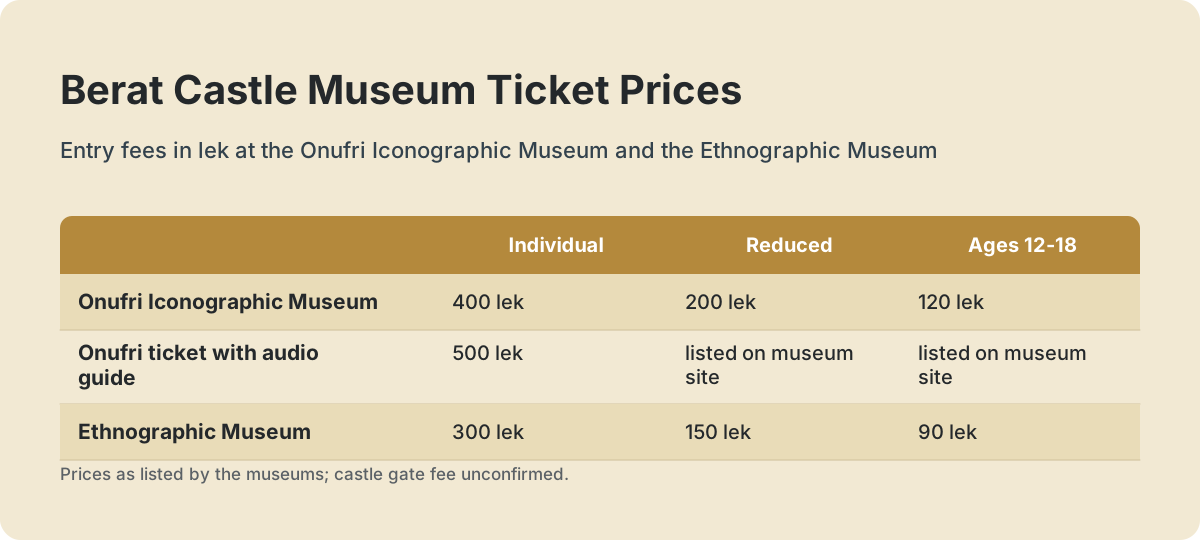
The castle holds far more than the Red Mosque. The Onufri Iconographic Museum, inside the Church of St Mary, charges 400 lek for an individual ticket, 500 lek with an audio guide, with reduced entry at 200 lek and ages 12 to 18 at 120 lek. The Ethnographic Museum, reopened on 30 May 2026 after more than three years of restoration, charges 300 lek and displays around 1,300 objects. Roughly eight churches survive inside the walls, from about forty-two that once stood here.
Start with Onufri. The museum holds the icon work of the painter Onufri and his school, displayed inside the castle's main church, and it is the single best-covered sight inside the walls. It is also the anchor for timing: the museums keep seasonal hours, and a visit built around them will pass the Red Mosque at its best-lit hour anyway. The Ethnographic Museum, down in the old town, reopened on 30 May 2026 after a three-year closure and now shows about 1,300 objects across its restored rooms, from wedding costume to household craft. Between the two museums and the walls themselves, a half-day inside the castle fills quickly.
The Kala is also a place to simply wander. The surviving churches, among them the Holy Trinity Church and St Michael's, stand among private homes and guesthouse gardens, and the walls open onto views across the Osum valley toward Mount Tomorr, whose main peak reaches 2,416 metres. There is no confirmed published entry fee for the castle grounds themselves: a small charge may apply at the gate in daytime, so carry a few hundred lek in cash, and the quarter is open to pedestrians in any case.
| Site | Individual | Reduced | Ages 12-18 and students | Children |
|---|---|---|---|---|
| Onufri Iconographic Museum | 400 lek | 200 lek | 120 lek | Free under 12 |
| Ethnographic Museum | 300 lek | 150 lek | 90 lek | Free under 12 |
| Onufri audio guide | 500 lek | listed on the museum site | listed on the museum site | listed on the museum site |
| Castle grounds | No confirmed figure; a small fee may apply at the gate in daytime | carries cash | carries cash | carries cash |
| Period | Museum opening hours |
|---|---|
| 1 May to 30 September | Daily, 9:00 to 18:00 |
| 1 November to 30 April | Tuesday to Saturday 9:00 to 16:00, Sunday 10:00 to 15:00 |
| National holidays | Open |
| October | Not listed on the museum site; check before an autumn visit |
| Free admission day | Who it applies to |
|---|---|
| 18 April | All visitors |
| 18 May | All visitors |
| 21 May | All visitors |
| 29 September | All visitors |
| 28 and 29 November | Albanian citizens only |
Small-group tours have become the most popular way to absorb all of this without pre-reading. A guide handles the sequence, the tickets and the stories, and the groups are small enough to ask questions in. The castle and old-town small-group option below is the one to compare against the private alternatives.
When Is The Best Time To Visit The Red Mosque?
There is no single best hour, but there are better seasons. The castle quarter is lived in and reachable on foot at any hour, while the museums inside and below it keep seasonal opening times. Late spring and early autumn give the most comfortable walking weather; summer afternoons can be punishing, with heat in Berat known to top 40 °C, and winter brings the wetter, greyer months. Climb early in summer, and check the museum site for October, which it does not list.
Summer demands a schedule. Go up soon after the museums open, do the walls and the Red Mosque before the midday heat, and spend the afternoon in the shade of the old town with a cold drink. Summer is also the peak season for the Osumi Canyon trips, since water levels settle into the tubing and swimming window after the spring snowmelt ends the rafting stretch. Autumn is arguably the sweet spot for the castle itself: the light is softer, the lanes are quieter, and the Wine and Stories of Berat festival, held from 2 to 4 October in 2026, fills the town with wineries from Albania and Kosovo. Winter is quiet and atmospheric, but the museums drop to their shorter cold-season hours and rain is more likely, so pair the castle with long lunches and the Ethnographic Museum rather than a full outdoor day.
| Season | Weather in Berat | What it means for the visit |
|---|---|---|
| Late spring | Mild and mainly dry | Comfortable climb, long days, water still high in the canyons |
| Summer | Hot and dry; heat can top 40 °C | Climb early, carry water, museums for the afternoon |
| Autumn | Cooling, with rain returning | Softer light, quieter lanes, the October wine festival in town |
| Winter | Wet and cool; snow is rare in town | Museums on winter hours, cosy guesthouses, short days |
For a fuller read on the seasons before booking anything, see the site's dedicated Berat weather and timing guide, and for the practicalities of a longer stay, the where to stay in Berat guide covers the Mangalem, Gorica and inside-castle options with their trade-offs.
Which Tours And Day Trips Include Berat Castle?
Dozens of guided products put Berat Castle on their itinerary, and every one of them carries you past the Red Mosque. The range runs from small-group castle and old-town walks to full-day trips from Tirana and the coast, and from daylight heritage tours to night photography walks. What tours solve for the independent traveller is simple: the roughly two-and-a-half-hour transfer each way from Tirana, and the logistics of the climb from the parking below the walls.
Tirana-based day trips are the biggest category, and they suit travellers using the capital as a base. They typically bundle the castle, the Onufri Museum and free time in Mangalem, sometimes with a wine or food stop in the Berat countryside, and they return to Tirana the same evening. The trade-off is pace: a day trip gives you the castle in a few focused hours, while an overnight stay gives you the town at dawn and dusk, when Mangalem's windows do the thing they are famous for.
Coastal visitors have their own version. Travellers staying in Durrës and Golem can join a heritage day tour that reaches Berat from the Adriatic side, covering the castle, the old town and the Mangalem quarter in a single outing without needing a car or a bus change in Tirana. For anyone combining a beach week with a culture day, this is the smoothest route.
The final pairing is the one this site keeps recommending: castle in the morning, canyon in the afternoon or on the following day. The Bigazi Waterfall canyoning adventure remains the featured pick for that second half, and the two day tours beside it below are the strongest castle-led alternatives from Tirana, including the night photography tour that shows Mangalem's windows after dark. Check availability on each listing before locking dates, since canyon trips in particular follow the seasons and the water.
Common Questions About The Red Mosque In Berat
What Is The Red Mosque In Berat Castle?
The Red Mosque, Xhamia e Kuqe in Albanian, is a small ruined mosque inside Berat Castle in central Albania. The national tourism agency counts it among the earliest Islamic buildings raised in the fortress. Today it survives as stone walls and a recognisable minaret rather than a working prayer hall, with one 2025 report describing restoration works that have not been officially confirmed.
Where Is The Red Mosque And How Do You Reach It?
It stands inside the Kala, the castle quarter above the Mangalem quarter of Berat. Most visitors walk up from Mangalem on the steep cobbled path. Car access into the castle quarter is being restricted, so plan to park below and walk up; buses from Tirana's South-North terminal take about two and a half hours to reach Berat.
Can You Go Inside The Red Mosque?
Not in the sense of entering a working prayer hall. What survives is fragmentary stonework and a minaret, and there is no separate ticket. Treat it as a short photo stop on the walk between the castle gate and the Onufri Museum, part of a wider visit to the castle complex.
Do You Need A Ticket For Berat Castle And The Museums?
There is no confirmed published fee for the castle grounds themselves, though a small charge may apply at the gate in daytime, so carry a few hundred lek in cash. The museums have fixed prices: the Onufri Iconographic Museum charges 400 lek for an individual ticket, or 500 lek with an audio guide, and the Ethnographic Museum charges 300 lek, with reduced rates for students and ages 12 to 18.
When Is The Best Time To Visit The Red Mosque?
Late spring and early autumn offer the most comfortable walking weather. Summer heat in Berat can top 40 °C, so climb early in that season and use the museums for the afternoon. Winter is quieter but wetter, and the museums drop to shorter cold-season hours; the museum site does not list October hours, so check ahead for an autumn visit.
The Red Mosque will never be the reason you come to Berat, but it will be part of the walk you remember. See it on the way to the Onufri Museum, give the walls a full loop, and let the rest of the day fall into the old town below or the canyon beyond it.