Ethnographic Museum Berat
The Ethnographic Museum in Berat, Albania, reopened in 2026 after a three-year restoration, and it is now one of the best windows into everyday Ottoman-era life anywhere in the Balkans.
Short answer
The Ethnographic Museum in Berat, Albania, reopened on 30 May 2026 after a three-year restoration and displays roughly 1,300 objects in a restored Ottoman house in the Mangalem quarter. Admission is 300 lek, with reduced rates of 150 lek and 90 lek for students and ages 12 to 18, and children under 12 enter free. Allow about an hour.
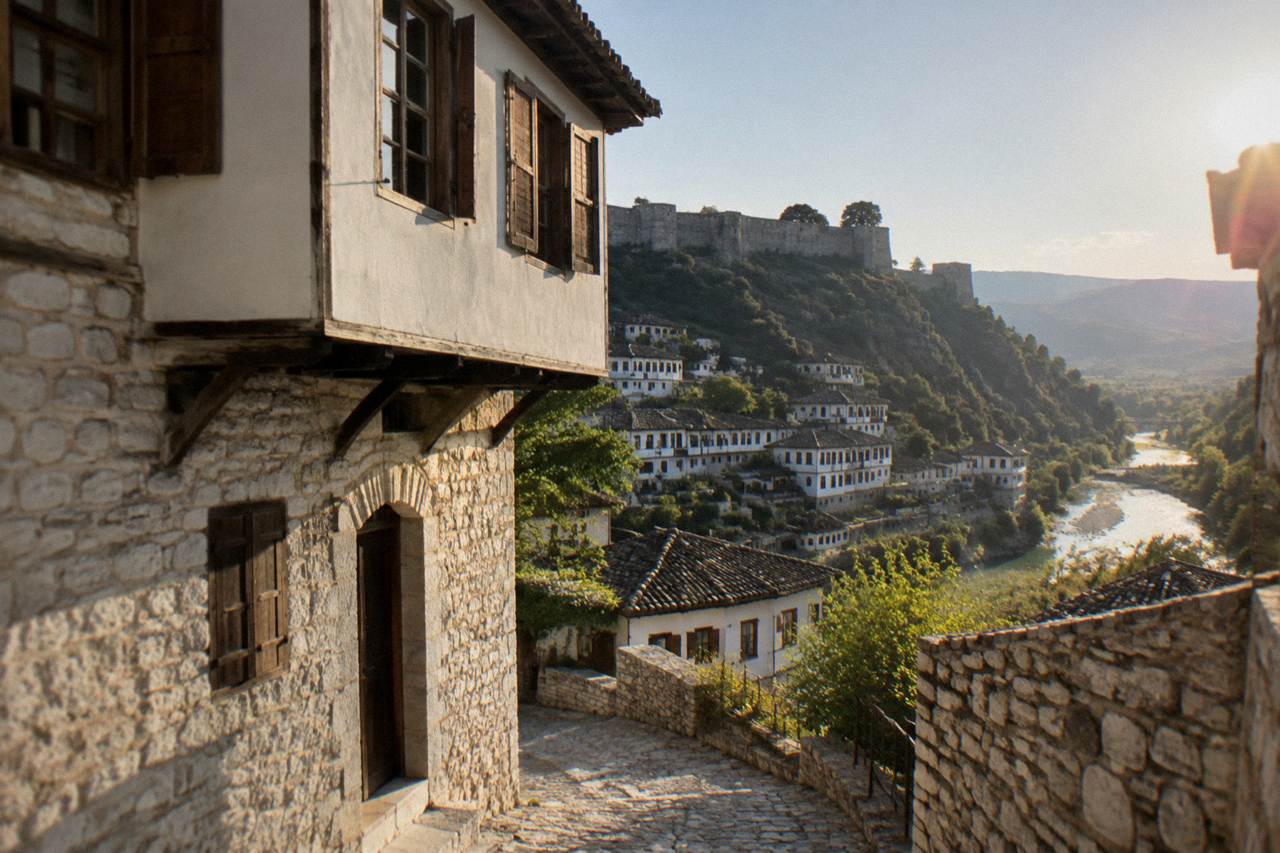
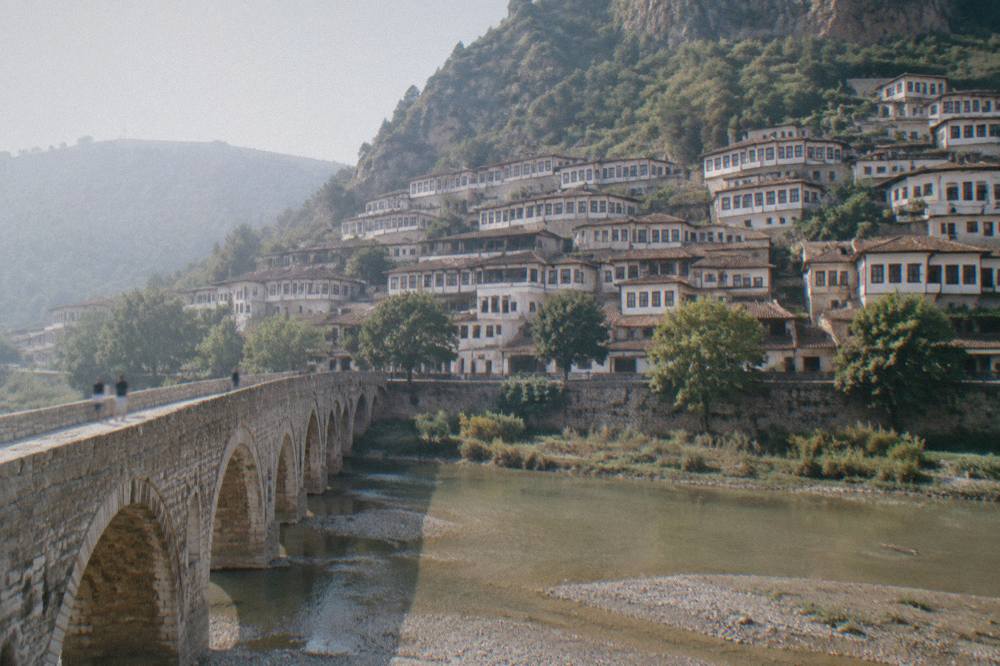
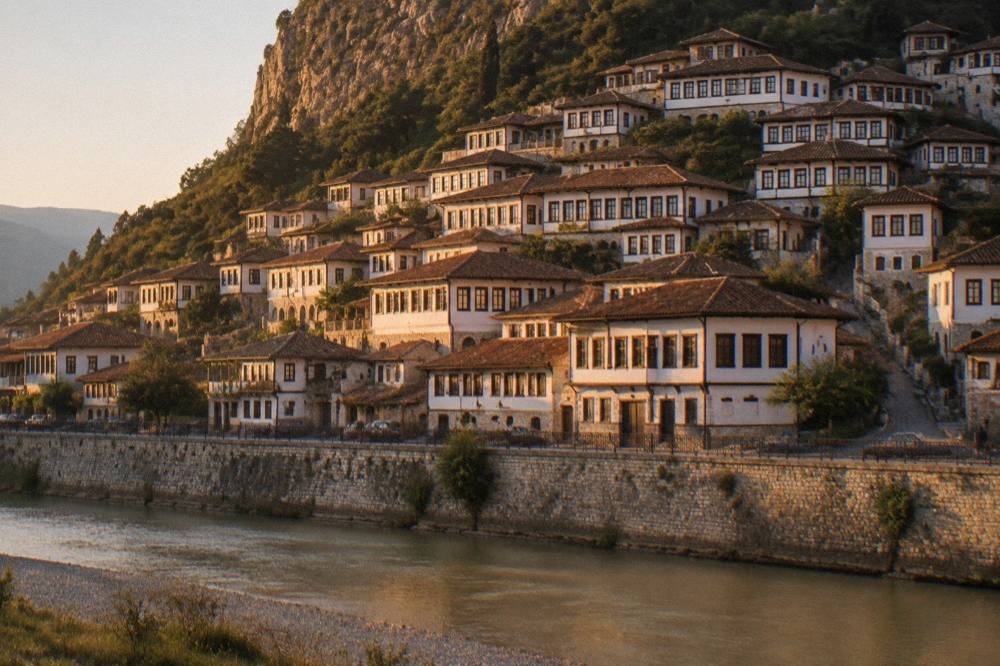
Berat, in central Albania, is a UNESCO World Heritage Ottoman-era hill town on the Osum River, famous for the stacked white houses of Mangalem that earned it the nickname "the city of a thousand windows". Among its museums, the Ethnographic Museum is the one that answers the quieter question: how did people in this town actually live, cook, dress and work across the centuries of Ottoman rule? Housed in a grand restored house in the heart of the old quarters, it reopened on 30 May 2026 after a restoration that took more than three years, with roughly 1,300 objects back on display. This guide covers the verified ticket prices, the seasonal opening hours, what you will find room by room, and how to fit the museum into a wider day around Berat and the Osumi Canyon country to the south.
What Is The Ethnographic Museum Berat?
The Ethnographic Museum in Berat, Albania, is a house-museum of traditional Albanian domestic life, set inside a large restored Ottoman-era dwelling in the Mangalem quarter, and it reopened on 30 May 2026 after a restoration lasting more than three years. Roughly 1,300 objects are on display, arranged to show how a prosperous Berat household functioned: reception rooms, sleeping quarters, kitchen equipment, looms, clothing and the tools of the town's craftsmen and merchants. It is run by the Berat Museum Center, the same body that operates the Onufri Iconographic Museum up in the castle, and the two sites are deliberately complementary: Onufri covers sacred art, while the Ethnographic Museum covers the secular, everyday world. Its post-restoration reopening was reported by Albanian media in late May 2026, and early attendance was strong, with more than 3,000 visitors recorded in the period after the doors opened again, most of them foreign travellers.
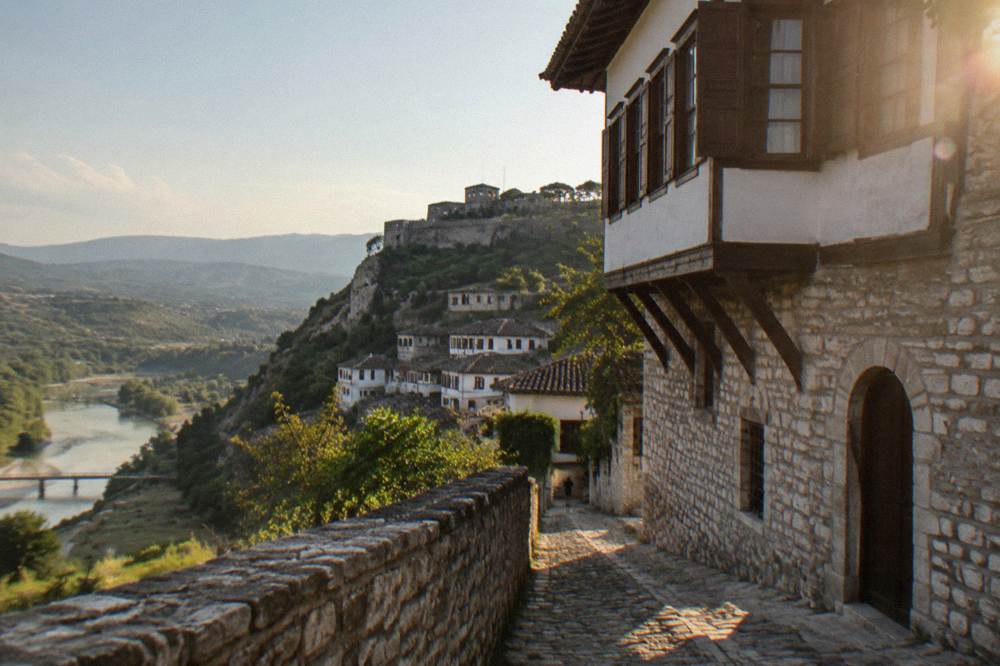
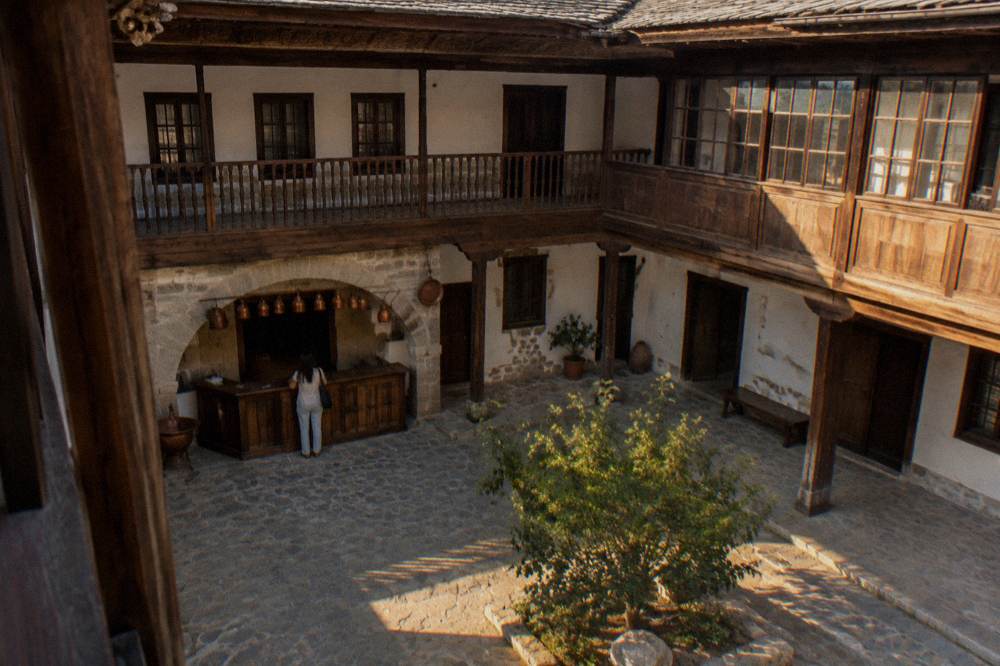
The building itself is part of the story. The great houses of Ottoman Berat were built with a stone lower floor for storage, animals and work, and a lighter timber-framed upper floor where the family lived, with the windows stacked in rows that give Mangalem its distinctive look. Walking through the museum is a walk through that vertical division of labour and comfort. Unlike a conventional glass-case museum, most of the collection is arranged in situ, in rooms furnished as they would have been used, which is what makes a visit feel less like reading labels and more like being let inside a locked house.
For context on how the old town as a whole fits together, including the two historic quarters facing each other across the Osum, see the old town overview of Berat. The museum sits on the Mangalem side, the slope most visitors climb first from the bus station and the promenade, so it usually ends up as either the first or the last museum of the day rather than something sandwiched in between.
Where Is The Ethnographic Museum Berat And How Do You Get There?
The museum stands in the Mangalem quarter on Berat's western slope, a short uphill walk from the Gorica Bridge and the Osum river promenade; coming from Tirana, you arrive by bus or furgon to Berat's terminal in about two and a half hours, then walk or take a local taxi toward the old town. There is no passenger train to Berat from anywhere in Albania, so road transport is the only public option; buses and furgons leave Tirana's South-North terminal roughly hourly through the day and the fare is a few hundred lek, paid in cash. The practical route once you are in town is simple: from the boulevard, head for the river, cross at the Gorica Bridge or walk along the Mangalem face, and the museum is signposted among the lanes of the quarter. There is no parking problem to solve for most visitors because the historic lanes are best explored on foot, and the whole old town is compact enough that a museum visit needs no vehicle at all.
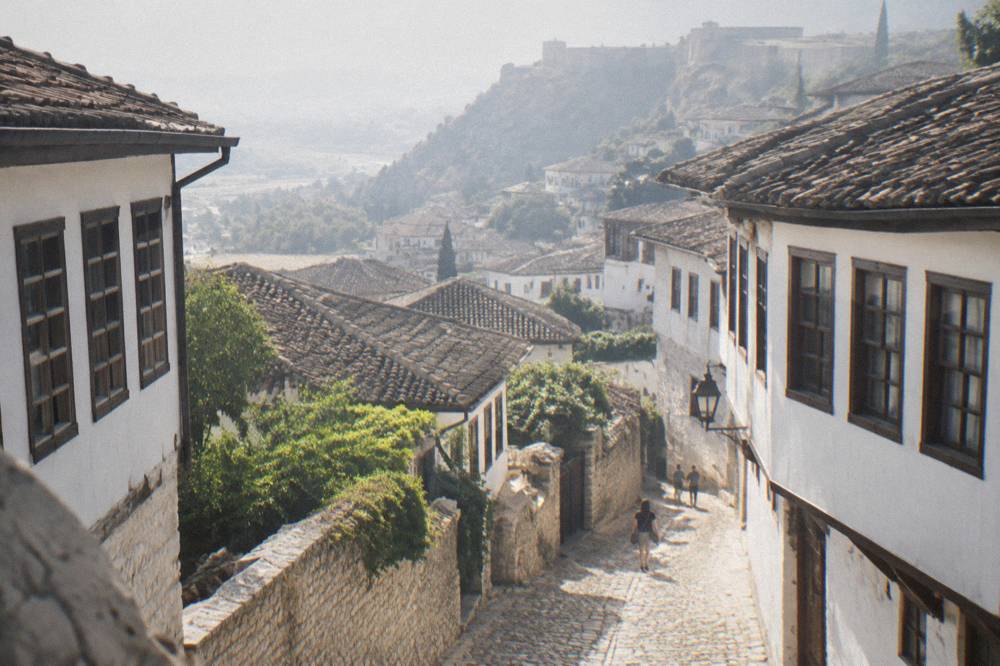
The setting matters as much as the address. Mangalem's lanes climb from the river toward the castle, and the museum sits partway up that slope, so you can combine it naturally with a descent to the historic Gorica Bridge or an ascent to Berat Castle. Visitors arriving from the capital can plan the full journey, terminals and connections included, with the Tirana to Berat transport guide.
Travellers who prefer a guided structure over self-direction often start with a walking tour of the town and drop into the museums as they pass. That is a sound pattern, and it is one reason the canyon tours below, which leave from Berat in the morning, tend to be booked for the following day rather than the arrival day.
How Much Are Ethnographic Museum Berat Tickets?
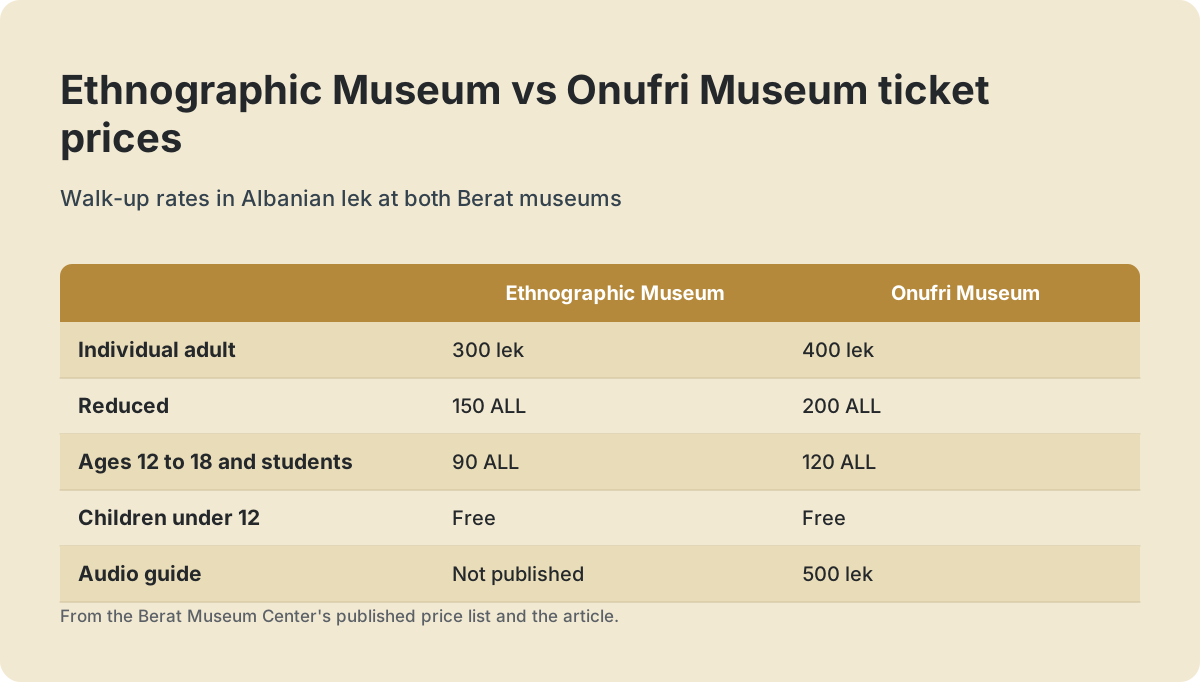
A standard adult ticket to the Ethnographic Museum in Berat costs 300 Albanian lek, roughly a few euros, with a reduced rate of 150 lek, a rate of 90 lek for ages 12 to 18 and students, and free entry for children under 12; at the Bank of Albania's recent official rate, 300 lek is a little over three euros at roughly 92 lek to the euro. These figures come from the Berat Museum Center's own published price list, which also covers its sister museum, and they are the only figures a visitor should trust, since unofficial blog prices circulate and drift out of date. Documentation is asked for at the desk when you claim a reduced or free category, so carry a student card or the children's documents. Payment is made in lek at the desk, and while online ticketing through Albania's e-Albania portal has been available for the state museums since November 2025, most visitors still simply pay on arrival.
| Ticket category | Price (Albanian lek) | Notes |
|---|---|---|
| Individual adult | 300 ALL | Standard walk-up rate |
| Reduced | 150 ALL | For eligible reduced categories listed by the museum |
| Ages 12 to 18 | 90 ALL | Age documentation requested |
| Students | 90 ALL | Student card requested |
| Children under 12 | Free | Accompanied by an adult |
There are also free admission days during the year, which are fixed in the museum's calendar rather than being last-minute promotions. On these days entry is free for all visitors, with two additional dates reserved for Albanian citizens only.
| Free day | Who enters free |
|---|---|
| 18 April | All visitors |
| 18 May | All visitors |
| 21 May | All visitors |
| 29 September | All visitors |
| 28 and 29 November | Albanian citizens only |
One practical note on money: Berat's old town remains largely a cash place, cards are not accepted everywhere, and the lek is the only real local currency, so arrive with notes rather than relying on a tap at the door. The wider money picture, ATMs and where cards do work, is covered in detail in the guide to eating and prices around Berat.
When Is The Ethnographic Museum Berat Open?
The Ethnographic Museum follows the Berat Museum Center's seasonal schedule: from 1 May to 30 September it opens every day from 9:00 to 18:00, and from 1 November to 30 April it opens Tuesday to Saturday from 9:00 to 16:00 and Sundays from 10:00 to 15:00, with national holidays also open. The schedule is the same one the Onufri Museum keeps up in the castle, which makes planning simple: on any day both museums are either both open on the long summer timetable or both on the shorter winter one. October sits between the two published seasons and the official page does not list it separately, so in October the safest assumption is that you should check before travelling, or plan for the winter-style schedule and be pleasantly surprised. Summer visitors have the easier deal, since daily 9:00 to 18:00 hours leave room for a museum stop either before or after lunch and a siesta-proof climb to the castle in the cooler part of the afternoon.
| Season | Days | Hours |
|---|---|---|
| 1 May to 30 September | Every day | 9:00 to 18:00 |
| 1 November to 30 April | Tuesday to Saturday | 9:00 to 16:00 |
| 1 November to 30 April | Sunday | 10:00 to 15:00 |
| National holidays | Open | Standard seasonal hours apply |
Winter visitors get a quieter museum, and the short daylight of the low season suits the interiors, which are warm and lamplit against the damp Berat winter. If you are choosing a season for the whole trip rather than just the museum, the qualitative pattern is simple: hot, dry summers with heat that can top 40 degrees on extreme days, and wetter, milder winters. More on that trade-off, month by month in plain terms, is in the Berat weather and seasons guide.
What Can You See Inside The Ethnographic Museum Berat?
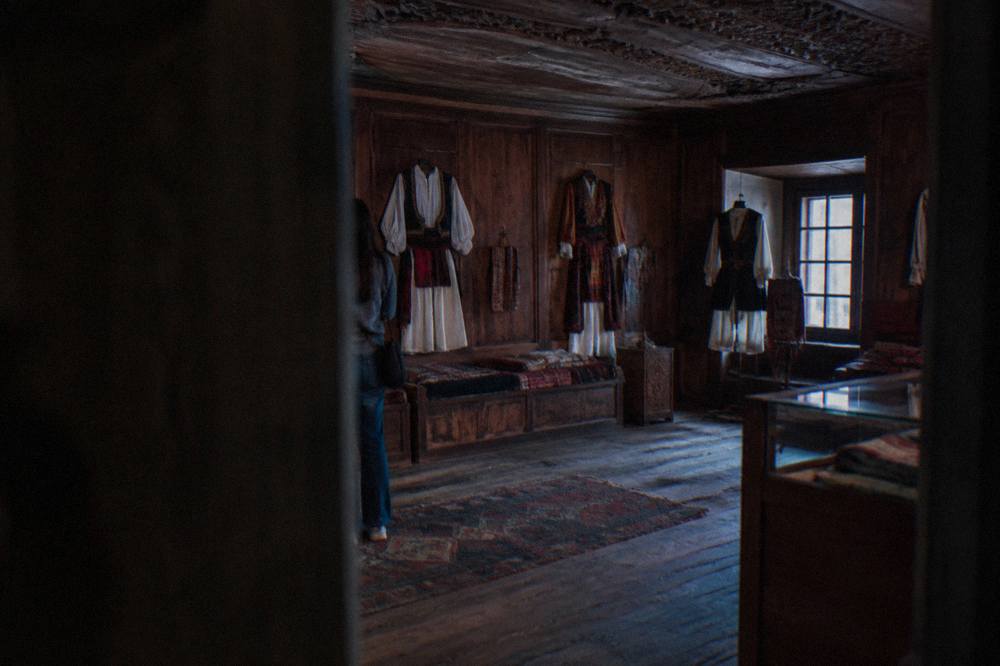
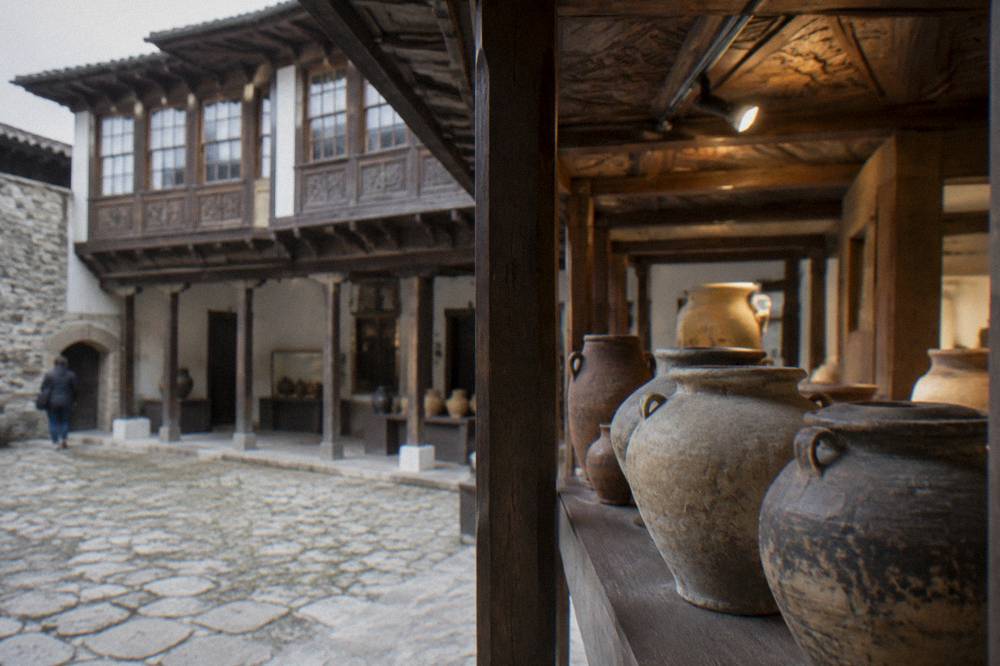
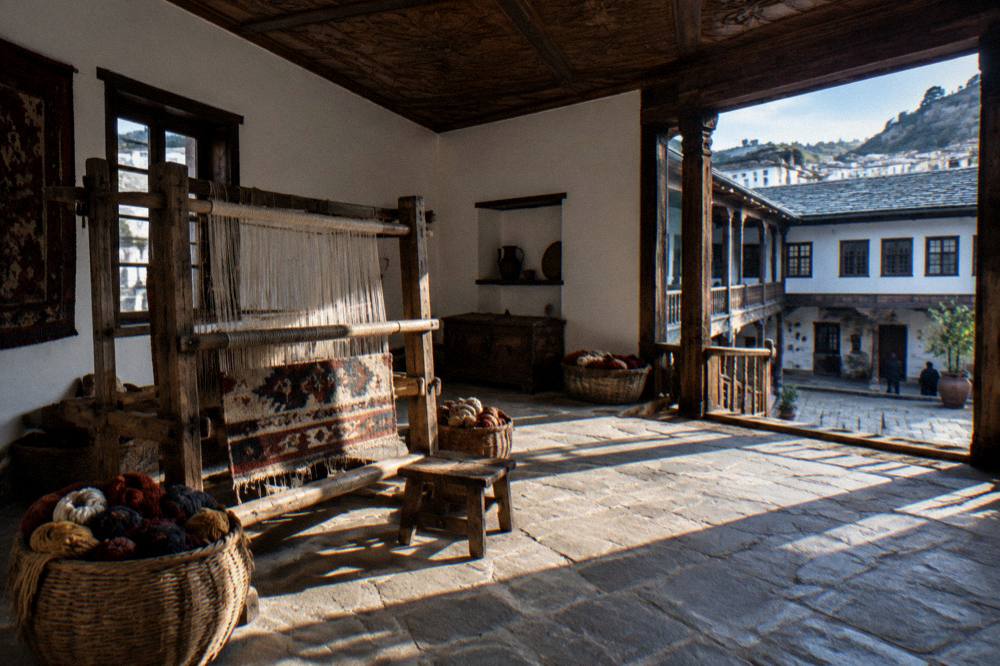
Inside the Ethnographic Museum you walk through the furnished rooms of a wealthy Ottoman-era Berat house, roughly 1,300 objects in all after the 2026 reopening: reception rooms with wall-to-wall cushioned seating, looms and weaving, kitchen and dairy equipment, weapons and dress, and the tools of the town's artisans. The layout follows the logic of the house rather than the logic of a gallery, so you move from public rooms, where guests were received and business was done, into the private rooms of family life, and down into the service spaces where food was prepared and stored. The textiles are the strongest thread: Berat's households produced their own cloth, and the looms on display were working tools rather than decorations. Alongside them sit the copper and earthenware of the kitchen, the heavy wool and embroidered costume of the region, and the equipment of the crafts that made Mangalem prosperous, above all metalwork, leather and textile trades tied to the town's position on the merchant routes of central Albania.
What the restoration changed, beyond the repaired building itself, is the presentation: the displays were redesigned for the 2026 season with modern lighting and a clearer route through the house, and the reopening was treated in Albania as a significant cultural event, covered by national media. For visitors, the practical effect is that a museum which spent three years closed is now the freshest heritage experience in the city, and the visitor numbers since the doors reopened suggest word is spreading fast among foreign travellers. Everything else covered here is indexed on Berat Travel Guide.
A few objects deserve a slow look rather than a glance. The carved wooden ceiling details and built-in wall cupboards of the main reception room show the joinery wealth bought in this town; the hearth and dairy section explains how milk became the yoghurt and cheese that still anchor Berat cooking, the same tradition you can taste in a local kitchen or on a food walk through the town; and the loom displays connect directly to the embroidery and costume pieces hung nearby, closing the loop between raw wool and finished dress.
How Does The Ethnographic Museum Compare With The Onufri Museum?
The two museums split Berat's heritage cleanly between them: the Ethnographic Museum covers everyday domestic life in a merchant house in Mangalem and costs 300 lek, while the Onufri Iconographic Museum, inside the castle, covers Orthodox sacred art and icons and costs 400 lek for an individual ticket, with its own reductions and an optional 500 lek audio guide. They are a natural pairing rather than a competition, and since both share the same seasonal timetable you can do them in a single day without checking two schedules. Onufri holds the painted icons of Berat's most famous name in that tradition and sits within the castle walls, so its visit folds naturally into the walk up to Berat Castle; the Ethnographic Museum sits down in Mangalem, so it pairs naturally with the Gorica Bridge, the river promenade and lunch. Between them they tell you how the town prayed and how it lived, and the small gap between the two ticket prices, a hundred lek, is as close as sightseeing budgets get to painless.
| Ethnographic Museum | Onufri Iconographic Museum | |
|---|---|---|
| Focus | Domestic life, crafts, costume | Icons and Orthodox sacred art |
| Location | Mangalem quarter, old town | Inside Berat Castle |
| Individual ticket | a few hundred lek | a few hundred lek |
| Reduced ticket | 150 ALL | 200 ALL |
| Ages 12 to 18 and students | 90 ALL | 120 ALL |
| Under 12 | Free | Free |
| Audio guide | Not published | 500 ALL |
A third, smaller site rounds out the museum town: the Solomon Museum, founded in 2018 and dedicated to the Jewish community of Berat, which is the only museum of its kind in Albania. Its story is a remarkable one and its opening hours are not officially published, so plan it as a bonus rather than a fixed stop; the Solomon Museum page collects what is verified. For the sacred-art side of the comparison in full, see the Onufri Iconographic Museum guide, and for the fortress that shelters it, the complete Berat Castle guide.
Many visitors cover all of this with a guide rather than solo, and the premium walking tours of the old town are built exactly for this kind of museum-heavy day. The premium expert-guided walk of Berat is the best-known format, and a structured morning with an expert guide tends to leave the afternoon free for either the castle climb or the canyon country south of town.
How Much Time Should You Spend At The Ethnographic Museum Berat?
Allow about an hour for the Ethnographic Museum itself, a little more if you read every label or travel with children, and plan a half-day around it once the walk up or down through Mangalem and a look at the surrounding quarter are counted; most travellers combine it with the castle and the Onufri Museum into one full day in Berat's old town. The museum is a house, not a labyrinth, so the risk is not running out of time but rushing rooms that reward lingering, especially the textile and reception displays. A comfortable pattern for a summer day is the Ethnographic Museum in the cooler morning, a long lunch on the promenade or in Mangalem, then the climb to the castle and the Onufri Museum in late afternoon when the light on the thousand windows is at its best and the day's heat has eased.
For anyone whose time in town is genuinely tight, there is a decision to make between depth and breadth. A hurried half-day in Berat is better spent on the castle viewpoint and one museum than on sprinting through both; the Ethnographic Museum is the easier one to reach, while Onufri rewards the climb with the stronger single collection. That trade-off, one day versus two, is argued in detail in the site's itinerary pages, including the compact one-day Berat plan and the roomier two-day version.
| Visitor type | Suggested time at the museum | Suggested day shape |
|---|---|---|
| Quick stop | 45 minutes | Museum, then Gorica Bridge and the promenade |
| Standard visit | 1 hour | Museum in the morning, castle and Onufri after lunch |
| Deep dive | 90 minutes | Museum with a guide, then a full afternoon in Mangalem |
| Family visit | 45 to 60 minutes | Museum, then a riverside break with the kids |
Guided formats change the maths a little, because a guide compresses a lot of context into a short window. The small-group castle and old town tours bundle the fortress and the quarters into one escorted loop, and the small-group castle and old town tour of Berat is the format most travellers choose when they want the structure without hiring a private guide.
Families should not be put off by the word "museum". The house format works for children precisely because nothing is behind a long glass case: looms, hearths, copper pots and a forbidden-to-touch seduction that is easier to manage in an hour than in a whole day. The under-12s enter free, which softens the arithmetic of a family stop, and the museum's size means an early exit is painless if attention runs out.
What Should You Pair With The Ethnographic Museum In Berat?
The strongest pairings are the classics: Berat Castle and the Onufri Museum up the slope, the Gorica Bridge and the river promenade below it, the mosque quarter around the boulevard, and, for a second day, the canyon country of Skrapar to the south, including Osumi Canyon and the Bogove waterfall near the village of Bogovë. Within the town itself the walk from the museum down through Mangalem to the river, across the Gorica Bridge and into the Gorica quarter is the single best hour of strolling Berat offers, and it costs nothing. The religious architecture of the old town, from the King Mosque to the Halveti Tekke, sits a few lanes from the museum, and the King Mosque guide covers the most important of them. Food-wise, the traditional restaurants of the old town serve the same dishes whose kitchen equipment you will have just seen, and the where to eat in Berat guide maps the reliable options.
Beyond the town, the big decision is the canyons. Osumi Canyon near Çorovodë is a protected natural monument, its rim viewpoints are free to visit, and the river that carved it is the same Osum that runs under the Gorica Bridge in front of the museum, which is a satisfying loop to close on a two-day visit. The Osumi Canyon day trip guide lays out the road south, the seasonal logic of rafting and tubing, and how the canyon fits with a Berat base. In summer the water is calm enough for tubing and swimming; in spring the snowmelt makes it a rafting river, and operators run roughly from late winter into June on the higher water.
The most practical way to reach the canyon and the Bogove waterfall from Berat without renting a car is a booked tour with transfers, and the classic canyon and waterfall format is the one most travellers take.
If your interests tilt toward the table rather than the trail, the same logic applies to the wine country around Berat, whose native Shesh and Puls grapes are described in the Berat wineries day trip guide. A museum morning, a long lunch and a winery afternoon is a very Berat kind of day, and it needs no car if you take a tasting tour with transfers. Solo travellers and cautious first-timers will find the general safety picture reassuring; the is Berat safe guide covers the practicalities, including emergency numbers and the areas where ordinary care is enough.
Whichever way you build the day, book the canyon or winery outing a day ahead rather than on the morning itself, because departures from Berat are few and the popular small-group formats fill first in high summer.
Common Questions About The Ethnographic Museum In Berat
What is the Ethnographic Museum Berat?
It is a house-museum of traditional Albanian domestic life, set in a large restored Ottoman-era dwelling in the Mangalem quarter of Berat, Albania. It reopened on 30 May 2026 after a restoration lasting more than three years and displays roughly 1,300 objects, from looms and costume to kitchen equipment and craftsmen's tools.
How much are tickets to the Ethnographic Museum Berat?
An individual adult ticket costs 300 Albanian lek. The reduced rate is 150 lek, ages 12 to 18 and students pay 90 lek, and children under 12 enter free. Documentation is requested for reduced and free categories.
What are the opening hours of the Ethnographic Museum Berat?
From 1 May to 30 September it is open every day from 9:00 to 18:00. From 1 November to 30 April it opens Tuesday to Saturday from 9:00 to 16:00 and on Sundays from 10:00 to 15:00. It is also open on national holidays. October is not listed separately on the official page, so check ahead in that month.
Is the Ethnographic Museum Berat worth visiting?
Yes, especially after the 2026 reopening. The displays were redesigned with new lighting and a clearer route, and the museum recorded more than 3,000 visitors in the period after reopening, most of them foreign. Combined with the Onufri Museum in the castle, it gives a complete picture of how Berat's households lived and worshipped.
How long does a visit to the Ethnographic Museum Berat take?
About an hour covers the house comfortably, with longer for readers and families. Most travellers combine it with the Gorica Bridge and the river promenade, or with Berat Castle and the Onufri Museum, making a half-day or a full day in the old town.
Can children visit the Ethnographic Museum Berat?
Yes, and children under 12 enter free. The furnished-house format suits families better than glass-case museums because the displays are tangible, but the standard museum rules on touching apply, so an hour is the right expectation for young visitors.