Berat Parking
Berat, in central Albania, is a UNESCO World Heritage hill town on the Osum River, and its lanes were built for donkeys, not cars. This guide covers where drivers can actually park, the new castle access rules, and when a car is more trouble than it is worth.
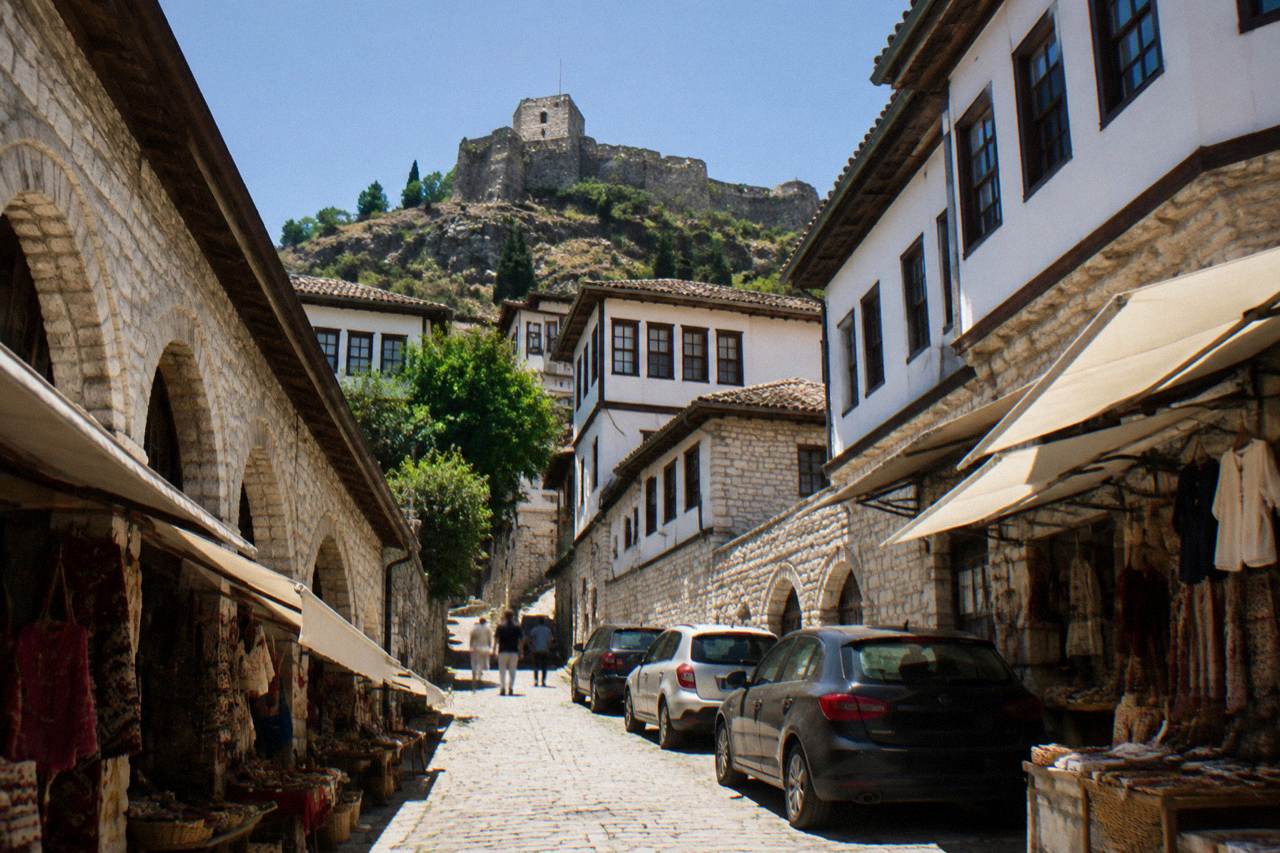
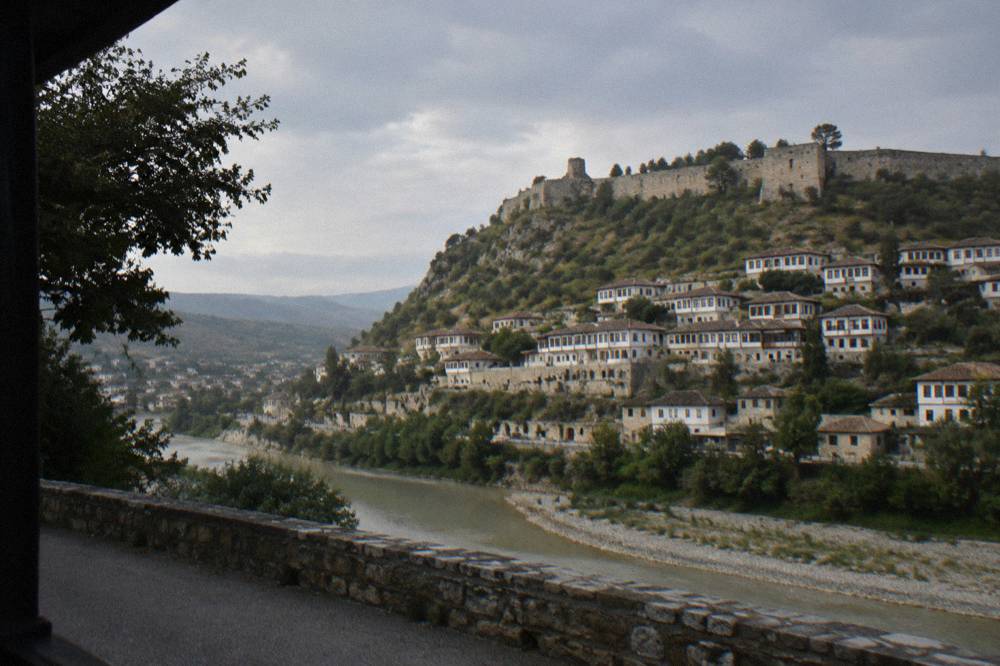
Berat sits on the Osum River in central Albania, a UNESCO World Heritage Ottoman-era town where the road network was laid out long before the car existed. That single fact shapes every parking decision you will make here. The historic quarters of Mangalem and Gorica, and the castle quarter of Kala above them, are dense stone landscapes with lanes built for foot traffic, and the town's authorities have spent the past two years actively pushing vehicles out of them. The good news for drivers is that everything worth seeing in Berat sits within walking distance of a handful of sensible parking spots outside the old core, and the rest of central Albania, from the Osumi Canyon to Mount Tomorr, is genuinely rewarding country to drive.
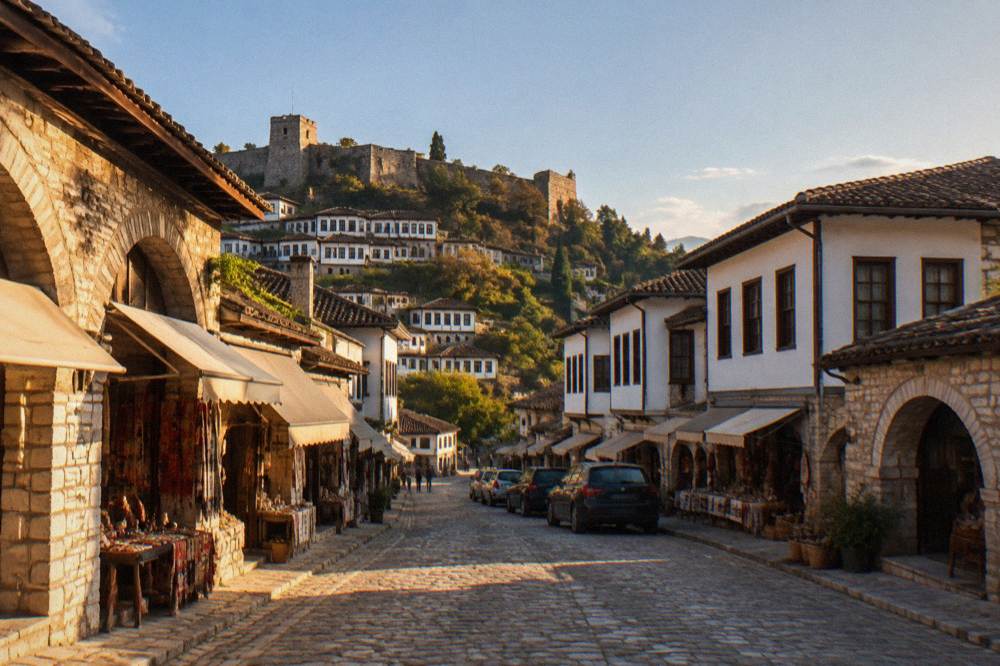
Where Can You Park In Berat?
The practical answer is to park outside the historic core and walk in, because parking pressure is concentrated in the old town. The new-town side around Bulevardi Republika, the roads approaching the Gorica Bridge and the lower slopes below the castle are where most visitors leave cars. No car park in Berat had its address, hours or price verified for this guide, so treat any lot as cash territory and check the price at the barrier.
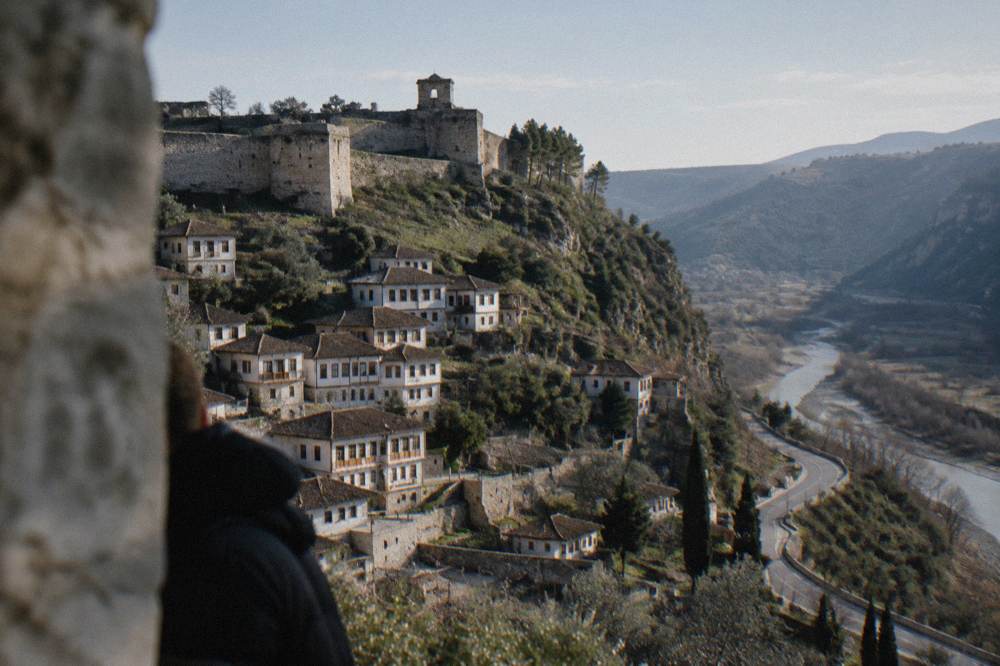
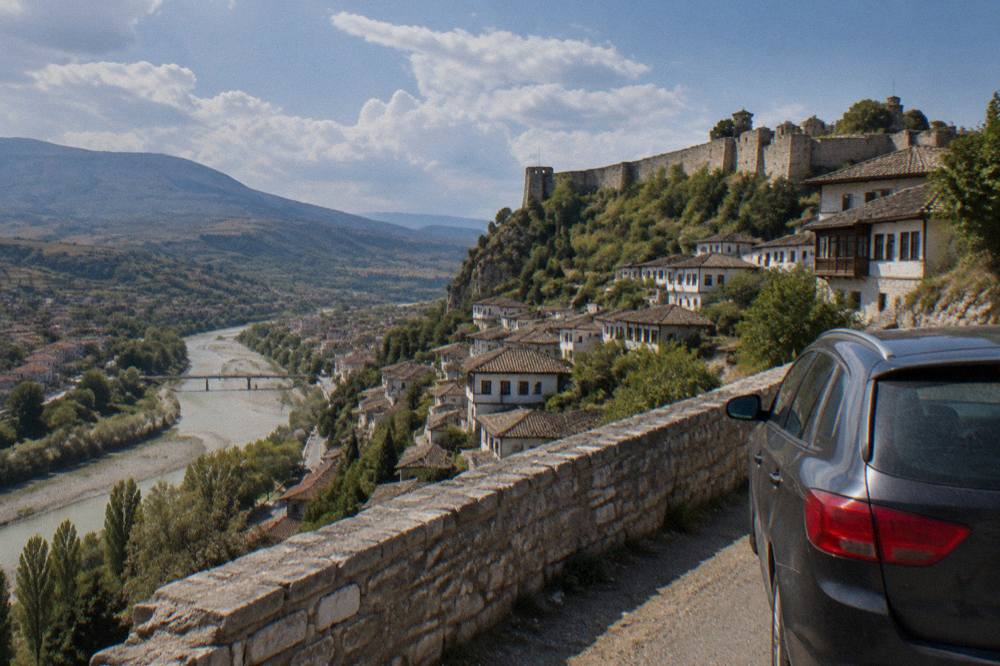
Berat splits into three parking realities. The new town, centred on Bulevardi Republika, behaves like any small Albanian town: street parking, some paid zones, and short walks to the Osum riverfront. The two historic quarters, Mangalem on the west bank and Gorica on the east, are a different matter. Their lanes are narrow, walled and often stepped, and the guesthouse terraces that make the town famous are built directly over the streets. squeezing a rental car up a Mangalem lane is a common mistake and an avoidable one.
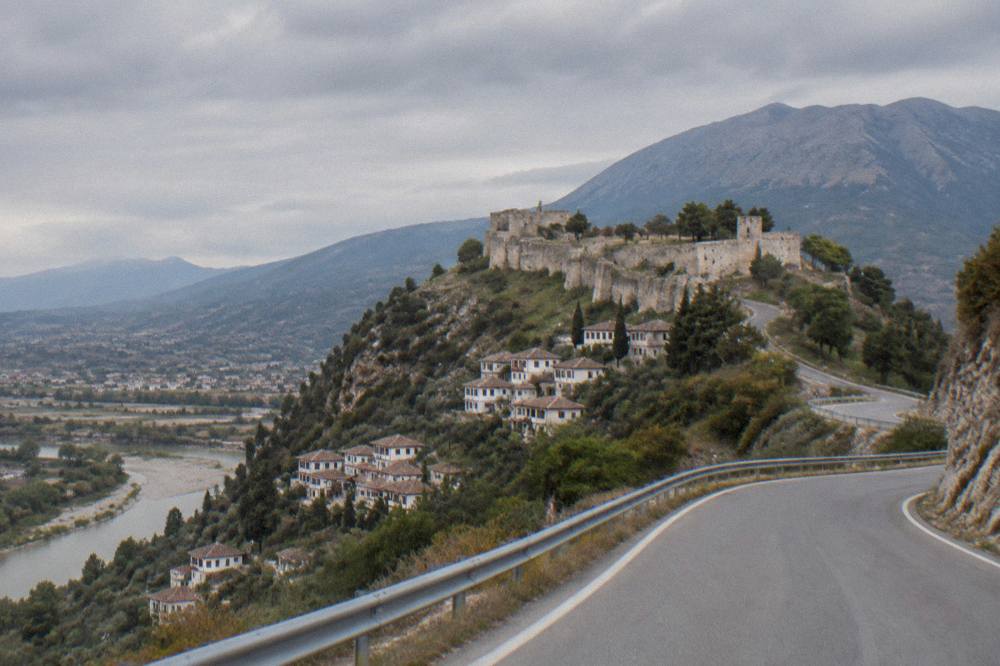
The castle quarter, Kala, is the tightest of all and now has formal restrictions, covered in the next section. The general rule that works everywhere in Berat: the higher up the hill you try to drive, the worse the idea becomes. Park low, walk up, and let the town do what it does best, which is being looked at slowly.
The last two years have changed the street map more than the previous decade did, and most of the changes favour pedestrians. The table below is the verified shortlist of what has actually happened to Berat's roads recently.
| Change | What it means for drivers | Verified detail |
|---|---|---|
| Kala vehicle restriction | Car access into the castle quarter is being restricted; plan to park below and walk up | Instagram post; Smart Parking not fully deployed per UNESCO |
| Smart Parking project | Barriers and electric shuttles planned at the castle to limit traffic; under implementation, not yet fully deployed | UNESCO State of Conservation report, January 2026 |
| Bilça panoramic bridge | A 290-metre EU-funded bridge over the Osum, completed around 2025, connecting Bilçë, Malinat and Zhitom and diverting through traffic away from the historic centre | EU Delegation, July 2025 |
| Berat-Ballaban road | New road toward Mount Tomorr nearing completion with asphalt, signage and barriers | September 2026 |
| Shkëmbi Road suspension | The castle road project is suspended until a Heritage Impact Assessment is done | World Heritage Committee decision, 2026 |
The Bilça bridge is the one most drivers will actually feel. It gives transit traffic a way across the Osum that does not touch the old town at all, which is exactly what a UNESCO-listed street network needs. Use it if you are passing through Berat rather than staying.
Can You Drive Up To Berat Castle?
No, in almost all cases. Car access into the castle quarter is being restricted; plan to park below and walk up. Everyone else applies through the municipal one-stop shop or the Smart Parking operators, and the practical answer for a day visitor is simply to park below and walk up.
The castle is a lived-in quarter, not a monument you circle by car. Around ten guesthouses and hotels operate inside the walls, and one centuries-old building next to the Onufri Museum is being converted into an eight-room family guesthouse under the 2025 National Investment Scheme. If you have booked a room up there, your reservation is your access: the restriction explicitly covers pre-booked guests, so tell your host you are arriving by car and follow their instructions. If you have not booked up there, do not try it.
The walk up is the point anyway. The lane from the lower town to the castle gate climbs past the whole cascade of Ottoman houses, and there are 24 defensive towers along the walls with about eight churches preserved inside, so the approach on foot is a large part of the sight. There may be a small fee at the gate in daytime for the castle grounds, so bring lek; outside staffed hours pedestrian access to the living quarter has traditionally been free, though that is informal and worth confirming locally. The Onufri Iconographic Museum inside the walls costs 400 lek for an individual ticket, 500 lek with an audio guide, with reductions for ages 12 to 18 and students.
One detail worth knowing: the cobblestone access road to the castle, the kalldrëm, was reported damaged in early 2026 and repairs started in April, a few years after the previous intervention. That is another reason the walk-up beats the drive-up while works settle.
For travellers coming from the capital without a car at all, a guided day trip sidesteps every question in this article at once.
The trio above spans the formats most Berat visitors actually choose: a full-day guided tour from Tirana, a lake-and-heritage variant with free time, and a canyon adventure for the day you would rather be on the water. If driving yourself still appeals, read on, because the roads themselves deserve an honest description.
What Is Driving In Berat And Central Albania Actually Like?
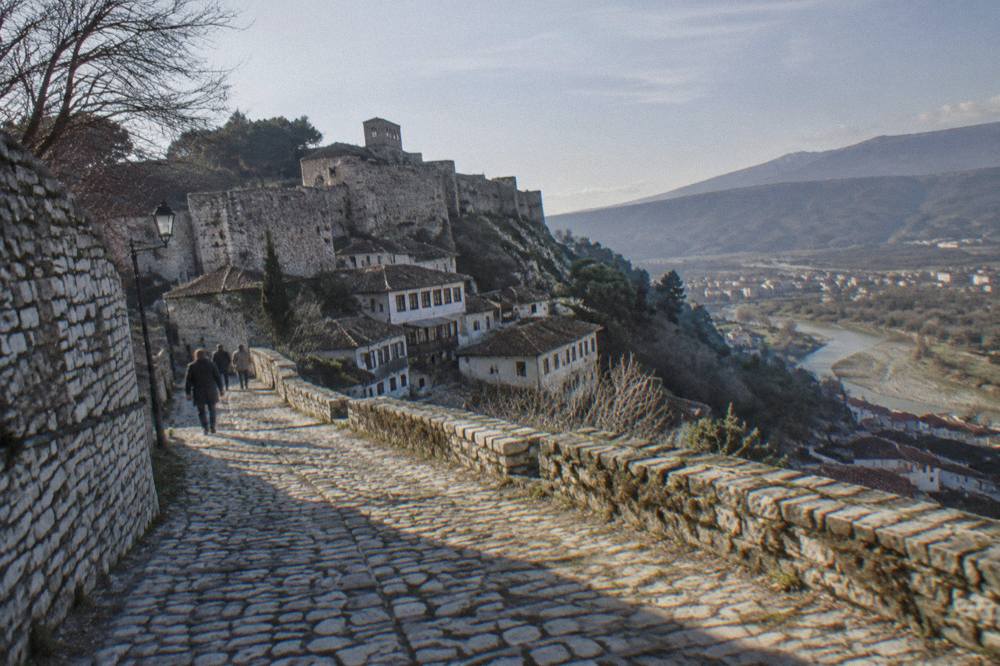
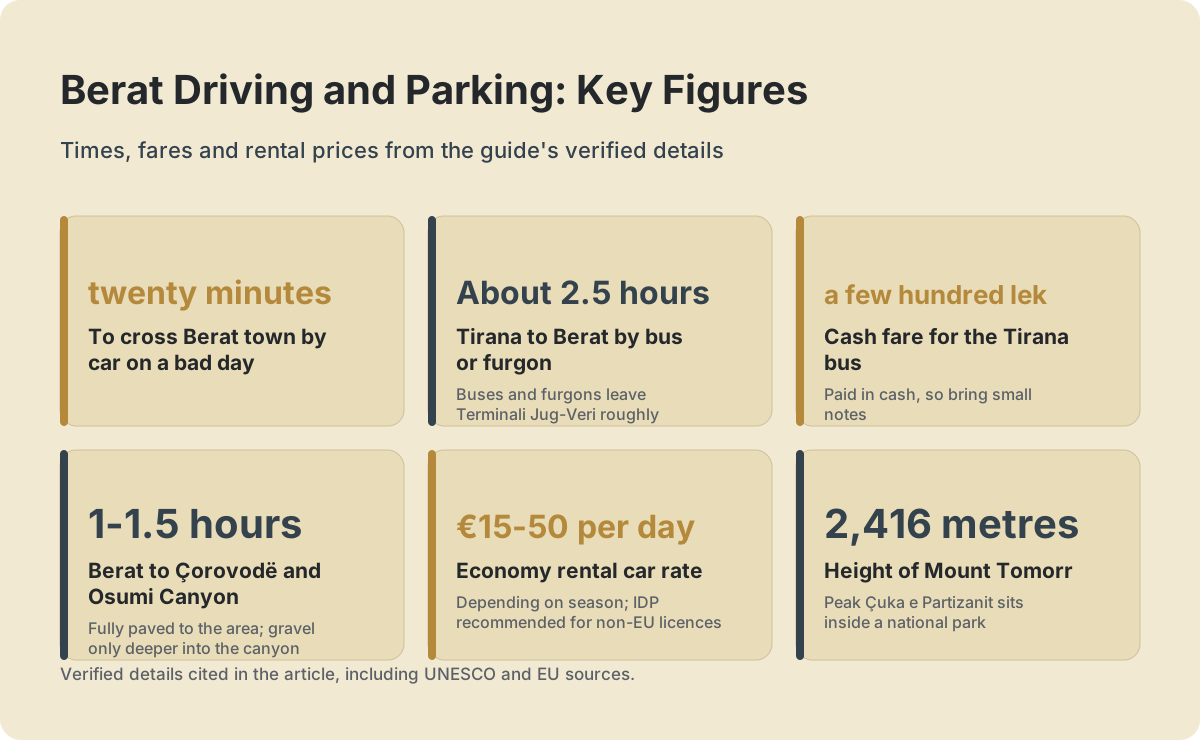
Driving in Berat itself is slow and narrow but simple; driving the surrounding region is winding, scenic and demanding. Inside the town expect one-lane stone streets, informal give-and-take with other drivers and very little formal signage. Outside it, the SH72 and the mountain roads toward Skrapar and Tomorr are fully paved but constantly curving, with potholes appearing and disappearing between maintenance cycles. An International Driving Permit is recommended for non-EU licence holders, and economy rentals typically run cheaper off-peak than in July and August.
The town itself takes twenty minutes to cross on a bad day. The real driving in this region happens on the roads out of it. The route to Çorovodë and the Osumi Canyon is fully paved and takes roughly one to one and a half hours from Berat, with gravel tracks only deeper into the canyon country. The Berat-Ballaban road toward Mount Tomorr has been rebuilt and was nearing completion as of September 2026, with new asphalt, signage and barriers, and a separate new road to the holy peak now shortens what used to be a drive of an hour and a half to two hours down to about thirty minutes for pilgrims heading to the Abbas Ali shrine.
Albanian driving culture rewards calm. Locals overtake on faith, pedestrians appear anywhere, and stray dogs are a real presence on rural roads, so dusk driving outside towns is worth avoiding. Fuel stations are frequent enough on the main corridors that range anxiety is unnecessary, but carry some lek in cash anyway, because card acceptance thins out fast once you leave the bigger towns, and Berat's old town remains largely cash territory.
If your only real reason to have a car in Berat is the day trip from the capital, it is worth comparing the effort honestly.
Do You Even Need A Car In Berat?
Most visitors do not. Berat is compact, everything in the old town is walkable, and the main arrival route from Tirana is served by bus or shared minibus from the South-North terminal in roughly two and a half hours, departing from early morning to late afternoon with the fare paid in cash. There is no passenger train to Berat, and no direct bus from Tirana airport, so the choice is really between the bus via Tirana, a private transfer, or a guided tour that includes transport.
The bus case is stronger than most people expect. Buses and furgons leave Tirana's Terminali Jug-Veri roughly hourly through the day, the journey takes about two and a half hours, and the fare is a few hundred lek paid in cash, so bring small notes. Berat's own bus terminal sits on the SH72 on the outskirts of town, about fifteen to twenty minutes on foot from the old core, with local taxis covering the hop for a couple of euros. Our Berat bus station guide covers the terminal layout, and the Tirana to Berat guide breaks down the departure options in detail.
The rail gap is worth understanding, because it surprises people. No passenger train reaches Berat. The Tirana-Durrës-Rinas line is under reconstruction with a target of end-2027, and the Durrës-Rrogozhinë tender winner is expected in November 2026, so rail will stay irrelevant to a Berat trip for now.
| Way to reach or explore Berat | What it costs you | What it saves you | Verified detail |
|---|---|---|---|
| Bus or furgon from Tirana | About 2.5 hours, cash fare of a few hundred lek | All parking questions | Departures from Terminali Jug-Veri, roughly hourly, early morning to late afternoon |
| Guided day tour from Tirana | A full day on a fixed schedule | The drive, the parking and the castle access rules | Transport included in the tour format |
| Rental car from Tirana or Berat | Economy rates, roughly €15-50 per day depending on season | Waiting on bus schedules, freedom for canyon and mountain loops | IDP recommended for non-EU licences |
| Train | Not available | Nothing yet | Tirana-Durrës-Rinas reconstruction targets end-2027 |
Once you are in Berat, a car sits idle for most of a normal visit. The two-day itinerary in our where to stay in Berat guide pairs old-town days with short local walks, none of which need wheels. A car earns its keep only when the plan includes the region beyond town, which is the next section's subject.
Which Day Trips From Berat Are Best Done By Car?
The Osumi Canyon country toward Çorovodë, the Mount Tomorr massif, and the wineries of the Roshnik hills are the drives that justify having a car in Berat. The canyon is roughly one to one and a half hours away on fully paved roads, Tomorr's new shrine road cuts the climb to about thirty minutes from what was up to two hours, and the wineries sit minutes out of town. The coast, by contrast, is a genuinely long drive and better treated as its own trip.
Start with the Osumi Canyon, the region's headline drive. The canyon near Çorovodë is protected as a Natural Monument, and the viewpoints along the rim, including Vrima e Nuses and the Old Italian Bridge, charge no entrance fee. The road is paved the whole way to the Çorovodë area, with gravel only if you push deeper toward individual trailheads, and one winding hour and a half from Berat the landscape drops into a gorge that looks nothing like the rest of central Albania. Rafting season runs roughly from late winter to early or mid June on the snowmelt, and tubing takes over for the calmer summer and autumn water, so the drive and the activity calendar are linked. Other pages covering the same trip are gathered on Berat Travel Guide.
For travellers who would rather ride up with a local operator than self-drive the loop, the canyon adventure below is the region's most-booked format.
Mount Tomorr is the second great drive. At 2,416 metres, with its peak Çuka e Partizanit inside a national park that shelters brown bear, wolf and birds of prey, it dominates the skyline from Berat. The Bektashi pilgrimage to the Abbas Ali tomb runs every August, with the 2026 edition from 18 to 25 August bringing police traffic restrictions around the Kulmak Tekke, so if your trip overlaps late August expect the mountain road to be managed, slow and busy. The rest of the year it is simply one of the best drives in the country.
| Drive from Berat | Road character | Verified figures and facts |
|---|---|---|
| Çorovodë and Osumi Canyon | Fully paved to the area, roughly 1-1.5 hours; gravel deeper in | Canyon is a protected Natural Monument; rim viewpoints free; rafting roughly late winter to early/mid June, tubing through summer-autumn |
| Mount Tomorr and Kulmak Tekke | Rebuilt Berat-Ballaban road, nearing completion September 2026; new shrine road is rough; 4x4 tours are the usual way up | Peak 2,416 m at Çuka e Partizanit; pilgrimage 18-25 August 2026 with traffic restrictions |
| Bogovë waterfall | Paved to the village, then a dirt road and a short forest trail of roughly 30-60 minutes return | Part of Tomorr Mountain National Park |
| Roshnik winery hills | Short local runs on country roads | Cobo, Alpeta, Luani, Nurellari, Edoni and Pupa all operate in the Berat region |
| The coast | A long haul; treat as its own itinerary | See our guide to getting from Berat to the coast |
Note the Bogovë row carefully: the waterfall is a walk, not a drive-to-the-base sight, so park in the village and take the short trail. For the canyon itself, if you would rather compare the two dominant formats side by side before committing, the lake-and-heritage day trip below is the higher-rated alternative to self-driving the whole circuit.
What Should You Know About Rules, Money And Fuel Before Driving?
Albania drives on the right, the currency is the lek, and cash still rules in old-town Berat. Albania is not an EU member and not in the Schengen area, so this is not a Schengen crossing; UK, EU and most Western visitors stay visa-free for 90 days in any 180, and US citizens can stay up to a year. The lek trades at roughly 92 to the euro, and museum and castle fees are quoted in lek.
The money picture matters more for drivers than for most visitors, because parking, fuel-station snacks and small-town coffee are exactly the places cards fail. The Bank of Albania's official rate put 1 euro at about 92 lek and 1 US dollar at about 81 lek in late September 2026, and those move daily, so think in rough terms rather than fixed conversions. Euros are accepted informally in some tourist businesses but change usually comes back in lek, often at a worse rate, so paying in lek is the better default. Our money and currency in Albania guide covers the full picture.
| Practical item | Figure or rule | Notes |
|---|---|---|
| Currency | Albanian lek (ALL), roughly 92 lek to 1 euro, 81 lek to 1 US dollar | Official Bank of Albania reference rate; exchange moves daily |
| Onufri Museum ticket | 400 ALL individual, 500 ALL with audio guide, 120 ALL for ages 12-18 and students, 200 ALL reduced | Inside the castle; children under 12 free |
| Ethnographic Museum ticket | 300 ALL individual, 90 ALL ages 12-18 and students, 150 ALL reduced | Reopened 30 May 2026 after three years of restoration, about 1,300 objects |
| Museum hours, 1 May to 30 Sep | Daily 9:00-18:00 | October hours are not published on the official page |
| Museum hours, 1 Nov to 30 Apr | Tue-Sat 9:00-16:00, Sun 10:00-15:00 | Open on national holidays |
| Emergency numbers | 112 general, ambulance 127, fire 128, police 129 | 112 works from any phone |
| Entry rules | Albania is not in the EU or Schengen; UK/EU visa-free 90 days in 180, US citizens up to 1 year | Days in Albania do not count toward Schengen totals |
On safety, the UK Foreign Office carries no advice against travel to any part of Albania, and the US State Department rates the country Level 2, exercise increased caution, as it does for much of the region. Street crime and bag snatching are the real categories of risk, not violence, and simple car discipline like not leaving bags visible on seats covers most of it. Our is Berat safe guide goes deeper.
Summer drivers should also respect the heat. July and August run hot across inland Albania, and Berat recorded the country's highest values on the hottest day of 2026, with summer heat that can top 40 °C in the shade. Park in shade where you can, carry water on the canyon and mountain drives, and shift long drives to the morning; our Berat weather guide explains the seasonal pattern.
Should You Drive Yourself Or Take A Guided Tour From Berat?
Drive yourself if your trip is really a central-Albania road trip with Berat as one stop among several; take a guided tour if Berat is the destination and the car is only a means to reach it. The town's parking pressure, the castle's new vehicle restrictions and the walkability of the old quarters all push the same way: the car pays off on the loop to the canyon and Tomorr, and adds nothing but stress inside town.
The honest comparison is not car versus tour on price alone, since tour prices shift with season and format and are best read on each operator's live listing. It is about where the friction sits. With a car, the friction is all inside Berat: finding a spot outside the old town, respecting the Kala restriction, and resisting the temptation to drive lanes that were never meant for cars. With a tour, the friction is the schedule: you leave when the tour leaves and see what the itinerary includes.
For a first visit built around the town itself, the guided formats win on every practical count, and the small-group castle-and-old-town option below is the format most Berat first-timers settle on.
| Your trip shape | Best transport choice | Why |
|---|---|---|
| Berat only, 1-2 nights | Bus in, walk everywhere | Old town is compact and pedestrian-first; castle is walk-up |
| Berat plus Osumi Canyon and Tomorr | Rental car, or a canyon tour | Paved canyon drive of 1-1.5 hours; canyon operators run the water activities |
| Berat as part of a Tirana-Gjirokastrë route | Car, or a multi-stop guided day trip | See our Berat to Gjirokaster guide |
| Arriving via Tirana airport | Bus via Tirana, transfer, or airport pickup tour | No direct airport bus to Berat; details in our Tirana airport to Berat guide |
| Wine-focused stay | Winery tour with transfers | Roshnik wineries are minutes out of town and tastings involve raki |
One more planning note for drivers staying inside the old quarters: tell your guesthouse you are arriving by car before you set out. Inside Mangalem and Gorica, hosts often direct you to a specific spot or meet you at the top of the lane, and inside the castle walls the pre-booked-guest exemption to the vehicle restriction only works if the host knows to expect you.
How Do You Park Respectfully In A Living Heritage Town?
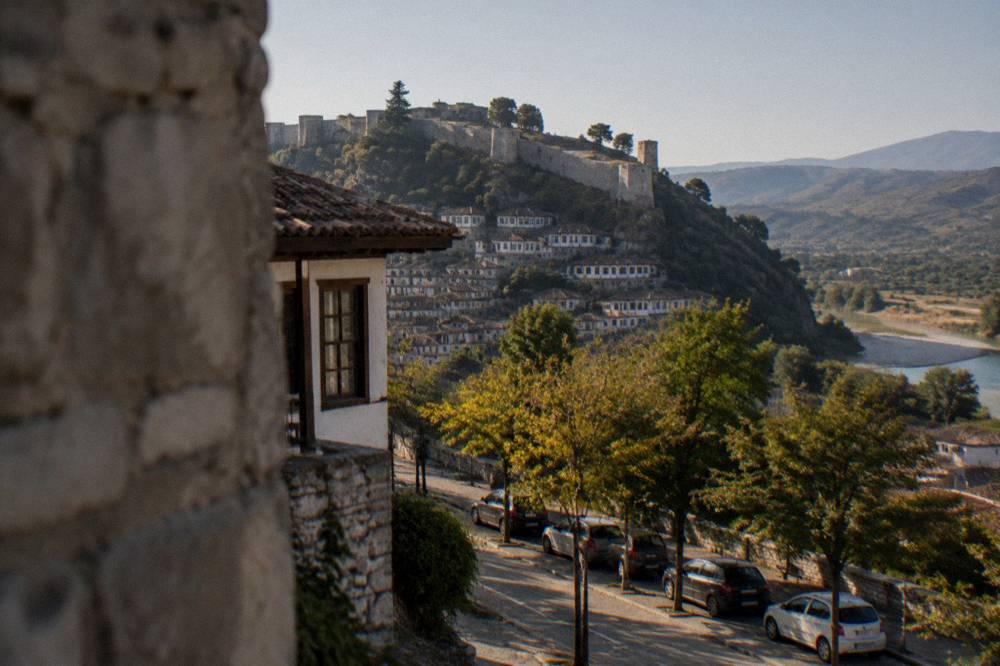
Park only where locals park, never on the stepped lanes of Mangalem or Gorica, never block a gate or a doorway, and treat the whole historic core as a low-emission, low-noise zone in practice even where it is not signed. Berat's quarters are UNESCO-listed as part of the Historic Centres of Berat and Gjirokastra, and the restoration projects of the past five years, from the Gorica quarter works to the Mangalem upgrade, were done on the assumption that cars stay out.
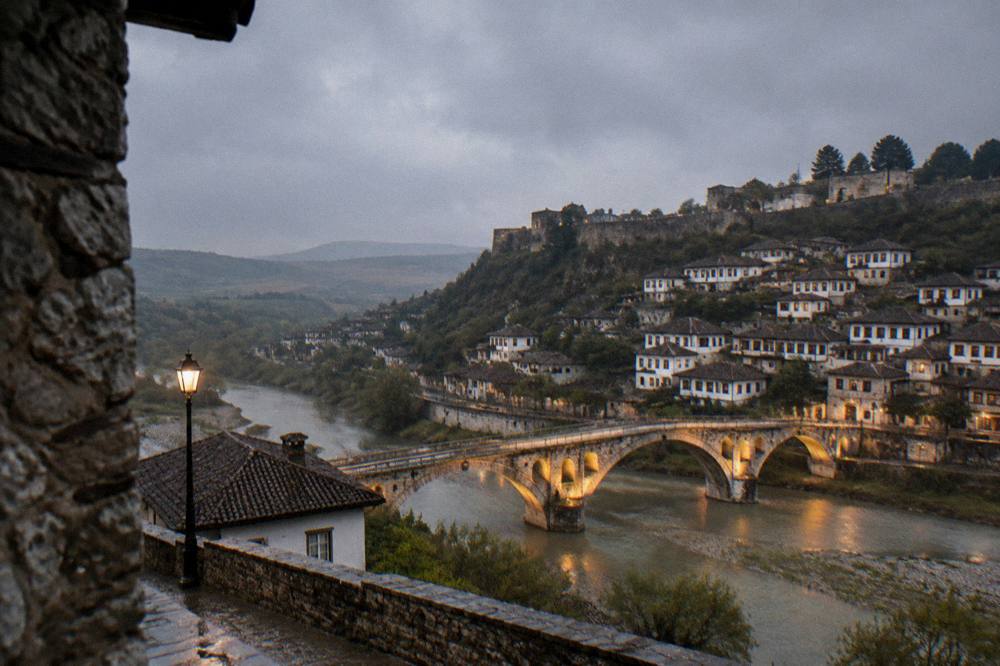
The reason this matters beyond politeness is that the World Heritage Committee reviewed Berat's state of conservation in 2026 and has been pressing Albania to slow down anything that risks the historic fabric, suspending the Shkëmbi Road project and the Osum river bank schemes until heritage impact assessments land. Every car parked across a Mangalem stair lane works against the same tide. The practical version of respect is easy: park on the new-town side, cross the Gorica Bridge on foot, and let the car rest until the day you drive out to the canyon.
For photographers, that car-free patience pays twice, since the best photography spots in Berat are almost all pedestrian vantage points where a parked car would only ruin the frame. And if your trip falls in early October, the town's Wine and Stories festival runs from 2 to 4 October 2026, which is a weekend when old-town parking gets tighter still and the walk-in approach earns its keep.
What Is The Bottom Line For Drivers Visiting Berat?
Bring a car if the region is the point, and leave it parked outside town every day you are in Berat; skip the car entirely if the town is the point and you are coming from Tirana. Park low, walk up to the castle, tell your host if you sleep inside the walls, carry lek for fees and fuel, and plan canyon and mountain loops for summer mornings. The bus terminal and guided day tours exist so you never park in the old town.
For the full-day format from the capital that this site features, the guided option keeps the entire question of Berat parking off your plate, since the tour handles the road and the town is then explored on foot. If that format fits your dates, its live listing carries the current details; the price is not published in advance, so check availability rather than expecting a figure here, and read the cancellation terms on the listing before you book.
Whichever way you arrive, the pattern holds: Berat rewards people who slow down, and nothing slows a visit down faster than hunting for a spot on a lane that never had one. Park by the boulevard, cross the bridge on foot, and spend the saved hours on the castle walls instead.
Common Questions About Parking And Driving In Berat
Where can you park in Berat?
Park outside the historic core, on the new-town side around Bulevardi Republika or near the approaches to the Gorica Bridge, and walk in. No individual car park in Berat had its price or hours verified for this guide, so confirm at the barrier and pay in lek. Never attempt to park on the lanes of Mangalem or Gorica.
Can you drive up to Berat Castle?
Generally no. Car access into the castle quarter is being restricted; plan to park below and walk up. Day visitors should park below and walk up.
Is there a fee to enter Berat Castle?
There may be a small fee at the gate in daytime for the castle grounds, and the grounds have traditionally been free to pedestrians outside staffed hours, though that arrangement is informal. The Onufri Museum inside the walls charges 400 lek for an individual ticket and 500 lek with an audio guide.
Do you need a car in Berat?
Most visitors do not. The old town is fully walkable, buses from Tirana take about two and a half hours with departures from early morning to late afternoon, and there is no passenger train and no direct airport bus. A car pays off mainly for the Osumi Canyon and Mount Tomorr loops.
Is driving in Albania difficult?
Town driving in Berat is slow and narrow but manageable. Rural roads are paved but winding, with potholes between maintenance cycles, informal overtaking and stray dogs. An International Driving Permit is recommended for non-EU licence holders, and dusk driving outside towns is best avoided.
Can you pay for parking and fuel by card in Berat?
Not reliably. The old town and Mangalem remain largely cash territory, and card acceptance thins out away from larger businesses. Carry lek; the currency trades at roughly 92 lek to the euro, and euros are accepted only informally with change usually given in lek.