Free Things To Do In Berat
Berat, a UNESCO World Heritage Ottoman-era hill town on the Osum River in central Albania, gives away its best views for nothing. This guide lists what is genuinely free, what carries a small lek fee, and where the free museum days fall.
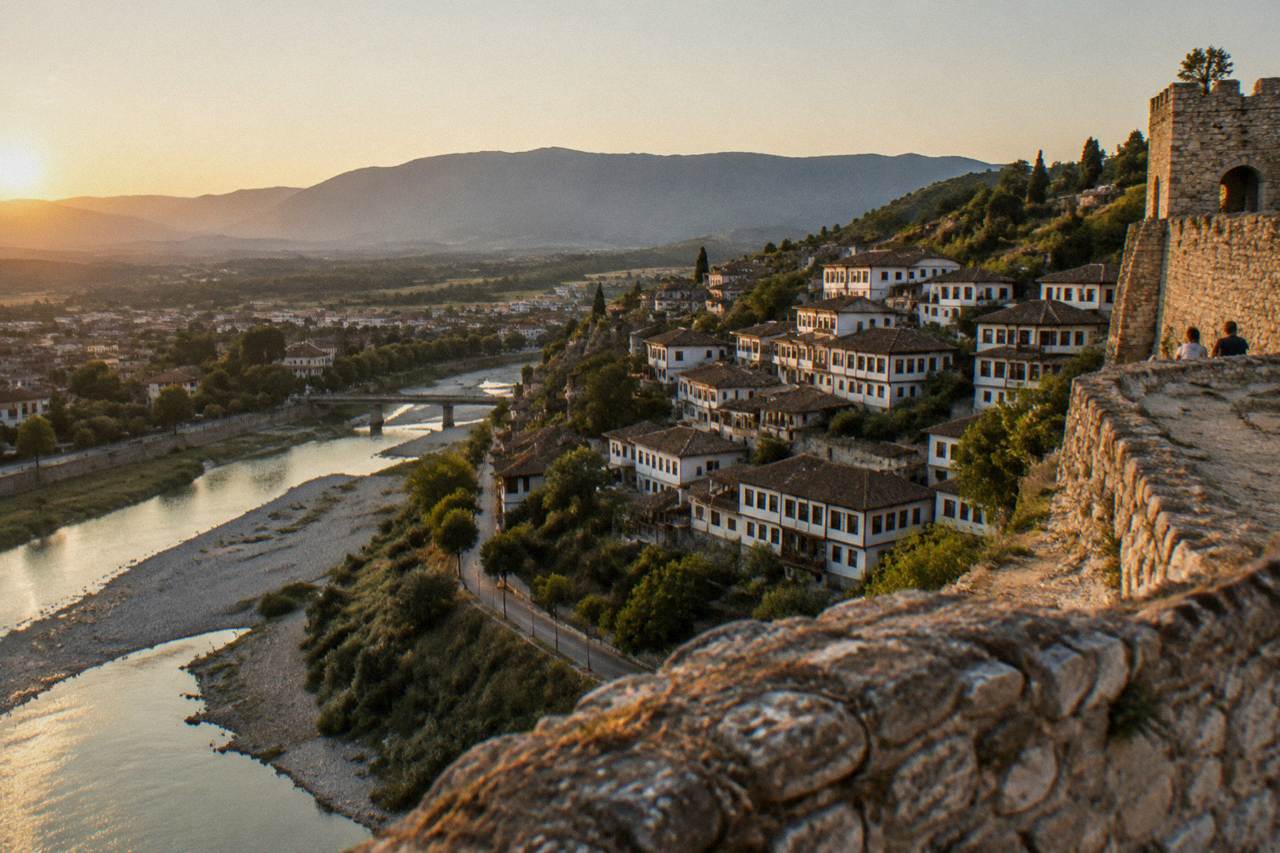
Short answer
Most of Berat, Albania is free to enjoy: the Mangalem and Gorica old-town quarters, the Gorica Bridge, both river banks and the castle walls outside staffed gate hours cost nothing, though a small daytime gate fee in lek is possible. The two state museums charge 400 and 300 lek but open free on four dates a year.
Berat, a UNESCO World Heritage Ottoman-era hill town on the Osum River in central Albania, is one of those rare destinations where the headline attractions cost nothing to stand in front of. The town was added to the World Heritage List in 2008 as an extension of the Gjirokastra inscription, and UNESCO describes it as a rare example of a well-preserved Ottoman town. The white houses stacked up the hillside, the fortress walls above them and the stone bridge over the river are all public space. Nobody charges you to look. What does carry a fee, the two state museums and sometimes a small gate charge for the castle grounds in daytime, costs a few hundred lek, not a few hundred euro. This Berat Travel Guide page walks through every genuinely free experience in the town, plus the free museum days and the free, tip-based walking tours that let you see it all with a local.
What Is Genuinely Free In Berat, Albania?
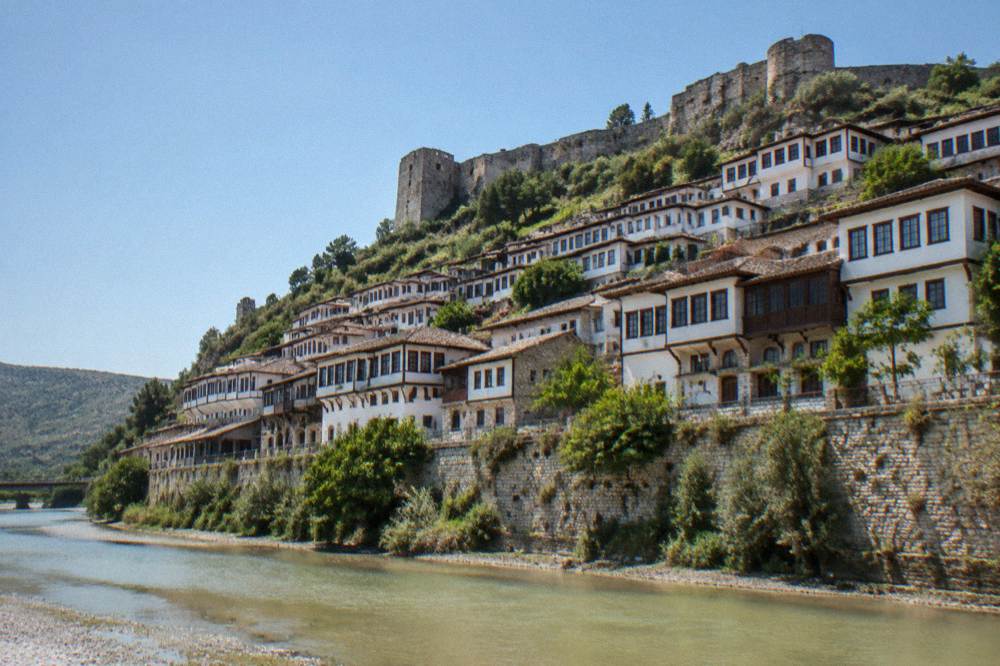
Yes, almost everything that makes Berat famous is free to experience: the Ottoman house fronts of Mangalem, the cobbled lanes of Gorica, the Gorica Bridge, both banks of the Osum River, the walk up to the castle walls, and every street-level view of the thousand windows. Only two things routinely cost money, the Onufri Museum at 400 lek and the Ethnographic Museum at 300 lek, and even those open free to everyone on four dates a year.
The reason is structural. Berat is not a themed open-air museum with turnstiles; it is a working municipality of 62,232 residents at the 2023 census, and its historic quarters are simply neighbourhoods. People live in Mangalem, run guesthouses inside the castle walls and hang laundry over the same alleys that visitors photograph. You walk in, you look, you walk out, and nobody asks you for a ticket. The 58.9-hectare World Heritage property and its 136.2-hectare buffer zone, shared with Gjirokastra, cover ordinary streets that remain open around the clock.
That does not make the town a free-for-all in the chaotic sense. Restoration has been constant: Albania's January 2026 report to UNESCO lists completed projects across the Gorica quarter, the Mangalem quarter, the Gorica castle trail and parking near the Old Gorica Bridge, and a 290-metre EU-funded panoramic bridge over the Osum, finished in 2025, that now diverts through-traffic away from the historic centre. The result is a compact old town that is calmer to walk than it was a few years ago, and that costs the same as it ever did, which is nothing.
Here is the honest ledger of what costs nothing and what does not.
| Sight or activity | What you get | Cost | Notes |
|---|---|---|---|
| Mangalem quarter | Ottoman house fronts, the thousand-windows view from below | Free | Public streets, open all hours |
| Gorica quarter | Cobbled lanes, quieter east-bank atmosphere | Free | Public streets, open all hours |
| Gorica Bridge | Historic stone arch bridge over the Osum | Free | Pedestrian crossing at any time |
| Osum river banks and promenade | Riverside walk between the two quarters | Free | Paved, shaded sections near the bridge |
| Berat Castle walls and grounds | Fortress walk, town views, ruined mosques and churches | Free outside staffed hours; a small daytime gate fee in lek is possible | Bring cash in lek for the gate |
| Osumi Canyon rim viewpoints | Canyon overlooks near Çorovodë | Free | Reached by your own transport |
| Onufri Museum | Icon gallery inside the castle | 400 lek | Free on four dates a year |
| Ethnographic Museum | Reopened 2026, around 1,300 objects | 300 lek | Free on four dates a year |
Is Berat Castle Free To Enter?
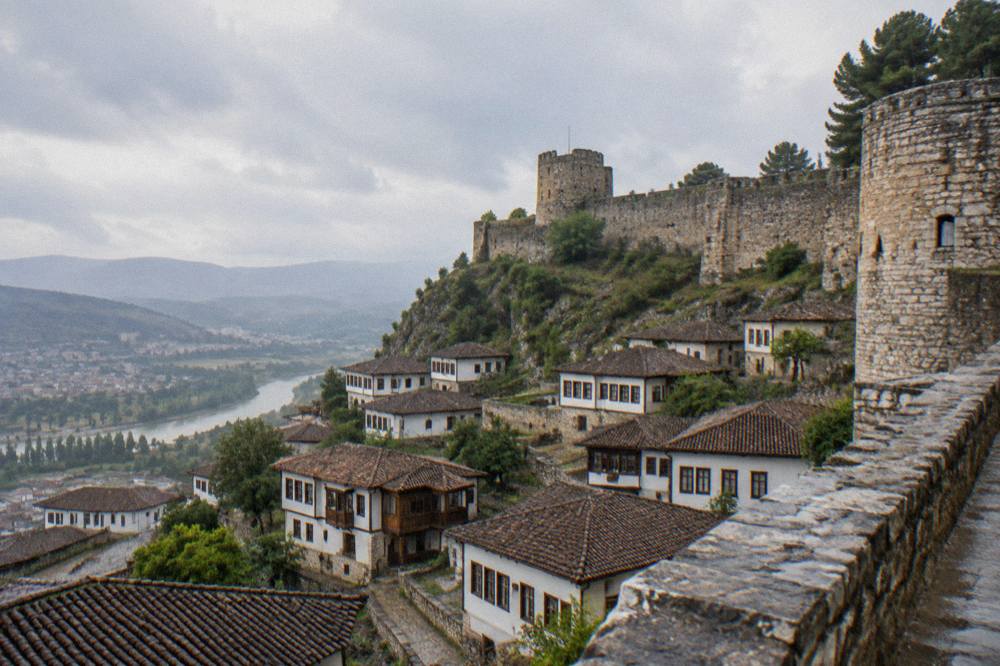
Berat Castle, the Kala, is a lived-in quarter rather than a ticketed monument, so walking up is free in principle and pedestrian access is not restricted to opening hours. In practice there may be a small fee at the main gate during staffed daytime hours, so carry a few hundred lek in cash just in case. Car access into the castle quarter is being restricted; plan to park below and walk up.
The fortress itself is the town's oldest layer and its biggest free asset. The walls carry 24 defensive towers, and though about 42 churches once stood inside, roughly eight survive today, alongside the Red Mosque, one of the earliest Islamic buildings in the fortress. Some of these are ruins you simply walk past. Others, like the church that houses the Onufri Museum, have their own entry rules covered further down this page. The mix is part of the appeal: the Kala is a neighbourhood with guesthouses, families and a museum, not a fenced ruin, and the cobbled approach road has been under repair since April 2026 after earlier resurfacing deteriorated.
Give the climb a full morning if you can. The path up from Mangalem is steep but short, the walls open onto the whole Osum valley, and the interior lanes wander past ruined churches and private gardens in a way no guided circuit can stage. There is no published timetable of staffed gate hours, so if the booth is unmanned you simply walk through, and if it is staffed you pay the modest local fee. Onufri Museum figures and hours sit in the next section; here is what the fortress grounds themselves contain.
| Inside the Kala | What it is | Cost to see |
|---|---|---|
| Fortress walls and 24 towers | Walkable ramparts with valley views | Free, possible small daytime gate fee |
| Red Mosque ruins | Among the earliest Islamic buildings in the fortress | Free, exterior only |
| Ruined churches | Remnants of the roughly eight surviving churches | Free |
| Onufri Museum | Icon gallery in the Church of St Mary | 400 lek, free days apply |
| Lived-in lanes and guesthouses | A residential quarter inside the walls | Free to wander |
If a free morning in the fortress leaves you wanting the full picture with a driver and a lake included, the most-booked option from the coast pairs the castle with Belshi Lake in one long day, and it starts from around the price of a museum ticket and a lunch.
Which Berat Museums Can You Visit Without Paying?
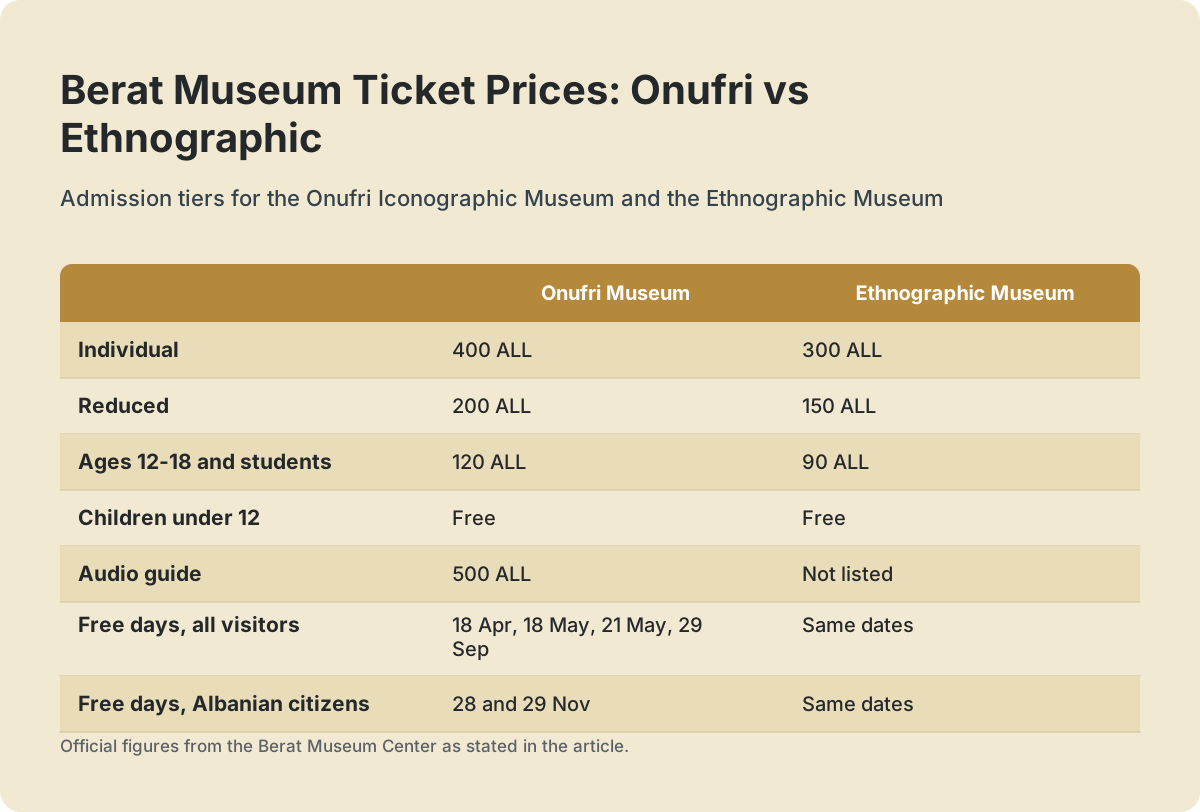
The two state museums in Berat are the Onufri Iconographic Museum at 400 lek and the Ethnographic Museum at 300 lek, but both open free to everyone on 18 April, 18 May, 21 May and 29 September, and free to Albanian citizens on 28 and 29 November. Children under 12 are always free at both. Since November 2025 you can also buy tickets online through the national e-Albania system instead of queuing at the desk.
Those are official figures from the Berat Museum Center, not estimates, and they are the only admission prices in town worth planning around. The reduced tiers help students and older visitors: at Onufri, a reduced ticket is 200 lek, ages 12 to 18 and students pay 120 lek, and an audio guide adds 500 lek. At the Ethnographic Museum, the reduced ticket is 150 lek and the 12-to-18 and student rate is 90 lek. Documentation is required for discounts, so carry a student card or ID if one applies to you.
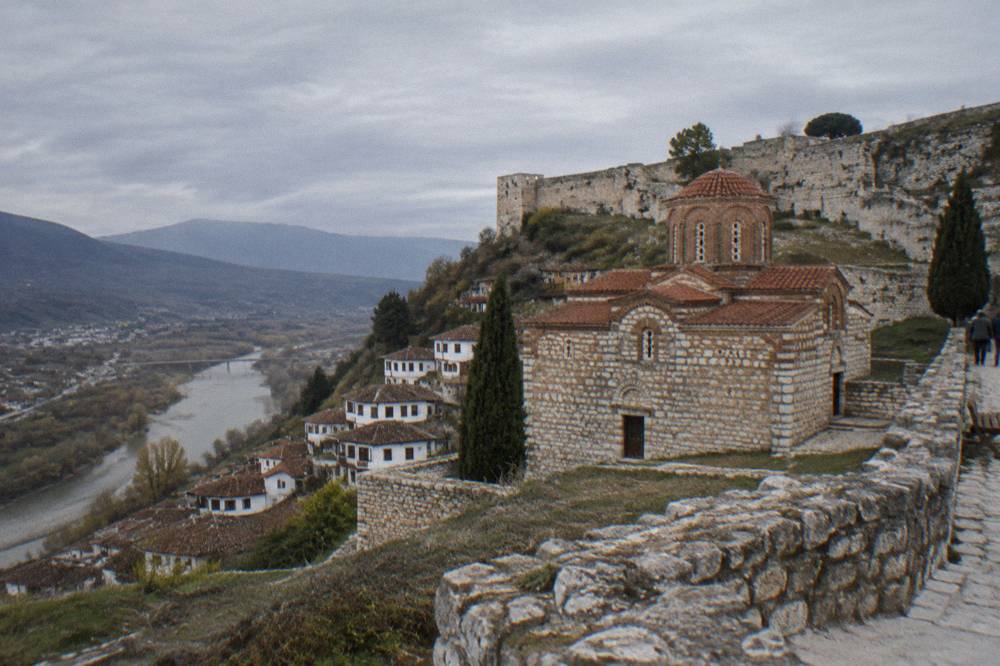
The free days deserve a line of strategy. They mark International Day For Monuments And Sites in April, International Museum Day and Cultural Heritage Day in May, and a late-September heritage date, and they draw local families as well as visitors, so arrive early. The museums run seasonal hours: from 1 May to 30 September they open daily 9:00 to 18:00, while from 1 November to 30 April they run Tuesday to Saturday 9:00 to 16:00 and Sunday 10:00 to 15:00, closed Mondays. October sits in a gap on the official page, so check before an autumn visit.
The Ethnographic Museum is the fresher story. It reopened on 30 May 2026 after more than three years of restoration, with rebuilt displays and around 1,300 objects across a traditional Berat house. Interest in the pair is clearly rising: the Onufri Museum counted 58,912 visitors from January to July 2026 against 50,615 in the same months of 2025, a 16 percent rise, and roughly 14,000 people came through in August 2026 alone. A Berat UNESCO heritage guide explains what UNESCO status actually covers in the town if you want the background.
| Ticket | Onufri Museum | Ethnographic Museum |
|---|---|---|
| Individual | 400 ALL | 300 ALL |
| Reduced | 200 ALL | 150 ALL |
| Ages 12-18 and students | 120 ALL | 90 ALL |
| Children under 12 | Free | Free |
| Audio guide | 500 ALL | Not listed |
| Free days, all visitors | 18 Apr, 18 May, 21 May, 29 Sep | Same dates |
| Free days, Albanian citizens | 28 and 29 Nov | Same dates |
If you are visiting from Tirana, Durres or the coast and want the castle and museums interpreted rather than just walked past, a guided day trip such as the Berat UNESCO and Belshi Lake day trip covers the fortress, the old town and a lake stop with transport included. You can compare dates first: Check availability.
Where Are The Best Free Views Of The Thousand Windows?
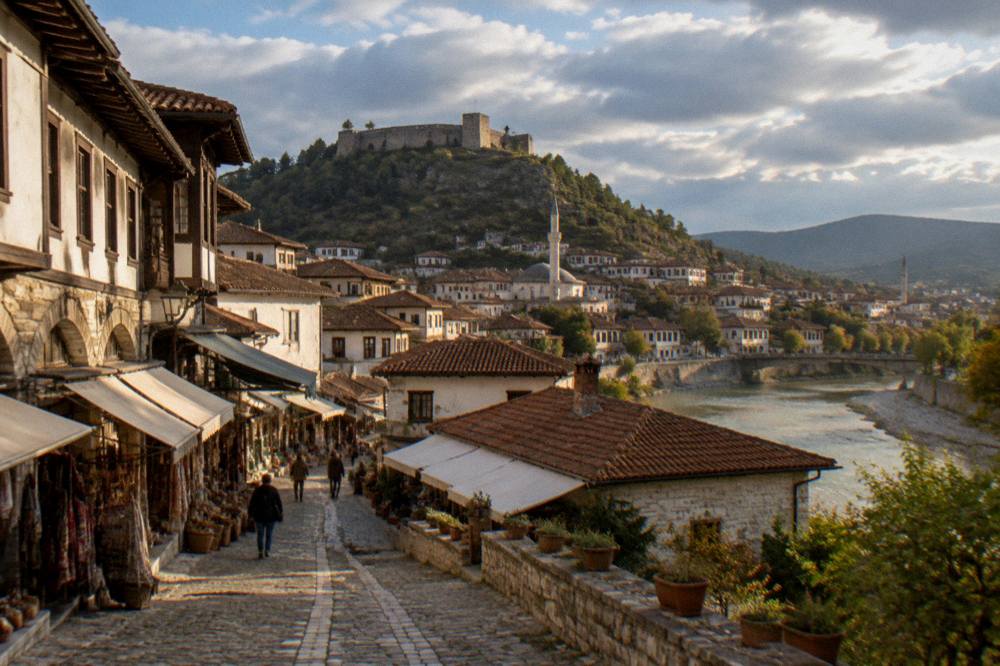
The classic free view of Berat's thousand windows is from the Gorica bank of the Osum River looking back at Mangalem's stacked white facades, best in late-afternoon light when the window rows catch the sun. Almost as good are the terraces up inside the castle walls, looking down over the whole town, and the middle of the Gorica Bridge, which frames both banks at once. None costs anything.
Photographers work these three angles on rotation, and a dedicated photography spots across Berat guide maps them in detail. The Gorica-bank view is the one on every postcard because the hillside of Mangalem is at its densest and most vertical from across the water, the houses packed so tightly that the window rows read as pattern rather than architecture. From the castle walls the same houses flatten into a red-roofed carpet with the river threading through, a completely different picture from the same free vantage district.
Timing matters more than equipment here. Berat's summers are hot and dry, and midday light flattens the white walls, so locals and photographers work the first and last two hours of the day. A printed map of Berat helps you connect the viewpoints into one loop: cross the Gorica Bridge to the east bank, walk south along the river path, look back at Mangalem, then recross and climb toward the castle as the light drops. The whole circuit is on foot and free.
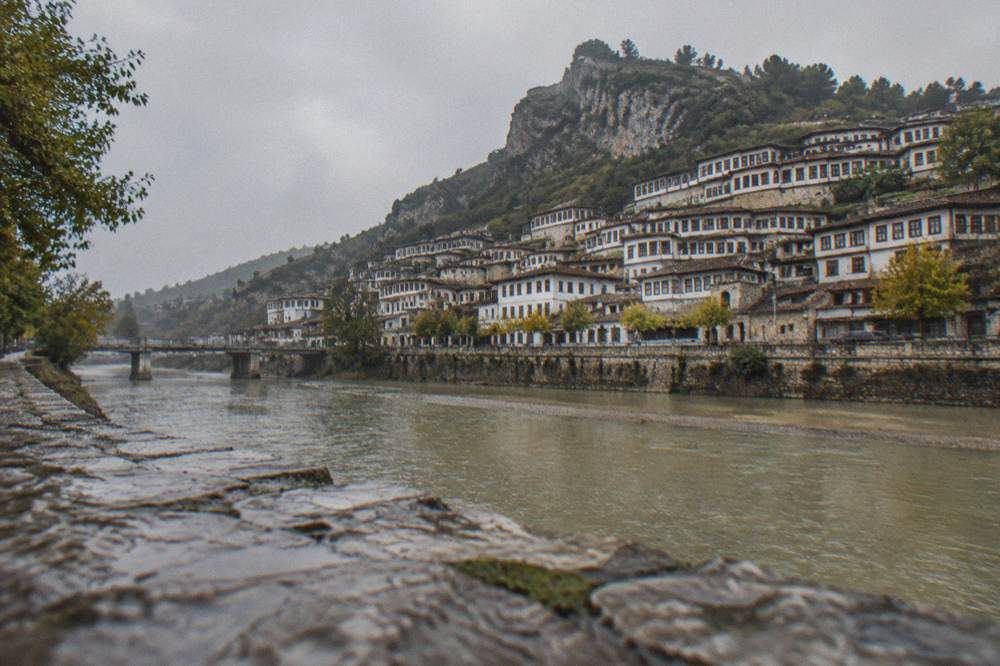
| Free viewpoint | What you see | Best time | Effort |
|---|---|---|---|
| Gorica river bank | Mangalem facades, the thousand-windows view | Late afternoon | Flat riverside walk |
| Gorica Bridge mid-span | Both banks, the river corridor | Morning or golden hour | None |
| Inside the castle walls | Red roofs, the Osum valley, Mount Shpirag | Sunset | Steep 15-20 minute climb |
| Gorica castle trail | Gorica quarter from above | Morning | Moderate uphill path |
| New panoramic bridge area | Wider Osum crossing, river landscape | Any daylight | Flat |
Can You Explore Mangalem And Gorica Without Spending Anything?
Yes, both historic quarters are ordinary public streets, free and open at all hours, and they hold nearly all of Berat's architecture worth seeing: Mangalem's Ottoman houses on the west bank and Gorica's quieter cobbled lanes on the east, joined by the free Gorica Bridge. The only costs you incur exploring them are the coffee or meal you choose to stop for, and a comfortable pair of shoes.
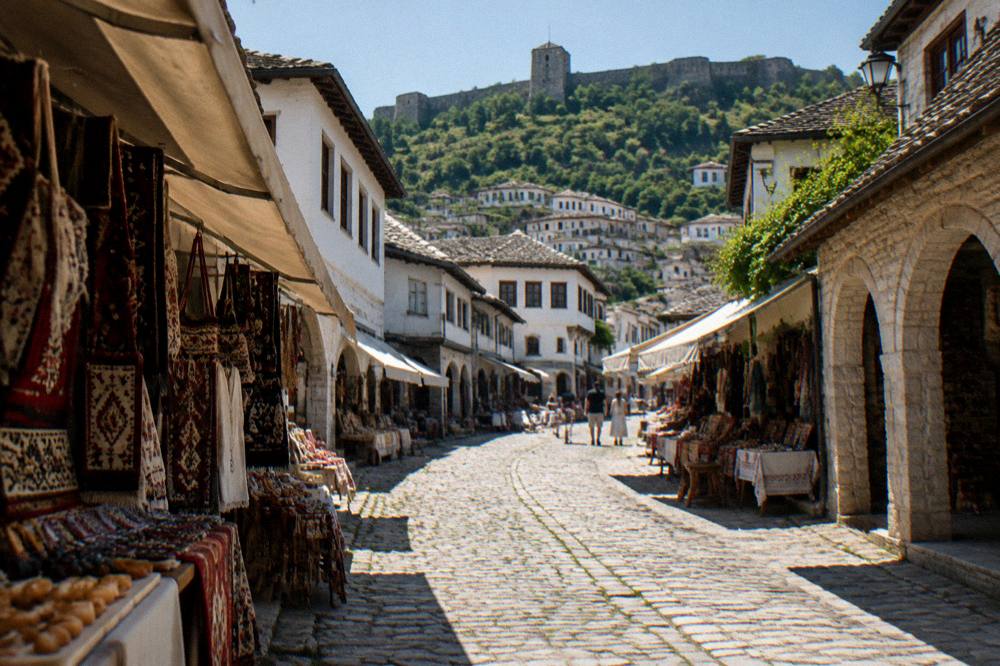
Mangalem is the postcard side, dense and vertical, its houses built into the slope with window rows facing the sun. Gorica is where the crowds thin out. Its lanes are wider, its gardens greener, and its recently completed restoration as a historic urban landscape project, listed in the January 2026 UNESCO report, has refreshed building fronts and the castle trail above the quarter without putting a single turnstile up. Wandering between the two, across the bridge and back, is the single best free activity in Berat and takes an unhurried hour or two.
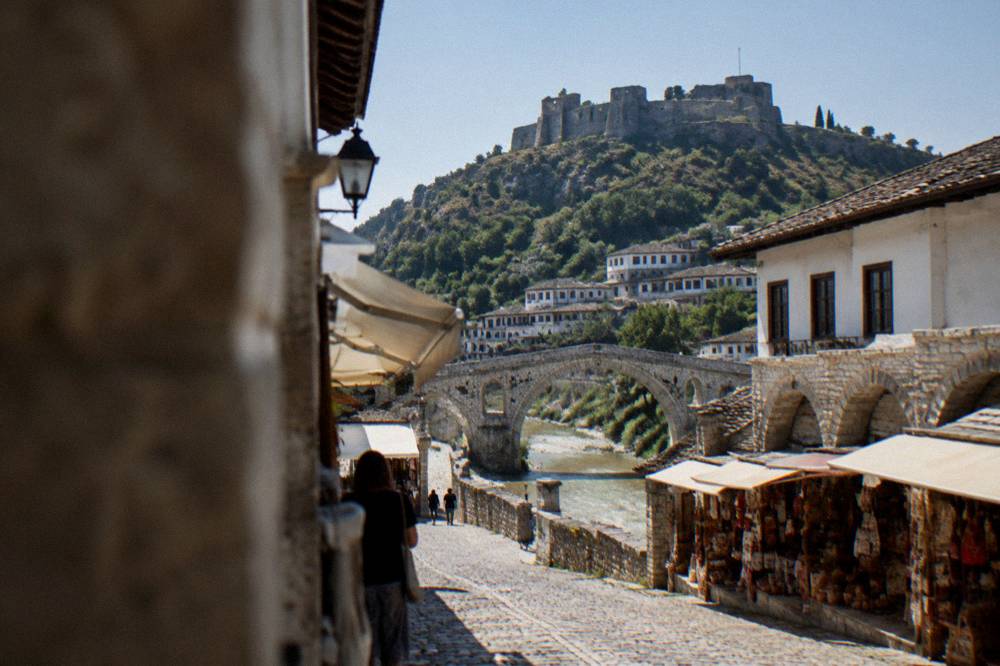
The bridge itself deserves a slow crossing. The Gorica Bridge is the historic stone crossing over the Osum, and from its middle you get the framed two-bank view described above. Downstream, the river banks have been landscaped into a promenade that locals use for evening walks, and the new 290-metre EU-funded Bilça bridge, completed in 2025, now carries through-traffic on the wider crossing so the historic centre stays quiet. Watching the town's evening rhythm from the bank, elderly walkers, kids on bikes, the call to prayer over Mangalem, costs exactly nothing and is as close to the real Berat as any museum interior.
Are Free Walking Tours In Berat Actually Free?
Yes, in the strict sense that no ticket exists: the free walks in Berat run on the tip-based model, free to join and free to leave, with the local guide paid by whatever participants choose to give at the end. The longest-running option, the UNESCO Old Town Berat history, art and culture walk on GuruWalk, is genuinely free to book, and the guru who leads it decides the route and the pace. Budget a tip in the range of a museum ticket or a meal.
That model deserves an honest explanation rather than a shrug. GuruWalk lists independent local guides, called gurus, who run pay-what-you-want walks; the platform itself takes no booking fee from the visitor, and the guru earns only the tips. On this site that walk is the standout free option because it covers the old town's art, history and culture in one loop, which is exactly the ground a first-time visitor wants explained: the quarters, the bridge, the castle approach and the window architecture. If a tip-based model does not suit you, paid expert-led walks also run in Berat, and the choice is honestly a matter of whether you prefer setting your own price or paying a fixed one.
A free walk pairs naturally with a free day. Book the walk for your first morning, let the guru orient you, then spend the afternoon revisiting whatever caught your attention, the castle climb, the Gorica lanes or the river bank, at your own pace and at no further cost.
What Free Nature Sits Within Reach Of Berat?
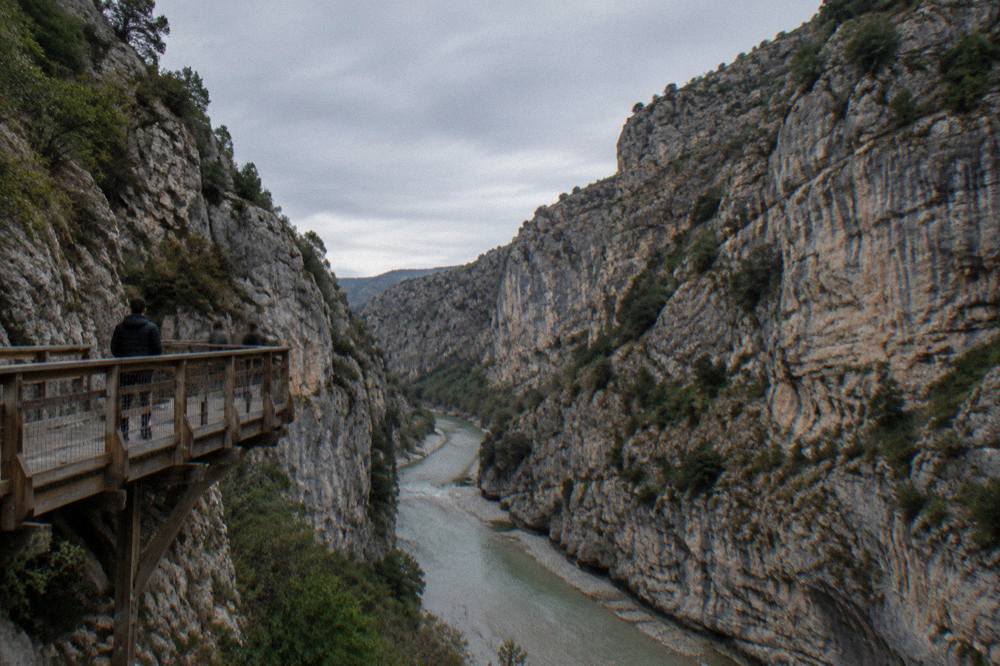
The free nature around Berat is real and substantial: the Osumi Canyon rim viewpoints near Çorovodë, including Vrima e Nuses and the old Italian bridge, charge no entrance fee at all, and Bogove waterfall in Tomorr Mountain National Park is reached by a short forest walk from Bogovë village. What costs money is only the equipment side, the rafting and tubing trips that run the river in spring and summer.
The canyon is the headline. The Osum river has cut a protected natural monument through the Skrapar hills, and the rim viewpoints above it are open public ground, reachable by road and free to stand at. The drive from Berat runs on fully paved roads to the Çorovodë area, roughly an hour to an hour and a half, with gravel tracks only deeper in. Down on the water it is different: rafting runs in spring, roughly March to May or June depending on snowmelt and water levels, while tubing takes over in the calmer summer and autumn months. Those trips are paid products, and the classic tubing run is one of the most-booked adventure options from Berat.
Bogove waterfall is the gentler option and also free to reach. From Bogovë village a short forest trail, an easy out-and-back of half an hour to an hour, leads to the falls and their pool inside Tomorr Mountain National Park. Mount Tomorr itself, whose Çuka e Partizanit peak rises to 2,416 metres, anchors the skyline south of town, and its slopes host the annual Bektashi pilgrimage to the tomb of Abaz Ali each August, when roads around Kulmak Tekke carry traffic restrictions and the mountain fills with pilgrims. A hiking routes around Berat guide covers the trails in depth.
| Nature spot near Berat | Free version | Paid version | Season note |
|---|---|---|---|
| Osumi Canyon | Rim viewpoints, Vrima e Nuses, old Italian bridge | Rafting and tubing trips | Rafting spring, tubing summer to autumn |
| Bogove waterfall | Short forest walk from Bogovë, no entrance fee | Guided waterfall hikes | Trail easiest late spring to autumn |
| Mount Tomorr | Parkland, village access roads | Jeep and guided summit trips | Pilgrimage traffic each August |
| Osum river bank in town | Promenade walk between the quarters | None needed | Year-round |
If a water-level river day appeals, tubing the canyon with a licensed operator is the budget-friendly way onto the Osum, and the original tubing run is the one most visitors book.
How Much Does A Cheap Day In Berat Really Cost?
A full sightseeing day in Berat can genuinely cost almost nothing beyond food and a bed: the quarters, bridge, river banks and castle walls are free, and a free GuruWalk costs only the tip you choose. The realistic baseline spends are a guesthouse at a wide range depending on season in typical listings, a cheap restaurant meal that is inexpensive by European standards, and a cappuccino at a modest sum, with museums at 300 and 400 lek if you go inside.
Those food and lodging figures are planning ranges drawn from 2026 listings and price reports, not promises: rooms run higher in peak summer, cheaper in shoulder months, and the only way to know a room's rate is to check the listing. The currency is the Albanian lek, roughly 92 to the euro, and the old town remains largely a cash district, cards are accepted at some hotels and larger restaurants but many Mangalem kitchens and small shops expect notes. A money and currency in Albania guide covers exchange and ATM fees, and a what a Berat trip costs breakdown does the full budget maths. For the evening, what to eat in Berat names the local dishes, qifqi, tavë kosi and japrak, that a cheap kitchen does best.
The honest caveat about a free day is that the two things visitors most want beyond the streets, museum interiors and wine, carry fees. The museums cost less than a coffee and a pastry in most of Europe, but winery visits around Berat, at producers like Cobo with its native Shesh and Puls grape varieties, are commercial tastings, and a guided winery tour with transfers is the comfortable way to do them. Free it is not. Good value, on this site's numbers, it plainly is.
Here is what a free-and-cheap day actually looks like on paper, using the planning ranges above.
| Line item | Typical planning range | Free alternative |
|---|---|---|
| Guesthouse night | Cheap by European standards, pay in cash in lek | Hostel dorm, see Berat hostels guides |
| Cheap restaurant meal | Cheap by European standards, pay cash in lek | Self-catered from market produce |
| Mid-range dinner for two | Cheap by European standards, paid in lek | Same, with a shared meze plate |
| Cappuccino | Espresso, cheaper | |
| Raki shot | Around 2 euro equivalent | Skip, or accept a house pour |
| Castle gate, daytime | Small fee, bring lek | Walk up outside staffed hours |
| Museums, both | 700 ALL combined | Visit on a free museum day |
| Old town, bridge, banks | Free | Already free |
Add it up and the pattern is clear: in Berat the sights are free and only the services, beds, meals, tastings, guided transport, carry prices, and even those run lower than almost anywhere else on the Adriatic side of the Balkans. A visitor who sleeps cheap, walks everything and times the museums to a free day can see the town's entire UNESCO-listed core for the price of two restaurant meals. Even a visitor who does none of that is still spending less per day than a coastal resort would charge for a sunlounger.
Common Questions About Free Things To Do In Berat
Is Berat Castle free to visit?
The castle is a lived-in quarter with unrestricted pedestrian access in principle, so walking up is free. A small fee may be charged at the main gate during staffed daytime hours, so carry a few hundred lek in cash. The Onufri Museum inside the walls is separate and costs 400 lek.
Are the museums in Berat free on certain days?
Yes. The Onufri and Ethnographic museums open free to everyone on 18 April, 18 May, 21 May and 29 September, and free to Albanian citizens on 28 and 29 November. Children under 12 are always free at both museums.
Can you see the thousand windows of Berat without paying?
Yes. The classic view of Mangalem's stacked windowed facades is from the Gorica bank of the Osum River, a free public street, and the castle walls offer an equally free panorama over the whole town.
Is the Osumi Canyon free to visit?
The canyon rim viewpoints, including Vrima e Nuses and the old Italian bridge, charge no entrance fee. Rafting and tubing trips on the river are paid activities run by licensed operators, with rafting in spring and tubing in the summer and autumn months.
Are free walking tours in Berat really free?
They are free to join and free to leave. The walks run on the GuruWalk tip-based model: no ticket, no booking fee, and the local guru is paid by the tips participants give at the end. Budget something in the range of a museum ticket or a cheap meal for the tip.
Do you need a car for the free sights in and around Berat?
Not in town. Mangalem, Gorica, the castle and the river banks are all walkable. The Osumi Canyon viewpoints and Bogove waterfall need transport, by your own car, a taxi or a guided day trip, since no passenger train reaches Berat and bus links run mainly toward Tirana.