Berat Hiking
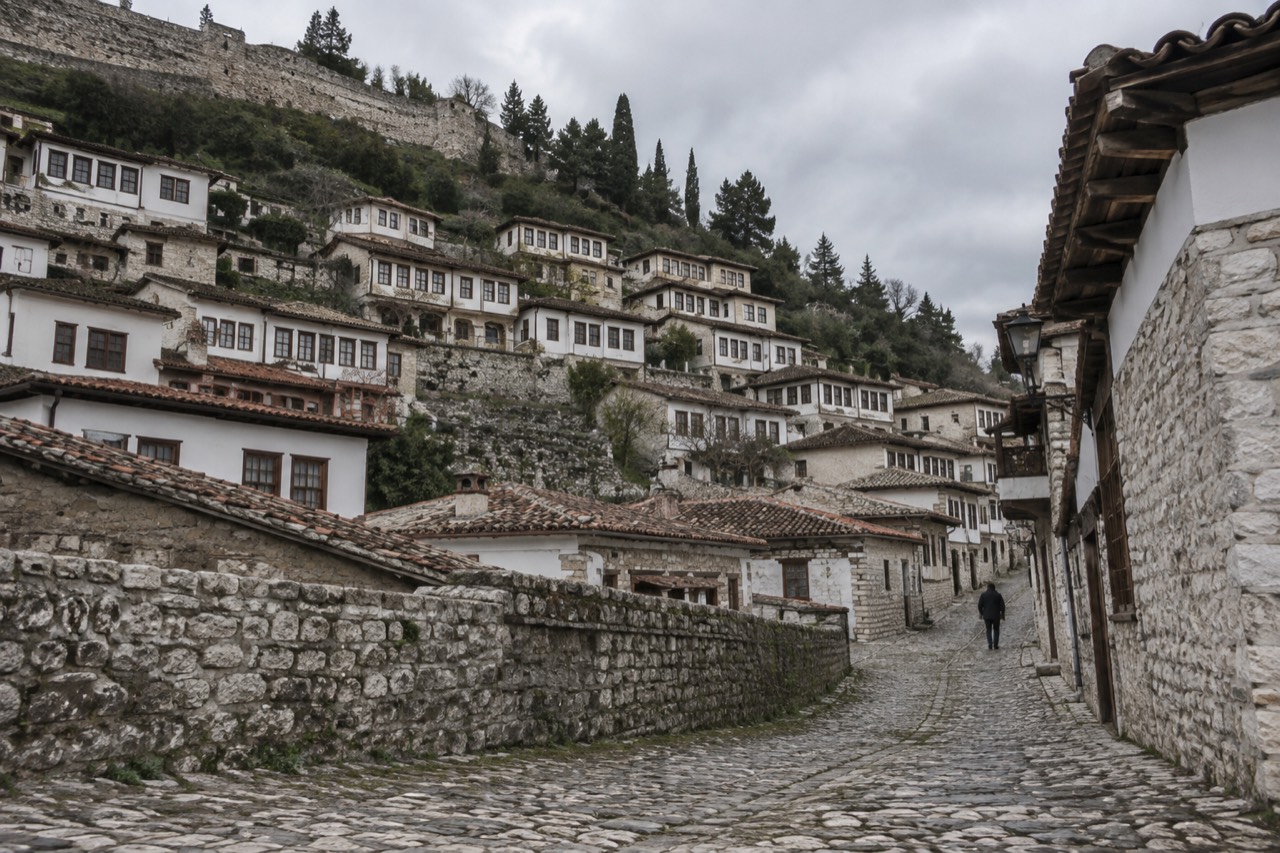
Berat, in central Albania, is a UNESCO World Heritage Ottoman-era hill town on the Osum River, and it doubles as a walking base: castle ramps, riverbank paths, canyon rims and a 2,416-metre sacred mountain all sit within a day's reach.
Short answer
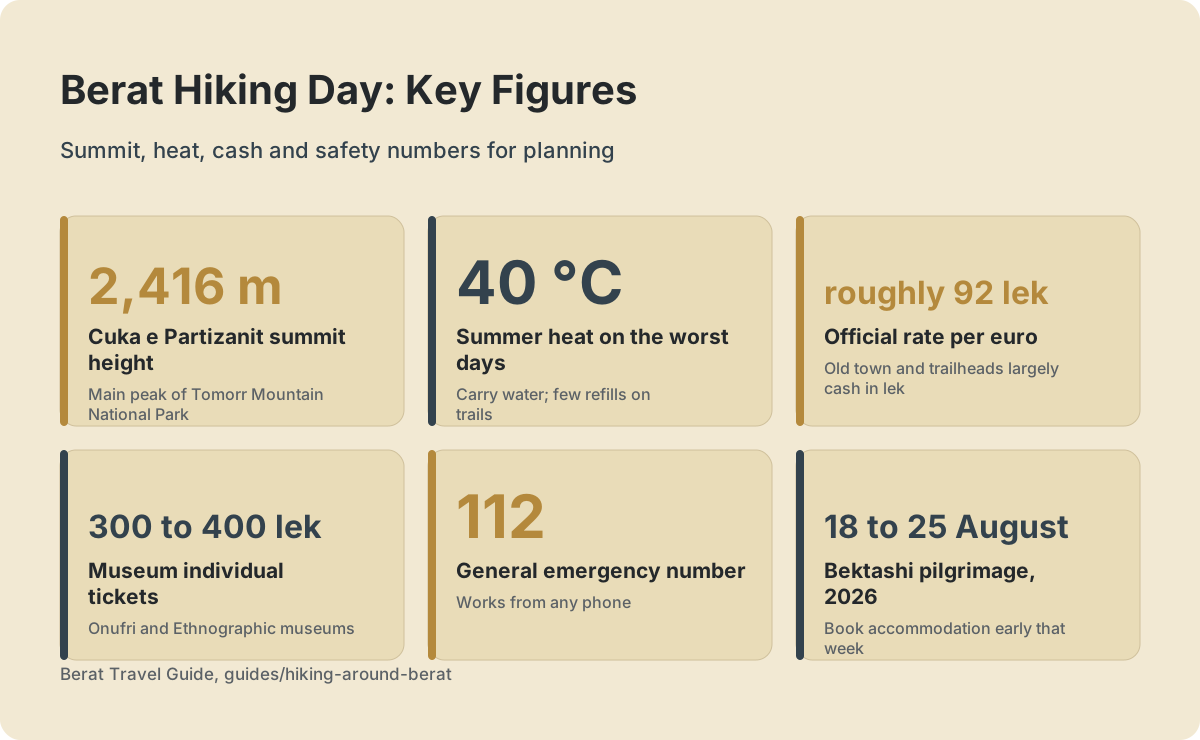
Berat's best hiking ranges from the castle quarter's stone ramps above the Osum River to the Osumi Canyon rim viewpoints near Çorovodë, the short forest trail to Bogovë waterfall, and full-day routes on Mount Tomorr, whose Çuka e Partizanit peak stands 2,416 m high. Spring and autumn suit most walkers; summer heat can top 40 °C. Bring lek for museums, water for every route.
Berat, in central Albania, is a UNESCO World Heritage Ottoman-era hill town on the Osum River, and its landscape rewards walkers more than most visitors expect. The town itself is a network of stone lanes climbing to a lived-in castle quarter, while the wider county holds the Osumi Canyon, the Bogovë waterfall inside Tomorr Mountain National Park, and the peak of Tomorr itself at 2,416 m. This guide covers what you can walk straight from your guesthouse, what needs a bus or a tour, and what each season does to the trails. No technical climbing skills are required for anything described here, only sensible shoes and enough water.
Where Can You Hike Straight From Berat's Old Town?
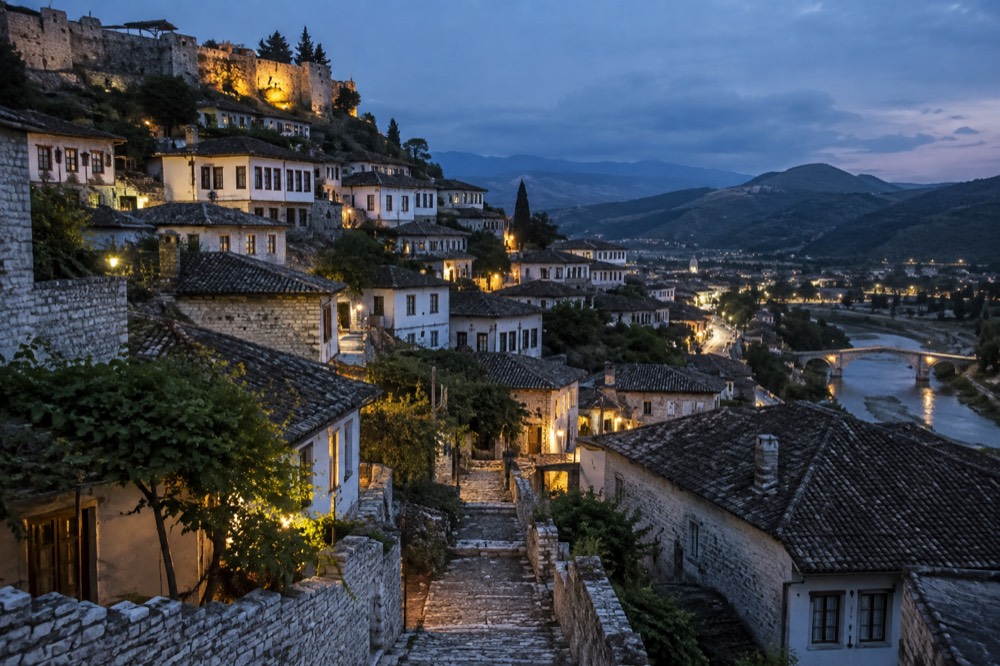
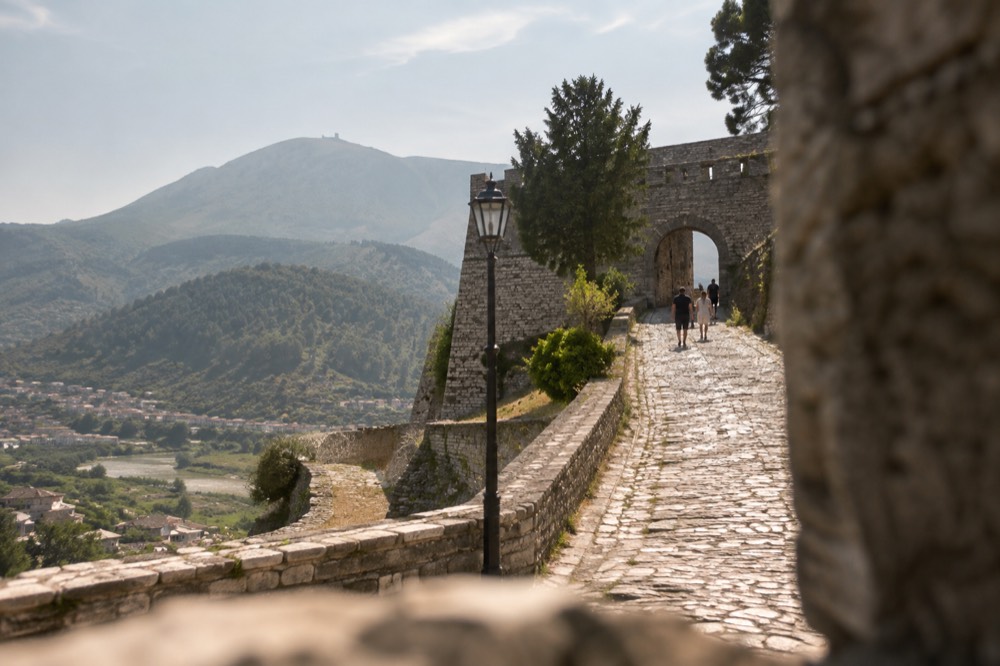
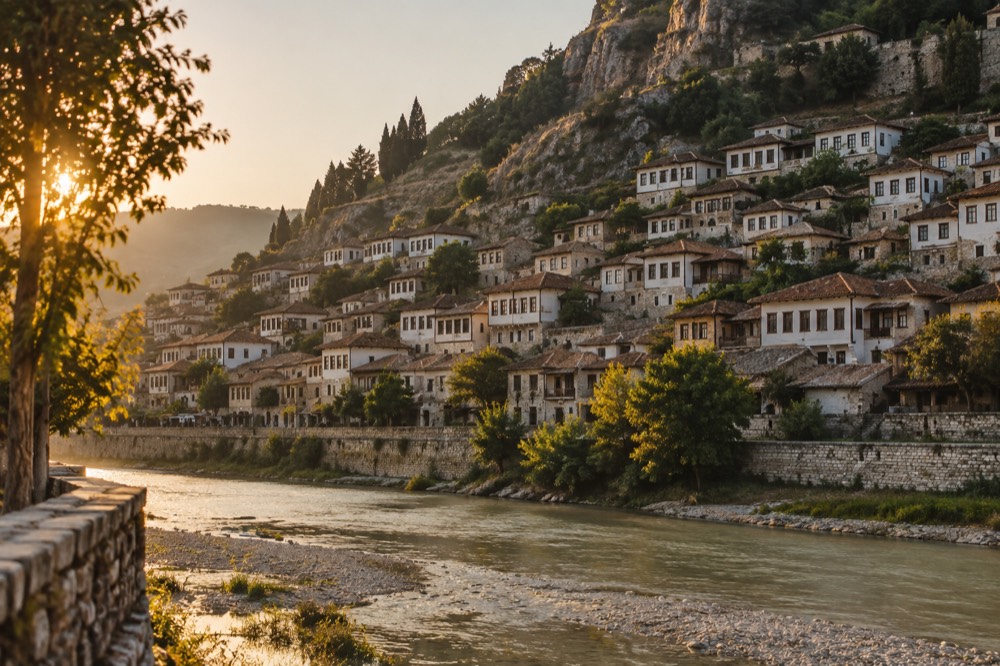
The two walks you can do without any transport are the climb to Berat Castle through the Kala quarter and the crossing of the Gorica Bridge into Gorica, whose lanes rise on the opposite bank of the Osum; both take in Berat's UNESCO-listed Ottoman streetscapes, and the castle's walls still carry 24 defensive towers. The ramp up to the castle is the classic first walk. It is steep, cobbled and partly restored, and the repair of the cobbled access road was reported in April 2026, so expect short stretches of work surface rather than a polished path. Inside the walls the quarter is still lived in: guesthouses operate there, and a centuries-old building next to the Onufri Museum is being converted into an 8-room family guesthouse, so the lanes carry residents, luggage carts and wedding processions, not just tourists.
Roughly 42 churches once stood inside the castle; about eight are preserved today, and the Red Mosque ruins sit among the earliest Islamic buildings in the fortress. That density means the walk doubles as a heritage circuit: you are not hiking to a viewpoint, you are walking through an inhabited monument. The trade-off is practical rather than scenic. Car access into the castle quarter is being restricted, so plan to park below and walk up. There may be a small fee at the gate in daytime; bring lek, since the old town is largely cash territory.
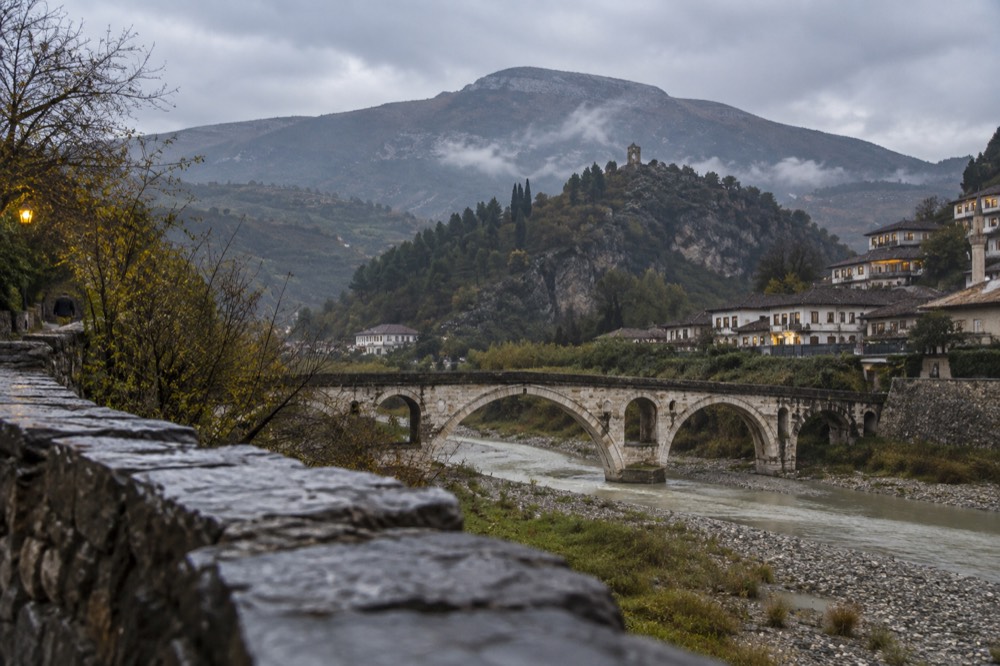
Across the river, Gorica gives you the mirror-image walk. Cross the historic Gorica Bridge, wander the restored lanes of the Gorica quarter, and climb toward the Gorica castle trail, one of the completed urban-rehabilitation projects listed in Albania's January 2026 UNESCO state-of-conservation report. From the far bank the whole of Mangalem's stacked windows face you, the view most photographers come for. A loop of castle, bridge and both riverbanks makes an easy half-day on foot, and it can be stretched with a detour along the Osum riverbank promenade, where a new 290-metre EU-funded panoramic bridge now diverts through-traffic away from the historic centre.
If you want the walk narrated rather than self-guided, the city has expert-led options. A premium expert-guided walk of the old town covers the lanes with a guide in about two hours, and a guided walk with food and wine tasting folds tastings into the route. GuruWalk also runs several free, tip-based walking tours of Berat with local gurus, a low-commitment way to get oriented on your first morning.
| Walkable site in Berat | What you see | Verified figure |
|---|---|---|
| Berat Castle walls | Lived-in fortress quarter above the Osum | 24 defensive towers |
| Churches inside the Kala | Ruined and preserved churches among houses | about 42 once stood, about 8 preserved |
| Gorica Bridge and quarter | Ottoman lanes facing Mangalem | 1 historic bridge, completed restoration works |
| Osum riverbank | Promenade and new panoramic bridge | 290 m EU-funded bridge |
Which Day Hikes From Berat Are Worth The Journey?
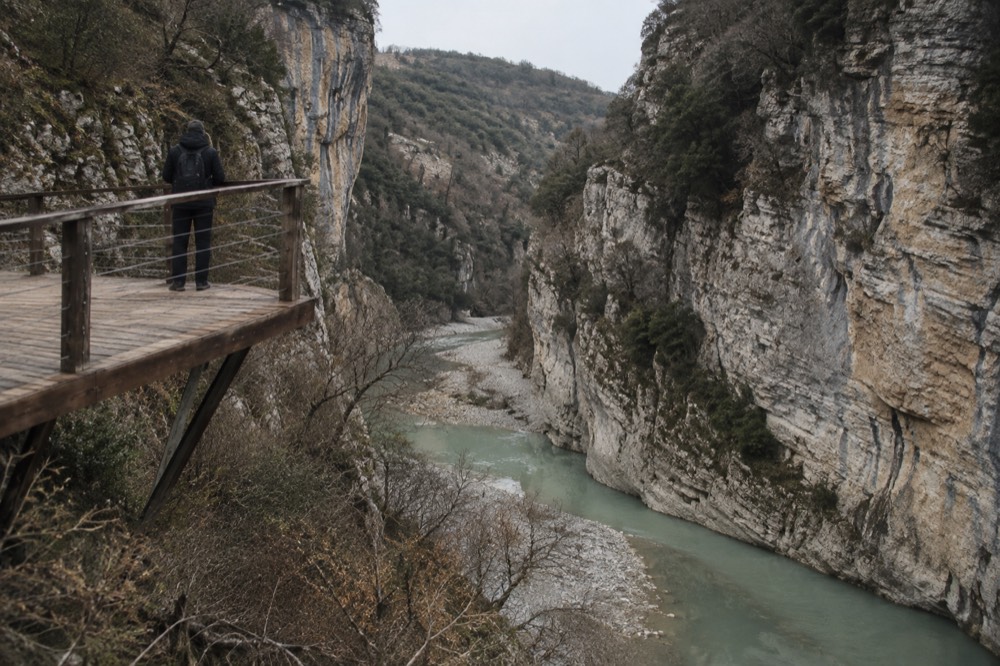
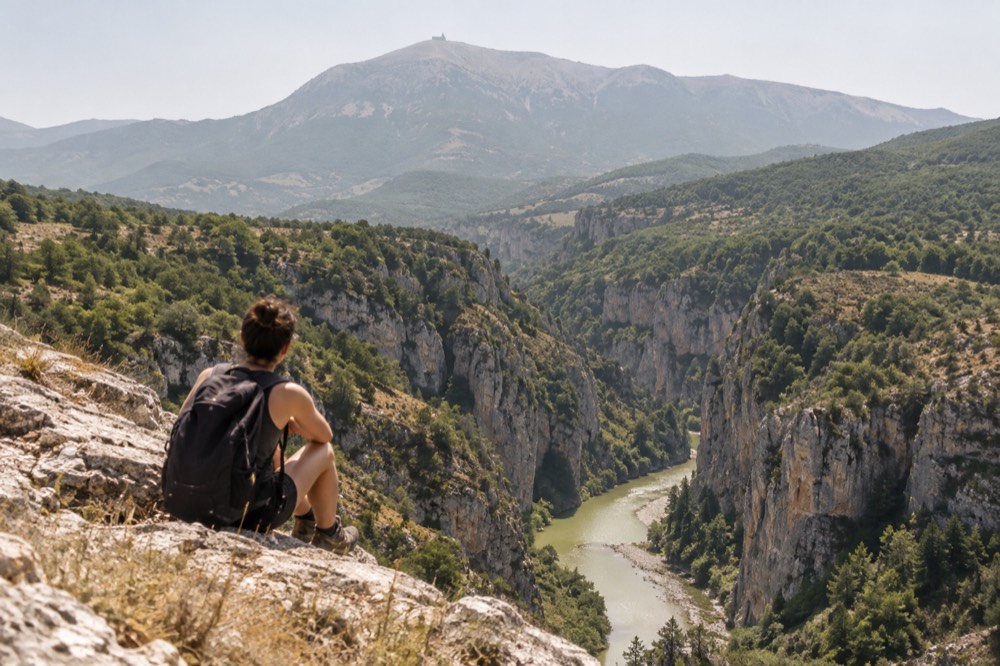
The two hikes that justify leaving town are the rim paths above the Osumi Canyon near Çorovodë, which are free to view with no entrance fee, and the short forest trail from Bogovë village to its waterfall inside Tomorr Mountain National Park; the canyon drive runs on fully paved roads, and the waterfall trail is an easy out-and-back through trees. The Osumi Canyon is protected as a Natural Monument, and its rim viewpoints, including Vrima e Nuses (the Bride's Hole) and the old Italian bridge, are repeatedly described by operators and hikers as short paths off the main road rather than full-day treks. Standing on the rim, you look down at a river gorge that rafting operators run in spring and summer. For hikers the appeal is vertical: pale walls, quiet, and vantage points that cost nothing.
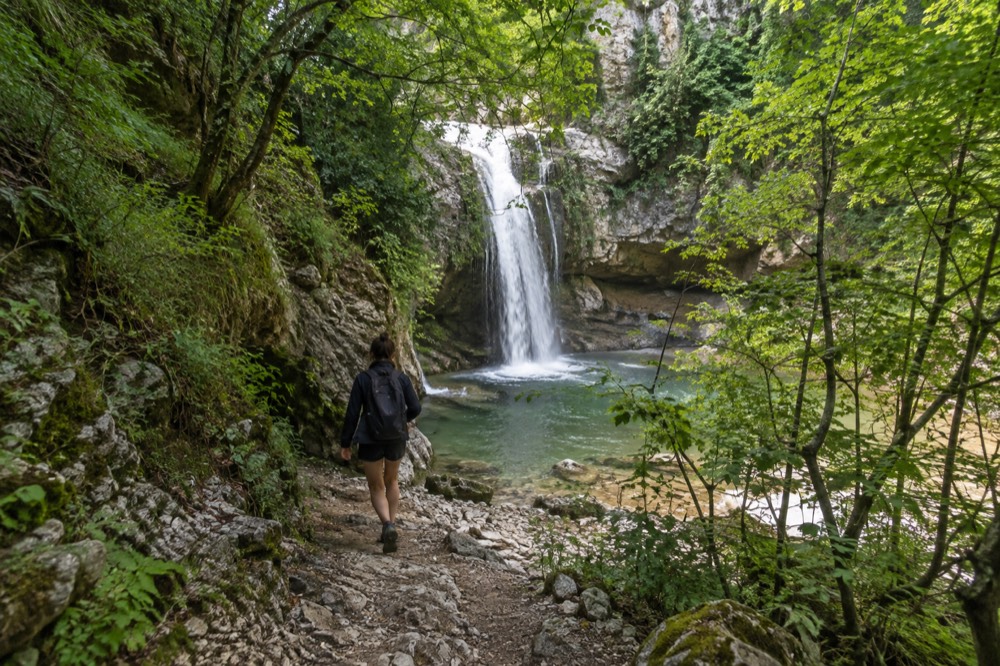
Bogovë is the softer option. From the village a dirt road narrows into a forest trail that ends at the waterfall and its pool, a short walk that families manage comfortably; the site sits inside Tomorr Mountain National Park, so the walk pairs well with a longer day in the mountains. Bring swimwear in summer, though the pool is cold even then. Both destinations sit in the Skrapar area south of Berat, so a single day can combine a canyon rim stop with the waterfall, or with a meal in Çorovodë.
Doing this independently needs a car or a bus toward Çorovodë, and a season check: spring melt makes the canyon dramatic, while late-summer water is calmer and lower. If independent logistics feel heavy, guided options remove the driving question entirely. The Osumi Canyon seasonal rafting and tubing adventure runs the river itself, and a canyon and Bogove waterfall tour lets you choose the classic canyon visit or tubing, both with a guide and gear.
For walkers who prefer water under their boots to beside them, the Osumi canyoning adventure at Bigazi waterfall is the more committed day, and a guided waterfall hike with wine tasting ends a Bogovë-area walk at a winery instead of a bus stop. There is also a genuine two-in-one from the capital: the Berat UNESCO and Belshi Lake day tour pairs the heritage town with a lake stop, a sensible pick if your hiking base is Tirana rather than Berat, and its details and price sit on the operator's live listing.
The three day tours above cover the two main shapes of a Berat day out: the heritage-and-lake circuit, a canyon river trip, and a castle-and-Mangalem tour. Each carries its own current price and review figures on its listing, and each includes transport from the coast or the capital, which is often the deciding factor for hikers without a car.
Is Hiking Mount Tomorr Realistic For Visitors?
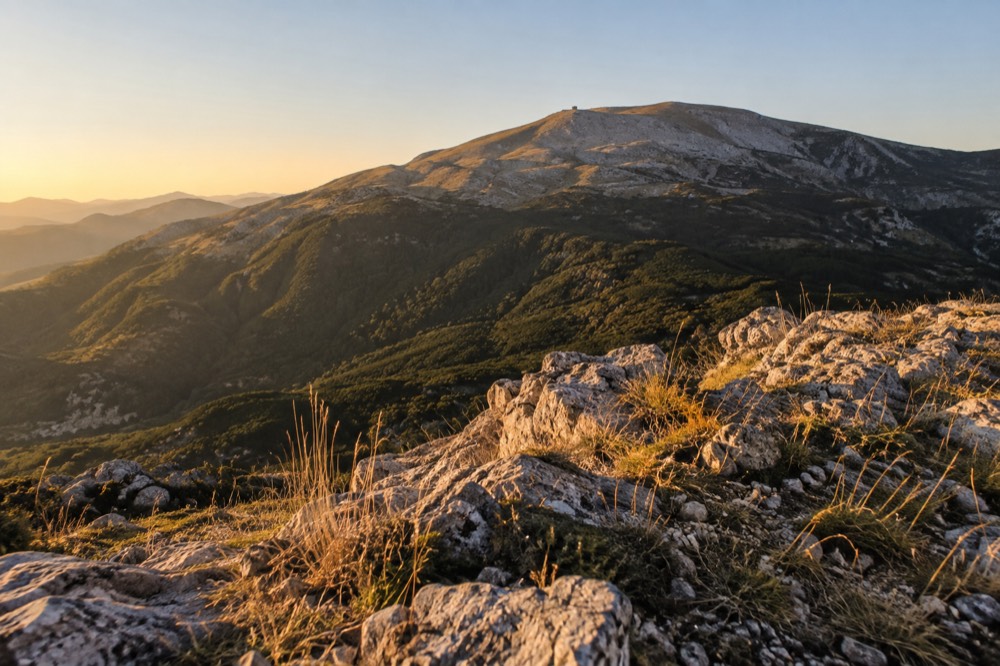
Yes, though most visitors meet Tomorr on a guided day trip rather than a lone ascent: the mountain's main peak, Çuka e Partizanit, stands 2,416 m, the massif lies inside Tomorr Mountain National Park, and the Berat-Ballaban road project was reported in September 2026 as nearing completion with asphalt, signage and barriers, which shortens access from the town. Tomorr is not just a hike; it is Albania's sacred mountain. The Bektashi pilgrimage to the tomb of Abaz Ali runs annually in August, with the 2026 edition from 18 to 25 August and police traffic restrictions around the Kulmak Tekke. Hiking in that week means sharing the mountain with a vast flow of pilgrims; outside it, the same trails are quiet.
The natural history is real too: the national park habitat supports brown bear, wolf and birds of prey, and a February 2026 forest fire burned pine forest in the park before two arrests were made, a reminder that dry months bring fire risk to the higher forests. Treat Tomorr as a full-day objective. Leave early, carry layers, and do not rely on water sources along the route. If a self-organized ascent feels like too much exposure to logistics, a Tomorr Mountain and Dardhe lakes day trip covers the mountain and its lakes with a guide, and a Mount Tomorr and Sotira waterfall route with Explore Berat's guided hike reaches a waterfall most independent visitors miss. For a deeper read on the region, see our free things to do in Berat guide for walking sights that cost nothing.
A guided Tomorr day costs more than a bus ticket, and the price is on the tour's listing, but it removes the two hard parts of this hike: the access road and the route-finding above the tree line. For hikers who want to earn the summit under their own steam, study the approach from the Berat side, check conditions locally, and build a spare day into the itinerary in case weather closes the high ground.
What Should You Pack For A Hiking Day Around Berat?
Pack for heat and cash: Berat's summers are hot and dry, with temperatures that can top 40 °C on the worst days, the old town and trailheads are largely cash-only in lek at roughly 92 lek to the euro, museum entries run 300 to 400 lek, and the castle's cobbled ramps demand shoes with grip rather than fashion. Water is the non-negotiable. Summer 2026 produced the year's hottest reported day in late July with the highest values recorded in Berat, and canyon and mountain routes have few reliable refill points, so carry more than feels reasonable. In the shoulder seasons a light shell jacket covers mountain showers, and in winter the wetter weather makes the stone lanes slick, so the same grip advice applies doubled.
Money matters more on Albanian trails than in most of Europe. The lek is the currency, the euro is not legal tender, and while some tourist-facing businesses accept it informally, change usually comes back in lek at a worse rate. Foreign-card ATM withdrawals commonly carry fees of several hundred lek, and one 2026 police operation in Berat targeted unlicensed currency exchange, so change money at bank branches rather than street kiosks. Our money and currency in Albania guide covers this in full, and the Berat costs guide breaks down what a day in town realistically spends.
| Item | Why it matters in Berat | Verified figure |
|---|---|---|
| Water | Hot, dry summers; few refills on trails | summer heat can top 40 °C |
| Cash in lek | Old town and rural stops largely cash | roughly 92 lek per euro, official rate |
| Grip-soled shoes | Cobbled castle ramps, wet winter lanes | 24-tower fortress on cobbled paths |
| Museum entry money | Onufri and Ethnographic museums | 400 ALL and 300 ALL individual tickets |
| Sun protection | Exposed canyon rims and mountain slopes | July typically the driest month |
Emergency numbers are worth saving before any hike: 112 is the general emergency number and works from any phone, while 127 reaches an ambulance and 128 the fire service; the police short number 129 is also widely cited. UK Foreign Office advice notes no travel warning against any part of Albania, and the US State Department maintains a Level 2 "exercise increased caution" rating for the country focused on crime rather than terrain, a level our is Berat safe guide examines in detail. For trail-specific risks, the honest list is short: heat, slick stone, loose gravel on canyon paths, stray dogs in rural areas, and summer wildfire smoke. None of these argue against hiking; all argue against setting out at noon in July without water.
When Is The Best Season For Hiking Around Berat?
Spring and autumn are the best hiking seasons: spring snowmelt makes the Osumi Canyon at its most dramatic and rafting operators run the river roughly from March to early June, tubing takes over in the calmer summer-to-autumn water, and Berat's winters are wetter while its summers are hot and dry, so May, June, September and October give walkers the best balance of trail conditions and heat. The seasonal split on the water is the clearest pattern in the region: high spring flows suit rafting, and lower summer and autumn flows suit the swim-and-float trips that many hikers add on canyon days. On foot the same logic applies in reverse. Spring brings green hills and fuller waterfalls; autumn brings soft light across Mangalem's windows and cooler canyon walls; midsummer belongs to early starts; midwinter belongs to the town's lanes and museums rather than long routes.
Two calendar items are worth planning around. The Bektashi pilgrimage fills Mount Tomorr in the second half of August, with the 2026 pilgrimage running 18 to 25 August, so book accommodation early that week or pick different dates. And the Wine and Stories of Berat festival, dated 2 to 4 October for 2026, turns an autumn hiking weekend into a food-and-wine weekend if you time it right, a pairing our Berat weather guide and where to eat in Berat guide help you build. October's museum hours sit between the site's published summer and winter schedules, so check the Berat Museum Center page before assuming an evening visit.
The seasonal rafting and tubing trip above is the easiest way to match your canyon day to the water: the same operator shifts from rafts in spring to tubes as levels drop, so the trip adapts rather than cancelling. Figures for price, duration and the 4.8 rating from 538 reviews sit on its listing. Whatever the season, check the operator's calendar for the dates you actually hold, since river levels, not opening hours, decide what runs.
| Season | Trail conditions around Berat | Water and activities | Watch-outs |
|---|---|---|---|
| Spring | Green hills, snowmelt on high ground | Rafting roughly March to early June | Wet cobbles, cool passes |
| Summer | Hot and dry, best walked early | Tubing, swimming, canyon floats | Heat that can top 40 °C, fire risk |
| Autumn | Soft light, cooler trails | Late tubing, wine festival 2 to 4 October | Shorter daylight |
| Winter | Wetter, quiet lanes | Museums at winter hours 9:00 to 16:00 Tue-Sat | Slick stone, reduced services |
How Do You Combine Hiking With Sightseeing Over Two Days?
A two-day plan that works: day one, walk the castle ramps and Kala lanes in the morning, visit the Onufri Museum at 400 lek inside the castle, cross to Gorica after lunch and finish on the riverbank; day two, head south for the Osumi Canyon rim and Bogovë waterfall, or trade the canyon for Mount Tomorr if you want the big day in the hills. The first day needs no vehicle at all, which makes it a safe anchor whatever the buses do. Museums open 9:00 to 18:00 daily in the summer season and shift to winter hours from 1 November, with the Onufri individual ticket at 400 ALL, the audio guide at 500 ALL, and the Ethnographic Museum at 300 ALL after its May 2026 reopening following a three-year restoration that returned roughly 1,300 objects to display.
The Ethnographic Museum deserves the mention hikers rarely get: it reopened on 30 May 2026 after more than three years of restoration work, and it now shows around 1,300 objects in a rebuilt interior. Free entry days exist, on 18 April, 18 May, 21 May and 29 September for all visitors, with 28 and 29 November free for Albanian citizens only, and online ticketing through e-Albania has covered Berat's museums since November 2025, so a rainy afternoon has an easy fallback. Fold these stops into the walking day rather than treating them as a separate excursion, and the old town does the rest.
| Stop on the walking day | Entry figure | Hours (summer, 1 May to 30 Sep) | Hours (winter, 1 Nov to 30 Apr) |
|---|---|---|---|
| Onufri Iconographic Museum | 400 ALL individual | 9:00 to 18:00 daily | Tue-Sat 9:00 to 16:00, Sun 10:00 to 15:00 |
| Ethnographic Museum | 300 ALL individual | 9:00 to 18:00 daily | Tue-Sat 9:00 to 16:00, Sun 10:00 to 15:00 |
| Onufri audio guide | 500 ALL | same as museum | same as museum |
| Castle grounds | possibly a small daytime gate fee | open through the day | open through the day |
Day two is where you choose your shape of mountain. A canyon-and-waterfall day keeps elevation modest and finishes with a swim; a Tomorr day commits the whole schedule to the national park. Both work as guided trips from Berat, and if your base is the coast or the capital rather than the town, the Berat UNESCO city, castle and Mangalem tour covers the walking day while a Belshi Lake trip adds the water view. For trip framing, the Berat map guide helps you sequence the town, while our getting from Berat to the coast guide handles onward travel once the hiking is done. As this Berat Travel Guide site lays out across its sections, the smartest itineraries treat the town as the base and the mountains as the day trips, not the other way round.
Should You Hike Independently Or Book A Guided Tour In Berat?
Hike independently if your goals are the castle, Gorica, the riverbank and a self-driven canyon rim, since those are free or near-free and need only shoes and lek; book a guided tour if you want Mount Tomorr, the canyon river, or any day that starts from Tirana, Durres or Golem, because access roads, gear and water-level judgments are exactly what a good guide removes from your day. The economics are asymmetric. The town walks cost nothing beyond museum tickets at 300 to 400 ALL, so guiding them is a comfort choice, not a necessity. The canyon and mountain days involve real logistics: river gear, seasonal water levels, road conditions that change with the Berat-Ballaban works, and high-country route-finding. That is where paid guiding earns its fee.
A middle path exists and suits many first visitors: take a Berat day tour with a lake stop on your first day to see the shape of the town with a guide, then walk the castle and Gorica alone on day two with the map already in your head. The tour's price, its 4.8 rating from 987 reviews and its nine-hour duration all render on the live listing, and hotel pickup from Tirana, Durres or Golem removes the bus question entirely, which matters if you read our Tirana to Berat transport guide and decided the terminal sounded like work.
If you do go independent, three habits keep the day safe: carry lek, tell someone your route on mountain days, and treat posted times and conditions as things to confirm locally, since roads, water and even museum hours shift with the season. Berat's hiking is not wilderness travel; it is a settled, historic landscape with wild corners an hour away, and the walkers who enjoy it most are the ones who respect both halves of that sentence.
The waterfall-and-wine hike above is the gentlest guided day in this guide's roster: a guided walk to a waterfall followed by wine tasting, a satisfying shape for a group whose enthusiasm for trails varies. Its small review pool and price sit on the listing. For everything else, the trio below covers the three most common booked days from Berat and the coast, with live prices and review figures on each listing.
Common Questions About Hiking Around Berat
Can you hike around Berat without a car?
Yes for the town itself: the castle ramps, the Kala lanes, the Gorica Bridge and both riverbanks are all walkable from any old-town guesthouse. For the Osumi Canyon, Bogovë or Mount Tomorr you need a bus toward Çorovodë, a rental car or a guided tour with transport included; note that since April 2026 vehicle entry into the castle quarter itself is restricted, so even drivers park below and walk up.
How hard is the walk up to Berat Castle?
It is a short but steep cobbled climb through an inhabited quarter, manageable for most visitors with reasonable shoes. Repairs to the cobbled access road began in April 2026, so expect some work surfaces. The reward is a lived-in fortress with 24 defensive towers, roughly eight preserved churches of the 42 that once stood there, and views over the Osum River to Gorica.
Is the Osumi Canyon free to visit?
Viewing the canyon from the rim, including the Vrima e Nuses and old Italian bridge viewpoints, carries no entrance fee, according to operator information. Paid activities such as rafting and tubing are separate, and their prices render on the tour listings rather than being quoted here.
Can you climb Mount Tomorr?
Yes, with preparation. The main peak, Çuka e Partizanit, stands 2,416 m inside Tomorr Mountain National Park, and the Berat-Ballaban access road was nearing completion in September 2026. Avoid the August pilgrimage week of 18 to 25 August unless you specifically want that experience, start early, carry layers, and consider a guided day trip if you do not know the mountain.
When is the Bogovë waterfall walk best?
Spring gives the fullest water after snowmelt; summer suits a cold swim at the pool and pairs well with canyon tubing. The trail is a short, easy out-and-back from Bogovë village through forest inside Tomorr Mountain National Park, suitable for families and casual walkers.
What should hikers know about money in Berat?
Carry Albanian lek: the official rate is roughly 92 lek to the euro, the old town and trailhead stops are largely cash, and ATM fees on foreign cards commonly run several hundred lek. Change money at bank branches, not street kiosks. Museum entries run 300 to 400 ALL, and the canyon rim itself is free.
Berat rewards walkers who treat the town and the mountains as one continuous landscape: cobbles in the morning, canyon rims by afternoon, and a glass of local Puls wine at the end of the day, made from a white grape that grows almost nowhere else.