Berat Unesco Heritage: A Visitor's Guide To Albania's City Of A Thousand Windows
Berat shares a World Heritage inscription with Gjirokastra and protects one of the best preserved Ottoman townscapes in the Balkans. Here is what the listing actually covers and how to see it.
Short answer
Berat forms one half of the UNESCO property Historic Centres of Berat and Gjirokastra, added to the list in 2008 under criteria (iii) and (iv). The listed core spans 58.9 hectares shared with Gjirokastra, including the castle, Mangalem and Gorica. Museum tickets run 300 to 400 lek, and the whole old town is walkable on foot.
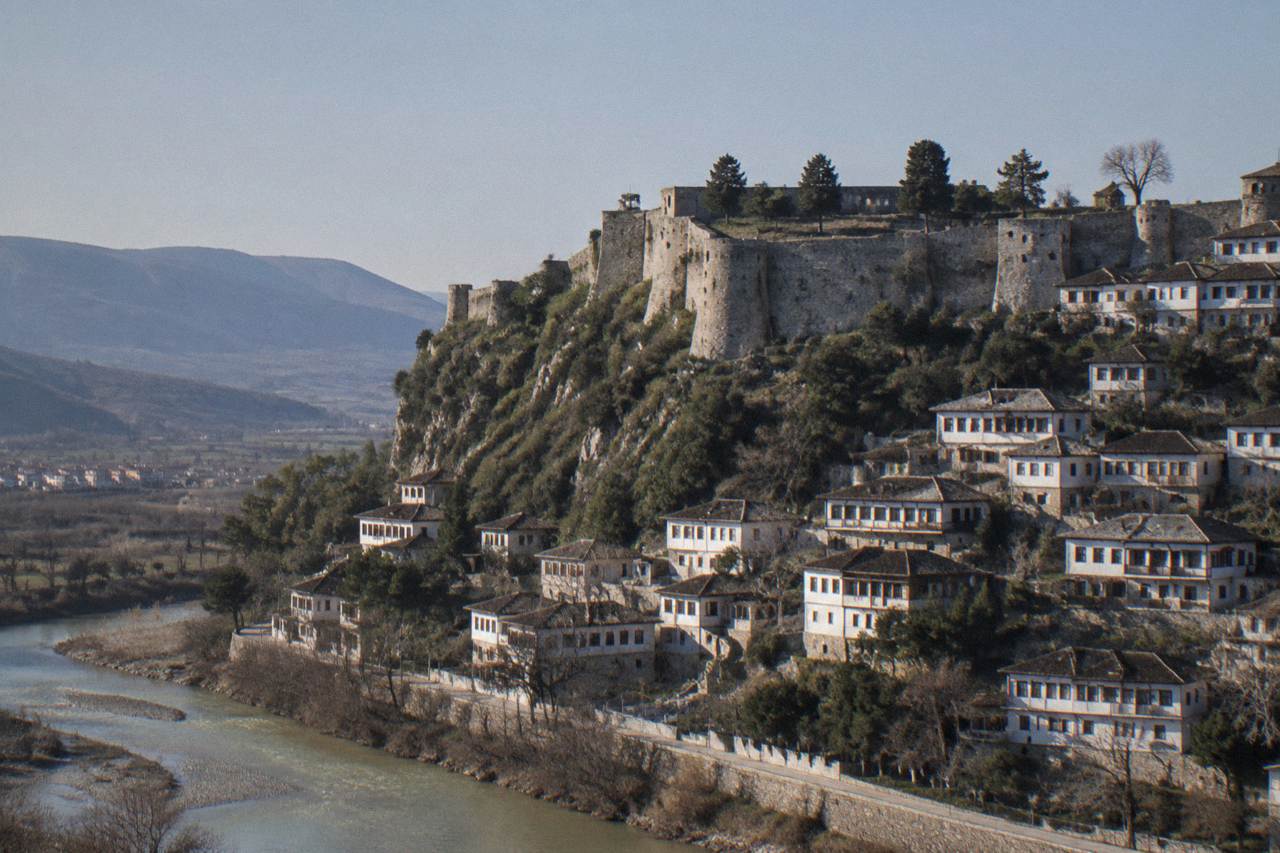
Berat, in central Albania, earned its place on the UNESCO World Heritage List in 2008, when the committee extended Gjirokastra's 2005 inscription to include this Ottoman hill town on the Osum River. UNESCO's own description calls it "a rare example of a well-preserved Ottoman town", and the phrase is not marketing. The castle still has residents, the mosques still hold services, and the rows of white houses with their ranks of windows still stare across the river at each other exactly as they did when the listing was drawn.
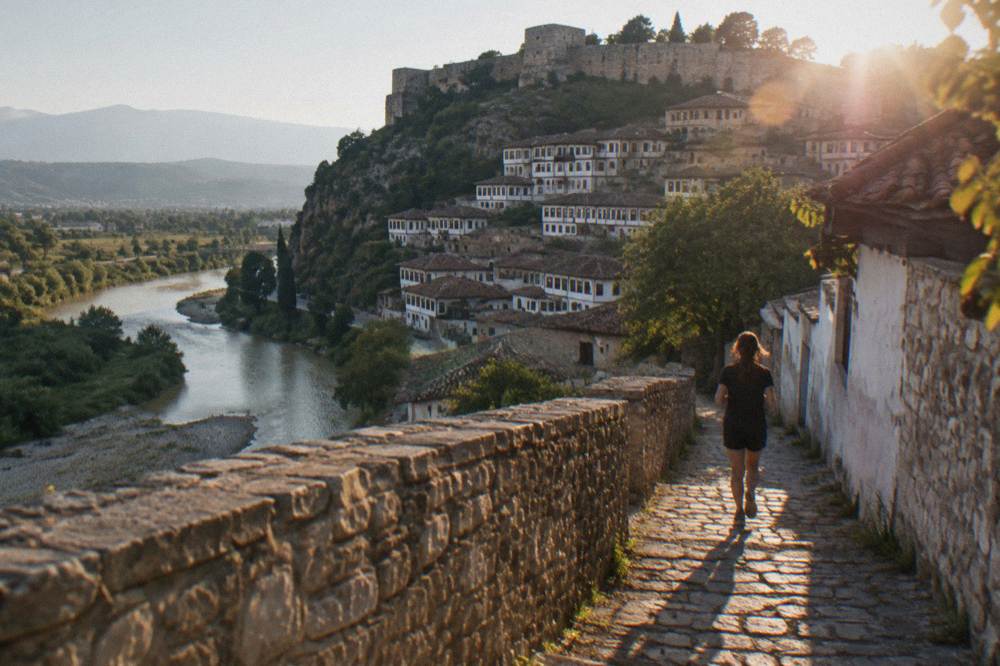
This guide covers what the Berat Unesco inscription actually protects, which monuments sit inside the boundary, how the museums and castle work in practice, and how to build a visit around them. For a wider look at the town, the Berat Travel Guide homepage collects every article on the site, from transport to food to walking routes.
What Is The Berat Unesco Listing?
The listed property is named "Historic Centres of Berat and Gjirokastra", reference number 569, and Berat was added to it in 2008 as an extension of Gjirokastra's 2005 inscription. The listing rests on criteria (iii) and (iv), and the combined property covers 58.9 hectares with a buffer zone of 136.2 hectares across both towns. UNESCO credits Berat with bearing "the imprint of a more independent life style, linked to its handicraft and merchant functions".
That last sentence matters more than it first appears. Gjirokastra was listed as an Ottoman stone town of fortified mansions; Berat was listed as its mercantile counterpart, a town of workshops, traders and river crossings. The distinction shows in the architecture. Mangalem's houses are tall, narrow and window-heavy because Ottoman tax regimes taxed street frontage, not floors, and because merchant families wanted light for their workrooms. The listing protects a functioning urban organism rather than a set of individual monuments.
The inscription also has a live governance side that most visitors never hear about. At its 2026 session the World Heritage Committee urged the suspension of two projects, the so-called Shkëmbi Road up to the castle and works on the Osum riverbank, until Heritage Impact Assessments are completed. A State of Conservation report from January 2026 describes a "Smart Parking" scheme at the castle as being under implementation. Neither item affects a day's sightseeing, but both explain why you may see barriers and works around the hill: the town and the committee are still negotiating how modern traffic fits a medieval street plan.
What Does The World Heritage Area Cover In Berat?
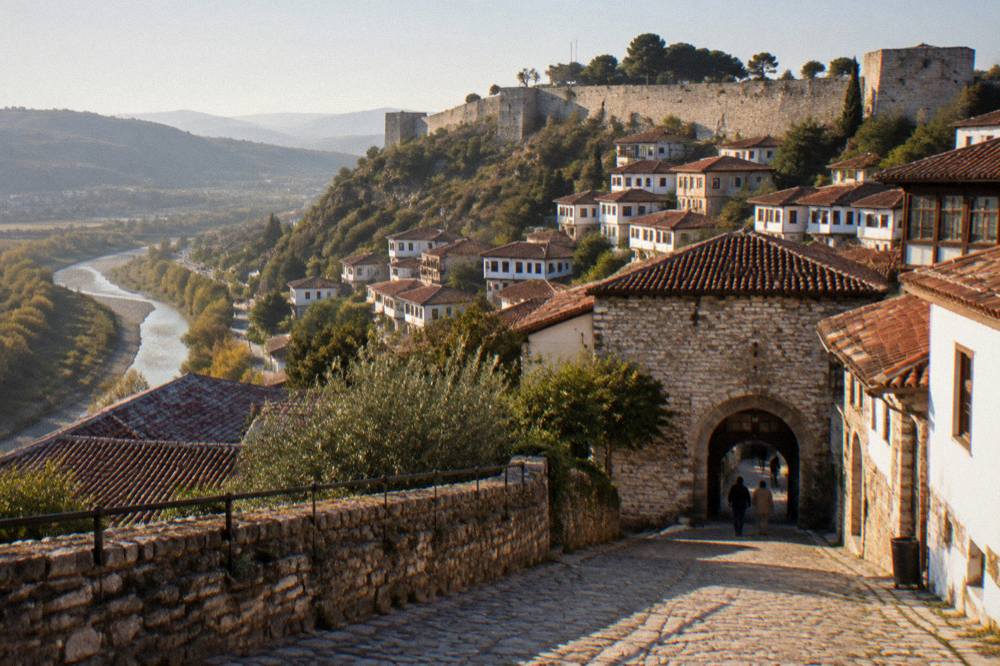
The listed area in Berat is essentially the old town: the Kala castle quarter on the hill, the Mangalem quarter stacked below it on the west bank, and the Gorica quarter across the Osum River, together with the historic bridge that links them. Inside the castle walls stand 24 defensive towers, and about 42 churches once stood within the fortress, of which roughly eight survive, alongside the Red Mosque, among the earliest Islamic buildings in the fortress. The river itself forms the spine of the whole composition.
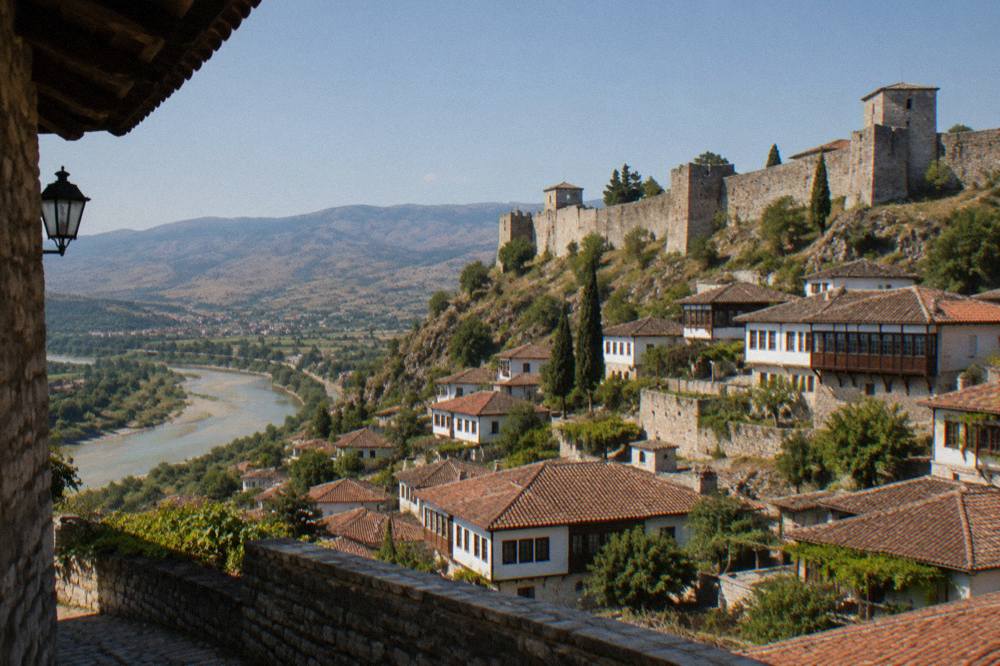
Walking the boundary takes an afternoon at a slow pace. You start on the boulangerie-scented lanes of Mangalem, climb the kalldrëm cobblestone road to the castle gate, loop the walls past the towers, then descend to the Gorica Bridge and cross into the quieter, garden-filled lanes on the east bank. Gorica is where the crowds thin out and where most of the guesthouses with terraces sit; the views back across to Mangalem are the postcard shots, which is why our Berat photography spots guide devotes so much space to this bank.
| Site | Where It Sits | What the Listing Protects |
|---|---|---|
| Berat Castle (Kala) | Hilltop above Mangalem | Fortress walls with 24 defensive towers and a still inhabited quarter |
| Red Mosque | Inside the castle | One of the earliest Islamic buildings in the fortress |
| Onufri Museum | Inside the castle, in the Church of St Mary | Icons and church heritage of the region |
| Mangalem | West bank below the castle | Ottoman merchant houses stacked up the hillside |
| Gorica | East bank of the Osum | Ottoman houses and lanes facing the castle |
| Gorica Bridge | Crossing the Osum River | The historic link between the two quarters |
A 2026 State Party report to UNESCO records several restoration projects in these quarters as completed, including the Mangalem quarter, the Gorica quarter's historic urban landscape, a Gorica castle trail and parking works near the Old Gorica Bridge. A new 290-metre EU-funded panoramic bridge over the Osum, completed to divert through traffic away from the historic centre, also feeds into the same story. Berat is being actively managed, not frozen.
For many visitors the practical question is how much of this can be absorbed in a single day, especially when arriving from the coast or the capital. If you want the interpretation handled for you, a small set of tours focuses exactly on this listed core.
The trio above spans the main ways people experience the heritage: an escorted old town day trip, a mountain and waterfall excursion into the Tomorr country behind the town, and a family home cooking class in Çorovodë that turns the food traditions of the region into the activity itself.
How Do You Visit Berat Castle And The Onufri Museum?
The castle quarter is free to wander in principle, though there may be a small gate fee in daytime, so bring lek. The Onufri Museum inside it charges 400 lek for an individual ticket with a 500 lek audio guide, open 9:00 to 18:00 daily from 1 May to 30 September. Car access into the castle quarter is being restricted; plan to park below and walk up.
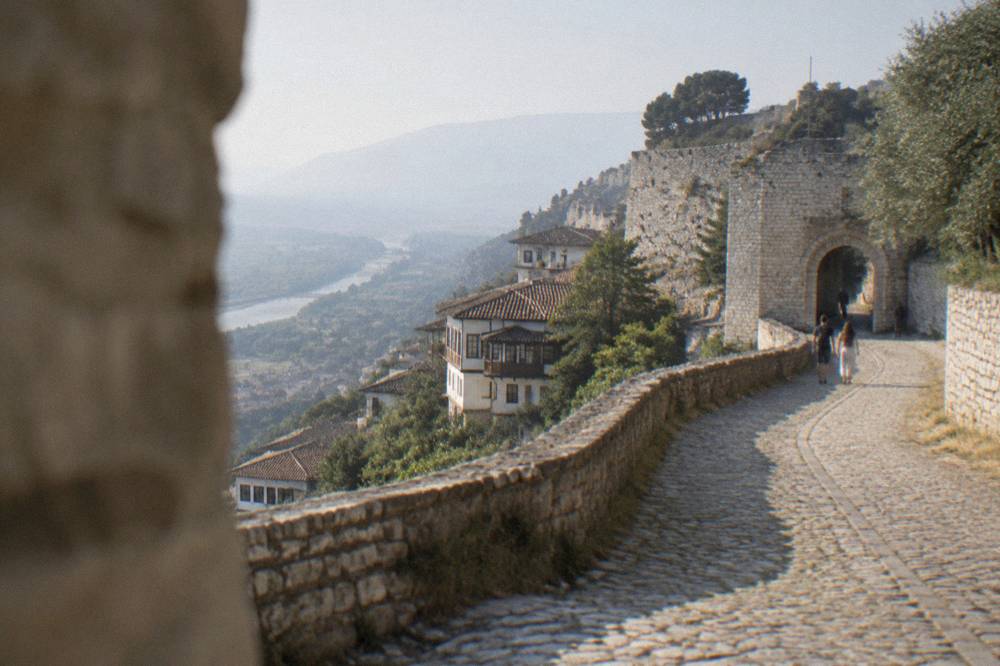
The walk up takes patience more than fitness, and the reward is a inhabited fortress: small houses, church ruins, the Red Mosque's surviving minaret base and long views down the Osum valley. Onufri, the celebrated painter whose name the museum carries, sits inside the Church of St Mary. The museum holds his icons and those of his son, and it is the single most concentrated dose of the region's religious art anywhere in town.
Two practical notes are worth fixing before you go. First, October is a gap in the published schedule: the official museum site lists hours for the May-September and November-April periods but not for October, so confirm locally if you are visiting that month. Second, the castle road itself, the kalldrëm, has had repair works start in April 2026 after damage to the earlier surface, another reason to wear proper shoes rather than sandals.
| Museum | 1 May to 30 September | 1 November to 30 April |
|---|---|---|
| Onufri Iconographic Museum | Daily 9:00 to 18:00 | Tuesday to Saturday 9:00 to 16:00, Sunday 10:00 to 15:00 |
| Ethnographic Museum | Daily 9:00 to 18:00 | Tuesday to Saturday 9:00 to 16:00, Sunday 10:00 to 15:00 |
Both museums open on national holidays, and both fall under the Berat Museum Center, whose site publishes the official hours and ticket prices. Since November 2025 tickets for cultural heritage sites, including Onufri, can also be bought online through the national e-Albania portal, which saves queueing in the busy months. For orientation before the climb, the Berat map guide marks the gate, the museums and the viewpoints.
What Can You See In Berat's Museums Beyond The Castle?
The Ethnographic Museum, which reopened on 30 May 2026 after a three-year restoration, charges 300 lek and displays around 1,300 objects across a traditional Berat house interior, while the Solomon Museum, founded in 2018 by Professor Simon Vrusho, is the only museum in Albania dedicated entirely to the Jewish community and rounds out the town's museum set alongside the icon gallery and the castle's open-air heritage.
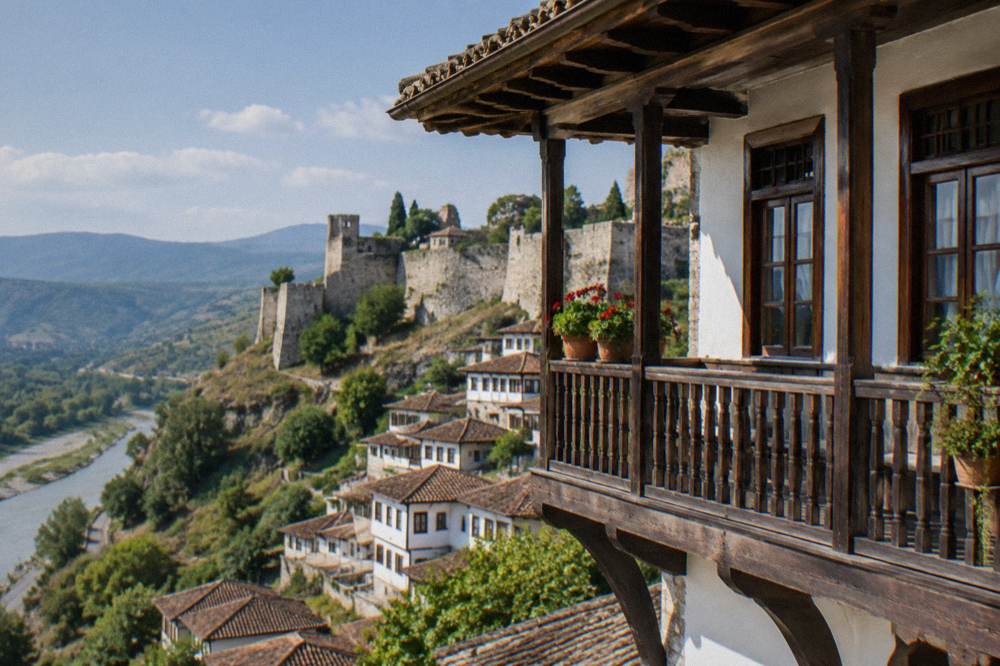
The Ethnographic Museum is the sleeper hit of a Berat visit. Before its closure it was already the best place to understand how an Ottoman merchant household actually worked, with its guest room, its kitchen and its loom; the restoration has refreshed the building, lighting and displays, and visitor numbers since reopening have been strong, mostly foreign. The Onufri Museum, meanwhile, has had a record year: the Berat Museum Center welcomed over 61,000 visitors in the first months of 2026, and Onufri alone counted 58,912 between January and July, up 16 percent on the same stretch of 2025.
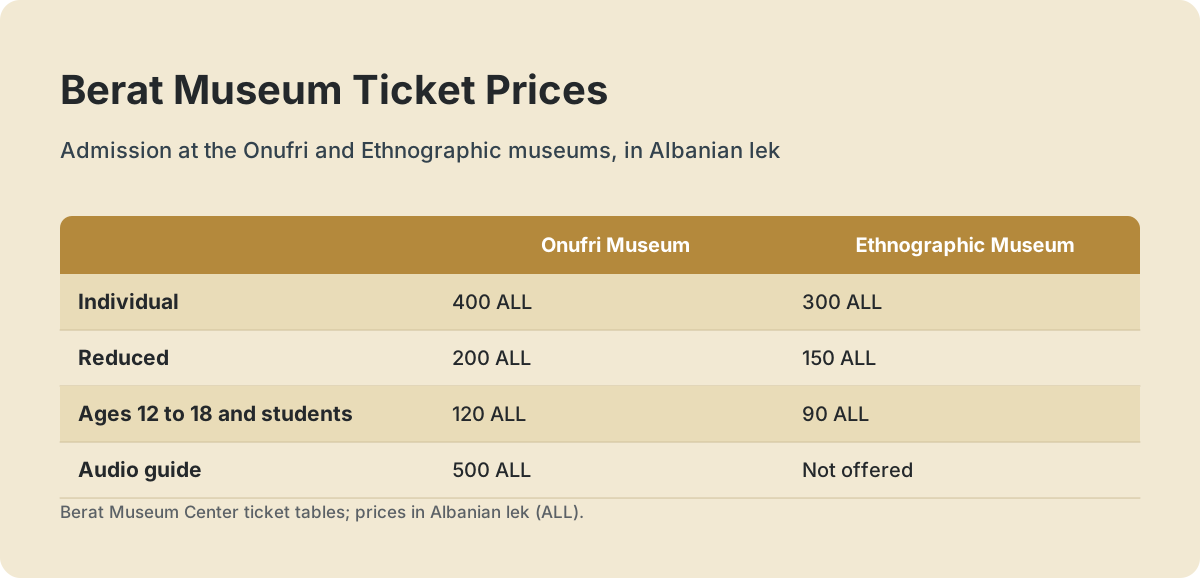
Ticket prices are modest and structured the same way at both municipal museums, with discounts for ages 12 to 18 and students, and free entry for children under 12. Documentation is required for discounts, so carry a student card or ID if it applies to you.
| Ticket Type | Onufri Museum | Ethnographic Museum |
|---|---|---|
| Individual | 400 ALL | 300 ALL |
| Reduced | 200 ALL | 150 ALL |
| Ages 12 to 18 and students | 120 ALL | 90 ALL |
| Children under 12 | Free | Free |
| Audio guide | 500 ALL | Not offered |
There are also free admission days each year, when both museums drop the ticket entirely for everyone, and two November dates reserved for Albanian citizens. If your dates line up with any of these, the saving is real.
| Free Admission Dates | Who Qualifies |
|---|---|
| 18 April, 18 May, 21 May, 29 September | All visitors |
| 28 and 29 November | Albanian citizens only |
A guided walk ties the museums to the streets outside, and several operators offer exactly that. A premium expert-guided walking tour of the old town is the format most visitors end up preferring for a first day, since it connects the castle, the quarters and the museum facades into one narrative.
How Do You Get To Berat From Tirana Or The Coast?
There is no direct airport bus to Berat: you take the airport bus into Tirana, then a bus or furgon from Tirana's South-North terminal, with departures running from early morning to late afternoon, a journey of about 2.5 hours and a fare paid in cash, a few hundred lek. No passenger train reaches Berat, and the country's rail reconstruction is aimed at the Tirana, Durrës and airport corridor rather than the interior.
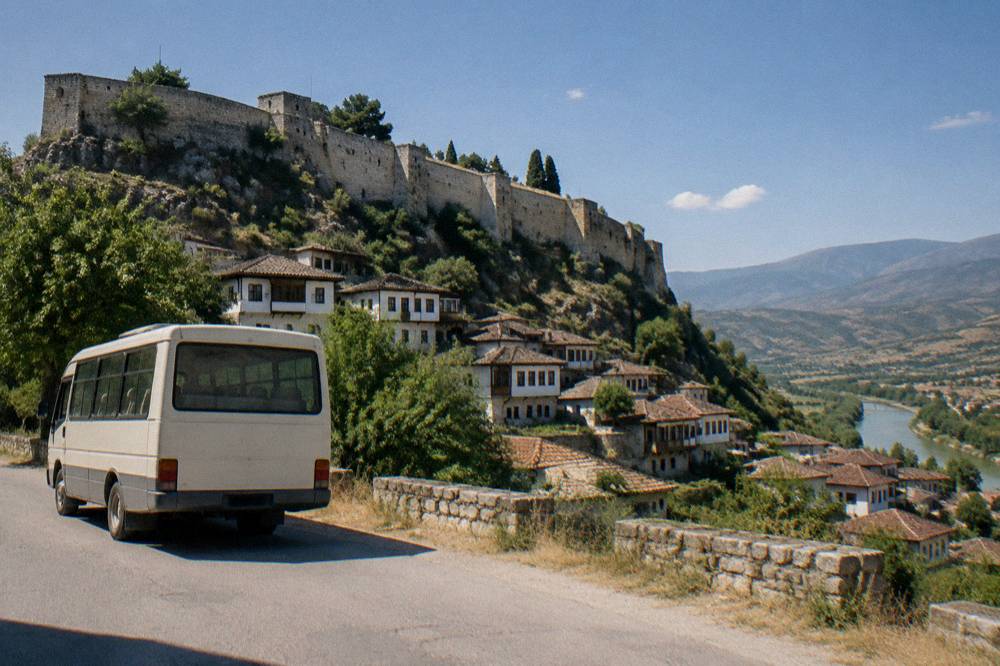
The bus terminal in Berat sits on the SH72 on the outskirts of town, about a 15 to 20 minute walk or a short taxi ride from Mangalem and the old town, a detail our Berat bus station guide covers step by step. Coming from the airport, the Tirana airport to Berat route involves the same change in the capital; the full Tirana to Berat guide lists the operators and the terminal layout.
| Route | How It Works | What To Know |
|---|---|---|
| Tirana to Berat | Bus or furgon from the South-North terminal | Roughly hourly, about 2.5 hours, cash fare of a few hundred lek |
| Tirana airport to Berat | Airport bus to Tirana, then the Berat bus | No direct airport service |
| By train | Not available | No passenger line reaches Berat |
| Durres, Golem and the coast | Bus inland or an escorted day tour | Coast visitors can reach Berat as a day trip without changing towns |
That last row explains why so many coastal holidaymakers see Berat at all. If you are based near Durrës or Golem, the Durres and Golem heritage day tour handles the old town and Mangalem in a single escorted day, and you can Check availability on the operator's live listing before you commit. Visitors already in Tirana have a parallel option built around the same listed core, pairing the town with Belshi Lake.
Driving yourself is straightforward on the main roads, and our driving and parking in Berat guide covers where to leave the car, which matters given the castle access restrictions. If Berat is one stop on a longer route, the Berat to Gjirokastra connection and the wider getting from Berat to the coast and beyond article map the onward legs.
For travellers who prefer the whole listed old town delivered in one escorted day, with the castle climb and Mangalem already built into the schedule, the box below sets out the operator's own listing.
When Is The Best Time To Visit Berat?
Late spring and early autumn are the best windows: the summer months bring heat that can top 40 degrees Celsius in this valley, as it did in July 2026, while winters are wetter and the museums shorten their hours from November, so May, June, September and early October combine long opening hours with bearable walking weather and the October wine festival adds a reason of its own, running 2 to 4 October in 2026.
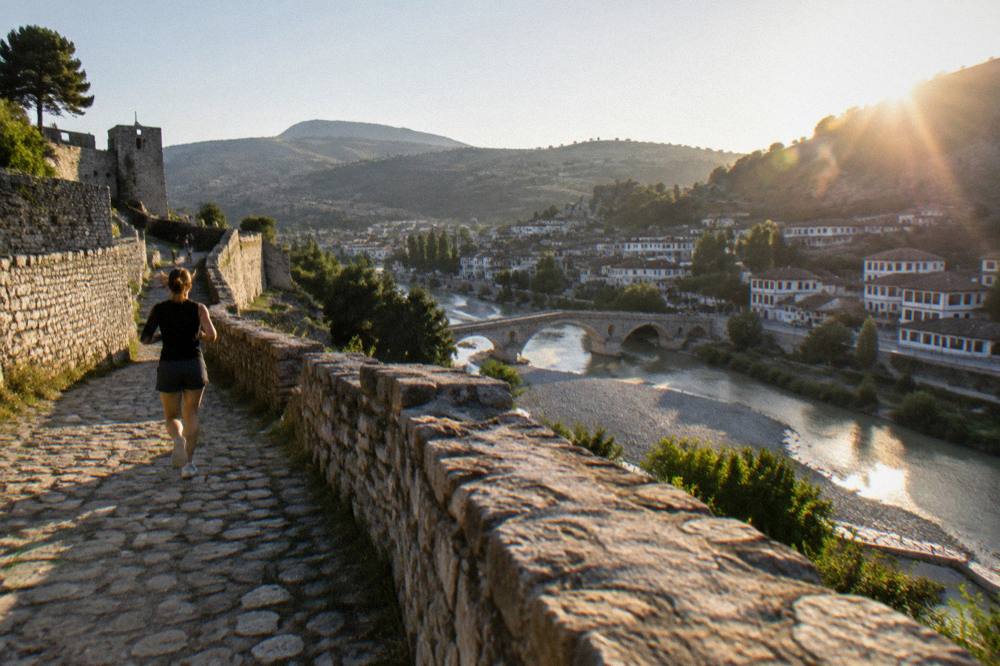
The town's climate is straightforwardly Mediterranean-continental: hot, dry summers and wetter winters, with rain concentrated in the colder months and July the driest stretch. The castle climb is exposed, there is almost no shade on the walls, and Mangalem's lanes bottle heat in the afternoon, so the practical summer pattern is to do the castle before eleven and the museums and Gorica after lunch. August adds one more factor to know about, though it sits well away from town: the Bektashi pilgrimage to Mount Tomorr, held in the second half of August, draws enormous crowds into the mountains behind Berat, with around 600,000 pilgrims expected in the 2026 edition and police traffic restrictions on the routes around Kulmak Tekke.
Wine is the other calendar anchor. The Wine and Stories of Berat festival, three days of tastings from Albanian and Kosovo wineries judged by oenologists from Austria and Italy, is the town's flagship event, and its culinary sideshows, cheese making, olive oil and fig tastings, make it a genuinely good weekend to be in the old town. The Berat region grows its own grapes too: Shesh i Zi and Shesh i Bardhë are the central Albanian workhorses, and Puls is a rare local white that Cobo Winery, among others, turns into a traditional method sparkling wine aged on its lees. A guided winery tour with transfers and tastings is the easiest way to taste the local pour without arranging your own driver.
For month by month planning, including what the shoulder seasons do to crowds and prices, the Berat weather guide carries the detail, and our piece on where to eat in Berat covers the restaurants that stay open through the quieter months.
What Should A Berat Unesco Itinerary Look Like?
A single full day covers the core: the castle walls and Onufri Museum in the morning, the Mangalem lanes and the Gorica Bridge after lunch, and Gorica's terraces at golden hour, which is exactly the shape most day trippers follow. Two days let you add the Ethnographic Museum properly, a canyon or winery half day, and the unhurried evening pace that the old town rewards, and anything longer opens up Mount Tomorr, Bogovë waterfall and the Osumi Canyon to the southeast.
The one-day version is deliberately front loaded. Climb before the heat, buy the Onufri ticket inside the walls, walk the full circuit of the fortifications while your legs are still fresh, then descend into Mangalem for lunch. The afternoon belongs to the river: cross the Gorica Bridge, wander Gorica's lanes as far as the church, then pick a terrace facing back west for the light on the windows. That is the itinerary, and almost no variation on it is needed. For a fuller breakdown by day count, our two days in Berat article extends the pattern.
The second-day options split by temperament. Hikers head for the trails behind town, covered in the hiking around Berat guide, from short forest walks to Bogovë waterfall to fuller Tomorr ascents. Culture-first visitors spend the morning in the Ethnographic Museum and the afternoon hunting the smaller churches and the remaining mosques of the old town, several of which have their own dedicated pages on this site. Budget conscious travellers will find that a remarkable amount of the listed town costs nothing at all to walk through, a point our free things to do in Berat article pushes hard.
Where Should You Stay Inside The Old Town?
Mangalem is the postcard quarter and the busiest with visitors, Gorica across the river is quieter and has the best views back at the hillside, and the Kala castle quarter itself offers the most unusual sleep in Albania, guesthouses inside a living fortress, though parking there is now heavily restricted and a centuries old building next to the Onufri Museum is being converted into a new eight room family guesthouse as part of a 2025 investment scheme.
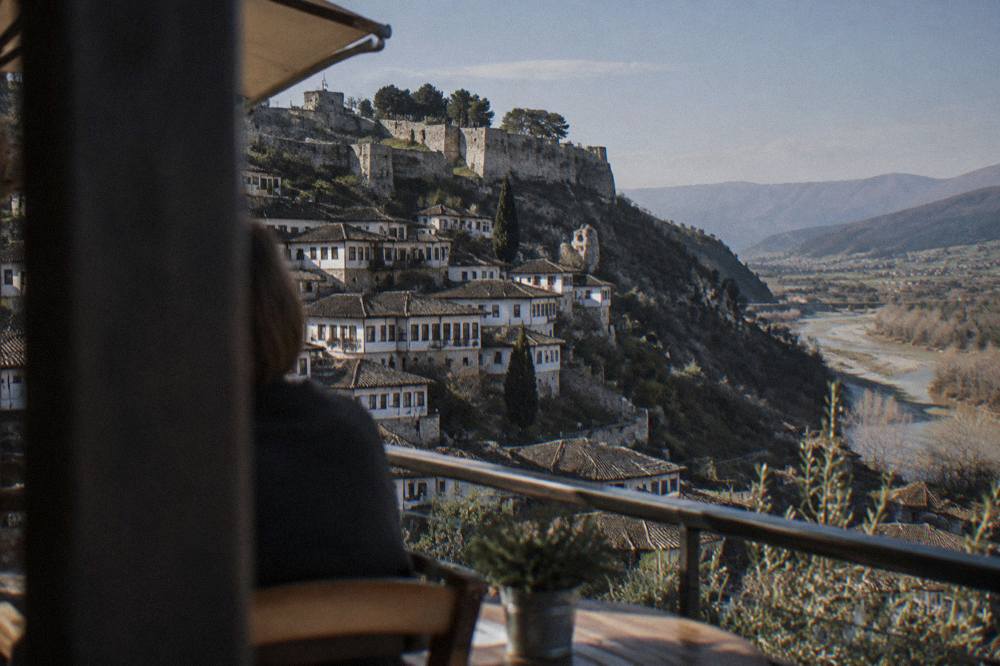
The choice is mostly a trade between atmosphere and convenience. A Mangalem base puts you under the castle and inside the restaurants; a Gorica base gives you the panorama and the calm; a Kala base means cobblestones under your window and a fortress as your street, but you will be walking your bags up the hill. Roughly ten guesthouses and small hotels operate inside the castle walls by recent traveller accounts, so the option is real, not theoretical. The full rundown of neighbourhoods, named properties and what each is good for sits in our where to stay in Berat guide, and the Berat hostels page covers the cheap end of the market.
One planning note cuts across all the quarters: the old town's lanes were not built for cars, and the access restrictions now in force around the castle make a car more of a liability than an asset once you have arrived. Park once, walk everywhere, and treat the hill as part of the sightseeing.
How Much Does A Berat Unesco Trip Cost?
The heritage itself is cheap: both main museums together cost 700 lek, roughly the price of a mid range main course, a cheap restaurant meal runs to a few hundred lek, and a night in an old town guesthouse is typically in the range of $44 to $79, so a comfortable two day visit with museums, meals and a room can be put together for well under the cost of a single night in most of Western Europe, though Albanian prices have been edging upward with tourism.
The currency is the Albanian lek, not the euro, and you should plan on cash for the old town, where cards are still far from universal. The exchange rate has been sitting around 92 lek to the euro, and ATMs are available in town, though foreign card fees can be steep, a subject our money and currency in Albania guide covers in detail. Euro notes are accepted informally in some tourist businesses, but change usually comes back in lek and the rate is rarely in your favour.
| Item | Typical Figure |
|---|---|
| Onufri Museum individual ticket | 400 ALL |
| Ethnographic Museum individual ticket | 300 ALL |
| Cheap restaurant meal | Cheap by European standards; cash in lek |
| Old town guesthouse night | Roughly $44 to $79 |
Meal and room figures above are planning ranges drawn from 2026 reports and listings, so treat them as a sketch and confirm current prices when you book; the museum figures are the official published tariffs. Reported inflation in Albanian tourism-linked services ran above the general rate through 2025 and into 2026, driven heavily by accommodation and hospitality, though Berat remains among the better value heritage towns in the Balkans. For the full cost picture, including transport and food in depth, the Berat costs guide is the reference page.
Safety, for the avoidance of doubt, is a modest concern here: foreign travel advisories for Albania advise normal precautions rather than avoidance, and our is Berat safe article goes into the specifics. The most common nuisance in the old town is simply uneven stone underfoot after dark.
If you are weighing whether all of this justifies the journey, or comparing Berat with its twin inscription partner, the what is Berat famous for and which is better, Gjirokastra or Berat pieces tackle those questions head on. For the deeper background on how the town ended up with this skyline at all, the Berat history guide traces it from antiquity through the Ottoman centuries to the listing.
Whether you come for a single escorted day or a slow week of guesthouse terraces, the three options below cover the main ways travellers experience the Berat Unesco core, from the old town itself to the mountains and tables behind it.
Common Questions About Berat Unesco Heritage
Is Berat a Unesco World Heritage Site?
Yes. Berat is part of the World Heritage property "Historic Centres of Berat and Gjirokastra", list reference 569. UNESCO describes Berat as "a rare example of a well-preserved Ottoman town".
When did Berat become a Unesco site?
Berat joined the World Heritage List in 2008, when the committee extended the 2005 Gjirokastra inscription to add the city centre of Berat. The listing rests on criteria (iii) and (iv).
How big is the Berat Unesco area?
The property covers 58.9 hectares combined across Berat and Gjirokastra, with a buffer zone of 136.2 hectares. In Berat itself the listed area is the castle, Mangalem and Gorica with the historic bridge between them.
Do you have to pay to enter the Berat old town?
No. The streets and quarters are free to walk. The museums charge admission, 400 lek for Onufri and 300 lek for the Ethnographic Museum, and there may be a small fee at the castle gate in daytime, so carry lek.
Can you drive into Berat Castle?
Car access into the castle quarter is being restricted; plan to park below and walk up. Most visitors should park below and walk up.
How long do you need to see the Berat Unesco sights?
One full day covers the castle, Onufri Museum, both riverbank quarters and the bridge. Two days allow the Ethnographic Museum, a slower evening pace and a half day in the canyon or winery country behind the town.