Halveti Tekke Berat
The Halveti Tekke is one of the quietest stops in Berat's World Heritage old town, a Muslim Sufi lodge tucked into the Mangalem hillside. This guide covers what it is, how to reach it, and how to fold it into a day around the city of a thousand windows.
Short answer
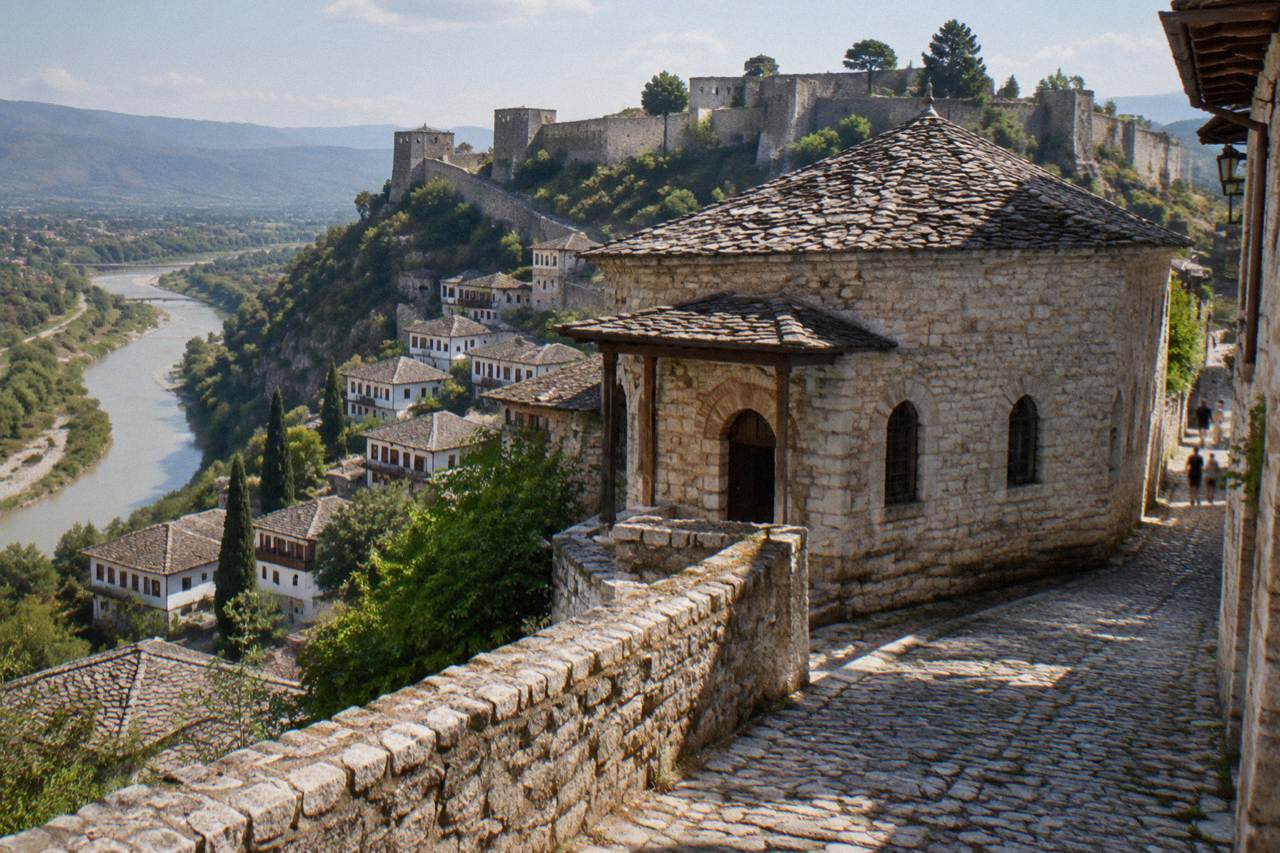
The Halveti Tekke is a historic Sufi dervish lodge in the Mangalem quarter of Berat, central Albania, part of the UNESCO-listed Historic Centres of Berat and Gjirokastra. It sits below Berat Castle among the whitewashed Ottoman houses. Allow twenty to thirty minutes, dress modestly, and combine it with the castle, the Onufri Museum at 400 ALL, and the Gorica Bridge.
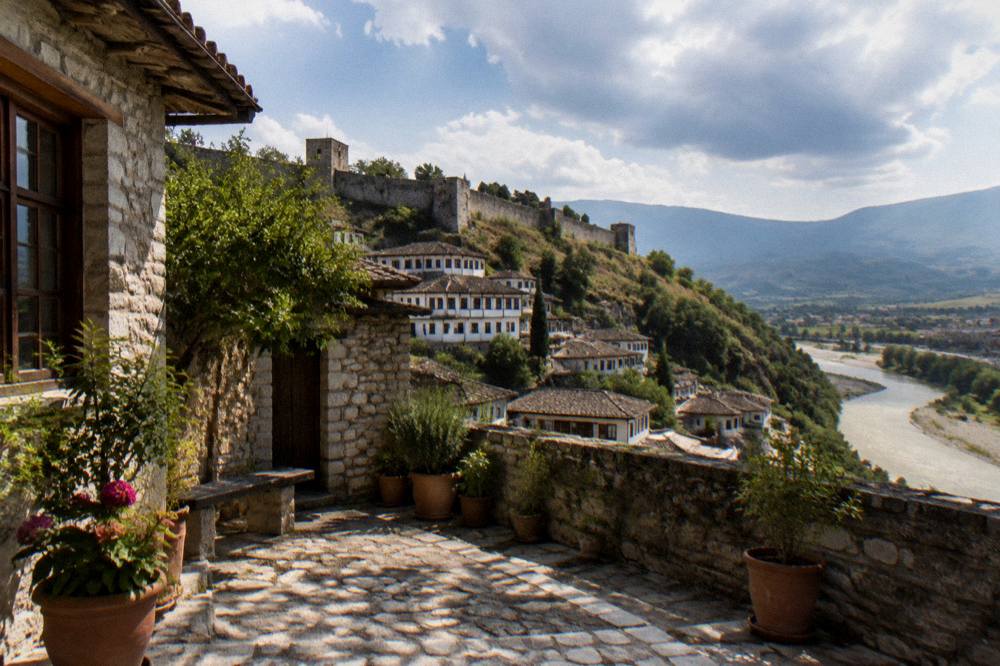
The Halveti Tekke stands in the Mangalem quarter of Berat, a UNESCO World Heritage Ottoman-era hill town on the Osum River in central Albania. It is a small building with an outsized story: a dervish lodge of the Halveti Sufi order, wedged into the steep lanes below Berat Castle, a few minutes' walk from the whitewashed rows that gave this town its nickname, the city of a thousand windows. Most visitors walk straight past it on the climb to the castle gates. Those who stop get one of the few quiet rooms in a town that has learned to live with its own fame.
What Is The Halveti Tekke In Berat?
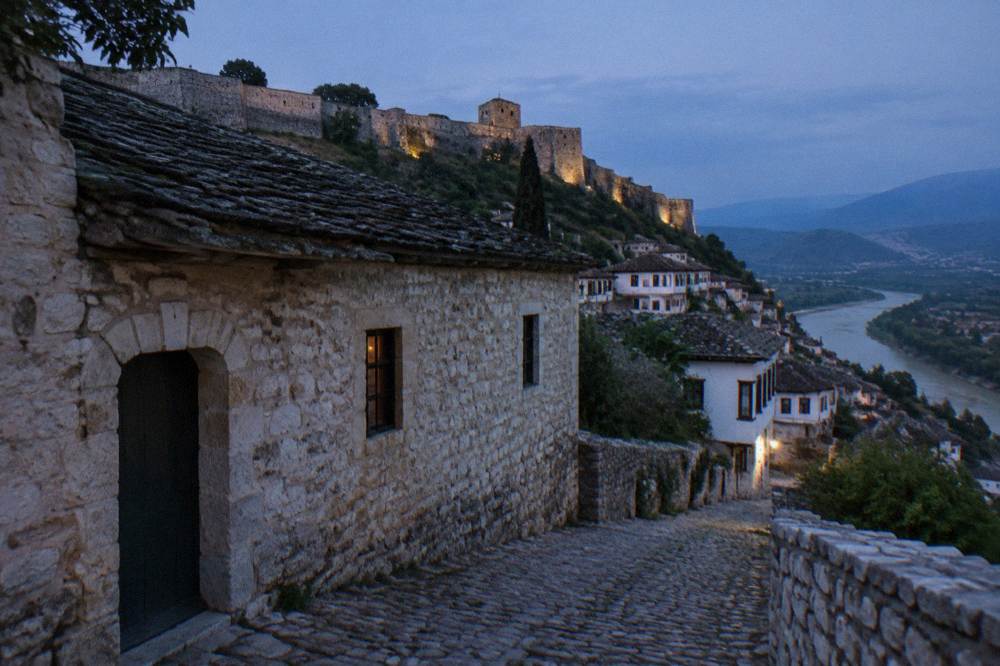
A tekke is a lodge for a Sufi Muslim order, and the Halveti Tekke in Berat is the historic home of the Halveti brotherhood in the Mangalem quarter, built during the Ottoman centuries and included today inside the UNESCO World Heritage property. Unlike a mosque, a tekke served as a meeting house, a school and a residence for dervishes, the mendicant followers of a Sufi path. The Halveti order was one of the major Sufi orders of the Ottoman world, and its lodges were once scattered across the Balkans. Berat's example survives inside the protected historic core, in the dense stack of houses that tumbles down the hill between the castle above and the river below.
Berat's World Heritage status is specific and worth understanding before you visit any single building. UNESCO inscribed the property as the Historic Centres of Berat and Gjirokastra: Gjirokastra went on the list in 2005, and Berat was added in 2008 as an extension. The citation describes Berat as a rare example of a well-preserved Ottoman town, a place where the ordinary housing of craftsmen and merchants, not just palaces and forts, was judged to be of outstanding value. The Halveti Tekke belongs to that everyday fabric. It is part of why the whole slope of Mangalem is protected, not just the castle at the top.
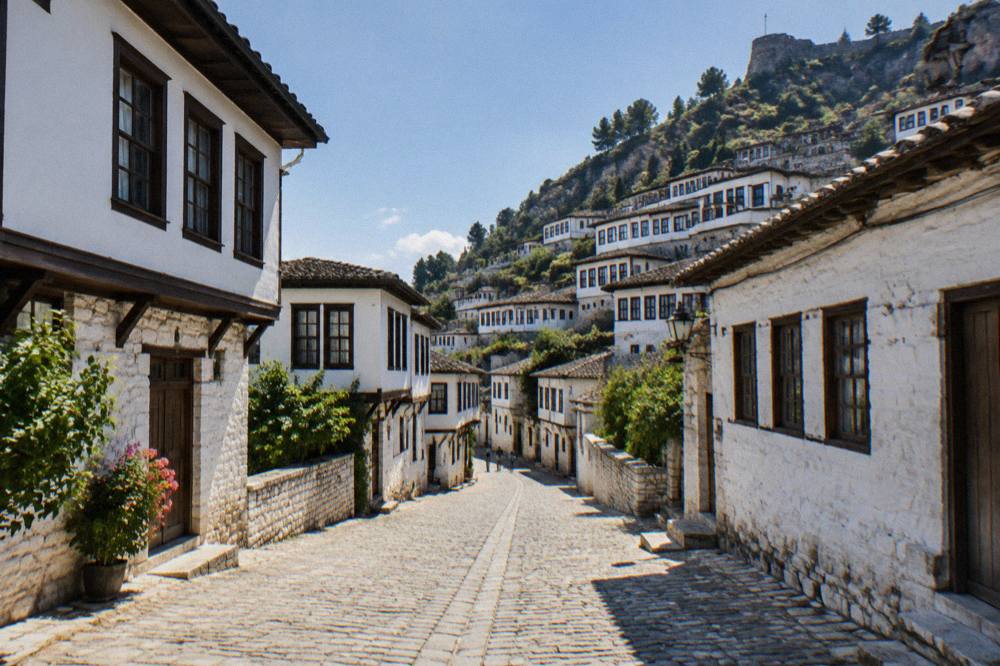
The lodge sits in good company. Within a few hundred metres of its door you can reach the King Mosque, the Lead Mosque by the river, and up on the castle ridge the Red Mosque, one of the earliest Islamic buildings inside the fortress walls. Together they map the religious geography of an Ottoman market town: a congregational mosque for Friday prayer, a riverside mosque for the tradesmen, a garrison mosque up in the castle, and a tekke for the mystical brotherhood that lived alongside all of them.
A useful way to place the tekke is against its neighbours:
| Site | Quarter | Role in Ottoman Berat | Status today |
|---|---|---|---|
| Halveti Tekke | Mangalem | Sufi lodge of the Halveti order | Historic monument inside the World Heritage core |
| King Mosque | Mangalem, near the centre | Congregational Friday mosque | Working historic mosque |
| Lead Mosque | Below Mangalem by the Osum | Neighbourhood mosque | Historic monument by the river bank |
| Red Mosque | Inside Berat Castle | Fortress mosque for the garrison | Ruined shell inside the castle walls |
| Bachelor's Mosque | Mangalem hillside | Neighbourhood mosque | Painted historic mosque |
The Mangalem quarter that holds the tekke went through a documented restoration programme in recent years. Albania's January 2026 report to UNESCO on the state of conservation of the World Heritage property lists the Mangalem quarter restoration among the completed urban projects, alongside work on the Gorica quarter and the trail up to Gorica Castle. That matters for a visitor in a simple way: the lanes around the tekke are in better repair than old photographs suggest, and the walk is easier than it looks from the bottom of the hill.
Where Is The Halveti Tekke And How Do You Get There?
The Halveti Tekke sits in the lower lanes of Mangalem, the hillside quarter on the castle side of the Osum River, roughly midway between the Gorica Bridge and the foot of the castle road, and the only sensible way to reach it is on foot. Mangalem is a car-hostile district of stone steps and narrow cobbles by design. The town has been actively calming traffic around its historic core, and from April 2026 vehicle entry into the Kala, the castle quarter above, was restricted to residents, pre-booked hotel guests, licensed taxis and similar exempt groups. Park below or arrive by bus and walk.
Getting to Berat itself is straightforward. From Tirana, buses and shared furgons leave the South-North terminal, Terminali i Autobuseve Jug-Veri, with departures spread through the day from early morning to late afternoon, and the run takes around two and a half hours. The fare is a few hundred lek, paid in cash. There is no direct bus from Tirana's airport to Berat; you change at the Tirana terminal. No passenger train reaches the city at all, and none will before the railway reconstruction now under way reaches its target at the end of 2027.
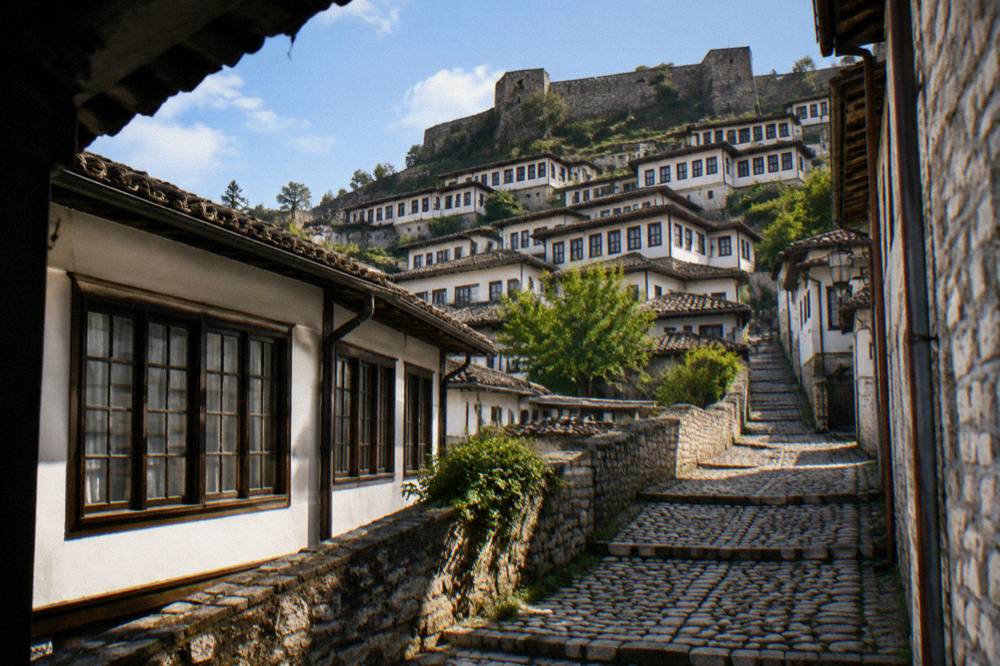
Once you are in the old town, everything is walking distance. The old town orientation guide covers the layout in detail, but the short version is this: the Osum River divides Mangalem on the west bank from Gorica on the east, the Gorica Bridge joins them, and the castle road climbs from the top of Mangalem. The tekke belongs to the Mangalem side, which means you will meet it naturally on the standard climb.
| Journey | How | Practical notes |
|---|---|---|
| Tirana to Berat | Bus or furgon from the South-North terminal | Roughly hourly departures, about 2.5 hours, cash fare |
| Tirana airport to Berat | Airport bus to Tirana, then change | No direct service exists |
| Berat bus station to Mangalem | On foot, local bus or taxi | Terminal sits on the SH72 on the outskirts |
| Mangalem to the tekke | Walk only | Stepped lanes, no through traffic |
| Mangalem to Berat Castle | Walk up the castle road | Vehicles restricted in the Kala quarter from April 2026 |
The practical detail people miss is the bus station's location. Berat's terminal is on the edge of town on the SH72 road, not in the centre, so budget a short transfer or a longer walk when you plan your arrival day. Detailed timings are in the Tirana to Berat transport guide.
What Can You See Inside The Halveti Tekke?
The Halveti Tekke is a modest building and the visit is short: a low stone structure with a small prayer room, the lodge quarters where the dervices lived, and the türbe, the tomb chamber where the order's departed leaders were honoured, typically seen in twenty to thirty unhurried minutes. Sufi lodges were built for intimacy rather than display. Where the King Mosque announces itself with a minaret and a portico, a tekke turns inward, and much of what you notice is scale: low doorways, thick walls, a courtyard that swallows the sound of the street.
Treat the interior as a piece of the Mangalem streetscape rather than a museum with a catalogue. The details that survive in Berat's Ottoman religious buildings are joinery, painted woodwork and stone carving, and the tekke's interest lies in how these sit against the whitewashed houses around it. Photography of the interior is not guaranteed to be welcome; a tekke is a religious space first and an attraction second, and the polite default is to ask before you shoot, and to skip it entirely if a service or a caretaker's duty is in progress.
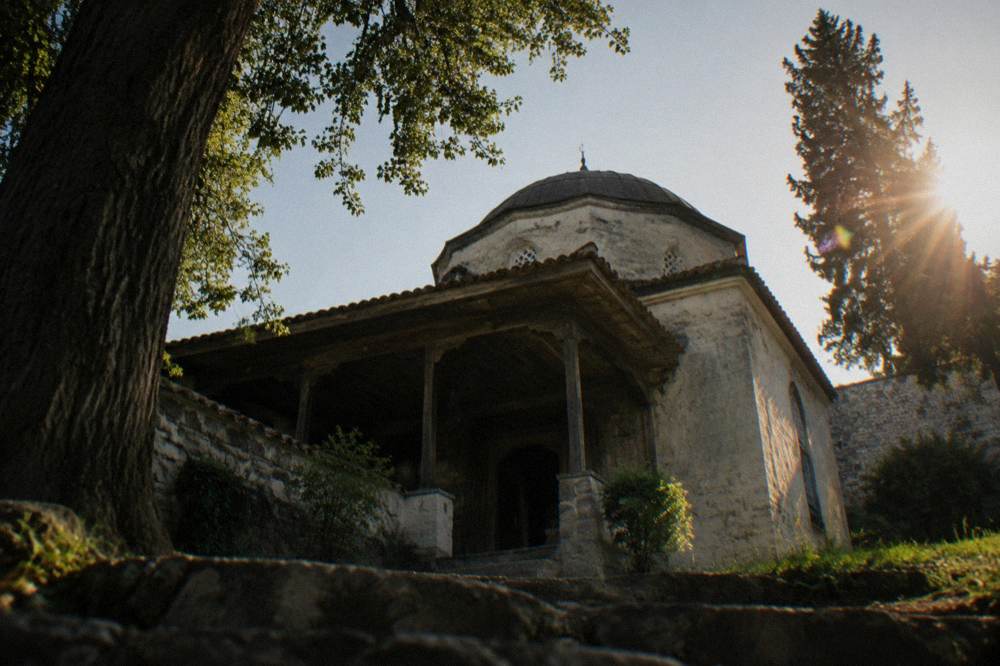
There is no published entry fee for the tekke that this site could verify, and no fixed opening hours either, which is normal for a small monument of this kind. The honest planning advice is to treat a visit as opportunistic: walk past, see if the door is open, and if it is not, the quarter itself is the attraction. The Mangalem slope, the painted Bachelor's Mosque a few lanes over, and the framed view down to the Osum are all free and open around the clock.
If the tekke door is shut, the nearby sights with dependable access are:
| Nearby sight | Access | Notes |
|---|---|---|
| Berat Castle | Walk up from Mangalem | A small daytime gate fee may apply; bring lek |
| Onufri Museum | Inside the castle | 400 ALL individual, open daily 9:00 to 18:00 in summer |
| Gorica Bridge | Across the river | Historic stone bridge, open at all times |
| Ethnographic Museum | Gorica side | 300 ALL individual, reopened in May 2026 |
That last row deserves its own sentence. The Ethnographic Museum reopened on 30 May 2026 after more than three years of restoration, with roughly 1,300 objects on display, and it is now one of the strongest reasons to cross the river after you finish with Mangalem.
The trio above reflects what most visitors actually book around a Berat stay: a canyon water trip, a structured day tour from the coast, and a rafting and tubing option for the high-water weeks. All three sit a drive outside the city, so they work best slotted around your old-town days rather than instead of them.
How Does The Halveti Tekke Fit Into A Day Around The Old Town?
The tekke earns its place as the quiet hinge of a Mangalem circuit: start at the Gorica Bridge, climb into the lower lanes to find the Halveti Tekke and the painted mosques, continue up to Berat Castle and the Onufri Museum, then descend by the same lanes to the river, a loop of roughly half a day at a walking pace. It is not a destination in itself. It is the moment of calm between the postcard bridge and the castle wall, and planning it that way produces a better day than racing between headline sights.
The order matters more than the list. The castle involves a real climb, and in summer the upper lanes hold heat long after noon, so the bridge and Mangalem circuit works best early, with the castle either before the heat builds or in the late afternoon when the light turns the thousand windows gold. Between the two halves, the tekke is a natural pause.
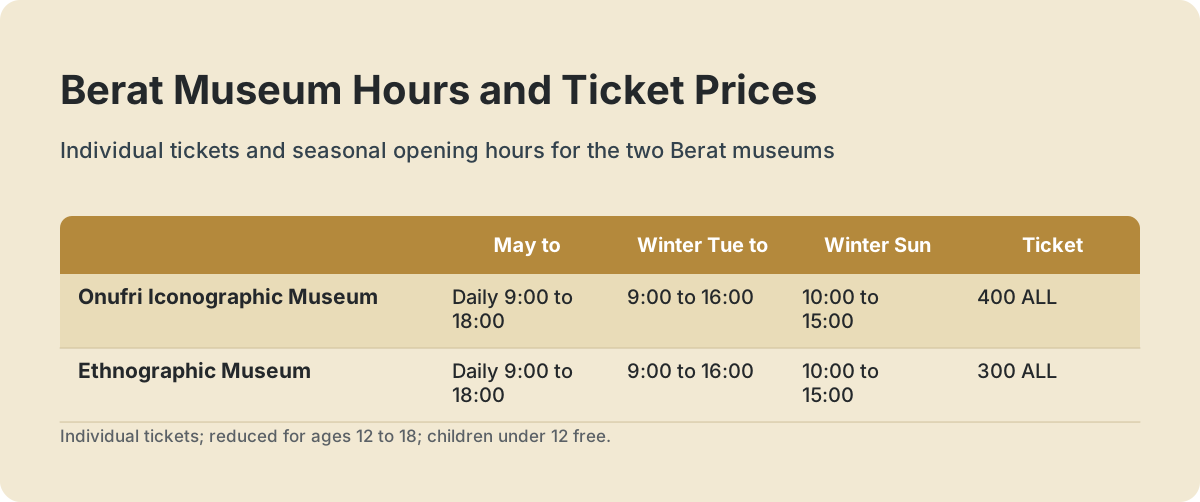
Museum hours follow the seasons, and the castle's museums are the only sights in the loop with a published timetable:
| Museum | May to September | November to April | Individual ticket |
|---|---|---|---|
| Onufri Iconographic Museum | Daily 9:00 to 18:00 | Tue to Sat 9:00 to 16:00, Sun 10:00 to 15:00 | 400 ALL |
| Ethnographic Museum | Daily 9:00 to 18:00 | Tue to Sat 9:00 to 16:00, Sun 10:00 to 15:00 | 300 ALL |
Both museums sell reduced tickets for students and visitors aged 12 to 18, and children under 12 enter free. Online ticketing through Albania's e-Albania portal was extended to the Berat museums in November 2025, which is useful in peak months when the Onufri queue can be long. The Onufri Museum guide covers the icon collection itself, one of the finest in the country.
For the walk itself, the one day in Berat itinerary on this site pairs the quarters, bridge and castle with food stops, and the where to stay guide explains why a guesthouse inside Mangalem or Gorica puts this whole loop outside your door.
When Is The Best Time To Visit The Halveti Tekke?
Spring and autumn are the best seasons for the tekke and the Mangalem walk: the lanes are neither baked nor slippery, the museums run their long summer hours from May, and the crowds of July and August have not arrived or have already gone, while winter visits are perfectly possible but short on daylight and sometimes wet. Berat's climate has no official published station normals, so the honest description is qualitative: hot, dry summers, with heat that can push past 40 degrees Celsius on the worst July days, and wet winters with rain concentrated from November through January.
Summer has one planning implication that surprises people. In late July 2026, Berat recorded the highest temperature readings in Albania on what the national press called the hottest day of the year, and Mangalem's stepped lanes hold that heat into the evening. If you travel in high summer, do the tekke, the bridge and the castle climb before mid-morning, then retreat to the river level until the late afternoon. The Berat weather guide expands on this without pretending to a precision the town's records do not support.
Two dated events give the shoulder seasons extra weight. The Wine and Stories of Berat festival ran from 2 to 4 October in 2026, filling the town with wineries from Albania and Kosovo, cheese and olive oil stalls, and a judged wine contest, which makes early October a genuinely good week to be in town. And in August, the Bektashi pilgrimage to the tomb of Abaz Ali on Mount Tomorr draws huge numbers into the wider region, the 2026 edition running from 18 to 25 August with police traffic controls on the mountain roads, a busy window in the Berat valley even if the old town itself stays manageable. The full index of guides sits on Berat Travel Guide.
| Season | The lanes around the tekke | Best plan |
|---|---|---|
| Spring | Mild, green, occasional rain | Full old-town loop plus a canyon trip |
| Summer | Very hot and dry, busy | Tekke and bridge early, castle by 9:00, river level at midday |
| Autumn | Warm, festival colour in October | Combine with winery visits and the festival |
| Winter | Quiet, wet spells, short days | Museums and interiors, the tekke whenever the door is open |
The river gives the seasons a second dimension. Osumi Canyon operators run rafting on the spring snowmelt, roughly from March into early June depending on water, and switch to tubing, swimming and floating trips through the summer and autumn. If a water day is part of your plan, May and June are the months where an old-town morning and a canyon afternoon both work at their best. The seasonal rafting and tubing adventure from Berat is the classic example of the format.
The seasonal logic above is exactly why that tour exists: operators change the activity with the water level rather than running one product all year.
What Should You Budget For A Berat Trip?
A Berat day built around the tekke is inexpensive by European standards: the tekke itself costs nothing verified to enter, the two big museums charge 400 ALL and 300 ALL, The lek is the only official currency, at roughly 92 lek to the euro, and the euro is not legal tender, though some tourist businesses take it informally and give change in lek.
The cash point matters more than the numbers. Mangalem remains largely cash territory: small guesthouses, family kitchens, bakery counters and the museum ticket desks all prefer or require lek. ATMs exist in the town centre, but foreign-card fees of around 500 to 800 lek per withdrawal are common, so a smaller number of larger withdrawals beats daily drip withdrawals. The full picture, including the card-acceptance map of the old town, is in the money and currency notes on this site's Berat costs guide.
Day-to-day costs reported for 2026 look like this:
| Item | Typical 2026 figure |
|---|---|
| Onufri Museum entry | 400 ALL |
| Ethnographic Museum entry | 300 ALL |
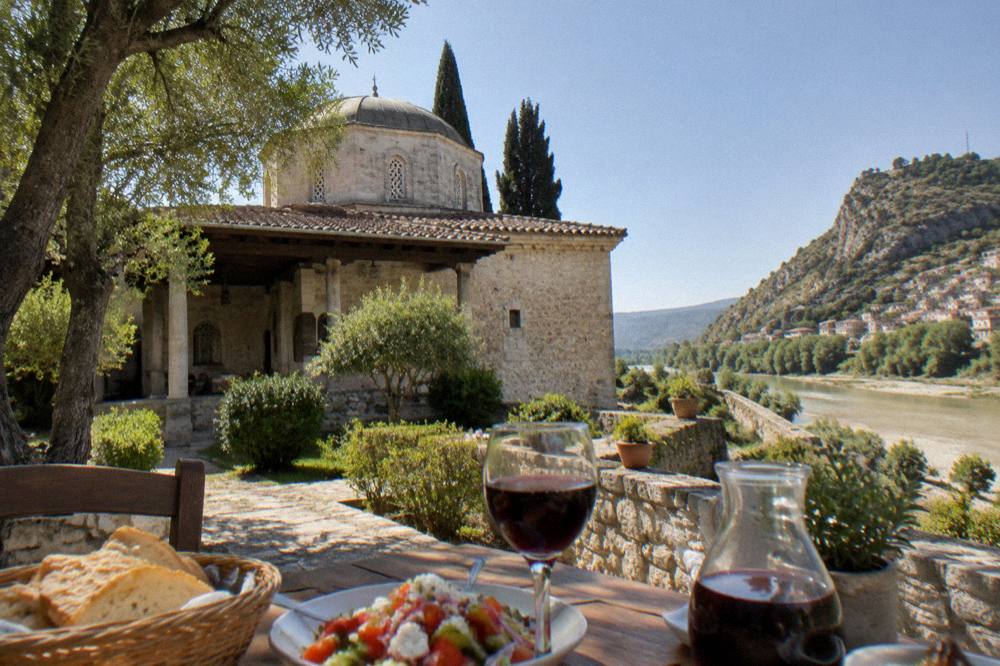
Food in Berat deserves a paragraph of its own because it is part of the same Ottoman-town story as the tekke. The town's signature dishes, qifqi rice dumplings, tavë kosi lamb baked in yogurt, and japrak stuffed vine leaves, are the kind of food the merchants' households of Mangalem ate, and a Slow Food community based in Berat works to keep those recipes in local kitchens. A cooking class is the most direct way into it, and several operate from family homes in and around the old town, the winery-and-transfer format being the better fit if you want the vineyard half of Berat's palate too.
Beyond the plate, the region's wine identity is real and specific: Cobo Winery in the Berat district bottles indigenous varieties including Shesh i Zi, Shesh i Bardhë, Vlosh and the local white Puls, some of it as a traditional-method sparkling wine aged on its lees for more than three years. That level of specialism is unusual for a town this size, and it is why a wine afternoon is a common second-day plan after the heritage loop.
Can You Pair The Tekke With An Osumi Canyon Trip?
Yes, and the pairing is the single best upgrade to a Berat stay: the Halveti Tekke, Mangalem and the castle fill a morning or a day in town, and the Osumi Canyon, a protected natural monument about an hour and a half's drive south into Skrapar, fills the other half with rafting, tubing, swimming and waterfall hikes through a gorge the road only touches at its rim. The canyon is the reason many visitors extend from one night to two. The Osumi Canyon guide covers the gorge, its rim viewpoints like Vrima e Nuses and the Old Italian Bridge, and the fact that viewing the canyon from the rim costs nothing.
The related tour this site features for exactly this pairing is the Explore, Swim and Float trip in Osumi Canyon: a guided water day built around floating the calmer summer river, with equipment included and swimming stops built into the route. It is a gentler animal than spring rafting, which suits the same travellers who like the tekke's quiet, and the tour's own page carries the live listing, or you can Check availability directly.
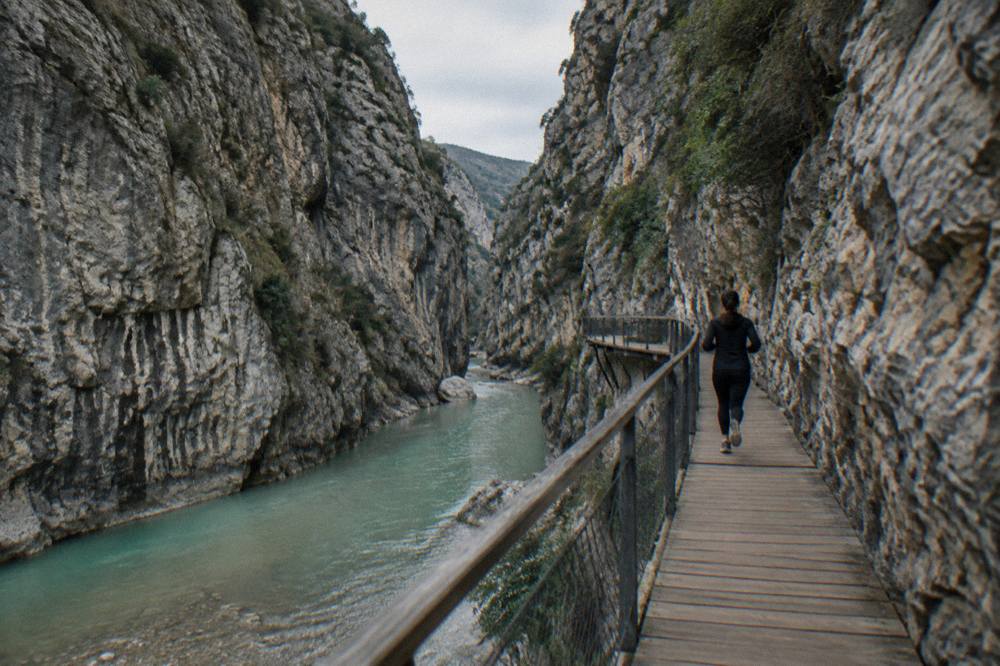
Water levels decide which format you get, so match the trip to your month. Rafting runs on the spring melt; tubing and floating carry the summer and autumn. If your dates are fixed in spring, pick a rafting product; if you are travelling in the school holidays, the swim and float formats are what the river actually supports then. One popular combined option pairs the canyon with the short forest walk to Bogovë waterfall, an easy out-and-back trail through the national park that ends at a swimming pool under the falls.
That canyon-and-waterfall combination is the version of the day that most first-time visitors report as the highlight of the trip, the gorge and the falls giving two very different kinds of water in one drive south.
Back in town, the other pairing worth naming is a day tour from the coast. Travellers staying in Durrës or Golem reach Berat on a long day trip built around the castle and the Mangalem lanes, which is a compressed version of everything this article describes. It works, but it converts the tekke from a pause into a checkpoint; if the lodge matters to you, overnighting in Mangalem is the better structure.
What Should You Know Before Visiting The Halveti Tekke?
Visit the Halveti Tekke with modest dress covered from shoulders to knees, remove shoes if you enter a prayer space, keep voices low, ask before photographing anyone at prayer, and treat the building as a living religious monument rather than a photo set, and go with the flow of the lanes around it: stepped, cobbled, and unforgiving in thin shoes. Etiquette at a tekke is the same common sense as any functioning house of worship. The visitors who cause offence are rarely malicious; they are simply unaware that a tekke is not a museum with a ticket desk and a closing time.
Safety in Berat itself is a low-stress question. The UK foreign office holds no advice against travel to any part of Albania, and the US State Department's standing guidance for the country is a Level 2 advisory, exercise increased caution, on general crime grounds rather than anything specific to this town. Ordinary precautions, watching bags in crowds and not leaving valuables in a parked car, cover the realistic risks. The is Berat safe guide goes deeper, and the emergency numbers are worth knowing by heart: 112 as the general number, with ambulance on 127, fire on 128 and police on 129 also in use.
A few final practicalities round out the picture:
| Question | Answer for this visit |
|---|---|
| Entry fee | None published; carry small lek notes anyway |
| Opening hours | None published; try daytime, and expect the door to decide |
| Time needed | Twenty to thirty minutes plus the walk through Mangalem |
| Best combined sights | King Mosque, Bachelor's Mosque, Berat Castle, Gorica Bridge |
| Footwear | Closed shoes with grip for the stepped lanes |
| Payment | Cash in lek; cards are unreliable in the old town |
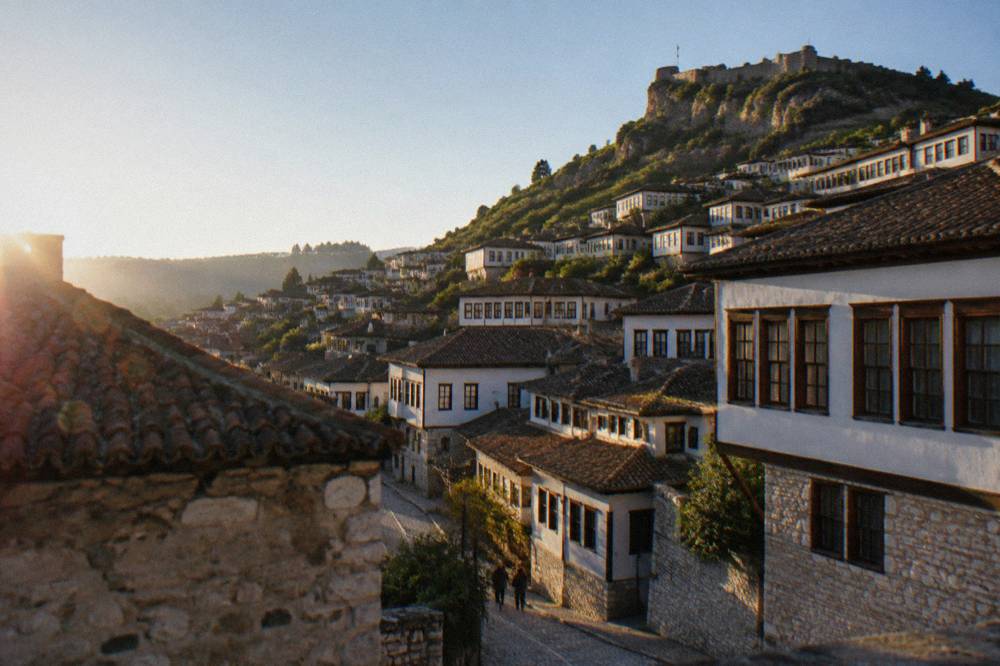
If your visit drifts into the evening, the river bank between the two bridges is the town's promenade, and Mangalem's guesthouse terraces face east across the whole stacked hillside at sunset, the one view that reliably outperforms its photographs. A final evening option that pairs well with a heritage day is a vineyard tasting in the hills above town, where several family wineries pour the indigenous whites and reds described earlier; the transfer-included winery tour is the format that fits an afternoon without needing a car.
That closes the loop this guide began: a small Sufi lodge on a stepped hillside, a World Heritage town built by the merchants and craftsmen whose faith built the tekke, and a valley that adds canyons, waterfalls and vineyards within an hour of the city walls. The Halveti Tekke is a twenty-minute stop that explains the town better than any single ticketed sight; walk it slowly, and give the door a chance to be open.
Common Questions About The Halveti Tekke
Is the Halveti Tekke in Berat free to visit?
No entry fee is published for the Halveti Tekke, and this site could not verify one either way. Treat it as free to walk to and conditional to enter: if the door is open, a small tip for the caretaker is a courteous gesture, so keep a few lek notes on you.
What are the Halveti Tekke opening hours?
There are no published opening hours. The tekke is a small religious monument in a residential lane, not a staffed museum, so access depends on whether the building is open when you pass. Try mid-morning or late afternoon, and be content with the quarter itself if it is shut.
How do I get to the Halveti Tekke from the Berat bus station?
The bus terminal sits on the SH72 on the outskirts of town. Take a taxi to Mangalem or walk in, then climb the stepped lanes from the river level. The tekke sits partway between the Gorica Bridge and the castle road.
What is the difference between a tekke and a mosque?
A mosque is a house of congregational prayer; a tekke is a lodge for a Sufi brotherhood, combining a prayer room, living quarters and a tomb chamber. The Halveti Tekke served the Halveti order, one of the main Sufi orders of the Ottoman Balkans.
Can you visit the Halveti Tekke and Berat Castle on the same day?
Yes, easily. The tekke sits in Mangalem on the climb to the castle, so the natural route is Gorica Bridge, the tekke and the painted mosques of Mangalem, then the castle and the Onufri Museum, a half-day loop at an unhurried pace.
What should you wear when visiting a tekke in Berat?
Dress modestly, with shoulders and knees covered, and wear closed shoes with grip for the cobbled steps. If you enter a prayer space, remove your shoes and keep your voice low. Ask before photographing, and never photograph anyone at prayer without permission.