Saint Demetrius Cathedral Berat
Saint Demetrius Cathedral sits inside Berat's UNESCO-listed old town in central Albania, a working Orthodox church surrounded by the white houses, mosques and museums that make this Osum River town one of the Balkans' most distinctive heritage destinations. This guide covers what to expect at the cathedral, how to fold it into a day of castle, museum and riverside sightseeing, and what to know about hours, dress and pairing it with the best nearby attractions.
Short answer
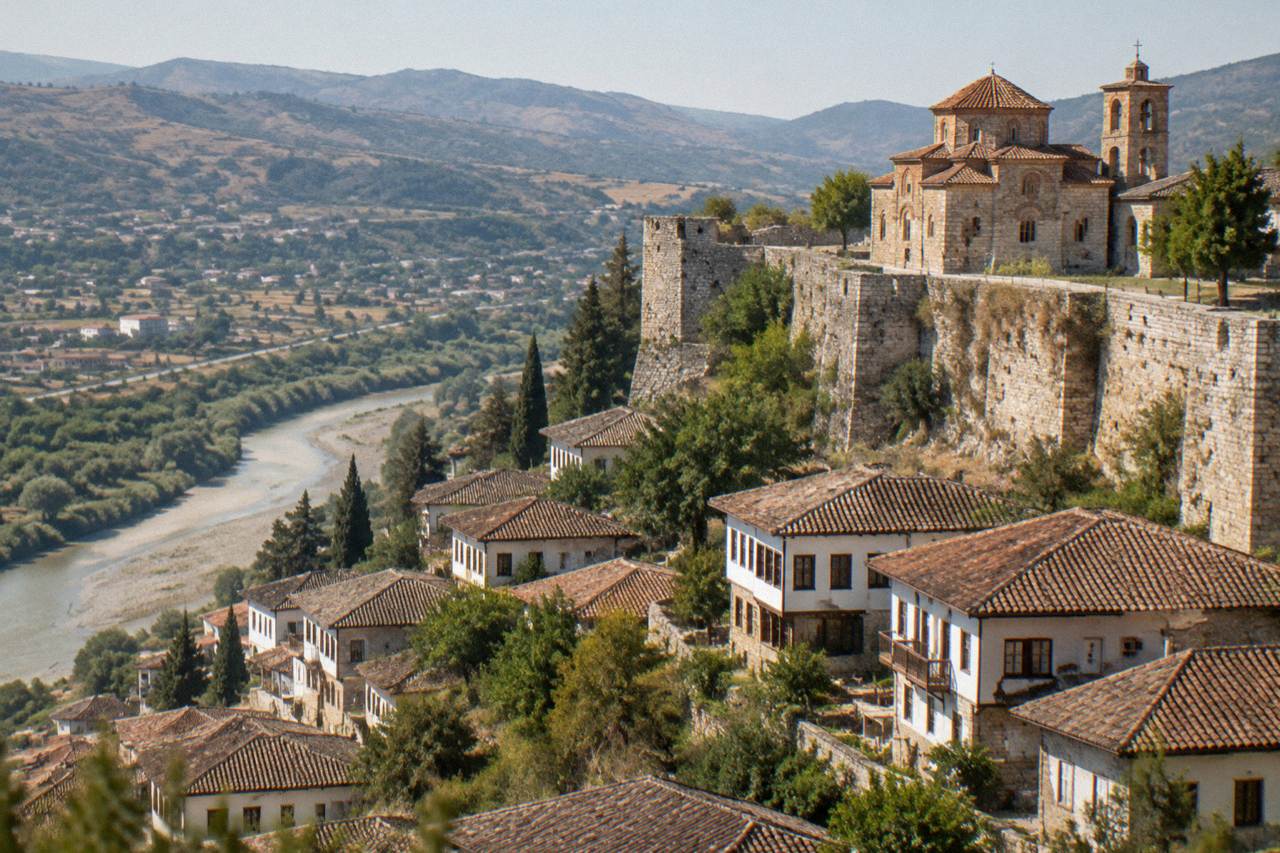
Saint Demetrius Cathedral is a functioning Orthodox church in Berat, Albania, the UNESCO World Heritage hill town on the Osum River, a 2008 extension to a listing that began with Gjirokastra in 2005. It sits in the old town within walking distance of Berat Castle, the Onufri Iconographic Museum, whose ticket is 400 ALL, and the Gorica Bridge, so most visitors see it as part of a half-day walking circuit rather than a standalone trip.
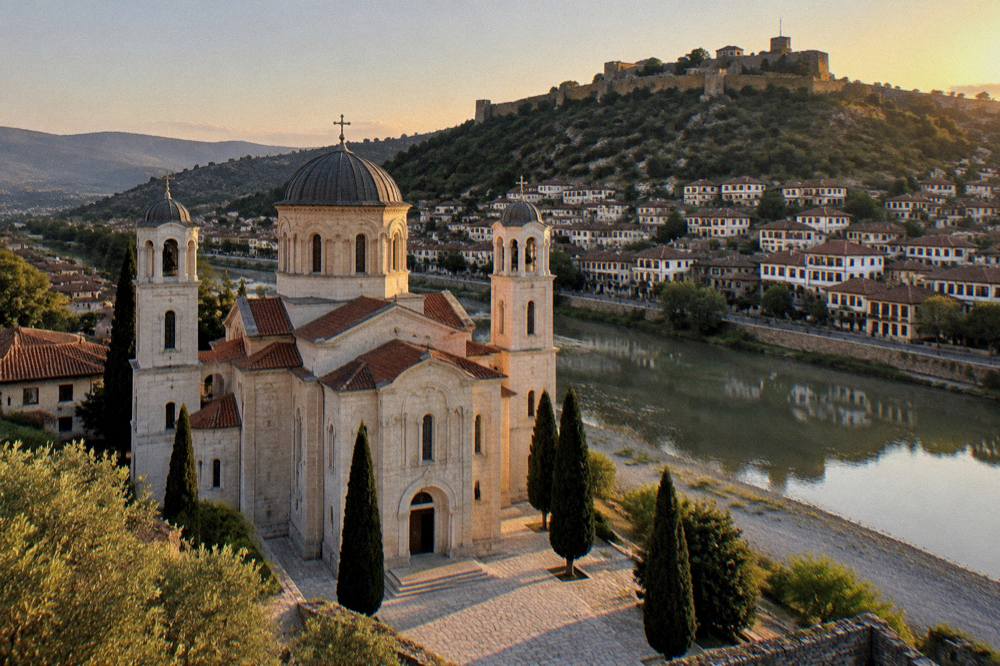
Saint Demetrius Cathedral stands in Berat, Albania, the UNESCO World Heritage Ottoman-era hill town on the Osum River in central Albania, and it is one of the quiet anchors of the old town's religious landscape. Berat earned its World Heritage inscription as an extension to the Historic Centres of Berat and Gjirokastra, added in 2008 to a listing that began with Gjirokastra in 2005, and UNESCO describes the town as "a rare example of a well-preserved Ottoman town". Within that fabric of white-windowed houses, hilltop castle walls and riverside promenades, the cathedral serves a living Orthodox community, which shapes how you visit it: modest dress, calm voices, and an understanding that service times come before sightseeing.
What Is Saint Demetrius Cathedral In Berat, Albania?
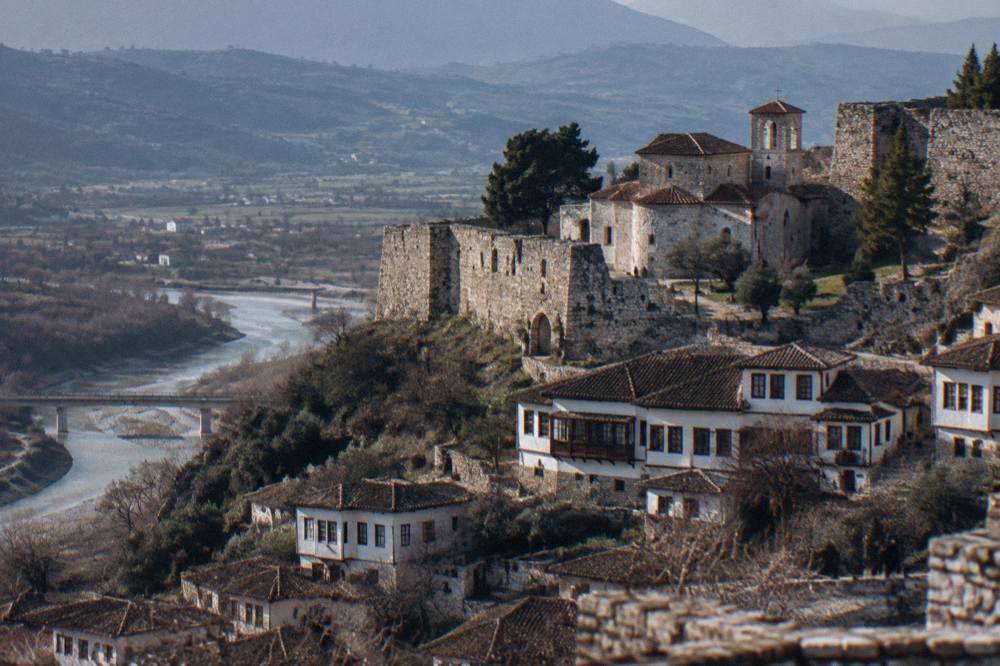
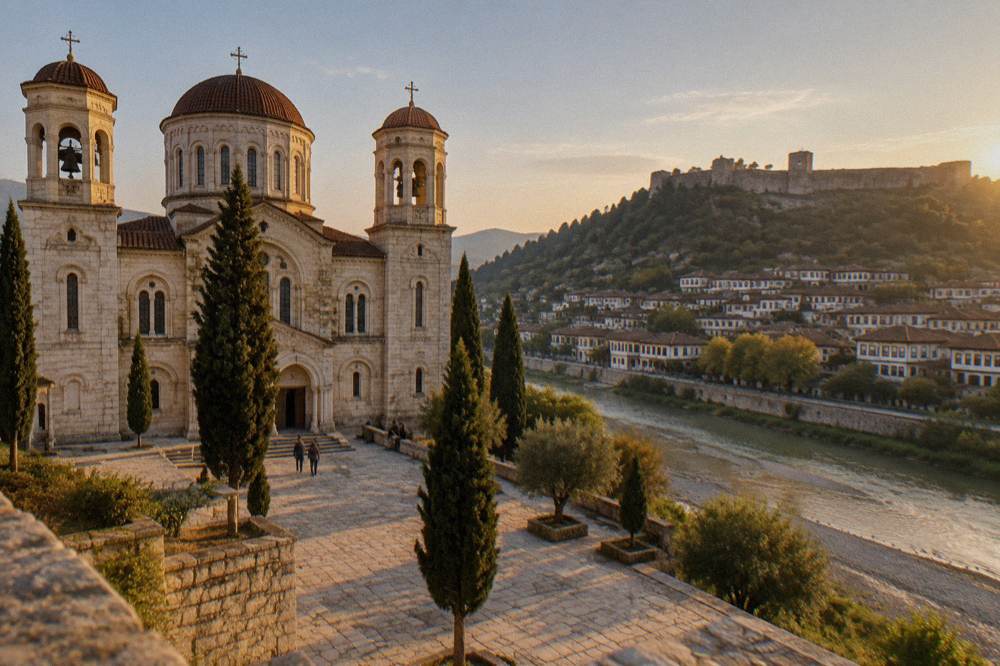
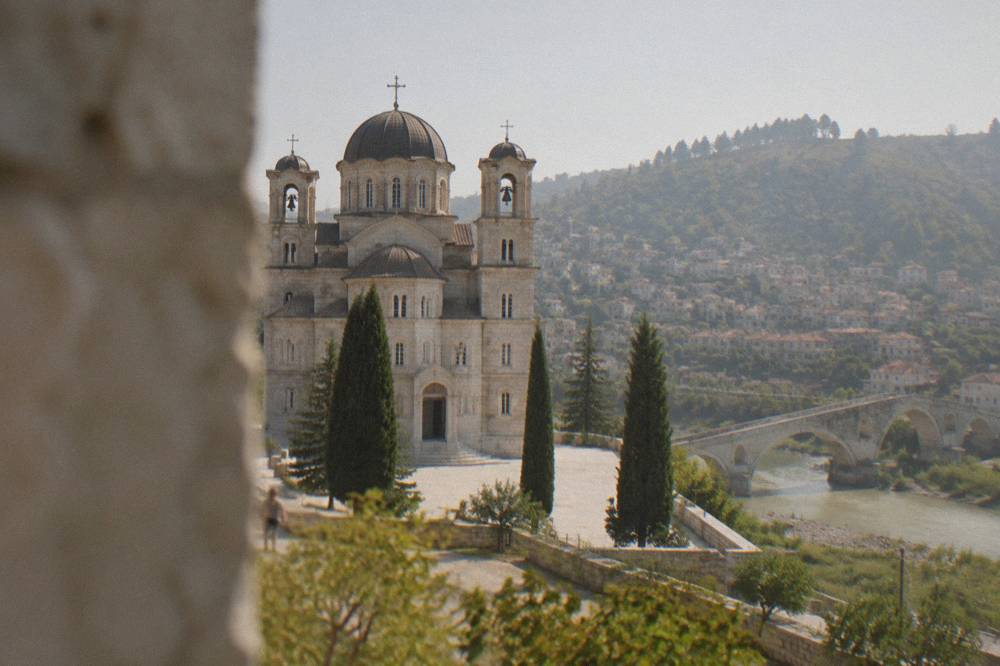
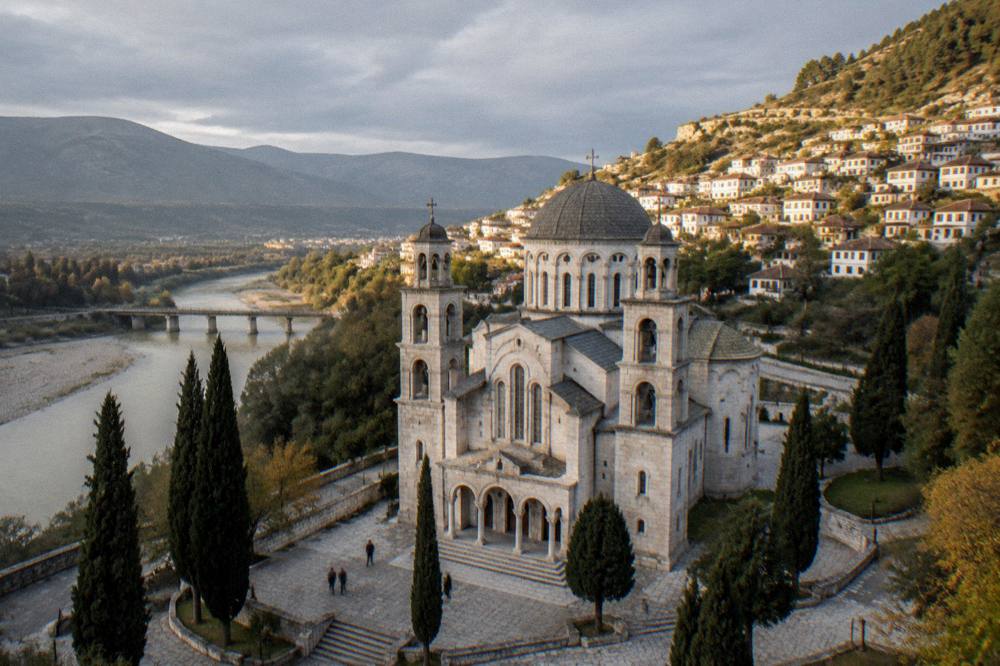
Saint Demetrius Cathedral is a working Orthodox cathedral in the old town of Berat, Albania, dedicated to Saint Demetrius, and it functions first as a place of worship and only second as a sight for visitors passing through the UNESCO-listed centre. Unlike the churches inside Berat Castle, many of them ruins or museum spaces, it belongs to everyday religious life in the town. Berat's Christian and Islamic heritage sits side by side throughout the old town, with mosques, tekkes, churches and a cathedral within a few minutes' walk of one another, and the cathedral is part of that layered story rather than a single headline attraction. Treat a visit as a short, contemplative stop inside a longer walking day. Entry conditions at working churches in Albania vary with services and staffing, so confirm locally whether the doors are open when you arrive, and never assume a published schedule applies on a feast day.
The cathedral's dedication to Saint Demetrius ties Berat to a wider Orthodox tradition. Saint Demetrius of Thessaloniki is one of the most venerated figures in Orthodox Christianity, and churches in his name appear across the Balkans. What makes the Berat instance worth your time is context: you approach it through lanes of Mangalem and the old town, the famous quarter of stacked white houses known as the city of a thousand windows, where Christian and Muslim neighbours have shared the same streets for centuries. That coexistence is precisely what the UNESCO listing recognizes.
Keep expectations modest and you will not be disappointed. This is not a frescoed museum with a ticket desk, and the site facts available for this guide include no verified opening hours or admission figure for the cathedral itself, so nothing of the kind is invented here. What is verified sits all around it: castle walls with 24 defensive towers uphill, the Onufri Iconographic Museum inside the castle, and the Gorica Bridge over the Osum.
Where Is The Cathedral And How Do You Reach It From The Town Centre?
The cathedral sits inside Berat's old town on the Berat side of the Osum River, within easy walking distance of Mangalem's lanes, the Gorica Bridge and the lower station of the walk up to Berat Castle, and no vehicle is needed to reach it. Berat's historic core is compact: the old town areas of Mangalem on one bank and Gorica on the other face each other across the river, and everything a visitor wants to see clusters within and between them. The town's bus terminal sits on the SH72 on the outskirts, roughly a 15 to 20 minute walk from the centre or a short taxi ride, so if you arrive by bus from Tirana you will simply walk in. Drivers coming from elsewhere should note that car access into the castle quarter above has been restricted, so the practical pattern is to park below and continue on foot.
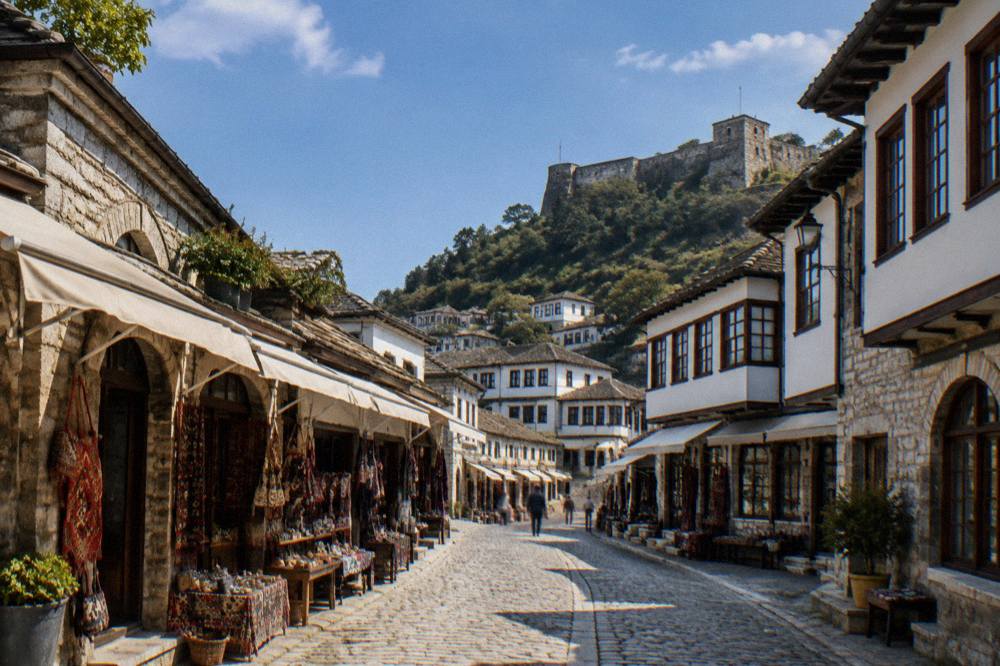
Arriving from Tirana, buses and furgons leave from the South-North bus terminal and take roughly two and a half hours, with departures spread from early morning to late afternoon and the fare paid in cash. Those details, plus route options and what the terminal itself is like, are covered in depth in the guide to getting from Tirana to Berat, while travelers flying in should read the airport-to-Berat transfer guide notes in our wider transport coverage, since there is no direct airport bus and you change in Tirana. Once you are in the old town, the cathedral, the mosques and the bridge all resolve into one walkable circuit.
For orientation before you go, sketch the day around the river. Cross the Gorica Bridge at least once, climb to the castle either morning or late afternoon, and let the cathedral, the Halveti Tekke and the King Mosque fill the natural pauses in between. On a hot summer day, save the climb for later and do the flat riverside and old-town stretch first.
What Can You See Inside And Around The Cathedral Quarter?
Inside the cathedral you can expect a modest, functioning Orthodox interior, an icon stand, candles and the hush of an active parish church, while the real spectacle sits outside: the streets of Mangalem, the castle walls overhead and the Osum River running past. Working Orthodox churches in Albania typically display icons of the saint they are dedicated to, and Saint Demetrius, a mounted warrior saint in Orthodox iconography, is the figure to look for. Photography etiquette follows the standard rule for active churches anywhere: be quiet, ask if you are unsure, and never interrupt a service for a photo. The surrounding quarter is the reward. Mangalem's houses, built with generous windows to light Ottoman-era artisan workshops, stack up the hillside in white tiers, which is where the city of a thousand windows nickname comes from.
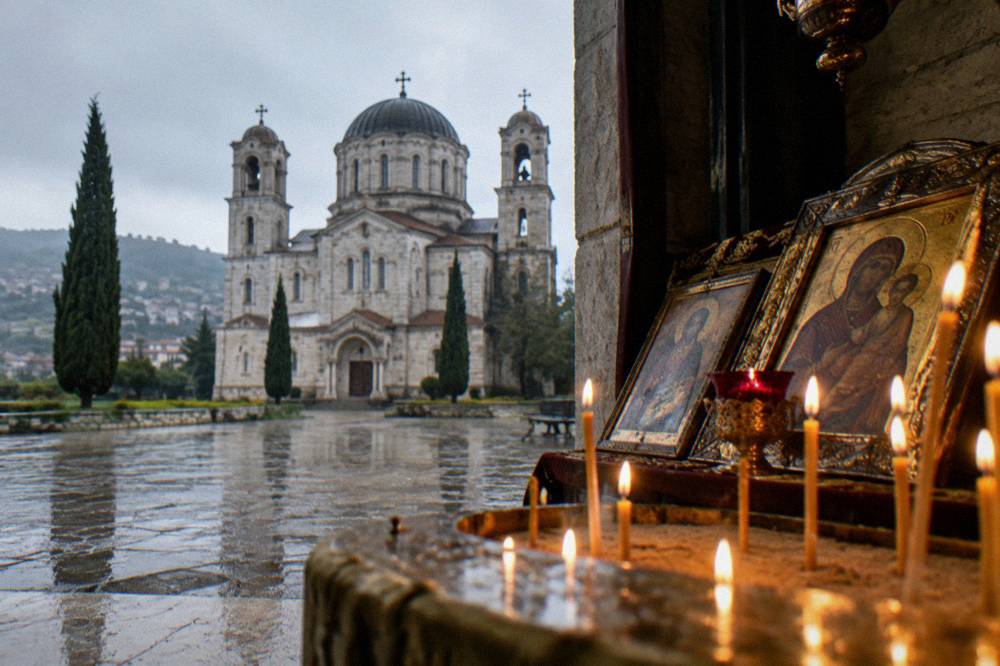
Between the cathedral and the river you pass several of the monuments that carry Berat's World Heritage status. The Halveti Tekke, a dervish lodge in Mangalem, and the King Mosque are both short walks away, as covered in our pages on Halveti Tekke and the King Mosque. Uphill, the castle holds the Onufri Iconographic Museum, the single best indoor stop in town for religious art, since Onufri was the greatest of Albania's icon painters and his works are the reason the museum carries his name. The museum's hours and fees are among the few Berat figures that are firmly verified, and they are listed in a table further down this page.
A sensible sequence is flat first, hill second. Walk Mangalem and the cathedral quarter while your legs are fresh, cross to Gorica for the bridge and the view back, then climb to the castle and finish with Onufri before the heat or the crowds peak. In summer, midday temperatures can be punishing, and the climb is entirely exposed.
How Does The Cathedral Fit Into One Day In Berat?
A one-day Berat itinerary that includes the cathedral works best as a loop: old town and riverside in the morning, the castle and the Onufri Museum at midday or late afternoon, and the Gorica quarter and sunset views last, with the cathedral as a ten to fifteen minute stop woven between the mosque and the bridge. The whole old town is walkable end to end in well under an hour, so the day is less about transport and more about pacing. If you are coming from Tirana on a day trip, the bus journey both ways eats into the day, and many travelers prefer a guided day tour that bundles the castle, Mangalem and Belshi Lake. Our one day in Berat itinerary walks through the hour-by-hour version, and the Berat day trip from Tirana guide covers the outbound options in detail.
| Part of day | Where to be | What you cover | Why it works |
|---|---|---|---|
| Early morning | Mangalem and the old town | Cathedral, King Mosque, Halveti Tekke | Streets are quiet and light is best on the white facades |
| Mid morning | Castle climb | Walls, 24 defensive towers, church ruins | Cooler before noon and thinner crowds |
| Midday | Inside the castle | Onufri Iconographic Museum | Indoor stop during the hottest hours |
| Afternoon | Down through Gorica | Gorica Bridge, Gorica quarter lanes | Flat walking and shade on the far bank |
| Late afternoon | Riverside promenade | Osum banks, views back at the castle | Sunset falls across the river toward Mangalem |
Two practical notes shape the day. First, the Onufri Museum keeps seasonal hours: from 1 May to 30 September it opens 9:00 to 18:00, while from 1 November to 30 April it runs Tuesday to Saturday 9:00 to 16:00 and Sunday 10:00 to 15:00, with Monday closure in winter. Second, the castle is a lived-in quarter with guesthouses inside the walls, so the walk up is along a real residential cobbled street rather than a roped-off monument path.
Which Nearby Attractions Pair Best With A Cathedral Visit?
The best pairings are all within the old town: Berat Castle with the Onufri Museum, the Gorica Bridge and the riverside, the Ethnographic Museum on the far side of the centre, and, for a second day, the Osumi Canyon and the wineries of the Berat region. The castle and Gorica Bridge are non-negotiable; they are the two images that define the town. The Ethnographic Museum, reopened on 30 May 2026 after a restoration lasting more than three years and displaying around 1,300 objects, gives you the domestic interior of the Ottoman house that the outside windows only hint at. A church, a mosque, a tekke, a castle and two museums in one compact centre is the exact mix that earned the UNESCO inscription.
For travelers with a second day or a half day to spare, the region opens up. Osumi Canyon, a protected natural monument near Çorovodë in Skrapar, lies about an hour to an hour and a half from Berat on fully paved roads, and there is no entrance fee to view the canyon from the rim; the paid rafting and tubing trips are a separate activity, with rafting generally running in spring when snowmelt fills the river and tubing in the warmer months. Our Osumi Canyon guide covers the viewpoints, and the region's wineries, which work with native grapes like Shesh i Bardhë and the local white Puls, are covered in the Berat wineries day trip guide.
Travelers who want the countryside without the canyon drive sometimes choose a guided excursion instead, and the horseback riding tour from Tirana, Durrës or Golem is one such option, a five-hour countryside ride rated 4.6 from 30 reviews on the operator's live listing.
It pairs naturally with a Berat visit because it covers the rural Skrapar-style landscape that the old town only hints at from its rooftops, and you can Check availability alongside the internal guides above.
When Is The Best Time To Visit The Cathedral And The Old Town?
The most comfortable visiting months are the shoulder seasons, spring and early autumn, when the old town is warm but the exposed castle climb is bearable; summer brings intense heat and the August Bektashi pilgrimage closes roads around Mount Tomorr, while winter days are short, wetter and much quieter. Berat's climate has no officially published station normals, so this guide describes it only in broad terms: hot, dry summers and wetter winters, with rain concentrating from November through January and July the driest month. Summer heat in Berat is genuinely serious, and it can top 40 °C, so a summer visit means starting early, resting at midday and climbing to the castle late.
One dated event is worth planning around either way. The Wine and Stories of Berat festival runs over three days, with the 2026 edition set for 2 to 4 October, filling the town with Albanian and Kosovo wineries, music and food, which makes early October both busier and more atmospheric. The Bektashi pilgrimage to the tomb of Abaz Ali on Mount Tomorr runs annually in August, with the 2026 edition from 18 to 25 August and police traffic restrictions around the Kulmak Tekke, which matters mainly if your route or day trip touches the mountain. For a fuller month-by-month discussion, see the Berat weather and seasons guide.
Church visiting also follows the religious calendar. Around Orthodox feast days, especially those honoring saints, working churches fill with services, and a visitor may find doors open but interiors busy with worship. That is a privilege to witness respectfully, not an obstacle, but it does mean you should not plan a tight schedule around interior access on those dates.
What Do The Nearby Museums Charge And When Are They Open?
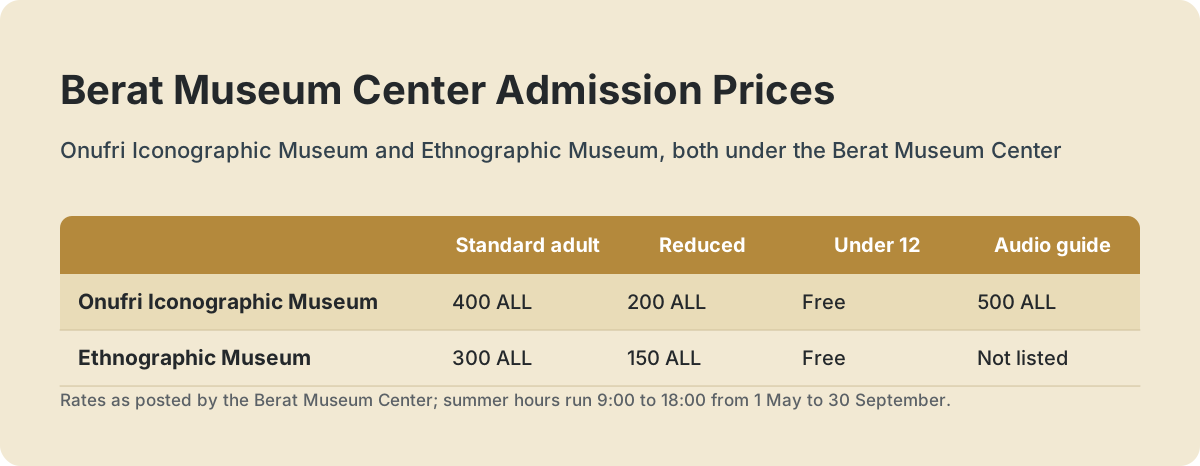
The Onufri Iconographic Museum charges 400 ALL per adult and the Ethnographic Museum 300 ALL, both under the Berat Museum Center, whose official hours run 9:00 to 18:00 from 1 May to 30 September and a shorter Tuesday-to-Sunday schedule in winter, while the cathedral itself has no published verified fee or hours. Those museum figures are the most firmly verified numbers in town, and they are worth knowing before you climb, since the Onufri Museum is the payoff at the top of the castle walk. Children under 12 enter free at both museums, students and ages 12 to 18 pay a reduced rate, and an audio guide at Onufri costs 500 ALL. Since November 2025, online tickets for cultural sites including the Berat museums have been available through the national e-Albania ticketing system, valid for a month after purchase.
| Museum | Standard adult | Reduced | Under 12 | Audio guide |
|---|---|---|---|---|
| Onufri Iconographic Museum | 400 ALL | 200 ALL | Free | 500 ALL |
| Ethnographic Museum | 300 ALL | 150 ALL | Free | Not listed |
| Period | Days | Hours |
|---|---|---|
| 1 May to 30 Sep | Daily | 9:00 to 18:00 |
| 1 Nov to 30 Apr | Tue to Sat | 9:00 to 16:00 |
| 1 Nov to 30 Apr | Sunday | 10:00 to 15:00 |
The Ethnographic Museum's reopening is recent enough to be a real reason to revisit the town if you have been before. It closed for a restoration lasting more than three years and reopened on 30 May 2026 with a redesigned display of roughly 1,300 objects, and early visitor counts after reopening ran past three thousand, mostly foreign visitors. Onufri's own numbers show how fast Berat tourism is growing: 58,912 visitors from January to July 2026 against 50,615 in the same period of 2025, a rise of about 16 percent.
For the cathedral, the practical rule stands: there may be a small fee at the castle gate in daytime and you should carry lek, but the church itself is a working parish, and you confirm locally. Cash matters in Berat generally. The old town remains largely cash territory, cards are accepted at some hotels and larger businesses, and foreign-card ATM fees commonly run several hundred lek.
Is The Cathedral A Good Stop For Families And Short Visits?
Yes, for families the cathedral works as a short, quiet stop on a route that is otherwise very child friendly, since the old town is traffic-light, compact and full of things to look at, and even the castle climb is a manageable cobbled street rather than a hike. The main caveats are the exposed uphill section to the castle, which toddlers will not manage alone, and the summer heat, which drains children faster than adults. Our Berat with kids guide covers family pacing in more depth, including which guesthouses make the base easiest.
For visitors on a tight schedule, say a half day off a coast-to-Berat drive, the priority order is clear: Gorica Bridge for the view, a wander through Mangalem past the cathedral and the King Mosque, and the climb to the castle gate even if you skip the full interior. If you have only two hours, stay flat and save the castle for a return trip rather than rushing the climb and the museum together.
For a fuller cultural immersion, the heritage day tour from Durrës and Golem combines Berat's UNESCO sights with local food stops and runs six and a half to seven hours, a format suited to families who want the logistics handled.
It is one of the few day tours in the roster with a perfect 5.0 rating, though from a small pool of 26 reviews, so read recent guest feedback on the live listing rather than assuming the average speaks for itself.
Where Should You Eat, Stay And Continue After The Cathedral?
Eat in the old town around Mangalem and Gorica, where the traditional cooking is built on dishes like tavë kosi, qifqi and japrak, stay in a Mangalem or Gorica guesthouse if you want the cathedral's lanes on your doorstep, and continue onward most easily toward Gjirokastra, the coast, or back to Tirana. Berat's food culture leans on home-style kitchens, and the Slow Food Berat community is headquartered in the town, working to keep traditional recipes alive, which is why the cooking classes here feel closer to being fed in someone's home than to a demonstration. Our where to eat in Berat guide and the what to eat in Berat companion list the specific restaurants worth booking.
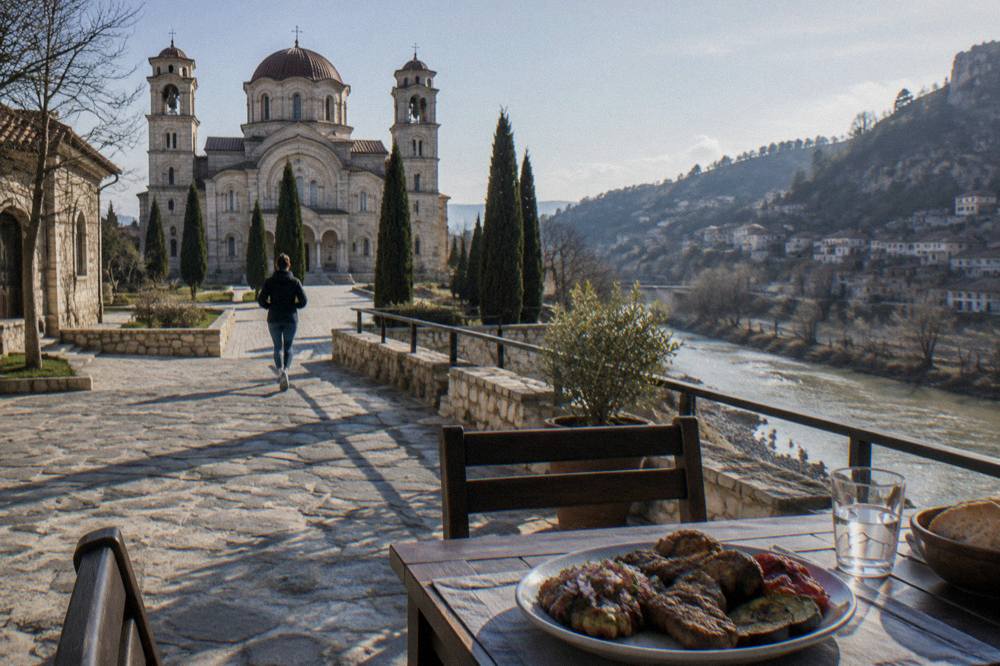
Accommodation splits neatly by quarter. Mangalem puts you under the castle with the cathedral and mosques around you; Gorica, across the bridge, trades that proximity for quieter lanes and the view back at the thousand windows; and staying inside the castle walls themselves is possible, with guesthouses operating within the walls and a centuries-old building next to the Onufri Museum being converted into an eight-room family guesthouse. Parking is the weak point in the historic areas, so if you are driving, choose a guesthouse that actually offers parking, as only some do. The full quarter-by-quarter breakdown is in where to stay in Berat.
For the onward leg, Gjirokastra shares the same World Heritage inscription as Berat and makes the natural pairing, covered in our Gjirokastra day trip guide. The coast is reachable but not near, and Berat is entirely inland, so beach plans belong to a separate leg of an Albanian itinerary. There is no passenger train to Berat; the national railway network is under reconstruction elsewhere, and buses remain the practical link between the country's towns.
What Else Combines Culture And Countryside Around Berat?
The strongest culture-plus-countryside pairings from Berat are the winery visits in the surrounding hills, the Osumi Canyon and Bogovë waterfall in Skrapar, and the mountain world of Tomorr, whose 2,416 metre peak dominates the region's skyline and anchors its sacred traditions. Tomorr is the sacred mountain of the Bektashi community, home to the pilgrimage each August, and its national park shelters brown bear, wolf and birds of prey. The Berat-Ballaban road project, which improves access toward the mountain, was nearing completion as of September 2026, which will make the area easier to reach on future trips. For wine, the Cobo Winery in the Berat region works with indigenous varieties including Shesh i Bardhë, Shesh i Zi, Vlosh and the rare local white Puls, even producing a traditional-method sparkling wine from Puls aged on its lees.
A canyon, waterfall and rakia village tour bundles three of those countryside threads in a single outing, the Osumi Canyon, the Bogovë waterfall reached by a short forest walk from the village, and a local rakia experience, running roughly a full day with a 4.7 rating from 24 reviews.
Bogovë sits on the edge of Tomorr Mountain National Park, and its waterfall trail is an easy out-and-back walk from the village rather than a mountaineering outing, which makes this one of the gentler countryside options. If you want the fuller picture of the canyon before committing, read the dedicated Osumi Canyon guide on this site, and confirm the date you have in mind directly with the operator's live listing, since river activities depend on water levels and season.
The region rewards slow travel. Between the cathedral, the castle and the canyon, you move from candlelit Orthodox interiors to Ottoman fortifications to a river gorge carved through limestone, all inside one county. Few Albanian itineraries offer that range in so few kilometres, and the Berat Travel Guide covers each layer in its own pages, from Apollonia's ruins to the practical safety and costs guides.
Common Questions About Saint Demetrius Cathedral In Berat
Is Saint Demetrius Cathedral in Berat, Albania, open to visitors?
As a working Orthodox church it opens around services and, in practice, much of the day in season, but no verified public hours are published for the cathedral itself, so treat any visit as potentially variable and confirm locally. Pair it with sites that do have firm hours, like the Onufri Museum inside the castle, open 9:00 to 18:00 daily from May through September.
Does Saint Demetrius Cathedral charge an entrance fee?
No verified admission figure exists for the cathedral, and this guide does not print one. Working Orthodox churches in Albania generally welcome visitors without a ticket, with candle purchases and donations customary. Carry small lek notes for candles, and budget separately for the nearby museums, whose official fees are listed in the tables above.
How long does a visit to the cathedral take?
The cathedral itself is a short stop, realistically ten to fifteen minutes plus time for photographs outside. Its value comes from the surrounding walk through Mangalem, the Gorica Bridge and the climb to Berat Castle, which together fill a half day or more. Plan the cathedral as one stop on a loop, not a destination in itself.
What should I wear to visit a working Orthodox church in Berat?
Modest dress is expected: covered shoulders and knees, no beachwear, and hats removed inside. Voices should stay low, and if a service is underway you may watch quietly from the back rather than walking through the nave. The same dress code applies at the town's mosques, so dress for the whole old-town circuit, not just the church.
Can I see Saint Demetrius Cathedral as part of a day trip from Tirana?
Yes. Buses from Tirana's South-North terminal take roughly two and a half hours with multiple daily departures, and the old town is compact enough to cover the cathedral, the bridge, Mangalem and the castle in a full day on the ground. Guided day tours from Tirana and Durrës also bundle the castle and Belshi Lake if you prefer not to manage buses yourself.
Is Saint Demetrius Cathedral the same as Onufri's church in Berat Castle?
No. The Onufri Iconographic Museum sits inside the Church of St Mary inside Berat Castle, at the top of the hill, while Saint Demetrius Cathedral is a separate working church in the old town below. Many visitors see both in one day: the cathedral as a living parish, the castle church as a museum of Onufri's icons, with a 400 ALL adult ticket.