Berat Accessibility
Berat, a UNESCO World Heritage Ottoman hill town in central Albania, is only partly accessible: the riverfront and boulevard are flat, Mangalem and Gorica are cobbled, and the castle sits up a steep stone lane. This guide maps the easier ground.
Short answer
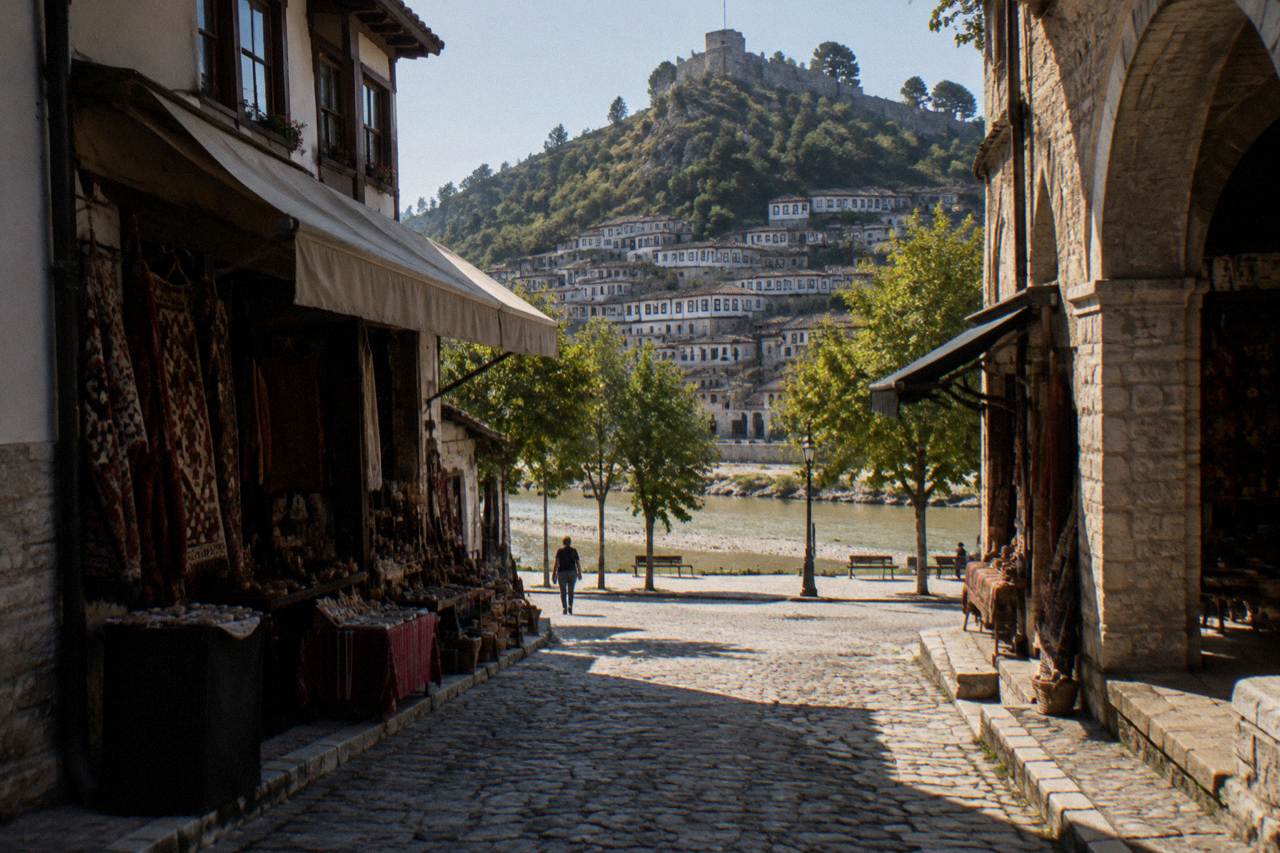
Berat is partly accessible. The boulevard and Osum riverfront are flat and paved; Mangalem and Gorica are cobbled; the castle needs a steep uphill walk. The Onufri Museum charges 400 ALL and the Ethnographic Museum 300 ALL, buses from Tirana take around two and a half hours, and spring or autumn suit visitors who tire in heat.
Berat, in central Albania, is a UNESCO World Heritage Ottoman-era hill town strung along the Osum River, and its accessibility is genuinely mixed. The town's beauty comes from terrain: whitewashed houses stacked up a hillside, stone lanes worn smooth by centuries of feet, and a fortress looking down from the ridge. That same terrain is what makes parts of it hard work for wheelchair users, for anyone who walks with a stick, or for travelers who simply tire quickly. The honest picture is that a visitor with mobility limits can have a rich time in Berat, but only by choosing the right streets, the right base and the right pace. This guide lays out the ground, street by street, and then builds a slower two-day plan around it.
Is Berat Accessible For Visitors Who Struggle With Hills And Cobbles?
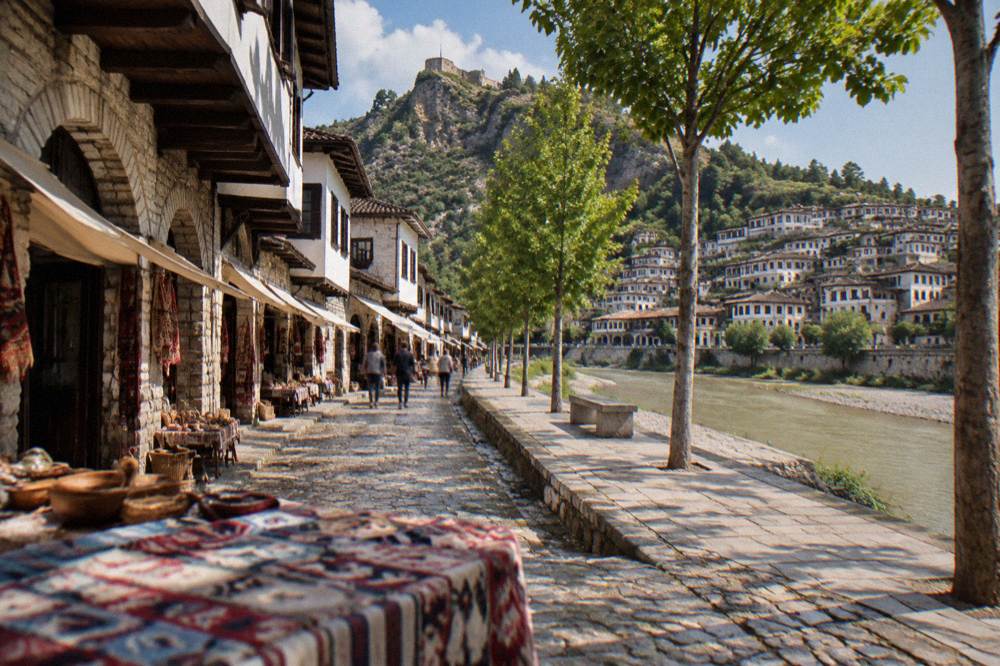
Berat is only partly accessible, and the honest answer depends on which Berat you mean. The new-town boulevard and the Osum riverfront are flat and paved, Mangalem and Gorica are cobbled and stepped, and the castle sits at the top of a steep stone lane. Wheelchair users can enjoy the river banks and the promenade; the castle interior is a harder ask.
The first thing to understand is that Berat is really four towns in one. There is the flat new town along Bulevardi Republika, where the banks, cafes and hotels sit on level ground. There is Mangalem, the famous quarter of a thousand windows, climbing the hillside in stepped cobbled lanes. Across the bridge is Gorica, the quieter Ottoman quarter, cobbled but gentler in gradient. And there is the Kala, the castle quarter at the top, which is a lived-in neighborhood reached by a sustained uphill lane.
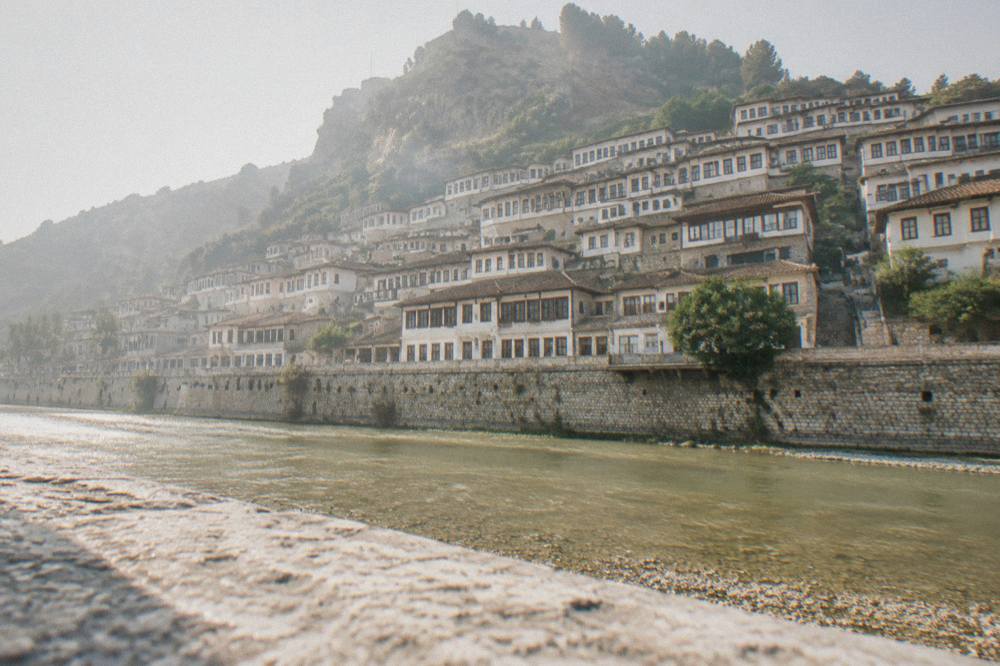
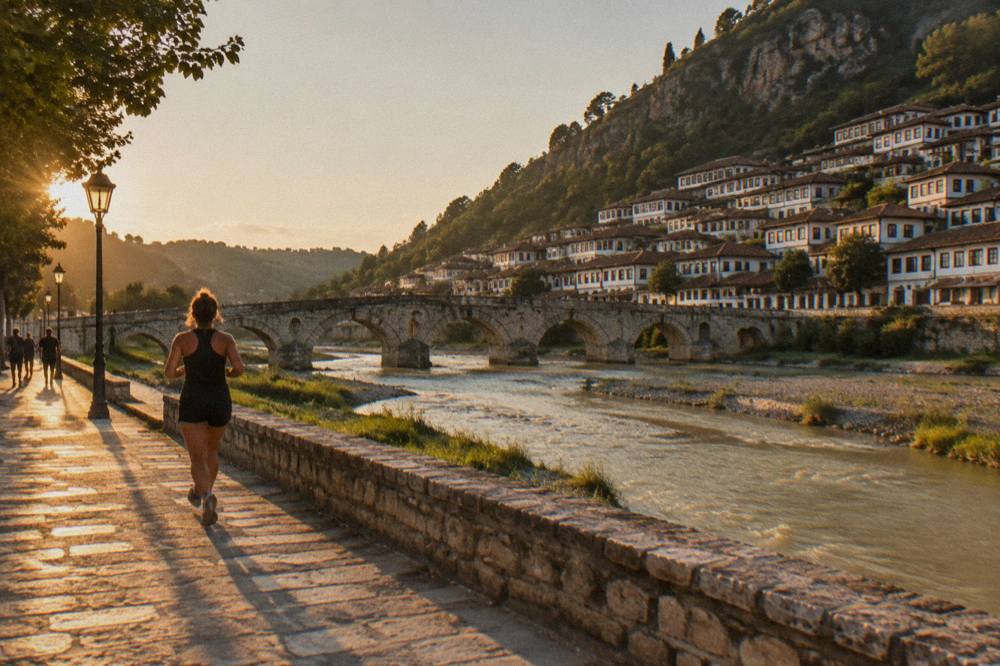
For a wheelchair or rollator user, the practical dividing line is simple: the river and the boulevard are workable, the hillside quarters are not. Mangalem's lanes are worn stone with steps appearing without warning, and there are no ramps to speak of. That does not make the quarter invisible to a limited-mobility visitor, though. The Gorica Bridge, the riverfront promenade and several viewpoints let you see the stacked windows of Mangalem from flat ground, which is how many of the classic photographs are framed anyway.
For visitors who can walk but need to budget their stamina, Berat is far friendlier than it first looks. The trick is to do one hill per day, rest in between with long lunches, and use taxis for the climbs you would rather skip. Taxis in Berat are cheap and plentiful by the boulevard, and a short hop can save the day's remaining energy. Our guide to Berat's overall layout pairs well with this page if you want to see how the four quarters fit together.
Which Parts Of Berat Are The Easiest To Get Around?
The easiest ground is Bulevardi Republika and the Osum riverfront, both flat, paved and shaded by plane trees. Gorica comes next, with cobbles and a few stepped lanes but no serious climb. Mangalem is steeper and rougher underfoot, and the Kala, the castle quarter, is a sustained uphill walk on worn stone that rewards fit visitors and challenges everyone else.
Here is how the ground actually feels, quarter by quarter:
| Area | Surface | Gradient | What it means for access |
|---|---|---|---|
| Bulevardi Republika (new town) | Wide paved promenade | Level | Easiest ground in town; cafes, banks and taxis all on the flat |
| Osum riverfront | Paved walkway along the river | Level | Smooth, scenic and connects the bridge viewpoints |
| Gorica | Cobbled lanes, some steps | Gentle to moderate | Quieter and gentler than Mangalem; the bridge itself is cobbled but level |
| Mangalem | Worn cobbles, stepped alleys | Moderate, rising | Atmospheric but rough; one lane at a time, rest often |
| Kala (castle quarter) | Steep cobbled lane, then gravel paths | Steep | The hardest walk in town; a taxi can cut most of the climb |
Two practical notes follow from that table. First, the riverfront is the town's accessibility asset: it is flat, it is pretty, and from it you can see both hillside quarters without climbing either. Second, the distinction between "cobbled" and "stepped" matters more than it sounds. Cobblestones are slow and bumpy but passable with care and decent shoes; steps stop a wheelchair entirely. Gorica leans cobbled, Mangalem leans stepped, and that single difference decides which old quarter suits you.
The flat ground is not a consolation prize, either. The boulevard holds some of the best eating and people-watching in town, and the promenade's plane trees make it pleasant even in the hotter months, which our Berat weather guide covers in more detail. If your mobility is limited and you only have one afternoon, spend it between the bridge and the boulevard and you will leave with the essential photographs.
How Accessible Are Berat Castle And Its Museums?
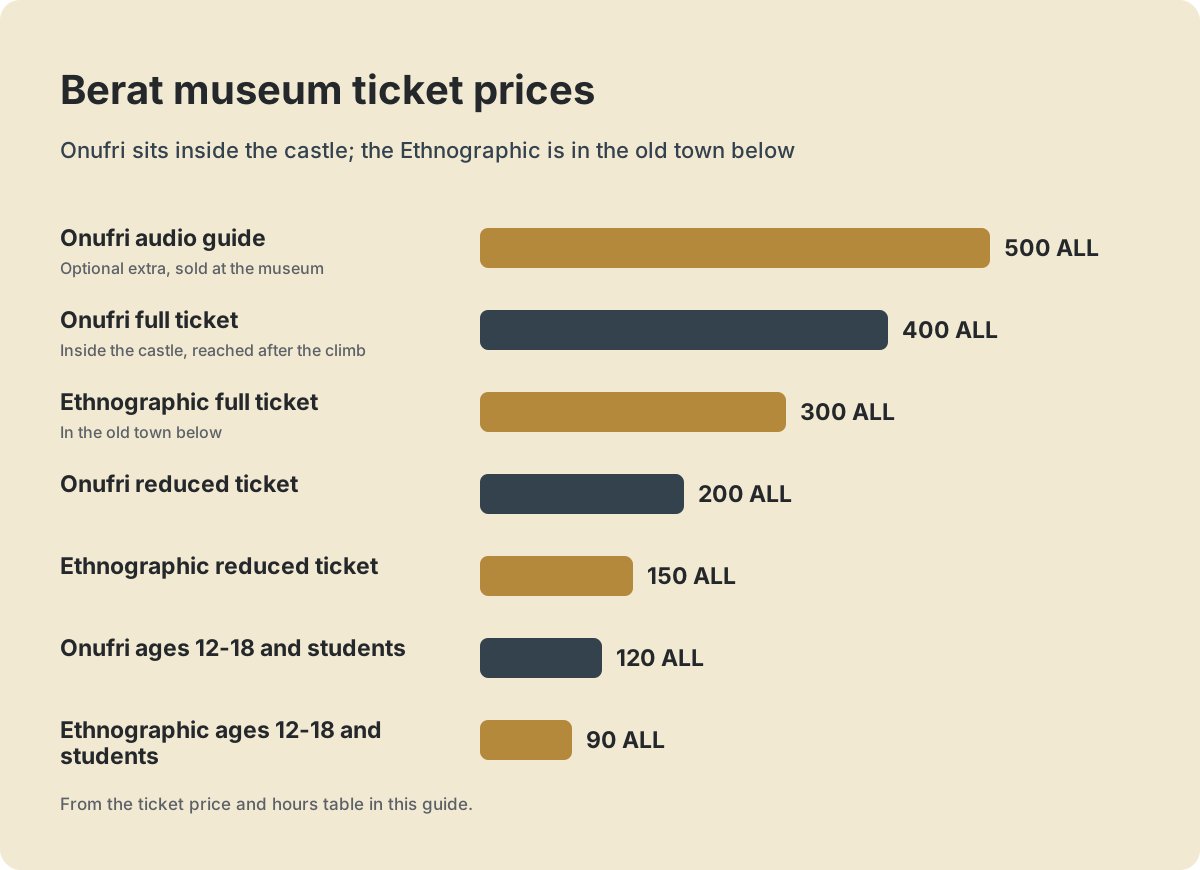
Berat Castle is the hardest part of the town for anyone with limited mobility, and its main museum sits at the top of the climb. The walls hold 24 defensive towers, and the Onufri Iconographic Museum inside charges 400 ALL with a 500 ALL audio guide. The grounds themselves may carry a small daytime fee at the gate, so carry lek.
The climb to the Kala is a single cobbled lane that rises steadily from the Mangalem side of town, and there is no gentler alternative route. Once inside the gate the ground levels out somewhat, but the paths between the walls, churches and viewpoints are gravel and uneven stone. The quarter is still lived in, with families and guesthouses behind the walls, which is why vehicle access has been progressively restricted; since April 2026, entry by car has been limited to residents, pre-booked hotel guests, licensed taxis and similar exceptions. The practical version: assume you walk up, or take a taxi to near the gate and walk the rest.
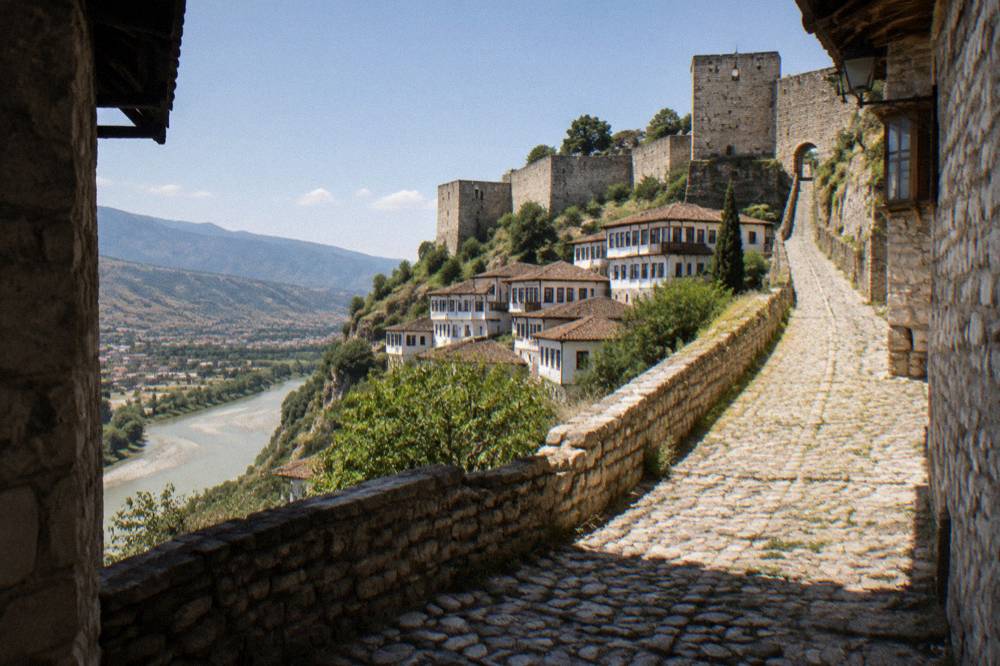
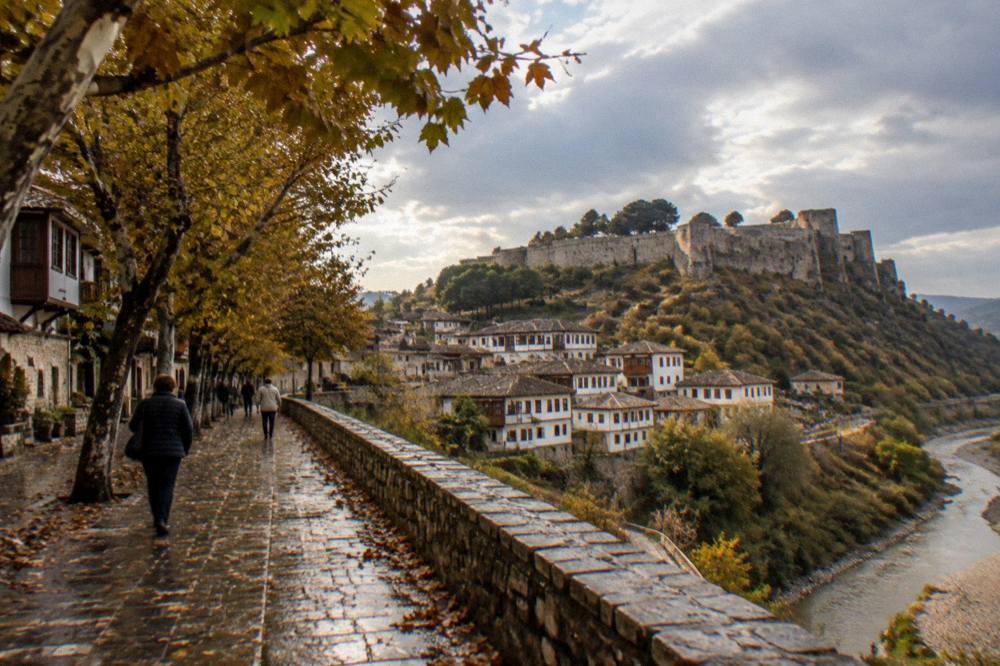
Inside the walls, the payoff is real. About 42 churches once stood within the fortress and roughly eight survive, and the Red Mosque ruin counts among the earliest Islamic buildings in the castle. The lane along the walls gives the classic view down over the white houses stacked toward the river, one of the frames that made the town famous. Take water, take your time, and go early in the day before the stone heats up.
The two main museums are run by the Berat Museum Center, and their tickets, hours and concessions are published:
| Museum | Location | Full ticket | Concessions | Summer hours (1 May to 30 Sep) | Winter hours (1 Nov to 30 Apr) |
|---|---|---|---|---|---|
| Onufri Iconographic Museum | Inside the castle | 400 ALL | Reduced 200 ALL; ages 12-18 and students 120 ALL; children under 12 free; audio guide 500 ALL | Daily 9:00 to 18:00 | Tue to Sat 9:00 to 16:00; Sun 10:00 to 15:00 |
| Ethnographic Museum | In the old town below | 300 ALL | Reduced 150 ALL; ages 12-18 and students 90 ALL; under 12 free | Daily 9:00 to 18:00 | Tue to Sat 9:00 to 16:00; Sun 10:00 to 15:00 |
A few free days apply to everyone each year, including 18 April, 18 May, 21 May and 29 September, while 28 and 29 November are free for Albanian citizens only. Neither museum is built for wheelchairs in the modern sense: the Onufri occupies a historic church inside the castle, reached after the climb, and the Ethnographic Museum is a traditional Ottoman house with interiors on more than one level. The Ethnographic is the easier of the two to reach, sitting in the old town below the castle, and it reopened on 30 May 2026 after a three-year restoration, now displaying around 1,300 objects.
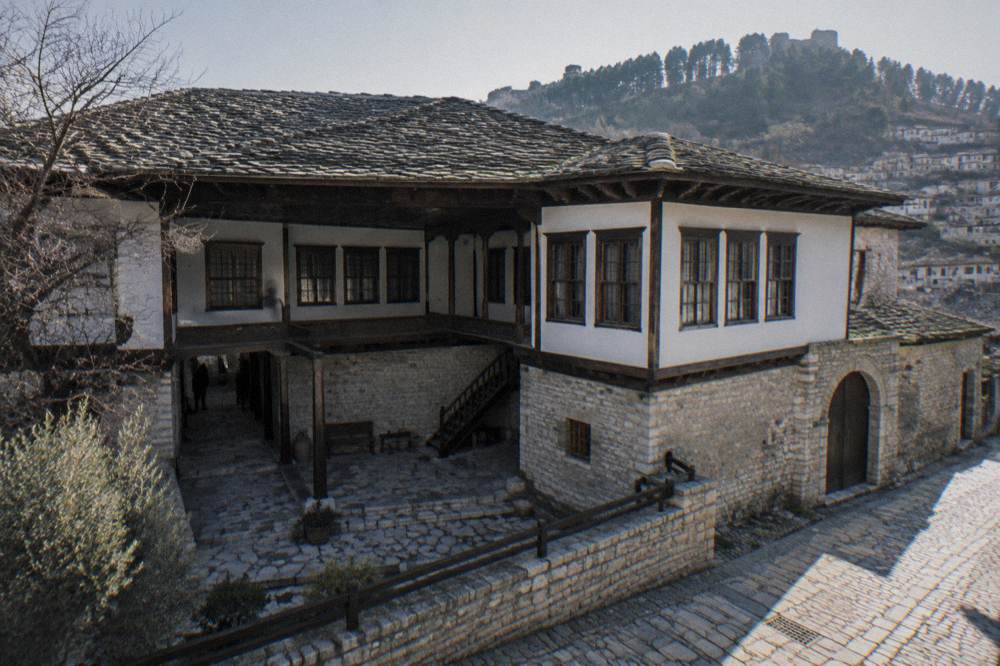
If the climb itself is the barrier rather than the museum, a guide can carry the experience downhill to you. A well-run guided walk covers the castle's story, the mosque quarters and the Mangalem lanes with commentary that does most of the work, and the premium expert-guided walk of Berat is the local favorite for exactly that: a two-hour format that lets you set a slower pace and stop where the ground is kind.
How Do You Get To Berat Without A Car?
Most visitors arrive by bus from Tirana's South-North terminal, a journey of around two and a half hours paid in cash on board, and there is no direct bus from Tirana airport, so you change in the city. No passenger train reaches Berat. Organized day tours from the coast remove the transfer problem entirely by collecting you at your hotel.
The transport reality shapes how accessible the town can be, because every option lands you somewhere different. Here is what is verified:
| Option | What is confirmed | Notes for slower travelers |
|---|---|---|
| Bus from Tirana | Departs the South-North terminal through the day, roughly two and a half hours | Fare paid in cash, a few hundred lek; sit near the front for a smoother ride |
| From Tirana airport | No direct service; take an airport bus to the terminal, then the Berat bus | Two changes with luggage; allow a generous margin |
| Berat bus station | On the SH72 on the outskirts, about 15 to 20 minutes from the old town | A taxi from the station to Mangalem or the riverfront costs a few euro |
| Train | No passenger rail reaches Berat; the Tirana corridor line is under reconstruction | Not an option this decade; do not plan around it |
| Rental car | Available in Tirana, at the airport and in Berat; economy cars run about 15 to 50 euro a day | Automatics are scarce; book early in summer |
| Guided day tour | Hotel pickup from Durres, Golem and coast resorts | Removes transfers, station taxis and luggage handling entirely |
The bus station's out-of-town position is the detail that trips people up. You arrive on the SH72, not in the old town, and the first thing you will want is either a taxi or the local bus toward Mangalem. With heavy bags or tired legs, take the taxi; the fare is a few euro and it drops you at your door, which matters in a town where many guesthouse doors open straight onto cobbles. Our Berat bus station guide covers the arrival layout, and the Tirana to Berat route guide covers the departure end.
If transfers, stairs and luggage are the main barrier rather than the terrain inside Berat, the strongest single answer is a door-to-door day tour. The Durres and Golem Berat heritage day tour collects you at coastal hotels, covers the castle and Mangalem with a guide, and returns you the same evening, which is why this site features it for accessibility planning. Check availability on the operator's live listing if that door-to-door model suits your trip.
Where Should You Stay For The Easiest Access?
Stay along or near Bulevardi Republika if level ground matters most, because the new town is flat, close to taxis and an easy roll to the riverfront. Mangalem is atmospheric but cobbled and stepped, Gorica is quieter with similar stone surfaces, and guesthouses inside the castle walls involve the steep lane every time you come home.
The base you choose does more for an accessible trip than anything else on this page, because it decides your morning and evening terrain before you have planned a single sight:
| Base area | Access trade-off | Suits |
|---|---|---|
| New town near the boulevard | Flat, taxis at the door, short roll to the river | Wheelchair and rollator users, anyone avoiding hills |
| Gorica | Cobbles but gentler gradients; quieter at night | Slow walkers who want the old-town feel without the climb |
| Mangalem | Stepped lanes, the classic window views | Photographers and visitors who can manage stairs |
| Inside the Kala | The steep castle lane in both directions, every day | Able-bodied travelers chasing sunrise from the walls |
A few honest words about each. The new town is not a compromise: several of Berat's most comfortable hotels sit within a couple of flat minutes of the bridge, and the riverfront promenade begins at their doorstep. Guesthouses inside the castle walls are a wonderful experience, with a new eight-room conversion of a centuries-old building underway next to the Onufri Museum, but they should be booked by travelers confident of the climb, repeated daily, often in the dark after dinner. One further note: parking in the historic quarters is limited and castle access by car is now restricted, so if you drive, a base with off-street parking in the new town is the calmer choice, a subject our driving and parking in Berat guide treats in full.
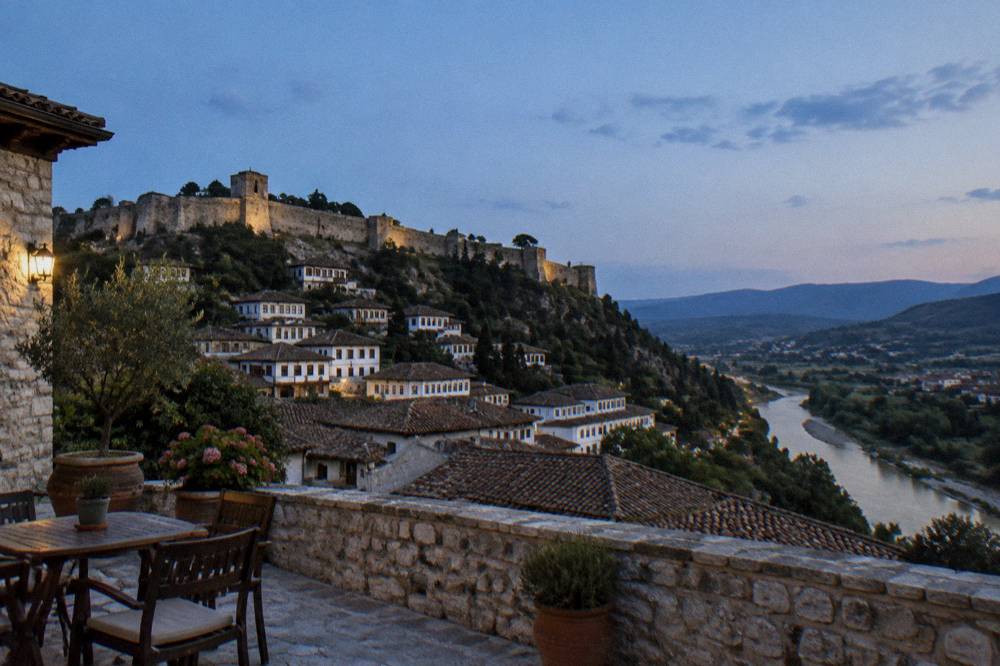
Budget travelers face one extra consideration, because the cheapest beds cluster in the old quarters where the ground is hardest. Read the Berat hostels guide together with the where to stay in Berat guide before booking, and weight location on the flat more heavily than a few hundred lek saved on the hillside.
How Easy Are Eating, Payments And Daily Errands In Berat?
Berat remains a largely cash town, so plan on lek rather than cards, though some hotels and larger restaurants take them. Eating out is cheap by European standards, and you pay in cash in lek. Bring small notes, and change money at bank branches rather than exchange kiosks you cannot verify.
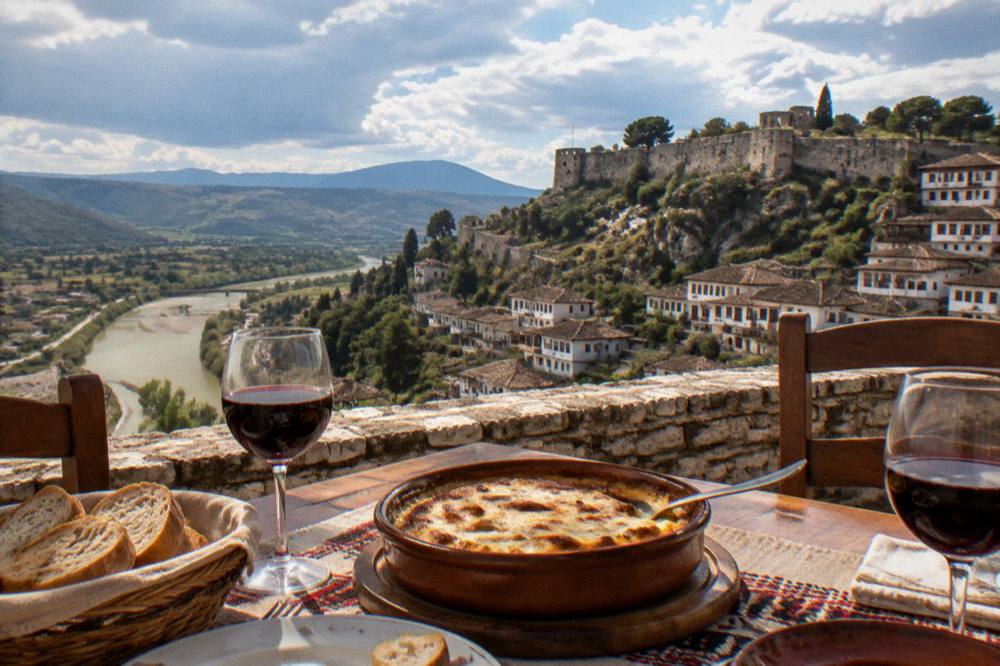
The good news for slower travelers is that eating well in Berat demands very little walking. The town's best-known dishes, tavë kosi baked lamb in yogurt, japrak stuffed vine leaves and qifqi rice dumplings, are served in restaurants a short flat walk from the boulevard, and portions are generous enough that a long lunch can stand in for sightseeing. Some kitchen classics are covered in the what to eat in Berat guide, with restaurant picks in the where to eat in Berat guide.
| Everyday item | Typical cost | Note |
|---|---|---|
| Cheap restaurant meal | Cheap by European standards, cash in lek | Local grills and byrek shops near the boulevard |
| Mid-range dinner for two | Cheap by European standards | Old-town restaurants with river views |
| Cappuccino | Cheap by European standards, cash in lek | Terrace cafes on the promenade |
| Espresso | Cheap, paid in lek | The local default order |
| Raki | About 2 euro a shot | Offered as a welcome pour in many guesthouses |
Treat those figures as planning ranges and check the room, prices in individual establishments vary. On money itself: the Albanian lek is the only real currency, at roughly 92 lek to the euro, euros are accepted informally in some tourist businesses but change comes back in lek, and old-town Berat is overwhelmingly cash territory. ATMs exist in Berat, and machines attached to bank branches are the safer choice than stand-alone ones; foreign-card fees can be steep, so withdraw larger amounts less often. The money and currency in Albania guide and the general Berat costs guide cover this in depth.
For visitors who want the food without the walking, a cooking class turns a meal into the activity itself, seated and hands-on. Mama Nina's cooking class is the long-standing local favorite, a three-hour format built around a home kitchen rather than a walking route, and it pairs naturally with a rest day between hill outings.
What Does A Gentler Two Days In Berat Look Like?
A comfortable two days keeps the castle to one early-morning visit, spends the flattest hours on the boulevard, the riverfront and Gorica's bridge, and leaves the afternoons for slow food and wine. Day one pairs the Kala with the museums; day two stays low along the river and ends with a cooking class or a tasting in the old town.
The itinerary below is built on one principle: one hill per day, and never two hard mornings in a row. It assumes a base on or near the boulevard and a willingness to spend a little on taxis to skip climbs.
| Slot | Day one | Day two |
|---|---|---|
| Early morning | Taxi to the castle gate, walk the walls in cool air | Flat riverside walk at your own pace |
| Late morning | Onufri Museum, then a slow descent through Mangalem | Gorica quarter and the bridge viewpoints |
| Lunch | Old-town restaurant, no rush | Cooking class, or a long boulevard terrace |
| Afternoon | Rest, then the Ethnographic Museum below | Rest, then wine tasting in town |
| Evening | Riverfront promenade at golden hour | Dinner with the thousand-windows view from flat ground |
Day one front-loads the one unavoidable climb while legs are fresh and the stone is cool. Take a taxi up rather than walking the lane if stamina is the constraint; the descent through Mangalem is the pretty direction anyway, and every lane eventually spills out at the flat. Day two deliberately stays low: Gorica's lanes are the gentler cobble experience, the bridge is level, and an afternoon tasting keeps everyone seated while the town's other attraction, its wine, gets its turn.
Travelers with more energy can stretch day two outward. The Osum Canyon lies about an hour to an hour and a half from Berat on paved roads toward Çorovodë, and the water-based trips there are open to reasonably confident swimmers rather than strong hikers. The Osumi Canyon swim and float trip with Bogove waterfall is the format that suits this kind of trip best: floating downstream with the current instead of walking a trail, and Bogove's waterfall sits at the end of a short forest walk of roughly half an hour to an hour return. Our Osumi Canyon guide and Bogove waterfall guide cover the terrain honestly if you are weighing it.
When Should You Visit And What About Safety?
Spring and autumn are the kindest seasons for anyone who tires easily, because Berat's summers are hot and dry, with heat that can top 40 °C, and winters are wetter, with rain concentrated from November to January. Albania is broadly safe for visitors; UK advice notes no regions to avoid, and the general emergency number 112 works from any phone.
Heat is the accessibility factor that gets overlooked. Berat's lanes are stone, its shade is intermittent, and the castle has almost none of it; a summer afternoon up there can be punishing for anyone whose heart or lungs are not fully cooperating. United States travel guidance for Albania sits at Level 2, exercising increased caution due to crime, but the practical risks in a small museum town are pickpocket-level rather than anything targeted at tourists. The fuller picture, including tap water and stray dogs, is in the is Berat safe guide.
| Service | Number |
|---|---|
| General emergency, any phone | 112 |
| Ambulance | 127 |
| Fire | 128 |
| Police | 129 |
On timing, plan around two calendar anchors. Mid-August brings the Bektashi pilgrimage to Mount Tomorr, when traffic around the Kulmak Tekke area is heavy for days, and early October brings the Wine and Stories of Berat festival, three days of tasting on flat ground in town, scheduled for 2 to 4 October. For anyone whose trip depends on avoiding crowds or heat, the shoulder months around those events are the sweet spot, and the autumn in Albania guide gets its own treatment elsewhere on this site.
One last practical note for visitors from Britain and the European Union: Albania is not an EU member and not in the Schengen area, so entry is a separate stamp and your days here do not count toward any Schengen allowance. UK citizens stay visa-free for up to 90 days in any 180, and United States citizens may stay up to a year without a residency permit. The getting from Berat onward guide covers continuing routes if Berat is one stop on a longer Albanian trip.
Accessibility in Berat is ultimately a matter of matching expectations to terrain, and that is what Berat Travel Guide tries to do across every page on this site. The flat town is genuinely lovely, the climb is optional more often than guidebooks admit, and the slow version of Berat, long lunches, river light and one castle morning, is the version many travelers end up preferring.
Common Questions About Berat Accessibility
Is Berat wheelchair accessible?
Partly. The new-town boulevard and the Osum riverfront promenade are flat and paved, and they carry the best views of Mangalem's stacked windows. Mangalem, Gorica and the castle are cobbled and stepped with no ramps, so a wheelchair visit means planning around the riverbanks and using a base near the boulevard.
Can you drive up to Berat Castle?
Not reliably anymore. Since April 2026 vehicle entry into the Kala quarter has been restricted to residents, pre-booked hotel guests, licensed taxis and similar exempt categories, with a barrier system under implementation. The practical plan is to park below and walk up, or take a licensed taxi to near the gate.
Are the museums in Berat accessible?
Both main museums are in historic buildings, so neither is fully step-free. The Onufri Iconographic Museum inside the castle charges 400 ALL, with a 500 ALL audio guide, and comes after the uphill walk. The Ethnographic Museum in the old town below, 300 ALL, is the easier one to reach and reopened in May 2026 after a three-year restoration.
How do you get to Berat with limited mobility?
The bus from Tirana takes around two and a half hours and lands at the station on the outskirts, from which a taxi of a few euro covers the 15 to 20 minutes into the old town. There is no direct airport bus and no train, so travelers who want door-to-door transport should look at guided day tours with hotel pickup.
Is Berat safe for older visitors?
Generally yes. UK travel advice notes no parts of Albania to avoid, and the risks in Berat itself are ordinary street-level ones rather than anything targeting tourists. The two real hazards for older visitors are heat, with summer days that can top 40 °C, and uneven stone underfoot, so decent shoes, water and a slow pace matter more than any security precaution.
When is the easiest time of year to visit Berat?
Spring and autumn. Summers are hot and dry, winters are wetter with rain peaking from November to January, and the cobbled lanes become slippery when wet. Early October also brings the Wine and Stories of Berat festival, running 2 to 4 October, which is a seated, flat-ground way to enjoy the town.