St Michael Church Berat
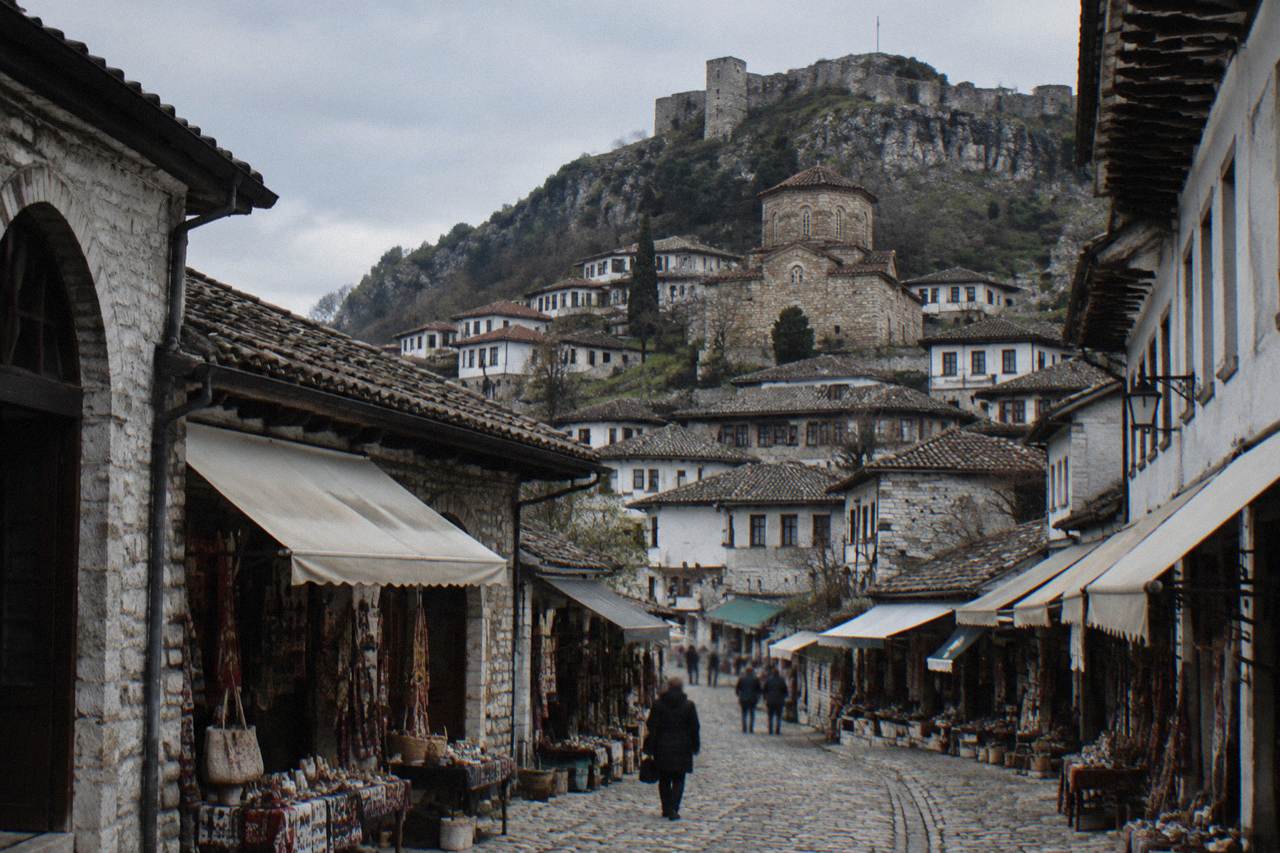
St Michael Church is one of the small Orthodox churches scattered through Berat's UNESCO-listed old town in central Albania. This guide explains what it is, how to find it, and how to plan the castle, museum and walking time around a visit.
Short answer
St Michael Church is a small Orthodox church in Berat, a UNESCO World Heritage Ottoman hill town of 62,232 residents in central Albania. The church is best visited as part of a walk through the castle quarter, where a daytime heritage fee of a few hundred lek may apply and the Onufri Museum charges 400 lek per adult.
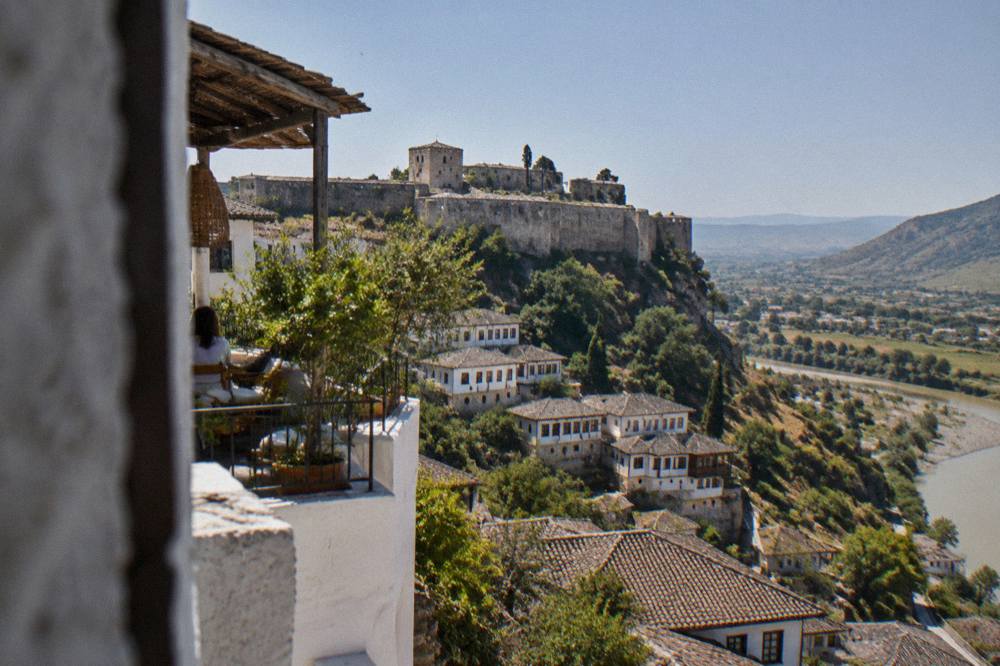
Berat, in central Albania, is a UNESCO World Heritage Ottoman-era hill town built above the Osum River, and St Michael Church is one of the small Orthodox churches tucked into its historic fabric. The town is famous for its rows of whitewashed, window-filled houses climbing the hillside, an image that earned it the nickname "the city of a thousand windows," but the real texture of the place is religious: churches, mosques and tekkes stand shoulder to shoulder inside the same walls, a coexistence UNESCO cites when it describes Berat as "a rare example of a well-preserved Ottoman town." A visit to a minor church like this one is not a ticketed attraction with a queue; it is a moment inside a living neighbourhood, and this Berat Travel Guide page explains how to make the most of it.
What Is St Michael Church In Berat, Albania?
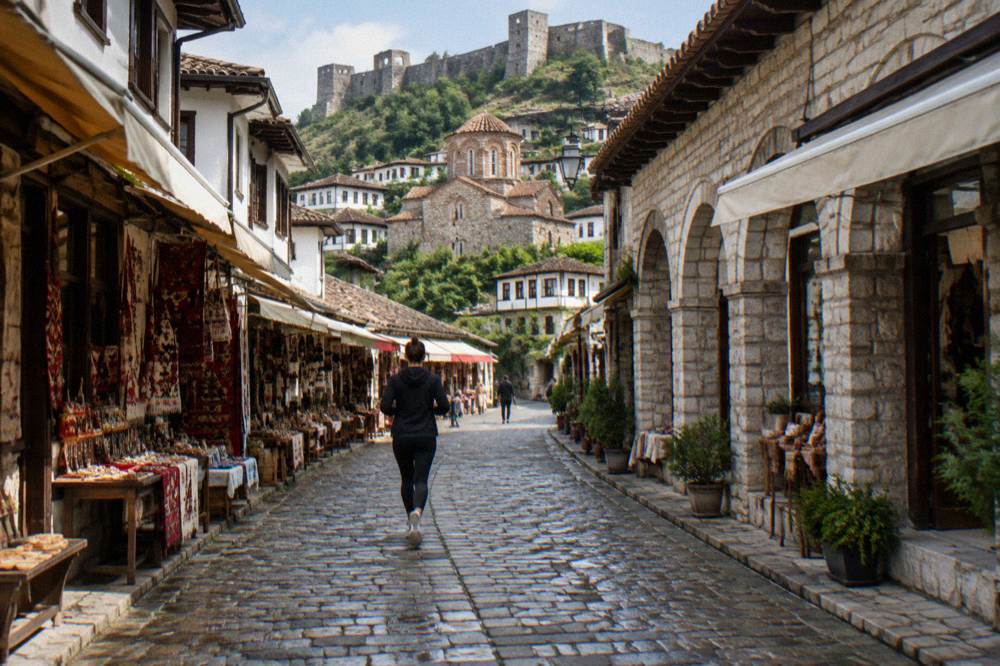
St Michael Church is a small Orthodox church dedicated to the Archangel Michael, one of the historic churches of Berat, a UNESCO World Heritage town of 62,232 residents in central Albania that was added to the World Heritage List in 2008 as an extension of the Gjirokastra inscription. Unlike the town's major monuments, it has no ticket desk, no published schedule and no staffed desk, so it belongs to the category of sights you discover on foot rather than ones you plan a day around. Berat's churches collectively are the reason the town earned its inscription: the walls of the castle quarter once held about 42 churches, of which roughly eight survive, alongside mosques and tekkes from the same centuries.
The honest starting point for any visitor is that published, verified practical detail on this particular church is thin. Berat's small churches are working religious buildings in a living neighbourhood, not museum branches, and their doors follow the rhythms of services and the caretakers who hold the keys rather than a printed timetable. That is worth knowing before you build an itinerary around a single small church, because the reward in Berat comes from the ensemble: the lanes of Mangalem and Gorica, the castle above, and the churches you pass on the way. Treat St Michael Church as a stop inside that walk and you will not be disappointed by a locked door.
What the church does offer, reliably, is context. Berat's religious architecture spans Byzantine foundations and Ottoman-era rebuilding, and the town's inscription covers 58.9 hectares of property across both Berat and Gjirokastra, with a buffer zone of 136.2 hectares. St Michael's sits inside that protected landscape, and UNESCO's criterion text notes that Berat "bears the imprint of a more independent life style, linked to its handicraft and merchant functions," which is why its churches and merchant houses read differently from the imperial Ottoman architecture of other Balkan towns.
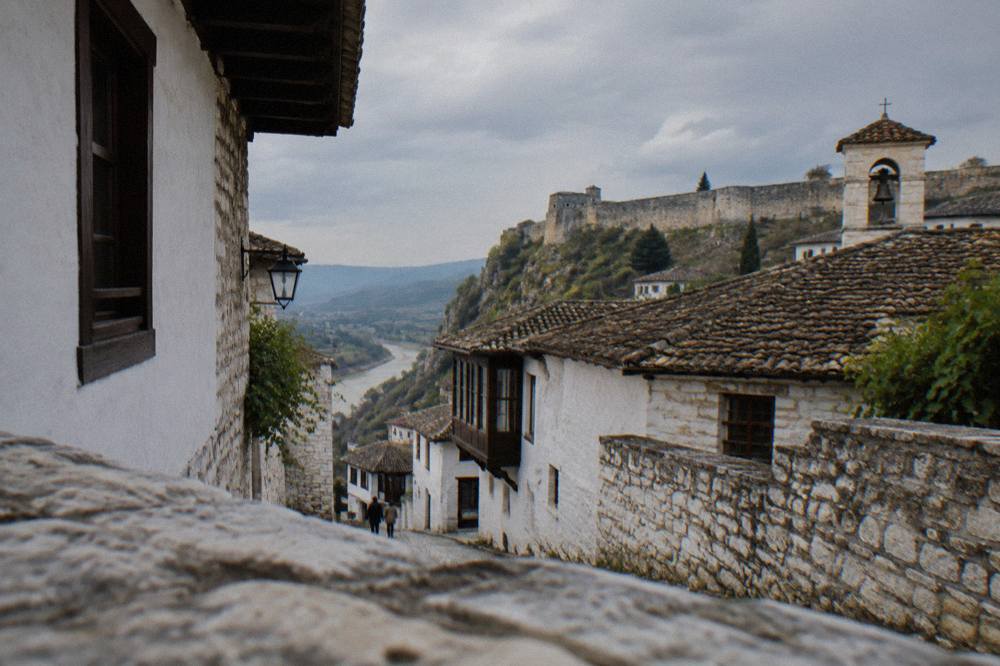
For orientation, the table below gathers the verified key facts about the town the church stands in.
| Fact | Figure | Source basis |
|---|---|---|
| UNESCO property name | Historic Centres of Berat and Gjirokastra, list ID 569 | UNESCO listing |
| Berat added to the List | 2008 (Gjirokastra inscribed 2005) | UNESCO |
| Municipality population, Census 2023 | 62,232 | INSTAT |
| Castle defensive towers | 24 | National tourism agency |
| Churches once inside the castle walls | About 42, roughly 8 preserved | National tourism agency |
| Highest point of nearby Mount Tomorr | 2,416 m | National tourism agency |
Where Is St Michael Church Located In The Old Town?
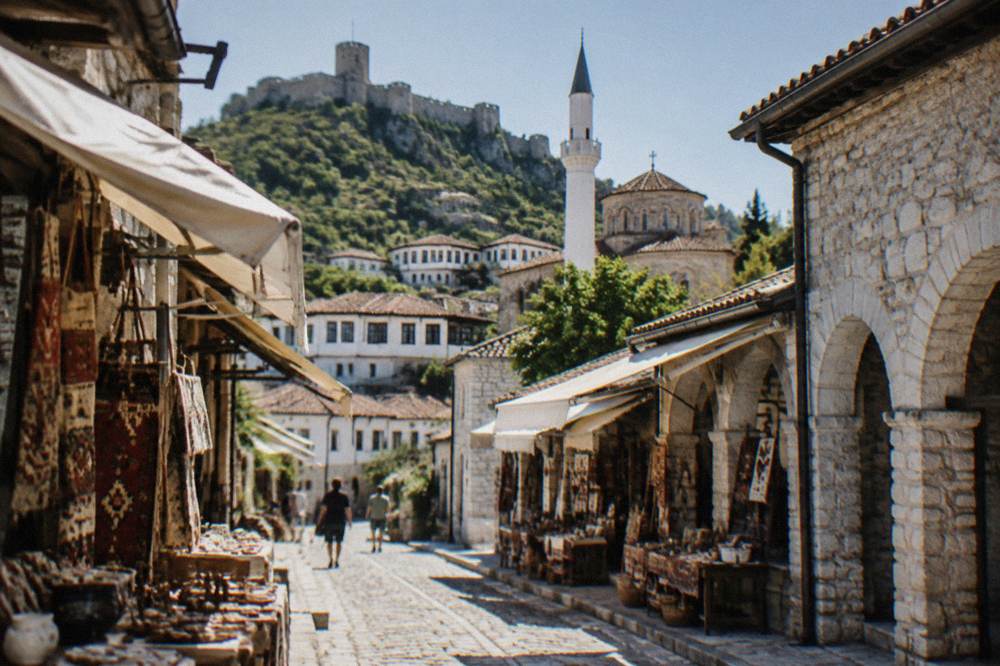
St Michael Church stands within Berat's historic old town, the UNESCO-protected hillside quarter on the Osum River in central Albania, and the practical way to reach it is on foot from the Mangalem or Gorica side, following the steep lanes up toward the castle quarter where the densest cluster of churches survives. The old town divides into three historic areas: Mangalem on the western hillside, Gorica across the river, and the Kala, the castle quarter at the top, which is itself a lived-in neighbourhood with guesthouses still operating inside the walls. Any church walk in Berat moves between these three, and the Gorica Bridge over the Osum links the two shores.
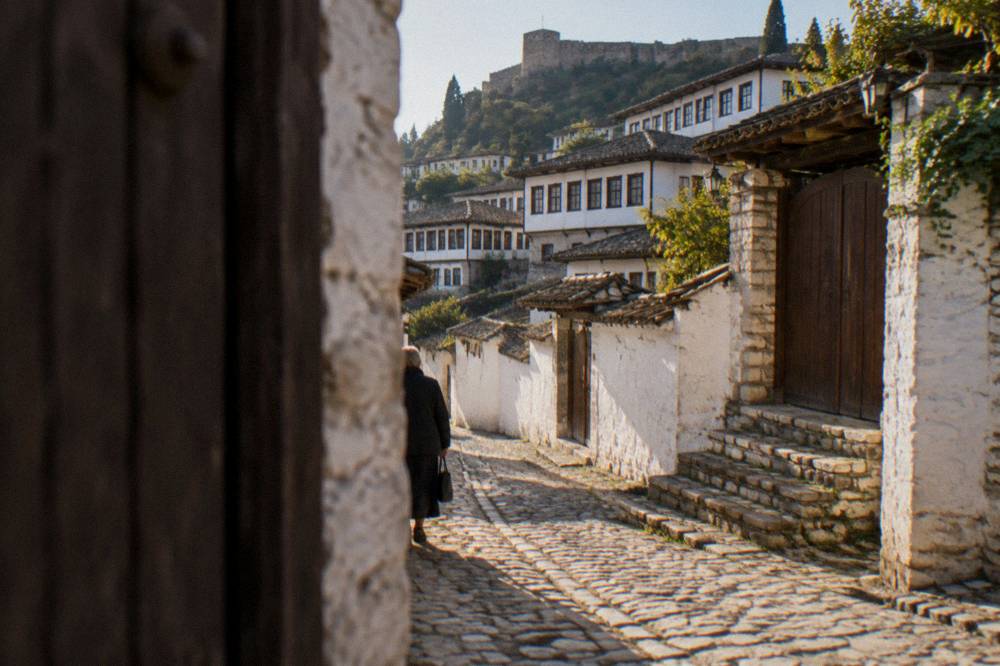
There is no formal address culture in the old town, and that is part of the charm. Lanes are stepped, signed sporadically and shared with residents' laundry lines and cats, so navigation is less about street names and more about vertical logic: riverside boulevard, hillside lanes, castle gate, castle interior. If you ask locally for the church, using the Albanian dedication, "Shën Mëhilli," will get you further than the English name, and a hand-drawn gesture up the hill will usually answer the rest. Allow time for wrong turns; every wrong turn in Berat ends somewhere photogenic.
One genuinely current planning note: car access into the castle quarter is being restricted. From spring 2026 the municipality has been limiting vehicle entry to the Kala to residents, pre-booked hotel and restaurant guests, licensed local taxis and authorised vehicles, as part of a "Smart Parking" project UNESCO's State of Conservation report describes as under implementation. The practical reading for a visitor is simple: park below, or arrive by taxi, and walk up. The stepped lanes were built for donkeys and pedestrians, and the walk is a deliberate part of the experience, a climb past the stacked windows the town is named for.
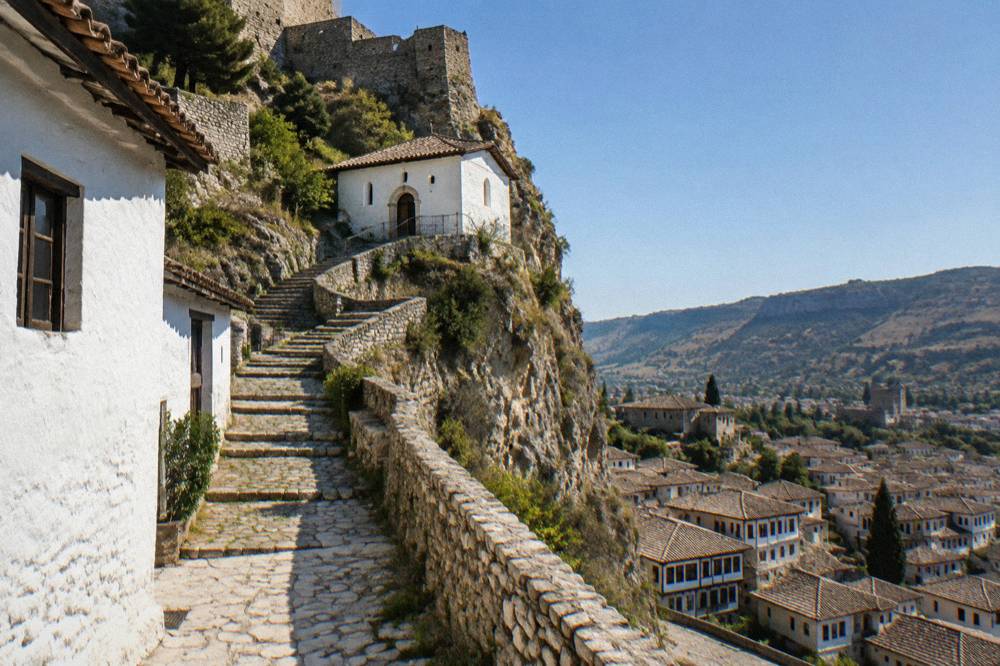
If you want a deeper dive into the neighbourhood itself, the old town overview guide walks the whole quarter, and the Berat Castle attraction page covers the fortress at the top of the hill.
Which Other Churches And Mosques Sit Within Walking Distance?
Within a short walk of St Michael Church you can reach the Onufri Iconographic Museum inside the castle, the Holy Trinity Church, St Michael's neighbouring small churches of the Kala, and, down in the town, the King Mosque, the Bachelor's Mosque, the Lead Mosque, the Halveti Tekke and St Demetrius Cathedral, all inside the same UNESCO property in Berat, Albania. No other town of this size in the Balkans packs so many working religious buildings of different faiths into one walkable hillside, and the distances involved are minutes, not hours, because the old town is compact by design.
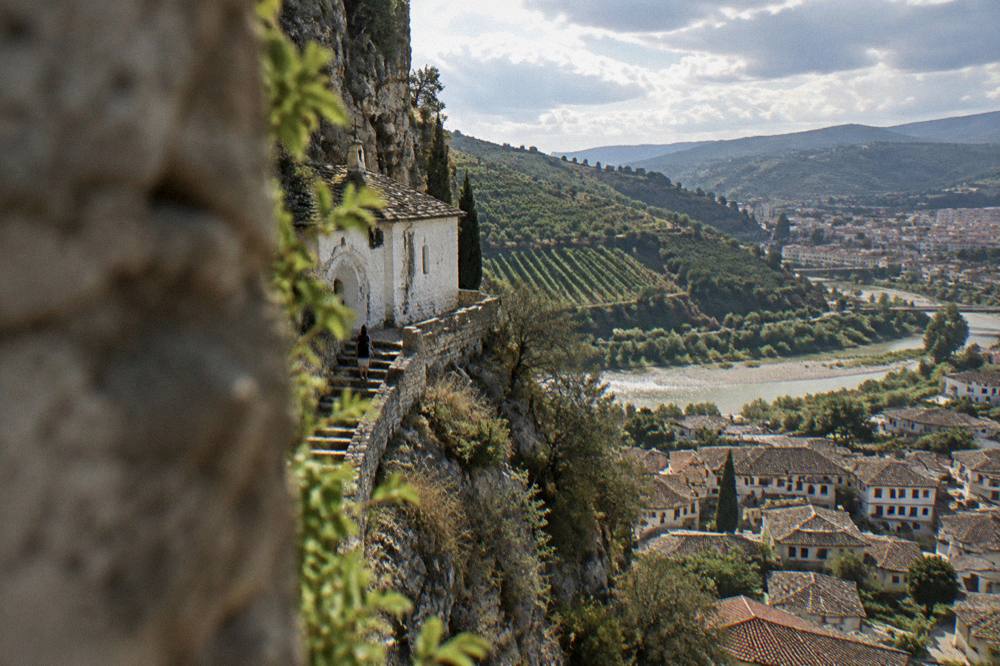
The logic of the walk is vertical. At the top, inside the castle walls, the churches are small, stone, sparse and often locked; the Red Mosque, among the earliest Islamic buildings in the fortress, stands near them as a ruin with its slim minaret base intact. Halfway down, Mangalem's terraces hold the King Mosque and the Halveti Tekke; on the far bank, Gorica holds its own quiet churches among the gardens. The museums anchor the two ends: Onufri at the castle's heart, inside the Church of St Mary, and the Ethnographic Museum in an old Ottoman house lower down, reopened in May 2026 after a three-year restoration with around 1,300 objects on display.
Give the churches of the Kala realistic expectations. The preserved churches inside the castle walls include small structures whose interiors hold icons and wall paintings, and some open only when a caretaker is found or a service is running. The verified reward for persistence is real: the Onufri Museum, the Church of St Mary that houses it, and the views across the Osum valley from the walls are the single best-organised part of the visit, with published hours and online ticketing through e-Albania since November 2025.
For individual buildings, these pages go deeper: the King Mosque, the Lead Mosque, the Bachelor's Mosque, the Halveti Tekke and the Holy Trinity Church.
A guided walk is one of the best ways to cover this dense cluster of buildings in a single morning, and the trio above spans the three most useful formats for Berat: a two-hour expert-led walk of the old town, an ATV tour for the hills beyond, and a cooking class in a local home for the food angle.
How Do You Visit The Church Together With Berat Castle And The Museums?
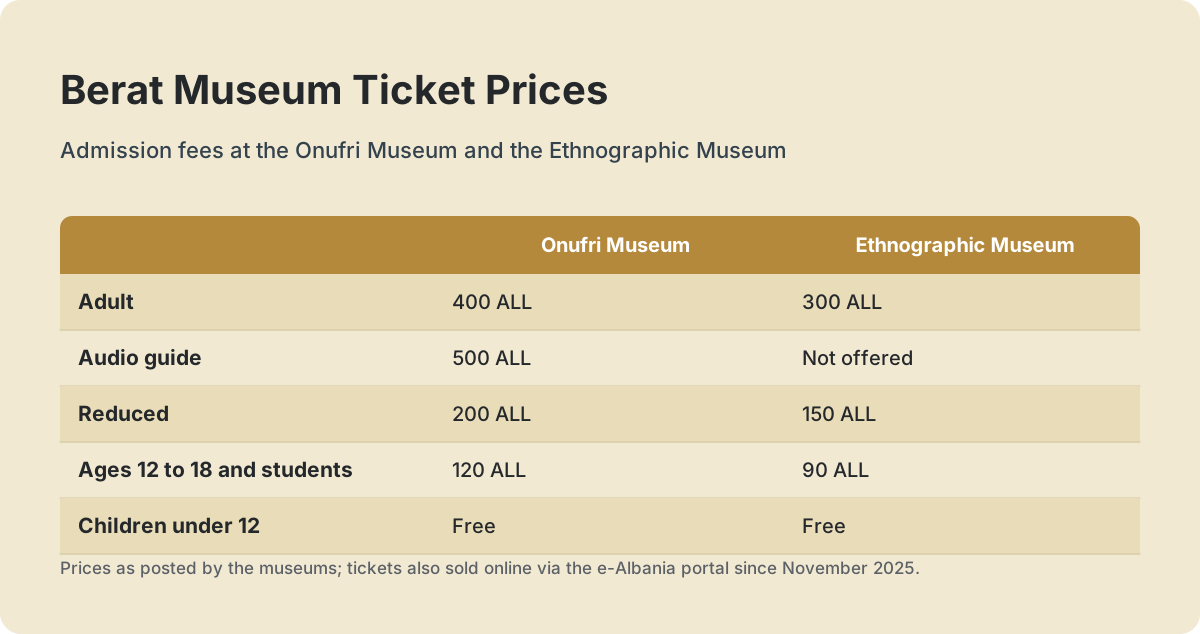
Plan one continuous loop: start at the riverside, climb through Mangalem into the castle quarter, visit the church sites and the Onufri Museum at the top, then descend past the Ethnographic Museum, with the Onufri Museum open 9:00 to 18:00 in the May-to-September season and 9:00 to 16:00 Tuesday to Saturday in winter, adults paying 400 lek at Onufri and 300 lek at the Ethnographic Museum. That single sentence is the whole practical plan for a day in Berat, and every figure in it comes from the Berat Museum Center's own published schedule.
The museums are the reliable spine of the day because they are the only heritage sites in town with published, staffed hours. The Onufri Iconographic Museum sits inside the castle, reachable by road to near the castle entrance gate for those who cannot manage the climb on foot. Its icons, the work of the master painter Onufri and his school, are the artistic reason the castle churches matter; seeing them first turns the small, dim church interiors you pass afterwards into a decipherable language rather than a dark room. The Ethnographic Museum, in the lower town, shows the domestic side of the same world: an Ottoman town house fitted out with the tools, textiles and rooms of a household that could have lived beside St Michael's.
Tickets are cheap by any European standard, and discounts are structured the same way at both museums: children under 12 enter free, ages 12 to 18 and students pay a reduced rate, and there are further reduced categories with documentation. Since November 2025, tickets for Berat's museums can also be bought online through the national e-Albania portal, valid for a month, which removes the one queue that can form at Onufri in peak summer. The museum also publishes free-entry days, including 18 April, 18 May, 21 May and 29 September, with 28 and 29 November free for Albanian citizens only.
| Season | Days | Hours |
|---|---|---|
| 1 May to 30 Sep | Daily | 9:00 to 18:00 |
| 1 Nov to 30 Apr | Tuesday to Saturday | 9:00 to 16:00 |
| 1 Nov to 30 Apr | Sunday | 10:00 to 15:00 |
| National holidays | Open | Posted at the door |
| Ticket category | Onufri Museum | Ethnographic Museum |
|---|---|---|
| Adult | 400 ALL | 300 ALL |
| Audio guide | 500 ALL | Not offered |
| Reduced | 200 ALL | 150 ALL |
| Ages 12 to 18 and students | 120 ALL | 90 ALL |
| Children under 12 | Free | Free |
The castle grounds themselves are a separate question from the museums. There may be a small daytime heritage fee at the main gate, so bring lek; the walls, as a lived-in quarter, remain walkable outside staffed hours. For the castle in full detail, see the Berat Castle guide, and for the icons, the Onufri Iconographic Museum page.
Which Guided Tours Cover The Old Town Churches?
A guided walking tour is the most efficient way to see St Michael Church and its neighbouring buildings, because Berat's small churches open their stories, and sometimes their doors, to guides who know the caretakers, and the premium two-hour expert-guided walk of the old town is the strongest fit, rated 5 from 53 reviews on its live listing. Printed sources cannot tell you which side chapel is unlocked on a Tuesday in October; a local guide can, and in a town where the headline monuments are easy but the small churches are capricious, that knowledge is the difference between a good half-day and a flat one.
The walking format suits Berat better than any other. The old town is compact, steep and car-hostile by policy now, so a guide on foot moves at exactly the pace the lanes allow. A typical expert walk covers the castle quarter's churches, the mosque quarter below and the viewpoints between, with the guide filling in the Ottoman and Byzantine layers that signage does not. Reviews of the premium walk repeatedly single out the guides' depth on the town's religious history, which is precisely the knowledge a St Michael Church visitor needs. Check availability if this format matches your plans.
Beyond the classic walk, two other formats reward the same ticket. Food-led walks through the old town pair the lanes with tastings, which suits travellers who want the church quarter as scenery for a long lunch. And photography-focused evening tours have grown around Berat's famous window walls, taking in the hillside light that makes the town's postcards; the town's best angles are documented in the Berat photography spots guide.
If you are travelling with children, note that the walking tours are short enough, at around two hours, to hold young attention spans, and the Berat with kids guide has the fuller family plan.
What Should You Know Before Visiting: Dress, Hours And Access?
Dress modestly, carry cash in Albanian lek, expect no published hours for small churches like St Michael Church, and plan around the published hours of the castle quarter and the museums instead, because the church is a working religious building in a residential neighbourhood rather than a ticketed site. Shoulders and knees covered is the baseline for Orthodox churches everywhere in Albania, and in Berat it is also practical: the lanes are steep, the shade is scarce in summer, and light layers that cover you work better than carrying a scarf you keep dropping.
Money matters more here than in most European heritage towns. The currency is the Albanian lek, and the old town remains largely cash territory: small shops, guesthouse extras and any gate fee will want notes, and while cards are accepted at some hotels and larger restaurants, a day of church-hopping runs on coins and small bills. The exchange rate has hovered near 92 lek to the euro and 81 lek to the dollar, and euro notes are sometimes accepted informally in tourist-facing businesses, with change usually given in lek and at a worse rate, so paying in lek is the better default. Avoid standalone tourist ATMs; use bank-branch machines, and expect a foreign-card fee of several hundred lek.
| Money question | Answer |
|---|---|
| Local currency | Albanian lek (ALL) |
| Rough rate | About 92 lek per euro, about 81 lek per dollar |
| Cards in the old town | Largely cash; cards at some hotels and larger restaurants |
| Euro acceptance | Informal in some tourist businesses, change given in lek |
| Foreign-card ATM fee | Commonly 500 to 800 lek at standalone machines |
Access and safety are the last practical pieces. Albania is not an EU member and not in the Schengen area, so border formalities are Albanian ones, but for most Western visitors they are trivial: UK, EU and Schengen citizens stay visa-free for 90 days in any 180, and US citizens may stay up to a year without a residency permit. The UK foreign office currently has no advice against travel to any part of Albania, and the US State Department's standing guidance is Level 2, exercise increased caution, a routine rating driven by general crime rather than anything specific to Berat. Emergency numbers are 112 for general emergencies, 127 for an ambulance, 128 for fire and 129 for the police.
| Citizenship | Visa-free stay in Albania |
|---|---|
| United States | Up to 1 year |
| United Kingdom | 90 days in any 180 |
| EU and Schengen states | 90 days in any 180, ID card accepted |
| Holders of valid US, UK or EU visas or residence permits | Visa-free entry |
What Else Should You See Around St Michael Church In One Day?
Around the church, one full day in Berat comfortably covers the castle quarter with its museums, the Gorica Bridge and the Gorica hillside across the Osum, and a meal in Mangalem, while a second day opens the countryside: the wineries of the Roshnik hills, the Osumi Canyon at Çorovodë, and the trails of Mount Tomorr National Park. That is the honest scope of the destination: small, dense in the centre, and suddenly wild within an hour's drive. The one day in Berat itinerary sequences the compact version hour by hour.
The river and the two banks deserve more attention than most itineraries give them. The Gorica Bridge, the old Ottoman footbridge across the Osum, is the classic photo of the town and the natural turnaround point of a church walk; from its middle you read the whole hillside of windows in one glance. A new 290-metre EU-funded panoramic bridge completed upstream now diverts through traffic away from the historic centre, which is quietly improving the air and the sound of the old town for exactly the kind of slow visit a church walker wants. The Gorica Bridge page covers the bridge itself.
Out in the hills, wine is the other reason people extend a Berat stay. The region grows indigenous varieties, Shesh i Zi and Shesh i Bardhë alongside the local white Puls, and family wineries such as Cobo in the Berat area pour them with olives, cheese and raki. A guided winery tour with transfers is the easy version, since the tasting rooms sit in villages where you would not otherwise find yourself, and the Berat wineries day trip guide lays out the full picture for independent travellers too.
For a completely different day, the Osumi Canyon is the headliner. Protected as a natural monument, the canyon near Çorovodë runs a rafting season in spring snowmelt, roughly March to early June depending on water, and a tubing season through summer and autumn when the river calms; there is no fee to view the canyon from the rim, and the drive from Berat is one to one and a half hours on fully paved roads. The Osumi Canyon guide has the season-by-season detail.
When Is The Best Time Of Year To Visit Berat?
Spring and early autumn are the best times to visit Berat for church sightseeing, because the climbs through the old town are punishing in the heat of a central Albanian summer, when temperatures can top 40 degrees, and the winters, while mild and rarely snowy in town, are wet, with the heaviest rain falling from late autumn through January. Those two sentences carry the whole seasonal argument, and no official station normals exist for Berat to refine them further, so treat any month-by-month temperature chart you see for the town as an estimate rather than measurement.
Summer is the season that needs managing. July and August bring the heat, the tour buses and the fullest museums: the Onufri Museum recorded about 14,000 visitors in August 2026, roughly 4,000 more than the same month a year earlier, and the visitor count for the first seven months of the year reached 58,912. The practical countermeasures are early starts, midday shade in Mangalem's lanes, and the realisation that the castle walls, white stone under a high sun, amplify the heat. Bring more water than feels reasonable.
Autumn is the connoisseur's slot. October in particular pairs cooler walking weather with the "Wine & Stories of Berat" festival, a three-day event held in early October, with the 2026 edition running from 2 to 4 October, filling the town with wineries from Albania and Kosovo, food stalls and music. Late September and early October are also outside the peak museum queue, and the light on the white walls is at its kindest. For month-by-month planning, the Berat weather guide covers what to expect and pack.
How Do You Get To Berat And Where Should You Stay?
Berat is reached by bus or furgon from Tirana's South-North terminal in roughly two and a half hours, with departures through the day and a fare of a few hundred lek paid in cash, and there is no direct airport bus, no passenger train and no practical flight alternative, so nearly every visitor arrives by road from the capital. The run is simple once you know the shape of it: airport to Tirana terminal, terminal to Berat, Berat terminal to the old town. The Tirana to Berat guide and the Berat bus station page cover the fine detail.
The buses are frequent and informal. Minibuses and midibuses leave from Terminali Jug-Veri, the South-North terminal, through the morning and afternoon, you pay the conductor in cash, and you should not expect online booking for every departure. Arrive, buy, board. The Berat terminal sits on the SH72 on the edge of town, from the old town it is a taxi ride of a few euros or a brisk walk of fifteen to twenty minutes, and drivers know the guesthouse names better than street addresses.
| Leg | Practical detail |
|---|---|
| Tirana terminal to Berat | Frequent daytime buses, a few hundred lek, cash |
| Journey time | Roughly 2 h 15 min to 2 h 45 min |
| Fare | About 500 to 600 ALL, paid in cash |
| Direct airport bus to Berat | None; change at the Tirana terminal |
| Passenger train to Berat | None |
Where you sleep shapes the visit more than in most towns, because the old town's three quarters have distinct characters. Mangalem, the window-lined hillside, is the postcard address, atmospheric and steep. Gorica, across the bridge, is quieter, greener and often slightly cheaper. The Kala, inside the castle walls, is the deepest immersion, with a handful of guesthouses and even a conversion of a centuries-old building next to the Onufri Museum into a small family guesthouse. The where to stay in Berat guide compares the quarters and the properties, and the Berat costs guide prices the whole trip.
Eating deserves its own paragraph, because the town's food is part of the same heritage as its churches. Berat's Slow Food community works to keep traditional recipes on local tables, and the dishes to look for are qifqi, crisp rice dumplings with mint and fennel, tavë kosi, lamb baked under a yogurt and egg crust, and japrak, stuffed vine leaves. A cheap restaurant meal runs to a few euros and a mid-range dinner for two to a few thousand lek, and the where to eat in Berat guide and the what to eat in Berat guide name the kitchens.
Why Does A Small Church Like This Matter In A Town Full Of Monuments?
A small church like St Michael Church matters because Berat's World Heritage status rests on the everyday coexistence its minor buildings prove: the town was inscribed for being a rare, well-preserved Ottoman town where churches, mosques and tekkes share one hillside, and the modest buildings, not the grand ones, carry that story. The big monuments could exist in any museum town. The dense scatter of small, lived-in religious buildings is the thing that cannot be moved or faked, and UNESCO's evaluation of Berat noted precisely this: its imprint of an independent, craftsman and merchant life, different from the imperial Ottoman pattern elsewhere.
That is also why the honest advice throughout this guide is to visit the church as part of a walk rather than as a destination. The building rewards a traveller who has learned a little of the town's story first: the icons in the Onufri Museum next door, the centuries of church-building inside the castle walls, the minarets rising from the same lanes. The visitor who walks up the hill with that context reads every small locked church in Berat as evidence rather than as a disappointment. The Berat history guide and the Berat UNESCO heritage guide carry that story at length.
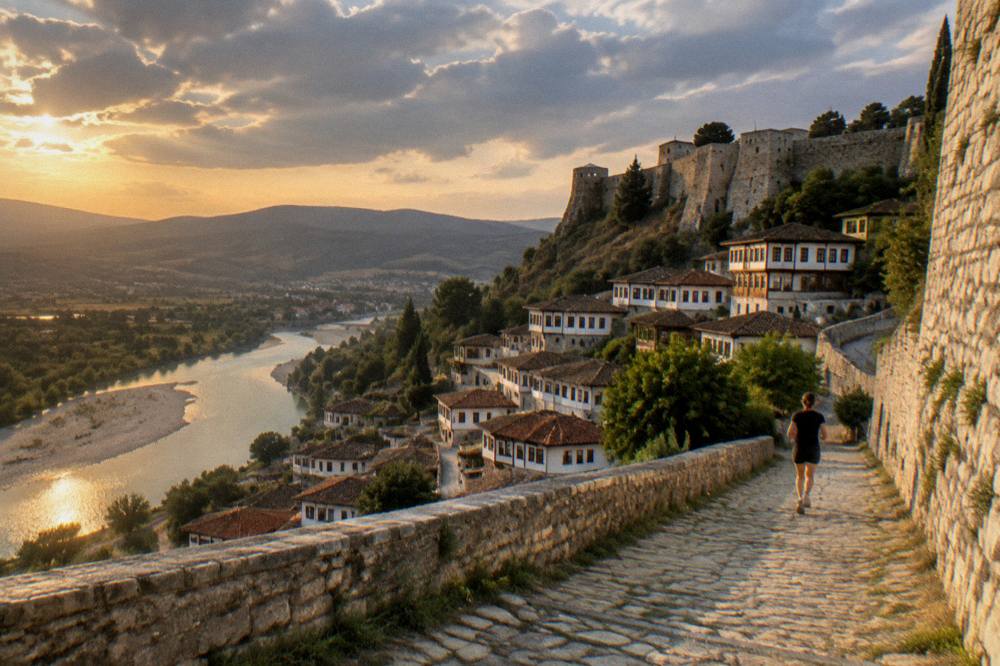
There is a quieter point worth making about preservation. UNESCO's 2026 World Heritage Committee decision on Berat and Gjirokastra urged the suspension of road and river-bank projects near the castle until heritage impact assessments are complete, and the castle access road's cobbled surface was under repair in spring 2026. None of this touches a visitor's day directly, but it explains why the town's lanes may feel like a work in progress at the edges, and why the middle of the old town, including its churches, is being managed with unusual care. Travellers who come gently, in the shoulder seasons, on foot, are part of the solution rather than the pressure.
Common Questions About St Michael Church Berat
What Is St Michael Church in Berat, Albania?
St Michael Church is a small Orthodox church dedicated to the Archangel Michael, one of the historic churches of Berat, a UNESCO World Heritage Ottoman hill town of 62,232 residents in central Albania. Berat was inscribed in 2008, joining Gjirokastra on the World Heritage List.
Where Is St Michael Church Located in the Old Town?
The church stands within Berat's historic old town on the Osum River, best reached on foot from the Mangalem or Gorica side and combined with the climb toward the castle quarter, where the densest cluster of churches survives. Car access into the castle quarter is now restricted, so plan to walk or take a licensed taxi.
How Do You Visit the Church Together With Berat Castle and the Museums?
Walk up from the riverside through Mangalem, visit the castle quarter and the Onufri Museum at the top, then descend past the Ethnographic Museum. The Onufri Museum is open 9:00 to 18:00 daily from May to September and 9:00 to 16:00 Tuesday to Saturday in winter, with adult tickets at 400 lek for Onufri and 300 lek for the Ethnographic Museum.
Which Guided Tours Cover the Old Town Churches?
A guided walking tour is the best format for the old town's churches, and the premium two-hour expert-guided walk of Berat, rated 5 from 53 reviews on its live listing, is the strongest fit. Food-led walks and photography-focused evening tours are the main alternatives.
When Is the Best Time of Year to Visit Berat?
Spring and early autumn offer the best walking conditions for church sightseeing. Summer heat can top 40 degrees and the museums fill up, while winters are mild but wet, with the heaviest rain from late autumn through January. Early October also brings the Wine & Stories of Berat festival, held 2 to 4 October in 2026.
How Do You Get to Berat and Where Should You Stay?
Buses and furgons run from Tirana's South-North terminal to Berat in roughly two and a half hours, with frequent daytime buses and a cash fare of a few hundred lek. Stay in Mangalem for the postcard atmosphere, Gorica for quiet, or the Kala inside the castle walls for full immersion.